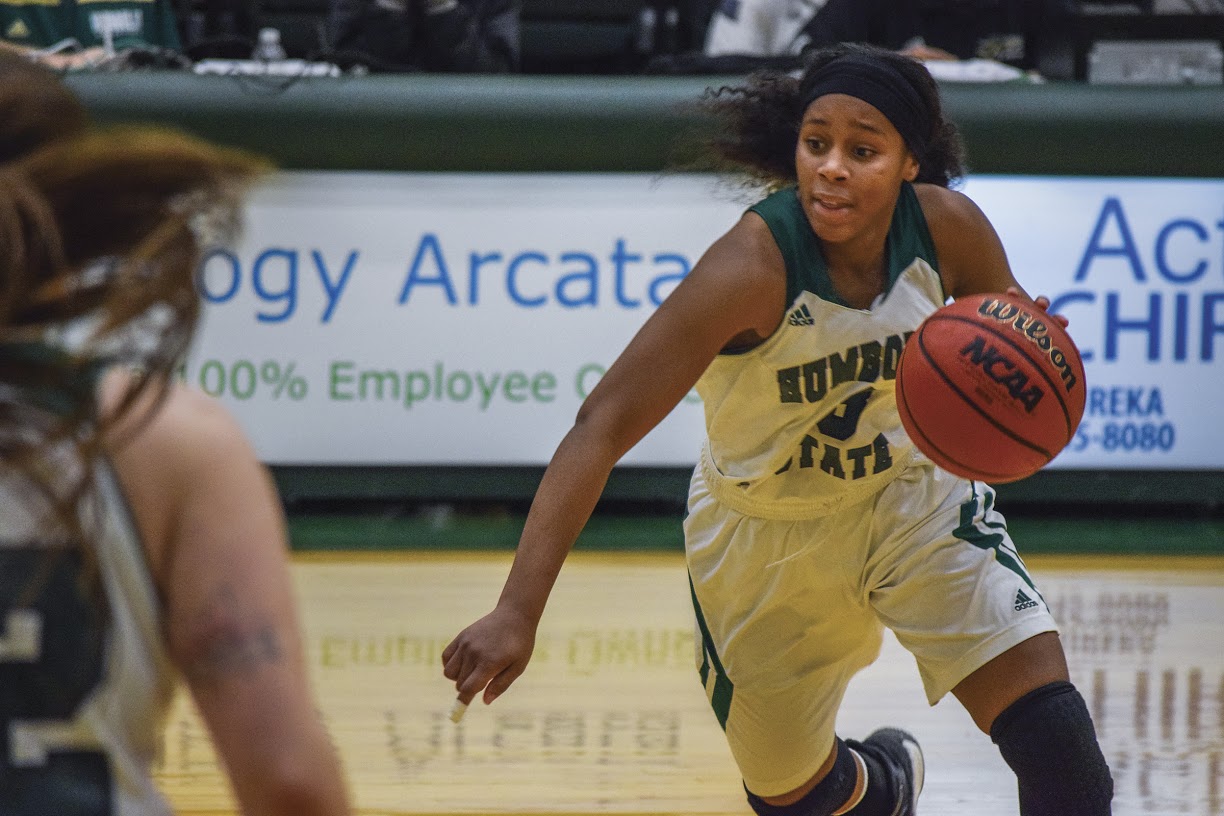
Playing collegiate sports and taking a full-time schedule is the equivalent of having two full-time jobs
During an online-only episode of “The Shop,” California Governor Gavin Newsom signed Senate Bill 206, or the Fair Pay to Play Act on Sept. 30.
Along with several other former college athletes, Newsom believes college athletes, especially Division I athletes, deserve compensation for their hard work and dedication to the game that makes their “bosses” rich.
“Colleges reap billions from student athletes but block them from earning a single dollar,” Newsom tweeted. “That’s a bankrupt model.”
Despite Humboldt State being a NCAA Division II program, we still agree that our athletes deserve some type of compensation based on the amount of revenue our athletic program brings in.
“The Shop” is a HBO talk show owned under the digital sports media company Uninterpreted. During the episode, Newsom was accompanied by NBA star LeBron James and they both shared the news on Twitter by posting a video snippet.
In a world that is so divided, sports can bring people together. Whether an athlete plays for a professional team or a college team, the support and compassion they receive from fans remains loyal.
In professional sports, athletes sign contracts with a team or an organization. When they sign, they are agreeing to the specific payment details they were offered or that they negotiated with their organization. For collegiate sports, college athletes are offered a scholarship breakdown and have the decision of accepting it or not.
However, anyone who is up to date with our budget crisis around campus knows that our athletic program probably receives close to no money to provide to our athletes. Especially considering that we still have athletes attending HSU out of pocket to participate in an intercollegiate sports.
HSU may not seem like a great example when pushing the idea that college athletes deserve compensation, but the Fair Pay to Play Act doesn’t allow athletes to be paid by their university, it just gives them the leeway to find sponsorship and make money off their hard work.
When we consider professional athletes, endorsement deals are contracted regularly. These deals allow companies to use athletes’ names, numbers and any other marketing facet that’s agreed upon, in exchange for money paid to the athlete. College athletes do not receive endorsement offers, but they still partake in similar marketing techniques that bring in revenue for their college and coaches.
The counterargument to this case states that college athletes are provided a scholarship that pays their tuition and resources that help them get through the academic portion of school.
Although this is true, many fail to realize the dedication and time commitment it takes to be a successful student-athlete. Being a student-athlete is essentially equivalent to holding two full-time jobs: studying and playing. This doesn’t leave time for a job off-campus to provide a steady source of income.
The fact that colleges and head coaches make money off their players’ successes is ludicrous, especially when the players themselves aren’t receiving any portion of that revenue. It is this exact argument that Newsom brought to light.
The proposed bill allows college athletes to receive a portion of the revenue that their college receives and sign endorsement deals like the pro athletes they aspire to be. Although the NCAA fought against the signing of this bill, Newsom stuck to his belief. He proposed providing the NCAA with a grace period to narrow down rules and regulations in hopes of making the transition smooth and effective. Therefore, the bill does not play any effect on college sports in California until Jan. 1, 2023.
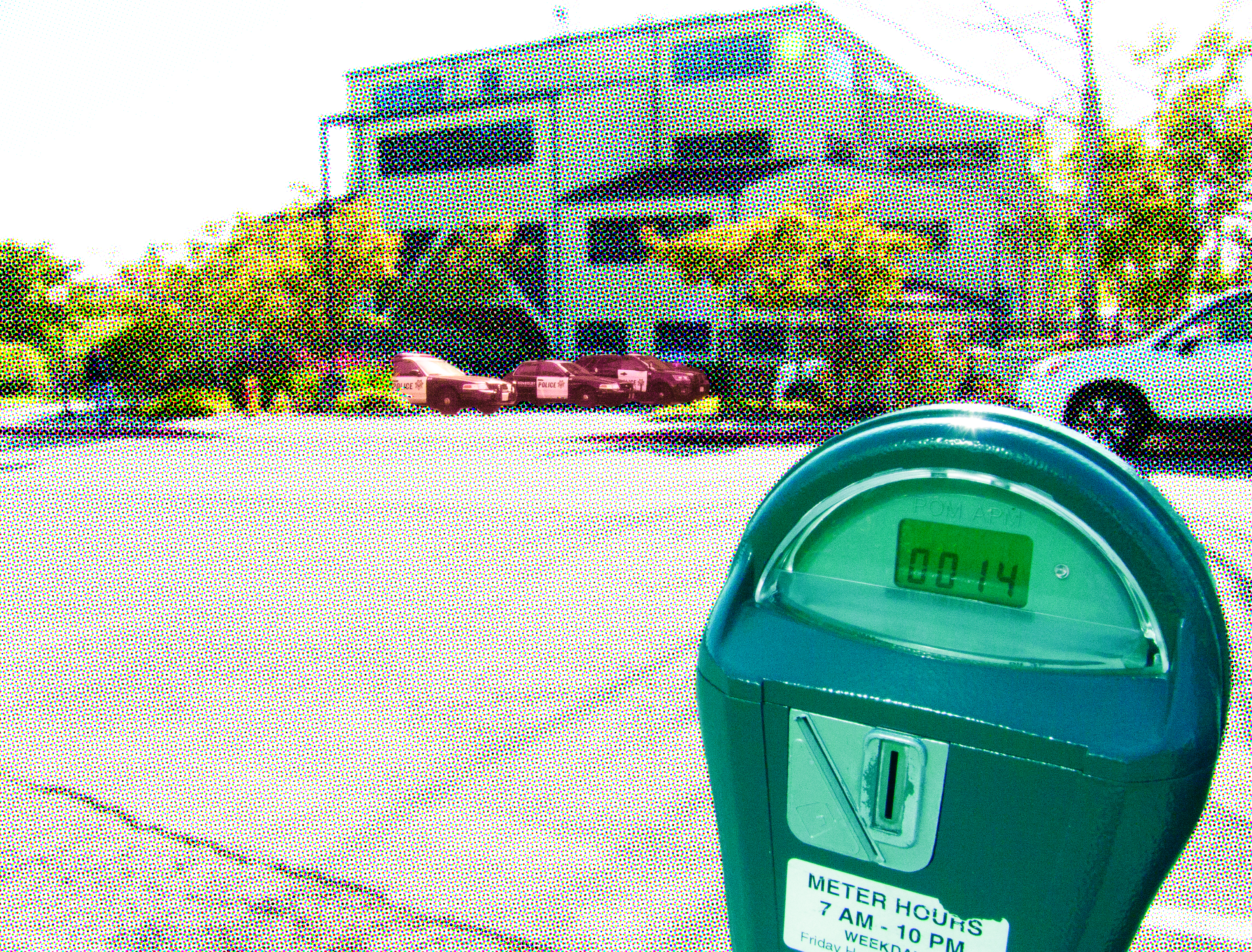
I, Skye Kimya, believe I was detained on Feb. 14 over a $40 on-campus parking ticket because of the color of my skin.
Around 8 a.m. that morning, I walked out of a building on the northeast side of campus to find two parking officers giving me a ticket for where my car was parked.
After getting into a small verbal altercation with these parking officers, I realized it wasn’t worth the argument. I asked them to give me the ticket and let me go about my day.
The parking officers were not happy with me driving off while they were still giving me my ticket, and before I knew it, Humboldt State police Chief Donn G. Peterson was pulling me over in an undercover vehicle.
Within minutes, another University Police Department vehicle arrived to the scene. I was interrogated for approximately 10 minutes by two officers on each side of my car about the incident that had just occurred. After the officers spoke with each other for a few minutes, another cop car pulled up, and UPD officer Delmar Tompkins made his way to my driver side.
“Please step out of your vehicle and put your hands behind your back,” Tompkins said.
“Excuse me? I don’t understand,” I said.
I was told I was being detained under suspicion of assault with law enforcement. After questioning this accusation, I was told I was a threat at that time and needed to be detained for the safety of the officers because they did not know the full story yet.
Confused and scared, I got out of the car, did what Tompkins asked me to do and began to cry like a baby as he placed me in the back of his cop car.
Imagine being detained and told you are a threat, under suspicion of assault, by a white officer twice your size. Imagine feeling confused and alone. Imagine questioning what could possibly happen next.
When you grow up trying to understand the purpose behind discrimination, you begin to notice how common it is and wonder if it will ever go away.
At times, you lose hope for your children’s generation. Yet other times, you want to become the greatest activist that has ever walked this planet, in order to actually make things right for those future generations.
Students at HSU don’t feel at home. We don’t feel as though there are people by our side, and we don’t see the amount of people of color around campus that the HSU pamphlets and website photos presented to us when we were deciding which university to attend.
According to HSU’s “fast facts,” the incoming class of fall 2016 consisted of 549 Hispanic/Latino students, 51 African American students, 31 Asian students, 11 American Indian students and four Pacific Islander students.
Additionally, the entire fall 2016 student body consisted of 2,869 Hispanic/Latino students, 271 African American students, 279 Asian students, 89 American Indian students and 20 Pacific Islander students.
With a student body total of 8,503, you can imagine what it is like to see only 270 other faces similar to yours on one side, and only 88 other faces similar to yours on the other side.
Hispanic and Latino students made up almost 35 percent of the entire student body that same year. Seems like a reasonable amount, right?
HSU actually receives funds from the U.S Department of Education ever since they became a Hispanic-Serving Institution at the start of the fall 2013 semester.
To become a Hispanic-Serving Institution, the university has to have an undergraduate full-time equivalent enrollment of at least 25 percent Hispanic students, and HSU was at 26.6 percent for the fall 2013 semester.
HSU continues to flaunt a great amount of diversity that it does not have. These incoming students, like many of us who were once in their shoes, attend HSU and slowly begin to witness and experience how diverse this campus and community is truly NOT.
Just the other day, the NAACP Eureka Branch called out HSU and asked them to stop recruiting students from minority-majority neighborhoods until changes are made around campus and within the community.
A majority of the students of color who have attended HSU for at least two academic years have experienced some type of discrimination, whether it was verbal, physical or emotional.
In 2013, Tompkins had a civil lawsuit filed against him by a Fieldbrook man who alleged he was the victim of a brutal assault back in January 2012. It turns out the Fieldbrook man wasn’t lying and the Cal State University system paid him $135,000 to keep him quiet.
As students of color at this university, how are we supposed to feel safe if our own UPD officers don’t do things the right way and have our back?
Cases like the murders of HSU African American students Corey Clark (2001) and David Josiah Lawson (2017) are still unsolved to this day, and we as students have not seen enough action taken by our president, UPD and even the Arcata Police Department.
Students of color do not feel safe, nor protected here. The NAACP Eureka Branch is right and something has to change before HSU tries to drag more students of color to this campus.
Demands for justice for David Josiah Lawson increase as the anniversary of his death arrives and his life is celebrated with family, friends and community members.
Charmaine Lawson gave everything she had to make sure that her son David Josiah Lawson was safe, secure and educated for 19 years. Within a matter of minutes, at a house party in Arcata, one individual decided to take all of that away by plunging a 10-inch kitchen knife into the abdomen of her child. It was around 3 a.m. on April 15, 2017, when David “D.J.” Lawson was murdered over the loss of a cell phone.
“I sacrificed so much to make sure my children were safe,” Charmaine Lawson said. “There’s absolutely nothing I wouldn’t do for my children.”
It has been a year and there is no one in custody for the murder. Tension on campus and in the community for justice to be served has been building since the event. Kyle Zoellner, a McKinleyville local, was originally arrested at the scene and later released by Humboldt County Superior Court Judge Dale Reinholtsen for insufficient evidence.
Protest from the Lawson family, Justice for Josiah Committee, community members and students began following the release, and efforts have been increasing as the one-year mark of the incident was arriving.
Barbara Singleton speaks at the Justice for Josiah rally in the UC Quad on April 12. Photo by Nick Kemper.
The Justice for Josiah Committee began 12 days of action leading up to the anniversary ending with a Celebration of Life for Lawson on April 15. As the week continued, pop-up events occurred after developments in the criminal case.
From August of last year until April 9, retired FBI and licensed private investigator Tom Parker had been assisting the Arcata Police Department in the Lawson investigation. Parker had joined the case after receiving a call from a friend telling him the details. Parker specializes in expert witness work on police practices, mostly for wrongful convictions.
Parker came up from Santa Barbara and met with the police department. He said he would see the case, but only if they would allow him to review all of the police files.
“I could see a lot of problems with the way the police had handled the case,” Parker said.
Parker agreed to take the case pro bono if the city would pay his expenses, and began working toward solving this case. He provided suggestions for improvements on protocol. He said he was met by resistance and obfuscation from the Arcata Police Department.
“I had been telling chief Chapman and detective Wiler that they were not moving the case the way they needed to,” Parker said.
He said his recommendation to Karen Diemer, the city manager, was to get a new police chief and that a lack of leadership was impacting the entire department. Parker threatened to quit, but Diemer asked him to wait. On April 9, after hearing nothing from Diemer, Parker resigned from his position.
He said though his official position is terminated, his involvement with the case is not over. Parker will continue to make the trip from Santa Barbara regularly until justice for Josiah is served.
From left to right: attorney Shelley Mack, former FBI agent Tom Parker, Charmaine Lawson and a man comforting her at the D St. Community Center during the Justice for Josiah celebration on April 15. Photo by Nick Kemper.
Less than 24 hours after Parker resigned, Arcata chief of police Tom Chapman resigned from his position after 24 years with the department.
In Chapman’s statement to coworkers in an email, he said this decision was driven by what is best for himself and his family, as well as the department.
There has been no confirmation on whether his decision to resign was related to Parker in any way.
On April 12 at noon, the Justice for Josiah committee held a rally in light of the new developments within the APD and the Lawson case. Daniel Segura, 23, a critical race, gender and sexuality major, was leading the rally.
“I have a lot of information on the case of Josiah Lawson,” Segura said.
Segura began informing the crowd about the resignation of Parker and Chapman, saying that himself and other individuals went to City Hall to ask Diemer how these resignations would impact the Lawson case. Segura said they were met with resistance and gaslighting, continually being placated. He claimed the cases were undeniably related.
“I remember [Diemer] laughed at one of our questions,” Segura said.
At the rally, quotes from Parker were provided and read, and Segura read a personal letter he had written to Humboldt State President Lisa Rossbacher, challenging her involvement in this case.
“She needs to stop this silence,” Segura said. “When you silence, you silence with the voice of the oppressor.”
Students were allowed the opportunity to share testimonies of their experiences dealing with racism in Humboldt. Student Rahkiv Lewis, 23, said he has been here for five years now, and as much as he loves this community, he can’t deny that people of color are targeted. He challenged students to step up and make a change now to improve the situation for further generations.
“Once we leave, people will forget. That’s how history happens,” Lewis said.
The protest ended with more information being provided to students, including the plan for Josiah Lawson’s vigil to be held on April 15, one year after his death.
In the early afternoon of April 15, friends, family and community members began filling the D Street Neighborhood Center as the rain continued to fall outside. The protest had been moved from the Arcata Plaza due to the torrential downpour. As people arrived, the Marching Lumberjacks were performing outside and a large grill barbecuing meat was set up under a pop-up tent.
A man grilling chicken outside of the D St. Community Center during the Justice for Josiah celebration on April 15. Photo by Nick Kemper.
Inside, there were tables for guests, as well as a bouncy castle for kids. In one corner, a long table is covered with plastic baggies filled with toiletries and snacks.
Christina Accomando, HSU professor and member of the local NAACP, said it was Charmaine Lawson’s idea to package toiletries for students of donated supplies, which they called “starving student care packages.”
The celebration of life began with Charmaine getting onto the stage and giving a powerful speech. She described for the crowd her experience, beginning at 3:37 a.m. on April 15. She describes being asleep on the couch when she received a call from Josiah’s phone. Surprisingly, it was not her child on the other end of the line, but rather one of his friends.
Charmaine hears from the girl, “He’s here at the Mad River Hospital and they’re not telling us anything.”
The hospital told Charmaine Lawson her child was in surgery, but refused to give any information to Josiah’s girlfriend, regardless of Charmaine encouraging them to do so. She said the person on the phone told her there was over 100 students present at the hospital.
Within a matter of hours, she would get the call that her child was dead.
The emotional weight in the room is tangible as Charmaine Lawson is unable to keep her composure for another moment. She gathers herself as family members rush to comfort her, and continues telling how Josiah valued education, for not only himself, but for both of his younger siblings. She said he wanted them to know how important getting an education was.
“I was so proud of my son,” Charmaine Lawson said. “We are still proud. We are still proud of D.J.,”
She then took the time to thank Humboldt County, HSU and College of the Redwoods students, as well as a number of individuals from her family and friends. Charmaine Lawson thanked Diemer as a mother, saying exuberantly, “Thank you. Thank you. Thank you.”
Charmaine Lawson also took time to talk about the recent tragedy that impacted HSU. On April 13, two HSU students were killed in a car crash on the southbound 101 freeway, south of Myers Flat.
KHSU office manager Lorna Bryant (left) and Charmaine Lawson. Photo by Nick Kemper.
The driver of the car was Emely Selina Carreno-Arenas, 20, and the passenger of the vehicle was Michelle Segundo, 19. Charmaine Lawson told the crowd the two girls were friends of her son that would have attended the vigil, had it not been too difficult for them to bear.
“We are going to celebrate Emely, Michelle and David Josiah Lawson,” she said.
Pastor Roger Williams and Lorna Bryant, community liaison and officer manager at KHSU spoke, and the celebration began. Food was served to the crowd. Charmaine Lawson helped the kitchen staff to cook up a celebrated meal of chicken, macaroni and cheese, collard greens, as well as vegan options, pink lemonade and baked goods at the end.
Students were entered into raffles for care packages, and donated supplies from community members, including a skateboard, which one of Josiah’s fraternity brothers from Brothers United received.
Randi Darnelle Burke, HSU dean of students, was the next guest to speak. He was announcing the university’s decision to designate a memorial grove on campus to honor and celebrate and a memorial will be held there in Josiah’s memory.
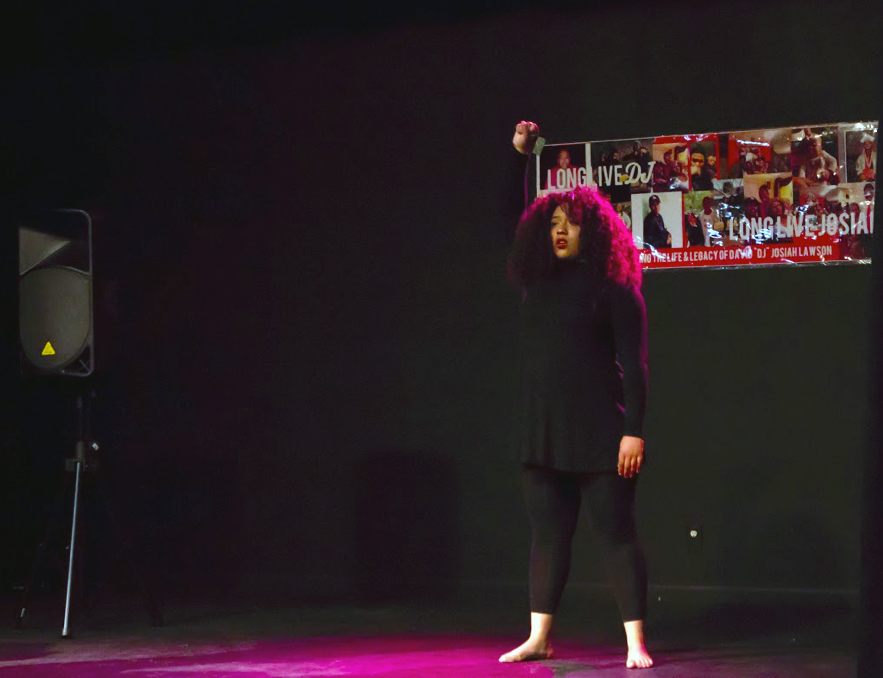
Individuals took the stage and told stories about Lawson’s life. Angel Sylva and dancer Ayanna Wilson came up stage and performed a powerful poem written by Sylva and an interpretive dance by Wilson.
“No matter what, we are going to thrive. No matter what, we are going to survive,” Sylva said.
Charmaine returned to the stage and began discussing the criminal aspect of her son’s case, saying she was pleased with former chief Chapman’s resignation. She also passionately thanked her lawyer and Tom Parker, who both made statements to the crowd.
Parker addressed his resignation and reassured that though he had officially resigned, he would still be present in attaining justice for Josiah.
“It should have been solved 30-45 days after this tragic incident happened,” Parker said.
Lorna Bryant returned to the stage and gave Charmaine Lawson praise in her efforts, and told her she was tied with her own mother as the best she had met.
Charmaine Lawson continues to drive every month from Southern California to Humboldt County seeking justice for her son’s unsolved murder.
Bryant announces a podcast, which will be going live the following day, April 16, on KHSU and can be streamed and shared anytime at KHSU.org.
Within a matter of hours of the release of the KHSU podcast with Tom Parker, the City of Arcata sent out a press release, also available on KHSU.
In a quote from the press release, the city stated, “The events of the last week have not deterred the investigative team from their ultimate purpose, which is to deliver a prosecutable case on behalf of David Josiah Lawson.”
As students, we have reasonable expectations of safety so we can focus on academic success without fear. This is not the reality for Humboldt State University students of color, both on campus and in the community. Both the Arcata Police Department and HSU have a long way to go to gain the trust of students of color.
The recent resignation of APD police chief Tom Chapman only worsens public confidence in local law enforcement.
A good deal of community members, including HSU students, are aware that 19-year-old HSU student David Josiah Lawson was murdered at an off-campus party in Arcata on April 15, 2017.
McKinleyville resident Kyle Zoellner was arrested at the scene of the crime, but released on May 5, 2017, due to lack of evidence connecting him to the murder.
There is a clear and serious disconnect within our community regarding racial diversity. Because Lawson is black and Zoellner is white, racial tensions tightened in the community. And as one group tries to engage with the community about race and public safety, others view such meetings as a way to promote white guilt.
To this day, no one is in custody of Lawson’s open homicide case.
Former FBI agent Tom Parker, who offered his investigative services on the Lawson case for free, resigned on April 9. According to the North Coast Journal, Parker said a lack of trust and cooperation by the APD led to his decision to resign.
“It was clear they were holding back things and not telling me the truth,” Parker said. “They had things going on and they wouldn’t tell me what they were.”
Chapman announced his resignation the following day without reason.
Following a press release by the City of Arcata announcing Chapman’s resignation, Arcata City manager Karen Diemer followed up with local media concerning both departures.
“[Chapman’s] decision does not stem from any one single thing,” Diemer said. “It is a combination of personal reasons and professional judgement on what he believes is best for the department and himself.”
In regards to the Lawson case, Diemer said the APD continues the investigation without Chapman.
“The investigative team for the David Josiah Lawson case is solidified with members of both the Arcata Police Department and District Attorney Investigators office,” Diemer said. “This team will stay in place and focused on the case through its completion.”
Parker’s claim that the APD withheld information raises major concerns. While it’s reasonable to conceal information from the public during an open investigation, why wasn’t the APD willing to cooperate with Parker?
Also suspicious is the timing of Chapman’s resignation. Why did Chapman resign the day after Parker terminated his contract with the APD and just five days before the one-year mark of Lawson’s death? Coincidence would be an unbelievable excuse.
While there’s only so much we can do in a case like this, we can demand more from from our law enforcement and other officials. Check with the City of Arcata, the Arcata Police Department and the Division of Student Affairs at HSU about the investigation. Don’t just do it once, but follow up as well.
We must stand in solidarity of not just the Lawson case, but for students of color. By remaining quiet, local law enforcement will prioritize less pressing issues and no progress will be made. We need to stand up for ourselves because the ones who should protect and serve us are stepping down.
Community members expressed frustration with the progress of the Lawson case at a community meeting held by Arcata City Council on Oct. 26.
The second of six planned community sessions was held to provide Lawson case updates and discuss student safety. Humboldt State University students and faculty and Arcata community members filled the D Street Neighborhood Center expecting answers.
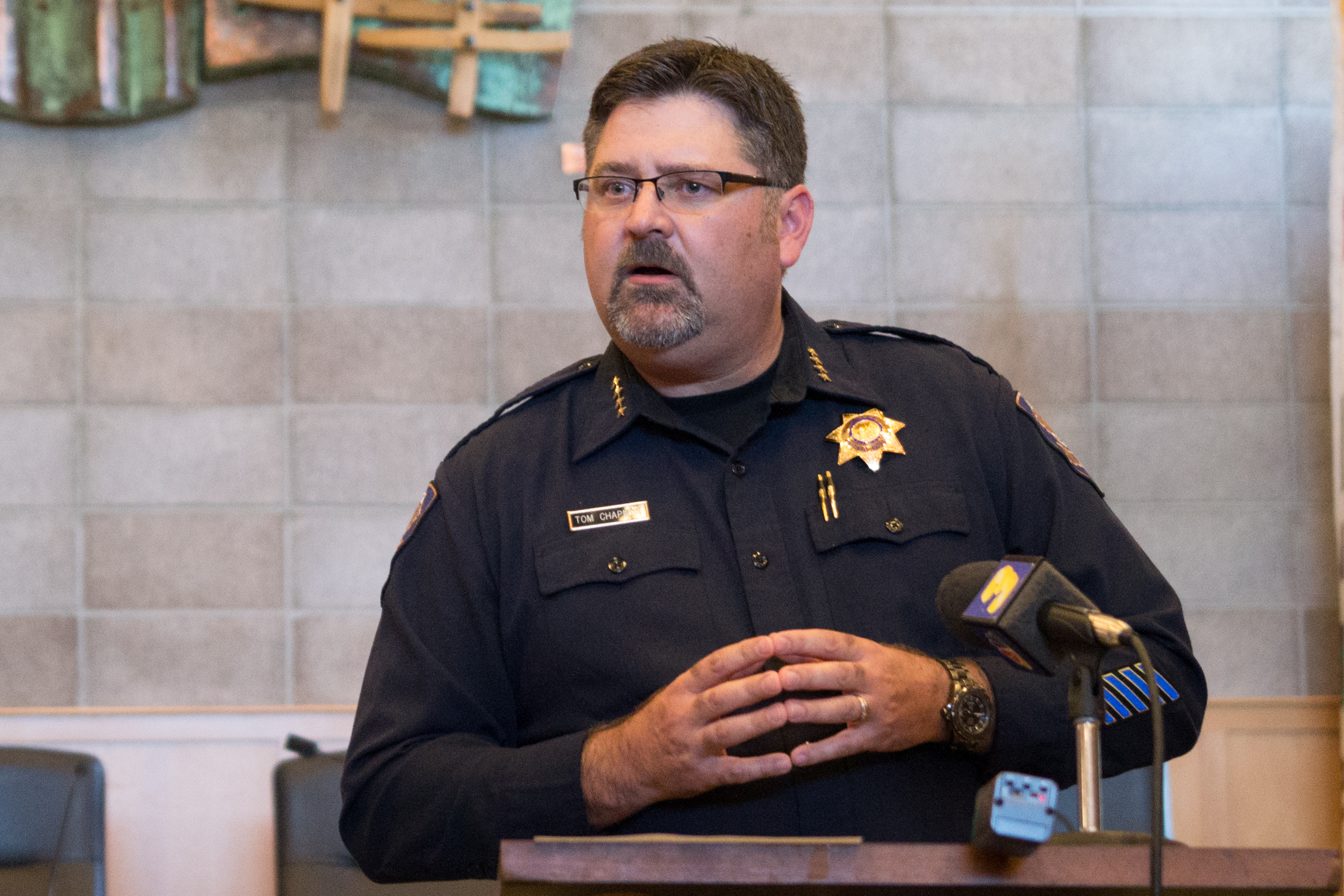
Arcata Police Department Chief, Tom Chapman gave updates on the Lawson murder case. Chief Chapman said APD has recruited Tom Parker, former FBI agent “to objectively review the case…considering the complexities and subtleties.”
Chapman said forensic evidence testing results have been received, yet APD is “a couple months out from ability to do testing on the last, outstanding piece of evidence.”
Limited information was provided due to the confidentiality of the case.
Community members urged for more transparency with the current process of the investigation and activism on behalf of the city.
Students of HSU voiced concerns of student safety both on campus and in the community.
Humboldt State University President, Lisa Rossbacher said “we [HSU] are working in conjunction with the city to ensure we have a safer environment for students.”
“By hearing stories of students feeling threatened… give city insights of how to provide safety for students.” Rossbacher said.
Chief Chapman urges students to come forward with any safety concerns, as well as suggestions for community involvement.
This website uses cookies to improve your experience. We'll assume you're ok with this, but you can opt-out if you wish. Cookie settingsACCEPT
Privacy & Cookies Policy
Privacy Overview
This website uses cookies to improve your experience while you navigate through the website. Out of these cookies, the cookies that are categorized as necessary are stored on your browser as they are essential for the working of basic functionalities of the website. We also use third-party cookies that help us analyze and understand how you use this website. These cookies will be stored in your browser only with your consent. You also have the option to opt-out of these cookies. But opting out of some of these cookies may have an effect on your browsing experience.
Necessary cookies are absolutely essential for the website to function properly. This category only includes cookies that ensures basic functionalities and security features of the website. These cookies do not store any personal information.
Any cookies that may not be particularly necessary for the website to function and is used specifically to collect user personal data via analytics, ads, other embedded contents are termed as non-necessary cookies. It is mandatory to procure user consent prior to running these cookies on your website.