The Lumberjack


Students Serving The Cal Poly Humboldt Campus and Community Since 1929

Tag: Surfing

  • Cal Poly Humboldt students ride the waves

    Cal Poly Humboldt students ride the waves

    by Savana Robinson

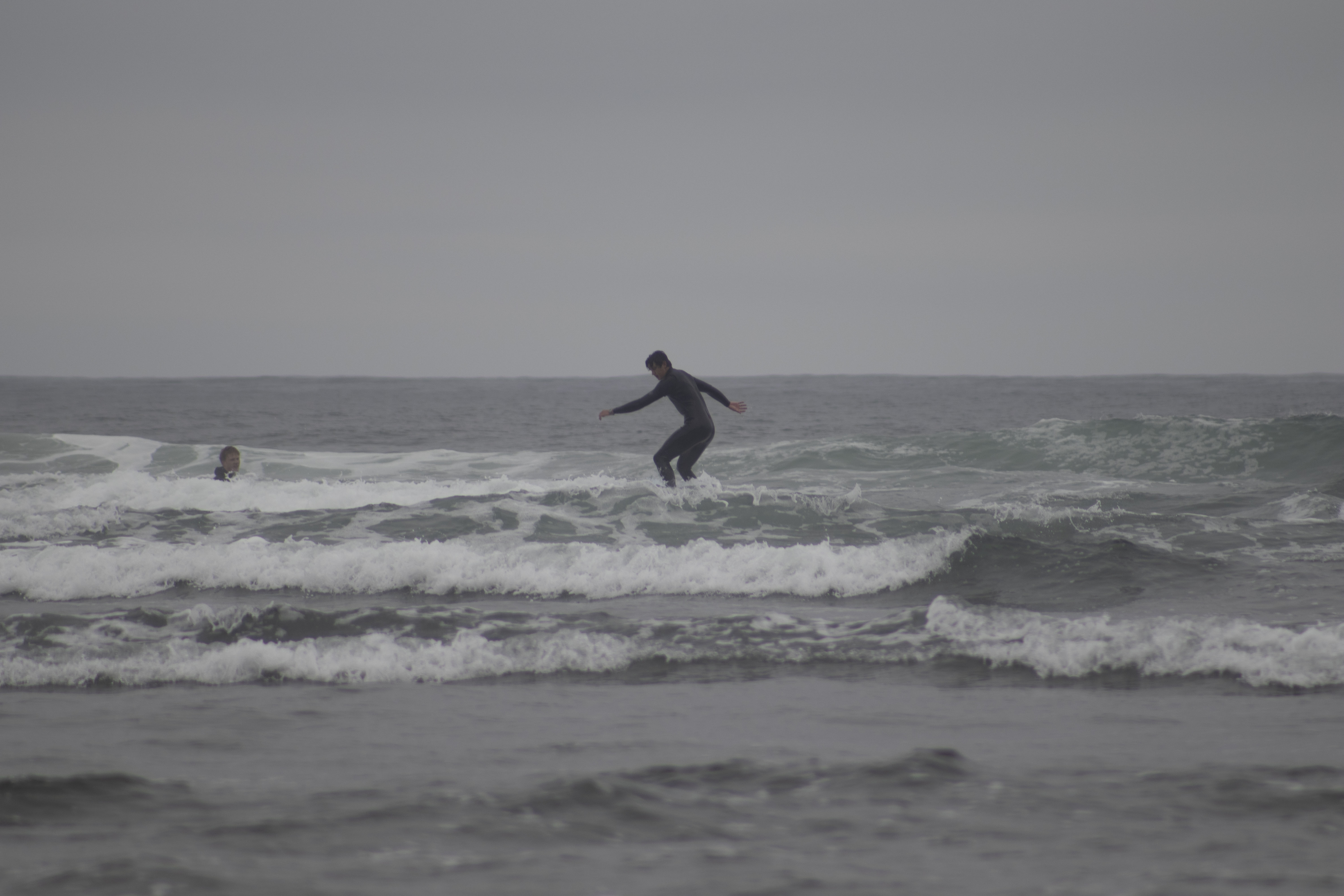
    It was an overcast morning at Moonstone Beach in Trinidad, California on the morning of Sept. 17. A group of Cal Poly Humboldt students ran out into the waves, surfboards under their arms and wetsuits on their bodies. For some, it was their first time surfing. For others, it was just one of many sessions. All of the students had signed up for the surf class through Center Activities, which also offers classes in climbing, backpacking, kayaking and more.

    The intro surfing class on Sept. 17 was Hannah Doran’s first surf lesson. At the beginning of the class break, she emerged from the water with a wide grin on her face and her hand displaying a shaka sign. Doran has previously surfed in New Hampshire, Maine and Scotland. Doran is a junior at Cal Poly Humboldt majoring in oceanography with a diving minor.

    “Surfing is cool and Humboldt’s the place to surf,” Doran said. “I’m having a great time.”

    She was most excited about getting more comfortable in the water, the Pacific specifically. She was also stoked to get solid advice from good instructors. Plus, $40 for five hours of instruction is a great price.

    Grady Hechd was the assistant instructor for the class. He has been working at Center Activities on campus since Feb. 2022.

    “It’s really rewarding watching people that have never surfed before get out there and watching them learn,” Hechd said. “It kind of clicks for some people.”

    Chris Isola, an environmental science transfer student, had gone surfing six times in Humboldt before the Sept. 17 class, but it was his first lesson. Throughout the lesson, Isola caught several waves with a smile.

    Alumna and lead instructor, Annalisa Rush, has been teaching surf lessons for over 25 years.

     “[The best part of the job is] sharing the joy of being on the ocean and watching people get super stoked on the thrill,” Rush said. 

  • A Surfer’s Tale: From Heaven to Quarantine

    A Surfer’s Tale: From Heaven to Quarantine

    An account of one HSU surfer’s last breath of clean, fresh air

    When Humboldt State University forestry major Gavin Schreiner set out on a 10-day surf trip over spring break, he had no clue what he would return to.

    Planned months in advance, Schreiner wasn’t going to let a virus stand in the way of his vacation. Packing over 50 pounds of food and supplies, he and a friend hiked nine miles up the coast of California. Schreiner stopped along the way to admire otters, countless shells and of course, to surf.

    “Surfing is obviously my favorite part and that’s the drive to go, but I love camping anyway,” Schreiner said. “I’m an avid backpacker. I’ve been through the Trinity Alps and definitely backpacked into SoCal a bunch.”

    A territorial surfer, Schreiner requested the location not be named, especially after this trip. Between spring break and COVID-19, the waves were packed.

    “It’s definitely my life path to surf until I die.”

    Gavin Schreiner

    “It was the most crowded anyone has ever seen that spot,” Schreiner said.

    Fortunately for those adventurous enough, there are nine miles of coast to surf on the way.

    “There’s the main surf spot out there, but there’s countless other waves along there,” Schreiner said. “It’s like a wave park. There’s so many different types of waves and different spots you can surf, and all offer different excitements.”

    Time between surf sessions consists of eating, sleeping and battling the elements to stay comfortable.

    “On the coast the weather changes super quick, so you have to be shedding layers, putting layers back on and also watching the waves 24/7 to make sure you get the best seshes [sessions] in,” Schreiner said.

    This is the longest trip Schreiner has taken so far, but he wants to break the record.

    “If we could spend a month, I would be in for that,” Schreiner said.

    At 20 years old, Schreiner has been surfing over half his life.

    “Surfing and the ocean is my number one priority,” Schreiner said. “It’s definitely my life path to surf until I die.”

    When he returned from his 10-day trip, Schreiner was greeted by strangers wearing masks and businesses with closed doors. The virus was not a factor in the trip. Surfers treated each other with the same brotherly love and competition. Schreiner would’ve stayed longer if it weren’t for school.

    “We kinda knew a little bit going into it that shit was going crazy,” Schreiner said. “The only thing we reconsidered was whether or not we could stay indefinitely and figure out a way to complete homework assignments out there.”

    Now that he’s back home, he tries to surf every day to take advantage of the opportunity.

    “I know a lot of my friends down south can’t surf because they’re closing the beaches, so I definitely feel super blessed to be up here right now,” Schreiner said. “I can follow social distancing and still go out every day.”

  • Sad excuse for the perfect wave

    Sad excuse for the perfect wave

    Dear wave pool manufacturers, what are you doing to surfing?

    The perfect wave has been the dream since early films like The Endless Summer and the 1987 classic North Shore. Many search years for this feeling that can only be provided by a combination of preparation and opportunity. This search is what hooks many to surfing because once you experience a great wave it only makes you want a better one.

    The search for perfection almost always ends with the most crucial aspect of surfing, disappointment. Disappointment is what keeps people addicted, please don’t misconstrue this as a negative. Wave pools eliminate frustration, great right?

    In some regards yes, but overall no, because wave pools make surfing redundant and generic. The perfect human-made wave doesn’t achieve the dream because you don’t have to search for it. There are now numerous wave pool facilities that exemplify the perfect wave, two of the most popular being the Kelly Slater wave pool and the Wavegarden facility in Texas.

    Wave pools have been around for 50 years. They’ve seen amateur surfing, professional surfing and may become the new Olympic playing field.

    Humboldt State freshman Julian Granados said wave pools might be helpful.

    “They could be good for practice because of how many perfect waves you can ride in a day,” Granados said.

    That’s true and could be why China has invested $30 million into a wave pool devoted to training for the 2020 Tokyo Olympics. So if these high priced wave pools are for Olympic training why should the average person care?

    HSU freshman Jason Bernardy said that wave pools are going to make surfing generic and boring to watch.

    “I don’t want to watch surfers make the same moves on the same wave so that they can get a score,” Bernardy said. “That’s a waste of everyone’s time.”

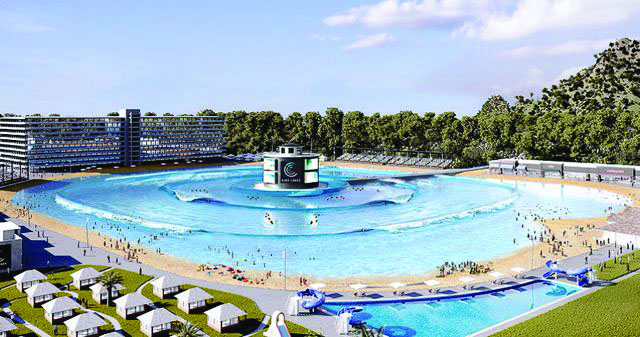
    Retired Australian surfer Mark Occhilupo set out to get people to care by creating his version of the wave pool, the Surf Lake. The Surf Lake is a human-made lake that measures about 400 x 400 yards with a literal gigantic upside down plunger in the center.

    When triggered, the boat-sized flipped plunger lets off a big cloud of black smoke and whistles like a steel engine. Like a horror film the plunger emerges from the water and with another ear-piercing cry it submerges, sending waves in four directions.

    The Surf Lake’s concrete bottom then allows the wave to break according to the contour. With four different breaks around the Surf Lake many can surf and in Occhilupo eyes many can pay. Unlike Slater’s ten year dream of creating the perfect wave, Occhilupo has invested in building a resort with full dining, accommodations and excellent surf.

    The real concern is the amount of water the wave pools use. Slater’s Surf Ranch in Leemore uses about 8,000 gallons of fresh water per day. The Wave Garden in Australia needs 4.4 million gallons of water per year to replenish what’s lost to evaporation.

    That’s a lot of fresh water being used and wasted. The amount of freshwater used is the primary concern but not too far behind is the Surf Ranch’s 70 ton hydrofoil that travels at 20 plus mph to create enough energy to make a wave.

    This hydrofoil is unnerving because there is no life expectancy and no plan for how they will dispose of it when there is a need for a new foil. The Surf Ranch, Wave Garden and most wave pools are keeping their facts and environmental plans secret to the public, which only makes the mind wonder and expect the worst.

    Many environmental mysteries are surrounding these overpriced distractions. Will wave pools distract us from real ecological concerns? Surfers and ocean-goers make up a large portion of the ocean and climate change activists simply because of their demographic.

    Those who live around and enjoy the ocean are the ones who care about the ocean and are the ones to want to preserve it the most. Wave pools counter that. What the wave pool does is distract activists and people with a platform who care about the ocean by telling them they can surf a perfect freshwater wave.

    Wave pool manufacturers may not realize it, but they’re subliminally showing people that they don’t need the ocean to enjoy surfing, thus taking away what makes surfing great.

    With so many real problems surrounding climate change, rising sea levels and a lack of fresh water it makes one wonder why we would be so entranced and concerned with creating an artificial wave that only contributes to making those three problems worse. We may like them now but soon they will be the downfall of what’s so addicting about surfing, the disappointment.

  • How to become a Humboldt surfer in 5 “easy” steps

    How to become a Humboldt surfer in 5 “easy” steps

    Once you’ve completed all the steps you will truly understand what it’s like to give up your life to the never-ending pursuit for something that could be better.

    In five easy steps, you can live out your life long fantasy of becoming a surfer in Humboldt County. Before devoting your life to these exaggerated guidelines, remember that surfing is based purely around enjoyment, and that everyone has their own definition of surfing because everyone surfs for their own reasons.

    Surfing has a long history, so please always remember to be respectful of the history, the ocean and to all others enjoying it. Let us begin.

    Step 1

    First head to Craigslist and look for an old surfboard and wetsuit, preferably sold together by a sketchy, but nice mid-50’s man named Rusty who came up to Humboldt 20 years ago to, as he says, “Escape the so-cal crowd bro.”

    Get ready to haggle, because there’s no way you’re spending over $80 for what he calls a “vintage” wetsuit and his magic wand from the 80s. Once the purchase is complete, he will enrich you with far-fetched stories of 25 foot Camel Rock, and when he paddled the jetty alone when it was 60 feet. Make sure to smile, nod and be respectful, because you have just been privileged enough to have a conversation with your future self.

    Step 2

    The next step is to convert your life to surfing. Do this by purchasing roof racks for your car, start wearing sunglasses everywhere you go, stop cutting your hair and most importantly, change up your whole wardrobe to surf attire.

    If you manage to come out looking anything like Jeff Spicoli from “Fast Times at Ridgemont High,” you’re in the clear, ready to mingle and surf where you like.

    Step 3

    You’re going to need to find a friend or a local who surfs. So for the third step, you should get back in contact with Ol’ Rusty and see if he has any buddies who would be able to show you around.

    Of course, he won’t, because he may have never surfed in the first place. So move on and head to Moonstone to look for some friends. You’re looking for someone your age or a little older who has experience.

    Finding someone with the ability to shame you into constantly trying to surf better is a plus. They should be, for lack of a better word, an asshole. He, or she, will become your surfing confidant, as they will know how little you know about surfing while promoting you as someone who’s been surfing their whole life. Once you find your Bodhi from Point Break, you will then be able to experience the big storm.

    Step 4

    This step is all about patience. You must stick with it. Just because people told you surfing is fun and easy doesn’t mean you’re going to be good at it. Surfing is something many devote their lives to, not as a profession, but for the never-ending search of the same feeling.

    So make sure to know your place and don’t screw it up for everybody else. Unless you’re a freak, you’re going to suck at first. Stay calm, take advice, and be prepared to embarrass yourself. It’s going to take at least a year of surfing once or twice a week for you not to suck and feel embarrassed. So embrace the year of suck and gather knowledge about spots, surfboards, sneaker waves and the Humboldt coastline.

    Always be on the lookout for more old surfboards and wetsuits. Keep one thing in mind during this step. You should go on every wave that you can no matter the size or shape, go, as long as you’re not cutting someone off.

    Pull into closeouts, throw yourself over the falls, go through the washing machine and meet Johnny hold down. Try and have fun doing it because more waves always equal more practice. Just make sure you’re safe and not alone, like Rusty when he paddled 45 foot Camel Rock alone back in ‘85.

    Step 5

    The final step is to buy an 80s conversion van during your senior year and drop out a semester before graduation, because hey, you can always go back when there’s no surf.

    Only once you obtain the van will you truly understand what it means to be a surfer in Humboldt County. The world is now yours. You’re free to roam and surf where you like with the ability to tell others you really have goals, knowing you can go back to school for a semester and graduate.

    Surfing is a beautiful activity, hobby, sport or whatever you want to call it. Please remember everyone starts surfing at different skill levels and takes their necessary steps to get better, so who’s to say that these five steps couldn’t work for you.
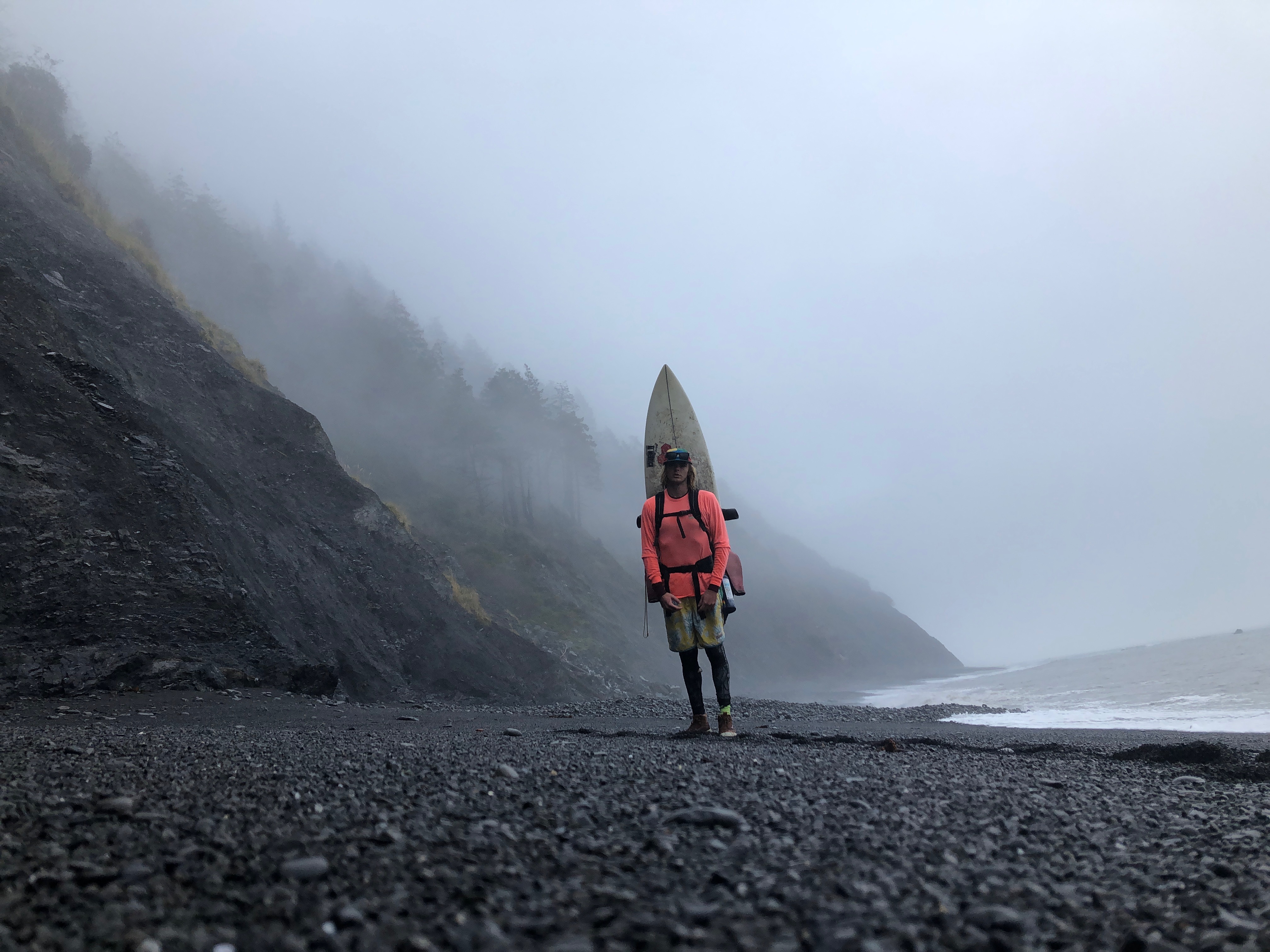
  • OPINION: Surfing isn’t an Olympic sport for a reason

    OPINION: Surfing isn’t an Olympic sport for a reason

    Let’s get ready for the inevitable disaster that will be Olympic surfing

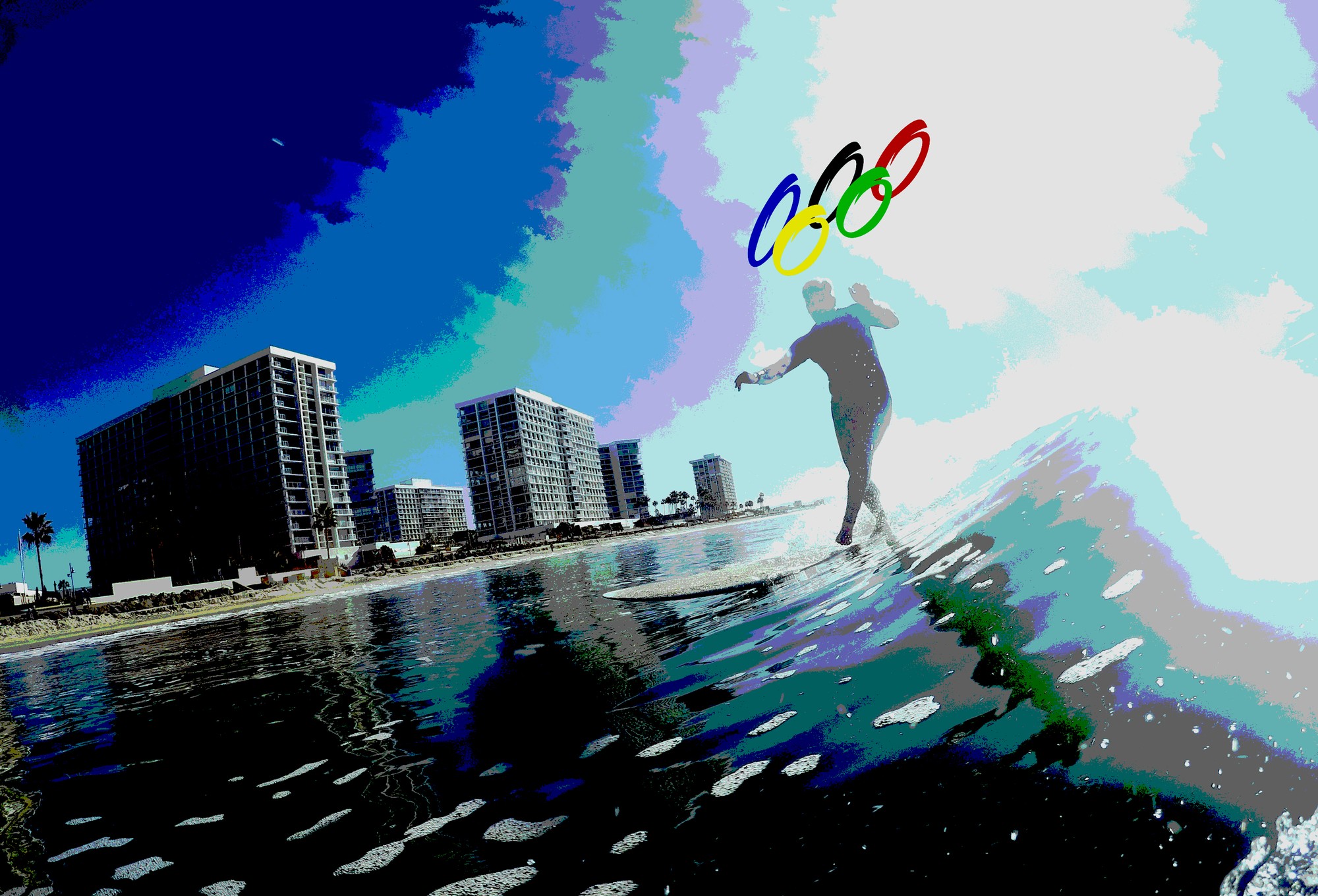
    Surfing is set to make it’s debut as an Olympic sport in the 2020 Tokyo summer games. Many are excited, but what I’m anticipating is a failure that compares to past Olympic blunders like Tug Of War (1900-1920) and Hot Air Ballooning (1900). Why, you ask? Because surfing is a hobby. Not a sport, and certainly not an Olympic sport.

    In Sep. 2015 the IOC (International Olympic Committee) received a proposal to add a number of events, including surfing to the 2020 Tokyo Olympics. A year later during the 129th session of the IOC a unanimous decision was reached to include surfing. With four years to spare the IOC was confident. Now, with a year remaining and the format still not finalized, it shows only surfers should hold surfing competitions.

    I present one question to the 90 IOC members. Have you ever watched a surfing competition? Because if one of the IOC members had, they’d know that surfing is one of, if not the most boring sport to watch live. Twenty minute videos of epic, mesmerizing surfing is filmed over months and doesn’t show the thousands of other waves surfed. That surfing can’t, and won’t be produced in Tokyo because the geniuses at the IOC are expecting video worthy, once in a lifetime waves to be produced twice in a matter of 25 minutes. Absurd.

    The event will include just 20 men, and 20 women competing respectively. Begging the question, who from the 32 men and 22 women on World Surf League (WSL) will be selected? Well, the all-respected IOC has decided to cherry pick the top 10 men, and top eight women at the end of the 2019 season and gift them a spot in Tokyo. Guess what IOC, all you’re doing is helping out America, Australia and Brazil. If 2019 is like 2018, those will be the only countries represented.

    HSU junior and surfer Aaron Friedley plans on watching the 2020 Olympics.

    “[I’m] excited to watch surfing in the Olympics, but if some countries aren’t represented that’s not fair,” Friedley said.

    Here’s a solution, just hold a competition between those three countries and call it a day. The final 20 Olympians will be decided in sub-par surf at the Pan-Am Surfing games, and at two ISA Surfing events this year to decide who will compete against the top ten men, top eight women and two Japanese representatives.

    The two day Olympic competition has been given a 16-day window to wait for the best surf, but what if good surf never comes?

    HSU senior and Surfrider Club president, Jeff Knapp also confirmed that surfing competitions are almost always held at crappy beach breaks.

    “You can’t rely on the ocean for good conditions,” Knapp said.

    This forces surfers to paddle for every wave, and surf like they’re stomping out a fire. The competition format has never represented true surfing, showing that it’s a hobby. To enforce this, the Olympic competition will be held at Shidashita Beach because of its “consistent summer trend.” Keyword trend, because it’s impossible to predict surf four years in the future. Shidashita, located 40 miles outside of Tokyo, is a shifty sand bottom beach break. Shifty because sand moves into unpredictable bars. These bars, when organized, produce great surf, but when unorganized are board-breaking machines. Go Shidashita!!!

    The IOC began disaster preparation in 2016 when partnering with the WSL and Kelly Slater to create a wave pool in Japan. This precautionary pool has remained a secret, will be done by 2020, and is supposedly not seeing any Olympic surfing. Side note, the cost of constructing a wave pool is upward of $30 million dollars, a pricey precaution for an event based off an ocean that’s free.

    HSU graduate student Taylor Team addressed wave pools, said that surfing isn’t for controlled environments.

    “You need to be at the mercy of the elements, not a pool,” Team said.

    But I’ll spare you the wave pool rant, because it requires elaboration and critical focus to see past the roller coaster bullshit. Bottom line is the IOC has no idea what they are doing when it comes to surfing.

    For consideration: I surf, and I believe that surfing is a hobby. There are numerous types of surfboards that all pertain to different wave shapes and speeds. To say you can only be judged if you ride one type of surfboard, on one type of wave, in one style, doesn’t make any sense. The IOC is putting surfing in a box by promoting an inaccurate representation of surfing that only a handful of people can do, and don’t realize that surfing can’t be judged over 25 minutes.

  • Surfing giants in Humboldt

    Surfing giants in Humboldt

    Waves upwards of 20 feet tossed and turned against the Humboldt coastline this week.

    According to the National Weather Service Marine Forecast, a small craft advisory is also in effect until Sunday afternoon. While the first big swells of the season are already arriving, the winter swell season has merely just begun.

    With more swells and even bigger waves on the way this season, it begs the question:

    How do such massive waves come to be?

    According to the National Oceanic and Atmospheric Administration (NOAA), water does not actually travel in waves. Waves are merely the transfer of energy, moving from one neighboring water molecule to the next.

    The NOAA says that waves are most commonly generated by wind. Wind-driven waves, or surface waves, start out when changes in temperature produce a change in air pressure. Air then follows its natural path, moving from an area of high pressure to an area of low pressure. This movement is referred to as wind.

    As the wind blows across the ocean’s surface, it generates ripples. This happens in a similar way to how ripples are created when you blow over the surface of a cup of water. These ripples increase in intensity to eventually become waves.

    What determines the size of a wave?

    The NOAA says that the size of these waves are determined by three main factors:

    Wind Speed: How fast the wind is blowing.

    Wind Duration: How long the wind blows.

    Fetch: Distance over water that the wind blows in a single direction.

    The biggest waves occur when wind speed is at its highest, wind duration is at its longest and when fetch is long or unlimited.

    There are several other factors that can affect wave size in a certain area, some of those factors include:

    Swell Direction: The direction in which the swell originated from.

    Ocean Floor Topography: Forms or physical features on the ocean floor.

    Tide: Rising and falling tides are caused by a gravitational attraction between the earth, moon and the sun.

    Why are these big waves in Humboldt?

    “It is because the storms that come out of the North Pacific are incredibly powerful,” said Dr. Jeffry Borgeld, Oceanography professor at HSU who specializes in Geological Oceanography. These storms “can be as energetic as a tropical storm, typhoon or a hurricane.”

    Despite the cold, powerful and often unforgiving conditions, there are a few individuals that can be seen bobbing amidst the chaos and gliding over the massive surf.

    HSU psychology student William Doudna is one of them.

    “There’s something very cleansing about surfing that if i don’t do it, i just don’t feel comfortable in my own skin,” said Doudna. “I feel like a better person every time I come out of the water.”

    Video by Michelle Meyers.