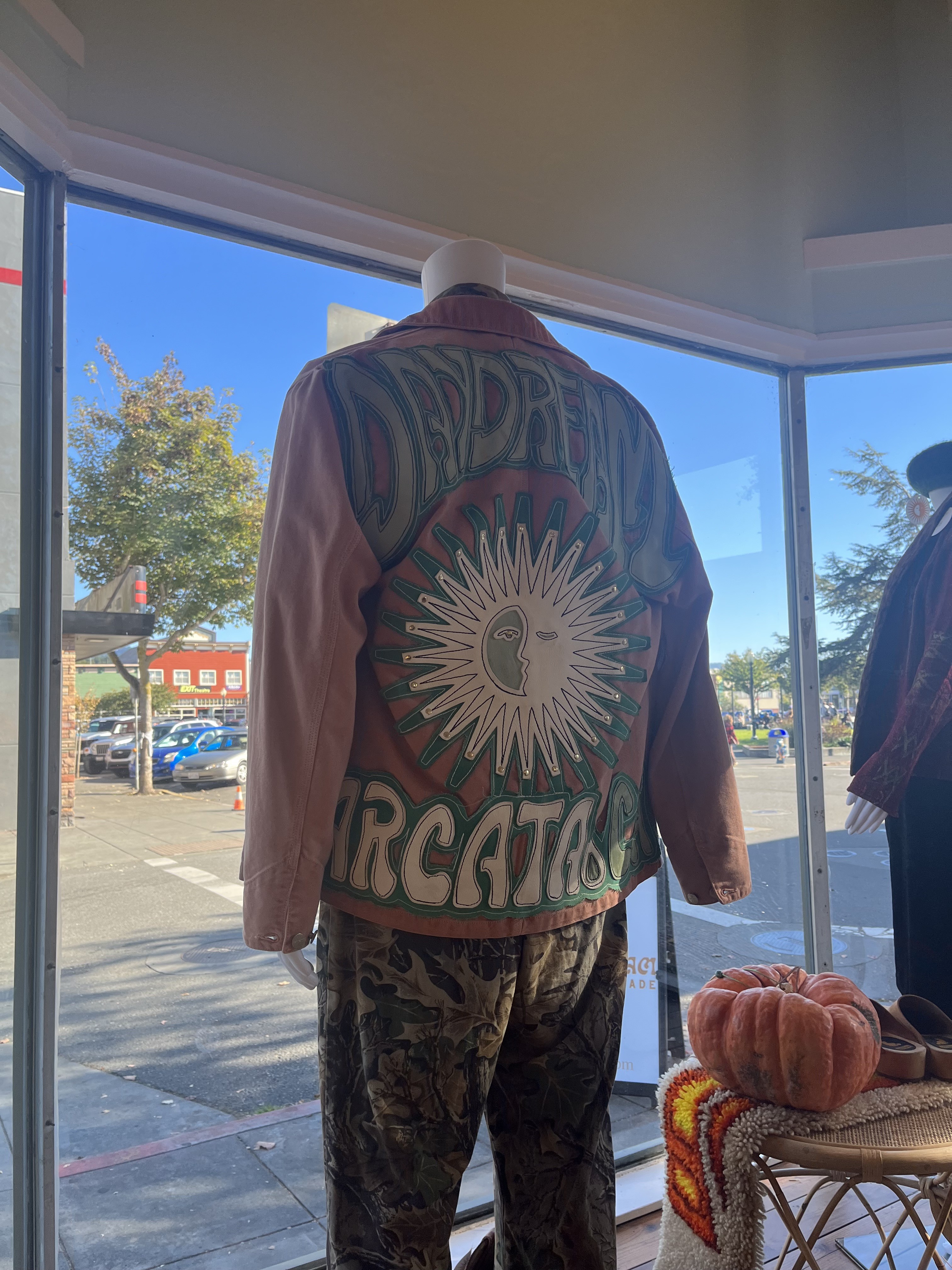
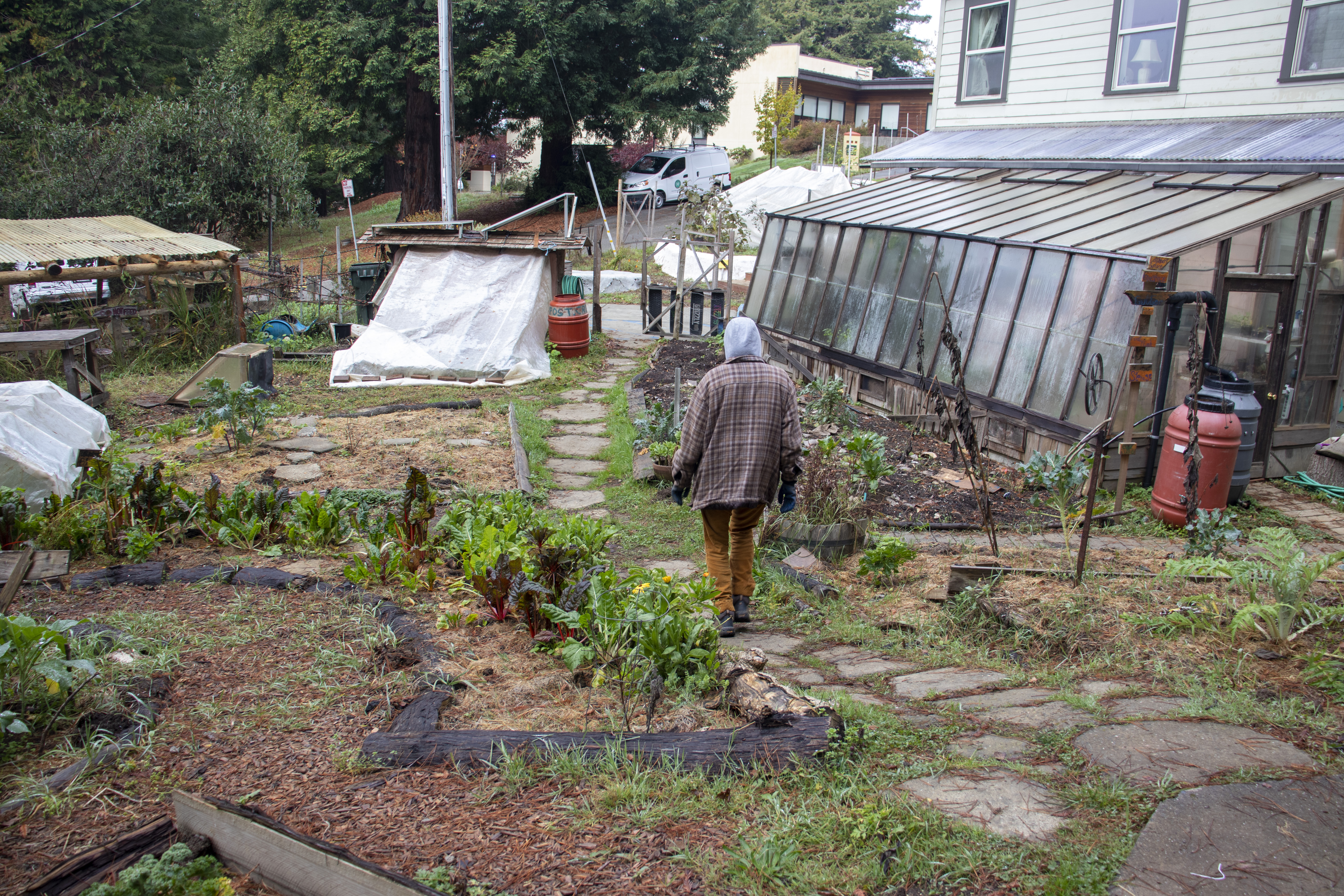
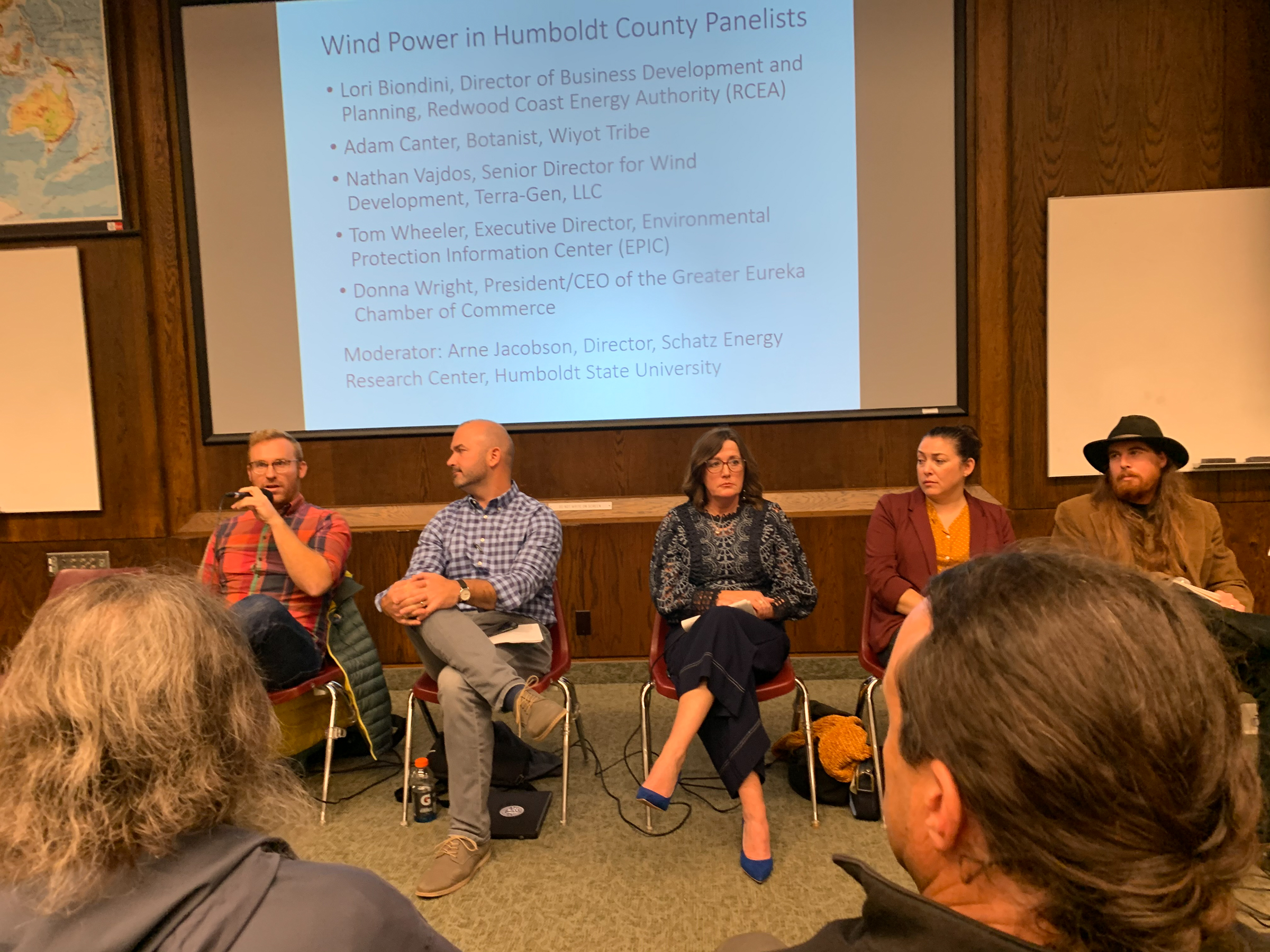
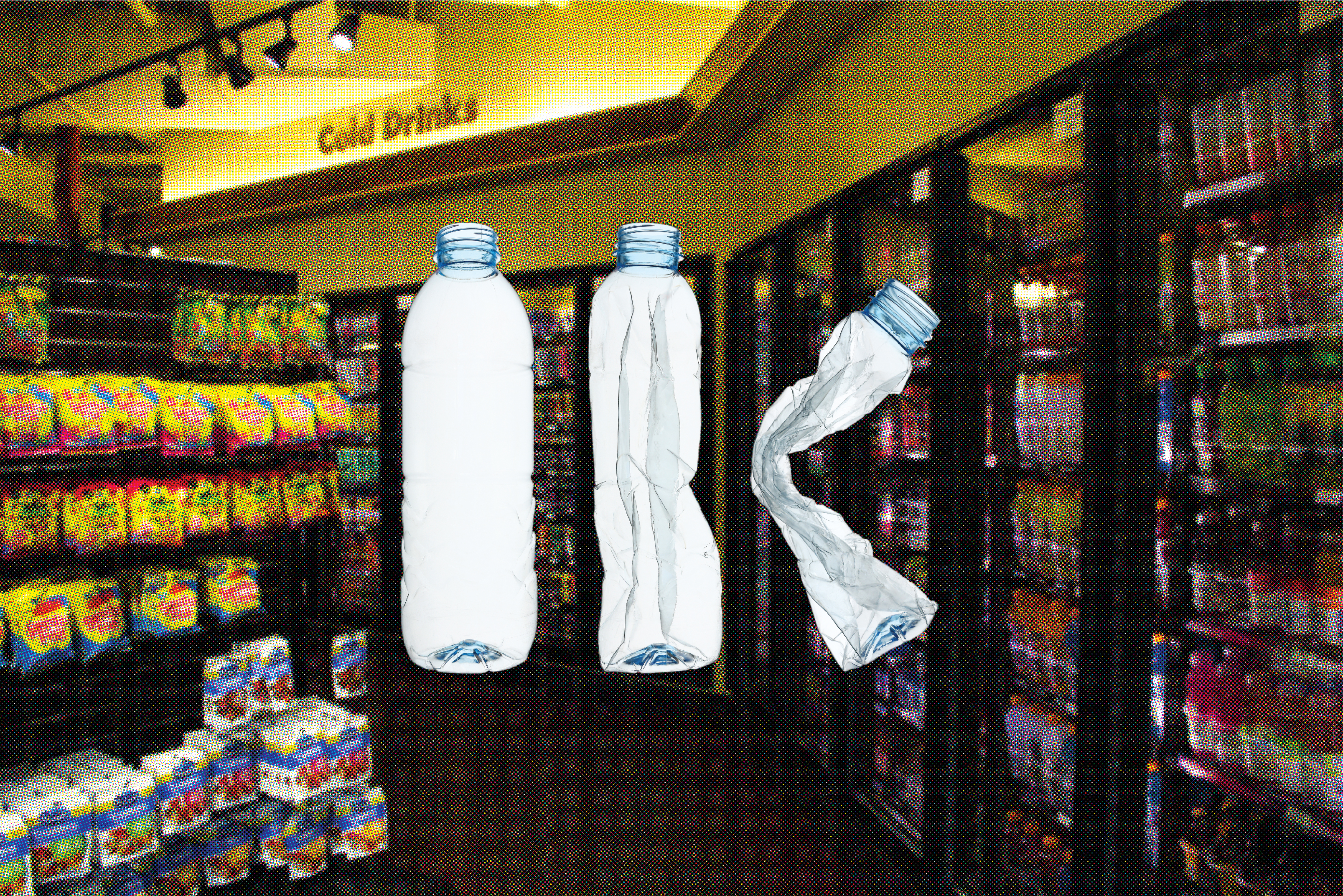
Thrifting for second-hand clothing has become a hobby and part of the culture for many Cal Poly Humboldt students, making the community an eclectic and stylish one. This combats the destructive industry of fast fashion. At Arcata’s new thrift store, Daydream, you can buy high-quality clothing and make money by clearing out your own closet.
Daydream, is a new buy-sell-trade second-hand clothing store on the corner of 9th and H St. across from the Arcata Plaza. The store provides a space for students and locals to make some cash while discovering a new sense of style. The warm-toned inviting store opened two months ago and is one of three local second-hand clothing stores co-owned by Jayna Nix and Ben Blair. Open seven days a week from noon to 6 p.m., you can go in to buy, sell, or trade any time before 5 p.m. and walk away the same day with cash or store credit.
What makes Daydream unique in comparison to the many other second-hand stores in the area is that they buy everything from the public and provide compensation either with store credit or cash on the spot. This process can be quite quick and is guaranteed to be completed within a single day. The store’s warm, clean, and inviting energy is represented in its curated racks of vintage clothing, rows of used trending shoes, and a wall filled with scented candles and accessories. Styles range from cottage-core to street style to retro and everything in between.
Photo by Zack Mink. Daydream boasts a collection of cute and colorful vintage.
Unlike the duo’s other stores, Redwood Retro and Modern Finds, both in Eureka, Daydream brings a focus to the art, styling, and sustainability of fashionable clothes. Rather than organizing the racks by gender, they are organized by size, style, and even season. This not only represents their push for gender and size inclusivity, but it encourages buyers to be more intentional and thoughtful when purchasing seasonal clothes that will last a lifetime.
The buy-sell-trade business model is also unique as the entire store relies on customers and locals bringing in their clothing to exchange.
“It creates a community hub where people come in, hang out while we go through their clothes and shop,” Nix said.
Daydream’s high standards for buying and trading clothing does highlight a downside of this model, which is that the sizing availability takes a hit when locals don’t have petite or plus-size clothes to bring in.
“We can’t control what people bring to us or the sizes we have… although we want to have more size inclusivity,” Nix said. With this being said, they are always looking for more variety in the sizes that are being traded and sold.
Despite facing challenges curating wide size ranges, Nix’s goal to recycle as much high-quality, sustainable clothing as possible is easily attainable with their buying standards and community support.
“Part of our mission is sustainability and recycling clothing. We try not to accept more
of the fast fashion brands and the buy-sell-trade model creates a space where we can recycle… what we already have,” said Nix.
Rather than buying clothes from fast fashion brands or selling old heirlooms to help partially cover monthly bills, Daydream is the place for students and Arcata locals to step up their style game, be financially responsible in a struggling economy, and stay committed to having a low impact on the environment.
It’s no secret that transportation is a big issue here at Cal Poly Humboldt. With almost 6,000 students currently enrolled and only 2,137 parking spaces, parking is the least fun game of musical chairs played daily by students. Despite past assurances of more parking spaces in the future, students are left to maneuver the measly parking available until then. Some students will graduate long before additional parking is finalized.
Morgan King, chair of the Sustainable Transportation Committee and a Climate Action Analyst in the Office of Sustainability, has been working on programs and initiatives to provide a variety of transportation options to, from and around campus. At a time when parking is a limited commodity, King is striving to offer students equitable options.
“Our focus is on transportation equity,” King said. “We really need to look at how we can ensure that everyone has access to the same levels of service, regardless if they’re taking a bus, walking or riding a bike.”
Not only does sustainable transportation operate to provide non-single occupancy vehicle (SOV) alternatives, they also focus on making these methods of transportation as sustainable as possible. Cal Poly Humboldt has established a reputation as an eco-friendly university, releasing two Climate Action Plans (CAP) since 2017. These plans are drafted with the intent of reducing emissions across campus and achieving carbon neutrality by 2045, essentially rendering the school free of fossil fuel use and conceivably running on sustainable, clean energy.
Vehicle commuting accounts for 16.9% of greenhouse gas emissions at Cal Poly Humboldt, measuring at 2,323 metric tons of carbon dioxide equivalent emissions. According to the most recent CAP, SOV trips account for the largest part of commuter emissions.
“[Administrators] are saying that they want to be a green campus,” said Zachary Meyer, student Transportation Specialist in the Office of Sustainability. “Well, one of the biggest sources of emissions is transportation emissions.”
Ranging from a Ride Share program that matches up students to carpool with guaranteed preferential parking to the simple but effective Jack Pass that provides unlimited free bus rides during the semester, there are a myriad of options available to students. King urged students to take advantage of the Jack Pass in particular, as the pricing is already built into the tuition students are paying. One service to take note of is the Lumberjack Express, which launched in early October. The new bus system offers free rides to students and is designed specifically to get around campus, only stopping at campus and campus-adjacent locations.
A large portion of sustainable transportation focuses on biking. Options offered to students include the Bike Share program, which provides low-cost bicycle rentals for conveniently getting around campus, as well as the Bicycle Learning Center (BLC), a student-run bicycle shop located under the West Gym stairwell by the Recreation and Wellness Center. The BLC offers free bicycle maintenance and bike parts, plus it raffles away free bikes on its Instagram. Unfortunately, bike theft remains a persistent problem for cyclists on campus.
“The immediate thing I’d suggest is registering your bike with the UPD because they can get you a free new lock,” said Adam Wood, student co-director for the BLC. “The free lock is a much better option than the more common braided steel cable lock, which can be cut through real quick.”
Luckily, through a student proposal approved by the Humboldt Energy Independence Fund (HEIF) and awarded $120K in 2021, there is a secure, weatherproof bike structure currently being designed for on-campus use in the near future.
Some issues impeding progress include funding and outreach for visibility to students. King mentioned that students often aren’t aware of the options available to them. Often, news and events are relegated to the end of department newsletters. The annual transportation fair used to be mandatory for new students as part of orientation, but King said they’ve lost administrative support for that.
“It needs to be constantly communicated,” King said. “It can’t only come out of my office. We’re trying to work on that, but there’s a lot of work to be done.”
“I think there could definitely be more funding towards [sustainable transportation],” Meyer said. “I personally don’t know what my budget is, what I can do fiscally. I’ve switched my approach this semester to do more education and event organizing to increase awareness and outreach.”
Meyer and King both also noted how hard it can be to push sustainable means of transportation when cars are so central to society.
“We live in a car-centric paradigm where people have grown up always respecting the car,” Meyer said. “The thing in your pocket to identify yourself is your driver’s license. That’s how ingrained driving is in our culture.”
Because of the need for the campus to become more sustainable, King said additional parking structures are not the priority.
There’s no telling whether the university would be able to substantially ease parking difficulties, including the pricey permits, at any point in the future, as the school aims to reach an estimated enrollment of 11,000 students by 2028. This sentiment was echoed at a mid-October meeting for the Sustainable Transportation Committee.
“Building more parking is just going to make parking cost more,” said Hank Kaplan, Transportation Analyst for the CSU system.
Major changes are being proposed for the university. One proposal considered is for a shuttle system designed to transport students from school to offsite parking located away from the campus. Another such change is to “pedestrianize” the streets, closing the core of the campus off to cars, thereby making it safer for pedestrians and more encouraging for non-SOV transportation.
“I’d like to see no cars in the center of campus,” Meyer said. “We have people getting hit by cars, and it’s pretty unsafe to walk and bike around that.”
Most of these radical changes are some years off, so in the meantime, King encourages students to make use of the alternative means of transportation available to them.
“It costs a lot of money to own, gas up and park a car – money that many of our students do not have,” King said. “And the single occupant vehicle is a major contributor to the global climate crisis affecting us all. But riding the bus with JackPass is free! Walking is free! Riding a bike is healthy and non-polluting! Carpooling is a great way to meet new people and save on gas and parking! So, if you are only driving alone to campus, try to walk, roll or bus one day a week.”
I see it almost everywhere – for nearly everything I buy, there’s a product that is packaged in some sort of brown paper or clear plastic container, with green-colored words saying something like “eco-friendly” or “all natural.” While the thought that more people are willing to buy sustainable-minded products is nice, a majority of these claims are mostly bogus. I see them as nothing more than huge, carbon-producing and trash-making companies looking to capitalize on growing consumer demand with fancy buzzwords and aesthetically pleasing packaging.
Sadly, a majority of these claims of environmental responsibility are nothing more than greenwashing; companies trying to appeal to consumers without actually providing any proof of sustainability, or doing the complete opposite of what they claim to value.
A few years ago, H&M launched their “Conscious Collection,” making claims that their new line of clothes offers recycled materials, are less resource intensive and are ethically made. Not only were these claims vague and had given little actual evidence, I find it difficult to believe that a huge company in the fast fashion industry – one of the largest polluting industries – would actually be doing all that good for the environment. Even if the line was found to be truly sustainable, what about all the rest of H&M’s clothing that they produce? It’s no surprise to me that the company has seen numerous lawsuits over the years about their claims.
On top of being fed unsubstantiated promises, I’m simply tired of the notion that it is all on us individuals to achieve sustainability. It’s like we can never escape the endless lecturing for us people to calculate our carbon footprint and to do our part to save the planet. Meanwhile giant companies get to endlessly extract and pollute.
Some companies even go so far as to make apps to help people track their C02 emissions. Back in 2020, Launchpad announced their new VYVE app, which allows people to directly calculate how much emissions their travels create. Who is Launchpad you may ask? It’s a subsidiary of none other than BP, one of the world’s largest oil and gas companies.
BP, like other major oil companies, have launched campaigns claiming to focus on sustainability, some even going as far as to say that they’re working towards a “low carbon future.” These campaigns essentially make appealing claims while ignoring the elephant in the room. These companies promote their false narrative of sustainability, meanwhile continuing to profit off mass resource extraction that is the largest contributor to ecological destruction.
On top of simply spreading misleading information about themselves, these companies are doing even more harm to people and the environment. While working to make themselves look good to an increasing amount of people concerned about the environment, they are continuing their irresponsible practices. It’s simply exhausting.
For Amber Chung, sustainability is everything. As an environmental science management major and the student leader of Cal Poly Humboldt’s Green Campus Team, Chung says she has been in love with the environment since she was a kid.
She said watching and reading “The Lorax” by Dr. Seuss opened her eyes as a child to the need for sustainability.
“I really saw for the first time like wow, like what we do literally does matter. It can change the whole environment like it did there,” Chung said. “Now that I’ve gotten older, I’ve realized that sustainability is such a wide concept, it has to be in everything for everything else to work. If you don’t center sustainability, you’re not really going to get anywhere with anything else, because it’s not going to last long term.”
As a branch of the Office of Sustainability, the Green Campus Team is an organization that consists of five student employees and one staff advisor. Their goal is to encourage everyone on campus to center sustainability in everything they do.
The team provides educational materials and advice for groups on campus on how to be as sustainable as possible while still having fun. In the coming months the team will hold a “Trashion” show where students can create outfits out of trash or other items that were about to be thrown away and a “Weigh the Waste” event to educate the campus community about the effects of food waste.
This semester the Green Campus Team will also relaunch the Green Workplace Assessment Program, including a new sub-program called the Peer To Peer Education Program. Advocates will talk to campus departments and educate them on sustainable practices so they can properly educate their peers.
They will also launch a student version of this program called Equal Reps, recruiting students that live on campus to educate others about living green.
“It would be great if students, before doing any sort of action, just considered the question and the idea of ‘how can what I’m doing be more sustainable?’” Chung said. “How can I do this in a different way?”
Chung said this could mean many different things and will look different for everyone.
“It could mean completely changing what you’re doing. It could be evaluating if you have the capacity to do more sustainable actions because sometimes there just simply isn’t a possibility with other things you have going on,” Chung said.
The Waste Reduction and Resource Awareness Program has brought back the paper towel composting project this semester. WRRAP also gives out composting buckets for on-campus residents, as well as finished compost to anyone who wants it.
“Students should keep an eye out for signs in the restrooms marking which bin is for paper towels and which is for other waste,” WRRAP said in an email to the Lumberjack. “This is a great help when we go to do our final sorting before placing the paper towels in the on-campus industrial composter.”
Chung explained that when planning events the campus should account for sustainability rather than making adjustments later. Chung suggested that the administration should foster an open dialogue with the Office of Sustainability to ensure that they are making the best decisions for the school long-term.
“I think continuing to make sure that [the administration is] keeping sustainability at a forefront rather than an afterthought would be really important for the school,” Chung said. “Especially as we’re making so many big decisions with the new Cal Poly change.”
The Green Campus Team has compiled the Zero Waste Event Certification Checklist of different things to keep in mind when planning an event on campus. The checklist includes helpful sustainability tips, like serving food buffet style in reusable containers and ensuring promotional or advertising materials and decorations are reusable, recyclable or compostable.
The Green Campus Team is currently looking for another student employee as well as experiential interns and volunteers. To learn more follow the Green Campus Team on Instagram @greencampus_humboldt.
HSU students continue to pursue a zero waste lifestyle despite the additional obstacles presented by COVID-19
Humboldt State University is synonymous with an eco-friendly, green lifestyle. This year, student sustainability values have been put to the test with a nationwide shutdown and a closed campus.
Sage Palacils, freshman at HSU, was raised in a household that emphasized the importance of sustainability and has been living eco-consciously their entire life.
“I’ve been practicing [sustainability] since I was young and the practice, more than the reasons are ingrained in me,” Palacils said. “I grew up really poor and we really didn’t have money to keep replacing things or not be sustainable.”
Since the pandemic began, Palacils’ carbon footprint has been significantly reduced, after they moved to Humboldt and stopped driving. Palacils also found they don’t miss shopping in the massive malls back home in Los Angeles, because they don’t see a need to be flashy this year.
“Since I don’t go out much, I don’t really buy clothes,” Palacils said. “I don’t really shop online. I kind of reuse the same clothes I have because of the pandemic.”
This semester, Co-Director for HSU’s Campus Center for Appropriate Technology Klara Hernandez is attempting to provide students with a virtual substitute for the resources and sustainable living information they would have access to in a normal semester.
“I feel like if I lead by example, people will become aware,” Hernandez said. “[I] just want to show that it’s possible that we can change individually. But at the same time, we have to attack this at the source, the corporations and big businesses, the people in power making the environmental impacts.”
Hernandez originally got involved through their volunteer Friday events, which are not currently offered. The hardest part about being a member and leader of CCAT for Hernandez this semester has been having to turn away eager students because of the HSU’s pandemic policies.
“We have to tell them no and it’s sad,” Hernandez said. “People really want to get involved and get their hands-on experiences, which is what we’re all about – providing that and serving the students, but we’re not able to.”
HSU Waste Reduction and Resource Awareness Program Outreach Director Skylar Fisher believes the pandemic has proved the human race is ill equipped to tackle the much larger issue of climate change.
“[If] we are not capable of responding to something as serious and as widespread as COVID, then we’re not gonna be able to be prepared for climate change,” Fisher said. “I’m very fortunate because I’m not extremely impacted by [climate change] yet, but you see all these communities that are and I think living sustainably is the least I can do.”
Unfortunately, Fisher believes a majority of the sustainability advice floating around the internet comes from insincere influencers who are seeking an easy paycheck.
“I think the current environmental movement is incredibly whitewashed. A lot of people having these conversations have taken it on more so as a fad than as something that they think can actually benefit our greater systems,” Fisher said. “It’s not so much about making a positive impact on the environment, it’s more so buying these products to make more products.”
Practices like upcycling, thrifting, composting and growing your own foods can significantly contribute to a reduced carbon footprint. Fisher emphasized not putting yourself down for things your unable to accomplish, instead being proud of what you did.
“It is impossible to expect everyone to be completely zero waste, but the important thing is to stay as aware as you can and reduce what you can.” Fisher said. “Just being aware, I think that’s the most important thing.”
Given the precautions taken to prevent further spread of COVID-19, living a sustainable lifestyle has become significantly more challenging as stores safeguard their produce in plastic and purchasing in bulk items is no longer an option.
“It’s super hard to get a hold of cheap, quality, low waste products and that has only gotten more difficult as the pandemic has progressed,” Fisher said. “[In the past] zero waste was the way that you lived if you couldn’t afford to waste, but it’s kind of been swapped now because plastic is subsidized, so it’s really easy for everything to be wrapped in plastic products. Which is hard on the consumer who now is blamed for wasting plastic.”
For Fisher, the bottom line when it comes to waste reduction and sustainable living is that we all need to get involved and do our part in order to succeed and for species to survive.
“[Reducing carbon emissions] is something that is very abstract to a lot of people but is very real and we need to understand that this isn’t just a competition to see how little trash we can throw out every week,” Fisher said. “There’s really real ramifications behind our waste output.”
The Humboldt Office of Sustainability reports good news for HSU’s Climate Action Plan
Humboldt State University’s 2019 Climate Action Plan Progress Report revealed positive impacts for the Climate Action Plan.
Morgan King, HSU’s Climate Action Analyst, explained how the Climate Action Plan divides campus emissions into three scopes, each categorized by how much control HSU has over reducing them.
“We’re striving towards reducing our scopes one and two,” King said. “Scope one, the majority of that is natural gas so what we need to do is start weaning ourselves off natural gas.”
“We’ve completed almost half of our strategies. But the most expensive ones that also have the greatest impact are the ones that we’re still lagging a little bit behind on.”
Morgan king, HSU’s climate action analyst
Scope one emissions are from burning natural gas on campus and the fuels fleet vehicles use. Scope two emissions are from electricity use. Scope three emissions are from commuting, business air travel and solid waste management.
The report said we are on track to meet the 2020 emissions reduction goal. The Climate Action Plan set a course for the campus to reduce greenhouse gas emissions to 1990 levels by 2020, to 80% below 1990 levels by 2040, and to become carbon neutral by 2050.
To accomplish these emissions goals, the CAP includes 55 strategies that lay out the short and long-term goals necessary to achieve these goals. According to the progress report, 45% of the strategies have been completed.
“We’ve completed almost half of our strategies,” King said. “But the most expensive ones that also have the greatest impact are the ones that we’re still lagging a little bit behind on.”
There are three projects in the works for 2020. First is a faculty learning program intended to teach professors how to incorporate sustainability in their lesson plans. Second, over spring break, King is co-facilitating a student leadership institute in climate resilience. King is also developing a sustainability minor to enable students to better understand the methods behind creating a sustainable environment.
“Within our initial climate action plan we saw it was critical to have an engaged campus population that are making decisions and engaged in actions to improve sustainability for the campus,” King said. “That’s potentially as important as changing out all the lights.”
A panel at Humboldt State University’s Sustainable Speakers Series weigh the pros and cons of the Humboldt Wind Energy Project
As the global concern to act against climate change increases, Humboldt County is in a position to capitalize on an opportunity to establish a significant renewable resource.
On Thursday, the Humboldt County Planning Commission votes on the wind energy farm developed by Terra-Gen. Terra-Gen, a Manhattan-based energy company, has proposed a wind farm to be built near Bear River, on Monument Ridge, above the city of Scotia.
The Terra-Gen wind farm carries controversy for numerous reasons. The project will help achieve carbon emission-reduction goals and provide two million dollars in annual tax revenue for the county, but will impact wildlife, forest ecosystems and the Wiyot prayer site Tsakiyuwit.
Arne Jacobson, director for Shatz Energy Research Center, said the proposed turbines will produce about 100 times less CO2 than burning fossil fuels.
“From a climate change perspective, wind looks pretty good,” Jacobson said. “Whatever perspective we have on this particular project, I think one question we should be asking ourselves is what we want to do with that opportunity, because I think it’s there and I think we have the local ethic and the local talent to make that happen.”
Lori Biondini, director of Redwood Coast Energy Authority, said the Terra-Gen wind project could be part of a solution to address RCEA’s goal of 100% renewable electricity in Humboldt County by 2025.
“The Terra-Gen project is part of one scenario to reach our goals,” Biondini. “If it doesn’t get built, then we will come up with another scenario.”
RCEA administers the community choice energy program, a program which allows communities to decide where their electricity comes from. It prioritizes local energy generation and generally more clean energy.
“I think that one of the promises of community choice energy is that we get to make choices that are good to our entire community.” Biondini said. “Not further marginalize those that might not otherwise have had a seat at the table.”
A crowd waits for Sustainable Speakers panel to begin. | Photo by Michael Weber
Adam Canter, a botanist and representative of the Wiyot tribal council, defended the preservation of the land and disapproved of the Terra-Gen project. Canter cites ethnobotanical resources and culturally significant sites as reasons not to move forward with this project.
“When we first heard about this project, there was this big pit that just kind of fell into our stomachs,” Canter said. “We thought when Shell came 10 years ago that no other company would come back and try to build a project here. But we were wrong.”
Canter pointed out the cultural resource report for the site bound in a green, four-inch binder.
“The representation of cultural diversity on this ridge is pretty magnificent,” Canter said. “We’re seeing evidence of Athabaskan peoples and the Wiyot-Algonquin peoples and really it should be listed on the National Register of Historic Places.”
According to Canter, the area is also a high prayer site; a place where a large expanse of Wiyot ancestral territory is visible. Like the turbines obscuring the view, the Wiyot cultural heritage could be obscured too.
Tom Wheeler, director for the Environmental Protection Information Center, said the proposed site is a questionable area to build a wind farm.
“The representation of cultural diversity on this ridge is pretty magnificent. We’re seeing evidence of Athabaskan peoples and the Wiyot-Algonquin peoples and really it should be listed on the National Register of Historic Places.”
Adam Canter
According to guidelines set by the California Energy Commission and the California Department of Fish and Wildlife, the proposed site is “pristine.” Wheeler said the site has several rare and endangered species, including the rare Horay bat.
Wheeler is still hopeful to keep the project, and said there is technology that can reduce some of the wildlife impacts. This, however, is only one mitigation measure to the several unavoidable cultural, environmental and wildlife impacts of the project.
“I want this to be a better project and it’s not there,” Wheeler said. “At least not yet.”
On Thursday, the final vote by Humboldt County’s Planning Commission will weigh impacts to Native American culture and environmental quality to the people’s interest in local, reliable energy.
Aside from the benefit of reducing carbon emissions, allowing Terra-Gen to build the wind farm also comes with an economic and infrastructure benefit.
Senior Director in Wind Development for Terra-Gen Nathan Vajdos said the company would be the second-largest taxpayer in the county, and could fund $14 million to Humboldt’s reliability network upgrades, with $1.3 million to the Humboldt substation.
“As we charge our iPhones, we fill up our cars with gas, we’re having impacts.” Vajdos said. “Whether this project is built or not, we are having an impact in this room.”
Humboldt State needs more clean water fill stations
Humboldt State banned single-use plastic water bottles in Fall 2011. In the eight years since, it seems HSU has hardly increased the amount of water fill stations on campus.
Campus banning single-use plastic was the right thing to do. It’s progressive and environmentally friendly, two things Humboldt State prides itself on. But the least administrators could do is give us more than two ‘Hydration Stations’ to fill our own bottles.
Nearly every building is home to a drinking fountain, but these fountains are outdated and many of them produce warm, ill-tasting water.
The Lumberjack has highlighted the issue of on-campus stores selling single-use plastic sodas and sugary drinks in the past, but we’re here to hammer it home again.
Disposable water bottles alone once contributed to a large portion of on-campus waste. Banning single-use plastic water bottles decreased that waste and even reduced HSU’s carbon footprint significantly. But campus makes waste with different products, ones filled with sugar and chemicals.
You may be thinking that we should just bring our own bottle filled with water to school, and most of us do. But there are times where we forget, and others where we run out. When we run out of water, we run out of healthy options. If we refuse to gargle the room temperature wash that comes out of our out-dated fountains, what options are we left with? Pepsi, Gatorade, Fanta and Vitamin Water.
It’s an insult to the student body and prospective students that HSU markets itself as pushing the bounds of sustainability when it continues to sell massive amounts of single-use plastic.
Profit is held far above sustainability and student health. Are we surprised? Not in the least. HSU often prioritizes profits over student health (the windowless rooms in Creekview are a great example).
If the school refuses to take action, then responsibility falls to us students. One of our only options for retaliation and action as a student body involves our purchasing power. Where students spend their money and what we say we will spend it on does create change. Attending Associated Students meetings and voicing concerns is another helpful tactic.
We are grateful for HSU’s aim of a more sustainable campus and future through the reduction of plastic consumption. But HSU needs to give students more drinkable water sources. The university needs to prioritize student health and cut ties with brands that continue to use plastic, even if it hurts the bottom line.
For a school that so desperately needs to increase enrollment and recruitment of students, HSU needs to remember to put effort into the students that are already here. Reputation can be everything, and this issue, just like our water, leaves a bad taste in my mouth.
Secondhand stores and DIY costumes make great options for spooky season
Any secondhand store can acknowledge that people don’t wear costumes for just one night, they recycle and reuse the pieces for other occasions and sometimes even the next year’s Halloween.
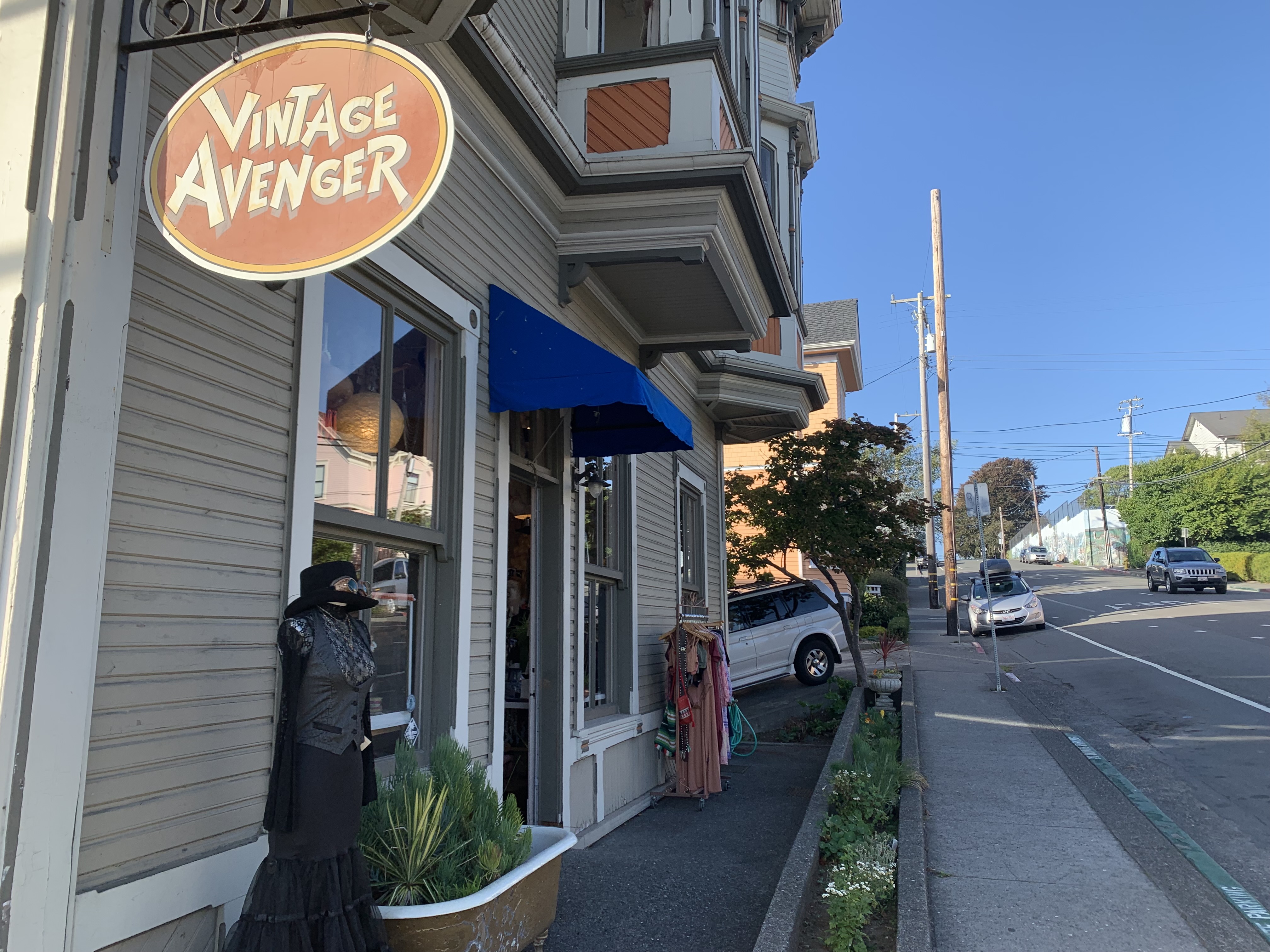
At the intersection of 11th and H Streets in downtown Arcata sits Vintage Avenger. This vintage boutique sells primarily secondhand items. Walking into the shop, you may be surprised to see some of the treasures hidden within.
Behind the counter sits the owner, Nancy Tobin, who says that people in Humboldt like their costumes to be more unique than the plastic packages you may get from a superstore.
“People don’t really like ready made costumes anymore,” Tobin said. “They kinda like pieces they can wear, like ethically sourced items you can wear for other occasions, not just specifically for a costume.”
Vintage Avenger can be your first stop in finding a costume for Halloween. They have some items you can wear as everyday fashion, too. | Photo by Rachel Marty
Ready made costumes, the ones packaged in plastic and sold in stores, are generally designed to match and work together as a unit. This makes the individual pieces of the outfits harder to reuse and style with other items.
“We try to be as much into recycling as we can,” Tobin said. “Anything gold, silver, sparkly sells fast.”
Vintage Avenger’s racks are stuffed with up-cycled pieces, fur coats and exotic dresses, and the racks tie in to the extravagant patterns that decorate the walls of the store.
Tobin said her concept of up-cycling costumes causes her to arrange the store accordingly and make decorative pieces visible to the daily shopper.
Humboldt State student Jennyfer Bonfil said her costume this year will be mixed of up-cycled materials and new purchases.
“I am going to be a DIY version of Mother Nature,” Bonfil said. “I shopped at Forever 21 online and SCRAP [Humboldt] for my costume.”
Another college student, Rose Meyers says she made an effort to not go shopping this year.
“I’m going to be one of the PowerPuff girls with my roommates,” Meyers said. “And we’re making [the costumes] ourselves.”
Shopping locally is great way to support the community and local economy, but online shopping is another option to look for costumes if you intend to buy. Ordering online can be perfect for simple basics such as blank t-shirts and tank tops that you may need to build your DIY costume, but you can often find entire pieces if you look for them.
When buying online, be cautious about sizing and cheaply made items. Also make sure to consider the shipping cost and time factors. In general, companies can send items within five to seven days, but if you need something expedited, expect shipping cost to increase for one to two day shipping.
While cost can be a priority, especially for college students, make sure you’re purchasing from reliable places. Sometimes you can get lucky and find something that closely resembles a more expensive version of pieces found in-stores, but understand that there are drawbacks to cheap costs and cheap clothing.
With Halloween just over a week away, now is the time to get those costumes together. So shop around, check out a few local shops, make something out of clothes you already own to lessen the stress on the environment and your wallet, or buy online for a (possibly) quick fix. Whichever you choose, remember to respect people and cultures, be safe and have fun.
4 ways to make the most out of your pumpkin this season
They’re hard, wonky looking and often suffer from an acute case of the warts. Pumpkins are the fruit of October and epitomize the Halloween season. Here are four ways to get the most use out of your pumpkin.
Photo courtesy of Pixabay
1. Carving a Jack-O’-Lantern
Jack-o’-lanterns are the most recognizable use for pumpkins. Local stores typically have all types of pumpkins available, differing in sizes and colors. Before choosing a pumpkin, be mindful of the design you want to fit onto the pumpkin.
First, prepare a large surface with a mat or towel to minimize the mess. Then, equip yourself with a knife, a large spoon and a container for pumpkin flesh. A serrated knife with teeth will work best for cutting through thick pumpkin skin, while a paring knife works best for the smaller details of your design.
Begin by cutting out a lid from the top of your pumpkin, and set it aside for later. Dig out the pumpkin flesh and seeds with a large spoon, and if you are interested in eating the seeds, save them in a container. Now for the fun part- carve out your design: a face, an animal, a monster or anything else that catches your fancy. If cutting straight lines is challenging, printing out a design and attaching it to the pumpkin with tape can help.
Photo courtesy of Pixabay
2. Compostable Plant Pot
Instead of a jack-o’-lantern, turn a pumpkin into a compostable pumpkin planter. Save an extra step in the transplanting process by using a pumpkin planter as a naturally decomposing pot.
Just like carving a jack-o’-lantern, cut an opening at the top of the pumpkin with a serrated knife. Feel free to decorate the plant pot by carving your own patterns on the surface of the pumpkin pot. After hollowing out the pumpkin with a spoon, just like a regular transplant, take a plant from its nursery pot and replant it with soil in the pumpkin.
The plant should grow beautifully if loved and cared for. As the pumpkin ages, an eventual transplant of the whole pumpkin into the ground will take place, decomposing and fertilizing the area.
Photo courtesy of Creative Commons
3. Prepare Mashed Pumpkin Puree
It’s a fact of life that some pumpkins just aren’t made for pie. The carving of the pumpkin contains flesh that is very fibrous and may not produce the best tasting pie. You can use puree in dishes like pumpkin pie and pumpkin soup.
To prep, cut your pumpkin in half and take out stringy fibers and seeds. One and a half pounds of raw pumpkin will yield two cups of pumpkin puree. And again, if you want to eat the seeds, save them for roasting later.
Cut the cleaned pumpkin into chunks and put them into a saucepan with one inch of boiling water. Turn the heat to low and throw on a cover to simmer for half an hour. Once the pumpkin is tender, drain the water and remove the peel. Use a potato masher to smash the pumpkins into a puree. The fresh pumpkin will last three days in the refrigerator, or months frozen.
Photo courtesy of Creative Commons
4. Roasting Seeds
By virtue of carving, cooking or smashing pumpkins, you’ll eventually be left with a bunch of little pumpkin seeds. In their final, toasted form, pumpkin seeds are a delicious, high protein and high fiber snack.
With your leftover pumpkin guts, separate the seeds from the stringy flesh. Run water over the seeds in a strainer or colander to make this process easier. Pat the seeds dry to ensure a crispy crunch.
Grab two or three tablespoons of a favorite cooking oil or butter, and add any additional spices your taste buds may desire. Classic salt and pepper works well, too. Mix and spread over a baking sheet, and make sure to line the baking sheet with aluminum foil to help with cleanup.
In a single layer, spread the clean and dried pumpkin seeds on the baking sheet. Throw it in the oven at 200°F for 45 minutes, stirring every 10 or so minutes. When the timer ends, turn up the heat to 325°F for five minutes to finish the seeds with a nice crisp.
Earn money. Many recycling plants in California offer trade-in programs where you can redeem money from the cash refund value (CRV) of plastic, glass and aluminum cans. The CRV amount for aluminum cans under 24 ounces and for glass and plastic bottles is $0.05. Containers larger than 24 ounces are redeemable for $0.10. Here in Humboldt you can take your bottles and cans to Humboldt Sanitation & Recycling in McKinleyville or the Eureka Recycling Center.
Make something new. There are so much things that can be reused and transformed into something new. Milk cartons can become bird feeders and trash can become artwork. Locally, Scrap Humboldt offers hundreds upon thousands of recycled, slightly used and new items for sale to let your creativity soar. They host creation tutorials to show people how to turn something discarded into something useful again. You can also donate your clean recyclables to their Arcata location to add to their collection of items for repurposing.
Clean them. Clean your recyclables before you toss them. Be mindful of the journey your recycling has yet to take in this consumerist chain. Besides knowing what is appropriate to recycle, it’s also important to properly prepare items before you recycle them. Cans should be rinsed clean, plastic caps should be discarded and wrappers should be torn off of containers.
Compost. Compost what you can. Paper materials like cardboard and newsprint are great materials for creating new flower and produce beds. These items don’t have to end up in the trash or even the recycling bin. Paper is great for reducing decomposition stench from compost bins and the carbon in paper can help facilitate the breakdown of waste. Just be sure the paper you use in your compost doesn’t have glossy inks like magazine paper.
Throw away the rest. You might be recycling things that aren’t recyclable. Plastics numbered with 3, 4 or 7 are sometimes not accepted by curbside recycling programs. Check your local recycling plant’s policies on what materials they accept and what they reject. Things like pizza boxes, aerosol cans, batteries and styrofoam are not recyclable. Throw items like these away or find a proper disposal. Here on campus there are several recycling hubs which offer bins for proper disposal of batteries, computer products and cellphones.
In spite of the successful campaign to phase out single-use water bottles, Humboldt State has yet to remove plastic bottled beverages from campus
Almost 10 years have come and gone since Humboldt State University took back the tap and did away with single-use water bottles on campus.
Overall HSU is known to lead the way in sustainability across the California State University system. In spite of being further ahead in the sustainability game than most campuses, HSU still offers a variety of beverages for sale packaged in single-use plastic.
HSU Dining Services Director Ron Rudebock said they have gotten a fair number of comments over the last couple of years regarding plastic products and on phasing out plastics completely.
“We have been working with vendors to obtain their products in a reusable or compostable or recyclable package and vendors are changing their package materials,” Rudebock said.
Four of the five campus responsibilities listed under the policy have set deadlines.
The first is the elimination of single-use plastic water bottles by Jan. 1, 2023. HSU met this requirement in 2011. The second is the elimination of plastic straws no later than Jan. 1, 2019. HSU eliminated plastic straws during the fall 2017 semester.
The third responsibility listed, also set for January of this year, was the elimination of single-use plastic carryout bags. HSU stopped using plastic bags back in March 2014. The fourth deadline, and last with a time requirement, was the elimination of single-use polystyrene (e.g. STYROFOAM™) food service items no later than Jan. 1, 2021. HSU eliminated Styrofoam to-go containers over 10 years ago and the campus is working to eliminate it in any pre-packaged items.
The final goal of replacing single-use plastic items with materials that are reusable, locally compostable and/or recyclable doesn’t list a specific deadline.
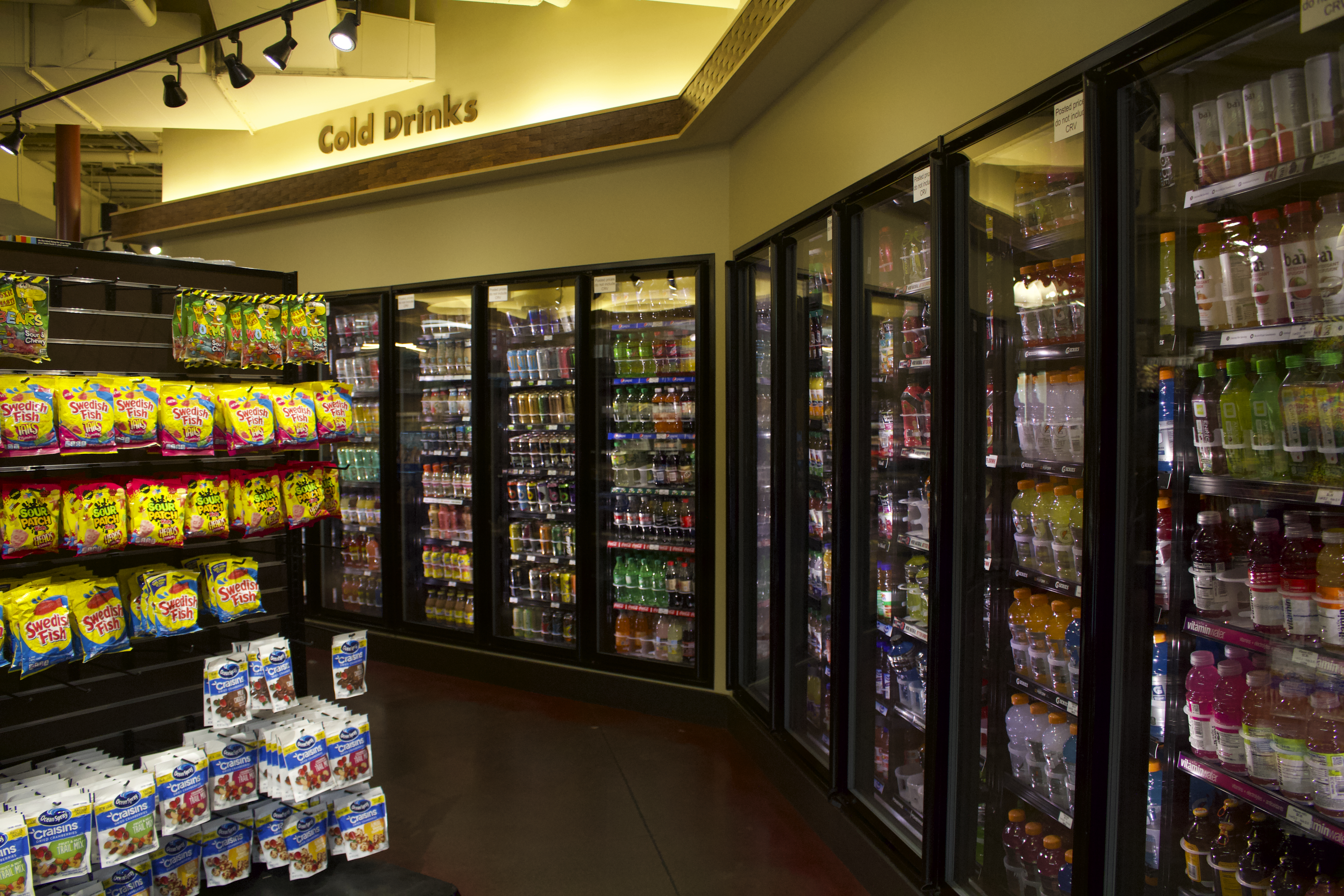
A variety of some of the single-use plastic bottled beverages offered. According to Rudebock, much of the decision to continue to sell single-use plastic drinks is because of consumer choice. | Photo by Megan Bender
Rudebock said this specific change is a challenge. The Depot, the College Creek Marketplace, the Cupboard and vending machines still offer plastic bottled beverages on campus.
“We would like to see a faster adaption but with this guideline having no deadline and with the current collapse in the recycling market I do not see this becoming feasible in the next year,” Rudebock said.
Dining services has made some efforts in providing more glass or aluminum options. The J, for example, has a beverage cooler that is all aluminum and glass, has eliminated single use plastic containers and has single-use packaging that is compostable or recyclable.
However, other locations haven’t been able to make the same change as effectively because of the demand for products that happen to also be in plastic bottles.
“We’ve been working with a lot of our vendors and pushing, trying to get more either glass or aluminum containers.” he said.
Rudebock said Dining Services also goes out of their way to order aluminum and glass alternatives whenever possible from specific companies and brands like Coke or Pepsi.
“It kind of comes down to consumer’s choice,” he said. “Consumers can help by purchasing products that are in reusable, compostable or recyclable packaging and not requesting products that are not in reusable, compostable or recyclable packaging.”
Students have pushed back against the university in the past, questioning its dedication to environmental responsibility over their business ties with PepsiCo.
As reported in the Lumberjack and the North Coast Journal, in 2017 HSU made efforts to meet student’s demands to closer align with its dedication to social, economic and environmental issues by re-evaluating a 40-year-long partnership with PepsiCo.
Under the contract PepsiCo funded HSU with around $58,000 worth of athletic scholarships in exchange for pouring rights. Pouring rights allowed PepsiCo to reserve 80% of HSU shelf space for their products.
Students also made the argument the set up was not fair to local businesses.
In spite of being in a budget deficit and the loss of scholarship funding, HSU did not renew the pouring rights contract and let it expire at the end of June 2017.
HSU was the first California public university and third national public university to phase out water bottles.
The University Center and Dining Services stepped into to help with some of the lost resources.
Rudebock said they managed to fund a majority of the lost scholarship money but leaves the decision of how the scholarships are dispersed up to the school. This way the UC and Dining Services are not directly funding athletics or any specific department.
The university still does business with PepsiCo but under different rebate-based agreements. Dining services also stopped carrying Aquafina water bottles, a brand owned by PepsiCo as a result of the nationally recognized Take Back the Tap campaign.
Under the Waste Reduction & Resource Awareness Program, students began efforts to Take Back the Tap at HSU starting in 2009. The student lead group and Dining Services worked to phase out the sale of single-use water bottles in 2011 as is the primary focus of the campaign.
As a result, HSU became the first California public university and third national public university to phase out water bottles. Dining Services initially explored an alternative by offering boxed water.
“At first we thought they were upset with the plastic water bottles, but they said ‘No no, just the water,’” Rudebock said. “It was more about the idea of selling packaged water.”
Before HSU removed water bottles on campus, TBTT calculated that HSU’s annual bottled water demand “required approximately 43 barrels of oil per academic year” and in turn was “releasing 35,000 pounds of carbon dioxide into the atmosphere.”
HSU now owns two Hydration Stations and has 16 water fill stations on campus.
Environmental Science & Management Professor James Graham and his geospatial students created an interactive map of HSU that includes where to find water fill stations on-campus as well as other resources.
The locations of all water stations on HSU’s campus according to the Sustainability project. These locations include the two Hydration Stations.
Sustainability Director Morgan King said Facilities Management worked with students help create the map.
“We worked with [Graham’s] students to develop layers for sustainability attributes,” King said. “Including water filling station locations, bike parking locations, recycling and compost bin locations.”
Anyone can access the map by visiting HSU’s sustainability website. The map key is listed in a drop down menu that offers different types of resources on campus. Under the sustainability option, users can check the box of the information they’re looking for.
Rudebock said Dining Services remains attentive to the needs of the students and the possibility of selling less plastic-bottled products.
“Every journey begins with a step,” Rudebock said. “The less plastic containers that students buy helps change the need for that product.”
The California State University system’s single-use plastic policy passed in December 2018 includes four policy changes that have deadlines, but the fifth and final goal of the policy doesn’t list a deadline.
Eliminate single-use plastic water bottles by January 1, 2023. HSU has already met this requirement as of 2011.
Eliminate plastic straws no later than January 1, 2019. HSU eliminated plastic straws during the fall 2017 semester.
Eliminate single-use plastic carryout bags no later than January 1, 2019. HSU eliminated plastic bags in March 2014.
Eliminate single-use polystyrene (e.g. STYROFOAM™) food service items no later than January 1, 2021. HSU eliminated Styrofoam to-go containers over 10 years ago and are working to eliminate it in any pre-packaged item
Replace single-use plastic items with materials that are reusable, locally compostable and/or recyclable.
To find out more about HSU’s Zero-Waste Initiatives, WRRAP and TBTT visit the WRRAP homepage.
With all the gear and gadgets, mountain biking isn’t as sustainable as it may seem
For a sport that usually occurs in natural settings, and whose participants generally value the ecosystem and the world around us, mountain biking has a serious sustainability problem.
Everything has an expiration date. No matter the maintenance, nothing is ever ‘for life,’ and nowhere is this truer than in the mountain bike industry. Chains stretch, tires bald or blow out, brake pads get worn down and bearings become crunchy and rough.
Issues arise when one attempts to revive or service a bike. Many of the functions are delicate and precise, requiring fresh parts to operate smoothly. This means something as simple as a tune-up often results in cables, housing, tubes and tires being thrown away.
Improper installation or use means that these parts break before they should and get replaced prematurely. Some people replace prematurely simply because they want improved performance.
It’s hard to process this waste on an individual level, but walk into your local bike shop and look in the trash cans. Often, they’re filled with very un-recyclable items that are used, removed and replaced.
Of course, the nature of the sport is that parts get worn down or broken and must be swapped. That so many of these parts get replaced prematurely or destroyed early due to user error is only part of the problem.
With the way our world is headed, mountain biking is due for a rude awakening on the ways that it creates unnecessary waste.
Other issues arise when we look at the bike industry and the way they market their high-end products. Often, these brands will swaddle their expensive parts in multiple layers of processed cardboard and plastics.
Recently, I purchased a new shifter for my bike. The shifter is a small plastic pod, about the size of a mandarin orange. It arrived in a box that I could’ve fit my shoes into.
Just because you can get away with selling drivetrain parts that cost as much as high-end electronics, doesn’t mean you need to package them like iPhones.
If these parts were packaged in plastic bags rather than bulky cardboard, you could fit 10 times the items in a similar space, drastically cutting down on shipping material and resources.
Usually, I give corporations a bit of lee-way with the way they package expensive items. It makes sense that they’d want to provide the customer with a sense of exclusivity for choosing to spend their hard-earned dollars on these parts. But with the news about our world’s climate becoming grimmer with every passing day, the mountain bike industry needs to step up and restructure their priorities to make the sport more sustainable.
I’ve never met a mountain biker who didn’t care about the environment and the future of our planet. Unfortunately, when something breaks usually the whole bike is unrideable until the issue is corrected. Most of us just accept the impact of our sport as there aren’t many other options.
With the way our world is headed, mountain biking is due for a rude awakening on the ways that it creates unnecessary waste.
Schatz Energy Research Center at Humboldt State was awarded a $5 million grant. The money is going to be used to build a microgrid at the Arcata-Eureka Airport in Mckinleyville. Peter Lehman, director of Schatz, said he was overjoyed when the good news broke.
“Everybody was high-fiving and hugging,” Lehman said. “It is a big deal for us, and a big win.”
Lehman spent about three months working on a proposal for the grant with his colleagues.
“It was really competitive,” Lehman said. “The California Energy Commission only funded one proposal out of ten. There was a lot of universities that didn’t get funded, and we did.”
The microgrid will be composed of a 2.3-megawatt photovoltaic array, or solar power system, and cover nine acres.
“It is one thing to have an idea, but it’s gotta be based in reality,” Lehman said. “First you have to conceive the idea, flesh out the idea and decide what partners need to be assembled. It’s not easy.”
Redwood Coast Energy Authority, or RCEA, partnered with Schatz, matching $6 million in funds to help the project. Executive director of the RCEA Matthew Marshall is optimistic about the project.
“We were waiting to hear back from the Schatz Center to see if they received the grant before submitting the application for the loan, but it’s now in the works,” Marshall said. “I’m optimistic.”
The RCEA is financing the upfront costs of the project with a low-interest loan from the United States Department of Agriculture’s Rural Utilities Service.
“We’ve got a goal to support the development of local solar projects,” Marshall said. “The project is pushing the envelope. It’s exciting being on the forefront.”
In addition to generating green electricity, the microgrid will create jobs for locals.
“Somebody has to pour the concrete, drive the post into the ground to mount solar panels and run the wires,” Lehman said.
In an emergency situation, the airports and United States Coast Guard could run for hours off energy gained from the microgrid .
“The airport and the Coast Guard are really important,” Lehman said. “The Coast Guard can’t fly if the airport doesn’t have electricity.”
RCEA owns the solar array and PG&E owns the wires, but who gets paid what for the electricity produced? How do customers get charged for that?
“It’s all new, its never come up before,” Lehman said. “We are going to be plowing some new ground trying to figure that out.”
The project is expected to begin this summer. PG&E will do a number of tests after the completion of the first multi-customer microgrid.
“PG&E is careful about what goes on their grid,” Lehman said. “There are a number of tests we will have to pass with them, looking over our shoulder to make sure that is it safe.”
PG&E communications representative Ari Vanrenen said PG&E is committed to clean energy.
“We are a community partner dedicated to building a better, more sustainable future for all Californians,” Vanrenen said. “This includes understanding and responding to the different needs of our customers and communities.”
Once the microgrid is established, the Schatz Center will spend a year writing reports on how it works and share their findings.
“Lessons we learn are going to be valuable for other people. That’s how progress happens in technology,” Lehman said . “You do things and try something. You tell people about it. The next time you build it, you are a little smarter and you do a better job.”
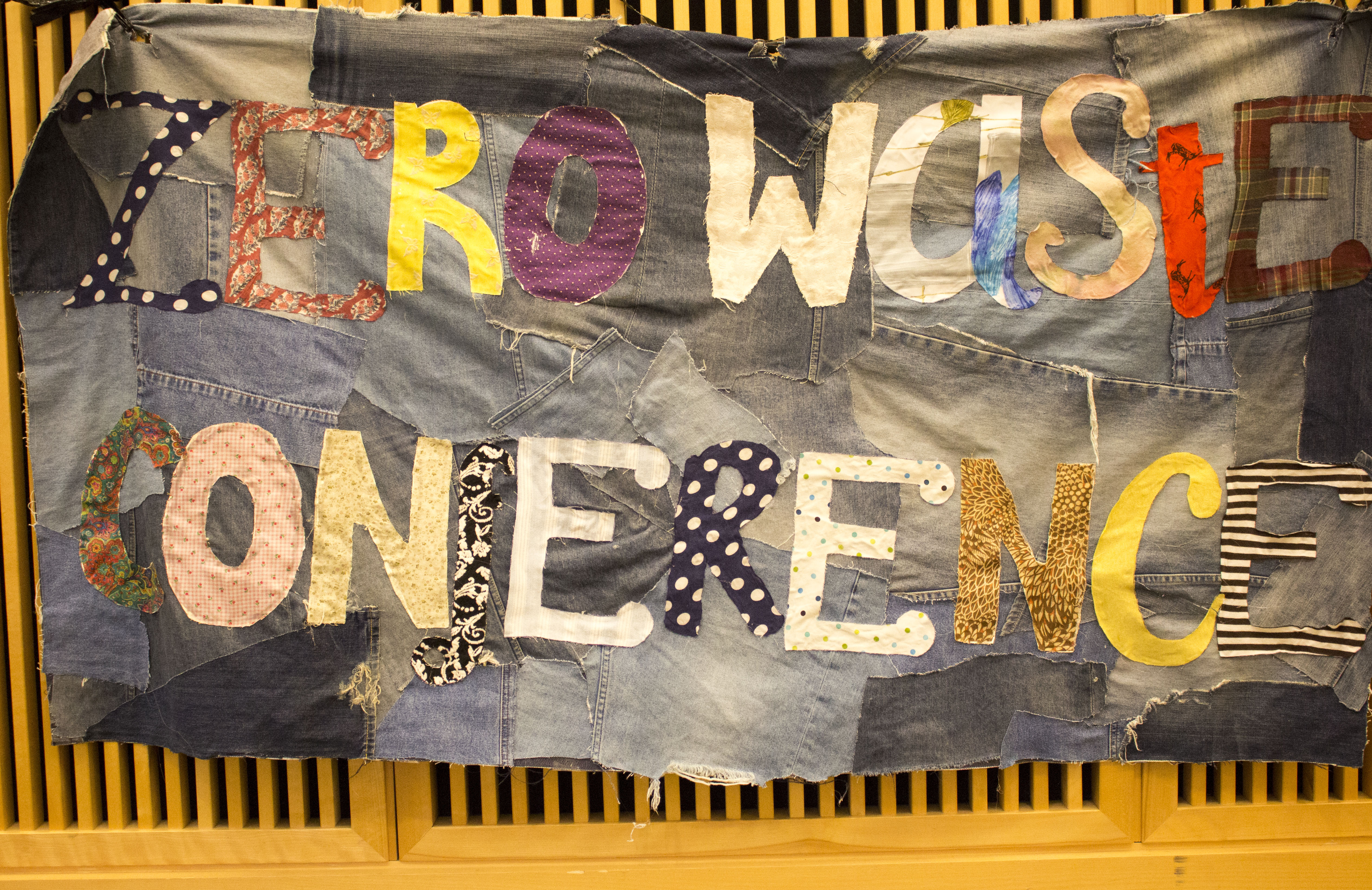
Humboldt State University’s WRRAP hosted their second annual Zero Waste Conference on Feb. 9 and Feb 10.
The conference aimed to focus on the way we’re redirecting waste in our community, as well as the barriers that come with it.
The two-day conference kicked off on Feb. 9 with DIY workshops focusing on waste reduction in the Humboldt community.
There was also a banquet with keynote speakers followed by a documentary screening of Wasted Away.
There was an all-day event of panelist discussions, a compost workshop and speakers on Feb. 10.
One of the speakers was Dr. Melanie McCavour, lecturer for environmental science and management at HSU.
McCavour’s presentation went over some common definitions and misconceptions of the terms biofuel, biomass and much more.
“There’s no one answer to the question ‘Are biofuels sustainable?’,” McCavour said. “They’re not always bad and they’re not always sustainable. It depends on the situation.”
McCavour expected to see more people in attendance. However, she said that one cannot judge success by the amount of people who turned out, and that it’s better judged by how much those learn from it.
WRRAP education director Shanti Belaustegui believes this conference is an amazing opportunity to have a dialogue in our community about solutions and to get inspired by things that are happening.
“I personally am leaving feeling very inspired,” Belaustegui said. “The people that did show up left with their minds nourished. That’s all we could’ve asked for, to create dialogue with the community and start this.”
Ciera Wilbur, zero waste director for WRRAP, hopes that the Zero Waste Conference becomes a permanent event at HSU for people who don’t quite know about sustainability and zero waste.
“The way I see sustainability is like the capacity to continue to exist,” Wilbur said. “We’re trying to protect our resources for future generations not just our current gratification.”
Wilbur described zero waste as something that should bring us away from the current idealism, which is convenience and single-use products. She tries to bring forth the idea that what you use can be reused.
“… we’re looking to create a circle,” Wilbur said.
When it comes to sustainability and zero waste, there are barriers that people face. Wilbur said our biggest barrier is accessibility.
“There’s a lack of education and sharing knowledge of how we can be more sustainable in an easy way,” Wilbur said.
Eliminating the meat industry would do more harm than good to our planet. The idea that animal agriculture is completely unethical and impractical is false.
The media does a fine job of antagonizing the meat industry, and we all know about the documentaries that reveal the ugly truth behind factory farming, such as Food, Inc. But have you ever thought about what would happen if we put an end to animal agriculture all together?
“Agriculture cannot be sustainable without animal agriculture,” said Dr. Frank Mitloehner, Animal Science professor at UC Davis. “That is something I’m sure of.”
For instance, livestock grazing is used as a tool to stimulate soil production, which in turn removes carbon dioxide from the atmosphere. When herds trample through pastures, they oxygenate soil while pushing down seeds that ultimately promote healthy land restoration. Also, excrement produced along the way fertilizes soil. If managed correctly, livestock distribution can be beneficial to the environment.
“Soils of the world must be part of any agenda to address climate change, as well as food and water security,” said Dr. Rattan Lal, professor of Soil Science at The Ohio State University.
Animal parts that are not consumed, such as bones or fat, do not get wasted in the Netherlands. Renewable products from soaps to heart valve replacements are sourced from slaughtered pigs.
The Dutch eat about a third of the pig “and the rest is exported to all kinds of countries in Europe and the rest of the world,” said Christien Meindertsma, a Dutch artist who is known for using raw materials in her work.
The truth is that we need to reduce our inherited carbon footprint habits: transportation, dieting and consumerism. The global food production and consumption, namely beef, produce more greenhouse emissions than all of transportation combined. In addition, eating less meat could reduce the risk of heart disease and other health-related issues.
In extreme cases of either a world full of meat eaters or vegetarians, moderation is the middle ground. Following one extreme over the other will not reduce global warming. We can start by agreeing that livestock is a crucial part of the agricultural system.
More than six weeks worth of compost went to a landfill. That’s after the composting contract HSU had with the Local Worm Guy ended and wasn’t renewed. All compost materials which ends up in the compost BiobiN vessel will be sent to landfill, as there is no alternative in sight.
HSU bio bin located near the Jolly Giants Commons. | Ahmed Al-Sakkaf
Last year, the university signed a $14 thousand contract with The Local Worm Guy farm to divert all the food waste the campus generates. All campus-generated compostable material is deposited to the 20-cubic-yard composting bio bin that was installed a year ago near the Jolly Giant Commons. When the bin is close to full, it’s then hauled away by Recology Arcata to be dumped at the worm farm. The university pays Recology around $80 per haul.
Last August, the owner of the worm farm Lloyd Barker informed HSU that he wouldn’t renew the contract with the university.
“It’s probably one of the harder decisions that we’ve had to make as a business,” Barker said. “With the challenges we faced last year we’ve had to take a step back and look at exactly what we need in terms of our business development to be able to offer that service again.”
The volume and the type of material that is generated on campus is challenging from a composting perspective. The challenges his business was facing from the university’s material didn’t leave him an option.
Organic food wastes inside the bio bin. | Ahmed Al-Sakkaf
“HSU is really a big feather in someone’s cap, it’s a really important customer for us, but right now it’s really hard to offer them the service we want to be able to offer them,” Barker said.
The university has a small scale composting facility called the Earth Tub. The Earth Tub is run by Waste-Reduction & Resource Awareness Program. WRRAP compost food waste they collect from student-run coffee tables, departmental break rooms and zero waste events, food waste that is not sent to the biobin where the majority of the organic waste ends up.
For organic waste to compost, it requires a consistent balance of carbon to nitrogen ratio. The ratio is around 25 to 30 parts of carbon to every one part of nitrogen. The compost material generated on campus mainly consists of heavily water saturated food type materials with very little carbon. Besides the imbalanced ratio of carbon to nitrogen, the university’s compost material tends to have a lot of garbage in it, such as F’real milkshake cubs and other noncompostable plastic bags from dining kitchens.
Organic food wastes inside the bio bin. | Ahmed Al-Sakkaf
“We end up with a lot of those pre-made milkshakes in a little plastic cups. We end up with probably 50 of those milkshake containers, and up to 150 pieces of recycles and garbage from the cafeteria per load,” Barker said. “We’ll also end up with big bags of stuff from the back of the house. It caused us a lot of problems and issues along the way.”
Last year alone, the worm farm composted over 200 cubic yards of HSU’s material that weighed about 97 tons. The university paid a total of $64 per cubic yard to divert this food waste from landfill to compost.
HSU is mandated by California’s AB 1826 law to compost. The law currently requires businesses that generate four cubic yards or more of organic waste per week to arrange for organic waste recycling services. Organic waste includes green waste, landscape pruning and wood waste. The university generates over seven cubic yards of organic waste per week.
“We are a state agency. We need to be compliant with this law,” said Morgan King HSU’s Sustainability and Climate Action Analyst.
Neither the university nor the county has the infrastructure or the appropriate facilities to compost large amounts of organic waste. Until the county builds a facility that can accept HSU’s food wastes, the university has no option but to try to work with the local worm farmer to resume their agreement.
Katherine Rodriguez scraping off leftover food into a compost bucket. | Ahmed Al-Sakkaf
“We’re kinda stuck. We need to haul it out to someone else who is a professional and can compost it,” said King. “He [Barker] can’t take our stuff and there’s no one locally besides him that would take this amount of food waste.”
Both the university and The Local Worm Guy view this as a temporary setback until they are all ready to resume their cooperation and resume their work.
“The Local Worm Guy is working on his side to be in a better position to take our food waste, and on our side, we are working on making our material more acceptable,” said King.
Prior to signing this contract with the local worm farmer, HSU didn’t have a large-scale composting program in place. Madi Whaley, the WRRAP program manager, said that before last year parts of the food waste generated on campus was diverted to a local hog farmer for pigs to eat.
“It is unfortunate,” said Whaley. “It’s a real shame that the compost is going to the landfill instead of being diverted to a composting facility.”
HSU prides itself on having a great food recovery system. This past summer, HSU won the Innovative Waste Reduction Award at the California Higher Education Sustainability Conference. The composting program HSU had in place partnering with Barker was a significant factor in winning the award. A factor that isn’t in place now.
Recycling is not as sustainable as you might think. It has become a wasteful movement that was beneficial during the early stages of the environmental movement. Now the cost outweighs the satisfaction we get out of recycling.
“Recycling has been relentlessly promoted as a goal in and of itself: an unalloyed public good and private virtue that is indoctrinated in students from kindergarten through college,” wrote John Tierney, journalist and self-described “contrarian” for the New York Times. “As a result, otherwise well-informed and educated people have no idea of the relative costs and benefits.”
To put it in another way, most recycling advocates are unaware of the cost of transportation, labor and production of renewable materials that ultimately defeats the purpose of saving the planet.
Recyclers are validated by the collective consciousness of fellow believers. They don’t realize the wastefulness that occurs after rolling the recycling bin to the curb. Why did things get worse? The short answer is the success of an ongoing marketing campaign that resonates with a growing population of millennials and aging liberals.
Since the advent of the “Reduce, Reuse, Recycle” idea, recycling received the most attention. Why? Because there’s barely any money in reducing or reusing. If you think about it, recycling starts its capitalistic cycle from our wallets to the bins or recycling centers, then to the manufacturing plants, the businesses and back to burning a hole in our pockets.
So, there you have it, reduce consumption and reuse your renewable materials. Buy used products and learn how to repair them if they break. Borrow, rent or share if you can. The point is to reduce the disadvantages of recycling that is practiced by too many people and apply smarter solutions to climate change. If enough of us consume less and reuse more, the act of recycling can reclaim its integrity. It’s all about balance.
This website uses cookies to improve your experience. We'll assume you're ok with this, but you can opt-out if you wish. Cookie settingsACCEPT
Privacy & Cookies Policy
Privacy Overview
This website uses cookies to improve your experience while you navigate through the website. Out of these cookies, the cookies that are categorized as necessary are stored on your browser as they are essential for the working of basic functionalities of the website. We also use third-party cookies that help us analyze and understand how you use this website. These cookies will be stored in your browser only with your consent. You also have the option to opt-out of these cookies. But opting out of some of these cookies may have an effect on your browsing experience.
Necessary cookies are absolutely essential for the website to function properly. This category only includes cookies that ensures basic functionalities and security features of the website. These cookies do not store any personal information.
Any cookies that may not be particularly necessary for the website to function and is used specifically to collect user personal data via analytics, ads, other embedded contents are termed as non-necessary cookies. It is mandatory to procure user consent prior to running these cookies on your website.