The Lumberjack


Students Serving The Cal Poly Humboldt Campus and Community Since 1929

Tag: sustainable farming

  • Turkey Doomsday

    Turkey Doomsday

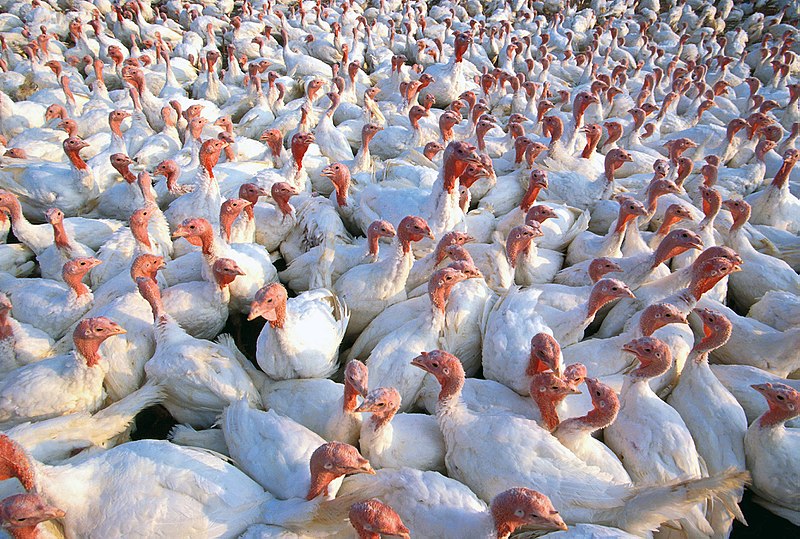
    Investigations have found that many large-scale poultry farms keep their birds intentionally overweight and injected with hormones

    Turkey Day is tomorrow, but people don’t always take the time to think about the farm to table process that leads to the birds ending up on our dinner plates.

    According to The American Society for the Prevention of Cruelty to Animals, “95% of farm animals in the U.S. are raised in factory farms,” with other sources, such as the Huffington Post, claiming numbers to be up to 99%.

    Factory farming has proven to be a profitable business, with the United States Department of Agriculture stating that there are approximately 2 million farms in operation.

    Poultry makes up a significant size of the income from animals, second only to calves and cattle.

    “Cash receipts for animals and animal products totaled 176.5 billion in 2018,” the USDA’s site says. “Cattle/calf receipts accounted for 38 percent of that total, while poultry/egg receipts accounted for 26 percent and dairy receipts 20 percent.”

    Some of the problems associated with factory farming include the health of the animals and their living arrangements.

    Investigations have found that many large-scale poultry farms keep their birds intentionally overweight and injected with hormones, only to be forced into tight cages until they are killed.

    “Due to selective breeding, commercial male turkeys rapidly grow to a weight 3 times larger than wild male turkeys in only 4 months,” Farm Sanctuary, an animal protections agency formed in 1986, states on their website. “Rapid growth and resulting heavy body weight can lead to heart problems and painful leg issues, which can eventually lead to crippling.”

    In 2017, The New York Times’ Editorial Board took a stand against factory-farmed poultry.

    “No animals raised on factory farms are kept and killed under worse conditions than turkeys and chickens, which make up most of the animals raised for food in the U.S.,” the editorial said. “Nearly 9 billion chickens are slaughtered each year for food. And because poultry is exempt from the federal Humane Methods of Slaughter Act, which the U.S. Department of Agriculture enforces, there are not even minimum federal standards governing how they live or die.”

    The Times continued their editorial, detailing how the “so-called broiler chickens” are genetically bred to grow fast, due to the demand for breast meat. According to the Times, these chickens grow so large that they can barely walk, suffering from painful skeletal disorders and deformities before they are killed.

    “The vast majority spend their short lives (about 47 days for chickens) in artificially lit, windowless, barren warehouse barns,” the editorial said. “So that turkeys won’t peck one another in these crowded barns, their beaks are painfully trimmed.”

    In Humboldt County, if you’re looking to avoid commercial, warehouse-raised poultry, one option is the Shakefork Community Farm. The farm raises small batches of turkeys every summer and fall.

    According to their site, Shakefork’s poultry is raised and slaughtered sustainably; raising their birds in open ranges as opposed to tight cages, believing in a more humane approach to raising animals.

    “We provide certified organic laying feed, but our hens provide for much of their own nutrition by foraging for seeds, bugs, and pasture,” the site says. “Our healthy and contented birds make for some of the best eating ever.”
  • Explore Nature Through Your Tastebuds

    Explore Nature Through Your Tastebuds

    Forage for free food locally while learning about your environment

    If you’ve ever dreamed of living off the grid and growing your own food, foraging is the next best thing to fulfill that desire.

    Foraging is a fun and rewarding way to immerse yourself in your local environment. Here in Humboldt County, there are plenty of opportunities for outdoor food morsel scouring. You can find dozens of wild plants that are both useful and edible, from anise, dandelions and yarrow to cattails.

    If you know what you’re looking for, urban food foraging is quite simple. Some yards in Arcata have fruit trees that are tempting to take from, but be sure to ask for permission before picking.

    If you don’t know where to start looking, you can use the Falling Fruit website or app. This site features a global map with geotagged locations of edible and useful items within your area. When you identify something new, you can mark it on the map to help others locate your foraging find.

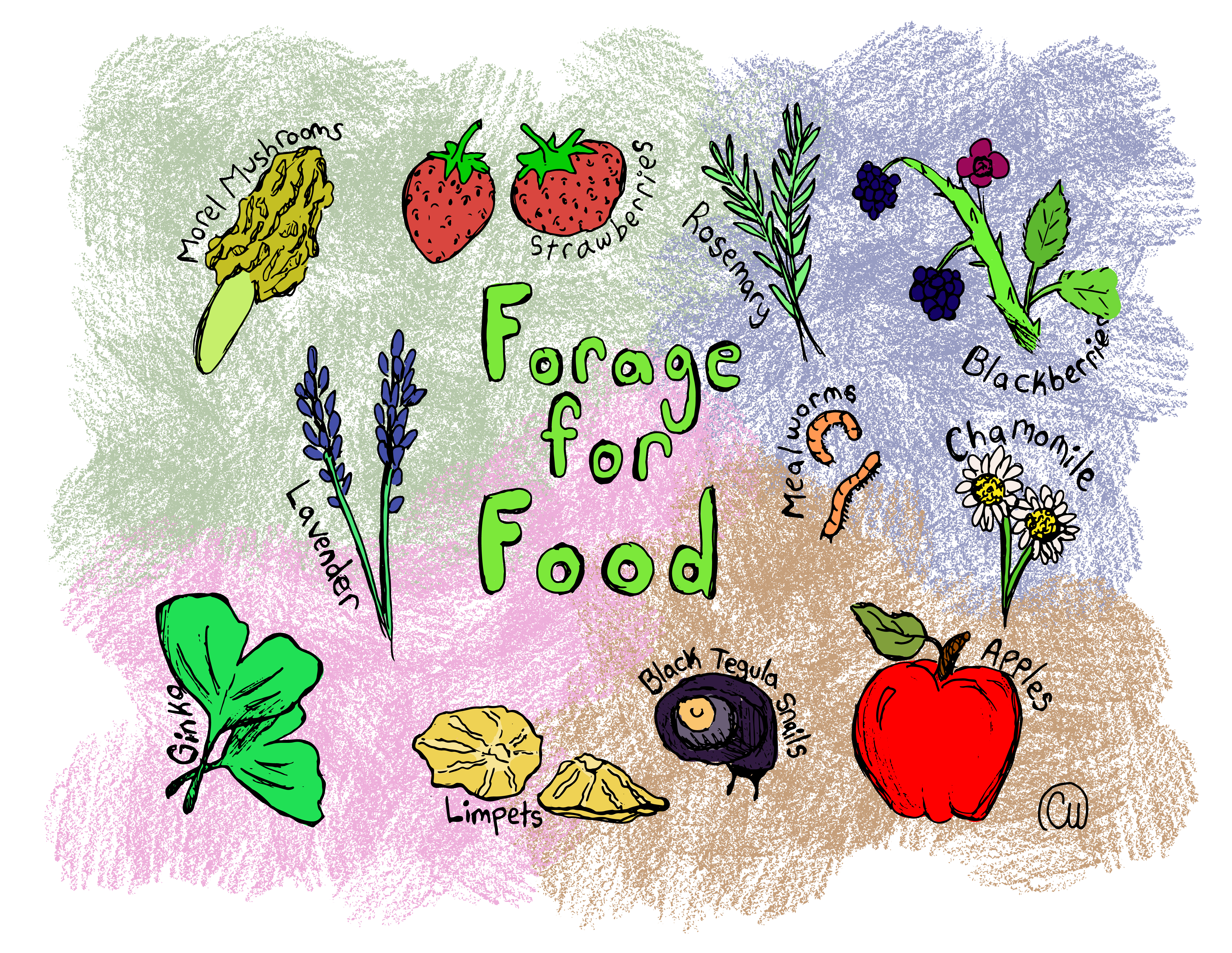
    If you want to look for wild herbs, fruits and vegetables beyond the cityscape, take a stroll to a park or the community forest and chances are you’ll find something forage-worthy, whether it’s morel mushrooms, blackberries or ginkgo.

    If you aren’t well-versed in fungi identification, there are options in the wild for food finding beyond the typical mushroom hunting. It’s best to steer clear of gathering mushrooms unless you are with an expert or have definitive knowledge of a particular type you are searching for.

    Foraging is a helpful way to inform yourself about natural food cycles. We often forget about the different produce seasons as grocery stores usually supply all types of seasonal produce year-round, but foraging for your own food helps you learn when produce is ready for harvesting.

    Explore beyond the city streets and forested land for scrumptious surprises from the sea.

    If you’re foraging for sea life, ensure you’re legally licensed to do so. You can forage for loads of coastal edibles like seaweed, snails and goose barnacles, but many items require a fishing license to take as well as prior knowledge of eligible sizes and harvesting limits.

    Make sure to have the proper equipment for specific foraging needs. When coastal foraging, it’s necessary to have have measuring equipment for the sea life you’re searching for to verify your finds are within size regulations. Bring a bucket for your finds and a knife or prying tools like a spudger to scrape off treats like limpets or sea snails. Gloves and knee pads are useful, but not necessary as long as you’re cautious on slippery terrain.

    Be aware of red tides and other contaminants that may affect coastal harvests. Humboldt and Mendocino County undergo an annual mussel quarantine form May 1 to Oct. 31 which prohibits mussel gathering to protect people from shellfish poisoning due to oceanic toxins. Avoid this concern by foraging for univalve organisms which don’t filter throughout their body and have singular shells, like periwinkles or black tegula snails.

    Foraging for insects can also be an exciting addition to your food gathering excursions. There are hundreds of species of edible insects including crickets, weaver ants and silkworms.

    Identifying edible insects can be tricky if you aren’t completely sure of what to search for. The most advisable way to consume insects would be through home cultivation of a species like mealworms or crickets.

    Don’t ever consume something that you aren’t 100% sure is safe to eat, whether it’s a fungus, plant or creature. Be sure to know how to properly identify items before your search.

    In addition, prepare foraged food properly. Make sure to wash findings thoroughly and cook it correctly so as to not have an upset stomach.

    Remember, do not forage on private land, or at state and national parks. It’s illegal to take items including rocks, wood, berries and nuts from these parks as they’re protected by state and federal conservation regulations.

  • Pollution Plagues California’s Biggest Industry

    Pollution Plagues California’s Biggest Industry

    Students learn how agriculture and water intersect, and how water can be impacted from outside sources

    Agriculture is the foundation of modern society. California’s Central Valley keeps millions of people fed from its acres of cultivation, but that much land, and work, requires a lot of water.

    Matthew Lotakoon, the president of the Water Resources Club at Humboldt State University, worked as a youth leader with the Tulare County Farm Bureau. The program provided local students with agricultural work in Tulare County and sometimes across the state of California. Lotakoon said his big take away was that agriculture is the economic backbone of the state.

    “No other industry in California matches agriculture’s economic productivity,” Lotakoon said. “There is a complex environmental solution to maintain biodiversity and economic livelihood.”

    Lotakoon said that the landscape of the Central Valley changed throughout its history. Most of the Central Valley has been soaked with water flowing off the Sierra Nevada mountain range. Since then, the agriculture industry has worked to serve the need for reliable food, a need that has been persistent and dominant.

    “No other industry in California matches agriculture’s economic productivity. There is a complex environmental solution to maintain biodiversity and economic livelihood.”

    Matthew Lotakoon

    “Historically, the Central Valley has been very productive,” Lotakoon said. “Most of the Central Valley was riparian areas, lots of swamps and reoccurring wetlands. Vast herds of elk and pronghorn lived on the landscape. And now, little towns like Porterville and Tulare have appeared and agriculture fields are everywhere.”

    To support a growing population of people, cities and roads were built on land that had previously been underwater, or at least waterlogged. The fertile ground was ideal for the agriculture industry. A decision was made in the 19th century to develop the Central Valley into a bread basket. A thirsty bread basket.

    “For the limited amount of water we have, we have to consider how to use it to preserve biodiversity while farmers are trying to maintain their livelihood,” Lotakoon said. “The farmers are good people, it is water policy in the Central Valley that is the challenge. Once partisan politics gets involved, it gets very messy.”

    Sustainable agriculture practices are the North Coast’s solution for feeding people in an appropriate way. To farm sustainably, resources including water, land and feed are used responsibly to prevent them from being depleted. The goal is to produce food forever. But farmers have to be conscious of where they get their water from, to avoid polluted crops.

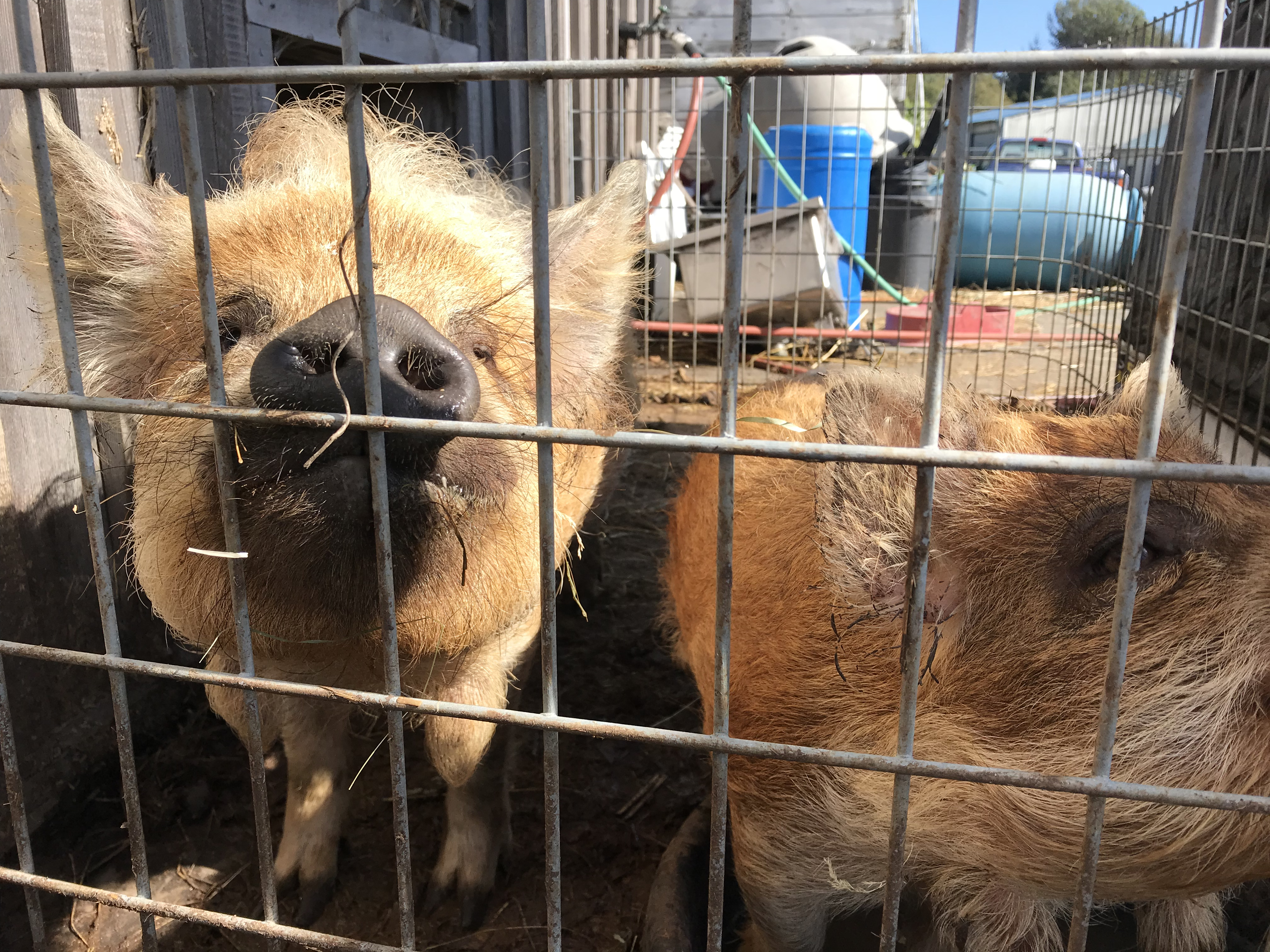
    Shail Pec-Crouse feeds her kunekune pigs. Pec-Crouse owns and manages a farm which practices sustainable farming, meaning she will be able to farm how she does today, forever. | Photo by August Davidson

    Shail Pec-Crouse owns Tule Fog Farm, a sustainable animal farm in the bottoms of Arcata. Her 22-acre property is home to pigs, sheep, turkeys and cows raised in a way that won’t damage the land they live on. Her operation is not very resource-intensive, although she did say working on the farm is a full-time job.

    At the moment, Pec-Crouse’s farm is hooked up to the municipal water system. It is an expensive alternative, but considering the local Sun Valley Floral Farm uses the herbicide RoundUp on nearby fields to prepare them for growing flowers, it is a safe alternative.

    “The field will be green one day,” Pec-Crouse said. “And orange the next.”

    It isn’t unreasonable to believe the toxic herbicides infiltrate the soil and work down into the groundwater. Infiltration is when soil absorbs water that falls on its surface. The water fills in crevices and pores between soil particles to create something of an underground lake called an aquifer. Depending on the chemical, infiltrating water can carry toxins into the aquifer.

    Watershed professor Joe Seney said groundwater contamination is a big management challenge. The use of herbicides, industrial waste, poorly constructed septic systems and urban runoff often pollute groundwater. Pollution poisons drinking water, destroys local ecosystems and can cause land to be infertile.

    Emma Flewell is studying environmental policy and planning at Humboldt State and worked with Ahtna Facilities Services to clean up a former Naval petroleum reserve in Bakersfield. The oil field contaminated a nearby aquifer and will take decades to clean up. The groundwater in the aquifer was used as tap water by a nearby neighborhood until people started getting sick.

    “The farmers are good people, it is water policy in the Central Valley that is the challenge. Once partisan politics gets involved, it gets very messy.”

    Matthew Lotakoon

    “There are a lot of aquifers that have the potential to be used for municipal water, but it’s sad because some of them are polluted,” Flewell said. “Being in environmental science and management, cleanup jobs are common. There have to be people who clean up the messes we make.”

    Flewell said there should have been legislation long ago to prevent aquifer pollution. She said it would be less expensive to not pollute in the first place than pay for the cleanup. Since the process to restore toxic sites takes years, the work needs to start as soon as possible.

    The Tule Fog Farm is an example of how a polluted landscape can be restored to be productive again. The farm is a remediation site, which means the ground the farm is on was once polluted but has since been restored. It takes knowledge and technology to restore land, and it should be an inspiration for future remediation.

    Lotakoon said consultation and collaboration with farmers is important moving forward. He stressed nobody is evil and it’s important to accommodate people and consider cultural differences and mannerisms.

    “Farmers are decent people trying their best to do good,” Lotakoon said.