The Lumberjack


Students Serving The Cal Poly Humboldt Campus and Community Since 1929

Tag: sustainable living

  • So You Want to Compost

    So You Want to Compost

    Composting can be one of the most beneficial ways to handle waste

    Learn the steps to compost.

    Every Wednesday, the trash bin, filled with whatever waste was tossed during the week, goes to the curb to be picked up by Recology and shipped off to a landfill.

    Forty percent of the waste that ends up in landfills is food waste, according to Recology. This can include raw scraps from food preparation, old sandwiches left to rot and unwanted leftovers. When food scraps end up in a landfill, the material is not just waste, it’s being wasted.

    “The average American generates 4.4 pounds of garbage a day,” the Recology site says. “Don’t let your food scraps go to waste.”

    Illustration by Collin Slavey

    It’s a big deal if food waste gets tossed into landfills. Besides taking up space in our already overwhelmed landfills, food waste doesn’t decompose properly in such settings. For example, an apple that falls above ground breaks down into useful nutrients like nitrogen, which enriches the soil. Underground the apple isn’t able to break down.

    Buried in a landfill, the apple is in an anaerobic environment, meaning that it is starved of oxygen. Anaerobic decomposition creates some nasty byproducts. The most malicious of these byproducts are methane and liquid leachate. Both of these are pollutants with consequences.

    “Fortunately, avoiding these pollutants is simple. Just compost it,” international waste management firm ToWaSo said. “Food and yard waste can be reused and turned into nutrient rich compost. Composting exposes the green waste to oxygen, allowing it to decompose as it would in nature.”

    Humboldt State does compost food waste. According to an email from TallChief Comet, the director of sustainability, energy and grounds keeping with Facilities Management, HSU compost is managed in two ways. The Waste Reduction and Resource Awareness Program manages the composting bins on campus, while food waste is diverted from dining services.

    “The on-campus composting process is handled by WRRAP and is using the material from the public compost bins scattered around campus,” Comet said in an email. “This material goes into an Earthtub composting vessel, located at Facilities Management and processes about 10,000 lbs (5 tons) of material per year.”

    “The average American generates 4.4 pounds of garbage a day. Don’t let your food scraps go to waste.”

    Recology

    “The food-waste diverted from all the dining locations on campus is collected by FM waste and recycling staff into a large pre-composting container,” Comet said. “About every three weeks it is transported by Recology (a local waste hauler) to a vermicomposting facility in Dows Prairie run by The Local Worm Guy.”

    Comet emphasized that it is important to keep contamination out of the materials’ stream, and if someone is in doubt about whether or not to compost, trash it.

    “The best effort students can make is to not generate waste in any form to begin with,” Comet said. “For compostable waste they can achieve this by not purchasing more than they will use/consume during the anticipated period.”

    But composting may very well be appropriate. Composting may seem like an intimidating, tedious and smelly thing to do, but with a bit of practice it becomes second nature. Working with local resources like the Campus Center for Appropriate Technologies can help prepare a student for their own compost bin.

    Jacob Gellatly, an active member of CCAT, recommended that students learn about composting.

    “Before a student starts composting they should learn a few things,” Gellatly said. “It is critical to get educated on the process of composting. Learn the recipe.”
  • Wind Farm Under Scrutiny

    Wind Farm Under Scrutiny

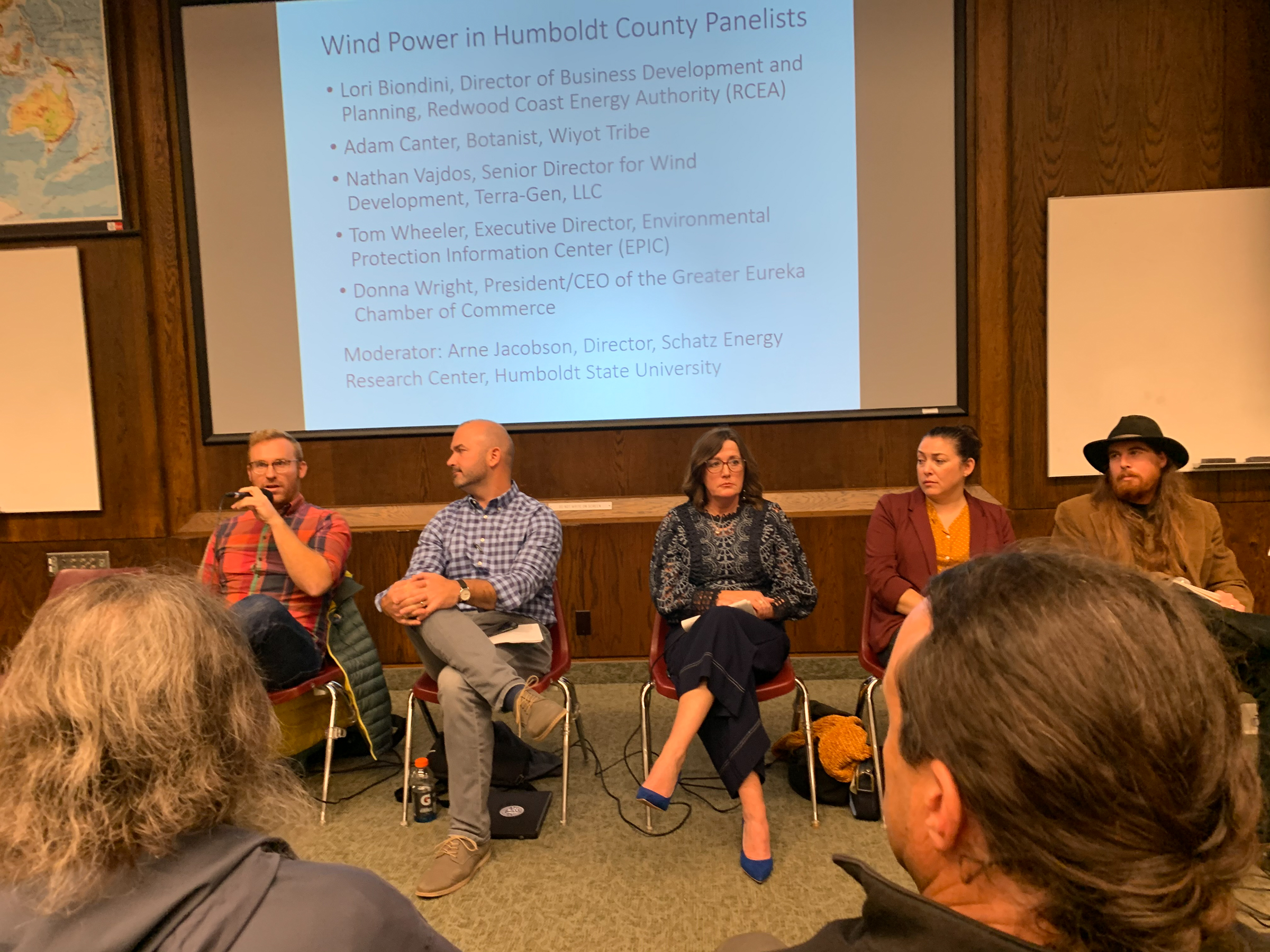
    A panel at Humboldt State University’s Sustainable Speakers Series weigh the pros and cons of the Humboldt Wind Energy Project

    As the global concern to act against climate change increases, Humboldt County is in a position to capitalize on an opportunity to establish a significant renewable resource.

    On Thursday, the Humboldt County Planning Commission votes on the wind energy farm developed by Terra-Gen. Terra-Gen, a Manhattan-based energy company, has proposed a wind farm to be built near Bear River, on Monument Ridge, above the city of Scotia.

    The Terra-Gen wind farm carries controversy for numerous reasons. The project will help achieve carbon emission-reduction goals and provide two million dollars in annual tax revenue for the county, but will impact wildlife, forest ecosystems and the Wiyot prayer site Tsakiyuwit.

    Arne Jacobson, director for Shatz Energy Research Center, said the proposed turbines will produce about 100 times less CO2 than burning fossil fuels.

    “From a climate change perspective, wind looks pretty good,” Jacobson said. “Whatever perspective we have on this particular project, I think one question we should be asking ourselves is what we want to do with that opportunity, because I think it’s there and I think we have the local ethic and the local talent to make that happen.”

    Lori Biondini, director of Redwood Coast Energy Authority, said the Terra-Gen wind project could be part of a solution to address RCEA’s goal of 100% renewable electricity in Humboldt County by 2025.

    “The Terra-Gen project is part of one scenario to reach our goals,” Biondini. “If it doesn’t get built, then we will come up with another scenario.”

    RCEA administers the community choice energy program, a program which allows communities to decide where their electricity comes from. It prioritizes local energy generation and generally more clean energy.

    “I think that one of the promises of community choice energy is that we get to make choices that are good to our entire community.” Biondini said. “Not further marginalize those that might not otherwise have had a seat at the table.”

    A crowd waits for Sustainable Speakers panel to begin. | Photo by Michael Weber

    Adam Canter, a botanist and representative of the Wiyot tribal council, defended the preservation of the land and disapproved of the Terra-Gen project. Canter cites ethnobotanical resources and culturally significant sites as reasons not to move forward with this project.

    “When we first heard about this project, there was this big pit that just kind of fell into our stomachs,” Canter said. “We thought when Shell came 10 years ago that no other company would come back and try to build a project here. But we were wrong.”

    Canter pointed out the cultural resource report for the site bound in a green, four-inch binder.

    “The representation of cultural diversity on this ridge is pretty magnificent,” Canter said. “We’re seeing evidence of Athabaskan peoples and the Wiyot-Algonquin peoples and really it should be listed on the National Register of Historic Places.”

    According to Canter, the area is also a high prayer site; a place where a large expanse of Wiyot ancestral territory is visible. Like the turbines obscuring the view, the Wiyot cultural heritage could be obscured too.

    Tom Wheeler, director for the Environmental Protection Information Center, said the proposed site is a questionable area to build a wind farm.

    “The representation of cultural diversity on this ridge is pretty magnificent. We’re seeing evidence of Athabaskan peoples and the Wiyot-Algonquin peoples and really it should be listed on the National Register of Historic Places.”

    Adam Canter

    According to guidelines set by the California Energy Commission and the California Department of Fish and Wildlife, the proposed site is “pristine.” Wheeler said the site has several rare and endangered species, including the rare Horay bat.

    Wheeler is still hopeful to keep the project, and said there is technology that can reduce some of the wildlife impacts. This, however, is only one mitigation measure to the several unavoidable cultural, environmental and wildlife impacts of the project.

    “I want this to be a better project and it’s not there,” Wheeler said. “At least not yet.”

    On Thursday, the final vote by Humboldt County’s Planning Commission will weigh impacts to Native American culture and environmental quality to the people’s interest in local, reliable energy.

    Aside from the benefit of reducing carbon emissions, allowing Terra-Gen to build the wind farm also comes with an economic and infrastructure benefit.

    Senior Director in Wind Development for Terra-Gen Nathan Vajdos said the company would be the second-largest taxpayer in the county, and could fund $14 million to Humboldt’s reliability network upgrades, with $1.3 million to the Humboldt substation.

    “As we charge our iPhones, we fill up our cars with gas, we’re having impacts.” Vajdos said. “Whether this project is built or not, we are having an impact in this room.”

  • Editorial: Out of Hydration Options

    Editorial: Out of Hydration Options

    Humboldt State needs more clean water fill stations

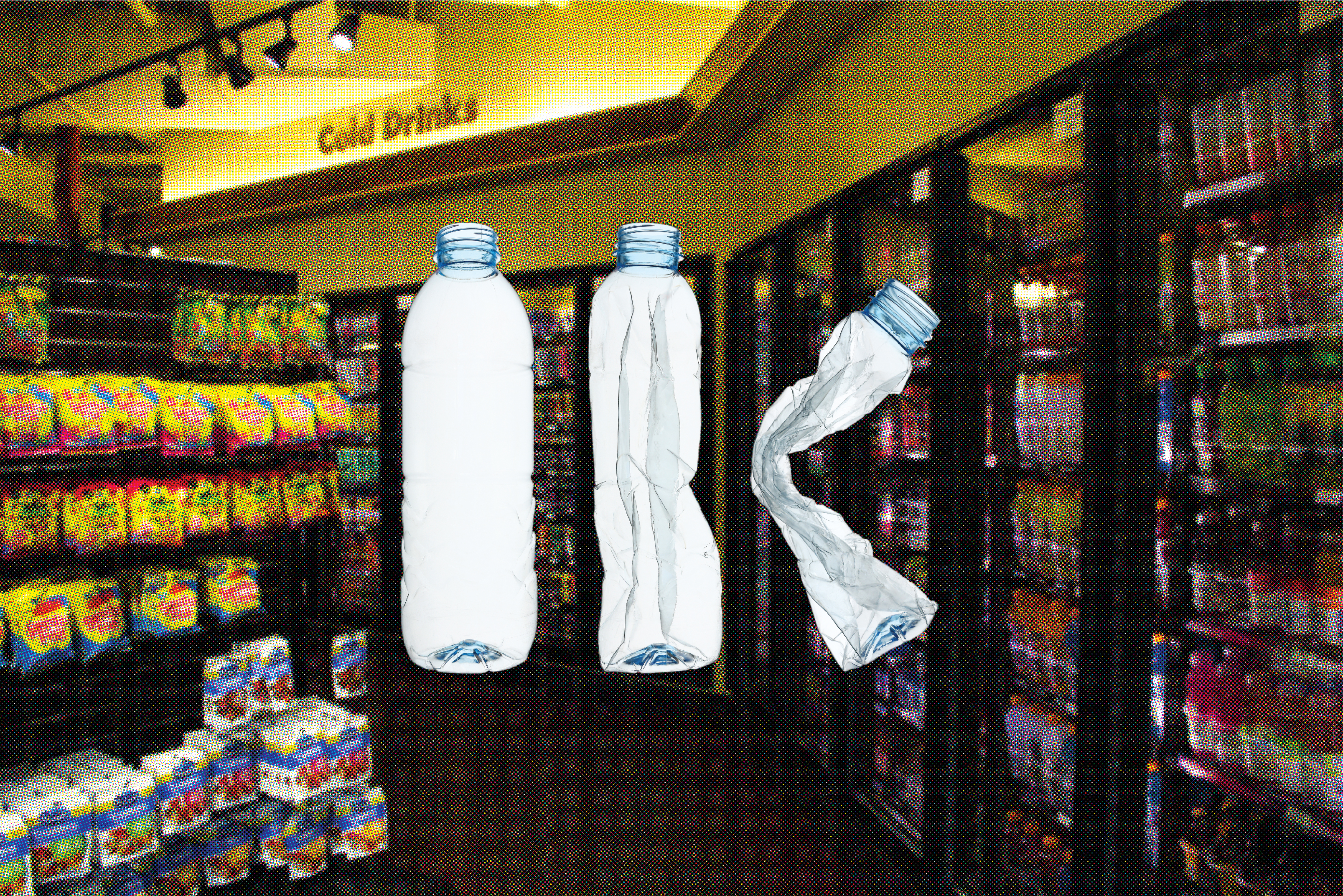
    Humboldt State banned single-use plastic water bottles in Fall 2011. In the eight years since, it seems HSU has hardly increased the amount of water fill stations on campus.

    Campus banning single-use plastic was the right thing to do. It’s progressive and environmentally friendly, two things Humboldt State prides itself on. But the least administrators could do is give us more than two ‘Hydration Stations’ to fill our own bottles.

    Nearly every building is home to a drinking fountain, but these fountains are outdated and many of them produce warm, ill-tasting water.

    The Lumberjack has highlighted the issue of on-campus stores selling single-use plastic sodas and sugary drinks in the past, but we’re here to hammer it home again.

    Disposable water bottles alone once contributed to a large portion of on-campus waste. Banning single-use plastic water bottles decreased that waste and even reduced HSU’s carbon footprint significantly. But campus makes waste with different products, ones filled with sugar and chemicals.

    You may be thinking that we should just bring our own bottle filled with water to school, and most of us do. But there are times where we forget, and others where we run out. When we run out of water, we run out of healthy options. If we refuse to gargle the room temperature wash that comes out of our out-dated fountains, what options are we left with? Pepsi, Gatorade, Fanta and Vitamin Water.

    It’s an insult to the student body and prospective students that HSU markets itself as pushing the bounds of sustainability when it continues to sell massive amounts of single-use plastic.

    Profit is held far above sustainability and student health. Are we surprised? Not in the least. HSU often prioritizes profits over student health (the windowless rooms in Creekview are a great example).

    If the school refuses to take action, then responsibility falls to us students. One of our only options for retaliation and action as a student body involves our purchasing power. Where students spend their money and what we say we will spend it on does create change. Attending Associated Students meetings and voicing concerns is another helpful tactic.

    We are grateful for HSU’s aim of a more sustainable campus and future through the reduction of plastic consumption. But HSU needs to give students more drinkable water sources. The university needs to prioritize student health and cut ties with brands that continue to use plastic, even if it hurts the bottom line.

    For a school that so desperately needs to increase enrollment and recruitment of students, HSU needs to remember to put effort into the students that are already here. Reputation can be everything, and this issue, just like our water, leaves a bad taste in my mouth.

  • Pollution Plagues California’s Biggest Industry

    Pollution Plagues California’s Biggest Industry

    Students learn how agriculture and water intersect, and how water can be impacted from outside sources

    Agriculture is the foundation of modern society. California’s Central Valley keeps millions of people fed from its acres of cultivation, but that much land, and work, requires a lot of water.

    Matthew Lotakoon, the president of the Water Resources Club at Humboldt State University, worked as a youth leader with the Tulare County Farm Bureau. The program provided local students with agricultural work in Tulare County and sometimes across the state of California. Lotakoon said his big take away was that agriculture is the economic backbone of the state.

    “No other industry in California matches agriculture’s economic productivity,” Lotakoon said. “There is a complex environmental solution to maintain biodiversity and economic livelihood.”

    Lotakoon said that the landscape of the Central Valley changed throughout its history. Most of the Central Valley has been soaked with water flowing off the Sierra Nevada mountain range. Since then, the agriculture industry has worked to serve the need for reliable food, a need that has been persistent and dominant.

    “No other industry in California matches agriculture’s economic productivity. There is a complex environmental solution to maintain biodiversity and economic livelihood.”

    Matthew Lotakoon

    “Historically, the Central Valley has been very productive,” Lotakoon said. “Most of the Central Valley was riparian areas, lots of swamps and reoccurring wetlands. Vast herds of elk and pronghorn lived on the landscape. And now, little towns like Porterville and Tulare have appeared and agriculture fields are everywhere.”

    To support a growing population of people, cities and roads were built on land that had previously been underwater, or at least waterlogged. The fertile ground was ideal for the agriculture industry. A decision was made in the 19th century to develop the Central Valley into a bread basket. A thirsty bread basket.

    “For the limited amount of water we have, we have to consider how to use it to preserve biodiversity while farmers are trying to maintain their livelihood,” Lotakoon said. “The farmers are good people, it is water policy in the Central Valley that is the challenge. Once partisan politics gets involved, it gets very messy.”

    Sustainable agriculture practices are the North Coast’s solution for feeding people in an appropriate way. To farm sustainably, resources including water, land and feed are used responsibly to prevent them from being depleted. The goal is to produce food forever. But farmers have to be conscious of where they get their water from, to avoid polluted crops.

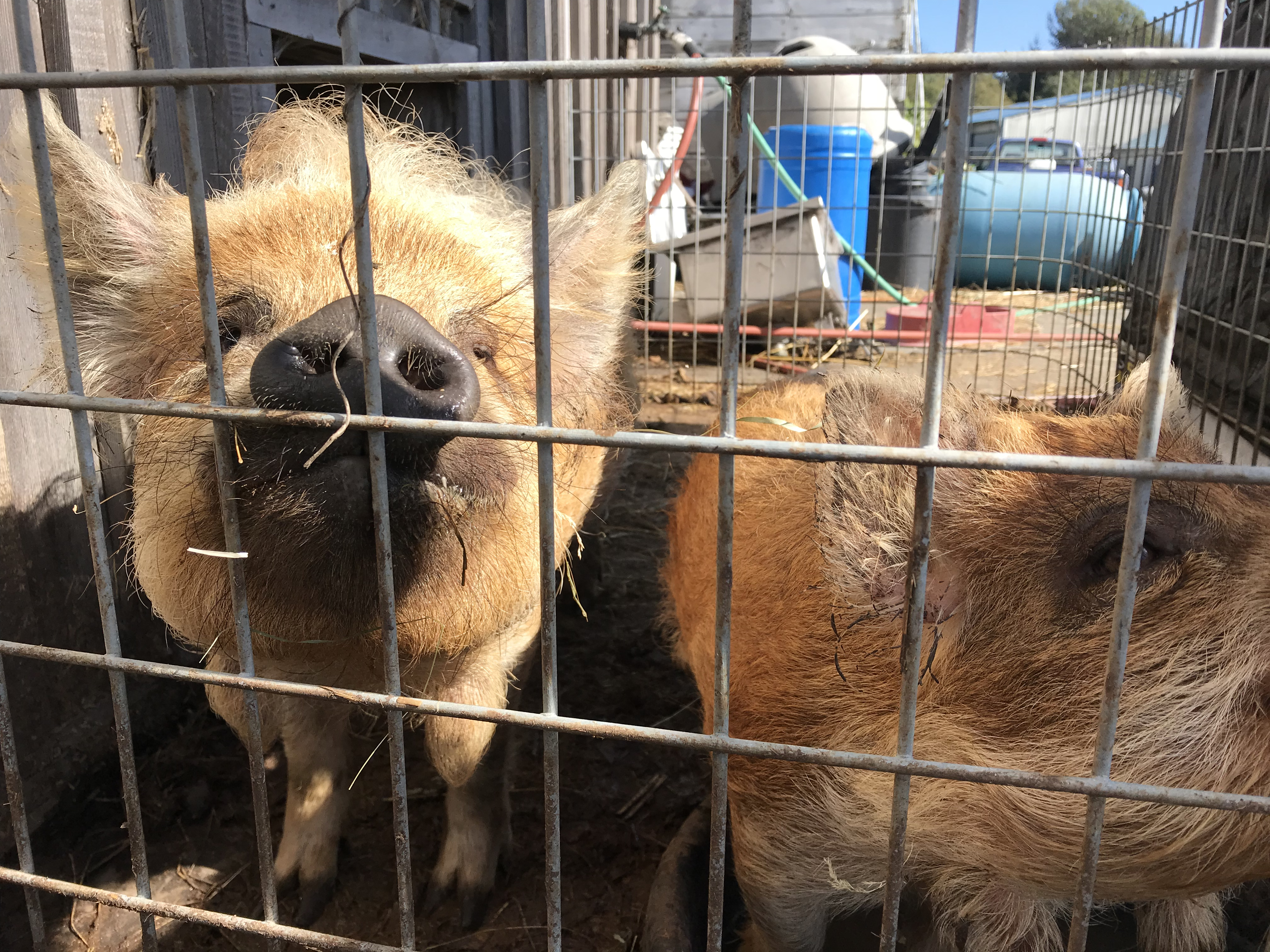
    Shail Pec-Crouse feeds her kunekune pigs. Pec-Crouse owns and manages a farm which practices sustainable farming, meaning she will be able to farm how she does today, forever. | Photo by August Davidson

    Shail Pec-Crouse owns Tule Fog Farm, a sustainable animal farm in the bottoms of Arcata. Her 22-acre property is home to pigs, sheep, turkeys and cows raised in a way that won’t damage the land they live on. Her operation is not very resource-intensive, although she did say working on the farm is a full-time job.

    At the moment, Pec-Crouse’s farm is hooked up to the municipal water system. It is an expensive alternative, but considering the local Sun Valley Floral Farm uses the herbicide RoundUp on nearby fields to prepare them for growing flowers, it is a safe alternative.

    “The field will be green one day,” Pec-Crouse said. “And orange the next.”

    It isn’t unreasonable to believe the toxic herbicides infiltrate the soil and work down into the groundwater. Infiltration is when soil absorbs water that falls on its surface. The water fills in crevices and pores between soil particles to create something of an underground lake called an aquifer. Depending on the chemical, infiltrating water can carry toxins into the aquifer.

    Watershed professor Joe Seney said groundwater contamination is a big management challenge. The use of herbicides, industrial waste, poorly constructed septic systems and urban runoff often pollute groundwater. Pollution poisons drinking water, destroys local ecosystems and can cause land to be infertile.

    Emma Flewell is studying environmental policy and planning at Humboldt State and worked with Ahtna Facilities Services to clean up a former Naval petroleum reserve in Bakersfield. The oil field contaminated a nearby aquifer and will take decades to clean up. The groundwater in the aquifer was used as tap water by a nearby neighborhood until people started getting sick.

    “The farmers are good people, it is water policy in the Central Valley that is the challenge. Once partisan politics gets involved, it gets very messy.”

    Matthew Lotakoon

    “There are a lot of aquifers that have the potential to be used for municipal water, but it’s sad because some of them are polluted,” Flewell said. “Being in environmental science and management, cleanup jobs are common. There have to be people who clean up the messes we make.”

    Flewell said there should have been legislation long ago to prevent aquifer pollution. She said it would be less expensive to not pollute in the first place than pay for the cleanup. Since the process to restore toxic sites takes years, the work needs to start as soon as possible.

    The Tule Fog Farm is an example of how a polluted landscape can be restored to be productive again. The farm is a remediation site, which means the ground the farm is on was once polluted but has since been restored. It takes knowledge and technology to restore land, and it should be an inspiration for future remediation.

    Lotakoon said consultation and collaboration with farmers is important moving forward. He stressed nobody is evil and it’s important to accommodate people and consider cultural differences and mannerisms.

    “Farmers are decent people trying their best to do good,” Lotakoon said.

  • Reduce, Reuse, Repurpose Recyclables

    Reduce, Reuse, Repurpose Recyclables

    Earn money. Many recycling plants in California offer trade-in programs where you can redeem money from the cash refund value (CRV) of plastic, glass and aluminum cans. The CRV amount for aluminum cans under 24 ounces and for glass and plastic bottles is $0.05. Containers larger than 24 ounces are redeemable for $0.10. Here in Humboldt you can take your bottles and cans to Humboldt Sanitation & Recycling in McKinleyville or the Eureka Recycling Center.

    Make something new. There are so much things that can be reused and transformed into something new. Milk cartons can become bird feeders and trash can become artwork. Locally, Scrap Humboldt offers hundreds upon thousands of recycled, slightly used and new items for sale to let your creativity soar. They host creation tutorials to show people how to turn something discarded into something useful again. You can also donate your clean recyclables to their Arcata location to add to their collection of items for repurposing.

    Clean them. Clean your recyclables before you toss them. Be mindful of the journey your recycling has yet to take in this consumerist chain. Besides knowing what is appropriate to recycle, it’s also important to properly prepare items before you recycle them. Cans should be rinsed clean, plastic caps should be discarded and wrappers should be torn off of containers.

    Compost. Compost what you can. Paper materials like cardboard and newsprint are great materials for creating new flower and produce beds. These items don’t have to end up in the trash or even the recycling bin. Paper is great for reducing decomposition stench from compost bins and the carbon in paper can help facilitate the breakdown of waste. Just be sure the paper you use in your compost doesn’t have glossy inks like magazine paper.

    Throw away the rest. You might be recycling things that aren’t recyclable. Plastics numbered with 3, 4 or 7 are sometimes not accepted by curbside recycling programs. Check your local recycling plant’s policies on what materials they accept and what they reject. Things like pizza boxes, aerosol cans, batteries and styrofoam are not recyclable. Throw items like these away or find a proper disposal. Here on campus there are several recycling hubs which offer bins for proper disposal of batteries, computer products and cellphones.