The Lumberjack


Students Serving The Cal Poly Humboldt Campus and Community Since 1929

Tag: sustainable

  • Cal Poly Humboldt signs contract for installation of two megawatts of solar 

    Cal Poly Humboldt signs contract for installation of two megawatts of solar 

    University expects the new microgrid will provide about 25-30% of current annual campus electricity needs

    by Brad Butterfield

    Striving for sustainability and nestled in among the indomitable redwood giants of Northern California, California’s new polytechnic signed a contract on Feb. 2 for two megawatts of solar and three Tesla megapack batteries, which are expected to supply 25-30% of the university’s current annual electricity usage. Not yet immune from fossil fuel energy dependence, the university used 13,723,403 kWh of electricity and 922,559 Therms of natural gas, resulting in a combined 8,215.37 metric tons of carbon dioxide equivalent (MTCDE) of emissions during the 2022-23 academic year. The new microgrid/solar project is a tremendous step towards the university’s goal to become carbon neutral by 2045 and will change Cal Poly Humboldt’s energy portfolio for decades to come.

    Where does Cal Poly Humboldt currently get its electricity?

     Where a significant portion of Humboldt County purchases its energy from Redwood Coast Energy Association, Cal Poly Humboldt has opted to purchase electricity from Shell Energy, North America. This choice in energy procurement by the university is made possible by Cal Poly Humboldt’s direct access (DA) purchase of electricity, in congruence with 13 other DA CSU’s. “DA provides retail choice to customers by allowing them to purchase electricity directly from an Electric Service Provider (ESP),” according to the California Public Utilities Commission website. With DA, Shell, North America provides the energy, then that energy is transported by PG&E to Cal Poly Humboldt campus. DA is lottery based and allows universities to choose the most cost efficient energy option, rather than the county supplied utility in any given area. The negotiation of this DA energy procurement is handled by the chancellor’s office and allows Cal Poly Humboldt to access electricity at a competitive rate thanks to the aggregated 13-campus negotiation carried out by the CSU. While renewable energy sourcing is important, it has to be carefully balanced against the university’s broad range of financial needs, according to Cal Poly Humboldt’s Energy Manager Andrea Alstone. “As the Energy Manager, obviously, I want to use as little energy as possible and make it as renewable as possible. But, I also realize that costs are real and it’s kind of a zero sum game,” Alstone said. “What we’re spending on electricity means that we’re not spending on other things that the campus needs; we really want to be conscientious of that fact.” Importantly, CA Senate Bill 100 will require renewable energy and zero-carbon resources to supply 100 percent of electric retail sales to end-use customers by 2045. Californian’s are on a one-way road to renewable energy.“[Energy] use in California has to be 100% renewable by 2045. So, as a direct access customer, we will meet those standards, but there are other entities that are doing that sooner. “The choice to purchase from Shell, North America comes, primarily, down to cost – a fact not surprising nor impressive to environmental science and management senior Rain Lopez. “This school is a government institution, which is basically a business that is clearly more interested in maximizing its profits and reducing meaningful spending… so, it’s not surprising that the school made this choice,” Lopez said. Environmental science and management Junior Brooke Douglass put things more bluntly. “Shell is an evil company that has committed many environmental injustices,” Douglass said.

    The Carbon Cost of Purchasing Energy from Shell

    The university’s choice to purchase from Shell, North America has real world impact, as they do not source as much of their energy from renewables as Redwood Coast Energy Authority. Shell, North America sources its electricity from 34% renewables, (Biomass & Biowaste, Geothermal, Eligible Hydroelectric, Solar, Wind) whereas RCEA sources from 50% renewables. This gap is in large part due to the differing goals of each energy provider. Shell, North America looks to obtain the cheapest electricity possible for its customers, while still meeting California’s current renewable energy requirements, according to Alstone.“Whereas RCEA is more community focused and it’s like, ‘what does our community want and how can we meet that?’” Alstone said. “Cost is important, but it’s not the only factor in their decision.” 

    A (natural) gas need

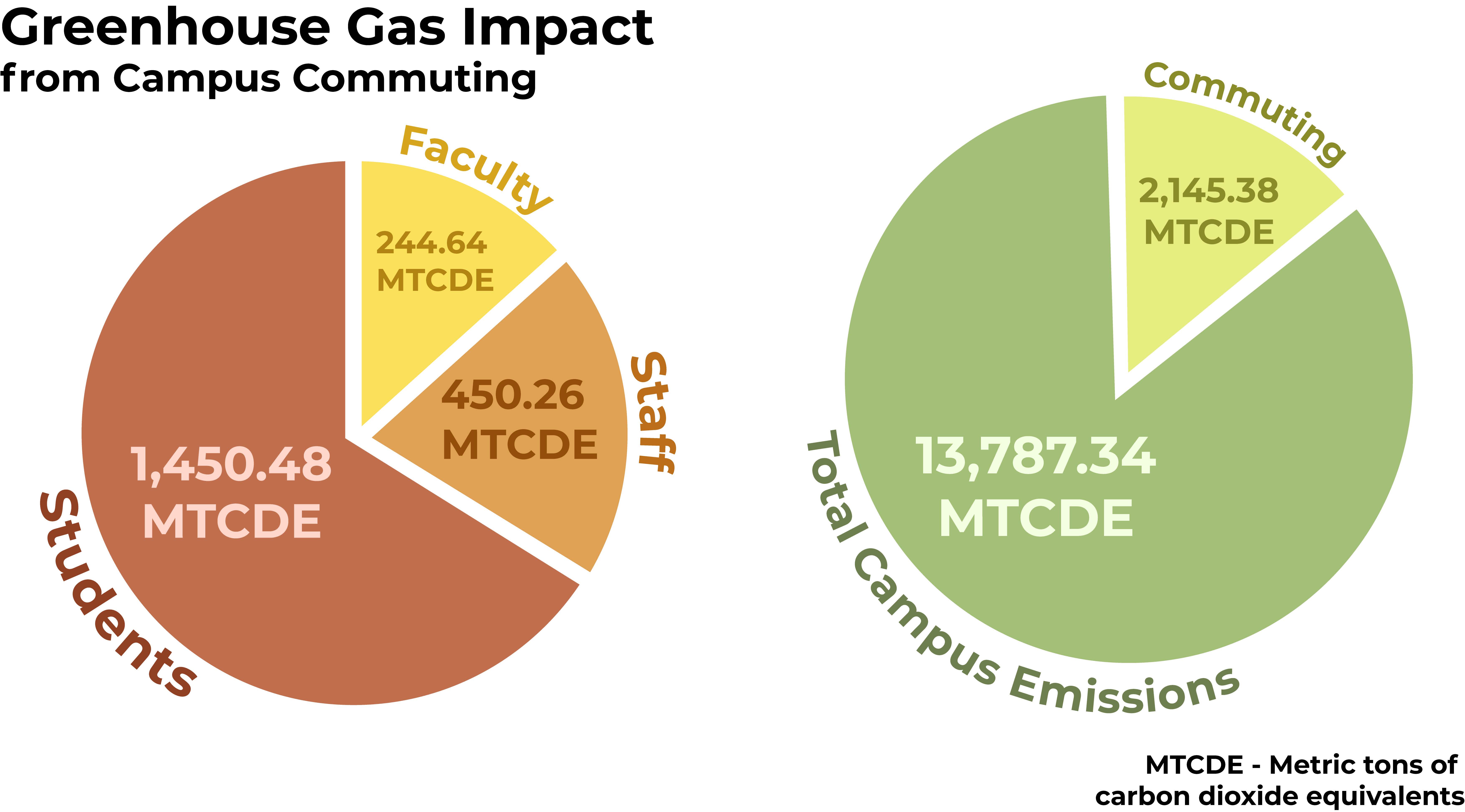
     Importantly, when talking about total campus energy consumption, electricity is only half the equation – actually, it’s exactly 35% of the equation, with the majority of energy consumption on campus coming from natural gas. The university’s main account for natural gas is with the Department of General Services, a branch of the CA government. Perhaps surprisingly, campus use and cost of electricity is a near perfect mirror image of its natural gas use and cost in 2022-2023, where electricity accounted for 35% of total energy usage on campus, but 61% of total energy cost. Natural gas accounted for 65% of total energy used but only 39% of overall energy cost. Cal Poly Humboldt, being the northernmost CSU, has a much greater need to heat its buildings as compared to other CSU’s. The necessity of heating its buildings nearly year round contributes to Cal Poly Humboldt’s ranking as 2nd highest in ‘campus gas purchased’ out of the 23 CSU’s, for the ‘22-’23 academic year, (when natural gas usage is normalized per-square-foot) according to the CSU energy dashboard. This equates to 0.46 therms/SF natural gas usage at Cal Poly Humboldt, only out-gassed by Cal State Fullerton. When thinking about MTCDE emissions, it’s incredibly important to factor energy efficiency into the equation. “If someone told me I had an infinite amount of money to spend on things, before I started spending them on more renewable energy, I would make things more efficient,” Alstone said. Meaning, the best way to obtain sustainability is to not require said energy in the first place. A better insulated building with triple pane windows requires less overall energy to heat and is thus more energy efficient, which of course leads to the dilemma of whether to allocate money towards infrastructure efficiency projects or towards renewable energy generation, i.e. solar panels. In 2022-23, Cal Poly Humboldt used 6.8kwh of electricity per square foot at a rate of $1.49/SF. Total campus emission for ‘22-’23 was 13,787.34 MTCDE, equivalent to 31,889 barrels of oil, according to university Climate Action Analyst Morgan King. That’s a substantial consumption of fossil fuels, no matter how one looks at it. For some students, this speaks to a disconnect between the university’s green-marketing and the campus’ actions. “Humboldt likes to claim it’s green though and it’s superficial… I think that being ‘green’ is a political buzzword,” Lopez said. “An institution of this size, regardless of having a relatively ‘small student body’ should have more resources to support its ‘green programs.’”

    Solar energy on the horizon

    The contract signed with EDP Renewables North America Distributed Energy on Feb. 2 means the university will not own, maintain nor pay for the installation of the solar system, however there will still be initial costs. Roof replacements are necessary for buildings that will be receiving solar panels, and sites on campus receiving the microgrid components will need to be prepared. The facilities yard, for example, is going to house three Tesla shipping-container-sized batteries. In total, the campus will have two megawatts of solar when the project is complete, which is about the max number of panels the university can physically support, currently.  “I want as much as [solar] we can have, and that’s kind of the max given the roofs in the parking lots and the fact that we’re kind of physically constrained,” said Alstone.The battery will provide a peak power of 5.8MW and a total energy of 11.5MWh. Battery capacity is crucial to the systems function as a reliable microgrid.“If everything went out, we’d need a battery which can start our energy system from zero, so we’ve oversized the battery,” Alstone said.Annually, the solar system is expected to produce 3,300MWh of solar – with a guaranteed production of 2,866MWh. This equates to about 25-30% of the university’s current annual electricity usage. In addition to making strides to lower campus greenhouse gas emission, the solar is also expected to save the university money, in multiple ways. As per the contract with EDPR, the university will pay the company for the electricity generated by the solar, but at a much lower rate than the university currently pays for electricity from Shell, North America.“It will end up lowering our bill,” Alstone said. Additionally, thanks to the Inflation Reduction Act, the solar system will also save the university money through hand-me-down tax benefits.“The [tax] benefit will be passed on to the owners of the solar, EDPR, and they in turn pass it on to us in the form of lower electricity costs,” Alstone said.  Another positive aspect to the contract with EDPR is a guaranteed minimum amount of electricity. If they don’t meet the minimum, then EDPR will pay the difference to the university, according to Alstone.Due to the need to install the solar arrays in multiple parking lots across campus, the installation will likely need to take place during the summer break, so as not to irritate the difficult parking situation on campus any further.“We anticipate the canopies will be installed over existing parking spaces Summer 2025 when classes aren’t in session with temporary, minimal impact to parking, “ said Aileen Yoo, Director of News and Information for the university.Cost savings, reduced reliance on fossil fuels for energy, no installation or maintenance cost – this is sounding like a killer deal. Naturally, there are two ways of looking at things.“In an ideal, ethical world, the university would invest in these solar panels as owners, [then] source and promote local unionized workforce for photovoltaic product repair, which would boost your local economy and probably reduce overall maintenance costs…” Lopez said. “But again, universities are businesses and will not operate from a place of long-term vision, just immediate costs.” In any case, the contract signing and soon-to-come microgrid and solar system seem a justified time for Cal Poly Humboldt to raise arms in victory – and that they are. “The microgrid project not only showcases Cal Poly Humboldt’s longstanding commitment and investment into sustainability, but it captures the spirit of what we do here: educate students who can help solve the world’s most pressing problems by providing a real-world example of the benefits of microgrids and how they work,” Yoo said.

  • Plastic Bottled Beverages Still Offered On Campus

    Plastic Bottled Beverages Still Offered On Campus

    In spite of the successful campaign to phase out single-use water bottles, Humboldt State has yet to remove plastic bottled beverages from campus

    Almost 10 years have come and gone since Humboldt State University took back the tap and did away with single-use water bottles on campus.

    Overall HSU is known to lead the way in sustainability across the California State University system. In spite of being further ahead in the sustainability game than most campuses, HSU still offers a variety of beverages for sale packaged in single-use plastic.

    HSU Dining Services Director Ron Rudebock said they have gotten a fair number of comments over the last couple of years regarding plastic products and on phasing out plastics completely.

    “We have been working with vendors to obtain their products in a reusable or compostable or recyclable package and vendors are changing their package materials,” Rudebock said.

    The California State University system passed an anti single-use plastic policy in December 2018.

    Four of the five campus responsibilities listed under the policy have set deadlines.

    The first is the elimination of single-use plastic water bottles by Jan. 1, 2023. HSU met this requirement in 2011. The second is the elimination of plastic straws no later than Jan. 1, 2019. HSU eliminated plastic straws during the fall 2017 semester.

    The third responsibility listed, also set for January of this year, was the elimination of single-use plastic carryout bags. HSU stopped using plastic bags back in March 2014. The fourth deadline, and last with a time requirement, was the elimination of single-use polystyrene (e.g. STYROFOAM™) food service items no later than Jan. 1, 2021. HSU eliminated Styrofoam to-go containers over 10 years ago and the campus is working to eliminate it in any pre-packaged items.

    The final goal of replacing single-use plastic items with materials that are reusable, locally compostable and/or recyclable doesn’t list a specific deadline.

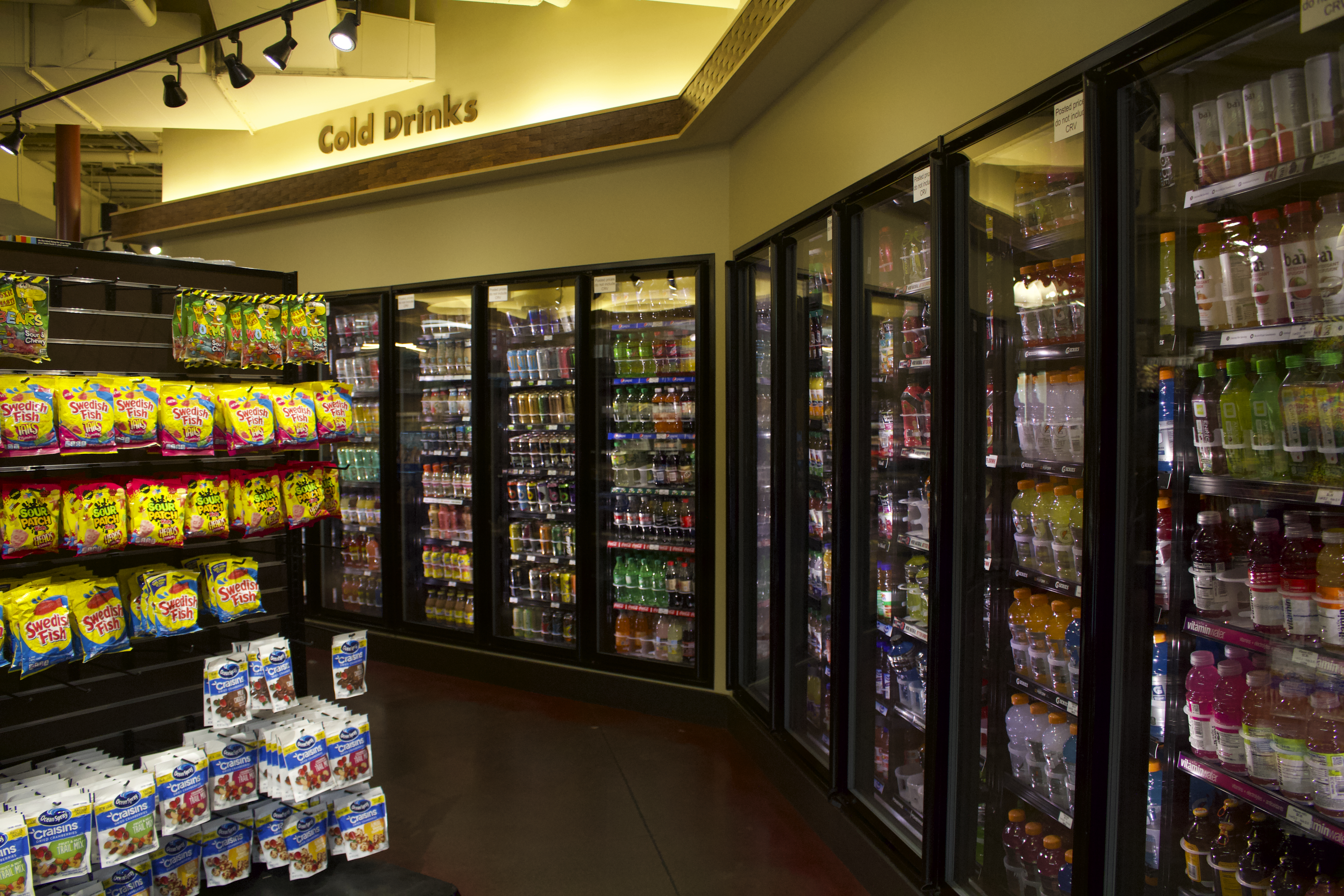
    A variety of some of the single-use plastic bottled beverages offered. According to Rudebock, much of the decision to continue to sell single-use plastic drinks is because of consumer choice. | Photo by Megan Bender

    Rudebock said this specific change is a challenge. The Depot, the College Creek Marketplace, the Cupboard and vending machines still offer plastic bottled beverages on campus.

    “We would like to see a faster adaption but with this guideline having no deadline and with the current collapse in the recycling market I do not see this becoming feasible in the next year,” Rudebock said.

    Dining services has made some efforts in providing more glass or aluminum options. The J, for example, has a beverage cooler that is all aluminum and glass, has eliminated single use plastic containers and has single-use packaging that is compostable or recyclable.

    However, other locations haven’t been able to make the same change as effectively because of the demand for products that happen to also be in plastic bottles.

    “We’ve been working with a lot of our vendors and pushing, trying to get more either glass or aluminum containers.” he said.

    Rudebock said Dining Services also goes out of their way to order aluminum and glass alternatives whenever possible from specific companies and brands like Coke or Pepsi.

    “It kind of comes down to consumer’s choice,” he said. “Consumers can help by purchasing products that are in reusable, compostable or recyclable packaging and not requesting products that are not in reusable, compostable or recyclable packaging.”

    Students have pushed back against the university in the past, questioning its dedication to environmental responsibility over their business ties with PepsiCo.

    As reported in the Lumberjack and the North Coast Journal, in 2017 HSU made efforts to meet student’s demands to closer align with its dedication to social, economic and environmental issues by re-evaluating a 40-year-long partnership with PepsiCo.

    Under the contract PepsiCo funded HSU with around $58,000 worth of athletic scholarships in exchange for pouring rights. Pouring rights allowed PepsiCo to reserve 80% of HSU shelf space for their products.

    Students also made the argument the set up was not fair to local businesses.

    In spite of being in a budget deficit and the loss of scholarship funding, HSU did not renew the pouring rights contract and let it expire at the end of June 2017.

    HSU was the first California public university and third national public university to phase out water bottles.

    The University Center and Dining Services stepped into to help with some of the lost resources.

    Rudebock said they managed to fund a majority of the lost scholarship money but leaves the decision of how the scholarships are dispersed up to the school. This way the UC and Dining Services are not directly funding athletics or any specific department.

    The university still does business with PepsiCo but under different rebate-based agreements. Dining services also stopped carrying Aquafina water bottles, a brand owned by PepsiCo as a result of the nationally recognized Take Back the Tap campaign.

    Under the Waste Reduction & Resource Awareness Program, students began efforts to Take Back the Tap at HSU starting in 2009. The student lead group and Dining Services worked to phase out the sale of single-use water bottles in 2011 as is the primary focus of the campaign.

    As a result, HSU became the first California public university and third national public university to phase out water bottles. Dining Services initially explored an alternative by offering boxed water.

    “At first we thought they were upset with the plastic water bottles, but they said ‘No no, just the water,’” Rudebock said. “It was more about the idea of selling packaged water.”

    Before HSU removed water bottles on campus, TBTT calculated that HSU’s annual bottled water demand “required approximately 43 barrels of oil per academic year” and in turn was “releasing 35,000 pounds of carbon dioxide into the atmosphere.”

    HSU now owns two Hydration Stations and has 16 water fill stations on campus.

    Environmental Science & Management Professor James Graham and his geospatial students created an interactive map of HSU that includes where to find water fill stations on-campus as well as other resources.

    The locations of all water stations on HSU’s campus according to the Sustainability project. These locations include the two Hydration Stations.

    Sustainability Director Morgan King said Facilities Management worked with students help create the map.

    “We worked with [Graham’s] students to develop layers for sustainability attributes,” King said. “Including water filling station locations, bike parking locations, recycling and compost bin locations.”

    Anyone can access the map by visiting HSU’s sustainability website. The map key is listed in a drop down menu that offers different types of resources on campus. Under the sustainability option, users can check the box of the information they’re looking for.

    Rudebock said Dining Services remains attentive to the needs of the students and the possibility of selling less plastic-bottled products.

    “Every journey begins with a step,” Rudebock said. “The less plastic containers that students buy helps change the need for that product.”


    The California State University system’s single-use plastic policy passed in December 2018 includes four policy changes that have deadlines, but the fifth and final goal of the policy doesn’t list a deadline.

    • Eliminate single-use plastic water bottles by January 1, 2023. HSU has already met this requirement as of 2011.
    • Eliminate plastic straws no later than January 1, 2019. HSU eliminated plastic straws during the fall 2017 semester.
    • Eliminate single-use plastic carryout bags no later than January 1, 2019. HSU eliminated plastic bags in March 2014.
    • Eliminate single-use polystyrene (e.g. STYROFOAM™) food service items no later than January 1, 2021. HSU eliminated Styrofoam to-go containers over 10 years ago and are working to eliminate it in any pre-packaged item
    • Replace single-use plastic items with materials that are reusable, locally compostable and/or recyclable.

    To find out more about HSU’s Zero-Waste Initiatives, WRRAP and TBTT visit the WRRAP homepage.

  • Mountain Biking Has a Sustainability Problem

    Mountain Biking Has a Sustainability Problem

    With all the gear and gadgets, mountain biking isn’t as sustainable as it may seem

    For a sport that usually occurs in natural settings, and whose participants generally value the ecosystem and the world around us, mountain biking has a serious sustainability problem.

    Everything has an expiration date. No matter the maintenance, nothing is ever ‘for life,’ and nowhere is this truer than in the mountain bike industry. Chains stretch, tires bald or blow out, brake pads get worn down and bearings become crunchy and rough.

    Issues arise when one attempts to revive or service a bike. Many of the functions are delicate and precise, requiring fresh parts to operate smoothly. This means something as simple as a tune-up often results in cables, housing, tubes and tires being thrown away.

    Improper installation or use means that these parts break before they should and get replaced prematurely. Some people replace prematurely simply because they want improved performance.

    It’s hard to process this waste on an individual level, but walk into your local bike shop and look in the trash cans. Often, they’re filled with very un-recyclable items that are used, removed and replaced.

    Of course, the nature of the sport is that parts get worn down or broken and must be swapped. That so many of these parts get replaced prematurely or destroyed early due to user error is only part of the problem.

    With the way our world is headed, mountain biking is due for a rude awakening on the ways that it creates unnecessary waste.

    Other issues arise when we look at the bike industry and the way they market their high-end products. Often, these brands will swaddle their expensive parts in multiple layers of processed cardboard and plastics.

    Recently, I purchased a new shifter for my bike. The shifter is a small plastic pod, about the size of a mandarin orange. It arrived in a box that I could’ve fit my shoes into.

    Just because you can get away with selling drivetrain parts that cost as much as high-end electronics, doesn’t mean you need to package them like iPhones.

    If these parts were packaged in plastic bags rather than bulky cardboard, you could fit 10 times the items in a similar space, drastically cutting down on shipping material and resources.

    Usually, I give corporations a bit of lee-way with the way they package expensive items. It makes sense that they’d want to provide the customer with a sense of exclusivity for choosing to spend their hard-earned dollars on these parts. But with the news about our world’s climate becoming grimmer with every passing day, the mountain bike industry needs to step up and restructure their priorities to make the sport more sustainable.

    I’ve never met a mountain biker who didn’t care about the environment and the future of our planet. Unfortunately, when something breaks usually the whole bike is unrideable until the issue is corrected. Most of us just accept the impact of our sport as there aren’t many other options.

    With the way our world is headed, mountain biking is due for a rude awakening on the ways that it creates unnecessary waste.