The Lumberjack


Students Serving The Cal Poly Humboldt Campus and Community Since 1929

Tag: the Editorial Board

  • Impending mergers threaten Humboldt’s identity

    Impending mergers threaten Humboldt’s identity

    The merging of departments within the College of Arts Humanities & Social Sciences will lead to the detriment of distinct programs and the appeal of Humboldt State as a unique university. 

    As smaller departments are pressured to combine in order to meet the demands of budget cuts that add up relentlessly in the face of the COVID-19 pandemic, we run the risk of losing the focused, intimate education that drew students to campus in the first place. 

    Due to low enrollment the journalism and communication departments have submitted a proposal to Dean Roseamel S. Benavides-Garb, suggesting they be combined, for fear of losing the departments altogether – a fear that is shared among many of the smaller departments on campus.

    One practical benefit of combining the journalism department with the communication department is the opportunity it would allow for courses to be offered more often with more students in the department. On the flip side, combining departments presents the potential to strip each major of its individual identity. While the increased size of the combined department could potentially attract more attention to each discipline, the lack of distinction between the two could also prove confusing and drive prospective students away. 

    Higher education is a step away from the general, scattershot education of grade school. We learn what we’ll focus on, and begin developing specific skills. We also begin to add to the greater pool of knowledge for our chosen field of study. The less our education hones in on a specific field, the more it feels like a shallow high school class – lacking the depth that student’s pay for when they attend a university. 

    While the emphasis of the study of communication is on the underlying meaning of how we communicate, the primary concern for most journalism students is the application of skills to make media of our own. Journalists are already required to take communication classes which prepare them for their chosen focus. Communication classes are valuable to journalists. Every member of our editorial board has taken a communication class which has shaped our perspective, just as our other general education classes impart valuable lessons. 

    Combining departments also comes with grave concerns that the departments will lose lecturers and potentially some of the classes they teach as former chairs are forced to move into teaching positions. This would cost journalism students opportunities to interact with more media professionals and those lecturers would be placed in danger of losing pay and the health insurance they have come to rely upon for themselves and their families. 

    The proposed plan not only throws the student experience in the department into question but ultimately, the merger’s promise to cut $180,000 in expenses annually feels almost like chump change in comparison to the monster deficit the university currently faces. At the end of the day, administrators, students and faculty have to ask themselves whether or not all this restructuring will benefit the university in the long term. Cuts save some money in the short run, but they represent a greater loss to the university and the Humboldt community.

    Some good will come of department mergers. We all have a lot to learn from each other. As journalism students, we will welcome our peers from the communication department and the value their program will add to ours in regards to the developing fields of ethics and theory of communication. Understanding how we interact with the world through language and the culture of communication is critical to operating as an effective journalist. 

    We hope that we can offer greater knowledge of media literacy. Today especially, media literacy is an essential skill any student with a university education should have, and it is crucial that students across all disciplines are armed with the tools to critically assess, analyze and critique media so that they can be more mindful of the media they consume.

    We also hope to impart our own personal experience writing about our university. All of us hear stories of poorly run programs, incompetence at the top of the HSU ladder, haphazard cuts, and a lack of forward thinking. We speak to staff who are afraid of the repercussions for simply telling us their stories. If we want to make HSU a better place, where else might $180,000 per year be saved?

  • It’s not just the Capitol Police

    It’s not just the Capitol Police

    As the world watched from their televisions on January 6, we witnessed scenes unfold before our eyes that were, to many, unimaginable: supporters of President Trump swarmed the steps of the U.S. Capitol Building, then proceeded to break in and advance as far as the Senate Chamber. 

    In the build up to the attack, Trump and his allies delivered speeches near the White House reaffirming his baseless claim that the election was fraudulent and that they must fight to overturn the election results.

    As rioters made their way past the barricades and through the doors, one thing was clear: at the time of the attack, there were few attempts made by police to stop the rioters. This comes as a sharp contrast to the Black Lives Matter protests that took place just this past summer, in which peaceful protestors were frequently met with violent police intervention.

    According to The Armed Conflict Location & Event Data Project that took place May 1 to November 28, 2020, Black Lives Matter protesters were significantly more peaceful than right wing groups, but law enforcement resorted to using force in 51% of Black Lives Matters demonstrations they engaged with, while only restoring to using force in 34% of right wing demonstrations they interacted with during the same period. 

    These statistics confirm what many activists already knew. The Lumberjack has documented the Eureka Police Department using more force against protesters in Eureka this past summer than the capitol police used when an attack was made against the capitol. The police use more force against journalists documenting protests than when right wing groups raided the capitol building. 

    On January 6, it took the National Guard four hours to deploy from the D.C. Armory from the time that the mob began making their way from where Trump was speaking. In contrast, in June at the height of the Black Lives Matters protests, there were about 1,700 National Guard members from Washington D.C. alone who were mobilized to respond to the demonstrators. 

    The feeble response from authorities in Washington D.C. to the attack on the Nation’s Capital is another undeniable example of racial biases that remain alive and thriving in this country. Our police protect white domestic terrorists and continue to endanger the lives of Black protesters advocating to have their voices heard and their equality recognized. 

    It is a message to all of the activists who choose to speak out against police brutality and all the journalists who cover the efforts of activists. Even here in Humboldt County activists face police brutality for daring to ask for an end to police brutality. Meanwhile, police open the gates across the country for violent extremists. The department might be different, but the institution is the same.

    It will take a dramatic institutional change in how the country approaches law and law enforcement to begin to dismantle the structure of white supremacy. The attack on the capitol showed the world that the institutions of law in D.C. need to change, but we have the same institutions here at home. Humboldt needs to change, too.

  • Prop 22 represents political favoritism of money over workers’ rights

    Prop 22 represents political favoritism of money over workers’ rights

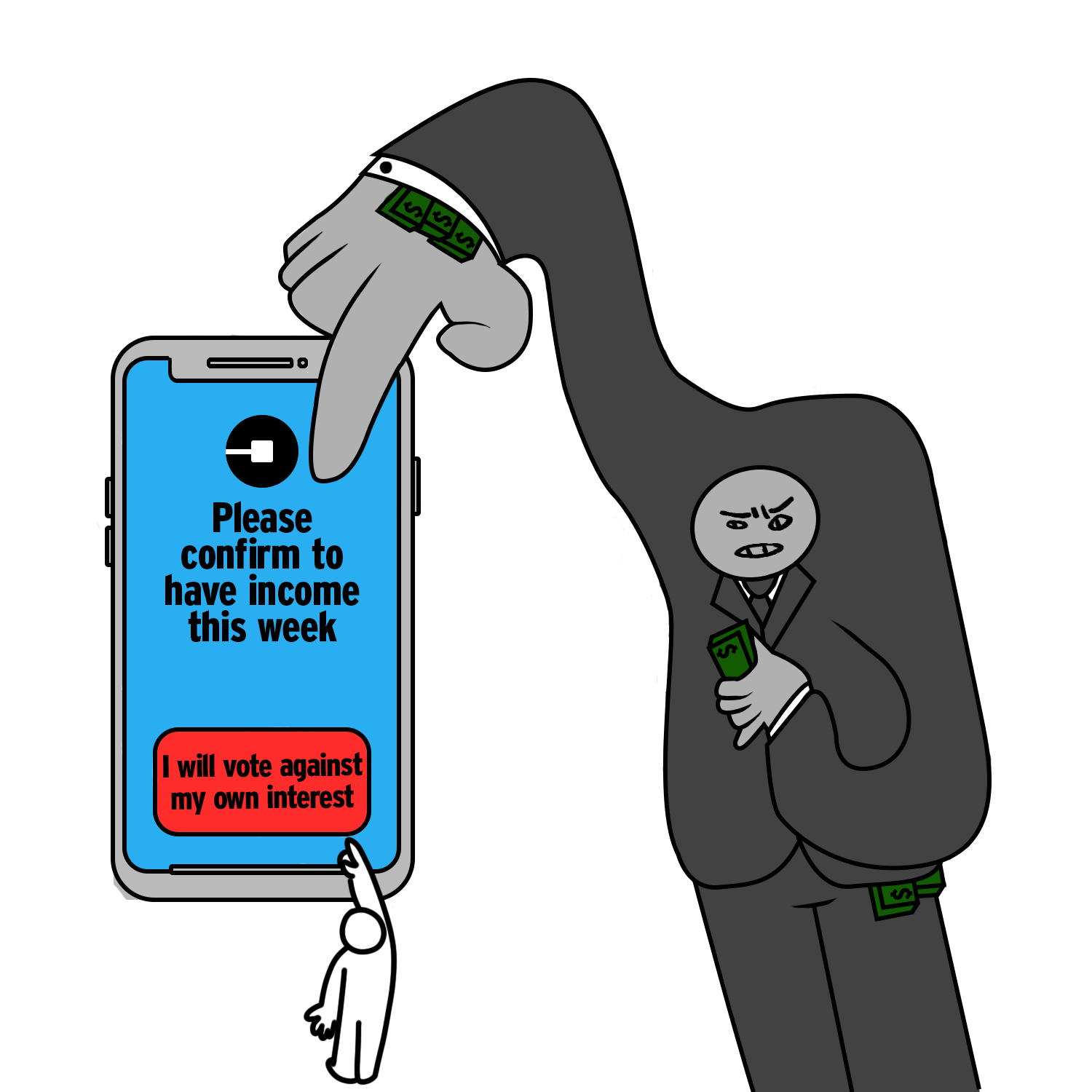
    California’s passing of proposition 22 on Nov. 5 represents a frustrating history of workers’ rights being trampled by the overwhelming influence of greed in politics. 

    This proposition forces app-based workers to be classified as independent contractors, rather than employees. This classification allows companies like Uber, Lyft and Doordash to pay their workers significantly less than California’s guaranteed minimum as well as provide them with worse benefits than would be guaranteed as a full-time employee.

    This proposition was vehemently opposed by labor unions that represented drivers. Unfortunately they were hugely outspent in advertising by the corporations that funded the ballot initiative for prop 22. Advertisements for a yes on prop 22 were incredibly misleading and placed on Amazon, YouTube and even inside of Uber’s app. They misleadingly claimed being an independent contractor provided workers with the freedom to receive benefits while driving on their own schedule. 

    In fact, under prop 22 drivers are only guaranteed benefits after 25 hours of engaged driving time. Engaged driving time is defined by prop 22 as time actively spent with a rider in the car, or a delivery in progress. With drivers reporting that they spend over half of their time waiting for a pickup, this could require workers to put in more than 40 hours a week for less benefits than a full-time California employee.

    The reason that companies like Uber and Lyft are able to continuously influence political campaigns is due to the fact that within the US, companies enjoy and exercise the same level of freedom of speech granted by the First and Fourteenth Amendments that residents due.  

    In a 1886 Supreme Court case, Chief Justice Morrison Waite said that “the Court does not wish to hear argument on the question whether the provision in the Fourteenth Amendment to the Constitution which forbids a state to deny to any person within its jurisdiction the equal protection of the laws applies to these corporations. We are all of opinion that it does.”

    Two years later, the Supreme Court made the ruling official stating, corporations had equal protection under the law as they were merely expressing and acting on behalf of the people that created and ran them.

    These rulings are what set the stage for one of the most important court cases in the history of politics within the US, Citizens United v. FEC. 

    In the rulings of the case, Justice Anthony Andrews, joined by other Justices of the court, wrote that corporations were protected under the First Amendment to freely express their opinions on matters both domestic and political. 

    Furthermore, Justice Andrews wrote in the majority opinion that the US government was not responsible for creating an equal playing field regarding the use of money, changing the rules of campaign financing, leading to the rise of super Political Action Committees. These PACs could acquire an unlimited amount of funds from corporations, individuals and other PACs to use for supporting political candidates and proposals.

    The consideration for corporations did not always extend to laborers. The US has a history of ruling against labor unions, going as far back as 1806, where the first case regarding a labor strike occurred with Commonwealth v. Pullis. The Philadelphia Mayor’s court ruled that leaders of a union strike were guilty of conspiring to raise their wages after labor strikes failed to do so. This established a precedent that labor unions were illegal, something that stood until 1842.

    The consensus in academic literature is that unions shrink income inequality. Union members make, somewhere between 10 and 30 percent, and enjoy more benefits. Unions also drive worker solidarity and income equality across race and gender lines. The recent rise in income inequality in the US is partially attributable to shrinking union membership. The idea of collective bargaining only works if trade unions have the power of large numbers of workers standing in solidarity. 

    The ferocity companies and governments demonstrate when quelling labor organizations should be all the evidence needed that labor organizations are effective. The total number of workers murdered in response to labor organization in the United States is unknown, but the number of workers killed by law enforcement, company militias, and other anti-labor forces during labor disputes numbers in the thousands. If labor organizations did not work, no one would drop bombs on striking workers and, knowing the risk, no one would strike if it did not benefit them.

    The US Government has often been hostile to labor organizations. During the early years of the industrial revolution, the legality of collective bargaining was uncertain, but often led to convictions and fines. Even when collective bargaining was legalized, the National Guard and local law enforcement were responsible for violence against labor organizers. 

    Resistance to collective bargaining should be expected from people who became as powerful as they did by appealing to moneyed interests. No one in a position of wealth and power can be relied upon to betray their source of power. Greed is bipartisan, and workers should not rely on institutions to grant them rights if those same institutions have proved hostile in the past. 

    Though the labor victories of the past still benefit workers immensely, companies are doing everything they can to undermine those victories. Prop 22 is one in a long line of examples. It undermines workers rights and chips away at our hard won standard of living. It should be a warning sign that no labor struggle is ever over. It will be an ongoing fight against corporate greed, but joining a union and standing in solidarity with workers across divisions of nationality, race, gender and economic background will benefit yourself and your community.

  • Shelter-in-Place is Not a Productivity Race

    Shelter-in-Place is Not a Productivity Race

    Quarantine shelter-in-place offers escape for some and anxiety for others—both are damaging

    Inhale, pause, exhale. We are living through an unprecedented, intimidating and stressful time, but now is not the time to beat yourself up.

    While the world seems at a standstill, many people have taken this time away from their normal daily duties to start new hobbies, lose weight or even learn new languages. These tasks and goals are not a reflection of yourself, nor should they be used to show off your journey through social distancing.

    A 2013 study by a psychologist at the University of Michigan examined the effects of social media on people’s mental wellbeing. The study found that social media, Facebook in particular, does not facilitate beneficial social interactions.

    The same, and worse, can be said in regard to many other social media platforms. For example, Instagram can be a mindless escape for some but a shame-inducing harbor for others.

    There’s a constant creation of new challenges and trends coming up everyday, whether it’s the pushup challenge, #untiltomorrow or even celebrities singing tone deaf tunes. Or perhaps it’s a stream of self improvement posts and revitalized New Years goals.

    Whatever is clouding your social media feed, it doesn’t have to be a standard for you to live up to. This isn’t a productivity competition.

    Some of us might have more time on our hands, but that doesn’t make things easier—and some people still working or now taking care of children might not have more time. We are also still dealing with pre-existing mindsets on top of the stress of a viral global outbreak.

    Don’t waste this time comparing yourself to someone who’s lost 10 pounds walking in circles in their driveway or to someone who’s learned how to speak Italian while in quarantine.

    We need to have compassion for ourselves always, but especially now. The Centers for Disease Control and Prevention’s COVID-19 webpage provides a section for stress and coping information. This page offers insight to stress causes and outcomes all while underscoring the importance of knowing everyone deals with stress differently.

    Thus, we escape to viral social media trends for entertainment and relief.

    In a recent Vox article, writer Rebecca Jennings supports the flood of Instagram challenges. She argues people should continue this outpour of personal content because it offers connections that will stay in this ephemeral time.

    However, instead of cluttering a platform with more dog picture reposts or pictures of people wearing pillows as clothing that only distract from the now, we should contribute to the conversation by being honest and doing something that honors yourself and others. Let your friends on social media know how you really feel—open up, cry, laugh and inspire. If you’re up for it, of course.

    Don’t waste this time comparing yourself to someone who’s lost 10 pounds walking in circles in their driveway or to someone who’s learned how to speak Italian while in quarantine. Of course, if walking in circles in your driveway while rambling in broken Italian is your thing, go for it.

    Being honest with others allows for accountability. If you continue to keep up a guise of happiness when you’re truly suffering inside, you won’t receive the help you deserve.

    Speaking up about how you feel is a challenge more people should face. You don’t need to make immediate changes to improve, but you owe it to yourself to take the time you need.

  • No Facts Justify the Pink Tax

    No Facts Justify the Pink Tax

    Businesses capitalize on gender-based price discrimination

    Gender-based price gouging often goes unnoticed, even though it affects the most basic items like clothing, menstrual products and toiletries.

    The pink tax, also known as the tampon tax, refers to women’s products that frequently cost more than equivalent male products. These taxed items aren’t necessarily centered around female hygienic products, but they often target that audience.

    March is dedicated to Women’s History Month, where past actions, sacrifices and challenges advocating for equal rights are respected and celebrated. The pink tax furthers gender discrimination and promotes the patriarchal setup of our society.

    Women pay more for products solely based on the product being used on a female body. This contributes to the suppression of female rights by unrealistically charging women more for the same products.

    The tax allows companies to take advantage of women’s products and manipulate the pricing to further profit. The New York City Department of Consumer Affairs conducted a study of the price differences between products which had male and female versions. The study found, on average, women’s products cost 7% more than men’s products.

    There are only five states which don’t tack on an additional tax for any women’s products—Alaska, Delaware, Montana, New Hampshire and Oregon.

    Research shows the female version of products like razors, clothes, shaving cream, facial cleanser and even children’s toys cost more on average than their nearly identical male counterpart products.

    Take a trip to the Target website and you can see the pink tax in action. A quick browse of Target brand razors will show the different pricing for men and women. A four-pack of women’s razors costs $2.99, while an eight-pack of men’s razors costs $4.89. That’s about 75 cents per women’s razor and about 60 cents per men’s razor.

    Pink taxes still exist in 35 states in the United States. There are only five states which don’t tack on an additional tax for any women’s products—Alaska, Delaware, Montana, New Hampshire and Oregon.

    Both New York and California look to join the five states of pink tax exemption by eliminating gender-based pricing discrimination. Governor Andrew Cuomo of New York is leading a campaign against the pink tax with a budget plan to remove all gender-based pricing. California State Senator Hannah-Beth Jackson motioned for the same action and argued for the removal of the tax through a demonstration provided in a press conference. Jackson placed two basically identical soccer balls on a table, one with a pink stripe priced at $8.99 and the other with a blue stripe priced at $6.99. Jackson showed gender-based pricing to be simply ludicrous.

    As of June 2019, 13 states made female hygiene products tax exempt, including Utah, Ohio, California, Connecticut, Florida, Illinois, Maryland, Massachusetts, Minnesota, New Jersey, New York, Nevada, Pennsylvania and Rhode Island.

    The essence of the pink tax is to further discriminate by gender and sexuality to create immense profit off of the subtle product differences. This makes money for corporate manufacturers and hinders the progression of gender equality.

    To participate in the pink tax revolution and help the gender equality cause, we advocate boycotting products that target women or supporting companies who fight against gender-based pricing. We encourage people to purchase from companies that don’t produce gender-specific products. Collectively, this allows us to retaliate against the existence of the pink tax in the first place.

  • We’re All Lonely But It’s Not Our Fault

    We’re All Lonely But It’s Not Our Fault

    Shifting the blame of loneliness from individuals to institutions

    There’s an epidemic of loneliness in modern America. It’s a trauma encompassing political, economic and social realms. We’re all alone, but it’s not any one person’s fault.

    Imagine the stereotypical millennial: they moved home after college, unable to find a job or afford a home of their own. It may sound pathetic. But maybe they’ve found the home they need.

    The alternative for the millennial generation is living alone in an overpriced closet. It leaves them fragile and alone. A 2018 national survey by the healthcare provider Cigna found 46% of Americans felt alone some or all of the time. Adults aged 18-22 responded as the loneliest age group. A 2010 AARP survey had similar findings.

    Lonely people are vulnerable. Alone, a small problem becomes a crisis. That crisis festers and becomes a trauma that stays with a person for life. Without a support network, a minor issue can snowball into an avalanche. Studies have linked loneliness to depression, distress, suffering, poor sleep, high blood pressure and death.

    Loneliness almost feels normal in a society that sees the world in terms of the individual. Privacy can feel like success. Appearing independent is an achievement. And we see weakness in a cry for help.

    We weren’t always this way. Prior to modern industry, humans often lived in close-knit communities, whether related by blood or not. Fast-forward to the 1950s, and the nuclear family emerges. There’s the working husband, the stay-at-home wife and the two or three kids. It might have been romantic then, but a 2020 article from The Atlantic by David Brooks shows this small, private family wreaked havoc on our social lives.

    Jump forward 60 more years and you get the loneliness epidemic. One could criticize nuclear families for pages—read Brooks’ piece for a full account. But as they relate to loneliness, they popularized small families and mistrust of anyone outside of those families.

    Small families can produce lonely individuals. Imagine a single child. Imagine their parents pass away. That child then has to live on their own, without the support of a family around them. Financial, personal or professional stresses can lead to a free-fall when you have no safety net.

    Small, nuclear families disintegrate, and children are left on their own.

    Youth are finding new ways to survive the aftermath of a nuclear family disaster.

    The good news is we seem to be adapting. We are, in some sense, valuing extended families again. Pew Research Center found a record 64 million Americans living in multigenerational households in 2018. In 2016, Pew found the most common living arrangement for the 18-34 age group to be living with parents.

    We’re also expanding families beyond biological boundaries through shared housing units and groups for single parents. These new arrangments provide a way forward that doesn’t necessitate stay-at-home wives or gender discrimination. We’re finding ways to balance our want for individual freedom with our need for a family.

    Living together doesn’t necessarily make for less lonely people. We should be cautious about praising housing arrangements that can be born out of economic necessity, but research suggests many are choosing less lonely housing by choice. Living together is a good first step toward a more stable society.

    Youth are finding new ways to survive the aftermath of a nuclear family disaster. Make fun of the millennial in their parents’ garage if you want. But it looks to us like they might have found shelter from modern loneliness. They’re going to be OK.

  • We Still Need to Talk About Consent

    We Still Need to Talk About Consent

    Consent is crucial, but some just don’t get it

    Sexuality, sex awareness and sex etiquette are constantly in the spotlight, and yet, we still need to talk about consent.

    Humboldt State University recently experienced a disruption in its supposed safe space when allegations arose against a faculty member by a student. The investigation into that case is ongoing. Unfortunately, violations against consent aren’t limited to our own campus.

    Convicted rapist Harvey Weinstein’s case reveals consent still isn’t understood in the modern world. Weinstein was convicted of taking advantage of and sexually assaulting multiple women.

    Regardless of the circumstance, consent is crucial.

    Consent isn’t complex, but its idea continues to perplex those who fail to understand its simplicity. Yes means yes, and nothing else qualifies as a confirmation unless a yes is explicitly given.

    Affirmative consent needs to be practiced, not just by sexually active people, but by all people, whether or not it pertains to sexual activity. The ability to revoke consent also needs to be understood.

    Consent is far from a one-and-done response. It can be withdrawn at any moment.

    Even in professions where one uses their body for monetary gain, the right to revoke consent at any time remains. The refusal to take further action is linked to the right to control one’s body without interference from another.

    Everyone is born with this right. This universal entitlement to ownership of one’s body transcends all differences between individuals. All communities are entitled to their own bodies and to define consent in their own ways.

    In cases where verbal consent isn’t an option, written consent can suffice. Those in deaf and nonverbal communities can look to signing or reading a partner’s physical signals to help prevent confusion and facilitate mutual, nonverbal consent.

    It’s important to remember proper sex etiquette at all times. The following examples illustrate the ways in which consent is given and revoked:

    • Always ask your sexual partner if they’re ready and willing to engage in a sex act, without coercion.
    • You should cease sexual activities when someone says “Stop” or any other iteration of “No.” Expressing discomfort with an act is also a sign of hesitation, and should be considered before proceeding.
    • Anyone can withdraw consent at any time, even when a sex act is underway.
    • You should only engage in sex when all parties involved are in a coherent headspace, without the involvement of drugs and alcohol.
    • Body language doesn’t indicate consent to an act. Sexual arousal isn’t confirmation.
    • Do not use your position of power to persuade someone into any type of sex act. Professors, bosses, managers and even counselors have a responsibility to conduct themselves professionally, without sexual desires or encounters.

    Regardless of the circumstance, consent is crucial. You can never be too presumptive when asking about someone’s comfort, and you can never be too cautious when verifying consent.

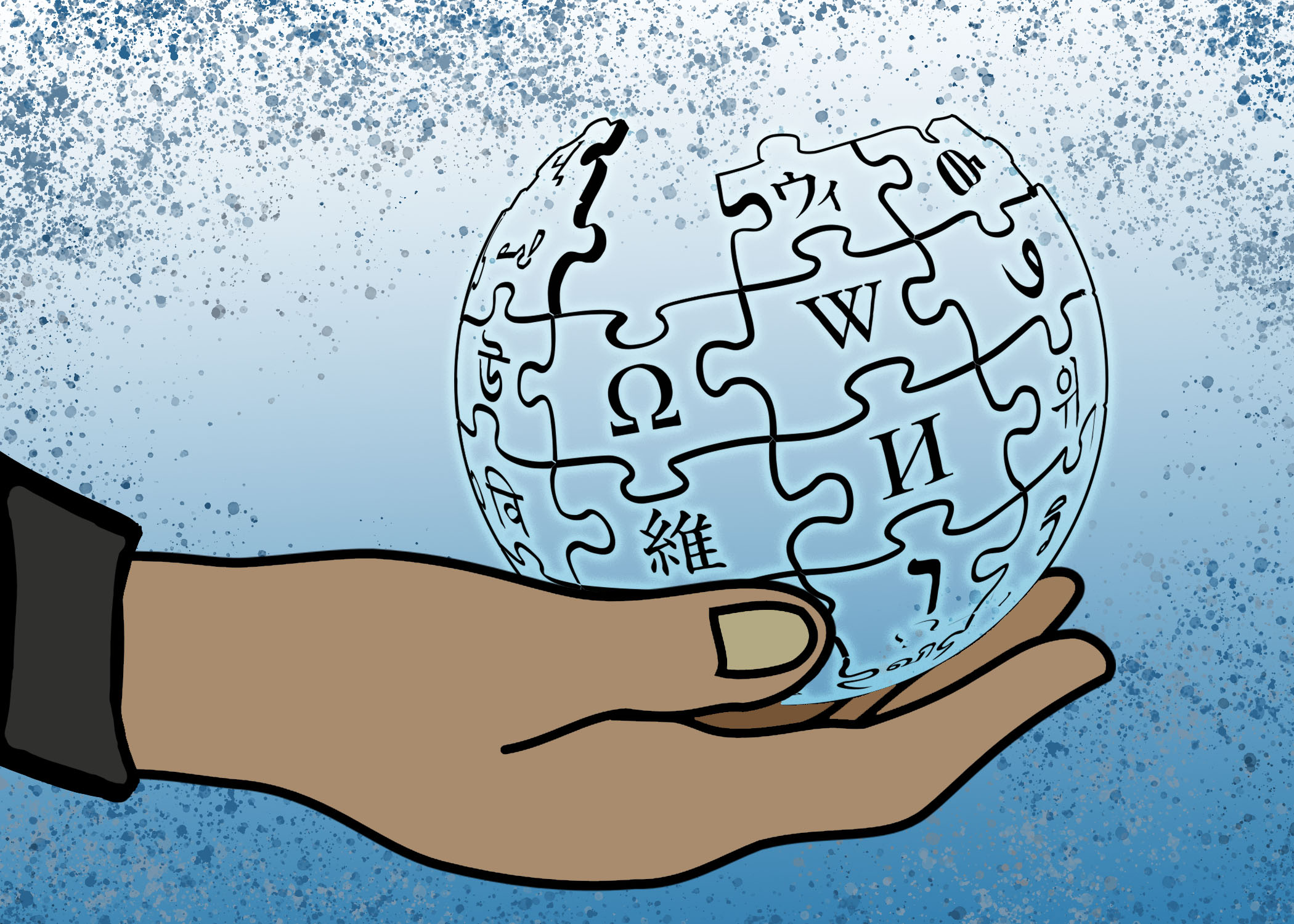
  • We Need the Wisdom of Wikipedia

    We Need the Wisdom of Wikipedia

    Wikipedia shows collaboration is crucial for accuracy

    We’ve all been there. You’re sitting in a class. Your professor wants you to write a paper on the different types of asexual reproduction of the Sanderia malayensis jellyfish or some other arcane drivel. Your first reaction is to hit up Wikipedia. Then comes the kicker. You can’t cite Wikipedia. You scowl and snarl under your breath.

    Wikipedia deserves more credit than we give it. Turning a blind eye to Wikipedia as a reliable source is shortsighted and has implications beyond the realm of encyclopedias. Distrusting Wikipedia represents academia’s unwillingness to open the gates of collaborative truth-seeking.

    Scientific papers, meanwhile, are far from perfect.

    Contrary to what your professors may tell you, Wikipedia, as a source, is statistically just as accurate as published encyclopedias for most of its content. A 2005 study by the Nature research journal, “Internet encyclopaedias go head to head,” found errors in both encyclopedias, but among the entries tested, the difference in accuracy was small.

    Wikipedia, in their signature self-aware style, has reported on their own reliability as well. Wikipedia does not guarantee validity, but it is an invaluable research resource.

    Inaccurate information on Wikipedia is usually corrected quickly. Hyperlinked citations back up nearly every claim made on an entry. The Sanderia malayensis jellyfish’s page hosts six sources from international professionals, biologists and a handbook on poisonous jellies.

    Scientific papers, meanwhile, are far from perfect. Soft sciences have suggested cures to unhappiness or boosts to confidence through simple behavioral change, but as other researchers try to replicate the experiments, their conclusions are significantly different. This indicates a serious error in the scientific method. If science isn’t replicable, science is null.

    In the last few years, a plethora of papers have fallen under criticism after researchers have failed to reproduce their results—it’s been called the replication crisis. The crisis may have a few sources.

    Mistakes happen on Wikipedia too and it is always essential to be critical of anything read.

    First, it’s not hard to get published. The University of World News said in 2018 that too much scientific research is being published. It estimated nearly 30,000 scientific journals are in circulation, publishing approximately two million articles each year. They said the volume burdens the peer review system and makes it dysfunctional.

    Second, the media likes to be the first to report on news, including science news. Journalists can be wrong and often are when it comes to reporting on science, especially when they’re grasping to be the first to report on new findings. These bad practices report inaccurate, unconfirmed, flawed science to their audience before the study can be replicated.

    Mistakes happen on Wikipedia too and it is always essential to be critical of anything read. Search around, find supporting articles for any claim made and be aware that there may be flaws. But be able to recognize valid and sound knowledge.

    Critical review by the editors of Wikipedia—who can be any person—is what makes Wikipedia so powerful and so accurate. It’s the world’s largest encyclopedia—about 50 times larger than Britannica—with over six million entries and over 200,000 contributors. Wikipedia should serve as a banner for collaboration—especially between diverse groups.

    In “The wisdom of polarized crowds,” a 2019 study from Nature Human Behavior, researchers found politically-diverse teams created more accurate entries than teams with less political diversity.

    Wikipedia comes in clutch, often. Using it as a source may be frowned upon by professors, but a short chat with most of them and they’ll say Wikipedia is an excellent place to start. The website is a tool, not a cheat code. It would be ignorant to ignore it, but if it’s used appropriately, maybe, just maybe, we could learn something about jellyfish.