By Andrew George Butler
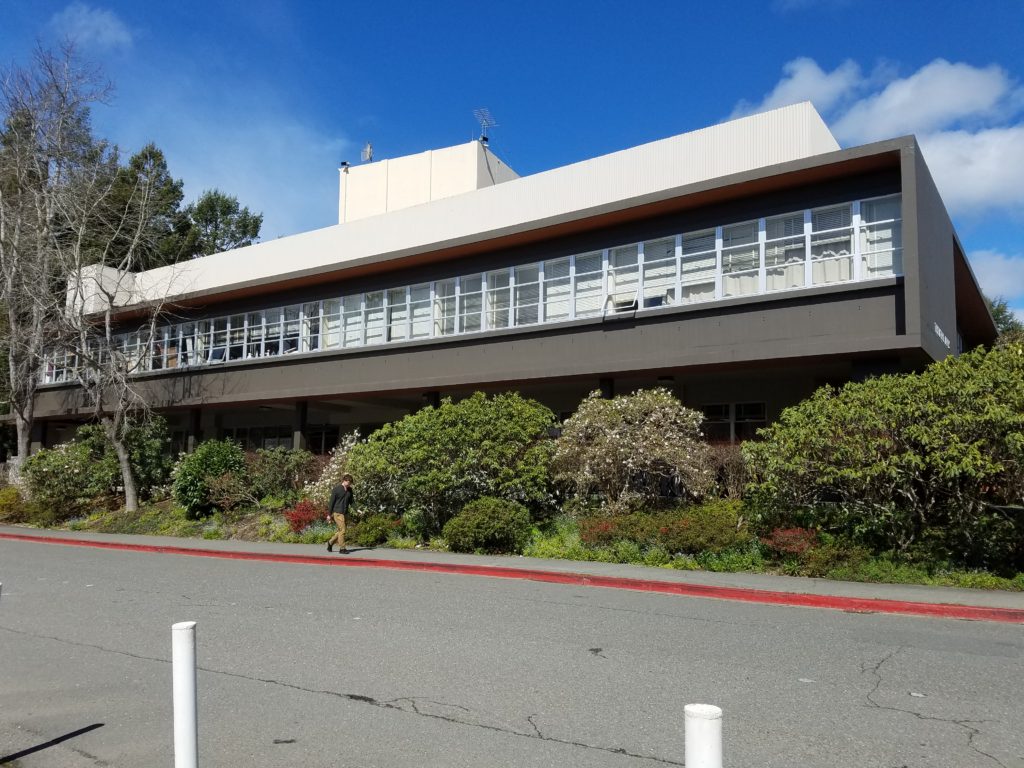
The grandaddy of all structures on Humboldt State’s deferred maintenance list will have to wait at least another year before seeing some much needed tender love and care. The Theatre Arts building is set to remain atop the list for another year as recent building code changes forced 2017’s earthquake retrofit plans to be put on hold.
The Theatre Arts building has been on deferred maintenance for over 15 years. In 2017 the building was supposed to receive the renovations it needed. The money was allocated, the plans were drawn up, and the contracts were signed all before 2016 came to a close. The staff of KHSU and other campus offices located in Theatre Arts all had prepared for temporary relocation, a task itself that took months and planning and scrambling.

David Reed, development director of KHSU, was tasked with much of the preparation for what would have been KHSU’s temporary relocation if construction had not been delayed.
“It’s frustrating, we spent months preparing to move. We have a large operation, many moving parts,” Reed said. “The only good side is that we digitized much of our paperwork in preparation for the move.”
Fast forward to the beginning of March, 2017. With less than a week until the retrofit was to begin, the HSU office of Facilities Management realized all the planning that went into the retrofit had been worked around a set of building codes that changed January 1, 2017.
Traci Ferdolage, director of Facilities Management at HSU is in charge of coordinating the construction funds once they are dispersed to HSU from the CSU main office. According to Ferdolage, the building codes, which are periodically reevaluated and changed about every three years, are calculated independently from outside the California State University system by state officials. Construction plans, such as the ones for the Theatre Arts building are issued by the CSU main office in accordance to the building codes in place at that given time.
“Once the CSU board allocates us the money for a project, we act,” Ferdolage said. “We don’t take into consideration the possibility of changing building codes.”
The CSU Seismic Peer Review Board periodically sends an independent reviewer to various CSU campuses to conduct a review of the buildings and deem if any retrofits or other construction is needed. The CSU main office then reviews the reports and grants money to campuses based on need.

The Theatre Arts building is currently not yet classified as unsafe for use, the proposed construction is to bring the building up to par with the most modern of structural standards.
“Facilities Management staff have done a wonderful job at keeping the building operational considering the levels of predicted renewal needs not funded by the State,” Ferdolage said.
Construction on Theatre Arts is expected to begin in May of 2018 according to Ferdolage.
There is no oversight board between state building officials and the CSU board to ensure that proposed projects are outlined with the most current building codes in mind. Construction grants are expected to be used promptly. The only way a campus can keep receiving grants is to keep spending the money as it comes in. Part of the money given to HSU for the Theatre Arts project was spent on building plans that are now essentially wasted funds. While the CSU chancellor’s office selectively audits how grant money is spent from time to time, there is not full time office or administrator in charge of ensuring that the tuition and taxpayer money used for campus construction is spent as efficiently as possible. That task is left to the university once the money is allocated. The rush to spend, mixed with a lack of communication between offices may not always lead to error, but it does pose the question: Who is in charge of the money?
“Projects are managed under fairly complex and defined financial guidelines which help ensure taxpayer and student fee money is handled responsibly,” Ferdolage said.
Building code officials, CSU seismic peer review board, facilities management, and a set of guidelines, all with no unifying oversight have left the Theatre Arts building in limbo for another year.
