The Lumberjack


Students Serving The Cal Poly Humboldt Campus and Community Since 1929

Tag: town hall meeting

  • Environment Takes Center Stage at Huffman Town Hall

    Environment Takes Center Stage at Huffman Town Hall

    Huffman talks greenhouse gases, sea level rise, salmon and more

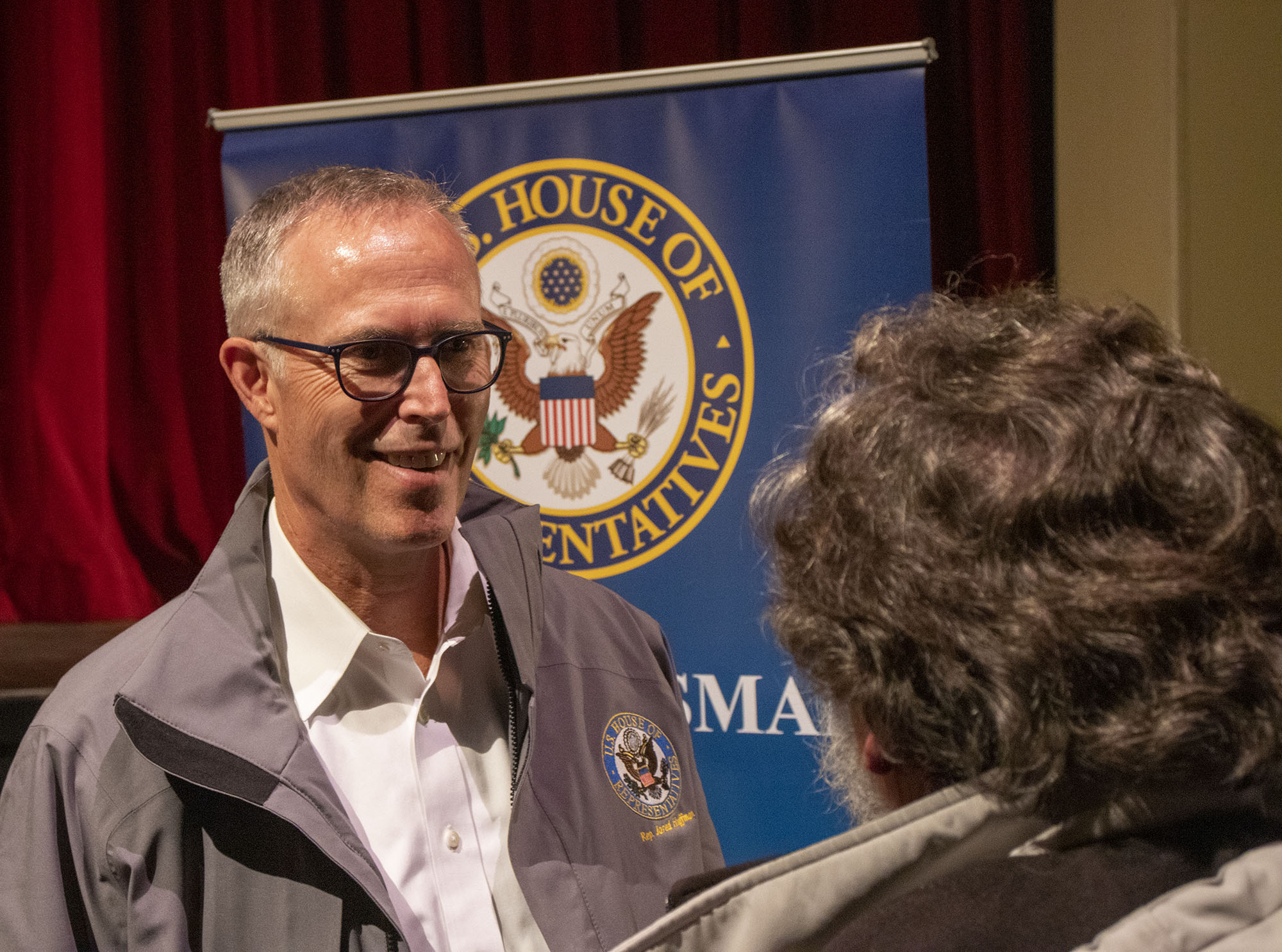
    Jared Huffman, representative to California’s Second District, held a town hall at Eureka High School on Feb. 21 to engage his Humboldt constituents. After touting the progressive platform he’s pushing in Washington, D.C., Huffman answered questions spanning from immigration reform to the 2020 election—but the prevailing concerns surrounded the climate crisis.

    “You got about a decade—less than a decade—to dramatically transform the global economy to put us on a path of decarbonization that gets us to net-zero greenhouse gas emissions by the year 2050,” Huffman said.

    Huffman sits on the House Select Committee on the Climate Crisis along with 14 other representatives. Authorized in January of last year, the committee is set to release policy recommendations on March 31. The report will steer the current and upcoming Congress on legislation regarding the changing climate.

    “Sea level rise and resiliency in coastal communities like this are just a huge part of the climate crisis. We are gonna have to do a lot of planning and prioritization for critical infrastructure.”

    Jared Huffman

    Several Humboldt residents questioned Huffman about protecting infrastructure from rising sea levels. Much of the county would be at risk if the sea rose. Low bridges and roadways are at risk as well as economic infrastructure like fisheries and farmland.

    “Sea level rise and resiliency in coastal communities like this are just a huge part of the climate crisis,” Huffman said. “We are gonna have to do a lot of planning and prioritization for critical infrastructure.”

    Huffman also sits on the Transportation and Infrastructure Committee. Huffman aims to focus some of the funding for infrastructure on coastal communities that would be impacted by rising seas.

    Some audience members expressed concern about Pacific Gas and Electric’s role in California’s power supply. After months of sporadic power outages, many Californians are looking at the possibility of de-privatizing the utility company.

    “I’d be fine if [PG&E] were reinvented into some type of not-for-profit entity as well,” Huffman said. “It would be nice to take that profit motive out of the situation to convert it from an investor-owned utility, where they gotta meet Wall Street’s expectations, to something that was publicly-owned or possibly a cooperative.”

    Huffman then shifted his focus to the diversion of water from the tributaries that feed into the Trinity River to farmland in the San Joaquin Valley. The Trump administration is working to release a new biological opinion that will allow for significantly more water to be diverted from flowing down the Trinity. This would override the previous finding that diversion of water would drastically impact the salmon population.

    A similar decision was made by the Bush administration in 2001. Restrictions on the natural flow of water down the Klamath River led to the mass salmon kill in 2002.

    Huffman is hoping to hold the previous finding up long enough for a new administration and Congress that would prioritize protecting native species.

    “You get the picture, right?” Huffman said. “The deck is pretty stacked right now against protecting our rivers and fisheries here on the North Coast. And it’s a fight I will continue to fight.”
  • The community speaks at town hall  opioid meeting

    The community speaks at town hall opioid meeting

    California state senator Mike McGuire and County Supervisor Virginia Bass hosted a town hall meeting on March 29 to discuss the opioid crisis in Eureka. Panels of statewide experts, health professionals, local leaders and addiction specialists were present.

    Social work major at Humboldt State, Ana Guerrero said, “I have seen teens shooting up in alternative schools. The thing is that in TV they show drugs as cool.”

    Mike McGuire who is currently representing California’s second congressional district began the meeting speaking behind the podium.

    “Our job is to clean up the streets of syringe land, and to deliver as many resources as possible,” McGuire said. “Our job is to better manage syringe distribution, and to go after pharmaceutical committees and hold them accountable. The unfortunate thing about this crisis is that there won’t be an easy solution.”

    Aegis Treatment received a $4.8 million investment for a medication-assisted treatment center and needle collection program, which was announced last November at the first opioid town hall meeting.

    “The grant is designed to do a few things,” Alex Dodd, Aegis CEO said. “It is designed to extend addiction treatment into primary care, to extend and expand medication treatment. It is also used to help people pay for treatment.”

    Before Dodd talked about the new center that will be open in the former Eureka Pediatrics. He wanted to clear up a misconception about the funding Aegis received.

    “This $4.8 million federal funding is coming through us to give to the communities. It isn’t being given to us to do what we want with it,” Dodd said. “The funding is not being given to Aegis to open the clinic. We don’t see one dollar of that money ourselves.”

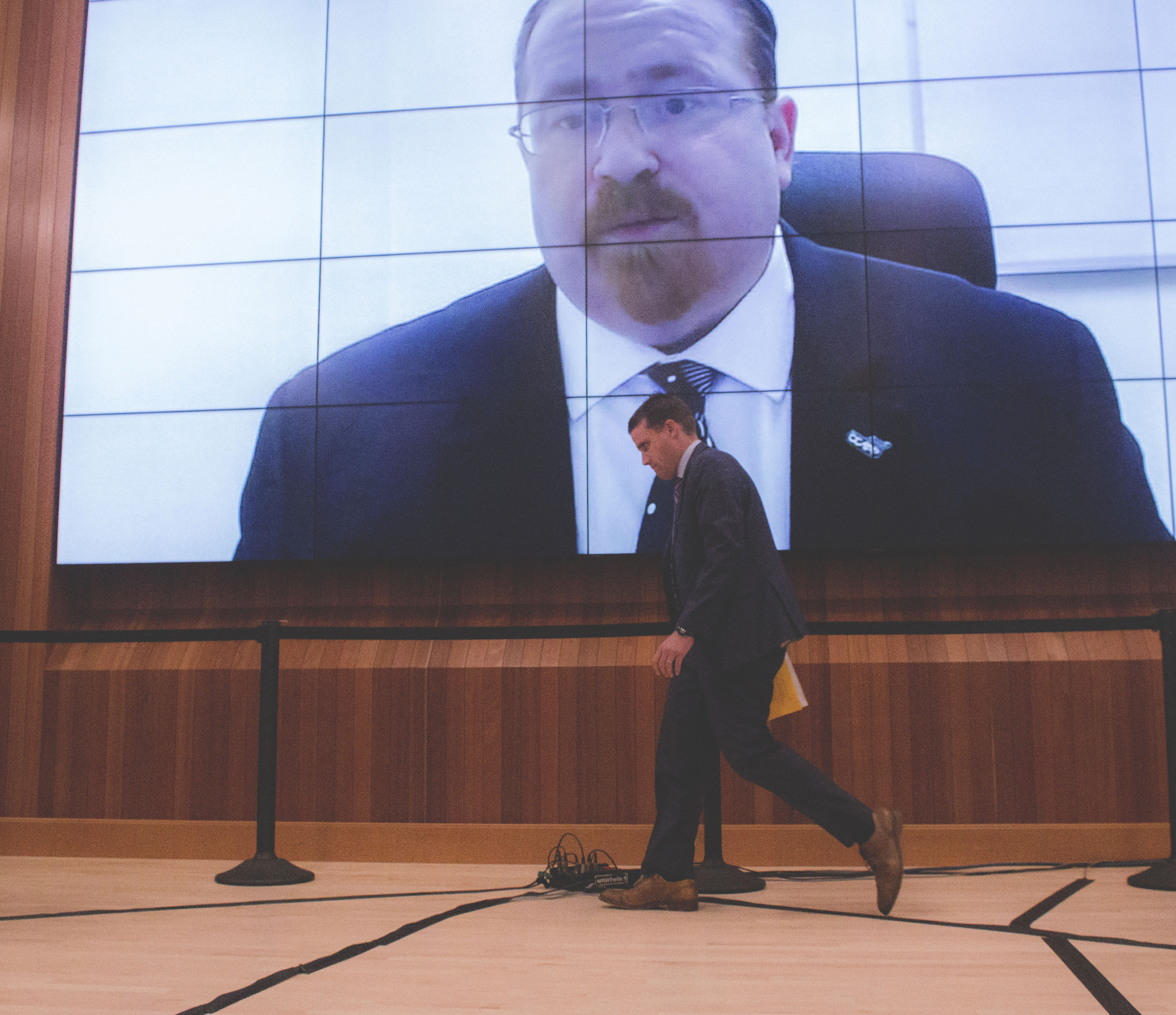
    Technical difficulties arose with planned video conferences with outside experts. Director of technology for Humboldt County Office of Education, Doug Lee, worked behind the scenes to fix the problem as well. The problem was fixed, and the video conference ran smoothly.

    “We had 10 microphones going into one microphone jack, and one mixer. Our system didn’t understand it,” Lee said. “We muted all the mics from the control panel. Once I did that, it was fine. All things considered, I think it went well.”

    A man walking into the Sequoia Conference Center for the opioid town hall meeting. The meeting was hosted on March 29 by Senator Mike McGuire and County Supervisor Virginia Bass. Photo by Bailey Tennery.

    Lesley Hunt, project manager for the Hoopa Valley Tribe planning department, said there is a huge taboo on substance abuse.

    “In my community, we are dealing with adolescents from a heartbreak age of 10 dealing with some of the stuff talked about tonight,” Hunt said. “It is how we address it from here and how we move forward.”

    Hunt said the Aegis funding is a step in the right direction, and believes it gives us a hope and some breathing room.

    “It’s a set if money you don’t want to talk about, but it has strings attached,” Hunt said. “Sometime those strings don’t match up to what our community needs, which is infrastructure money, the facilities are outdated and overcrowded.”

    John McManus, executive director of Waterfront Recovery Services, addressed a comment about empty beds in recovery programs.

    “For the beds you are concerned with, it would be about more measures Z funding,” McManus said.

    Crossroads, a drug and alcohol rehabilitation center, and Waterfront Recovery Services are all working on being drug Medi-Cal certified, to be able to treat people who have Medi-Cal.

    “We have submitted our application. Hopefully it will take less than nine months to a year,” McManus said. “The certification standards will raise the level of Medi-Cal care we are providing for the rest of the residents.”

    In the midst of the question and answer portion, Trish Cottrel, a social work major at HSU was given the microphone.

    “I also want to encourage you to have a tribal representation at the next meeting, because I think that community really needs to be served, they are disproportionately affected.”

    Blue Lake resident Alex Bodie works for a non-profit attended the meeting. She said she liked how experts who were outside of the region commented on the problem.

    “Our numbers are high with it, but this is happening all across the country. There are root things that are underlying the problem that happens within this,” Bodie said.

    Bodie said the hosts of the meeting didn’t realize there was no tribal representation until the community members brought it up.

    “They needed to include other folks. There definitely needs to be more inclusion for the people who are doing the work on the ground,” Bodie said.