The Lumberjack


Students Serving The Cal Poly Humboldt Campus and Community Since 1929

Tag: Toyon

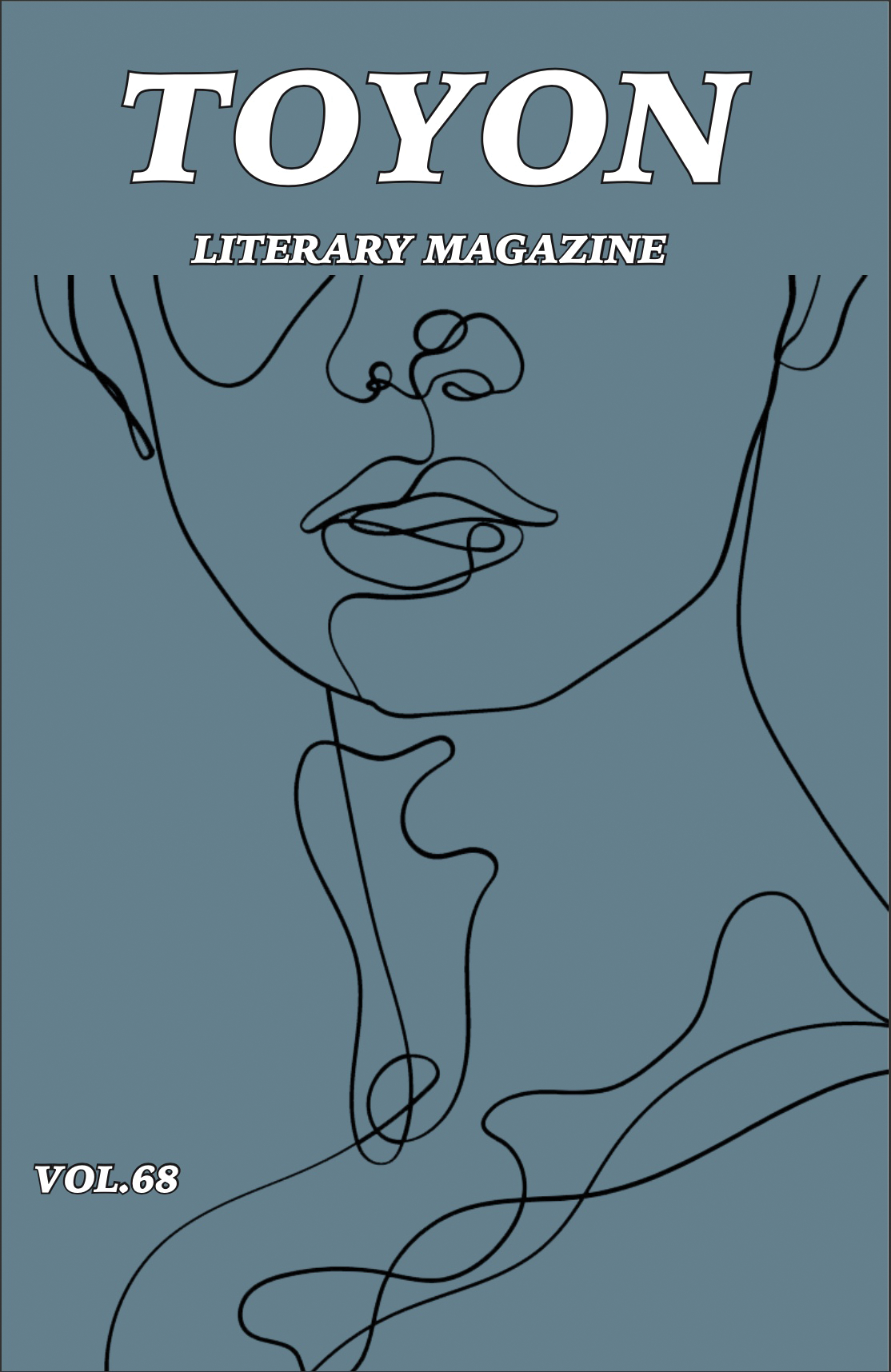
  • Toyon volume 68 heals tender wounds

    Toyon volume 68 heals tender wounds

    by August Linton

    The 68th edition of Toyon, Cal Poly Humboldt’s multilingual literary magazine, was released on Tuesday, March 29. It is the culmination of a year of work by the staff, through forced distancing caused by COVID-19, across vast distances, and from a multitude of perspectives.

    Contributions to this year’s Toyon came from countries around the globe. The submission base’s broad scope means that works in many languages are featured. Some of the works originally submitted in a language other than English are presented in both languages, and some of the translation work is only available online on Toyon’s website.

    Maurizio Castè’s ‘Germogli verdi,’ or ‘Sprouts of green,’ published in both the original Italian and translated into English by Toti O’Brien, is a gently insistent witness to the beauty of spring, and to nature’s resilience in the face of climate change. This is a theme that surfaces at other points in Toyon 68, in Dobby Morse’s “The Fate of the Earth,” “Climate Change” by Larissa A. Hul-Galasek, and Meghan E. Kelley’s “What’s Left for the World to Say?”

    In these works, there is a deep veneration of both nature’s delicacy and of her strength. There is also an anger that seems to well up from deep within the Earth; anger for the future of humanity in the face of a climate apocalypse and for the fate of the natural world in our aftermath.

    There are many other standout poetic works in Toyon 68. The magazine’s opening work “Each Time I Held a Dying Bird” by Grace E. Daverson pulls the reader into delicately described and emotional pocket memories. As Daverson methodically describes each bird she has known, the wild joy of holding a bird in one’s hand and the childlike wonder of shining a flashlight into developing eggs organically melt into the glass-sharp grief of not being able to protect the ones you love.

    Toyon also publishes short stories, academic literature, and visual art.

    “Dismantling Structural Systems of Oppression Through a Revolutionized Pedagogy” by Ambar A. Quintanilla systematically explores the institutional barriers to education which Latinx and Black students face, multiplied by conditions during the COVID-19 pandemic. Quintanilla’s emotional connection to the subject matter as someone who has experienced these barriers (and who has seen the people she cares about be affected by them) is as important to the piece as her efficient and insightful analysis of the complex contributing socioeconomic factors.

    Among the magazine’s small selection of visual art, “Thinking” by Ernie Iñiguez and Mario Loprete’s “Concrete Sculptures” stand out. “Thinking” is a polished and pastel digital illustration of a meditating robot, while “Concrete Sculptures” is photos of the artist’s graceful and haunting sculptures of folded clothes.

    The theme of Toyon 68 is “hope and healing,” which is self-evident from the works within. The contributors’ love for this world and for the always painful process of healing is strung throughout the magazine, as taut and musical a guitar string. Healing takes time, passion, work, and love, and Toyon 68 has all of those. On the back cover of the volume, their sendoff is this:

    “WARNING: This product contains love, anxiety, dysphoria, tenderness, birds, affection, grief, orange juice, trauma, anger, and maternal bonds. Side effects may include self-reflection and a sense of inner peace.”

    Toyon 68 is available now in print and online.
  • Stories and seeds at a shindig

    Stories and seeds at a shindig

    Toyon celebrates the release of their 65th issue

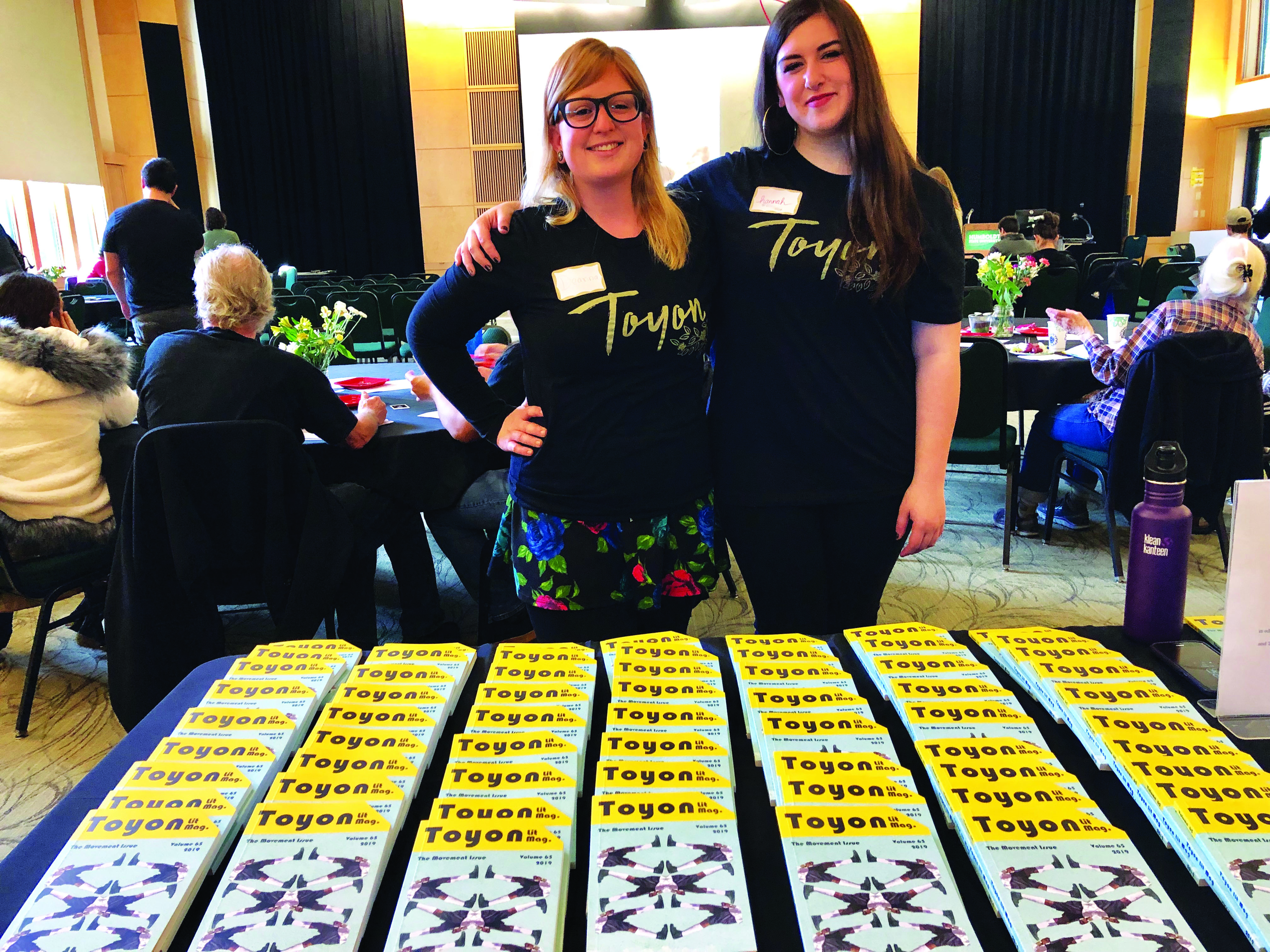
    It has a sky-blue cover with a thick strip of yellow across the top of it that reads Toyon, the ‘Movement Issue’ is out. The publication released their 65th issue with a large celebration accompanying it in the Kate Buchanan room.

    For those unaware, Toyon is an English literature magazine that relies heavily on students submitting original work. They have the ability to submit short stories, poetry and anything that falls within that realm of writing.

    This is an opportunity to be taken full advantage of since many other magazines charge their writers to have their work published as Deanna Abate said. Abate is a senior majoring in English and has been working with Toyon for two semesters now.

    Abate said that something that differentiates this issue with all others is that they as a staff did not clearly define the topic to their writers, they let them define it for themselves.

    “We told people it was the migration issue,” Abate said. “And then people submitted their work based on how they defined migration.”

    Unlike the rest of the publications on campus, this publication only publishes once an academic year. They receive submissions up until a certain point and while that is going on their editors work tirelessly to edit everything to utmost perfection.

    In the 65 issues they have released, the idea came about to start commemorating the past and future issues other than someone just hoarding them in a musty closet.

    As the archive editor, Hannah Hosqisson scans all of the older versions of this magazine and then works with HSU’s special collections to upload it to their website so it’s available for anyone to see.

    By doing this anyone anywhere can access older or newer versions from the website. Hosqisson is also an English major in her senior year and picked up the task of archiving from the previous archive editor.

    Since Toyon has been around since 1954, there is a lot of work to be done to archive everything but it’s worth it according to Hosqisson. Aside from archiving she has also helped them out with their spoken word.

    “We did outreach events and held a couple of events last semester,” Hosqisson said.

    IMG_5034.HEIC.jpeg
    Look at that, a vending machine made entirely of paper and tape that can dispense art and literature… with the help form someone inside pushing out what the person wanted dispensed. | Photo by Cassaundra Caudillo

    Toyon’s issue is full of stories and content in various genres and in particular, this issue was more diverse than usual Hosqisson mentioned. While event-goers perused the newest issue and munched on some finger foods that were being served, Linda K, was behind the swag table giving out freebees. This table was filled with items that you would figure, some mini notebooks, pens, bookmarkers and the always important – stickers.

    However, in addition to all of those goodies they also handed out packets of seeds. Originally they were going to give out those simplistic silicon band bracelets, but the staff came together and agreed that wildflower seeds were more ergonomic.

    “We thought planting wildflowers, attracting bees, butterflies and birds was a good thing,” K said.

    They not only hosted an event to celebrate the various voices written about in the recent issue and the hard work put into it, but they pulled in environmental consciousness too.

    “Let’s do something that actually helps the environment,” K said.