The Lumberjack


Students Serving The Cal Poly Humboldt Campus and Community Since 1929

Tag: training

  • How to interact with a service dog – don’t.

    How to interact with a service dog – don’t.

    By Griffin Mancuso

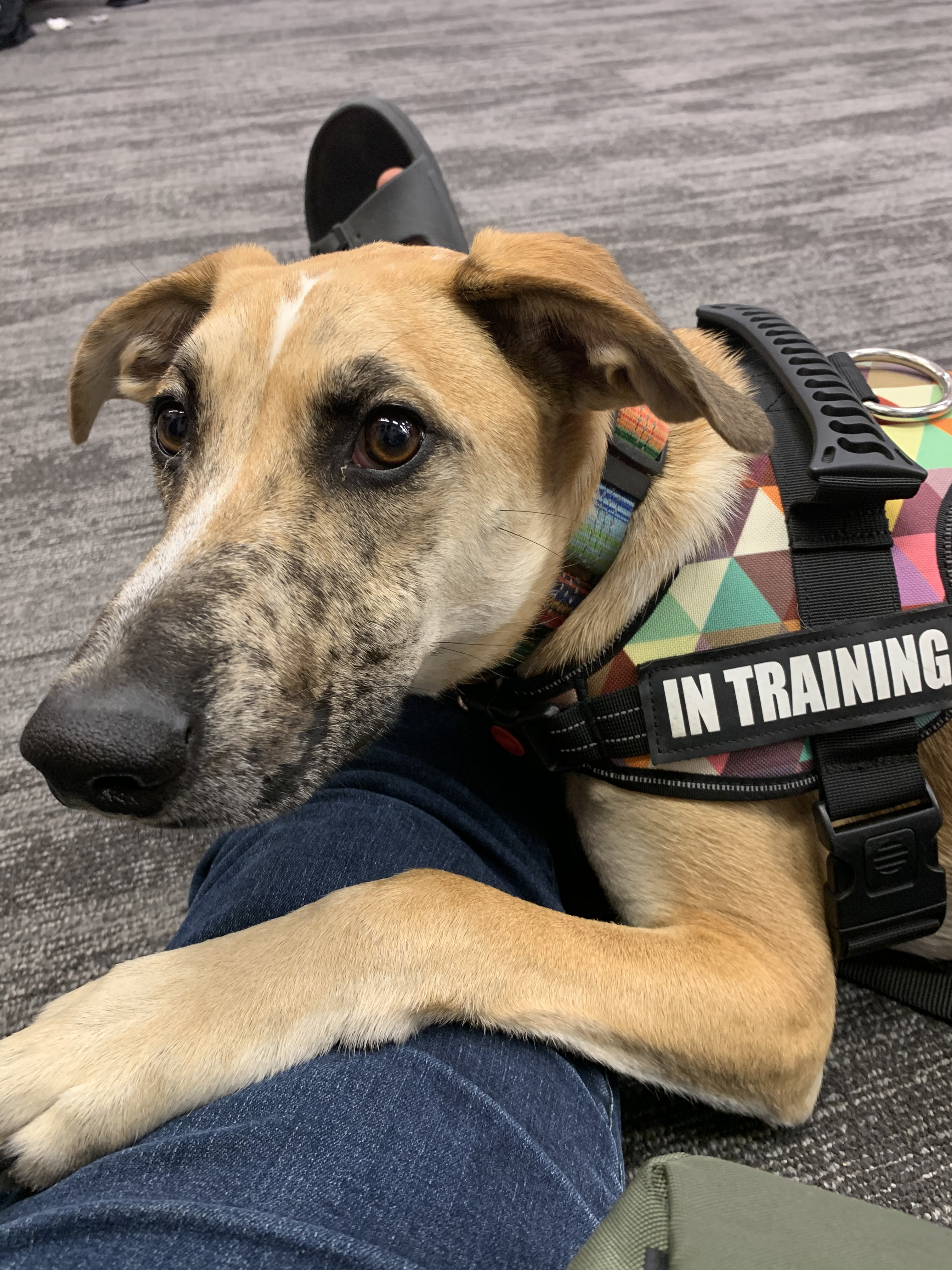
    On my second day of public access with my service dog in training, I braved the crowded hallways of The Depot in search of brunch. After paying for my food, I found a booth and used the opportunity to practice deep pressure therapy with my service dog, which is his favorite task because it involves him laying on my legs and getting a bunch of treats. The pressure helps decrease my heartrate, and thus, lowers the constant buzz of anxiety any time I go into a public place. 

    A group of men in the booth next to me took notice of my service dog. I didn’t pay them much attention until I heard one of them say, “Hey, there’s a way you can point out a fake service dog, watch this.”

    My blood ran cold as one of the men tried to call my dog over in an excited, high-pitched voice. Even though it was his second day on the job and he was seven months old at the time, my angel of a dog stayed put and watched them with the same amount of bewilderment I had. Apparently, that glance was enough for the men to start gasping and pointing. Feeling embarrassed and defeated, I rushed out of The Depot and hid in my apartment for several hours.
    Thankfully, that was the worst situation I have faced with my service dog. Since then, I gained more confidence in me and my service dog’s abilities and know how to advocate for his space. I also did a little bit of reading on the law.

    According to California Penal Code 365.6, section A, anyone who intentionally interferes with a service dog’s ability to perform their tasks could be charged with misdemeanor. They can face time in jail for up to six months, a fine between $1500 and $2500, or both.

    Two years later, I have realized that many people do not know how to interact with a service dog in public. Generally speaking, the key is to not interact with them at all. In fact, pretend like they aren’t even there.

    The Americans with Disabilities Act defines a service dog as a dog that is trained to perform a task that alleviates the symptoms of a person’s disability. A service dog can be any breed and are not required to be certified or go through a professional training program. They are also not required to wear a vest or identification showing that they are a service dog, but most handlers will identify their dogs in some way to prevent access issues.

    The types of tasks service dogs can perform include retrieving items, deep pressure therapy, acting as a brace if their handler falls down, alerting to rises in cortisol or blood pressure, reminding their handler to take medication, protecting their handler’s head during a seizure, and many more. In a legal sense, service dogs are medical equipment and can be life-saving. They empower their handlers to live independently and improve their quality of life.

    Therefore, it can be detrimental, or deadly, if someone distracts a service dog, no matter what their intentions are. The Depot incident was the only time a person’s intentions were clearly malicious, but most of the time people just really, really want to say hello to my dog. 

    I’ve noticed that many passersby develop what I call doggy tunnel vision. They see the dog and feel intensely compelled to talk to them or approach them, without much thinking in between. I get it, I really do. I love dogs with my whole being. If you are an adult, I promise that you have enough self-control to leave service dogs alone. If you must say something, talk to the handler directly.

    When talking to a handler, some may be more comfortable answering questions about their dog than others. I will put up with a lot of questions and comments. You’d be surprised how many stories I get about people’s dead dogs. Not everyone is as tolerant as I am, so please be respectful of the handler’s comfort level and save your stories for later. Most importantly, do not ask about their disability.

    Some handlers are okay with their dog being pet, and some aren’t. Petting them may interfere with their ability to task or the dog is simply not interested in greeting strangers. Some handlers will have a badge saying something like, “Ask to pet,” but you should always ask before you reach your hand out.

    Most of the time, if a dog is tasking, it is best to let them do their job. You wouldn’t go up to a cashier at a store and ask them if they need help. 

    If you pass by someone having a medical episode and their service dog is tasking, assess the situation before immediately dialing 911. Ambulance rides are expensive and not always necessary.

    I am personally more patient with children when it comes to my service dog. They often don’t know any better and are following their parent’s example. Half of the time, parents will redirect their children away from my dog or take a few minutes to explain that my dog is working. Those are my favorite parents. My least favorite parents are the ones who are either blissfully unaware of their child approaching my dog or actively encourage them talking to or petting my dog.

    Living in Humboldt County, I understand that I live in a pretty dog-centric area. Some people bring their pet dogs everywhere they go, including non-pet friendly stores. Most of the time, these dogs are behaved enough and not bothering anyone, but I have no way to tell if those dogs are a danger to my service dog. Service dogs come with the expectation that they will not lunge, bark, or attack other dogs while working. Pet dogs do not.

    Some dog owners try to bypass this restriction by putting a vest on their pet dog and bringing them anyway. Legally, store employees are only allowed to ask service dog handlers if their dog is, in fact, a service dog, and what tasks they perform. This is meant to prevent employees from asking handlers invasive questions about their disability, but some pet dog owners abuse this system. 

    There is no definitive way to tell a fake service dog from a real one, so you’re doing a disservice to service dog handlers by trying to pass your dog as an essential piece of medical equipment. The best case scenario is that they are an inconvenience we have to avoid while shopping. The worst-case scenario is that your dog injures our service dog and puts them out of work permanently, or kills them.

    Having a disability can be hard. We navigate a world that was not built with us in mind, and if the dog allows me to go to the grocery store and find the minced garlic without panicking, so be it. Please don’t make our outings harder than they need to be. We appreciate those who respect us and our service dog’s space, and we’d love more people to join that crowd.

    Griffin Mancuso is the photo editor and a prolific graphic designer for The Lumberjack. He is also a service dog handler and overall dog enthusiast/nerd. You can contact him at gm249@humboldt.edu.
  • What It’s Like Inside Pelican Bay Amid the Coronavirus Pandemic

    What It’s Like Inside Pelican Bay Amid the Coronavirus Pandemic

    A conversation with a College of the Redwoods student at Pelican Bay State Prison

    We now have more than 1.5 million people worldwide infected with COVID-19 and over 90,000 deaths. The United States has surpassed every other country in cases with just over 450,000. People are being told to socially distance themselves with six feet of space between others and isolate inside. But what about the millions who are incarcerated that don’t have that option? 

    Kunlyna Tauch is housed at Pelican Bay State Prison and is a student in the College of the Redwoods Pelican Bay Scholars Program at Pelican Bay State Prison. He is slated to graduate with his associate degree for transfer this summer. Tauch is also a student and contributor in Paul Critz’s audio journalism class, which produces Pelican Bay’s podcast “Pelican Bay: UNLOCKED.” Tauch has been a spokesperson of sorts for the recent programming at Pelican Bay and an advocate of the changes being made inside the supermax prison.

    Cases of the coronavirus have risen just over 1,300 throughout 100 federal prisons, thousands of jails and 1,700 state-run facilities nationwide. The Federal Bureau of Prisons says 138 inmates and 59 employees have tested positive and at least seven inmates have died, bringing the total to at least 32 COVID-19-related deaths inside the nation’s prisons and jails. 

    On March 31, California state prison officials announced they would be releasing 3,500 incarcerated individuals early to help free space in cramped prisons due to a possible coronavirus outbreak. Governor Gavin Newsom announced a halt in the transfer and intake of incarcerated individuals and youths into California’s 35 state prisons.

    According to the California Department of Corrections and Rehabilitation website, there are, as of April 9, 12 incarcerated persons at California Prison, Los Angeles County, 19 incarcerated persons at California Institution for Men in Chino, one incarcerated person at North Kern State Prison in Delano and one incarcerated person at Substance Abuse Training Facility in Corcoran who have tested positive for COVID-19. Seventy-one CDCR or California Correctional Health Care Services employees have tested positive for COVID-19 in 21 incarcerated facilities, and hundreds have called in sick for work.

    In the past five years there have been more programs in Pelican Bay than ever before and the culture inside is changing. After a lawsuit was awarded to the incarcerated individuals participating in the 2011 and 2013 hunger strikes and their advocates, one of the two solitary housing units was shut down and terms of isolation were limited to five years. This caused the prison to mitigate the effects of solitary confinement with programs like education and therapy. I spoke with Tauch on what it’s like in Pelican Bay State Prison as a college student amid the changes COVID-19 has brought to the infamous prison.

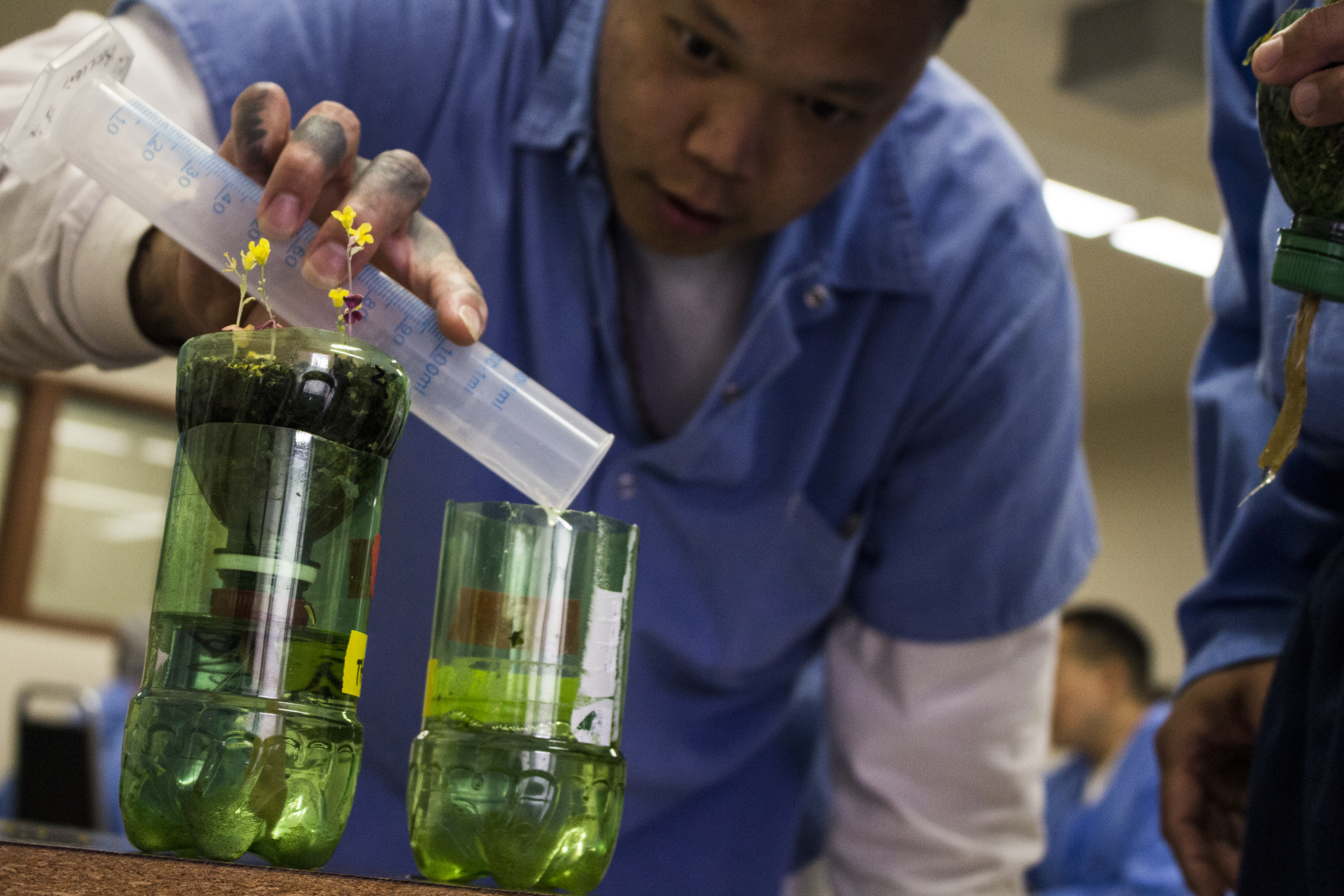
    Kunlyna Tauch looking upward in June of 2019. Tauch is slated to earn his associate degree for transfer through College of the Redwoods’ Pelican Bay Scholars program this semester. | Photo by T. William Wallin

    Tony Wallin: What’s it like in Pelican Bay State Prison right now and what are your concerns?

    Kunlya Tauch: First of all, CDCR stopped all visitation and there are no programs. So we’re doing like old prison time, right. Which is us in prison going to yard and trying to occupy ourselves with whatever we have, which is not that much. My concern is that people on the streets are so socially distant from each other they become callous of each other and become more segregated and more disconnected. But from what I am seeing on TV is a lot of good, which is making me happy. The little acts of kindness and videos of people on the street coming out, I love it. There’s actually a little silver lining out of this.

    TW: Yeah. There’s a lot of opportunity for positivity through all of this.

    KT: It’s hard to pass on those opportunities because it’s so in-your-face. 

    TW: What’s it like in there with programs shut down? What are you doing to keep busy?

    KT: College of the Redwoods has been the only program that is really working on shifting their whole business model to make it work for us. They are still running classes through correspondence and we’re getting hella work like every Friday. Our teachers are saying, ‘This is what we expect. Your next essay is due this date, send it in the mail,’ but because I have five classes I have enough work to sustain me, plus I have hella books I’ve got to get through. I am pretty occupied but it’s pretty restless in here, you know? People are constantly checking on their family, making sure they are well. They aren’t reading, they aren’t programming, they aren’t going anywhere, so their day consists of the phone and the yard. The yard schedule in itself [has changed], we aren’t seeing the regular people we used to see. They’re making it real limited, they’re not giving the day room. They literally made some new rule where only five cells in the day room at a time, which prohibits ourselves from doing what we want to do. It’s kinda stressful. It feels like we are taking a lot of steps back as far as prison goes. 

    TW: CDCR said they were going to send out more cleaning supplies to all prisons and make sure every prison has what they need. Are you seeing that?

    KT: That’s never been a problem. The cleanliness of the place isn’t a problem. Right now I have a personal friend who had some symptoms, they didn’t even test him and they just took him to quarantine and is on two weeks lockdown with no mail, no phone, no nothing. Just to see if he has it or not.

    TW: Where do they have the quarantine right now? What do they have blocked off?

    KT: They have one on A yard and one on B yard and it’s one section of one building and they’re basically in the SHU [secure housing unit]. They’re like kicking off drugs by themselves. That’s their treatment and I guess the nurses are going over, but I don’t know. I assume nurses are checking on them professionally. There’s too much of a shortage of testing, but one thing about medical is they are a separate entity than CDCR, so CDCR can’t dictate what they do.

    TW: Interesting. They operate differently? The warden doesn’t have a say on the medical side of things? 

    KT: No, medical community operates the medical community. All records are sealed and confidential. The prison has to accommodate that or else there’s a big lawsuit. I think CDCR concedes medical and there’s an agreement [between them]. According to the American government this is it and [CDCR] is only the California government, same with religion and same thing with tech. For some reason the tech, IT, here is their own entity and they suck. It takes like a month to transfer music onto our laptop [for the podcast]. It’s been stagnant. I’ve been feeling lethargic. I feel like they caged me back up and I’m really back in prison again. Pelican Bay was really doing good with their programs and everything running everyday and now it feels like this modified program where it feels like we’re just on lockdown. I feel like a lot of our minds aren’t being stimulated because a lot of us aren’t in those programs we are forced into or choose to be in.

    TW: Right. It feels like pre-2014?

    KT: Yes. Real shit. It feels like before and it feels like out of mind will cause more trouble. I am waiting for the ball to drop. I am waiting for something to happen. I’m almost mad that personally we’re on lockdown, but the whole fucking world is on lockdown and I can’t make more moves happen.

    TW: Yeah, the irony in all of this is everything is locked down globally. How is your morale and the overall morale in the prison? Are there still positive interactions?

    KT: I feel like we’re losing that. I feel like the tank is draining every single day. Guys that were motivated are losing that motivation. I see my college peers going like, ‘I don’t even feel like doing the work.’ But you don’t have that motivation no more because you’re not in front of the teacher anymore, you’re not engaging. You have questions but you can’t get an answer. I have a bleeding heart for my community in here, but it’s hard for me to help them because I have five courses and I have to study. We’re getting hella shit to read and it’s like, ‘I don’t have the time to worry about you guys because I have to get this out of the way first.’ Before all of this coronavirus I was approved to transfer to Lancaster [California State Prison, Los Angeles County]. That’s a level three. That was a big decision I had to make because that means I have to detach myself from this place I grew roots in. The process of this whole coronavirus—I’m back worrying about college and I can’t really be the catalyst to get my guys rallied up to do their work because I have to just worry about my work. So, I’ve been feeling like the morale is ‘Let’s see what happens while we are in this state of limbo,’ which is worse than staying stagnant because we’re losing the momentum, you know? We work on momentum on the programs that are on a level four yard. Without that momentum it’s like, ‘I’ll just watch Jerry Springer all day.”

    TW: It’s gotta be rough going from so many programs for the first time at Pelican Bay and then, in an instant, they’re gone. For those of you that are students at College of the Redwoods, can you study together?

    KT: Everything in person is shut down but we can do our own personal study groups, but we are divided. So, we only see our own dudes in our own yard and maybe another building and they’re across the fence so we can’t even have a study group out there. Also the COs [correctional officers] are really cracking down on what stuff we can bring out and they’re asking us, ‘Why were you bringing books and stuff out to the yard since programs are shut down?’ So we can’t even have that. So technically no, we can’t have a study group. We can have an impromptu one if there’s a cool CO that says it’s cool, we can sit out there.