by Jake Hyslop
It’s no secret that transportation is a big issue here at Cal Poly Humboldt. With almost 6,000 students currently enrolled and only 2,137 parking spaces, parking is the least fun game of musical chairs played daily by students. Despite past assurances of more parking spaces in the future, students are left to maneuver the measly parking available until then. Some students will graduate long before additional parking is finalized.
Morgan King, chair of the Sustainable Transportation Committee and a Climate Action Analyst in the Office of Sustainability, has been working on programs and initiatives to provide a variety of transportation options to, from and around campus. At a time when parking is a limited commodity, King is striving to offer students equitable options.
“Our focus is on transportation equity,” King said. “We really need to look at how we can ensure that everyone has access to the same levels of service, regardless if they’re taking a bus, walking or riding a bike.”
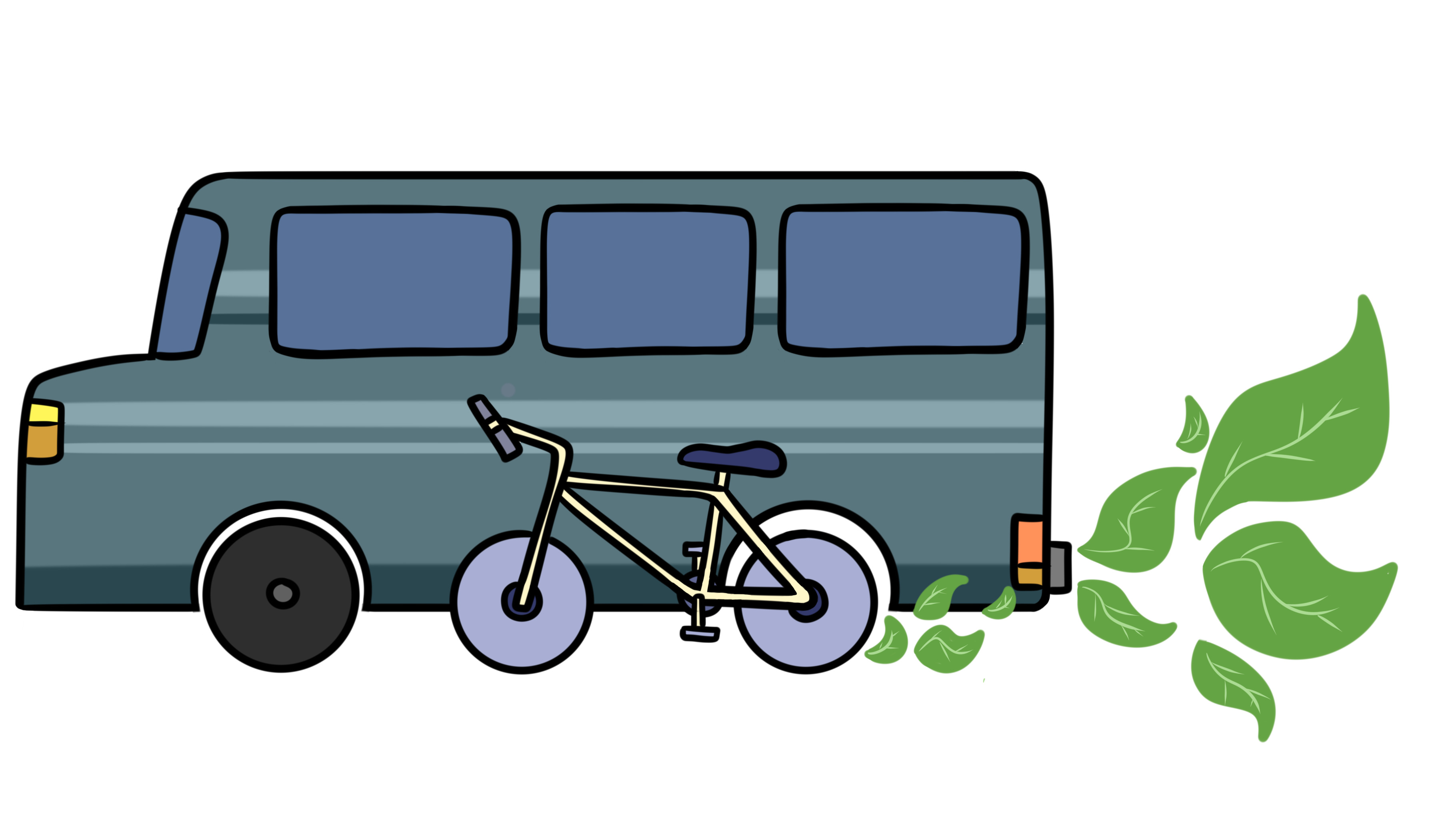
Not only does sustainable transportation operate to provide non-single occupancy vehicle (SOV) alternatives, they also focus on making these methods of transportation as sustainable as possible. Cal Poly Humboldt has established a reputation as an eco-friendly university, releasing two Climate Action Plans (CAP) since 2017. These plans are drafted with the intent of reducing emissions across campus and achieving carbon neutrality by 2045, essentially rendering the school free of fossil fuel use and conceivably running on sustainable, clean energy.
Vehicle commuting accounts for 16.9% of greenhouse gas emissions at Cal Poly Humboldt, measuring at 2,323 metric tons of carbon dioxide equivalent emissions. According to the most recent CAP, SOV trips account for the largest part of commuter emissions.
“[Administrators] are saying that they want to be a green campus,” said Zachary Meyer, student Transportation Specialist in the Office of Sustainability. “Well, one of the biggest sources of emissions is transportation emissions.”
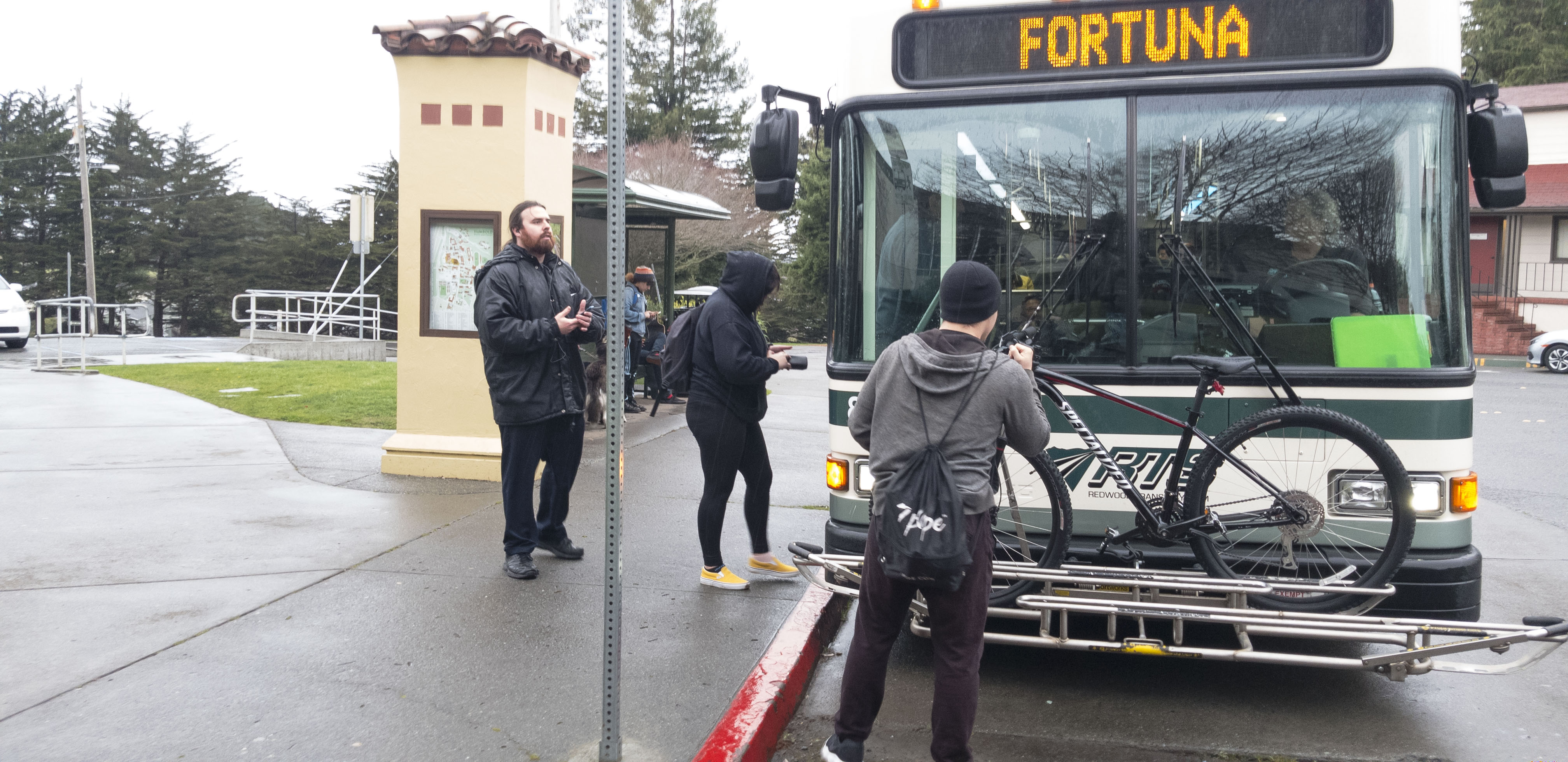
Ranging from a Ride Share program that matches up students to carpool with guaranteed preferential parking to the simple but effective Jack Pass that provides unlimited free bus rides during the semester, there are a myriad of options available to students. King urged students to take advantage of the Jack Pass in particular, as the pricing is already built into the tuition students are paying. One service to take note of is the Lumberjack Express, which launched in early October. The new bus system offers free rides to students and is designed specifically to get around campus, only stopping at campus and campus-adjacent locations.
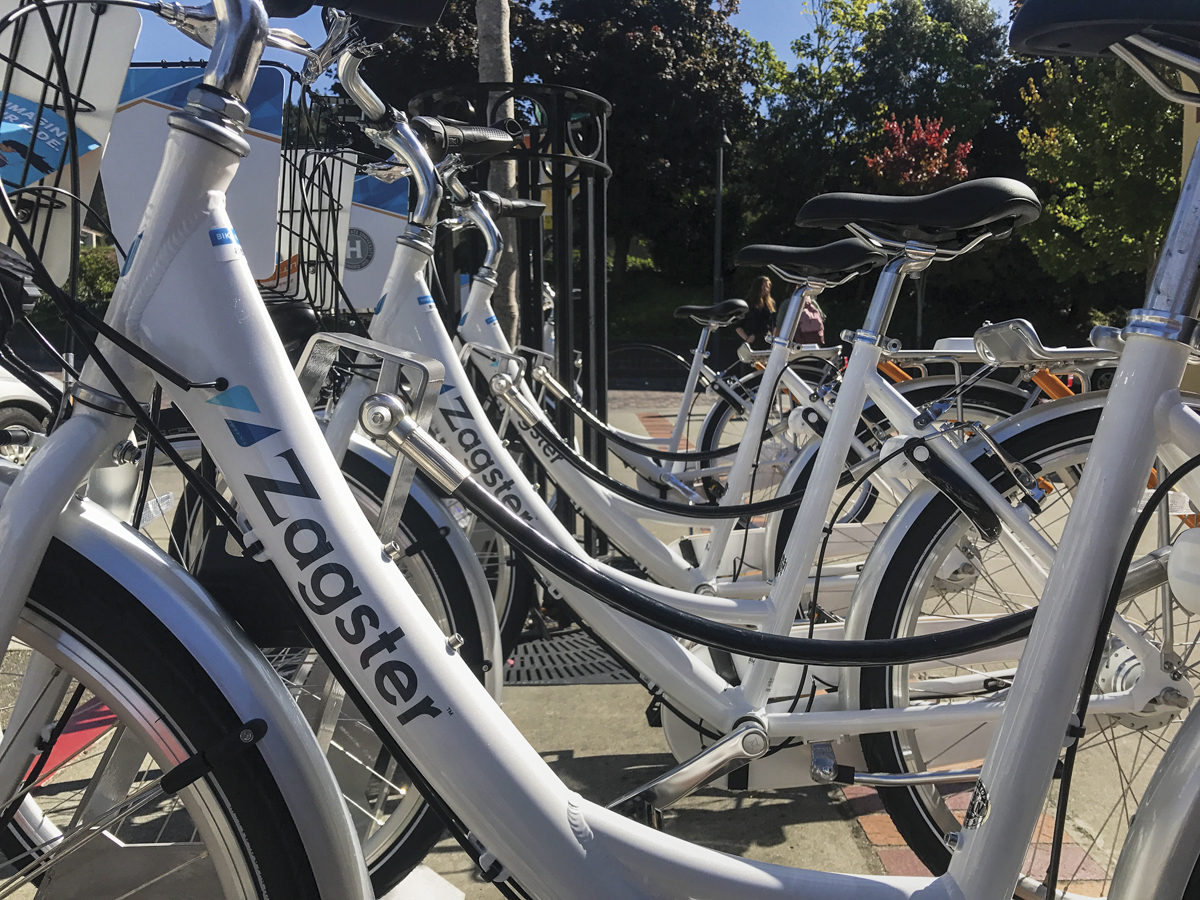
A large portion of sustainable transportation focuses on biking. Options offered to students include the Bike Share program, which provides low-cost bicycle rentals for conveniently getting around campus, as well as the Bicycle Learning Center (BLC), a student-run bicycle shop located under the West Gym stairwell by the Recreation and Wellness Center. The BLC offers free bicycle maintenance and bike parts, plus it raffles away free bikes on its Instagram. Unfortunately, bike theft remains a persistent problem for cyclists on campus.
“The immediate thing I’d suggest is registering your bike with the UPD because they can get you a free new lock,” said Adam Wood, student co-director for the BLC. “The free lock is a much better option than the more common braided steel cable lock, which can be cut through real quick.”
Luckily, through a student proposal approved by the Humboldt Energy Independence Fund (HEIF) and awarded $120K in 2021, there is a secure, weatherproof bike structure currently being designed for on-campus use in the near future.
Some issues impeding progress include funding and outreach for visibility to students. King mentioned that students often aren’t aware of the options available to them. Often, news and events are relegated to the end of department newsletters. The annual transportation fair used to be mandatory for new students as part of orientation, but King said they’ve lost administrative support for that.
“It needs to be constantly communicated,” King said. “It can’t only come out of my office. We’re trying to work on that, but there’s a lot of work to be done.”
“I think there could definitely be more funding towards [sustainable transportation],” Meyer said. “I personally don’t know what my budget is, what I can do fiscally. I’ve switched my approach this semester to do more education and event organizing to increase awareness and outreach.”
Meyer and King both also noted how hard it can be to push sustainable means of transportation when cars are so central to society.
“We live in a car-centric paradigm where people have grown up always respecting the car,” Meyer said. “The thing in your pocket to identify yourself is your driver’s license. That’s how ingrained driving is in our culture.”
Because of the need for the campus to become more sustainable, King said additional parking structures are not the priority.
There’s no telling whether the university would be able to substantially ease parking difficulties, including the pricey permits, at any point in the future, as the school aims to reach an estimated enrollment of 11,000 students by 2028. This sentiment was echoed at a mid-October meeting for the Sustainable Transportation Committee.
“Building more parking is just going to make parking cost more,” said Hank Kaplan, Transportation Analyst for the CSU system.
Major changes are being proposed for the university. One proposal considered is for a shuttle system designed to transport students from school to offsite parking located away from the campus. Another such change is to “pedestrianize” the streets, closing the core of the campus off to cars, thereby making it safer for pedestrians and more encouraging for non-SOV transportation.
“I’d like to see no cars in the center of campus,” Meyer said. “We have people getting hit by cars, and it’s pretty unsafe to walk and bike around that.”
Most of these radical changes are some years off, so in the meantime, King encourages students to make use of the alternative means of transportation available to them.
“It costs a lot of money to own, gas up and park a car – money that many of our students do not have,” King said. “And the single occupant vehicle is a major contributor to the global climate crisis affecting us all. But riding the bus with JackPass is free! Walking is free! Riding a bike is healthy and non-polluting! Carpooling is a great way to meet new people and save on gas and parking! So, if you are only driving alone to campus, try to walk, roll or bus one day a week.”