The Lumberjack


Students Serving The Cal Poly Humboldt Campus and Community Since 1929

Tag: traveling

  • Traveling as a student during COVID-19

    My whole life I’ve been told to “travel young,” “travel while you still can,” and “travel now because it only gets harder as life goes on.” I gained my love for travel my freshman year of high school when I had the amazing opportunity to go to Mexico with my aunt and uncle. Since then I have gone three more times. I have also been to Dallas, Texas and California’s bordering states. Traveling is one of the things that I love to do most. I was supposed to go to Costa Rica in 2020, but like many other people that year, I had to cancel my trip due to COVID-19 rapidly spreading through our world.

    When I went to Dallas during the summer of 2021 for two weeks, it showed me how much I missed traveling and seeing new places, people and cultures. Right now, the only thing that has been holding me back is school.

    The pandemic has been hard to navigate as a young adult and as a student, but I try to find silver linings in everything. With most courses still online, I have been able to adjust my schedule so that the majority of my classes are on Zoom or are completely asynchronous, which gives me the opportunity to travel this semester.

    Keeping up with school while traveling is a whole monster in itself. Operating in a different time zone has its challenges. You have to figure out what time it is at home versus wherever you are and keep track of what time classes meet. Trying to discover new places while having class also presents a challenge because your time management skills have to be at a peak level, not to mention the fear of contracting the virus in the process and not being able to get back to the US if you leave.

    During this school year, I have been able to go to Mexico twice. Yes, I am privileged to do this since I work for an airline, but what can I say? This is a field where you can mix business and pleasure. The first time was only for two days, so I went to the class that took attendance and was able to do my homework in the airports. This last time, however, was for a week and I was able to attend the first week of classes online. One of the struggles of starting the semester abroad is not having access to textbooks, but I found a way to survive.

    Even as a full-time student, I have managed to find a way to travel and see the world. It is difficult but it is so possible and so worth it. I encourage you to try and see the world. Stop staring at your computer screen in your apartment trying to get an education. Do the same thing on a beach somewhere, or in an Airbnb a few hours away. Just live your life.
  • Humboldt State reconsiders spring break

    Humboldt State reconsiders spring break

    Proposal to move spring break to a later date generates controversy

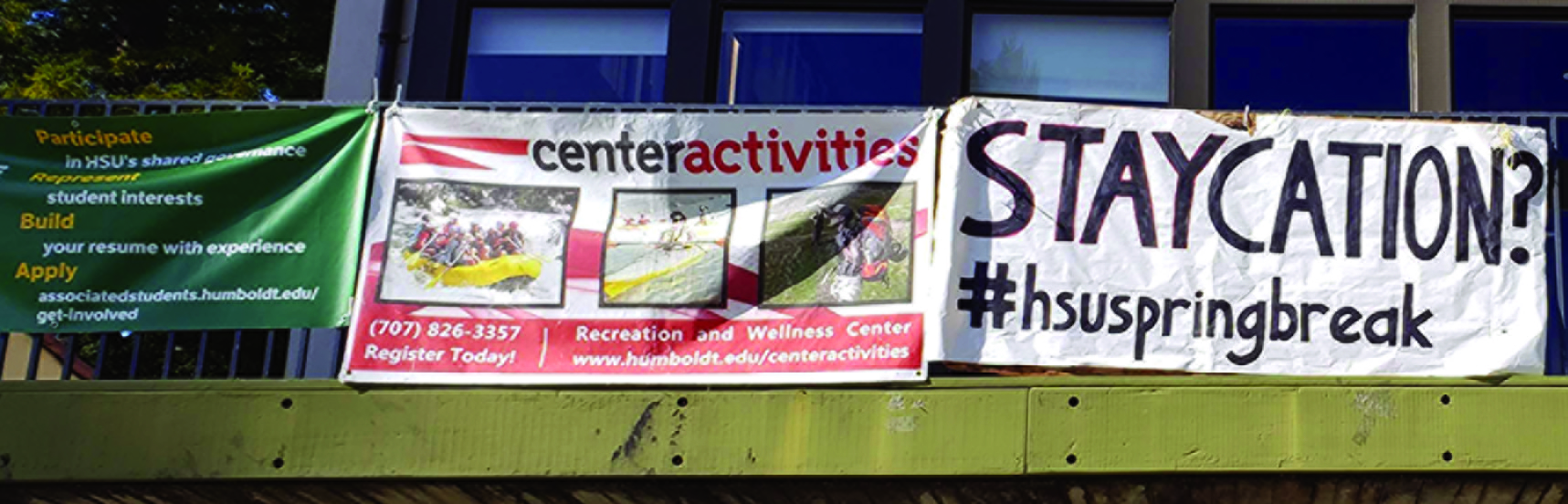
    On Sep. 29, Humboldt State University’s administration announced an idea to move spring break for this academic year from Mar. 15-19 to Apr. 5-9, 2021.

    In the meeting, Jen Capps, Provost and Vice President for Academic Affairs, explained the student and community health argument behind delaying spring break.

    “We face some challenges around making sure that our faculty, our students, staff, et cetera are safe, and how to bring folks from out of county into county, quarantine them, provide face-to-face instruction,” Capps said. “And then if they leave for spring break, what I’m hearing from facilities and different folks is they just don’t have the capacity to then require students to quarantine again.”

    A few suggestions for how to maneuver the situation were made by University Senate members including Cindy Moyer, an HSU music professor.

    Moyer pitched the idea to have break or rest days spread throughout the academic year to divert students from traveling and returning home.

    “Five carefully strategically spaced days off spread out over the weeks in the middle of the semester,” Moyer said. “So that students are getting some time off, but not getting enough time off that they will go home.”

    Monty Mola, HSU physics and astronomy professor, argued that spring break should begin a week later. The decision to move around spring break would have ripple effects on the greater HSU community.

    Giovanni Guerrero, a fourth-year environmental science management major, believes moving spring break to early April would be too much of an adjustment for students and faculty.

    “There’s a lot of stress on my back as a student, and I’m sure a lot of stress on the backs of teachers as well [as] our professors to meet deadlines and to carry out our rigorous university expectations,” Guerrero said.

    Guerrero added that the spring break would give everyone a chance to emerge from isolation and take a breather from responsibilities.

    “I think there’s a direct correlation with mental health. Right now we’re in a different sort of situation, virtual learning,” Guerrero said. “Sitting here at my desk inside my room for six hours a day, doing homework, attending classes and then doing my work with Associated Students. I have very little breathing room. Having a break, like a week break, where I don’t have to stay inside my room all day is super beneficial.”

    Rich Alvarez, the Diving and Safety Officer in the HSU Scuba Diving program, is less concerned about the psychological impacts of a later spring break and more concerned about the practical implications.

    For his diving certification program, Alvarez typically takes his students to Mendocino for open water dives where the diving conditions are more stable than anywhere in Humboldt. However with COVID-19 restrictions, he is only able to travel within the confines of the county.

    “Traditionally, Trinidad doesn’t really get to the point where we would feel safe taking students into the water there until April and sometimes even late April,” Alvarez said. “So if they shift spring break to the fifth through the 12th, the question becomes, can we meet with them after spring break? And it kind of sounds like a no.”

    If Alvarez can’t meet with his students after break to finish their diving certification, they will be unable to partake in open water dives.

    “That takes that whole month of April out of contention, and then we were looking at trying to, either way, putting students into water conditions that may not necessarily be safe for what we’re trying to do, or having to get people most of the way through their certification, but not able to do the open water dives.”

  • Plans to study abroad in the Czech Republic during COVID-19

    Plans to study abroad in the Czech Republic during COVID-19

    Journalism student looking to study abroad is questioning her decision

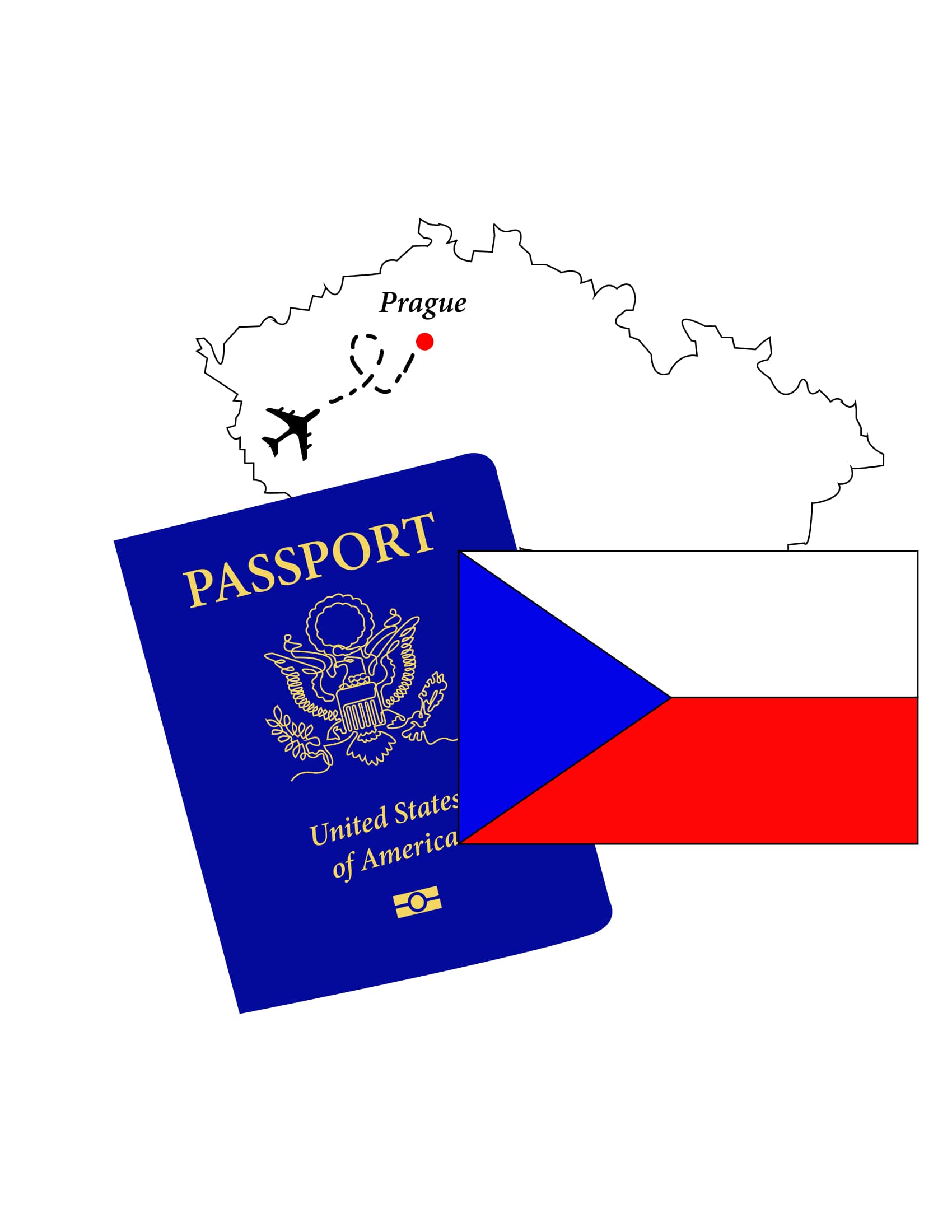
    My study abroad program in Prague, Czech Republic, takes place next semester.

    I speak in the present tense because it has not been canceled or postponed. The program is still set to happen. With this information, I keep asking myself, if the European Union miraculously opens up to the United States by Dec. and I am given the ability to travel to Prague, would I go?

    Well, yeah, most likely.

    However, there’s a lot to take into account.

    The program takes place from Feb. 2, 2021, to May 22, 2021.

    I bought my plane ticket back in April 2020 when it was ridiculously cheap, so there’s that going for me.

    I got my passport in Jan. which was super exciting. I would need to start getting my documents together to obtain my visa by Jan. 2021.

    There’s a lot of planning involved in something that is very uncertain.

    I’ve been having a lot of conflicting thoughts about studying abroad during COVID-19. Would I feel safe flying on a plane for 20 hours to get to Europe? What if there was another global shutdown while I was overseas? Would I be satisfied with my classes and internship being online? If I didn’t go, would this be one of the biggest regrets of my life?

    I’ve been so careful since March. I have been wearing my mask correctly, I’m constantly washing my hands, using hand sanitizer, keeping my distance, and I’m staying at home unless getting groceries or working. I’ve following all the rules here, why would it be any different there?

    Airlines have been taking the extra mile to deeply cleanse and sanitize the cabins, as well as limiting the number of people being put on an airplane. Would this still happen in 2021 for an international flight? I really don’t know.

    Upon arrival, I’m fully aware that I would have to self-quarantine for two weeks. Although self-quarantining sucks and is extremely boring, it would be absolutely necessary and worth it because I’d be living there for four months anyways.

    Now, another question would be, why would I travel across the world just to take some online classes for a few months. The experience! Being in a different country, experiencing the culture and of course eating the food. There wouldn’t be another time in my life that I’d have the chance to temporarily live in another country to go to school. It’s an opportunity unlike any other.

    Why would some students travel back to Humboldt State University just to take online classes? For the town, the environment, to get away from home, or even to just be here.

    If there was another global shutdown, I think I’d be okay being in the Czech Republic considering the U.S., specifically California, hasn’t been doing so great with the shelter in place order anyways. Would I technically be safer? I mean, maybe. The Czech Republic as a country has a smaller population than California and a lower rate of positive cases. So, yeah, it’s a possibility I could be safer.

    The program is being very transparent and answering a lot of questions that students like me had been having for the past four months. The information being provided has to do with the possibility of online internships, whether or not obtaining my visa is still worth it, how refunds would be issued, and even safety protocols for housing and such.

    I feel as though, as long as I am not being irresponsible and acting like an ignorant American tourist, it would be okay.

    I would just be wearing my mask (correctly) and minding my own business.

    However, this is only if the EU lifts the U.S. travel ban, which may not happen anytime soon.

    To je zivot?

  • Let’s shrink our impact over the break

    Let’s shrink our impact over the break

    With winter break fast approaching some of you may have big plans for the semester gap, but in our excitement lets not forget the importance of minimizing our waste and our environmental impact.

    Students on the HSU campus have a few ideas on how minimize our environmental footprint this break.

    Kyla Toole’Wells, a kinesiology major in her third year at HSU says that when we travel we should, “go in groups.”

    “Usually I carpool or take a bus,” said Kyla Tool’Wells.

    Molly Cribari, a Chemistry major at HSU also suggests carpooling or other less impactful forms of transportation when traveling.

    Humboldt State offers a Homeward Bound bus program for HSU students that live in California. Students going back to the bay area or down to LA can go into their student center to sign up for this bus when seats are available. (Seats are no longer available on this bus for the trip down over winter break.)

    Another way to travel efficiently if you don’t already have a fun carpool plan is to use Zimride, the ride sharing service HSU partnered with back in 2013.

    Besides your travel plans there are other things to keep in mind this break. The holidays, Christmas, Hanukkah, the Solstice, and other sacred/special days that are celebrated can increase waste in a few ways.

    Brian Simpson, a forestry major in his last semester encourages those who partake in getting a Christmas tree, to purchase an actual tree.

    Brian Simpson
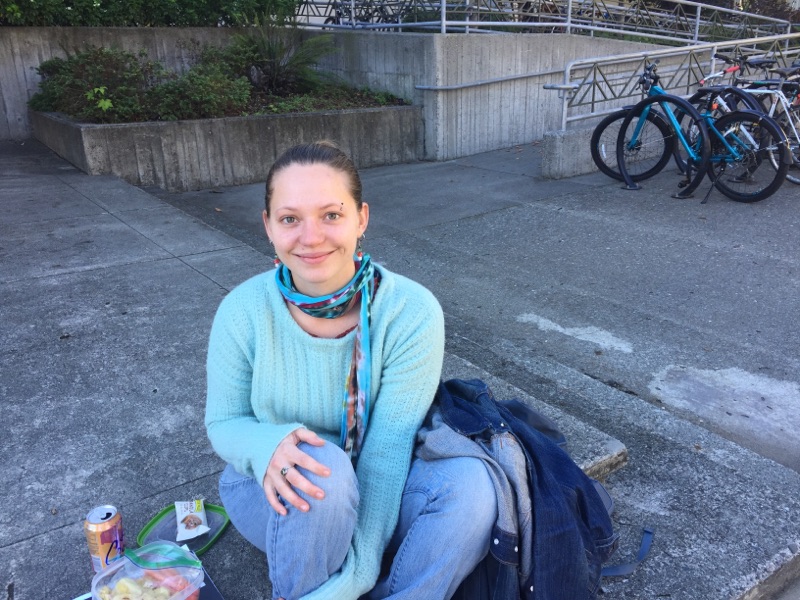
    Brian Simpson, a forestry major in his last semester encourages those who partake in getting a Christmas tree, to purchase an actual tree. Photo credit: Kyra Skylark

    “Getting an actual tree from a forest seems like its not environmentally friendly, but trees are in fact a renewable resource,” said Simpson. “Getting an actual tree from a tree farm or a forest helps with carbon sequestration.

    The tradition of giving holiday presents can also create a large amount of waste for some families. Both Simpson and Toole’Wells recommend reusing wrapping paper.

    “Wrapping paper and presents creates a lot of trash, so recycle, and I always like to save bags and reuse bags,” said Toole’Wells.

    Reusing bags, using reusable bags, or wrapping in newspaper can be alternatives to simply buying more paper to immediately throw away.

    “Maybe make cute newspaper ones ones and be crafty,” said Toole’Wells.

    Jessica Ramirez, general biology major’s family has reused the same present bags for most of her life.

    “We reuse any christmas bags every year, we’ve probably had the same ones since we were born,” said Ramirez. “We don’t really buy too many presents.”

    Ramirez also thinks we should think about our gifts more and make sure they mean something.

    “Maybe try to just reduce how many presents people actually need,” Ramirez. “I feel like people overbuy because there’s so many deals, but you know it’s not about the deals, it’s just about the thought really.”