The Lumberjack


Students Serving The Cal Poly Humboldt Campus and Community Since 1929

Tag: trees

  • Improving One’s Health Within The Trees

    Improving One’s Health Within The Trees

    Rosa Granados is a member of Women’s Cross Country at Humboldt State University and found when problems arise, doing something with her time was helpful.

    “I started running when there was something crucial going on in my life, running helped me find my home,” Granados said.

    According to pilot studies published in the “Journal of Adolescence,” outdoor activities can improve one’s overall health.

    Granados was raised in foster care, a difficult experience for her, but was able to find a family with the members of her running team and a passion for running which positively impacted her health. Running was a place for her to disengage from stressful situations and focus on the peaceful environment of nature.

    “It’s very important for everyone to practice self-care and expand one’s own definition of wellness,” Granados said.

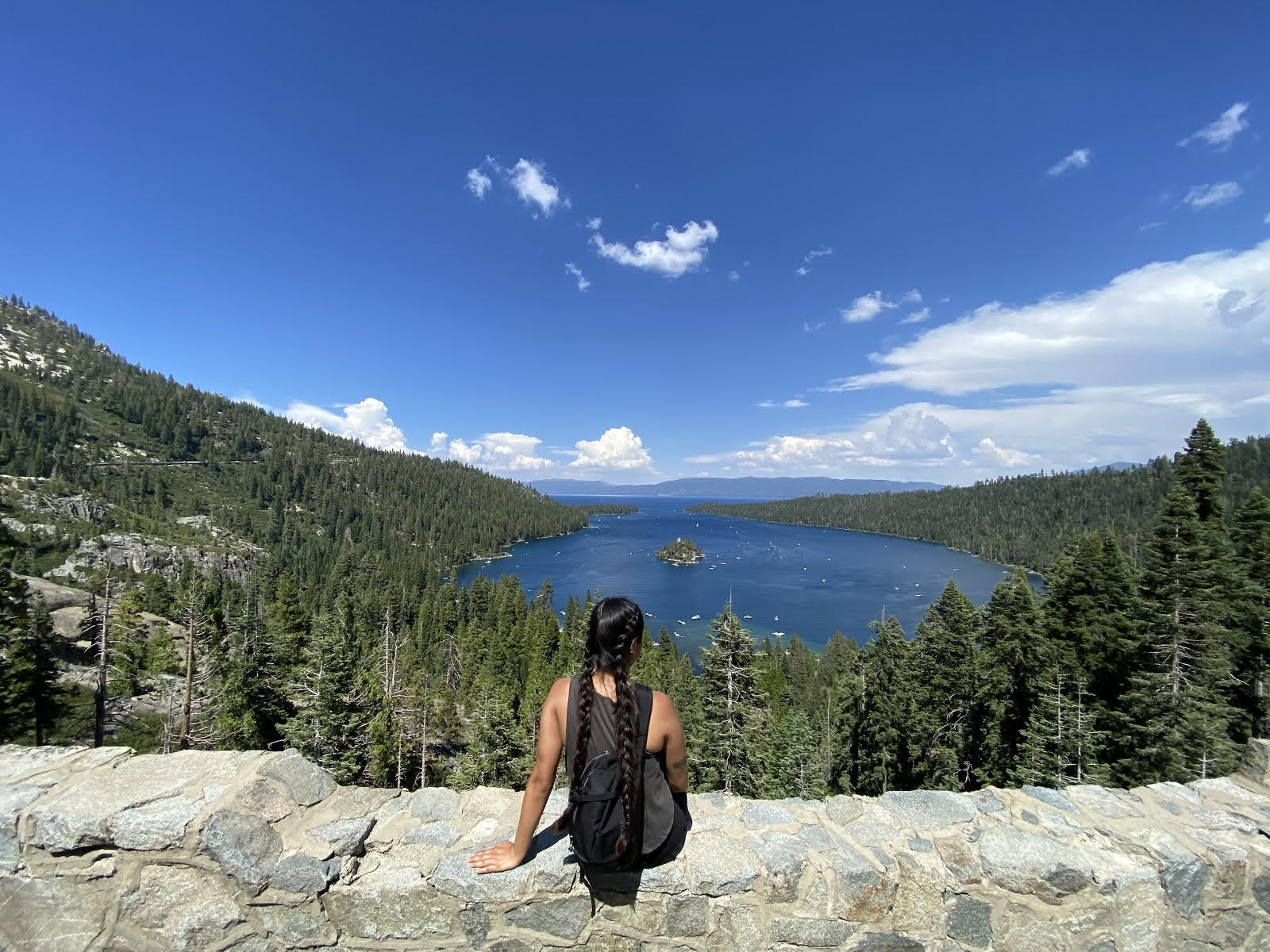
    Granados enjoys hiking through the forests of Humboldt and the calmness of nature. It was a great place to disconnect from society as there was often a lack of cell reception. This caused her to feel present in the moment.

    Enjoying nature helped Granados cope with depressing situations and accept life experiences that she couldn’t control.

    According to an article published in the journal “Perspectives in Public Health”, “Using a combination of arts- and nature-based activities, present distinct synergistic benefits that have the potential to make a significant impact on the psychosocial wellbeing of adult mental health service users.”

    Granados’ job at Harm Reduction at HSU was about helping others with their mental health and trauma.

    In order to maintain Granados’ job with care, it was important for her to take care of her own mental health and wellbeing.

    Sheila Camerarena had a similar life experience to Granados.

    “Being a social worker can be very draining and I always have to remember that I need to take care of my needs first before I can help others,” Camerona said.

    Camerona also had a hard time at home. She found herself having to grow up very fast, taking a massive toll on her.

    “Knowing these difficulties I had at home is what led me to nature, it was like an escape,” Camerona said.

    Growing up, she found peace with bike riding throughout her neighborhood and grew up to become a lover of hiking.

    Nature helped Camerena get in touch with her spirituality and culture, it gave her a sense of connection with the world around her that she always wanted to find.

    Several studies have suggested that having a deep connection to spirituality can lead to a more positive well-being. According to the article “Enhancing Spirituality and Positive Well-Being Through Nature,” a study by Stringer and McAvoy wrote exposure to nature can lead an individual to connect to something greater, increasing their cognitive abilities and creative abilities.

    Similar to Camerarena and Granados, Annika Slattery was also searching for a home. Fresh from Hawaii and stepping foot in Arcata for the first time in her life, Slattery wasn’t sure if this was the place for her.

    Slattery was planning on getting her degree and moving back to Hawaii, however, things changed when she fell in love with the environment at Humboldt State University.

    “I started learning about my awesome major and it was everything I wanted,” Slattery said.

    Slattery is a recreational studies major and fell in love with forest bathing, being outdoors, and enjoying nature with her fellow classmates.

    She focused on recreational tourism and backpacking trips with classmates, from rafting trips to beautiful hikes in the forest.

    Being outside, enjoying nature, and being disconnected from the world for ten to fifteen minutes, Slattery not only found her home but developed a family bond within her major.

    “With this pandemic, I felt very contained and that my life had shifted into this box, I never realized how being outdoors could greatly improve your mental state,” Slattery said.
  • Sudden Oak Death Plagues Humboldt’s Forests

    Sudden Oak Death Plagues Humboldt’s Forests

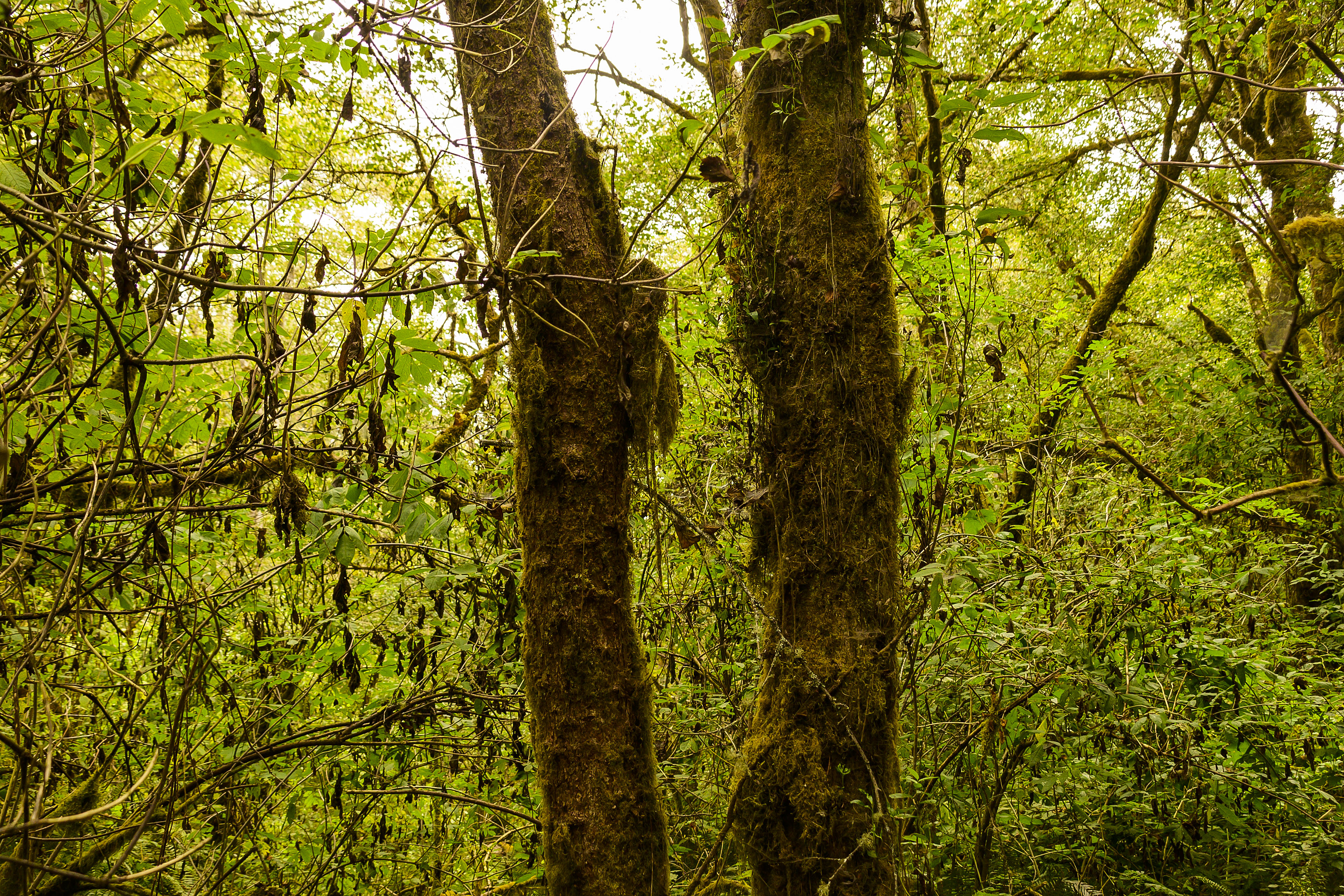
    Humboldt County is known for its beautiful forests, but sudden oak death threatens its trees

    Sudden oak death is the common name for a disease that started infecting trees 20 years ago and has since killed over a million trees—including trees in Humboldt County.

    The University of California Cooperative Extension explained that the disease is caused by a pathogen called Phytophthora ramorum.

    “It is caused by a microscopic fungus-like organism, Phytophthora ramorum, a lethal, canker-causing pathogen of certain oaks and tan oak trees,” UCCE wrote.

    Susan Marshall, a wildland soils professor at Humboldt State University, is involved in two grant programs that deal with pathogens like sudden oak death. Marshall is connected to Christopher Lee, an HSU alumni with a Ph.D in forestry from the University of Missouri, who now works as a forest pathologist at the California Department of Forestry and Fire Protection.

    “It gets into the vascular tissue that is just underneath the bark, and it kills that tissue,” Lee said. “If it does that in several different places around the circumference of the tree, then it will eventually kill a band of tissue all the way around.”

    If the Phytophthora ramorum does kill the tissue all around the tree, the tree is effectively girdled. Generally, live tissue transports water and nutrients up the tree, but if those pathways are blocked lower down, everywhere above the infection dies. The organism infects the tree’s circulatory system and can spread to the nutrient tissue and water-conducting tissue, xylem and phloem, essentially starving the tree and clogging it up. A full ring is a sure death sentence.

    “As far as these diseases go, it would probably be worse under a warmer and wetter sort of scenario.”

    Christopher Lee

    Marshall and Lee described Phytophthora ramorum as being like a fungi or brown algae, with characteristics similar to closely related plant pathogens. Specifically, they are in the class Oomycota, which are a distinct line of fungus-like eukaryotic microorganisms. They are fungus-like because they have a long, branching net-like structure like the hyphae of fungi. They are algae-like because they descend from the same phylum, Heterokontophyta, as many algae.

    Phytophthora ramorum is not the only pathogen that affects trees, but it is the most visible and the most deadly, devastating thousands of acres of forest. In California, sudden oak death has been most prominent in and around Sonoma County, according to reporting by the Times Standard.

    Humboldt County’s dense forests of tan oak, the main host for the disease, is at especially high risk of tree death. Humboldt’s weather and climate are an unfortunately-inviting environment for sudden oak death. The dense oak forests in the area means both greater humidity and a shorter distance for a pathogen to travel.

    “As far as these diseases go, it would probably be worse under a warmer and wetter sort of scenario,” Lee said.

    The recent fires around California also have an indirect connection to Phytophthoras. The loss of vegetation limits the way pathogens spread due to a wildly new arrangement. It is good to note heat from fire can sometimes help slow a pathogen’s spread by eradicating an area where the pathogen had a large presence. Lee noted that if the root system of a tree isn’t fully dead, however, Phytophthoras may have a chance of surviving in its host.

    The main goals of the programs Marshall is involved with are to identify the disease more rapidly and figure out how to slow its spread.

    There isn’t a specific way to control a disease like this, but Marshall said rapid testing of plants in nursery stock may catch Phytophthora ramorum before it can infect new hosts.

    “Every year that [we] can buy that [sudden oak death] doesn’t leapfrog into some other county and cause quarantines and regulations on those counties is a little bit of economic damage that they’ve staved off,” Lee said.

    Sudden oak death has only affected one percent of Humboldt’s trees, but its impacts in California and Oregon demand researchers like the ones Marshall and Lee are involved in will be continuing to study it and find newer and faster ways to help manage the remaining forests along the coast.

  • Trees are Here to Help

    Trees are Here to Help

    How planting trees can serve as one branch of a climate action plan

    In the face of climate change, all scales of society, from government to corporations to individuals, are looking for ways to emit less and sink more carbon. The internet latched onto the tree-planting solution, but it’s important the right trees are planted in the right place at the right time.

    The climate crisis is the dominant issue of this decade. According to Robert H. Socolow and Stephen W. Pacala, who wrote the article “A Plan to Keep Carbon in Check” in 2006, the world must avoid emitting about 200 billion tons of carbon over the next 50 years.

    To make the problem manageable, Socolow and Pacala turned the required reduction into one-billion-ton “wedges.” The paper contained strategies that could be scaled up by 2050 to reduce carbon emissions by one million tons per year. For example, a wedge would be achieved if the number of miles traveled by the world’s cars was cut in half or if global deforestation was halted within 50 years.

    Tree planting has become one of the most popular solutions in popular culture. Ecosia and Team Trees are two internet campaigns working to plant millions of trees.

    A consistent goal in climate science is net zero emissions. In other words, the volume of greenhouse gasses going into the atmosphere needs to equal the volume coming out. With a record 37 billion tons of carbon dioxide emitted in 2018, that’s a daunting task. To achieve this goal, society needs to emit less carbon and increase nature’s carbon sinking, or the natural process of turning carbon dioxide gas into solid matter.

    Top minds of the world are putting their heads together to come up with solutions, ranging from modernized public transportation to alternative energy technology to lifestyle changes toward less consumption. Beyond that, policy makers and scientists are working closely with everyday people to educate, inspire and solve the crisis.

    Locally, Humboldt State University, the City of Arcata and Humboldt County have prepared climate action plans. In the spring of 2019, five public workshops were hosted by the county to get ideas from community members on an action plan. The primary goal of these plans is to reduce emissions to pre-1990 levels by 2030.

    2030 is the nearest milestone in climate policy. According to the Intergovernmental Panel on Climate Change Special Report on Global Warming, global emissions will need to fall 45% from 2010 levels by then to be on track for the net zero emissions goal for 2050. This ideal timeline would limit global warming to the best-case 1.5 degree Celsius increase in average temperature, a goal which still brings with it real climate change.

    Tree planting has become one of the most popular solutions in popular culture. Ecosia and Team Trees are two internet campaigns working to plant millions of trees. A number of science-based YouTubers have published videos explaining the project, including SmarterEveryDay, Mr.Beast and Aspect Science.

    Trees are a valuable ally in the battle against climate change because they sequester carbon. A tree’s bark is made out of carbon. During photosynthesis, plants turn sunlight, water and carbon dioxide into glucose. The glucose molecule, along with other essential nutrients, turns into plant matter like leaves, branches and roots, effectively storing carbon in a solid state.

    For this ordeal to be successful, it’s essential the people planting trees understand the silvics of those trees. Silvics is the study of the life history and characteristics of forest trees, and without understanding it, the newly-planted trees are more likely to die.

    With the Earth at a critical time in its life history, the top minds of the world are opting for some deep breaths, planning and deliberate, well-informed environmental action.

  • Redwoods Growing at Remarkable Rates

    Redwoods Growing at Remarkable Rates

    Some coastal redwoods are growing faster than expected and scientists aren’t certain why

    Many redwoods in Northern California are growing at unexpected—even record-breaking—rates. While redwoods only remain in a tiny portion of the world, they appear to be in good health.

    “People talk about saving the redwoods,” Humboldt State University Professor of Forest Ecology Steve Sillett said. “The redwoods, as long as we don’t cut them down, are doing just fine. The question is, can they help save us?”

    The answer is complicated.

    “The Redwoods and Climate Change Initiative found that one Del Norte County redwood put on 2,811 pounds in 2014, a record-breaking annual growth.”

    Many coastal redwoods are growing faster today than they have in the last thousand years, according to a 2019 report from the ongoing Redwoods and Climate Change Initiative.

    The RCCI, a research partnership studying redwood health since 2013, found surprising growth in redwoods located away from dry forest fringes or recent fires.

    By estimating tree weight based on the tree’s measured width, height and volume, the RCCI found one Del Norte County redwood put on 2,811 pounds in 2014, a record-breaking annual growth.

    The cause of the increased growth is uncertain. Sillett, who sat in his lab beside tree rings which he used to measure age and growth, said climate change may or may not play a role in the increased growth. Sillett said the Clean Air Act of 1970 may have cleaned the air enough to allow more sunlight on the trees.

    “What happened is, the air cleared,” Sillett said. “And with clear air, you get more light, and so it could very well be that this increase in growth rate that we see very strikingly in some of these trees, starting in the late 60s and early 70s to present, is just because of increasing air quality.”

    Beyond climate and air quality, Sillett said multiple factors likely contribute to increased growth. Sillett also said the growth won’t necessarily last.

    “I think that there’s very much a limit to what redwoods or any vegetation can achieve,” Sillett said.

    A redwood tree ring in HSU Professor Stephen Sillett’s lab Aug. 28. | Photo by James Wilde

    A sudden spread of redwood forest also seems unlikely, Lucy Kerhoulas, an assistant professor of forest physiology, said. Kerhoulas said redwoods already have to work hard to reproduce via seed. Climate change might make reproduction even more difficult.

    “Successful seedling germination and establishment might be really challenging under a warming and drying climate,” Kerhoulas said.

    In other words, redwoods are doing well, but they’re not about to reclaim their lost forests.

    Sillett emphasized that many living redwoods are maintaining their normal growth despite less successful reproduction.

    “It’s not the case that they’re responding uniformly,” Sillett said. “But what we do see is that in the prime parts of their range, which is, say, north of San Francisco and relatively close to the coast, the rates of wood production are higher than they were in the not-too-distant past.”

    Redwoods store large amounts of carbon, especially in their prime ranges, but Sillett said that won’t offset the carbon dioxide produced by humans.

    “There’s not enough land in the world to plant with redwood forest,” Sillett said, “that would allow them to save us from what we’re doing to the atmosphere’s chemistry.”

  • Forest defense flies high in the Mattole Valley

    Forest defense flies high in the Mattole Valley

    Chunder Dome activists blockade the Long Ridge Road.

    Old-growth forests no longer exist in many places where they once thrived.

    According to National Geographic, the Redwood National Park contains less than five percent of the original two million acres of old-growth forests that once existed in the park.

    “The forest defenders are here, because the trees are here,” Jack Noonan, Earth First! Humboldt and Humboldt State Climate Crisis member, said. “The forest defenders have a stake in preserving old-growth forests. Trees are the best defense against climate change we have.”

    The Mattole Valley is in southern Humboldt County, stretching from Whitethorn to Petrolia along the Mattole River. Since 2014, the Earth First! environmental movement has been holding off the Humboldt Redwood Company from logging old- growth Douglas-fir forests in the North Fork Basin of the Mattole Valley.

    Jene McCovey, HSU anthropology alumnus and present HSU Climate Crisis member, describes forest defense as three influential steps: direct action, lawsuits and media.

    “Earth First! will slap a lawsuit on Humboldt Redwood Company and they will slap back, filling a lawsuit on Earth First!” McCovey said.

    While lawsuits are being issued, direct action is taking place in the forest. Stanton Wood has been involved in protecting the Mattole Valley since 2014 when this defense of the North Fork Basin got underway.

    “We are out here fighting for forestry best management practices,” Wood said.

    Earth First! opposes clear-cutting methods as well as the hack and squirt practice of killing small trees.

    “The hack and squirt method includes a person with a machete hacking several slices into a one foot diameter tree or smaller, [the tree at a persons chest height] and squirting Monsanto herbicide into the cut to kill the tree,” Wood said.

    The success of the forest defense blockade on Long Ridge Road has to do with the ingenious use of giant tripods built in the middle of logging access roads, known to Earth First! as Skypods or Chunder Domes.

    These Chunder Dome tripods are built from three trees that are tied together at the top. Woody debris, or chunder, is placed inside the tripod. At the top of the tripod legs, a rope is attached. This rope stretches out across the valley and connects to a platform suspended in space, which is connected to a second rope that is attached to another Chunder Dome on the other side of the valley.

    “If someone were to disturb the Chunder Dome or cut the rope, the people on the platform would fall to their death,” Wood said.

    The Humboldt Redwood Company can’t move a Chunder Dome, so they are denied access to the road used to get to the trees.

    Long Ridge, located within the Mattole Valley, had been fought for and won by Earth First! and the Environmental Protection Information Center (EPIC) in the early 2000s.

    “Long Ridge was set aside when the EPIC environmental organization took Humboldt Redwood Company to court and won around 2002,” Wood said.

    “In the past, the Humboldt Redwood Company would negotiate and honor agreements. Today, they seem to only be looking at their corporate bottom line, going after the best of what is left of their holdings,” Rob DiPerna said on EPIC’s blog on Feb. 20.

    The Earth First! victory of blocking Lone Ridge Road has led to the Humboldt Redwood Company amending their Timber Harvest Plan to allow for new road construction to bypass the Chunder Domes.

    “The outcome of the new road is expected in the first two weeks of March. It will either be accepted or rejected,” Wood said.

    The Timber Harvest Plan amendment must go through CAL FIRE and other agencies, following a period of public comments and opinions.

    Karen Coulter is the director of the Blue Mountains Biodiversity Project, monitoring federal agency’s policies regarding logging and spraying toxic herbicides on public lands.

    The HSU Climate Crisis Club is making arrangements to have Earth First! author and environmental and social justice activist Coulter come to HSU in April. Climate Crisis plans to have Coulter host Earth First! workshops on strategic campaign planning: media strategies for activists and public land monitoring.

    If you would like to get in contact with Earth First! in the Mattole Valley, they have a Facebook page, Save the Mattole Ancient Forest, or their email address is: mattoleancientforest@riseup.net.

  • Plant trees while you search the web

    Plant trees while you search the web

    Working to combat deforestation around the world, Ecosia is a search engine that plants a tree for every 45 searches the user makes.

    In an effort to balance out the harsh effects of deforestation around the world, certified “social business” Ecosia was born. Ecosia is a search engine that benefits the environment with just a click. For every 45 searches, a tree is planted.

    Evan Gamman, HSU environmental science and management major, thinks using this search engine is an easy way to help save the planet while browsing the web.

    “I heard about this site a while ago and it makes me feel productive while I’m searching,” Gamman said. “I do hella searches. It’s sick to see my number go up and know that there are trees being planted somewhere.”

    Since its inception in 2009, over 20 million trees have been planted. Their goal is to reach 20 billion by 2020. The revenue from advertisements are then donated to non-profit tree-planting organizations. The company publishes their monthly financial reports so users can hold them accountable and see where the profits are actually going.

    Lyla Godfryd, HSU senior studying international studies, believes there are multi-faceted advantages in using a search engine that isn’t facilitated by a large corporation.

    “It feels good not supporting a monopoly, like Google,” Godfryd said. “At the same time, you’re supporting reforestation on a global scale.”

    The website encourages users to consciously consume the internet.

    Their mission statement states that they, “believe in everyone’s power to do good.”

    They want to empower people to end deforestation in a way that suits anyone’s lifestyle.

    According to Google, over five billion searches happen each day. Imagine how many trees could be planted if Ecosia was as large as Google.

    Arcata artist Xenia Robles, 21, likes that this website is a way to subconsciously benefit the environment.

    “In a time of complete selfishness, it is refreshing to find an organization that chooses to run in a way that benefits the greater good,” Robles said. “This site in particular is really easy to use and easy to understand what they are doing. We get to see real results from our participation.”

  • Benefits of being outside

    Benefits of being outside

    By | Bryan Donoghue

    Being outside rejuvenates our bodies. Geneviève Marchand, a Kinesiology professor specializing in outdoor recreation notices that many students come here and take opportunities to get to know the community of outdoor recreation, but that there are also some students who do not. This point of curiosity led to a study, if participation in the outdoors near Humboldt State helps students feel more connected to their campus community.

    “My hypothesis is that it is and that students that actually either have opportunities to go outdoors or take the time to go outdoors feel more connected to Humboldt State.” Marchand said. “I’m really interested to find if that works and if that makes a difference.”

    Outdoors 3.jpg
    Gold Beach, Oregon Photo credit: Iridian Casarez

    The outdoors provide a variety of different benefits under a cluster of different weather conditions and locations. Although, being outside in nature like we have in Humboldt stays consistently beneficial in how it effects our bodies and mind.

    The cooling air is helpful with refreshment, acting as a stimulant of sorts that wakes up an individual, specifically someone who has been fatigued.

    “When I’ve been at the gym all day, it’s nice to just walk outside and feel the cool air and just kind of chill for a second,” said Madeline Hatch, a sophomore kinesiology major at Humboldt State.

    This sentiment aligns with Marchand’s research. According to Marchand, just being outside reduces our stress levels.

    “We basically just go outdoors, and somehow being that it’s nature, that open space, being in green, the sounds and the smells, it all reduces our stress levels.” Marchand said. “There’s actually evidence of it reducing your heart rate, and calming your breathing.”

    Outdoors 4.jpg
    Grants Pass, Oregon Photo credit: Iridian Casarez

    It’s not just feeling exhausted physically, after spending a while studying, sometimes the brain needs a breath of fresh air to be woken up as well.

    “I definitely notice that when I get bogged down with studying, if I take my reading outside, it kind of wakes me up a bit,” said Kindall Murie, a senior marine biology major.

    There’s evidence that the outdoors helps plenty psychologically. According to Marchand, it reduces mental stress and gives just a better mental wellbeing overall.

    The outdoor environment of Humboldt County is something to be grateful for according to Steve Bell, an assistant supervisor at the Student Recreational Center at Humboldt State.

    “You have to stimulate yourself. This is a natural way to get what’s available out there.” Bell said. “So that’s what we’re doing. We’re making the most of an opportunity to be out here, by being outside today. I was just telling my daughter here that you really need to thank God for the opportunity.”

    To enjoy the benefits of being outside, you have to put the effort in. Make that first step. The benefits will follow.

    “I was telling my daughter, we are going to get a lot more out of this than what you put into it.” Bell said. “You don’t only reap what you sow, you reap more than you sow. We’re doing it by faith, and we’re basically sowing the seed today to reap the benefits of another time.” 

    Outdoors 2
    The top of the sky trail at Trees of Mystery. | Photo by Iridian Casarez

    According to Marchand, there’s evidence we learn best about ourselves, and potentially about how to work with other groups in outdoor settings that are challenging us.

    “In the end, nature takes care of letting them know if they did a good job, or not.” Marchand said. “I think they learn about themselves, and become better and more in tune with themselves as human beings.”