The Lumberjack


Students Serving The Cal Poly Humboldt Campus and Community Since 1929

Tag: Trinidad

  • Trees are Here to Help

    Trees are Here to Help

    How planting trees can serve as one branch of a climate action plan

    In the face of climate change, all scales of society, from government to corporations to individuals, are looking for ways to emit less and sink more carbon. The internet latched onto the tree-planting solution, but it’s important the right trees are planted in the right place at the right time.

    The climate crisis is the dominant issue of this decade. According to Robert H. Socolow and Stephen W. Pacala, who wrote the article “A Plan to Keep Carbon in Check” in 2006, the world must avoid emitting about 200 billion tons of carbon over the next 50 years.

    To make the problem manageable, Socolow and Pacala turned the required reduction into one-billion-ton “wedges.” The paper contained strategies that could be scaled up by 2050 to reduce carbon emissions by one million tons per year. For example, a wedge would be achieved if the number of miles traveled by the world’s cars was cut in half or if global deforestation was halted within 50 years.

    Tree planting has become one of the most popular solutions in popular culture. Ecosia and Team Trees are two internet campaigns working to plant millions of trees.

    A consistent goal in climate science is net zero emissions. In other words, the volume of greenhouse gasses going into the atmosphere needs to equal the volume coming out. With a record 37 billion tons of carbon dioxide emitted in 2018, that’s a daunting task. To achieve this goal, society needs to emit less carbon and increase nature’s carbon sinking, or the natural process of turning carbon dioxide gas into solid matter.

    Top minds of the world are putting their heads together to come up with solutions, ranging from modernized public transportation to alternative energy technology to lifestyle changes toward less consumption. Beyond that, policy makers and scientists are working closely with everyday people to educate, inspire and solve the crisis.

    Locally, Humboldt State University, the City of Arcata and Humboldt County have prepared climate action plans. In the spring of 2019, five public workshops were hosted by the county to get ideas from community members on an action plan. The primary goal of these plans is to reduce emissions to pre-1990 levels by 2030.

    2030 is the nearest milestone in climate policy. According to the Intergovernmental Panel on Climate Change Special Report on Global Warming, global emissions will need to fall 45% from 2010 levels by then to be on track for the net zero emissions goal for 2050. This ideal timeline would limit global warming to the best-case 1.5 degree Celsius increase in average temperature, a goal which still brings with it real climate change.

    Tree planting has become one of the most popular solutions in popular culture. Ecosia and Team Trees are two internet campaigns working to plant millions of trees. A number of science-based YouTubers have published videos explaining the project, including SmarterEveryDay, Mr.Beast and Aspect Science.

    Trees are a valuable ally in the battle against climate change because they sequester carbon. A tree’s bark is made out of carbon. During photosynthesis, plants turn sunlight, water and carbon dioxide into glucose. The glucose molecule, along with other essential nutrients, turns into plant matter like leaves, branches and roots, effectively storing carbon in a solid state.

    For this ordeal to be successful, it’s essential the people planting trees understand the silvics of those trees. Silvics is the study of the life history and characteristics of forest trees, and without understanding it, the newly-planted trees are more likely to die.

    With the Earth at a critical time in its life history, the top minds of the world are opting for some deep breaths, planning and deliberate, well-informed environmental action.
  • The North Coast Crab Fleet is geared up

    The North Coast Crab Fleet is geared up

    Standing at the fish counter at Katy’s Smokehouse, you get a sense of the sea around you. The breeze and the roar of the sea is right outside, while the inside is warm. The experience is accompanied by the aroma of smoked fish. If you like fish and crab, there is no place like Katy’s.

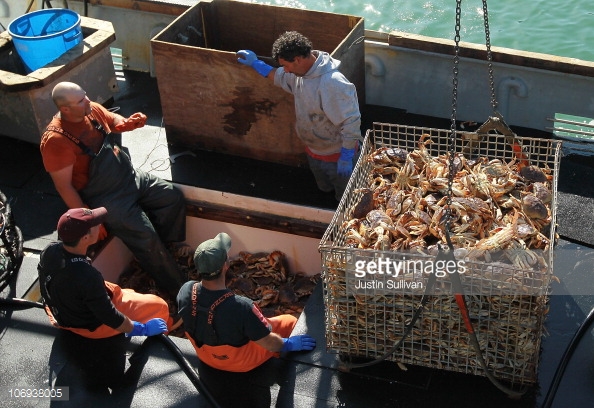
    Bob Lake is the owner of Katy’s Smokehouse in Trinidad. He makes his living off of the sea, selling fish at his market. Lake’s routine involves loading and unloading boats and supplying bait to the Trinidad Crab Fleet at the pier, which is located just down the street from his market.

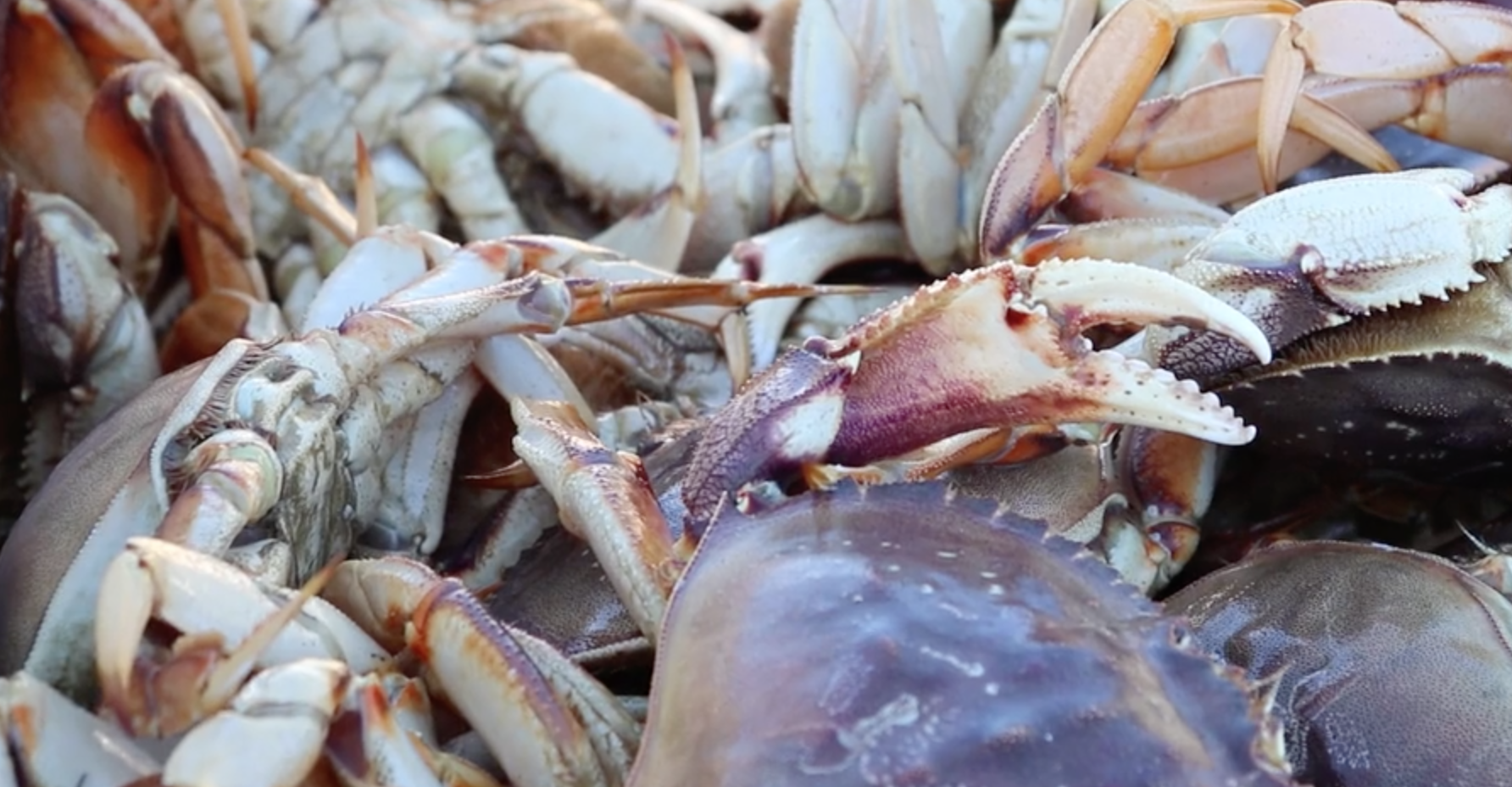
    The North Coast Crab Fleet consists of Eureka, Trinidad and Crescent City combined. The ideal Dungeness crabs have a 25 percent to 28 percent meat-to-shell ratio, but crabs can even get as big as 30 percent, meat per shell. The official ratio for the commercial crab fleet is set at 25 percent meat to shell. People pay good money for Dungeness crabs, and fishermen don’t want to sell anything but the best. A crab with a 25 percent to 28 percent meat-to-shell ratio means a happy customer.

    Fisherman went out Tuesday, Jan. 23 to catch some crabs to send to the processor for meat-to-shell ratio tests. Up until now, the crabs have had a 19 to 20 percent meat-to-shell ratio this season.

    “It would be a waste of a resource, and a travesty, to take these crabs in the condition they are currently in,” Lake said.

    Crab developmental problems have been due to the possibilities of a late molting period and less available food on the ocean floor. The competition for food is a big factor. When crabs get into this state, cannibalism becomes prevalent, and the weak get eaten by the strong.

    “There is just not enough food to keep every crab full,” Lake said.

    Testing protocol states strict testing sites and no selecting of the catch. If the fishermen were to bring in poor crabs and delude the processor, the observers themselves could not afford the cost of doing business. The yield, quality and customers’ perceptions of the crabs are worth the substantial amount of money it costs. These details are all taken into account before the crab season begins. Crab fisherman have to protect the resource and their customers.

    As fishing officially begins, the market sets the price. If the fleet catches a lot of crabs, the price goes down. If more crabs are being caught than can be sold at market, the price will be lowered to allow more people to buy the abundant crabs. If at some point there are not enough crabs, or if the market is sucking them up faster than the fisherman can bring the crabs in, then the price will go up.

    The locally agreed upon ex-vessel price is set by the large buyers and the Fisherman’s Market Association that represents the North Coast Crab Fleet’s three ports in Eureka, Trinidad and Crescent City.

    “The retail price will be around $4.99 per pound,” Lake said. “Canneries and processors pay fish taxes, loading fees, transportation and the employees get paid to cook the crabs.”

    Lake and the crew of the F/V Joie-Lynn, Cary Meyer and Clark Ward, all expect a very good year for crab lovers and the fleet alike.

    “I was born with optimism,” Ward said.

    Optimism swirls aboard Meyer and Ward’s crab fishing vessel, Joie-Lynn. Meyer and Ward said the crabs were caught, tested and showed 25 percent meat-to-shell last week, meaning the crab season can get under way as soon as a dock price per pound for Dungeness crab is set.

    This story was updated on Feb. 1, 2018 from its original publication on Jan. 23, 2018 per request by the author.

  • Road Race in Trinidad

    Road Race in Trinidad

    The 52nd Annual Clam Beach Run

    By | Erin Chessin

    The fog cleared just in time for hundreds of runners to take their marks at the 52nd annual Clam Beach Run in Trinidad, Calif. An event hosted by the Greater Trinidad Chamber of Commerce. Friends, families, and locals united on a sunny Saturday afternoon and ran one of California’s most scenic road races.

    HSU alumni, Paul Matli, was amongst this crowd of runners on the start line.

    “I wasn’t nervous for this race because I knew it was going to be fun,” said Matli. “Clam Beach is one of the more exciting races I do every year. It’s a combination of rolling hills and flat ground, and the fact the last 2 miles are on the beach makes it more fun.”

    Runners could either register for the half marathon, 8 and three quarter mile, 5 and three quarter mile, or the 3 mile race. Each race started at the same time and place but runners had to turn off at a specific point in the town of Trinidad and take their designated path depending on the distance they signed up for. The half marathon began at 11:30 a.m. while the 8 and three quarter mile, 5 and three quarter mile, and the 3 mile races took off in the afternoon. The weather conditions were exceptionally good, with temperatures hitting just above 50 degrees.

    This was no ordinary road race. From the trails to the sand, runners made their way through thick forest and ascended down a rocky path to the beach. The scenery is impeccable and many runners found themselves distracted by the North Coast’s beauty. Kenneth Pocasangre, HSU alumni and a teacher at Fieldbrook Elementary, couldn’t help but enjoy the sights and sounds of the beach.

    “The scenery is what distracted me from the pain,” said Pocasangre, “I could see the ocean hitting the rocks, the fog drifting through the trees, the beautiful colors reflected by the sunlight, it was exhilarating.”

    Once the runners made their way through the forest, the road race ascended down to the beach. In the 8 and three quarter mile race, the last two miles ended on a long stretch of Clam Beach. Matli said this was the toughest part of the race as he struggled to get past the famous Little River that all runners must cross in order to reach the finish.

    “I fell in,” said Matli. “I tried to swim through the river but I ended up being carried down the stream and had to pull myself back onto the course.”

    The Little River isn’t forgiving, many runners found themselves struggling to get past the river since the tide was abnormally high as observed by Jocelyn Barber, a student at HSU studying environmental resources and engineering.

    “I noticed everyone was using the rope to get across the Little River since the current was so high,” Barber said. “ I decided to walk upstream and avoid the rope, running through the cold stream. There were people I could see being carried away by the water.”

    Pocasangre said his shins were problematic throughout the race.

    “I knew I had to keep pushing through in order to get to the finish line, as painful as it was,” said Pocasangre, who finished first place overall in the half marathon race with a time of one hour and 29 minutes.

    The Marching Lumberjacks, who perform at HSU’s football games and numerous other events, showed up at the finish line with enthusiasm and high spirits.

    “I picked up the pace, as much as I could,” said Pocasangre. “I could hear the music about a half mile away from the finish line. It was gratifying hearing the band playing from afar, helping you get through the final excruciating stretch of the race.”