The Lumberjack


Students Serving The Cal Poly Humboldt Campus and Community Since 1929

Tag: TV shows

  • Our Flag Means Death gives the gays everything we wanted

    Our Flag Means Death gives the gays everything we wanted

    by Sophia Escudero

    In episode five of Our Flag Means Death, the two leads share a moment under the moonlight. Stede gently folds a piece of fabric that Ed’s mother had given him and tucks it neatly into a pocket of his waistcoat.

    “You wear fine things well,” he says, tenderly, and Ed looks up at him with nothing short of adoration in his eyes. He leans in, then stops himself, and as the two part ways they look back at each other, both clearly wanting more but unable to bring themselves to voice it.

    That’s pretty gay, I thought to myself, but I didn’t dare hope that this scene was intended as anything beyond bromance.

    I grew up on Tumblr as a queer kid at the height of Superwholock, reblogging edits of Emma and Regina from Once Upon a Time looking longingly at each other and watching conspiracy videos about how, if you really read between the lines, the BBC are totally going to make Johnlock canon in the next season of Sherlock. I believed that the new Star Wars trilogy would give us gay Jedi, and the MCU would give us gay superheroes. Eventually, this hope faded. Each new season of Sherlock was worse, each “first gay Disney character” was less relevant to the plot than the last, and every video I saw from a con featured actors and writers mocking fans in the audience for daring to ask if there would be queer characters.

    I grew to accept that any show that was not explicitly marketed as being about coming out or facing homophobia would ever have a central queer romance. Any scraps I got would be something confirmed on Twitter or by an actor in an AMA and the void would have to be filled by fanfiction.

    When I saw that Taika Waititi was producing a comedy about pirates, I was all in. I was pleasantly surprised when a side character was revealed to be nonbinary and used they/them pronouns. Frankly, my bar for LGBT representation in media is subterranean. If a single character is canonically queer, doesn’t die and is not treated as a joke by the narrative, I will embrace the work wholeheartedly. I don’t ask for much, but I still rarely get more than a “wait and see.”

    Every episode was tailor-made to convince me that this was a love story, but I refused to be tricked so easily. When these characters were found in suggestive scenarios, I accepted it as a joke, and when they shared moments of tenderness and emotional vulnerability, I accepted that they were just really good friends. Even when the cast and crew said, verbatim, “this is a love story,” I was certain they meant it in the nebulous way that a buddy comedy is a love story, and that if I read into it I was a stupid, greedy little homosexual trying to make pop culture gay. Hell, I made it to the ninth episode, where they kiss each other on the lips and make a plan to run away together, still half-convinced that this was some kind of friendship kiss found only in advanced queerbaiting.

    It shouldn’t be shocking to me that queer people exist in television and movies. As a queer person, I should know that we do. Yet, years of media telling me otherwise had convinced me that maybe I was wrong. It has been over a month since the season finale aired, and I haven’t recovered from the sheer impossibility of seeing a romance between two men as central to the plot in a show about something other than queer pain.

    These characters are in love. They kiss, they hold hands, they exist outside of subtext and punchlines. Some jaded part of me thinks that a second season must end in death and suffering, but the inner 14-year-old that was hopeful enough to suffer through four seasons of Sherlock dares to believe that maybe, just maybe, gay people can be happy outside of fanfiction.
  • New A24 film shows off the beauty of Humboldt County

    New A24 film shows off the beauty of Humboldt County

    by Sophia Escudero

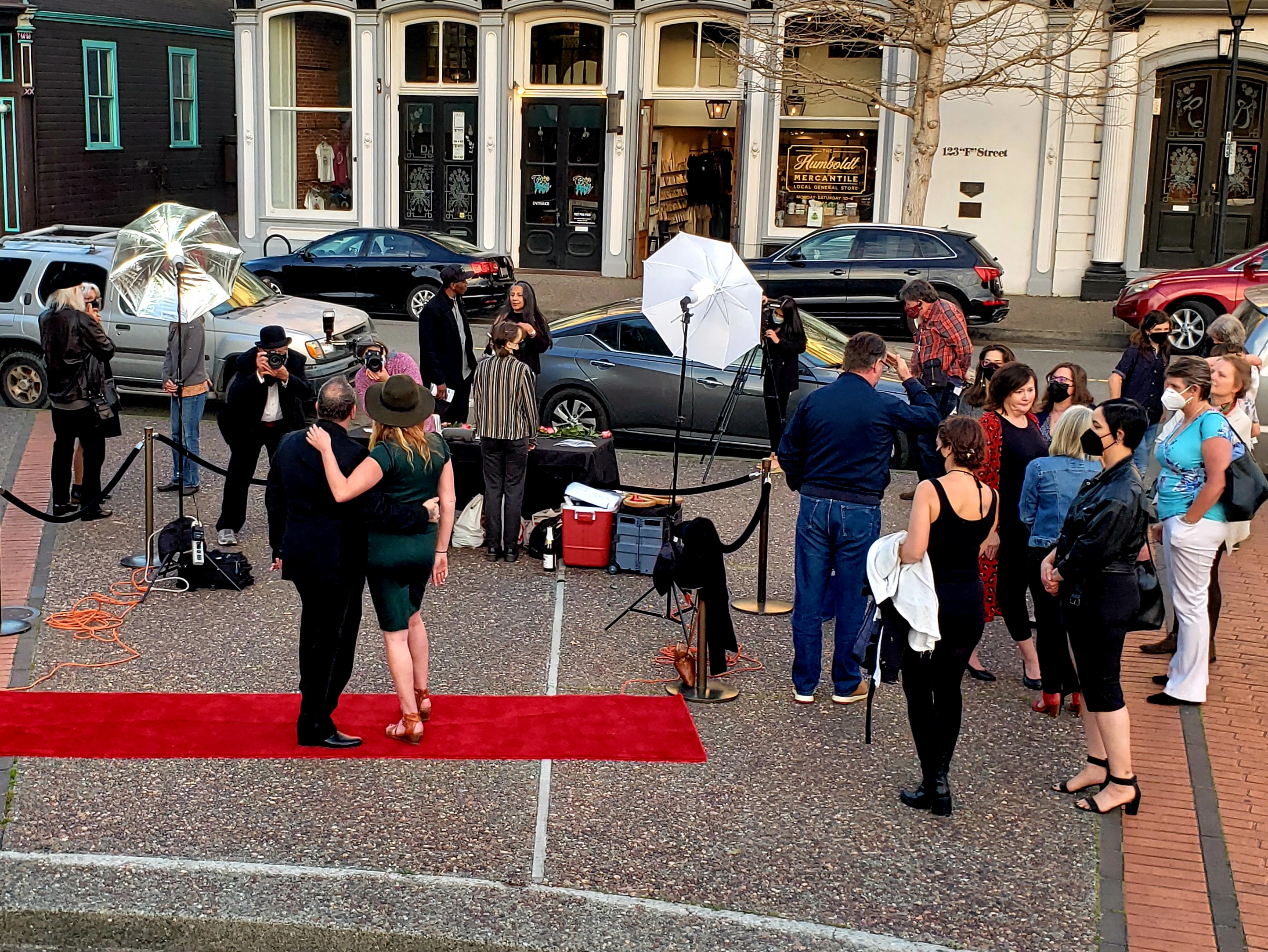
    On Friday, Feb. 11, the A24 movie “The Sky is Everywhere” premiered on Apple TV+, accompanied by a red carpet event in Old Town Eureka. Filming took place locally on such locations as Moonstone Beach, Arcata High School, College of the Redwoods, and Sequoia Park, and over 500 locals were involved in the production, myself included.

    The film itself explores the grief of Lennie Walker, a high school girl grappling with the sudden loss of her idolized older sister. Lennie, portrayed by actress Grace Kaufman, finds herself caught between a grief-forged connection with Toby, her late sister’s boyfriend (Pico Alexander), and Joe, an intriguing new music student fresh from a Parisian conservatory (Jacques Colimon), but more than that, she finds herself torn between mourning and moving on.

    Director Josephine Decker depicts this world through a lens of magical realism. Lennie’s inner turmoil causes a storm around her only she can see, and the act of playing music literally leaves her walking on air. While these slightly surrealist aspects could serve to take one out of a film, here it serves to highlight Lennie’s turbulent emotions and sense of unreality. The visuals help set “The Sky is Everywhere” apart from many other YA dramas, while characterizing it with a certain twee sensibility and aesthetic.

    The film’s minor characters round out the ensemble with heart and soul. Tyler Lofton’s nice guy Marcus, Ji-Young Yoo’s supportive bestie Sarah, and Jason Segal’s stoner uncle Big are all highlights, but Cherry Jones as Lennie’s grandmother Fiona is the standout star of the ensemble. Jones grounds the piece with her kind yet authoritative presence, quietly stealing the show without detracting from her costars. Though the film focuses on Lennie, it, unfortunately, does so at the cost of the people around her. We never get more than one or two shallow notes on many of the people populating this world, despite the actors turning in genuine performances with what they were given.

    Still, nothing is quite like seeing my own hometown (and in one scene about four minutes in, my own face) filmed so beautifully and professionally on the silver screen. Humboldt is on full display here, with every scene reminding the local viewer of a place they know well. A jubilant dance scene appears before the Old Town Gazebo, a heartfelt apology takes place in the streets of Ferndale, and the Arcata Presbyterian Church hosts the funeral that sets so much into motion. The emotion of seeing one’s home in this way was one shared by Deputy Director of the Humboldt Film Commission Nate Adams, who I interviewed at the red carpet.

    Photo by Sophia Escudero | Eureka Mayor Susan Seaman cuts the red ribbon commemorating the Old Town gazebo as a site of filming Feb. 11.

    “It’s overwhelming, trying to focus on the movie and seeing the locations, and the people, and the art, and even my friend’s stickers made it into the movie,” Adams said. “It’s just overwhelming to see so much of Humboldt.”

    Film Commissioner and HSU alum Cassandra Hesseltine teared up as I asked her about her experience helping create this production.

    “I cried at the end of the movie yesterday when I watched it,” Hesseltine said. “Part of why I cried is because I love working in film. I wanted to work in film since I was five. Besides the content of the movie, and it is a beautiful movie, the reason why I cried was just to think about how all this happened in my community, that I helped it happen, and it was really, really special.”

    “The Sky is Everywhere” is available for streaming at Apple TV+.

  • Arcane Review: Alternative Canon Done Right

    Arcane Review: Alternative Canon Done Right

    Two months ago, ‘Arcane’ dropped and took the world by force. The animated steampunk series is a League of Legends adaptation that debuts a few show-exclusive characters, most notably the villainous kingpin Silco.

    For people who don’t play League, ‘Arcane’ sets itself apart as an alternative canon to its video game predecessor – and it does it right, something that isn’t always the case for TV and film adaptations.

    ‘Arcane’ catches the viewer’s undivided attention within the first few minutes of the pilot episode and consistently maintains it throughout the course of the tumultuous, action-packed storyline. Beloved League legends roam the streets of the undercity and maneuver testy politics in the edifices of Piltover as the two worlds collide with explosive consequences.

    Viktor, a chronically ill Hextech inventor with a progressive disability, straddles both as undercity stock working far above the poisoned squalor of his original home. He and his research partner Jayce face various moral dilemmas as they make the push for progress, at great cost to themselves, particularly Viktor. An aged-up Ekko, a far cry from the young boy introduced at the start of the series, takes the helm of the Firelights, an undercity rebel group, with unabashed swagger and style.

    Caitlyn, the posh rifle-wielding daughter of a prominent council member in Piltover, finds her bearings in the undercity as Vi, tattooed and grisled from her formative years in the undercity and subsequently in prison, shows her the ropes. While the two women initially find each other at odds, they soon form a strong sapphic bond that defies the strictures of their respective differences in social status and upbringing. Korra and Asami from ‘Legend of Korra’ and Adora and Catra (and many more) from ‘She-Ra’ walked so Caitlyn and Vi could run.

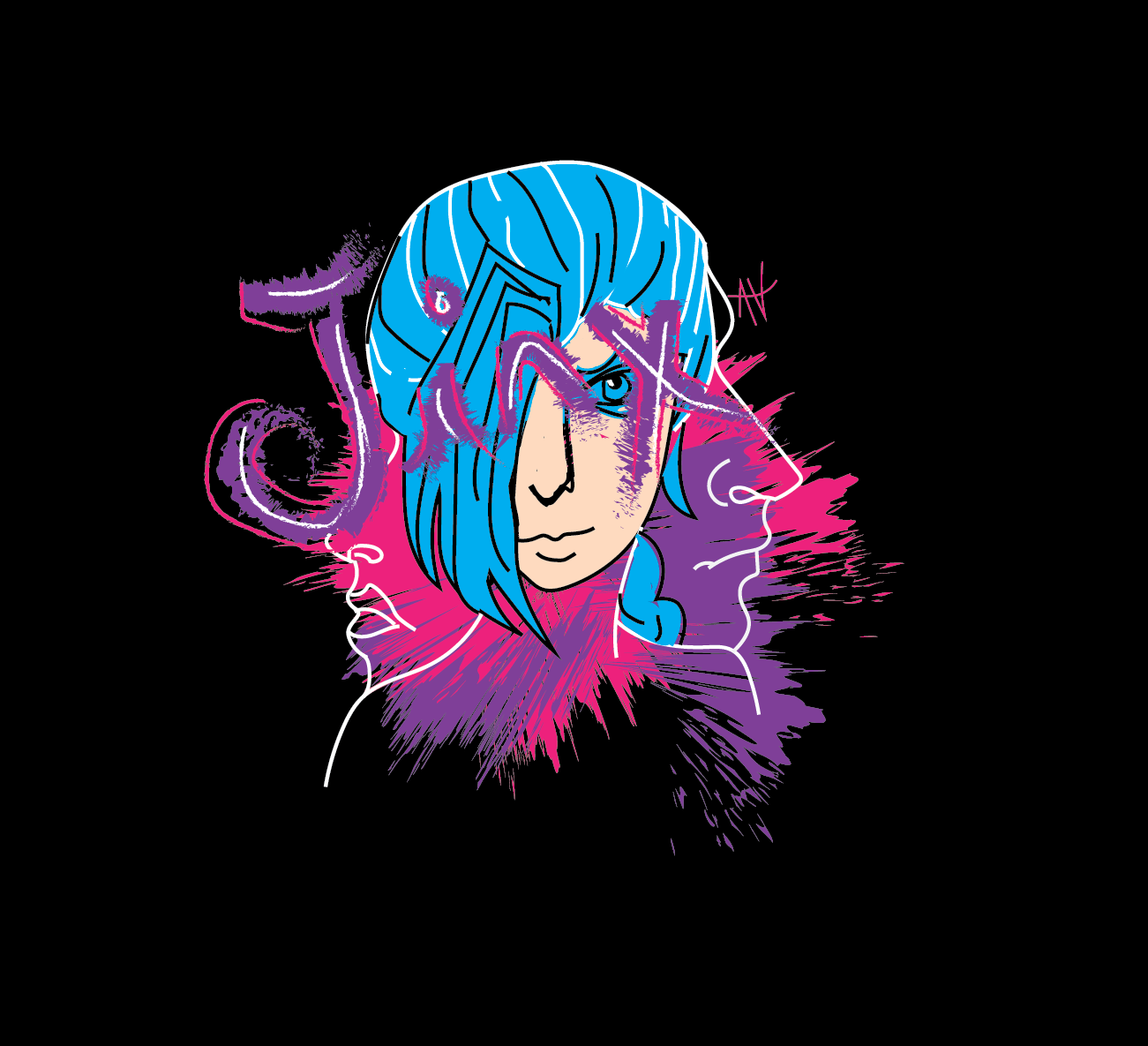
    The unique art style, bombastic musical score, and thorough character development flourish the compact plot, which largely centers around the estrangement of Vi and her younger sister Powder, aka Jinx. The tragedy of Jinx lies in her inability to reconcile her younger self, Powder, with her present self. The inclusion of Silco is necessary to piece together Jinx’s elusive backstory while still maintaining congruence with the original canon of League, a feat that Arcane managed to pull off seamlessly.

    Jinx’s mental health issues are spurred on by Silco, who took on the role of her adoptive father at the end of the third episode and psychologically groomed her to become an explosive human weapon as a means to meet his nefarious ends. In the backdrop of this central conflict, mounting tensions between the elites of Piltover and the vagabonds of the undercity rise to a dramatic crescendo and abruptly halt with a jaw-dropping cliffhanger that leaves the viewer teetering on the razor thin edge of Jinx’s deteriorating mental health.

    When done right, TV and film adaptations embellish the canon of the original source material, not detract from it or contradict it. In the span of only nine episodes, Arcane succeeded and kept its viewers braced for the second season.

  • Welcome to the Twilight Zone

    Comparisons between episodes of the classic TV show The Twilight Zone and our own dismal reality

    In what may be the greatest understatement of the century, 2020 has been a rather eventful year. Wildfires, a global pandemic, isolation, protests throughout the world, political turmoil, deaths of public figures – you could write a new version of “We Didn’t Start the Fire” for each month of the year. So, why not look to retro television for comfort? Why not explore a simpler time, when the greatest fears we had were looming nuclear war, human short-sightedness, crippling loneliness and the catastrophic realities of climate change?

    Oh wait.

    1. Nightmare at 20,000 Feet (Season 5, Episode 3)

    A man recovering from a nervous breakdown is the only person on his plane who can see the monster just outside the window. He attempts to warn his fellow passengers, only for people to assume he’s lost his mind. The fear of flying is certainly one many people these days are familiar with, as travel becomes a major factor in the spread of COVID-19. With the US government claiming it’s safe to reopen and many people ignoring mask and distancing guidelines, it can be easy to doubt one’s own concerns. Like the man on the plane, we find ourselves questioning if the invisible force of death is actually there. Are we overreacting, or do we really see an imminent threat?

    2. Where is Everybody? (Season 1, Episode 1)

    A man finds himself alone in an abandoned town, with no memory of who he is or how he got there. He finds himself searching empty streets and abandoned shops for any sign of human life, only to be left alone with just his own thoughts for company. This certainly brings back memories of the beginning of shelter in place, when nothing was open and we all thought it would blow over within a week or two. Remember when it was pessimistic to say we wouldn’t be back to normal until fall? Good times.

    3. It’s a Good Life (Season 3, Episode 8)

    The citizens of a small town are cut off from the world at large and kept at the mercy of a six-year-old boy with reality-warping powers. They live in a state of constant anxiety about what fresh horror awaits while pretending everything is fine to avoid angering someone who doesn’t seem to understand that actions have consequences. What a classic American mood? The townspeople, in their defeated acceptance of the new normal, are certainly relatable to the average person in 2020 watching things fall apart while baking bread, submitting assignments, and occasionally looking at the red sky to say, ‘Sure, this might as well happen. What’s next?’

    4. The Midnight Sun (Season 3, Episode 10)

    Two women are in their apartment building, slowly being consumed by unbearable heat as they await the end of the world. They cope with the loneliness by supporting each other as the world outside erodes. While the twist in this episode is certainly not one of the series’ best, the despair of the two women as the radio presenter snaps on air and paint boils on the canvas feels painfully relevant as wildfire season is upon us. Staying inside and distracting ourselves with hobbies is really all we can do, as we smell the smoke and watch the destruction on the news.

    5. Time Enough at Last (Season 1, Episode 8)

    An absentminded, bookish man is left alone in a ruined city after a bomb destroys everything and everyone he once knew. This episode is one of the classics, and it’s easy to see why. The sense of loneliness permeates the entire episode, even before the bomb drops. Our protagonist can only find solace from his abusive wife and belittling employer in the pages of his books, but once he’s lost the interactions he’d taken for granted he finds himself sinking into depression. Unfortunately, like many of us who’d had grand quarantine plans of learning a language or writing a book have discovered, having all the time in the world doesn’t necessarily mean we can finally indulge in our dreams.

    6. The Monsters Are Due on Maple Street (Season 1, Episode 22)

    A small community is torn apart and devolves into a violent blame-game after the electricity goes out. In a time of abundant anti-Asian hate crimes in response to the “Chinese virus” pandemic, this episode is an excellent example of what not to do. Yes, things are bad – there is no denying that. However, we need to remember that we have to look out for each other. We can’t go around blaming others for everything that’s gone wrong – we have to work with them to solve our problems. Wear a mask. Donate to fire relief funds. Call your representatives. Order takeout from local restaurants. Check in on your friends and family. Do whatever you can to support those around you.