The Lumberjack


Students Serving The Cal Poly Humboldt Campus and Community Since 1929

Tag: TWIS

  • This week in STEM

    This week in STEM

    By | Bryan Donoghue

    Embed from Getty Images

    A computer chip currently being developed by NASA could be the toughest piece of technology ever sent into space. The chip is designed to be sent to Venus, a planet that is a host to active volcanoes, sweltering heat, and a surface that suggests that the planet may have once had oceans and continents. NASA hasn’t sent a mission to Venus since 1989, and no spaceship has landed there since 1985. The planet’s sulfur clouds, incredible pressure, and extreme heat made space craft navigation borderline impossible for scientists. Now, navigation of Venus has become a possibility. Researchers for NASA working on this product decided to introduce silicon carbide into the equation, which is a compound of silicon and carbon used to make things like fake diamonds. To test the durability, NASA researchers put the silicon carbide chip into something called the Glenn Extreme Environments Rig. This simulates the conditions on Venus artificially to see if the chip can hold up. The chips worked for an entire 33 days in the machine, and could have run longer. NASA scientists working on the project are sure that one day the device will make it’s way to Venus.

    Source: Science Magazine, Popular Mechanics, NASA


    Embed from Getty Images

    Bali is an Indonesian island and resort center popular with tourists around the world. Recently, it’s been under red alert. Mount Agung is a volcano on the island that has recently erupted, and residents have been evacuated in an effort to conserve public health. The deep smoke clouded the sky, and by last Monday morning, the smoke had reached a height of 9,100 meters (5.6 miles.) At Bali’s main airport, Ngurah Rai International Airport, flights were cancelled from 24 hours that Monday, and 59,000 citizens were stranded, with 24,000 citizens evacuated. As the soot and ash continue to spread across Bali and Pulau Lombok, masks are being distributed among residents.

    Source: CNN, ABC, BBC


    Embed from Getty Images

    There’s always a possibility of food poisoning when it comes to what you eat. Recently, the key ingredient in any kind of baking is the culprit of bacterial baddies. E. Coli bacteria has been found in more than 250 flour-containing products. All of the products have been recalled.The bacteria can be reactivated with water, and in a dry food item like flour, that dormant bacteria can revitalize and start replicating. There are multiple to ways to kill bacteria, and the two most common ways to do this are using heat and irradiation. E. Coli bacteria is hard to kill, as higher doses of irritation and heat are needed to fend of bacteria. Next time you reach for the cookie dough this holiday season, you should think twice.

    Source: Science News, CNN, New York Times


    Embed from Getty Images

    The future is here. We can now have hallucinogenic trips without needing to put chemicals into our body. Researchers at Sussex University have developed a machine that lets you have a trip similar to magic mushrooms. The machine integrates both virtual reality and Google’s Deep Dream system. The Deep Dream system identifies patterns and features in images using our brain’s neural network. Volunteers who participated in testing the machine were asked if they ever started to lose control of themselves or their senses. The answers ended up looking similar to a 2013 study on the effects and experience of taking psilocybin. The people involved in this project think this is a great example of how virtual reality can help science. This is not only because of it’s ability to mimic reality so closely, but because this technology tricks our brains. The challenge technology presents to our brains could help reveal more of the important secrets still undiscovered about the brain.

    Source: Science Alert, Newsweek, Nature
  • This week in STEM Oct. 24

    This week in STEM Oct. 24

    By | Bryan Donoghue

    Embed from Getty Images
    One of the things that makes weed worrisome is its impact on developing brains. A new study presented at the World Psychiatric Association found that teens who smoke pot are more likely to suffer from psychosis. The results show that people who used cannabis before 18 developed schizophrenia 10 years earlier than other people who didn’t smoke. For every year the teens smoked weed, symptoms of psychosis rose 21 percent annually.

    Source: Scientific American, Newsweek, Vice

    Embed from Getty Images
    You can really use Google Earth to find anything, even discovering something ancient. Over the past decade, Google Earth has been used to identify thousands of burial sites dispersed around Saudi Arabia. Recently, archaeologists used the application to uncover around 400 stone structures called “gates” in the Arabian desert. The researchers believe it may have been built by nomadic tribes anywhere from 2,000 to 9,000 years ago.

    Source: New York Times, Popular Mechanics, Forbes

    Embed from Getty Images

    Climate change isn’t just affecting sea level, but it’s also harming coffee production. Coffee needs specific temperatures to grow properly and is highly likely to have pests. To combat diminishing coffee production, researchers are cross-breeding coffee plants to create a brand new strain. With most of the coffee around the world grown close to the equator, the newest coffee strain resists climate change and is named after the countries that produce our espresso beans. Out of seven new variety hybrids, Centroamericano is the new breed of coffee bean that can best withstand rising temperatures and decreasing rainfall while still producing a large quantity of quality coffee.

    Source: The Times, The Denver Post, Phys.org

    Embed from Getty Images

    Soldiers stuck in the snow will soon have some high tech underwear made of special fabric to combat the threat of sweat freezing. The light fabric uses nanowires, tiny wires of silver, to form a mesh across cotton. The silver reflects body heat back to someone’s skin helping with insulation. To help with sweat, the underwear also has hydrogel beads, a polymer that absorb up to 40 times their weight in water. This will help keep the troops warm for the winter.

    Source: Science News for Students, Business Insider

  • This week in STEM Oct. 16

    This week in STEM Oct. 16

    By | Bryan Donoghue

    Embed from Getty Images

    Doomsday theorists may start gearing up for the coming of the end as Yellowstone National Park’s super volcano could erupt a lot earlier than predicted. A group of scientists from Arizona State University analyzed incredibly old ash from 630,000 years ago, and found that based on the timeframe from the last explosion, we may be close to another one. It won’t happen for the next few decades at minimum, but when it does explode, the ash would cover most of the United States and the Earth would go into a volcanic winter.

    Source: National Geographic, New York Times, New York Post, Reddit (for doomsday theorists)

    Embed from Getty Images
    Forget crop circles, a mysterious hole called a polynya was spotted near Antartica by researchers earlier this week. National Geographic reports that it’s the size of the state of Maine, around 30,000 square miles. Another gigantic hole was also found near Antartica last year, though it was smaller. It is still unknown what this polynya means for Antartica’s oceans and climate.

    Source: CBS, USA Today, National Geographic

    Embed from Getty Images
    We’re all just people, so the notion of race based on skin color is truly outdated. Researchers from University of Pennsylvania have found eight genetic variants within four regions of the human genomes that influence pigmentation.
    These special cells in the skin called melanosomes that act as pouches to hold pigment molecules. This essentially means some skin is just darker or lighter. Humans genetically develop colors just like other mammals through evolution. A researcher on the study says this discovery helps dispels the biological concept of race.

    Source: University of Pennsylvania, Science Magazine, New York Times

    Embed from Getty Images
    There are worm like creatures under the sea known as bryozoans, and they might just be the medicine we need. A compound known as Bryostatin 1, which is found naturally in the bryozoan Bugula neritina, has been studied for decades as a potential drug for cancer, HIV, and Alzheimers. Its supply is severely limited, and finding a way to recreate the compound in a lab setting has been difficult. Researchers at Stanford University have been able to successfully recreate 2 grams of the compound so far, and they plan to continue research on benefits of the drug.

    Source: Stanford, Science News, Chemical and Engineering Magazine


  • This week in STEM

    This week in STEM

    By | Bryan Donoghue

    Elon Musk continues to make new announcements on rockets that will help us travel to far away places, but recently he’s getting in touch with his roots. Rather than 12-meter rockets he’s been wanting to go to Mars with, Musk is opting to launch smaller vehicles that are only about nine meters tall. These rockets can travel up to 18,000 miles per hour, making long-distances shorter. Musk said that any two points on Earth would be less than an hour apart. Buying a ticket for a seat will cost the same as full fare economy in an airplane.

    Source: New York Times

    Our species’ origins are close to 200,000 years old according to some investigators. Through a recent study on a boy who lived in South Africa 2,000 years ago, Homo sapiens may have emerged as a genetically distinct species as early as 350,000 years ago. Researchers retrieved a complete version of the ancient boy’s DNA from his skeleton to compare with DNA from modern people and Stone Age species. The boy’s DNA is not affected by the migrations that occurred 2,000 years ago, so evolutionary geneticist Carina Schlebusch of Uppsala University in Sweden finds it to be the best benchmark so far for gauging when Homo sapiens originated in Africa.

    Source: Science News


    Animals travel the world’s oceans on makeshift rafts, whether they’re synthetic or natural. The 2011 Japanese tsunami caused a mega-rafting event and objects from Japan traveled as far as 7,000 km. The tsunami transported hundreds of species to the United States and Canada. Researchers have documented animals on 635 debris objects such as docks and buoys. There were 279 living Japanese invertebrate and fish species, with about 20 species together in each piece of debris. As the world population grows, the amount of waste entering the ocean will rise. Due to this, in the future of our coasts could become a lot less diverse.

    Source: Science Magazine


    Cells can be reprogrammed using mixtures of DNA, RNA and proteins. The most popular method uses viruses as a delivery vehicle—although they can infect unintended cells, provoke immune responses and even turn cells cancerous. Now there’s another process known as tissue nanotransfection, which involves a chip holding an array of tiny channels that apply electric fields to individual cells. This gives the chip the ability to convert or reprogram cells into other types, which has raised hopes for regenerating damaged limbs and organs. Researchers used the chip to restored the legs of injured mice and claim the technique is developed enough to test on people.


    Source: Scientific American

  • This week in science (Feb. 1 – Feb. 8)

    This week in science (Feb. 1 – Feb. 8)


    Illustration by Claire Roth.

    Wildlife – A batty welcome

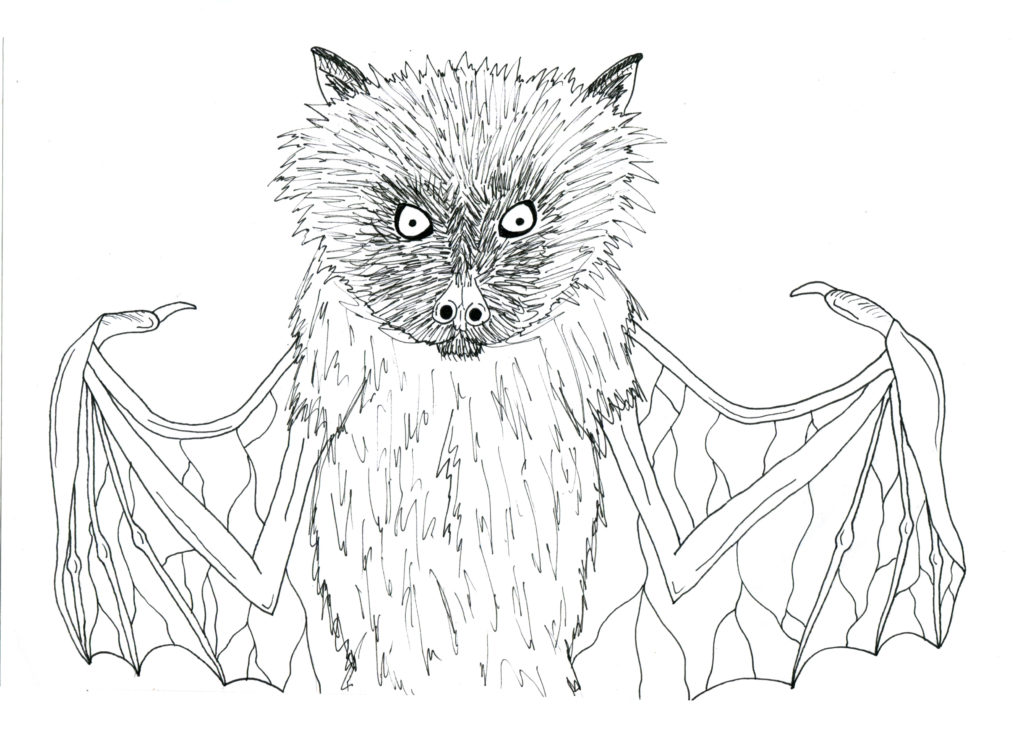
    At the San Diego Zoo, a critically endangered species of bat known as the Rodrigues fruit bat was the first of his species to be brought into the world via cesarean section. The emergency procedure was deemed necessary after the bat pup’s mother experienced complications during her attempt to deliver him naturally. Though the mother did not sustain the cesarean section procedure, Lucas, as the bat pup was named by zoo personnel, is thriving in the careful hands of the San Diego bat keepers and will join the zoo’s resident bat colony when he is old enough. Rodrigues fruit bats are endemic to (only found on) Rodrigues Island, an island near the coast of the country Madagascar.

    Sources: BBC, The San Diego Union Tribune


    Illustration by Claire Roth.

    Genetics – A, T, C, G… X and Y

    If you’ve seen the first “Jurassic Park” movie you may remember the cartoon DNA sequence telling park visitors that it makes up all life on earth. Even if you haven’t seen the dino flick, it’s worth knowing that all life on earth contains DNA that is made up of a combination of letters, forming a double helix, and that those letters are A, T, C and G. However, scientists from France, China and the United States recently found a way to add two new letters to that sequence, synthetic letters known as X and Y. The scientists were experimenting with finding new ways to treat nasty diseases such as Escherichia coli and discovered that they were able to add the X and Y letters to the DNA sequences of those diseases. With more research, this could lead to possible treatments or cures for life-threatening diseases.

    Sources: BBC, National Academy of Sciences


    Illustration by Claire Roth.

    Astronomy – Hide and black hole

    Scientists from the National Astronomical Observatory of Japan discovered the existence of a black hole that had not been spotted before due to its position behind a cosmic cloud in our very own Milky Way galaxy. The cloud was said to have been moving through space rapidly before coming into contact with the black hole; this is the reason the black hole became visible at all. Black holes, as their name suggests, are difficult to spot in the inky expanse of space. However, if they come into proximity with something they can affect or alter, their existence is revealed.

    Source: Science Daily


    Biology – Carnivorous beginnings

    Illustration by Claire Roth.

    Scientists from the State University of New York at Buffalo questioned just how carnivorous plants obtained their taste for animals and seem to have gotten closer to an answer. The study focused on three geographically separate types of carnivorous plants: an Australian pitcher plant, an American pitcher plant and an Asian pitcher plant. The researchers found that the genomes of all three carnivorous plants contained traces of the same kind of protein that would later develop into the enzyme responsible for breaking down prey. This protein is thought to have originally been meant to fight off predators and protect the plant. Through many years of evolution and due to the fact that many species of carnivorous plants live in nutrient-poor environments, the protein developed into the enzyme that makes these carnivorous plants what they are today.

    Source: Science Daily

  • This week in science (Jan. 25 – Feb. 1)

    This week in science (Jan. 25 – Feb. 1)

    By | Claire Roth

    “When we became the climate changers” Illustration. | Claire Roth

    Climate – When we became the climate changers

    When it comes to conversations surrounding climate change, there seems to be more agreeing to disagree than flat-out agreement. It’s a strange phenomenon for a topic having to do with the existence of our planet as we know it. A group of scientists recently set out to create a starting point for this pivotal discussion, effectively creating a timeline for climate change and its origins. The group published an article in the American Meteorological Society outlining estimations of climatic variation since before the industrial age. The goal of this was to contain better conversations of what is considered to be a “normal” climate for our earth within a definition of where the age of industry began. The group was spurred into action after analysis of ice cores displayed a spike in carbon dioxide emissions much earlier than the previously agreed upon beginning of industry. This means humans were affecting the global climate far earlier than originally believed. Research on this topic could prove hopeful in political spheres as well, helping policy makers to better perceive humanity’s impact on the planet.

    Source: BBC, American Meteorological Society

    “>0.001 percent human, ~0.999 percent pig” Illustration. | Claire Roth

    Cellular – >0.001 percent human, ~0.999 percent pig

    A new type of fetus has crossed the known boundaries of what is human and what is pig. Researchers at the Salk Institute of Biological Studies in San Diego were recently successful in their efforts to grow human tissue within a pig fetus. Human cells were inserted into a pig embryo, which was then implanted in a sow to attempt growth for 28 days. The purpose of this endeavor is to eventually find a way to propagate human organs within another animal. Many obstacles lie in the way between this team of scientists and success. Some of these obstacles include questions of morality by outside entities, a five-month difference in gestation time between humans and pigs and also the fact that the majority of embryos in the study did not make it even close to existing for the 28-day goal of the study. The scientific importance and significance of the study persists in the fact that healthy, available organs could one day save the lives of those in need of transplants.

    “Cat, Ph.D” Illustration. | Claire Roth

    Source: BBC, Cell Journal

    Wildlife – Cat, Ph.D.

    There is one question that can oftentimes make or break any relationship: are you a dog person or a cat person? If you’re a dog person and your first argument is to claim canine intelligence superior to feline intelligence, think again. Researchers at Kyoto University in Kyoto, Japan subjected cats to a series of harmless tests of intelligence. They found that cats are conscious of past enjoyable experiences, such as where a tasty treat was located. This means that cats, like dogs, may be able to associate certain human sounds and gestures with specific meanings.

    Source: BBC, Behavioural Processes Journal

    “Saccorhytus “R” Us” Illustration. | Claire Roth

    Evolution – Saccorhytus “R” Us

    Scientists have pinpointed the earliest known human ancestor. One thing is for certain: you are guaranteed to look nothing alike, unless you happen to be around 540 million years old and resemble an alien football. Researchers have identified fossilized remains of a millimeter-sized creature known as Saccorhytus that is currently the earliest known placeholder on the evolutionary timeline of humanity and numerous other species of vertebrates. Saccorhytus likely spent its days on the ocean floor hanging out between grains of sand, consuming lifeforms smaller than itself. Perhaps it also contemplated the millions of years it would take for evolution to take it through the stages of being a fish and into the millions more years it would take for evolution to finally craft it into a human.

    Source: BBC, Nature Journal

    “Plant some pollination” Illustration | Claire Roth

    Ecology – Plant some pollination

    A sharp decline in bee populations has resulted in many farmers resorting to hand-pollination, such as apple farmers in China. However, a recent international study may hold part of the key to saving the world’s key pollinators, maintaining agricultural wellbeing and improving the ecological health of our natural landscapes. Researchers from global locations studied the effect of removing exotic plants from secluded mountaintop landscapes on the success rate of pollination in those areas. They found that areas where there were more native plants displayed a wealth of pollinators, flowers and fruit. This was linked to the possibility of an interconnected web of life in these areas and stands as a testament to the importance of ecological restoration efforts around the world.

    Source: BBC, China Dialogue, Nature Journal

  • This week in science Jan. 16

    This week in science Jan. 16

    Graphic Illustrations and Written By: Claire Roth

    Politics – A glimmer of hope

    Perhaps one of the most hopeful developments so far in the world of 2017 science is President-elect Donald Trump and his affiliates’ acknowledgement of climate science. Though the terms ‘Trump,’ ‘science,’ and ‘hopeful’ rarely fit within the same sentence, this recognition stands in stark contrast with much of what President-elect Trump said in the past concerning climate science oftentimes publicly denying its necessity and the existence of climate change in general. BBC News reports that Trump’s “about-face” on these issues came gradually after his election and that he now is softening his opposition to key environmental steps such as the 2016 Paris Agreement.

    Source: BBC News

    Wildlife – Merging territories

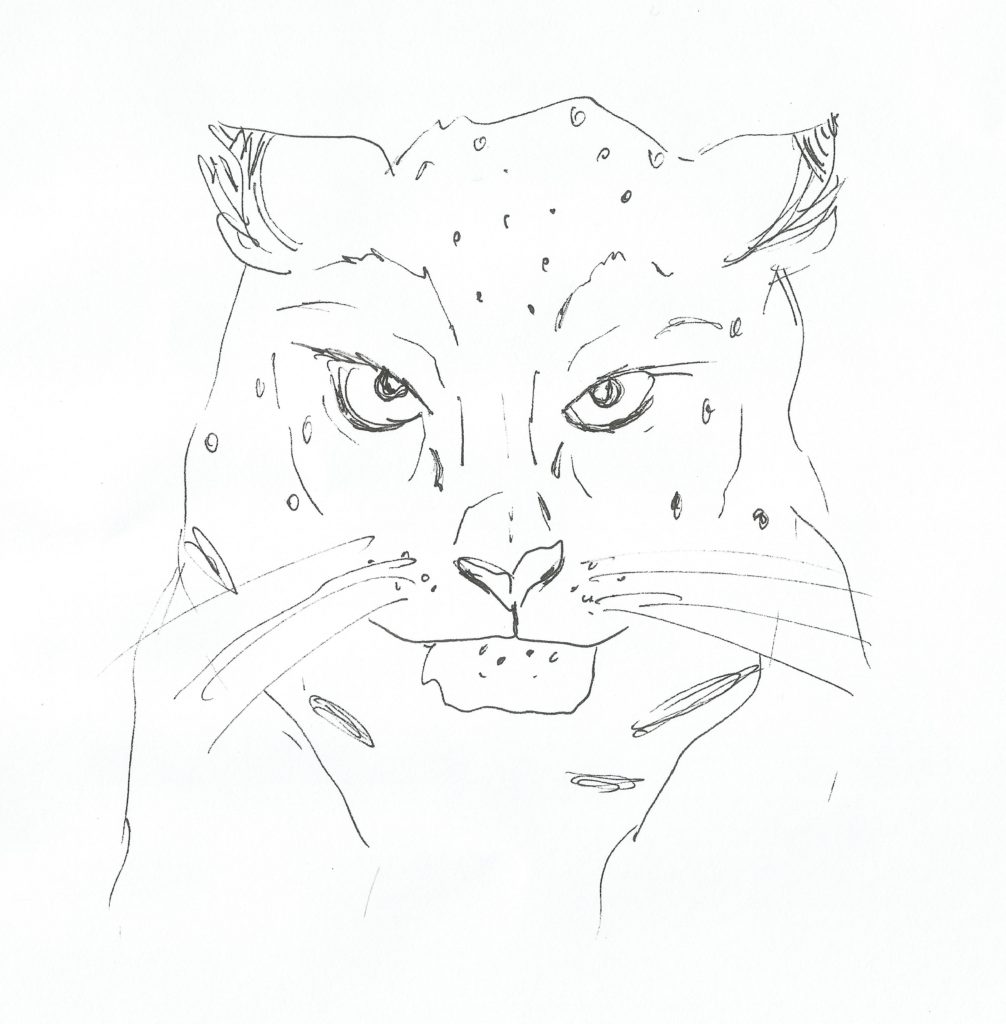
    Shifting treelines and warming temperatures as a result of climate change, have created a possibly troublesome overlap of territories between common leopards and snow leopards on the Tibetan plateau. The phenomenon had never beforehand been observed due to the big cats’ differing habitat needs, but wildlife scientists point to a warming climate as the culprit. Common leopards, usually residing in lower elevations than snow leopards, seem to have begun their ascent into snow leopard territory as temperatures continue to rise and treelines recede. This poses an issue to the already endangered snow leopard population.

    Source: BBC News

    Wildlife – Cooling caribou

    Many of us have a friend who’s dead-set on reducing their footprint on the global  climate, but what about a friend who’s reducing their hoofprint? As caribou roam their tundra home and munch on darkly colored shrubs, space is opened up for grasses that are oftentimes more lightly colored and therefore absorb less heat energy than their darkly colored shrub counterparts. Research suggests that the widespread amount of caribou grazing and the resulting decrease in retained heat energy on the earth’s surface has cooling effects on the ecosystem.

    Source: Anthropocene Magazine

    Food – Staying spicy, staying alive

    Researchers at the University of Vermont recently found a correlation between spicy pepper lovers and staying alive longer. A component present in peppers known as capsaicin is thought to be helpful in helping your body maintain a healthy vascular system and overall weight. According to a study by the University of Vermont there is a 13 percent increase in lifespan of those who enjoyed peppers during their lifetime.

    Source: Science Daily

    Language – Swearing by science

    If someone has ever told you that you need a swear jar, they’re probably right. However, science has given those of us who are “swear-happy” a new excuse to say f*** yeah. A team of psychologists at the University of Cambridge found that the more you cuss, the more likely you are to be telling the truth. The study found that the inclusion of swear words in one’s everyday jargon shows that honest beliefs are not being censored. Additionally, the language patterns of frequent swearers were studied and resembled the language patterns having to do with telling the truth.

    Source: Science Daily

    Wildlife – Moody worms

    “Ah, yes, I remember my moody teenage years fondly,” said no one ever. It turns out that humans are not the only animals that experience those ups and downs associated with adolescence. The Salk Institute for Biological Studies found that the brain chemistry of teenage roundworms causes them to act more irrationally than adult roundworms, exhibiting behavior such as taking their sweet time when seeking out food sources or choosing a direction to travel in.