The Lumberjack


Students Serving The Cal Poly Humboldt Campus and Community Since 1929

Tag: unsolved crime

  • SoCal Connected Produces Lawson Documentary

    SoCal Connected Produces Lawson Documentary

    ‘Who Killed Josiah’ examines the consequences of a divided community and the effect David Josiah Lawson’s death had on his family

    In Humboldt County there are some people that don’t know about David Josiah Lawson, but others will remember his name and story for the rest of their lives.

    When Karen Foshay, an executive producer for KCET – a television station in Southern California, heard about Lawson’s murder she felt she had to follow the story. Foshay produced the 29-minute episode “Who Killed Josiah?” for KCET’s news documentary series SOCAL Connected.

    After three months of working on the news documentary, “Who Killed Josiah” premiered on KCET’s website, kcet.org, and YouTube on Oct. 22 and will air on KCET-HD and KCETLINK on Nov. 12, 13, 14 and 16.

    Foshay’s husband attended Humboldt State University as an undergrad. In January, when she and her husband were passing through Humboldt, she found herself on the scene covering a national news story when two local girls went missing from their backyard.

    “Along the way I meet a photojournalist who told me about an LA student who was killed up here,” Foshay said. “I looked into it and I was really interested. Not the death itself, but what this death did for the area.”

    “We couldn’t paint the community as racist. We had to be fair and give their voices and experiences justice.”

    Karen Foshay

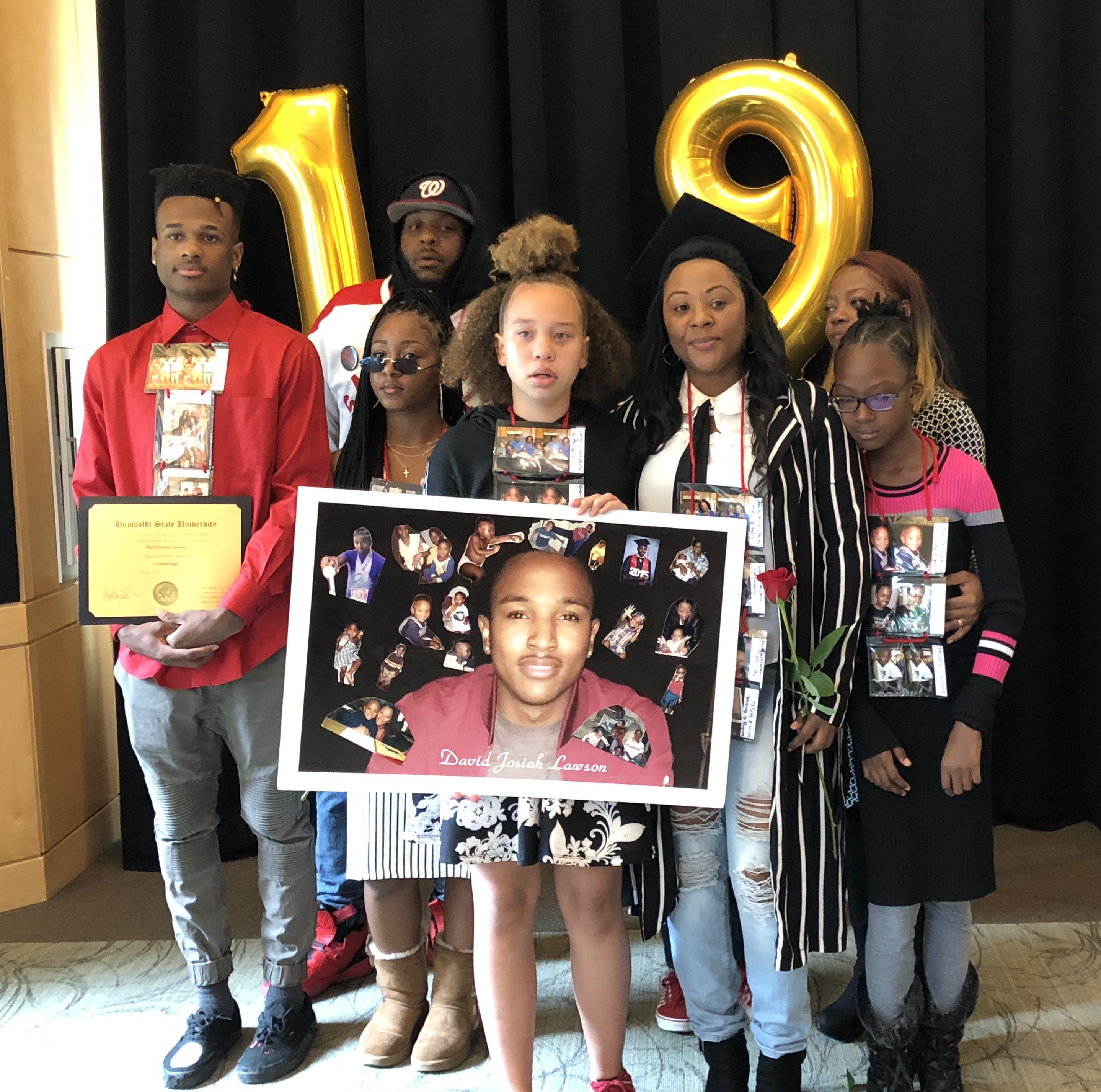
    The episode follows the murder of David Josiah Lawson, a 19-year-old Humboldt State University student, who was stabbed at an off-campus party on April 15, 2017. The show examines the consequences of a divided community and the effect Lawson’s death had on his family.

    Foshay said that part of the reason she pursued Lawson’s story is because he moved to Humboldt from Perris, a city in Riverside County. She added that she understands many students move to Humboldt from Southern California. When she and her crew were investigating, they had to consider HSU’s policies, recruiting methods and how the institution approached the death of a student.

    When the crew collected more information, they weren’t able to separate Lawson’s story from the area.

    “The scenery and landscape is the backdrop,” Foshay said. “Rugged, scary, and drop dead gorgeous which frames the mystery of the story.”

    The crew filmed at familiar places in Humboldt, such as HSU’s campus, Eureka and Moonstone Beach. The crew also interviewed recognizable local faces, such as Lawson’s mother Charmaine Lawson, photojournalist Mark McKenna and former KHSU Office Manager Lorna Byrant.

    Photo courtesy of Karen Foshay

    Toward the end of their investigation, Foshay said that she and her crew obtained four hours worth of dash cam footage that captured dramatic moments of the night of the murder, as well as a call a police officer made to Charmaine breaking the news of her son’s death.

    “You have to keep asking questions and digging,” Foshay said.

    “Who Killed Josiah?” depicts an emotional and complex story that provides a variety of perspectives from Lawson’s family and the community at large.

    Foshay said that she wanted to respect the strong feelings on both sides.

    “We couldn’t paint the community as racist,” Foshay said. “We had to be fair and give their voices and experiences justice.”
  • Community still demands ‘Justice for Josiah’

    Community still demands ‘Justice for Josiah’

    Police are past their estimated time for solving the more than one-year-old crime

    He was smart. He had goals. He came to Humboldt to avoid the challenges of South L.A.

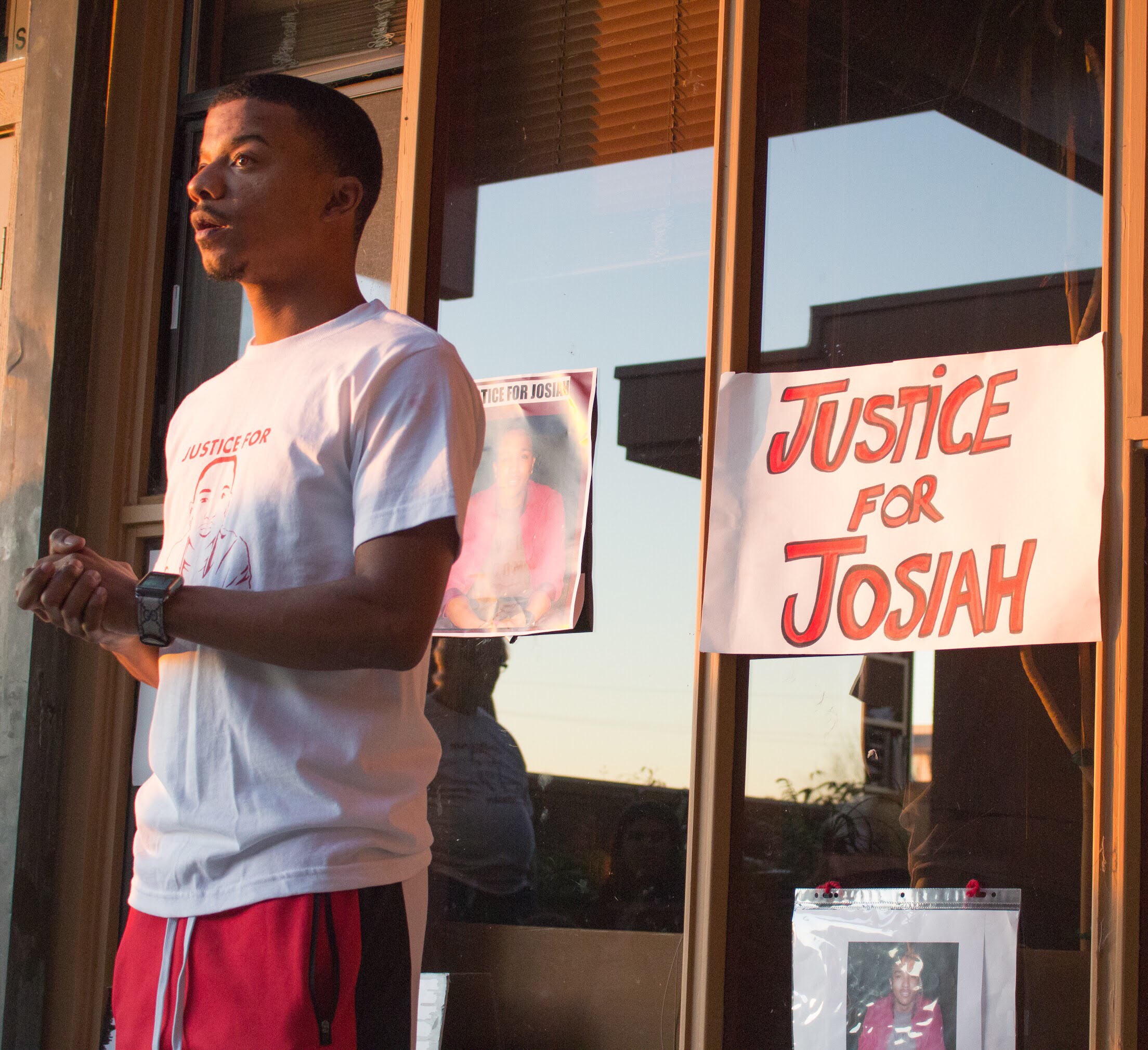
    These words were spoken outside of Arcata City Hall by Karim Muhammed, a friend of David Josiah Lawson. Lawson was murdered on April 15 2017 and his case still remains unsolved.

    Discussion on race and safety in the community were the main subjects amongst community members on Oct. 15. Tears streamed down faces as homemade posters of Lawson were hung on the walls in front of Arcata City Hall.

    Muhammed met Lawson their freshman year in the dorms at HSU. He said he misses Lawson and was at his dorm everyday.

    “He was one of the first people I met when I moved to Humboldt,” Muhammed said.

    Muhammed said he thought Arcata was safe compared to south L.A but that isn’t his experience. How to keep moving forward he said is to bring awareness and continue to inform incoming students about Lawson’s murder.

    “We need to get it solved, get new people in power, get people informed and vote,” Muhammed said.

    Muhammed said the goal is to make the community safer but many people in the community are still oblivious to the death of Lawson or they just don’t care. When he learned of the roster release of the HSU’s predominantly African American student clubs to the Arcata Police Department, Muhammed said that was a big red flag. He said this shows where they stand with the situation and further proves their indifference.

    “People choose what they want to believe or they just don’t want to believe,” Muhammed said.

    Meg Stofvsky, a retired school psychologist, said the vigil’s are held to continue remembering Lawson as well as inform people who are new in the area. Stofvsky was representing Charmaine, Lawson’s mother, and said Charmaine has caught the interest of the California State University system about her son’s murder. She said Charmaine has been travelling to other CSU’s to talk about safety on campus and will be in Sacramento later this week.

    “We need a firm insistence we are not going to continue to let this happen,” Stofvsky said.

    It has been 18 months since Lawson’s murder and Stofvsky said the county seems to be sliding backwards. She said we need to continue having resilience and hope and to keep the Arcata Police Department accountable. Stofvsky said the APD recently gave a six to eight week time limit to solve the case and that limit is up.

    “We hear a lot of talk about progress from the APD but we haven’t seen any,” Stofvsky said.

    When Charmaine Lawson comes into town for court hearings or monthly vigils she stays at Sharon and Michael Fennell’s house. Both are HSU alumni and have been proponents seeking justice for Lawson. Sharon Fennell, was a KHSU DJ under the name Sista Soul and said she met Charmaine at the second vigil held for Lawson.

    “We show up once a month. This is a beautiful thing and Charmaine knows,” Fennell said.

    Fennell offered ideas to start selling “Justice for Josiah” shirts at the HSU bookstore to continue to bring awareness of his murder. She said that way Lawson would be seen more on campus and students would be reminded of what happened. A conflict Fennell has is that students come to HSU but then leave after they graduate, which keeps Humboldt from changing.

    “People need to come, stay, build businesses and change the community,” Fennell said. “If not we stay 80 percent white. Boring.”

    A member of the “Justice for Josiah” movement, Jill Larrabee, said actions by CSU and California Faculty Association are starting to take hold regarding safety on campuses but society needs to change. Larrabee said we need to learn, educate, heal and grow and get more people in office.

    “Humboldt County has the good ol’ boys club in power,” Larrabee said.

    To move forward Larrabee said white people need to converse with other white people about racism. Larrabee said racism is still a big problem here in Arcata but more and more people are coming out and acknowledging their privilege.

    “When we hear white people say we can’t guarantee safety, then we are going to demand it,” Larrabee said.

  • 11 months and no justice for Josiah

    11 months and no justice for Josiah

    David Josiah Lawson was a victim of a hate crime and has become the poster child of the racism that exists in Humboldt County. Though the Arcata Police Department has been working through the investigation using physical evidence and witness statements, the trail remains cold in the pursuit to bring justice to Lawson.

    Lawson was a black 19-year-old criminal justice student at Humboldt State when he was stabbed to death at a house party in Arcata on April 15, 2017. The efforts of local authorities attempting to solve the case of his death fall short to this day. Those who spoke up after the incident hold little water in the eyes of the law due to conflicting reports of hearsay and lack of evidence. So much is against Lawson under these unfortunate circumstances.

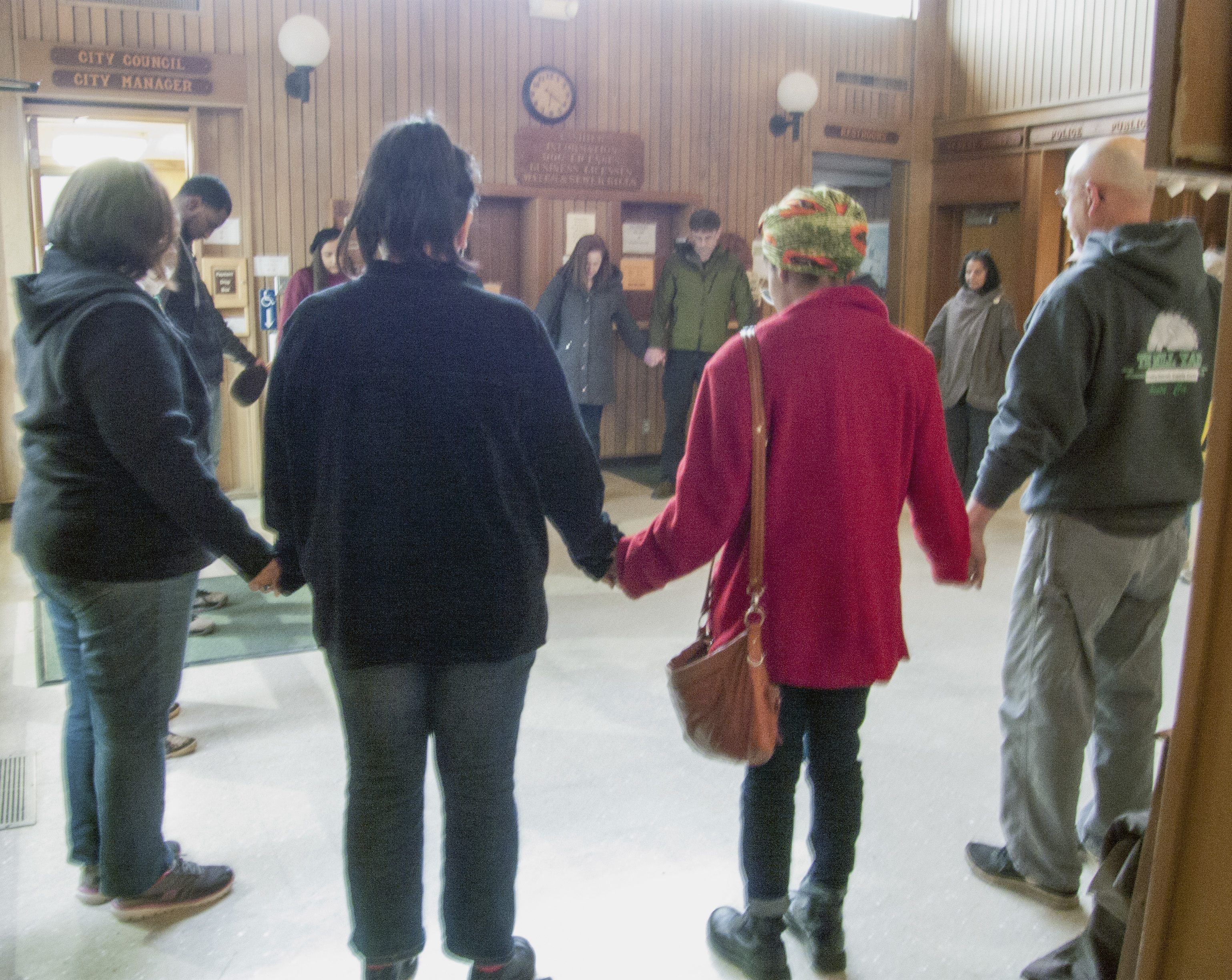
    A vigil has been held for Lawson every month since his untimely death last April. The turnout of the 11th vigil on March 15 at Arcata City Hall was lower than usual due to spring break and heavy rain, but over a dozen people participated in solidarity of Lawson nonetheless.

    During the vigil, Alex Foster, a leading force in finding justice for and preserving the memory of Lawson, said mixed messages aired by the media continue to hamper with the development of the murder case.

    “There’s a lot of rumors and false narratives, especially from newspapers,” Foster said. “It’s just different perspectives.”

    McKinleyville resident Kyle Zoellner was arrested for allegedly stabbing Lawson, but was released by Judge Dale Reinholtsen for lack of evidence. During the preliminary hearings, contradicting testimonials by eyewitnesses include Zoellner’s physical condition when Lawson was murdered.

    In a report by Mad River Union, Zoellner’s family said Lawson was stabbed to death while Kyle was unconscious due to a brutal assault. However, the Lost Coast Outpost reported Elijah Chandler, a friend of Lawson who was at the scene of the crime, witnessed Zoellner “drop something shiny on the ground” a moment after discovering someone had been stabbed. Conflicting reports such as these only muddy the waters of the case.

    What students, police officers, politicians and other community members need to understand is that the murder of Lawson brings up broader issues of social injustice and public safety.

    If people continue to downgrade the importance of this case or stay disinterested, then we are doing ourselves a huge disservice. We are allowing criminals to get away with hate crimes in a town that brings in innocent students year after year.

    Despite some of the challenges Foster and other tenacious supporters face, the search for justice carries on.

    Though the case remains open, relentless efforts are made to not only keep Lawson’s memory alive, but to spread awareness about the injustices that people of color still face in the area.

    April 15 will mark the one-year anniversary of Lawson’s death. Though details for the next vigil are in the works, tentative plans include a community gathering at the Arcata Plaza and a march to the D Street Neighborhood Center. Full details will be announced on the Justice For David Josiah Lawson Facebook page.

    In addition, the City of Arcata is supporting a safe space for a Community Dialogue on Race on March 22 at the D Street Neighborhood Center, located at 1301 D St. in Arcata. The meeting starts at 5:30 p.m.

  • “Unsolved Hate,” the case of David Josiah Lawson

    “Unsolved Hate,” the case of David Josiah Lawson

    The murder of David Josiah Lawson happened almost 11 months ago. On April 15, 2017, the 19-year-old HSU student Lawson was stabbed multiple times at a house party in Arcata and he died shortly after. The case remains unsolved and justice has yet to be served. Suspect Kyle Zoellner was arrested at the scene, but was later released due to lack of evidence. Lawson’s death is still felt deeply by students and community members.

    Close to 100 people gathered at the D Street Neighborhood Center for a showing of the documentary “Unsolved Hate” last Thursday, which was directed by Courtney Wagner. The film focuses on the Lawson case and how his murder affected our small college town. The NAACP Eureka Chapter hosted the event as a part of the three-part film series they are showing for Black History Month.

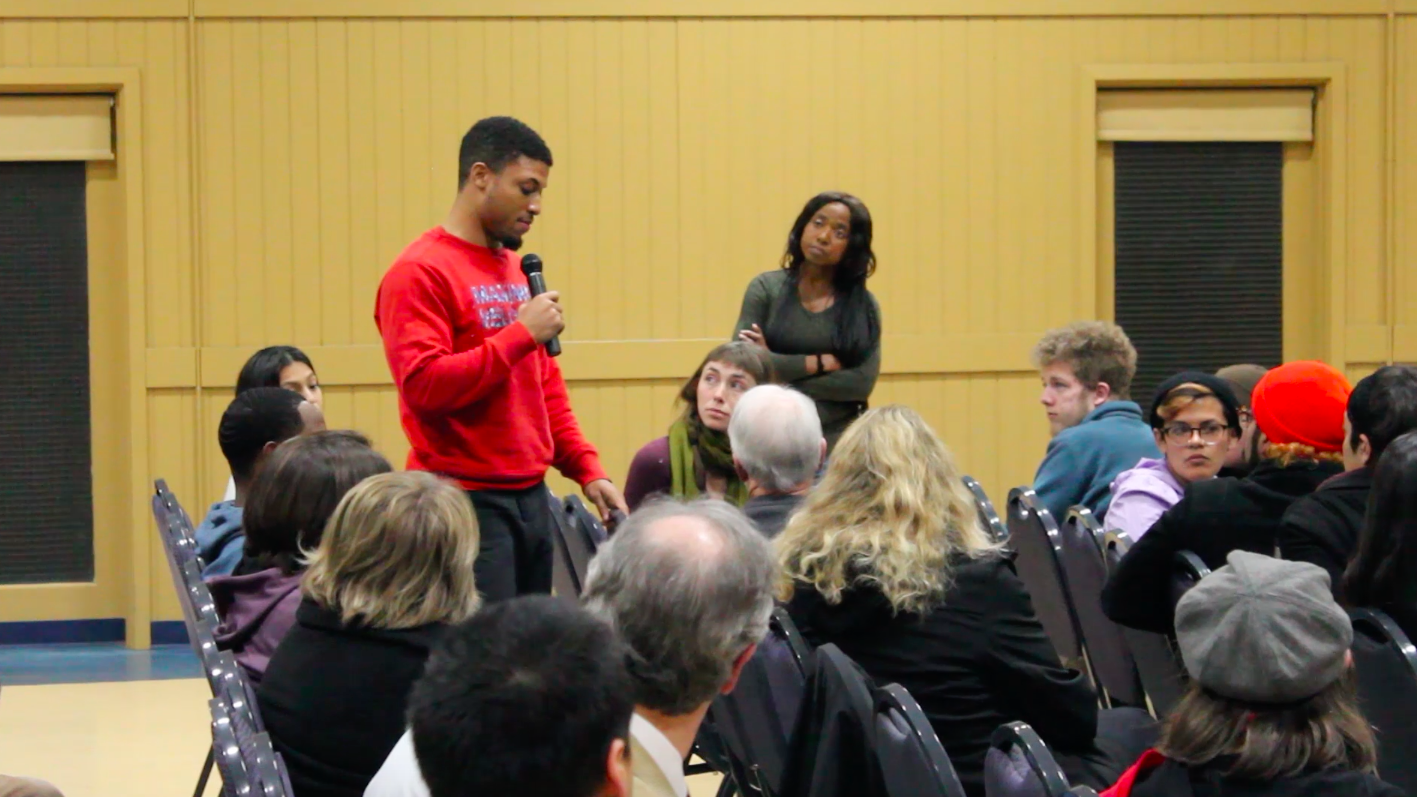
    A discussion followed the film screening in which students and community members were able to discuss the case and the social issues surrounding Lawson’s death. The discussion was similar to the six forums the city council promised the students of HSU. The original meetings were meant to be a place to discuss the safety of minority students and provide community updates on the case. The six meetings that the city council promised were stopped after the fourth one with no notice. Community members are attempting to work with city officials to reinstate these forums without the updates on the case, because the case is ongoing and therefore cannot provide certain information.

    Footage by Patrick Maravelias. Edited by Kyra Skylark and Patrick Maravelias.

    Wagner is a recent graduate of Sacramento State University. She directed “Unsolved Hate” as her graduation project. Wagner got a panicked call from a friend at HSU the night Lawson was murdered in which she learned of the homicide and the potential mishandling of the case on behalf of the authorities.

    Footage by Patrick Maravelias. Edited by Kyra Skylark and Patrick Maravelias.

    “I want even the smallest amount of change, even if it’s just one local [who] watched it and thought, ‘Damn, I was raised with racist values and it affects all the people around me,’” Wagner said. “Even just one person becoming self-aware would be amazing, but I would really like to see some actual justice happen.”

    Community member Rachel Garcia attended the showing to get more information. She wanted to know what exactly happened the night Lawson died and if anyone filmed the cops to hold them accountable for how they handled the situation.

    “I think if people were cognizant that they have the right to [film the cops on the scene], it might help situations like this,” Garcia said.

    She learned at the showing that, no, the cops were not properly filmed by individuals on the scene.

    Footage by Patrick Maravelias. Edited by Kyra Skylark and Patrick Maravelias.

    HSU student Jamila Salih attended the screening to support the #JusticeforJosiah movement.

    “I’m here to bring consciousness to Humboldt,” Salih said. “There is no platform where black students are talking about black things, minority students or anyone talking about things that are uncomfortable. So I just wanted to create that platform for students. ”

    All Melanated Everything is a show on KRFH 105.1 that airs every Tuesday at 5 p.m. and Thursday at 3 p.m.

    Salih created All Melanated Everything as a platform to have “uncomfortable conversations about racism, classism, anything basically that the social construction is – you don’t talk about it.”

    Footage by Patrick Maravelias. Edited by Kyra Skylark and Patrick Maravelias.

    Deborah Sanchez, a board member on the Seventh Generation Funds Board and a Superior Court Judge in Los Angeles, attended the showing while in town.

    “There is enough information here to show that this is a possible hate crime and if the local authorities are not going to take this seriously, then perhaps we need to be looking into civil rights issues and putting pressure from the Federal authorities to take care of the situation,” Sanchez said during the discussion.

    Footage by Patrick Maravelias. Edited by Kyra Skylark and Patrick Maravelias.

    Whether it’s seeking justice for David Josiah Lawson in 2017 and HSU student Corey Clark in 2001 on a federal level, getting their story to a national publication or keeping their legacy alive here, the students and community members who attended the film showing will not stop searching for answers.

    “It’s gonna be a long road, but I also think that it’s definitely something the community can rally around, the community will eventually heal from and will also change the trajectory of everything that will happen in the future,” Sanchez said.

    To stay updated on the case and events related to the case, visit the Justice for Josiah Lawson site, the SLAWSON GIRL blog or the #JusticeforJosiah Facebook page. 

    ————

    If you are wondering what you as a community member can do to help the Lawson case, you can contact the Arcata City Council members to reinstate “the promised monthly meetings where we will be discussing racism in the community,” and to inquire about the status of the investigation.

    City Council members:

    1. Mayor Sofia Pereira, 707-633-8015, SPereira@CityofArcata.org
    2. Vice-Mayor Brett Watson, 707-293-3585, BWatson@CityofArcata.org
    3. Paul Pitino, 707-822-2556, PPitino@CityofArcta.org
    4. Michael Winkler, 707-822-1857, MWinkler@CityofArcata.org
    5. Susan Ornelas, 707-826-2722, SOrnelas@CityofArcata.org

    Contacting Democracy Now and NPR to encourage them to cover David Josiah Lawson’s case and the mishandling of the case as a nation-wide story is another way to show your support that was brought up during the film discussion.

    UPDATE: The monthly community meetings for updates on the case and discussion regarding student safety have been reinstated. The next will be held on Thursday, March 22, 2018.

    ————