The Lumberjack


Students Serving The Cal Poly Humboldt Campus and Community Since 1929

Tag: vanlife

  • Proposed state assembly bill gives van lifers hope

    Proposed state assembly bill gives van lifers hope

    By Eli Farrington

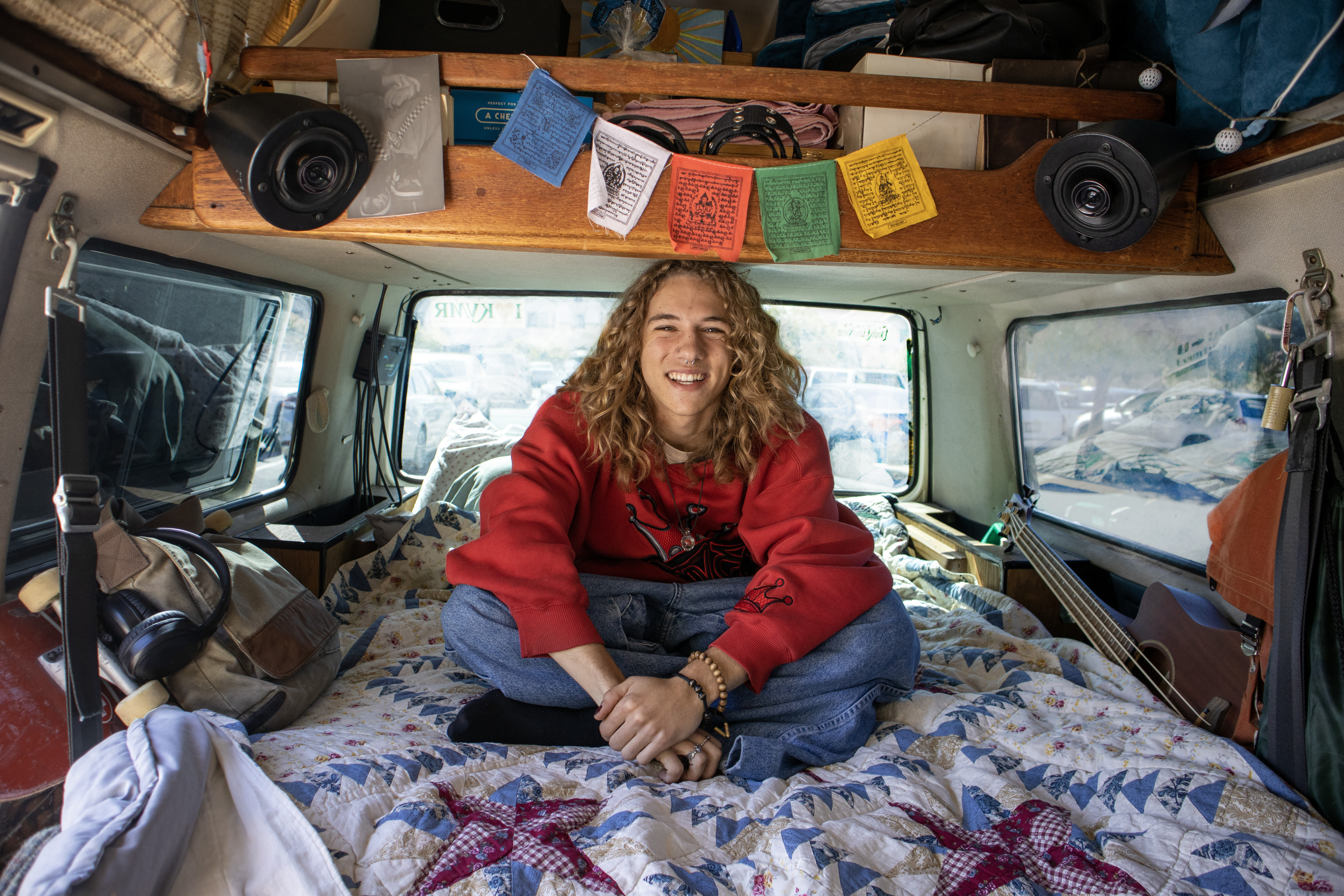
    On Oct. 25, 2023, Cal Poly Humboldt sent out an email to the entire student body detailing a list of new parking regulations that were going to be enforced effective immediately. However, none of the new regulations actually pertained to the majority of the on-campus community, but rather to a much smaller and more vulnerable one: the van lifers. 

    Jan. 11, 2024, Assembly member Corey Jackson introduced bill AB 1818 into the state legislature. If passed, all California State Universities and California Community Colleges would be required, and all UC campuses requested, to allow students that live in their vehicles to park on campus overnight as long as they possess a valid parking pass issued from their institution. 

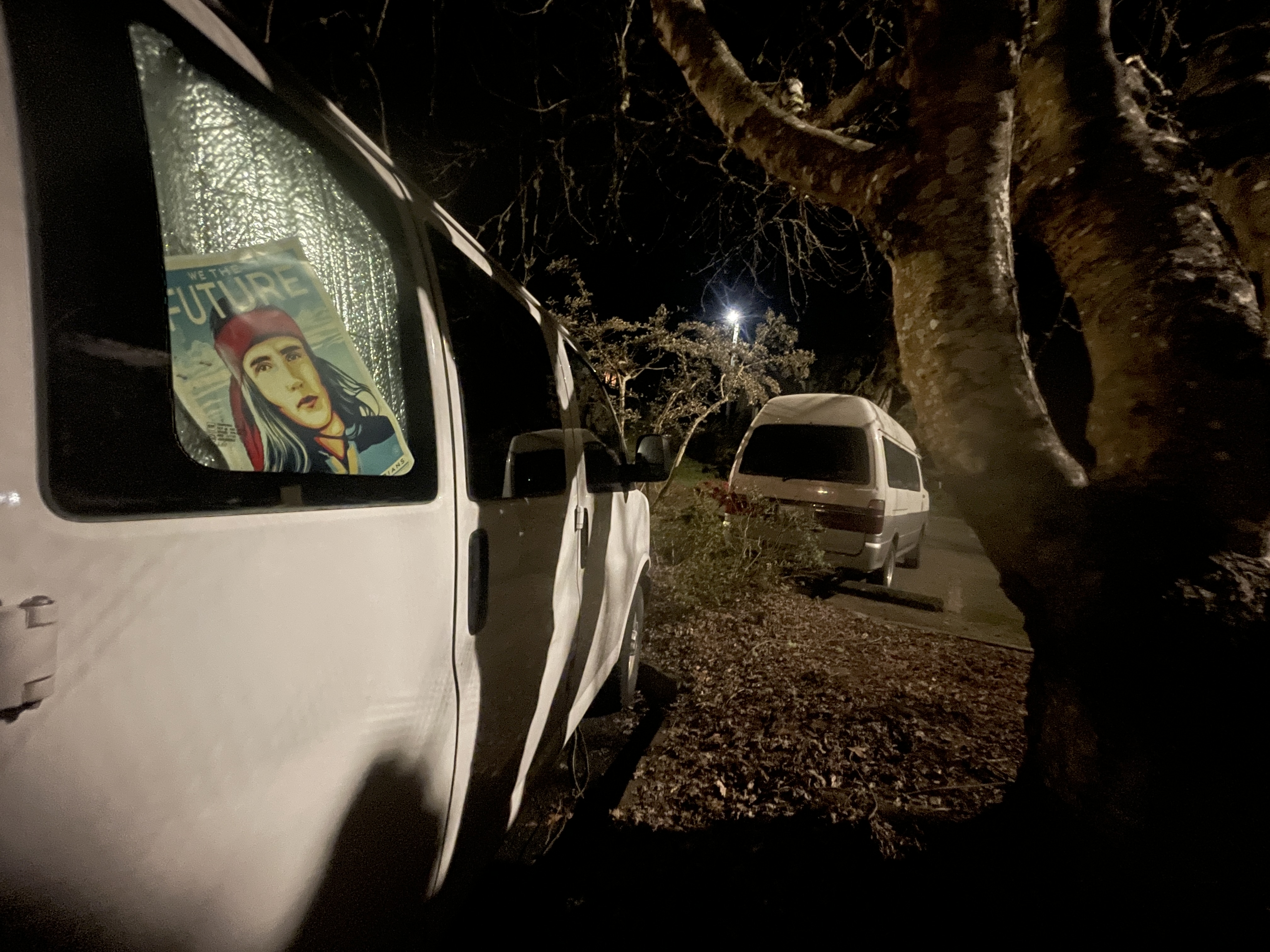
    A humble community of vehicle-dwelling college students, the van lifers lived comfortably and peacefully in the parking lots of Cal Poly Humboldt for many years before the university finally decided to crack down on them. After the university claimed that their presence in the parking lots created ‘unsafe and unsanitary conditions,’ the van lifers were forced to leave the campus and look for overnight parking elsewhere. 

    Caleb Chen, a first-year Cal Poly Humboldt masters student in the public sociology program, was one of the students who were forced to leave. At the time, he was living in his vehicle, and the uncertainty of not knowing where he was going to sleep that night took its toll on him. 

    “In November, when we all had to move, it scattered us all to different places, and some of us ended up at the Arcata Community Center,” Chen said. “It definitely felt less safe there. It caused a lot of [stress] at the end of the semester that got in the way of schoolwork and the research assistantship that I’d come to this school for. Cops locking the gate to the community center at night meant if I needed to drive off all of a sudden in the middle of the night due to a break-in attempt, I’d be stuck in that parking lot. That wasn’t ever a concern at the school parking lot.” 

    At the beginning of 2024, Chen’s vehicle broke down. He couldn’t afford to fix it, so he ditched the van life and moved into an apartment with his significant other. Regardless of his new living situation, Chen was still impressed with the opportune timing of AB 1818’s proposal. 

    “It’s very timely, and whoever introduced it must have had their finger to the pulse, because this isn’t only happening at Cal Poly Humboldt,” Chen said. “It just speaks to the widespreadness of this and the fact that students at Humboldt are really just a drop in the pond, so to speak, of people that are affected by this situation.”

    In contrast to Chen, junior Hannah Barrett and sophomore Joshua Tarman left their overpriced one bedroom apartment at the beginning of the new year and moved into a camper together for a more favorable living situation. Barrett is a psychology major, while Tarman attends College of the Redwoods with a focus on early childhood education. 

    The couple originally planned to park their camper on Cal Poly Humboldt’s campus overnight, but when the Oct. 25 email was sent out they were forced to make other arrangements, including parking in areas of Samoa and Manila Dunes. 

    “I think that secure parking is something that should be a given for students,” Tarman said. “[Students are] paying to be in an environment where they’re supposed to learn, and so if a school wants to be able to provide all the facets for students to learn, they should definitely have a priority over their safety and their emotions. Students can’t learn when they’re just figuring out how to live in the first place.”

    While Barrett and Tarman are doing well enough with their vehicle parked off campus, they would definitely prefer the safety and security of an on-campus parking spot if AB 1818 were to pass. 

    “I just think that if you’re able to park here overnight with a parking pass, it is a little silly that you just can’t physically be inside your vehicle,” Barrett said. “It’s like at that point, [the university] is just trying to make it more difficult for people, because there’s [nobody] – at least I didn’t see – being unsanitary or dumping anything.” 

    The unsafe and unsanitary accusations have rubbed many of the van lifers the wrong way, including junior and mechanical engineering major, Derek Beatty. 

    “That was a smear campaign,” said Beatty. “It was, I guess, the only way that they could find to try to make other students feel like, ‘Oh I guess that’s why they’re getting kicked out.’ It was like they needed to give some reason so that there wasn’t as much outrage, but obviously, I don’t think many people believed those claims, and I think that even made people a little more upset on our behalf. But yeah… it’s kinda bullshit that they said that and then didn’t have any evidence to back it up other than a picture of a rainwater collection bucket.”

    The Lumberjacks request for complaints against van life students resulted in a total of two back-to-back complaints made by two anonymous people. Otherwise, no complaints were found. 

    Beatty is hopeful that AB 1818 will pass soon, so that he and others can park on campus again. He misses the safety net and the sense of community that on-campus parking provided for the van lifers, and having to park off-campus every night has taken that away. 

    One of the primary benefits of on-campus overnight parking is consistency. Having a dependable place to call home, even if it’s just a place to park a van or camper, can make all the difference in the world to the van lifers, one of Cal Poly Humboldt’s most at-risk communities. 

    “I spend all my time in this same parking spot,” Beatty said. “It’s just now for some reason I have to not be here from 10:00 p.m. to 7:00 a.m., when I could just stay parked here, not have to move all the time, and just have a consistent spot.”

    Carrie White, a Cal Poly Humboldt senior and biology major, lived on campus in her camper starting in 2021, but it recently broke down and has been stuck at a mechanic shop for several weeks. Since then, White’s living situation has been volatile, sleeping sometimes with friends, and at other times on the floor at one of her places of work. She hopes that AB 1818 will pass, to give low-income, displaced, immigrant students like herself a safe and secure location for alternative living. 

    “I think that passing the California Assembly Bill AB 1818 is the bare minimum a multi-million dollar institution affiliated with the CSU organization owes to its students,” White said. “In general, folks living in their vehicles are amongst the most vulnerable students. We know from thousands of studies that homelessness is a risk factor for mental and physical health pathologies, increased loneliness and isolation, decreased academic performance, decreased quality of life, and suicide. Passing a bill allowing homeless students to stay on-campus, in their vehicles, with a valid permit shouldn’t be a discussion – it should be a glaringly obvious choice. This is a social crisis, a public health crisis, a humanitarian crisis – and it is here, on our campus.”

    Student homelessness is a problem that plagues practically every college campus in California, and Cal Poly Humboldt is no exception. Cal Poly Humboldt students are still prohibited from sleeping in their vehicles on campus, but if AB 1818 passes, they can come back and the van life community can rebuild in a safe environment. 

    “I felt safer staying on-campus up until I was forced to leave,” White said. “In the act that I believe was an attempt to shame homeless students off campus – cue gross Cal Poly Humboldt email accusing homeless students of being ‘unsafe and unsanitary’ – the trust I have in this institution is null and void. Having said this, I would absolutely move back to campus if Bill AB 1818 passed; proud, in a state of activism, and don’t worry – safe and most definitely sanitary.”
  • Cal Poly Humboldt issues parking citations to students living in vehicles

    Cal Poly Humboldt issues parking citations to students living in vehicles

    by Jillian Wells

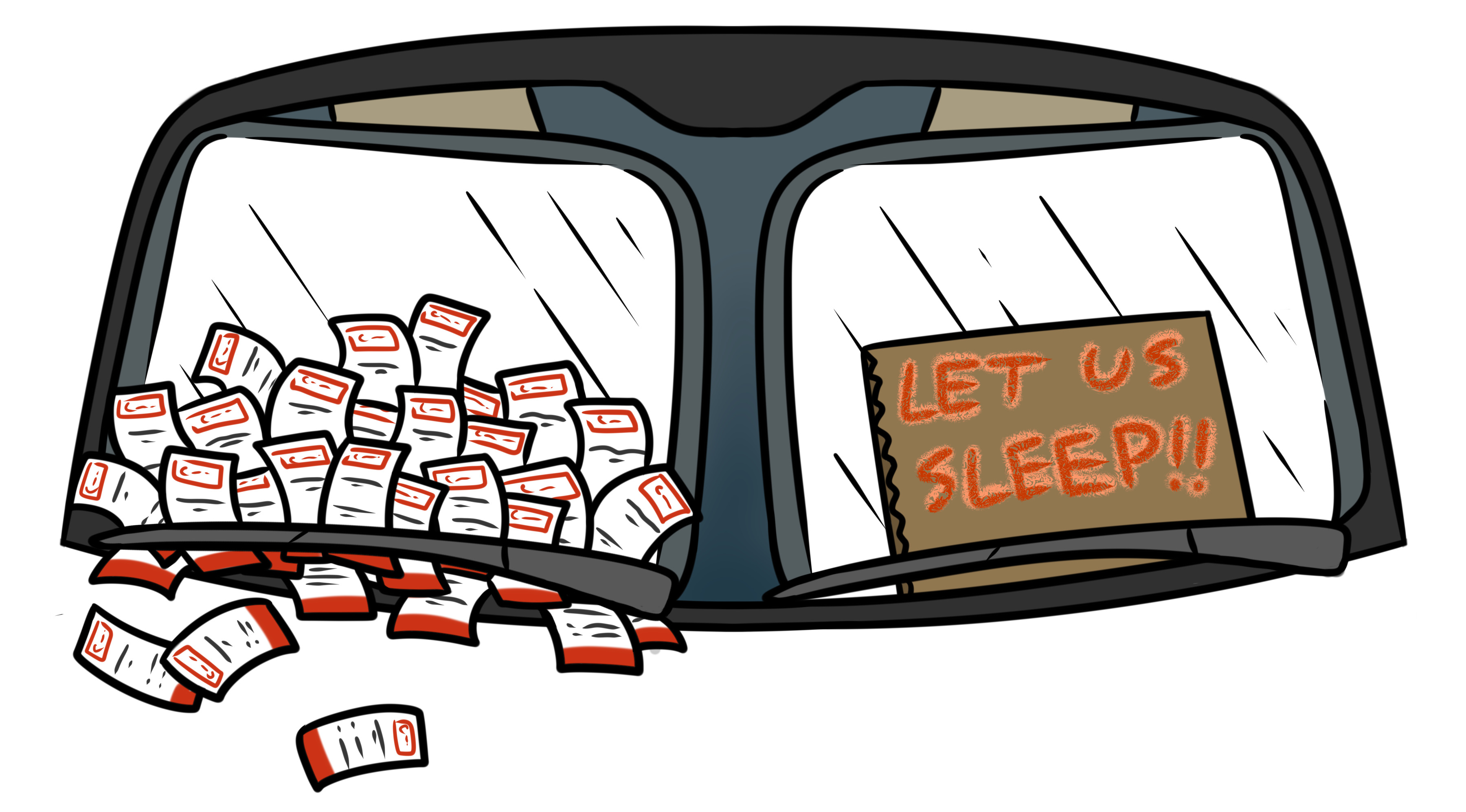
    On the morning of Nov. 13, students living in alternative housing such as vans, RVs, campers and motorhomes on campus awoke to parking tickets on their vehicles. The parking tickets each cost between $40-$53, with some students receiving multiple citations. 

    The enforcement of parking regulations came 19 days after the university sent out an initial email, notifying students that they would be enforcing a previously overlooked policy that prohibits overnight camping.

     This decision to enforce this policy sparked community backlash and has gained national attention, as there was a Los Angeles Times reporter interviewing students this week. 

    The citations issued to students outlined various violations, including “No Use of Vehicle for Living/Overnight” and “Beyond Designated Lanes.” Additionally, comments on the tickets highlighted specific infractions such as “windows being covered.”

    Cris Koczera, the Interim Director of Risk Management & Safety, did not respond to requests about further clarification about the criteria for determining if a student is sleeping in a vehicle by press time.

    Student Derek Batty lived in a vehicle on campus, but made the decision to move into temporary housing to avoid receiving a citation.

    “I feel more homeless in this place [temporary housing] than I did before,” Batty said. “I’m grateful for it for sure, but I wish we just didn’t get kicked out.”

    Batty also said that despite moving into temporary housing, he received a parking ticket on the morning of Nov. 13 because his windows were covered up. 

    “They can’t prove that we’re sleeping in the vehicle based on having [the windows] covered,” said Brad Butterfield, vice president of the Alternative Living Club, in an impromptu meeting on Nov. 13.

     They expressed frustration and asserted that just because their windows are covered up isn’t evidence that they are sleeping in their vehicles. 

    Ethan LeVering, an Associated Students (A.S.) delegate for the University Senate, pointed out a lack of consideration in the enforcement process.

    “They did not knock on the vehicles, they did nothing to check if anyone was in there,” LeVering said. “They simply left the little ticket and ran off.”

    The University Police Department (UPD) declined to comment. LeVering also criticized the university’s approach.  

    “These students have not been given a presumption of innocence, which is outright un-American,” LeVering said.

    Carrie White, a student who lives in their vehicle, emphasized the economic ramifications of the parking citations.

    “That’s what they’re [Cal Poly Humboldt] working on, the economic punishment,” White said. “They know we don’t have any money, so they’re going to ticket us until we have no choice. They’ll break the bank before they break our will.”

    Caleb Chen, another impacted student, expressed his concerns about the timing of the ticketing. He believes that the university is starting the citation process just before fall break to limit potential media coverage and keep the ticketing discreet.

    “They could tow us at the beginning of fall break… to remove the vehicles silently while all the students were gone,” Chen said.

    Chen added that while he appreciates the option of temporary housing, he’s not interested.

    “At this point, it’s about making sure there’s a solution for future students and all their [Cal Poly Humboldt’s] solutions only go until December 18.”

    Brad Butterfield is a member of The Lumberjack. He did not help write or edit this article.

  • Policy, protest, and pirates: students protest against campus evictions

    Policy, protest, and pirates: students protest against campus evictions

    by Jillian Wells

    Other contributors: Alex Anderson and Dezmond Remington

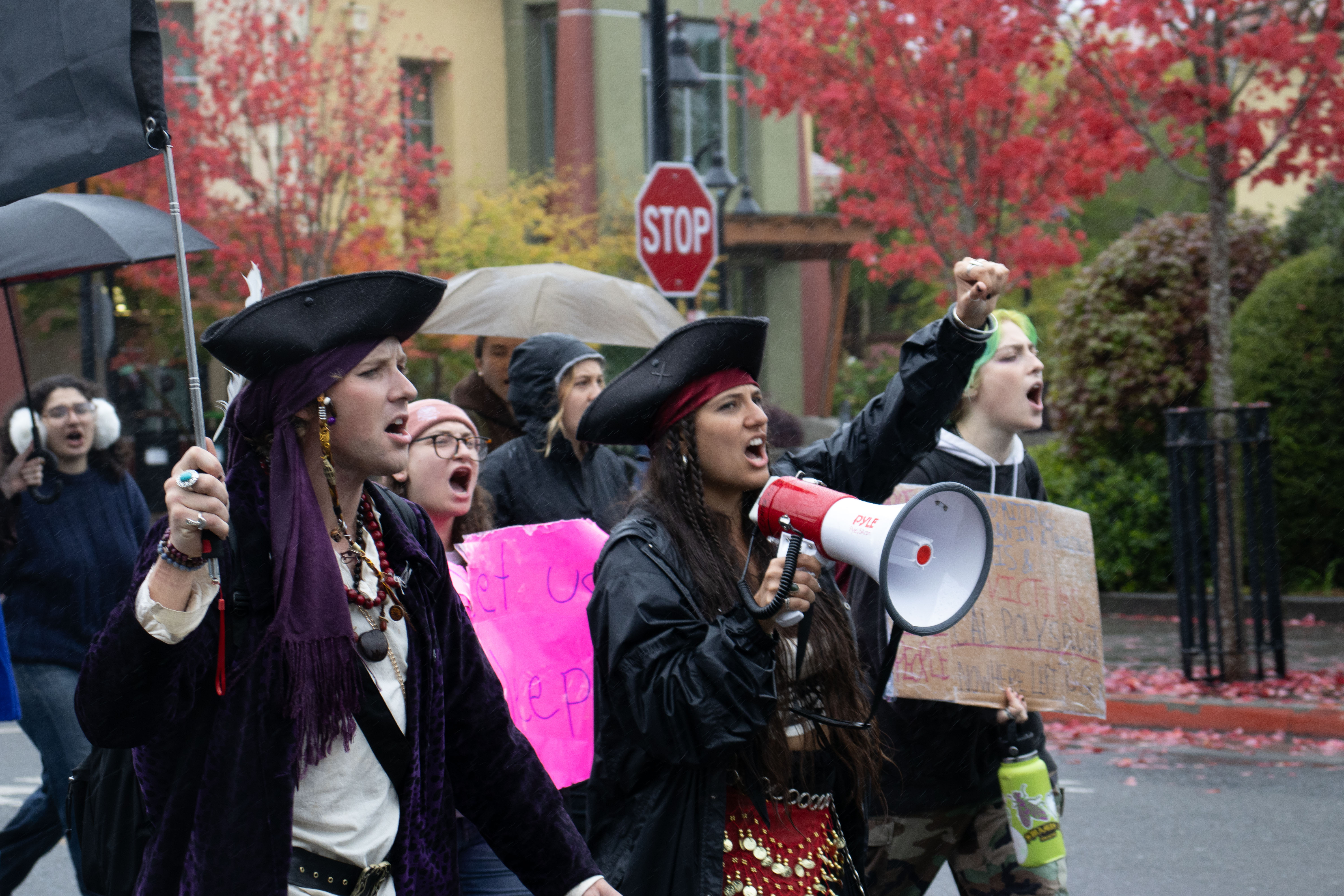
    In a powerful show of unity, students and faculty members gathered in the rain at Cal Poly Humboldt to protest the recent decision to evict students living in vehicles on campus. The protest, which took place on Thursday, Nov. 2, highlighted the larger problem of homelessness in Humboldt County. 

    The protest started at 11 a.m. in the G11 parking lot and lasted throughout the night. At 12 p.m., protestors marched to the quad in the rain chanting, “Hey, ho, hey, ho student eviction has got to go!”

    Photo by Cedrik Vonbriel. A sign at the protest.

    The protest was led by Maddy Montiel and Brad Butterfield, the president and vice president of the Alternative Living Club, who were dressed as pirates because of a long-running joke of them being “land pirates” and their RV’s being ships on wheels. Furthermore, the initial eviction email occurred during Halloween week, and since then Montiel and Butterfield have been solely focused on securing safe housing, but didn’t want the situation to take celebrating Halloween from them. 

    “The university took a lot from us last week,” Montiel said. “We decided we wanted to keep one thing for ourselves and still dress as pirates and give our outfits a chance to see the light of day.”

    Photo by Cedrik Vonbriel. A sign at the protest.

    The protest also featured an open discussion, where Montiel and Butterfield stated their list of demands from the university. 

    Their demands included the university allowing overnight camping or sleeping in vehicles through the end of the fall semester, at least, a formal apology for the dehumanizing language in the initial eviction email, the establishment of a committee for long-term solutions, more transparency in defining camping and its implementation, and evidence of the “unsafe and unsanitary conditions” that was stated in the email.

    At the protest, Butterfield stated students living in their vehicles are open to finding a solution that works for them and the university, but that the university hasn’t been willing to negotiate. For the students living in their vehicles, protesting was a last resort. 

    “For the school to assume that they can just get rid of us and push us out onto the streets and we’re going to go away quietly, is wrong,” Butterfield said.

    On Tuesday, Nov. 7, the University Senate passed a resolution that would pause the enforcement until the end of the 2023-2024 academic year; this resolution was sent to President Jackson’s office. It awaits a decision. Mark Johnson, the President’s Chief of Staff, who attended the meeting on behalf of Jackson, declined to answer any of The Lumberjack’s questions, as did Dean of Students Mitch Mitchell.

    During the protest, various speakers articulated their concerns, frustrations, and demands, emphasizing the need for understanding and fair solutions. The protest featured many voices and perspectives within the community, stressing the importance of addressing the issue with attainable solutions and compassion.

    Photo by Cedrik Vonbriel. A sign at the protest.

    Rouhollah Aghasaleh, an assistant professor in the School of Education, attended the protest and said that he sympathizes with the students who are being evicted.

    “Living in a [vehicle] doesn’t make you less human.” Aghasaleh said.

    Meheret Vasquez-Suomala, a religious studies major, expressed disappointment in the administration and hopes that they will listen and work with students, not evict them. 

    “You [Cal Poly Humboldt] are deliberately misplacing lower-income students and that’s what’s frustrating.” 

    Raymond Haeckel, another one of the speakers at the protest, questioned the accusations made by the university and stated that without proof of the unsafe and unsanitary conditions. Haeckel will continue to believe this is an effort to force these students into on-campus housing and collect housing fees.

    “This is motivated by money and money alone,” Haeckel said.

    Jules Tatum, another student at the protest, condemned the university’s decision to evict students.

    “To say that these people are unsanitary, unsafe, dangerous individuals is just a slap in the face. The only dangerous conditions are being created by the institution,” Tatum stated.

    Ultimately, the protest highlighted the need for realistic and attainable solutions that work with students, not evicting one of the most vulnerable student populations. 

    If you’re interested in learning more about this on-going issue, the Alternative Living Club is meeting on Friday, Nov. 10, at 3:30 in front of the library. 

    Disclaimer: Brad Butterfield is a member of the Lumberjack. He did not help write or edit this article.

  • Students find financial freedom in vanlife

    Students find financial freedom in vanlife

    by Jillian Wells

    Amidst housing shortages and the increasing cost of everyday living in recent years, students are looking to an alternative way of living: vanlife. The term “vanlife” means exactly like what it sounds like, living in a van, but the term encompasses various mobile living options such as trailers, campers, motorhomes and RVs. 

    For students seeking a more affordable lifestyle, vanlife is a compelling solution. According to Maddy Montiel, a senior environmental science major with five years of vanlife experience, this choice has allowed them to avoid the cost of traditional housing. Ultimately, Montiel hopes to never pay rent through college. On-campus housing, depending on the type and meal plan, can range from $5,000 to $15,000 per year. In contrast, by parking their motorhome on campus (with a general parking pass) Montiel saves about $500 on gas per month and their monthly living expenses can be as low as $300 for essentials, making it a financially sensible choice. 

    “I’m choosing to do this instead of putting myself into an insane amount of debt in order to pay rent somewhere,” said Montiel. “I’ve always wanted to do it and can’t see myself living another way.”

    Similarly, student van-lifer Steven Childs, a senior wildlife major, explained that while it may not be his preferred lifestyle, it aligns with his financial priorities.

    “If you think about it, the whole point of me being here is to study and go to school and learn. At the end of the day, your room generally is a place for you to put your head and sleep,” said Childs.

    Students are also being drawn to vanlife because of the freedom and independence it offers. When living on wheels, the world becomes your front porch.

    “It’s definitely a pro to be able to wake up on the beach, and pretty much wherever you want to wake up”, said Bohdi Haugen, a freshman doing vanlife. 

    Haugen also added some of the advantages that come with owning a van, including that it really feels like your own; a feeling you may not necessarily have when you’re renting someone else’s space. Jaikyn Russel, a freshman studying forestry, who shares a van with Sierra Cole and their dog Indy, believes vanlife is a lot more doable than people think it is. Cole added that one of the draws of vanlife is being able to travel and always have your home with you. 

    Even with all of the benefits of vanlife, it doesn’t come without its challenges, notably not having a bathroom.

    “I’ve grown pretty familiar with public restrooms nowadays,” said Haugen.

    Montiel added that vanlife often gets glorified, and that there are some harsh realities that come along with it, including dealing with every aspect of your consumption because resources are limited. For instance, Montiel mentioned that they have to always have propane or else they won’t have a way to cook food, boil water or keep their appliances running. Montiel also noted the less-than-glamorous aspects of vanlife.

    “You have to deal with your own shit – literally in every regard, you have to deal with your own shit,” said Montiel.

    But despite this challenge, they believe it forces you to have a shift in mindset and become more sustainable. 

    Students embracing this lifestyle feel that there is a sense of community among vanlifers. Haugen has met many other like-minded people who are in the same situation as him. Montiel further elaborated that they and other vanlifers have formed close-knit bonds, organizing events such as cookouts and beach bonfires together. These connections provide a support system for those navigating the challenges of this lifestyle.

    While this lifestyle isn’t for everyone, it can be cost effective, rewarding, and freeing for those who do it. If you’re interested in embracing this lifestyle, Montiel noted that an alternative living club is underway. The club’s first meeting will be Friday, Oct. 27 at 3:30 p.m. in Library room 114. 

    “We’re hoping to use that to create a space for students who live like this and students who are interested in living like this, to come and talk about it and learn about it and advocate for more resources,” said Montiel.

  • Van life on campus is not for the weak

    Van life on campus is not for the weak

    by Brad Butterfield

    It was Spring semester’s first Monday, 11 p.m., 40 degrees fahrenheit. I was strumming through a sloppy chord progression in an empty campus parking lot with a fellow student I’d just met named Ryan Kelly. We tag-teamed a pasta dinner topped heavily with Egyptian hot sauce that sent me into a sweat. 

    Kelly’s right-hand-drive Toyota Hius van was parked next to my home on wheels – an all white Chevy 3500 christened ‘The Dump Truck.’ We are both student vanlifers. This unplanned, laughter filled jam session only tells a small aspect of what it means to live in a van. 

    In fact, my first week on campus was mostly colored by a lack of showering and being cold. This is to be expected. I have owned The Dump Truck for nearly three years now and have weathered a number of uncomfortable days in some strange places. 

    By week two on campus, I had found the best shower locations and was pleased to meet a handful of other fine folks choosing the same lifestyle as me. Vanlife is a lifestyle that attracts vastly varied characters with differing goals. 

    Wildlife major Steven Childs put it bluntly to me one evening in Bigfoot Burgers. 

    “It shows sheer willpower, and some intelligence,” Childs said “You don’t do this by fluke. Its not like one day you happen upon an RV or a van and are like -oh fuck it im going to college. You plan it out. You’ve thought about the things you need to do, and some people are willing to go a little further than other people to make it happen. Or their situation puts them in that position.” 

    Childs said there are also financial motivations behind his lifestyle choice. 

    “A room, which is about 500-600 dollars a month and utilities…that’s going to really put me in a financial bind,” Childs said. “On top of tuition and books -and then trying to juggle that- I’d put a bigger burden on my wife. And so, the idea was born.” 

    Obviously, it isn’t just frugality that leads to sleeping in the back of a van. 

    Ryan Kelly explained his sleeping setup to me, which consists of an inflatable camping mattress laid diagonally under his table and thermal undergarments to stay warm. 

    “I’m more mobile, it’s convenient,” Kelly said. “I want to see places and be able to travel and save money. Living in a van is the way to do that.”

    When I pressed him on the lack of creature comforts afforded in our chosen way of life, Ryan doubled down without hesitation. 

    “If you want to live in a house and be comfortable, that’s fine,” Kelly said. “I don’t need much. Just got to have the bare essentials. A place to stay dry. Something to sleep on is good.”

    Students are in a unique bubble here in Humboldt county. There is a lack of housing and lack of jobs. What jobs there are, are often low paying, particularly when compared to the jobs that students have left behind. 

    “I had come from bartending in San Diego in a very rich area and was making really good money and then came here,” said Bobby Howser, another vanlifer.“I passed out resumes for two weeks, didn’t hear back from anybody for two months and then got a bussing position at a spot. I was more experienced than the people that worked above me.”

    Howser is content with his situation.

    “Camping is my favorite thing,” Howser said. “I don’t need a lot to be happy. A comfy bed and I can figure the rest out. It’s about perspective.” 

    Of course, there are the unavoidable inconveniences that come along with sleeping in a vehicle. Vanlife is about perspective, as Howser said, but it is also about reality. And reality can be a gross beast. 

    “When you have an all metal interior, it’s the condensation that gets you,” Howser said. “Things don’t ever dry out here because it’s so moist. When it’s really wet outside, and my breathing is causing condensation on the walls, mold can grow. I had that happen last semester which sucked. And water will drip off the ceiling and hit me in the face while I’m sleeping, you know… Like super fucking cold.” 

    Walking up a cold, steep hill in the morning just to take a piss is less than ideal. I don’t want to have a conversation through the shower curtain either. These are the sacrifices that come when one doesn’t pay rent though; acceptance of these trade-offs was the common theme of all of the conversations I had with van dwellers this week.

    In the past, I’ve used a propane heater to take the edge off of freezing nights. They don’t burn very efficiently and the safety of using one in an enclosed space is highly questionable. Arcata nights are cold, but thankfully not freezing. I have a few fluffy Costco blankets (thanks mom) that keep me comfortable through the night. 

    All of the vanlifers I spoke to were dealing with the chilly nights in a similar fashion. Layers, layers, layers. Of course at some point in the morning one has to depart their blanket cocoon and face the Humboldt dawn hour.

    Childs has served in the military and is no stranger to sub-par sleeping situations. Still, sometimes the reality of the current situation drowns out perspective.

    “When you wake up in your vehicle in the morning, that’s the snap to reality,” Childs said. “That’s when shit gets really real. When you wake up there’s no escaping that you’ve slept in a vehicle. The most challenging thing is to put on chilly pants in the morning.”