The Lumberjack


Students Serving The Cal Poly Humboldt Campus and Community Since 1929

Tag: veterans day

  • Connections Between Veterans Propel Academic Success

    Connections Between Veterans Propel Academic Success

    Student veterans make connections and have access to resources with help from VETS

    Humboldt State University has about 500 veteran-affiliated students, according to HSU Veterans Enrollment and Transition Services.

    James Lamping, the outreach coordinator at the VETS office and a veteran himself, works to connect veterans by giving them a place to talk, seek therapy and find friends.

    “Every vet comes from a different background, and it’s an interesting community,” Lamping said. “Even though there is a lot of diversity between us, we all share a culture tying us together.”

    Nov. 11 is the anniversary of the signing of the armistice, which ended World War I. The day honors former and current military service people and is observed as a federal holiday, Veterans Day. HSU students and faculty have the day off.

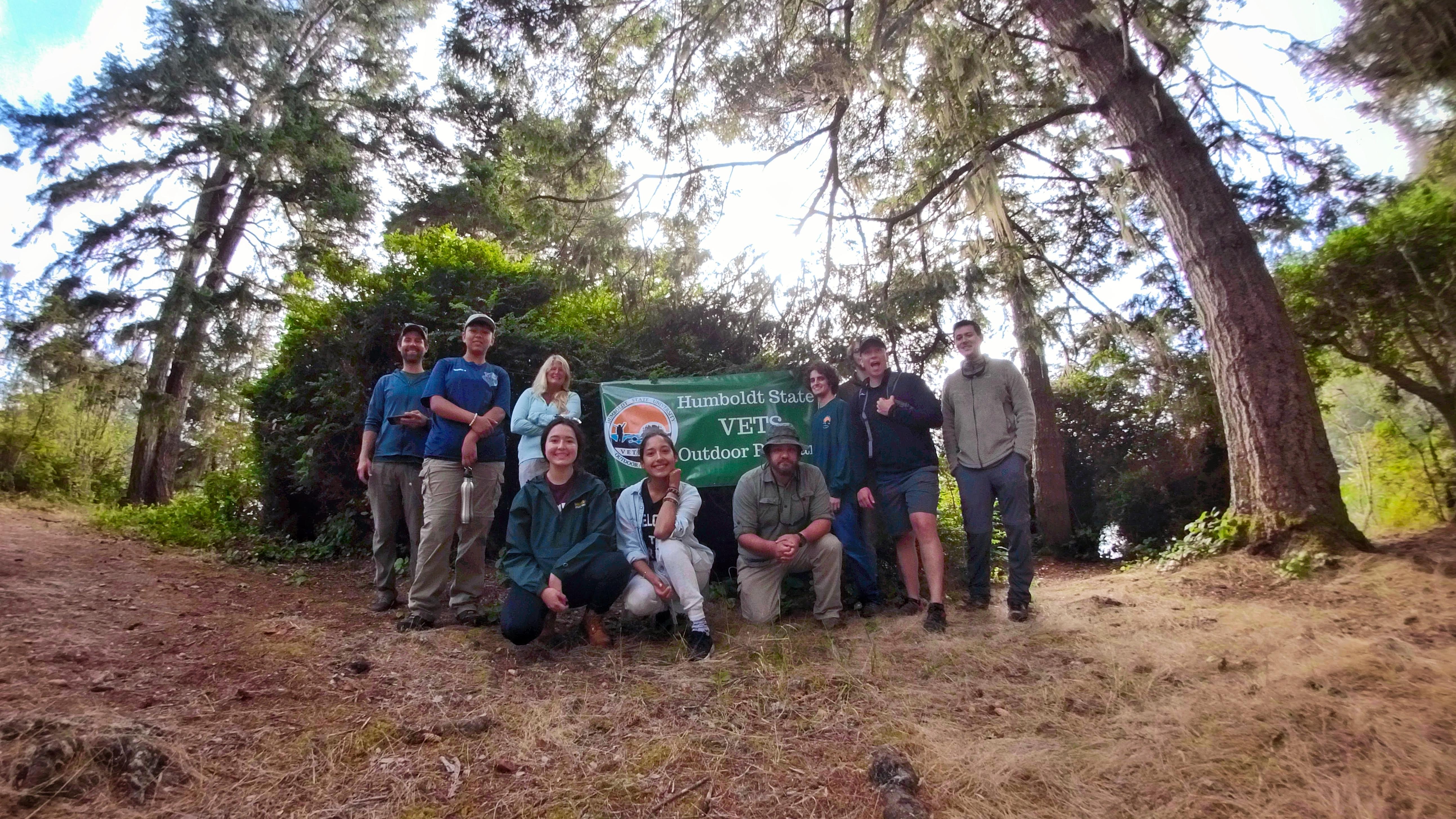
    One way the veterans at HSU connect is through the Outdoor Sports Program facilitated by the VETS office. Year-round, a group of veterans partake in several outdoor sports activities like hiking, kayaking and snowboarding.

    James Lamping (left) and John Biggs. | Photo courtesy HSU VETS

    John Biggs, a student veteran majoring in marine biology, went on one of the outdoor trips when he moved to Humboldt State in the spring of 2015. He was able to familiarize himself with other students and build relationships.

    “We did a big hiking trip up in the Trinities, a rafting trip,” Biggs said. “All the people I met on that trip were my core group of friends when I started here.”

    Biggs said that having friends and familiar faces in his classes helps him focus on learning. It had been six years since the last time he took an algebra class.

    “I feel like I’m more successful taking classes when I know somebody and have someone to talk to and study with than just myself,” Biggs said. “I’m not someone who asks questions. That’s just my personality.”

    Lamping said veterans are one of the more successful populations on campus, partly due to the structured lifestyle that is familiar to military life. Having something to do every day provides a daily purpose.

    “Having the structure is nice,” Biggs said. “To have something to do rather than figuring it out on your own.”

    The VETS office provides help and academic services for veterans. VETS connected Biggs with the Student Disability Resource Center to help him in the Learning Center.

    “I’m not a big test taker, so that was fun,” Biggs said. “That was really helpful.”

    Kim Hall, veterans program administrator for HSU, was one of the people who helped Biggs get back into the flow of school. Hall started the outdoors program and also started the North Coast Veterans Stand Down, a three-day event that provides food for homeless veterans at the county fairgrounds in Ferndale.

    In celebration, HSU VETS is hosting a dinner event this Friday, Nov. 15 at 6:30 p.m in the Green and Gold Room on HSU’s campus. The Veterans Day Celebration is free for veterans and their families.
  • Please kneel for our national anthem

    Please kneel for our national anthem

    The meaning of patriotism evolves as our divided nation continues to quarrel about taking a knee.

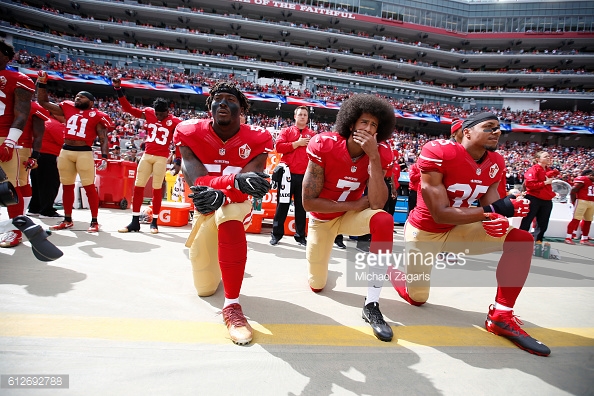
    Former San Francisco 49ers quarterback Colin Kaepernick gained widespread attention in the past year for kneeling during the national anthem prior to NFL games. His polarization spotlighted the ongoing racism in our country.

    For instance, Donald Trump called Kaepernick a “son of a bitch” for taking a knee, yet he defended white nationalist protesters as “very fine people” following the “Unite the Right” rally in Charlottesville, Virginia.

    In addition to the “son of a bitch” comment, Trump said that “players [should] stop disrespecting our Flag & Country” or risk getting the boot.

    As a result, NFL players locked arms and kneeled during national anthems, which signified a big middle finger to an unfit president while siding with Kaepernick.

    The peaceful gesture of taking a knee represents the suppressed truth of the American flag as a symbol that “oppresses black people and people of color,” said Kaepernick.

    It was also in particular response to police brutality and the criminal justice system against African Americans in the United States. However, not everyone is positively moved by his influential gesture.

    Naysayers believe that kneeling during “The Star-Spangled Banner” is just a slap in the face to our military veterans, but they fail to recognize the bigger picture. Kneeling before the national anthem isn’t targeting the people who fought and died for our country, but rather the hypocrisy of patriotism.

    “It baffles me that our protest is still being misconstrued as disrespectful to the country, flag and military personnel,” said strong safety for the 49ers, Eric Reid. “It has always been my understanding that the brave men and women who fought and died for our country did so to ensure that we could live in a fair and free society, which includes the right to speak out in protest.”

    Patriotism means devotion to one’s country, but it’s much more involved than its conservative, flag-waving point of view. Honoring our troops is one thing, but black homicides by racist white cops prevent me from being a proud American in every respect. U.S. Navy veteran Mohammed Jahanfar was burdened by Trump’s discriminatory travel ban earlier this year, which also stigmatizes the idea of unconditional patriotism. These and a myriad of other problems in our society make me a halfhearted patriot.

    All in all, the prevalent oppression of people of color is embarrassing. They put to shame the customary concept of patriotism when you factor in these contemporary realities.

    The national anthem is still relevant to honoring our soldiers and veterans, but that’s not what taking a knee represents. It’s about refusing to pledge allegiance to racial injustice and persecution of marginalized peoples. Think about the hate-filled rally in Charlottesville, Virginia the next time you decide to express your wholehearted loyalty to the U.S. Think about Eric Garner who repeated “I can’t breathe” as police choked him to death on a sidewalk. Until these enduring social issues come to an end, I can’t fully agree to be a proud American.


  • Fake soldiers and cultural appropriation

    Fake soldiers and cultural appropriation

    By | Phil Santos

    There’s no point in explaining cultural appropriation to the military community. This isn’t because it’s futile, but rather the opposite. I served in the Navy for long enough to say that the military community has an intimate understanding of what cultural appropriation is, particularly when it’s their culture. But there’s a possibility that they don’t know this is the case as the military doesn’t come up in these conversations.

    Cultural appropriation is hard to explain because there’s not really a definitive line where it is or isn’t happening. But in short, it’s when one culture takes elements from another culture without permission. It’s problematic for a number of reasons. Two of them are that cultural appropriation creates a type of cultural reverse engineering. It allows others outside a culture to benefit from the identities that don’t belong to them.

    With cultural appropriation, it’s important to ask who is doing the taking and why. Most of the time, the culture that takes is the dominant culture (mainstream society), while the culture which is taken from is usually a marginalized culture (Indigenous, Black, Asian and so on). The result is a dominant culture that rejects marginalized cultures at large, except for select elements that become attributed to or “reinvented” by the dominant culture. Translation: /rock-n-roll is attributed to white people, but its pioneers were Black.

    A more individualized example of cultural appropriation is easier to understand when we consider a specific kind of imposter. In 2009, under the guidance of James Arthur Ray, three people died during a “sweat lodge ceremony” he held in Sedona, Arizona. Imposters like Ray cherry pick elements of various cultures to sell to others in the form of “spiritual retreats” or “healing ceremonies.” They may call themselves a “medicine woman” or a “certified shaman.” They often go as far as claiming the culture they appropriate.

    This is where the military comes in. Ask someone in the military how they feel when someone pretends to be a veteran or active duty member. The responses you’re likely to get will echo the conversations surrounding the topic of cultural appropriation. The military community even has its own term for this: Stolen valor.

    Stolen valor happens when people pretend to be military members or lie about their military background. If you search “stolen valor” on YouTube, you’ll find plenty of videos showing military members confronting imposters who have appropriated their identities. Putting yourself in the shoes of a soldier who lived through war makes it easy to understand why stolen valor is outright wrong. The imposter didn’t earn the uniform, they didn’t go to war, so they should take it off. They might want to be part of military culture, but they’re not. They have no place pretending like they are.

    If stolen valor is so easy to understand and relate to, what’s the hiccup with cultural appropriation? I think it’s because people understand and respect military culture more than other marginalized cultures. But they are all cultures, and one isn’t better than the other. You can say being Asian isn’t the same as being a soldier. This is the same as saying that cultures are different from one another, which is obvious and redundant. If you can understand why no one should wear a fake Medal of Honor, you understand why no one should wear a fake headdress. They both hold cultural significance that no one else is entitled to. So if you ever find yourself having difficulty explaining cultural appropriation, a comparison to the military might be what you need.

  • Student Veterans gains larger community space

    Student Veterans gains larger community space

    By | Lauren Shea

    The community space for student veterans has grown as the support for student veterans continues.

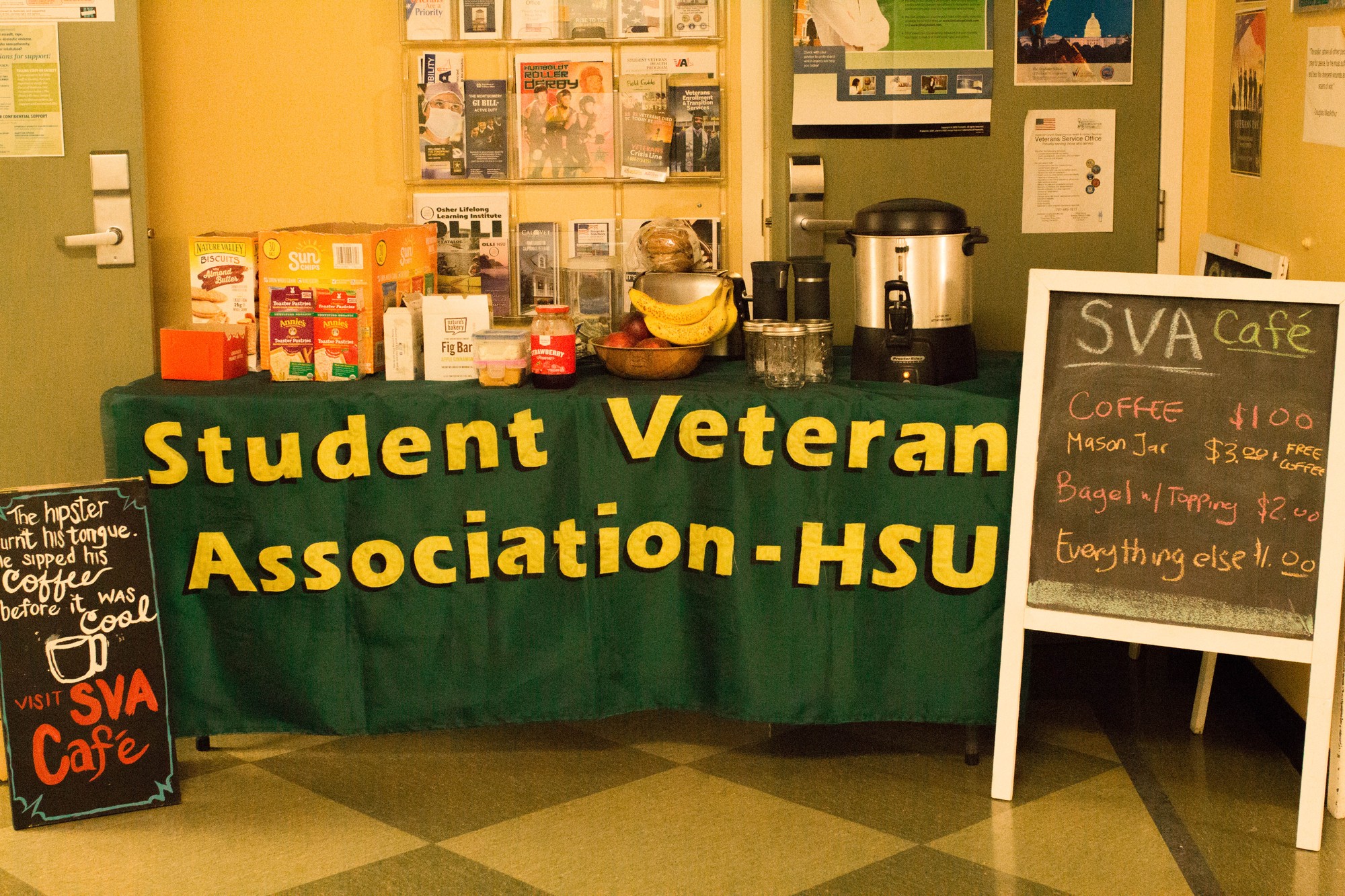
    The Student Veterans Association cafe is up and running again. The café helps fund activities and events for student veterans. The café resides outside the Veterans office on the lower level of the library.

    The food ranges from coffee to organic food and gluten free options. James Lamping, Forestry Major, talked about the type of food they have at the cafe.

    LSSVA2
    Mural inside the Veterans Office in the Lower Library room 58. Photo credit: Lauren Shea

    “We usually try to have healthier options,” Lamping said. “Once we move into the larger community space, we would like to try to create SVA mason jars for students.”

    Lamping is a U.S. Navy veteran where he spent six years in the service.

    “The biggest off-putting factor of going back to school after the military is the huge age gap,” Lamping said. “Being 28 in college with people much younger than me was tough. It helps to find a common ground with people.”

    The Student Veterans Association not only provides resources for student veterans, but a space to build relationships in a familiar community. They’re closely linked with the Student Veterans Association on the national level. They help to represent student veterans with programs such as the GI Bill and their healthcare and give them the opportunity to be heard and represented as a military population in the government but on a school level.

    “The organization really puts a huge effort into creating awareness of the challenges that veterans go through when transitioning back into civilian life,” Lamping said.

    Lamping had the support of the Veterans Resource Center at his community college.

    “The transition wasn’t that insane to me, but I know people that have come out with PTSD and other mental trauma,” Lamping said. “It’s really important to have that community space where you can talk with people about it.”

    One of their main goals is to create and have a community space for veterans to build a support system in a familiar community. They plan to have a soft opening of the space soon and hope to get grant money in the future to furnish it.

    Some of the activities that the Student Veterans Association have are intramural sports. Last year, they played Dodgeball. This year they’re playing Volleyball. Their team is named the Blue Falcons.

    Myra Hallman, the scribe for the association helps plan some of the events for the student veterans. She is also involved with planning activities in the Outdoor Program.

    “The Outdoor Program really helps vets with getting them outdoors and decompressing,” Hallman said. “We’ve done quite a few different activities. Some of the activities we have are hiking, rafting, kayaking and snowboarding.”

    Kim Hall, the Veterans Program Administrator, helps veterans transition, get enrolled and provide resources for their start at HSU.

    “The program is run mainly by student veterans in the program,” Hall said. “We provide them with the sense of community for people transitioning into civilian life.”

    The Student Veterans Association and the Veterans Transition services are closely tied with the Veterans Resource Center in Eureka.

    “I think the support for veterans is important and the program helps bring awareness to community,” Hall said.

    HSU veterans and students in the community will come together on Veterans Day to honor their services.