The Lumberjack


Students Serving The Cal Poly Humboldt Campus and Community Since 1929

Tag: war

  • War on the Horizon? Iran Blamed for Oil Field Attacks

    War on the Horizon? Iran Blamed for Oil Field Attacks

    United Nations pointed to Iran after Houthi rebels initially claim Saudi Aramco attacks

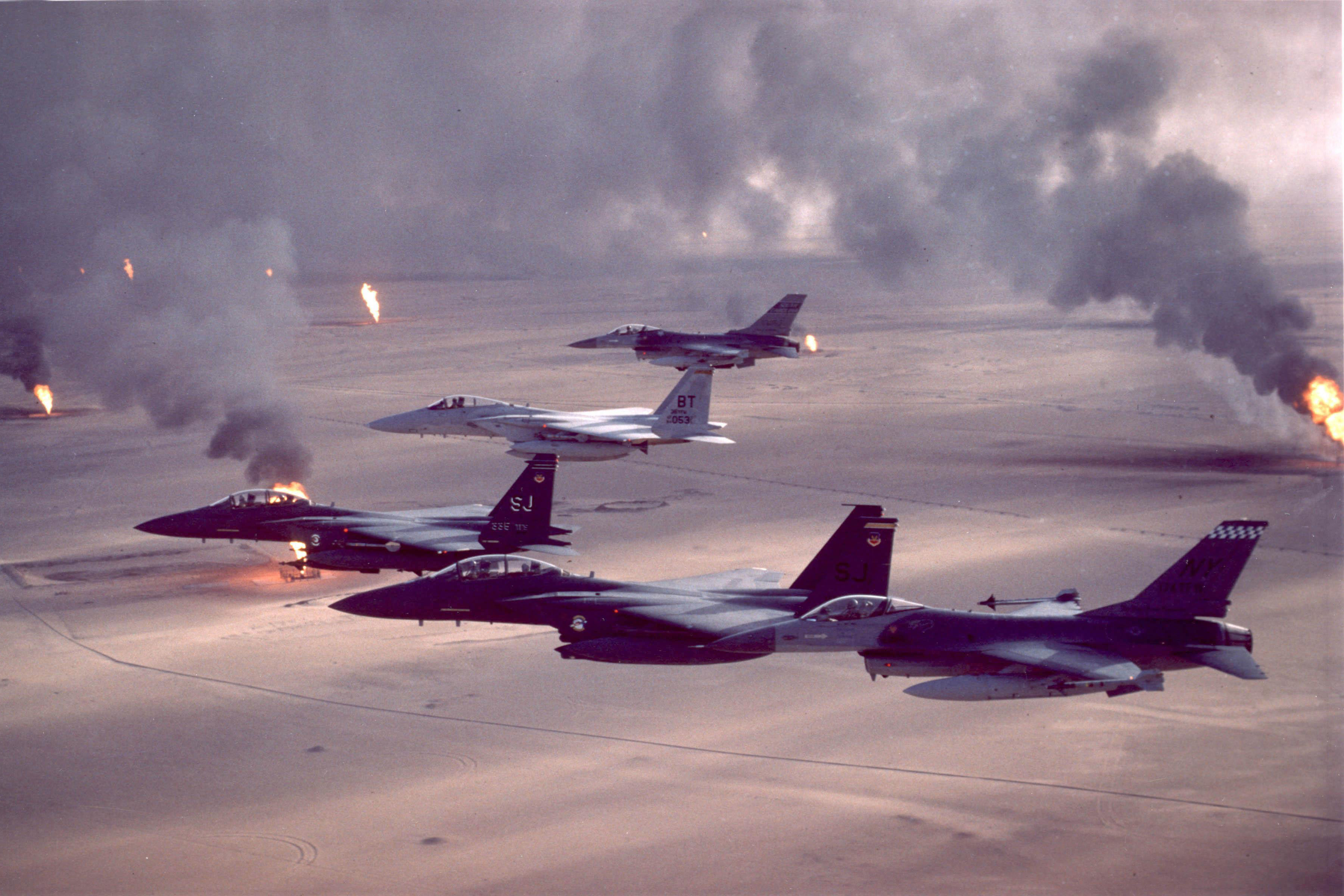
    On Sept. 14, drones attacked two of Saudi Aramco’s oil plants and the United States quickly pointed fingers at Iran as the perpetrator, sending military aid to Saudi Arabia.

    Iranian-backed Houthi rebels initially claimed the attack as their own, reporting that they sent missiles from Yemen, but U.S. Secretary of State and former CIA Director Mike Pompeo were adamant that Iran was to blame for the attacks on the Abqaiq and Khurais oil facilities. Pompeo commented on the incident during an episode of CBS’s “Face the Nation.”

    “No reasonable person doubts precisely who conducted these strikes,” Pompeo said. “And it is the intelligence community’s determination that it is likely the case that these were launched from Iran.”

    Iran drew global attention by targeting Saudi Arabia, the world’s oil exportation leader. In an interview on 60 Minutes, Crown Prince of Saudi Arabia Mohammad Bin Salman put the attack in context.

    “This attack didn’t hit the heart of the Saudi energy industry, but rather the heart of the global energy industry,” Bin Salman said. “It disrupted 5.5% of the world’s energy needs; the needs of the U.S. and China and the whole world.”

    Iran and Saudi Arabia both continue to try to gain influence in the Middle East, and the ongoing conflict in Yemen proves that while they may not want full-scale war, neither side fears conflict.

    After meeting with President Donald Trump and his national security team, U.S. Secretary of Defense Mark Esper explained Trump’s approval of military support in response to Iran’s aggression during a press conference at the Pentagon.

    CNN’s coverage of US Secretary of Defense Mark Esper and Gen. Joseph Dunford announcing the United States sending troops to Saudi Arabia.

    “It is clear based on detailed exploitation conducted by Saudi, United States and other international investigative teams that the weapons used in the attack were Iranian-produced, and were not launched from Yemen as was initially claimed,” Esper said. “All indications are that Iran was responsible for the attack.”

    Esper added that in response to the attacks and a Saudi call for help, the U.S. will deploy defensive forces focused on air and missile defense.

    At the United Nations General Assembly, the leaders of Germany, France and the U.K. released a joint statement concurring with the U.S.

    “It is clear to us that Iran bears responsibility for this attack,” the statement said. “There is no other plausible explanation. We support ongoing investigations to establish further detail.”

    Trump said the U.S. also employed economic measures against Iran.

    “We have just sanctioned the Iranian National Bank,” Trump said. “That is their central banking system and it’s going to be at the highest level of sanctions.”

    CBS News coverage of Trump’s announcement of new Iran sanctions on national bank.

    However, President of Iran Hassan Rouhani has denied Iran’s fault. Rouhani called the attack a retaliation from Yemen for unwanted outside influence.

    “The people of Yemen are forced to respond to all the violations and the flood of weapons from U.S. and Europe toward Saudi Arabia and the United Arab Emirates,” Rouhani said in a televised press conference in Ankara. “They cannot show legitimate defense in the face of their country being destroyed.”
  • 20 Flights to Remember

    20 Flights to Remember

    Honoring those who lost their lives on 9/11

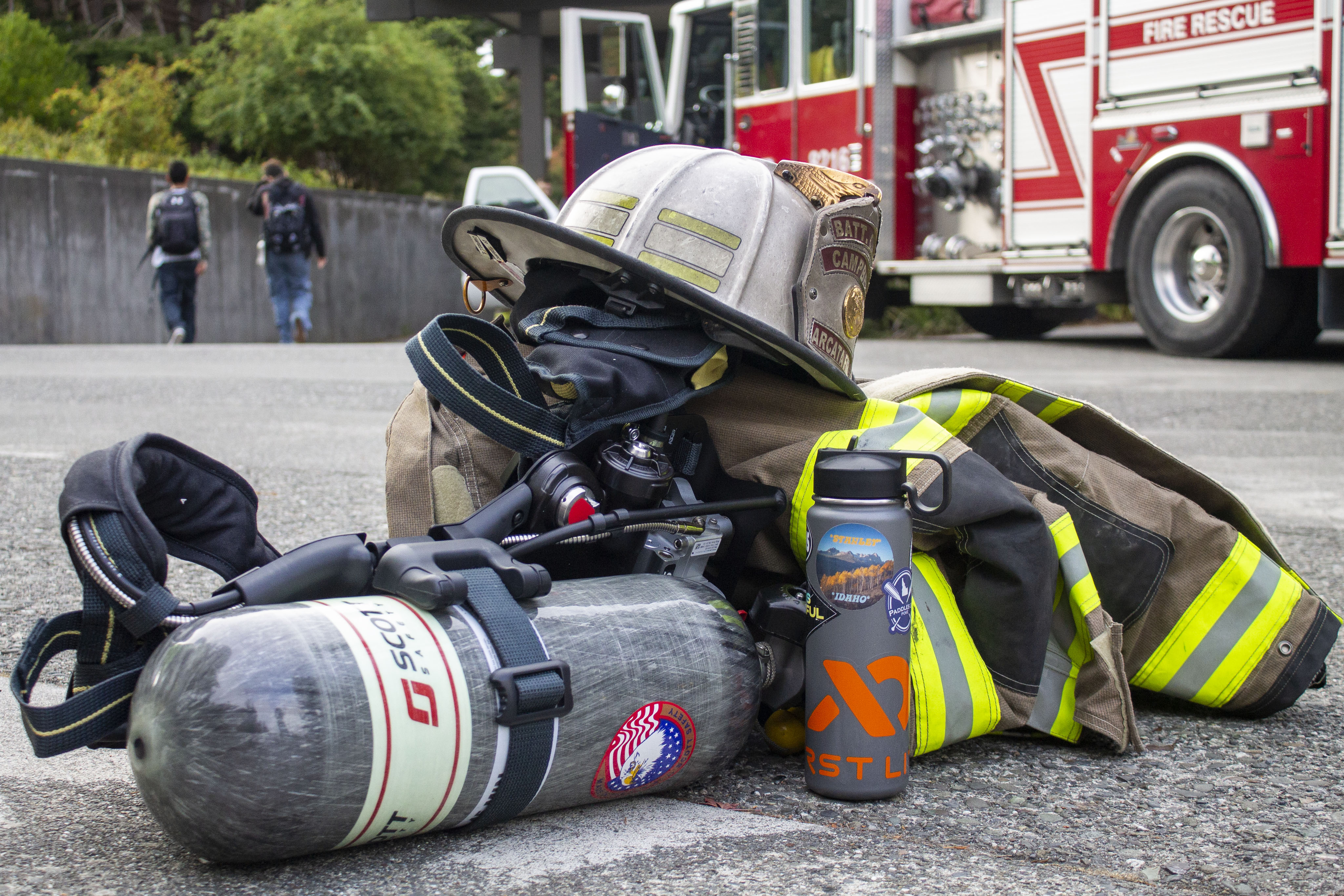
    Humboldt County firefighters, community members and HSU students walk HSU’s Founders Hall stairs in honor of those who died at the World Trade Center on Sept. 11, 2001.

  • Peace in the Middle East

    Peace in the Middle East

    An interfaith community panel discussion

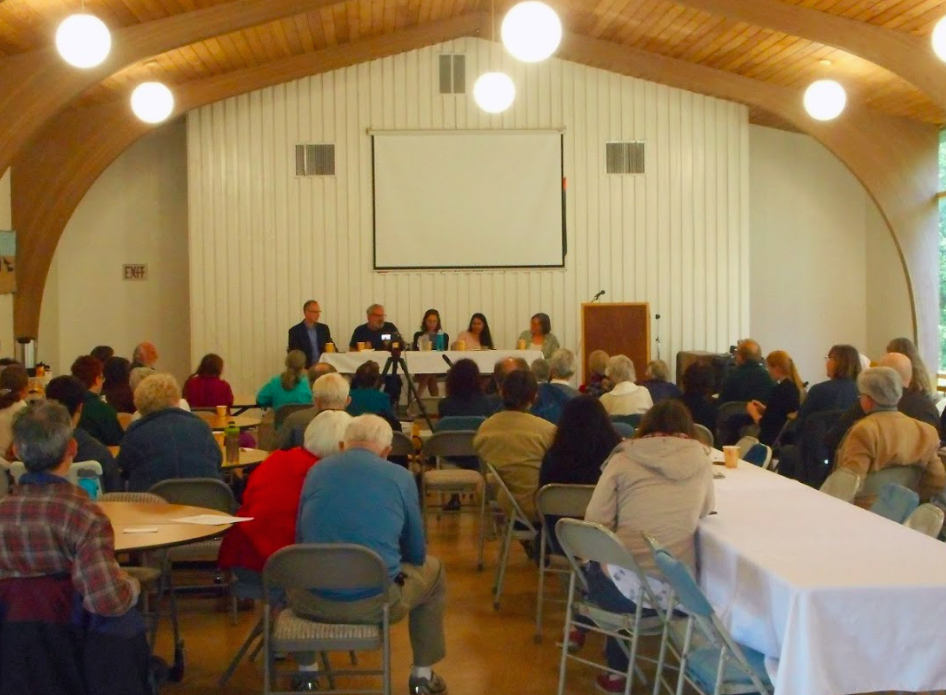
    Middle East peace and the role of the U.S. was a panel discussion from three professors from Humboldt State and an Israeli filmmaker. The three professors from HSU were history teacher Leena Dallasheh, and political science teachers Swati Srivastava and Kathy Lee. The Israeli filmmaker was Udi Aloni. The moderator was John Meyer, HSU chair of the history department.

    The panelists discussed how to give the Palestinians a voice. Palestinians have been consistently prevented from being heard.

    “There is an exclusion of Palestinians in public space, and they are villainized in their representation by the media,” Dallasheh said. “American weapons have been used consistently against Palestinians. American money has been used to support a system that continues to suppress millions of people and continues to prevent millions of others to return to their homes, despite international decisions. That is why as Americans, we have a responsibility to address the plight of the Palestinians.”

    There are Palestinian refugees in Berlin and Europe doesn’t want them.

    “If something terrible happened to a Jew in France, they can come home to Israel and be surrounded by Jewishness. An experience I’ll never forget is seeing Palestinian refugees in Berlin. They come to find refuge in Berlin where Europe doesn’t want them, when really their home is in Palestine,” Aloni said.

    The Palestinian situation is much worse than apartheid, it is an occupation.

    “In apartheid, you don’t have people shooting at you from point blank range,” Dallasheh said.

    It is not so much that Israel is using America, but America is using Israel. America pushes weapons on Israel.

    “Israel is a place of colonialism in the Middle East to serve the purpose of America,” Aloni said.

    The United Nations is supposed to support Palestine. In order to receive help from the UN, you must be an international state with recognition.

    “You have to be a state to have international recognition. Palestine can’t just call itself a new state, it must have international authority and recognition. This needs to happen and it hasn’t so far,” Srivastava said.

    The occupation of Palestine has something to be hopeful about.

    “With the decline of the U.S. in the world stage, and the decline of the U.K. because of Brexit, does not automatically mean that the new right will take over. It might mean that the new left will take over and perhaps different kinds of nationalism will flourish that will not rely on antiquated ideas of what a state is,” Srivastava said.

    A huge piece of the puzzle is the American arms industry and moving the American economy away from an industry of war.

    “Vote for people that pledge to move the U.S. economy away from where it is today,” Lee said.

    “The U.S. will enter trade agreements that will have nothing to do with weapons and make a provision in the agreement that the country will have to buy American-made weapons. That is something that we have been exporting for a long time. We should move away from these old models of trade agreements, supplying arms to countries that don’t even need them,” Srivastava said.

    Why should we care about this?

    “It is problematic that students coming to my class don’t know about this,” Srivastava said.

    In closing, we are reminded that this is a tough topic.

    “Gandhi said, ‘Almost everything that you do is insignificant, but it is important that you do it.’ That is the approach that we have to take,” Lee said.