The Lumberjack


Students Serving The Cal Poly Humboldt Campus and Community Since 1929

Tag: waste reduction and resource awareness program

  • WRRAP’s fifth annual Zero Waste Conference goes virtual

    WRRAP’s fifth annual Zero Waste Conference goes virtual

    HSU’s eco awareness program continues providing support to campus during the pandemic

    Humboldt State University’s Waste-Reduction and Resource Awareness Program team will be hosting seminars and workshops online, raising awareness of environmental justice, local resources, the zero-waste lifestyle and providing eco-friendly DIY techniques, like making your own deodorant.

    This year Oct. 19-23, WRRAP will be holding its annual Zero Waste Conference virtually.

    The virtual setting grants more accessibility for speakers to attend. Beyond the clothing swaps and physical demonstrations, WRRAP sacrificed the semester for the safety of students. The new policies come at the cost of student interaction.

    Amanda McDonald, WRRAP’s program manager, said the biggest obstacle in their path this semester is reaching students.

    “Typically, there’s multiple table events that we work throughout the semester that really get students engaged in waste reduction just by walking through the quad,” McDonald said. “That kind of interaction is so much harder with students being online.”

    The WRRAP staff is smaller this semester, they are still provide students on campus with resources through the Reusable Office Supply Exchange program, the Bicycle Learning Center and the campus compost project.

    The ROSE program simultaneously reduces waste and provides students with free access to school supplies donated by the community and former students.

    Sam Kelly, director of ROSE, said the program is operating as usual with extra precautions and shorter hours of operation.

    “We definitely have more stuff in here right now than past semesters,” Kelly said. “Just because we don’t have a lot of people coming in and taking it.”

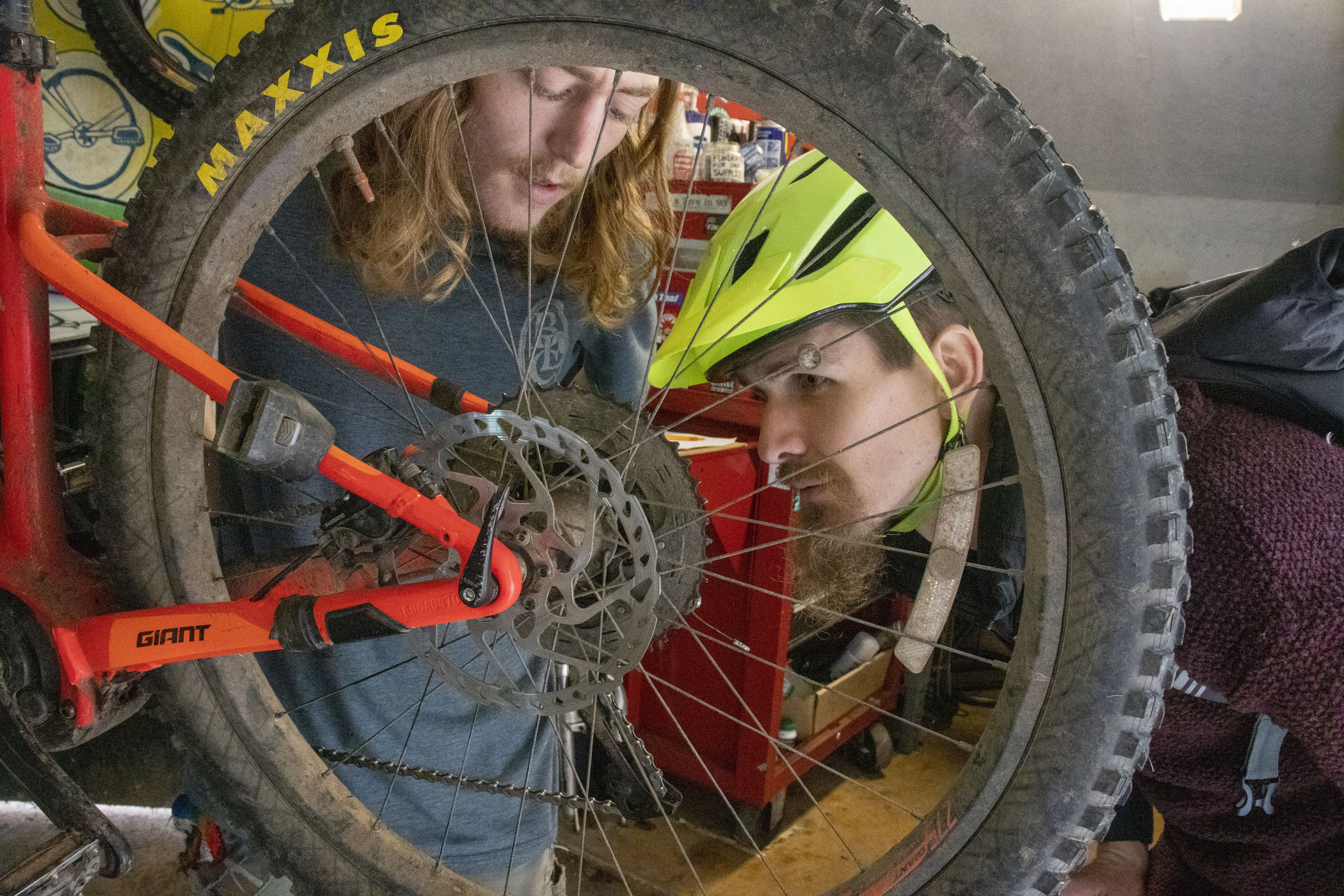
    The BLC, located on the eastern end of the Redwood Bowl, is offering free bike repairs to students, staff and faculty. Service differences include wearing masks and social distancing during repairs.

    COVID-19 restrictions currently forbid the BLC from allowing volunteers, which has forced them to cut back their hours.

    Justin Delgado, a BLC instructor, said it has also made the days a lot longer without someone else in the shop.

    “Typically we get about one person, at least when I’m here, per day right now,” Delgado said. “It used to be prolly five or six.”

    The compost team continues providing campus with their weekly services, however with a fraction of the employees present, their load is significantly lighter.

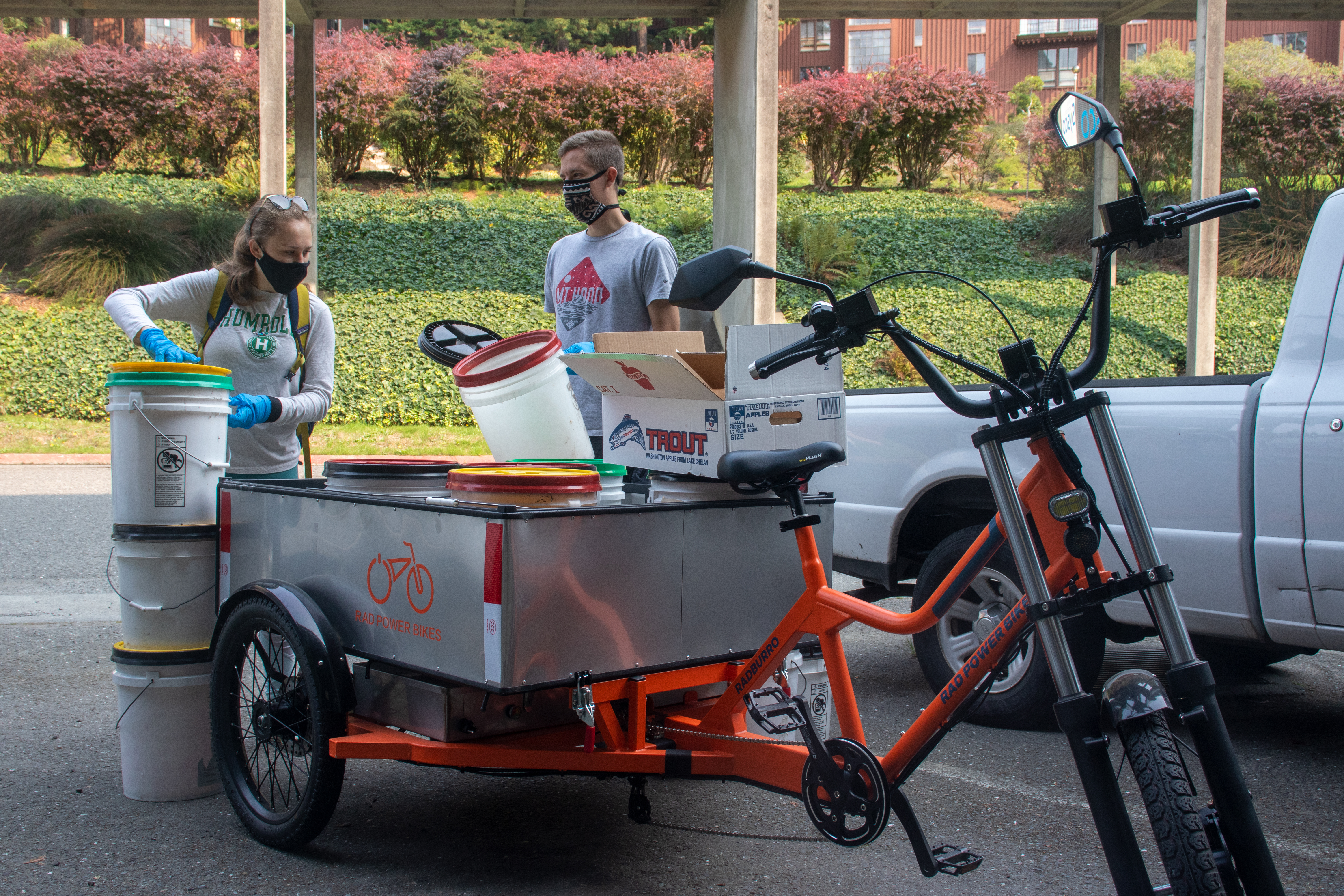
    The team recently made the switch to an electric mountain bike this semester for compost collections. While much more energy efficient than the electric facilities vehicles they used in the past, in its current state, the trailer they’re hauling behind the E-bike can only hold a fraction of the buckets.

    WRRAP’s compost collection process has switched over from electric facility vehicles to an electric mountain bike for energy efficiency. The downside to the switch, is the trailer the bike pulls behind it can only hold a fraction of the compost buckets.

    Krissi Fiebig, the director of the compost branch of WRRAP, said they intend to team up with the BLC and modify the trailer possibly into a tower to fit more buckets.

    “I don’t know how aerodynamic that would be,” Fiebig said. “But it would get the job done.”

    The compost team is beginning a new partnership with the Campus Center for Appropriate Technology, allowing students access to properly dispose of their food waste. Additionally, providing free fertilizer towards the end of the semester, to any students who show up.

    McDonald expresses concern in the programs future with several of the student staff members expecting to graduate in the spring. Finding replacements will be challenging given the virtual format that’s currently planned for the rest of the academic year.

    “I’m just nervous that it’s going to harm the integrity of the program,” McDonald said. “When we do hire new people, I want them to understand the history of this program and the legacy that they’re stepping into and carrying on.”

    Though they can’t currently accept casual volunteers, the WRRAP team currently has intern positions available and leadership positions opening soon for students interested in the future of our planet.

    “Being one of the people on the WRRAP branches really helps to remind me to reduce my own waste,” Fiebig said. “And just to be more conscious than I already was of the things I consume and what I do about my life.”
  • Students advocate for award-winning food sovereignty lab.

    Students advocate for award-winning food sovereignty lab.

    Awaiting approval from President Jackson, the food sovereignty lab is the first of its kind

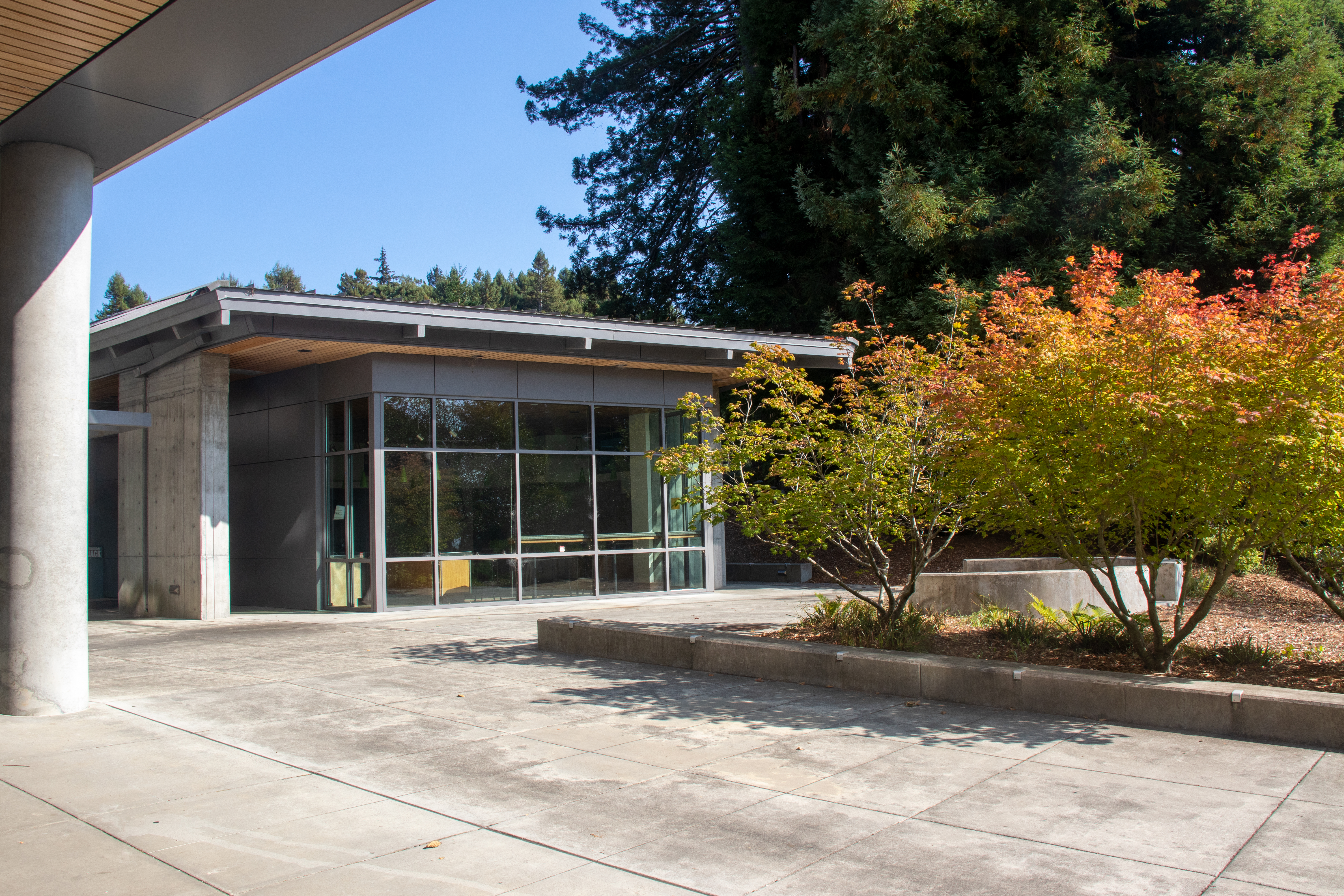
    After facing rejection multiple times from administration, the request to use the former Hilltop Marketplace as the location for an entirely student-lead food sovereignty lab is finally getting attention from the higher-ups.

    Last semester, on the first day of class, professor of Indigenous Natural Resource Management Practices Cutcha Risling Baldy, posed students with two questions they would have the entire term to answer: first, what do you think HSU needs? Second, what do you think we can accomplish as a class in the semester?

    The idea students came up with is a food sovereignty lab that could be used for academics, events and gatherings and it would be connected directly to food security. The food-lab would be the first of its kind available in all California Universities, possibly all colleges in the country.

    Amanda McDonald is a leader of the Waste Reduction Resource Awareness Program at HSU and one of the student participants in the food-lab project. According to McDonald, food security is the number one student need across all CSU campuses. She feels our current food security program, OhSNAP! is a huge help, but students need more.

    “The OhSNAP! student food pantry has done an outstanding job at helping meet basic student needs in the past two years, however, it is simply not enough,” McDonald said. “The Food Sovereignty Lab will work in tandem with organizations like OhSNAP! to address innovative solutions to food security, food sovereignty and sustainability. Through conducting research, writing grants and collaborating with community gardens in our region, the potential of this Lab has yet to even scratch the surface.”

    The student-led project is backed by award-winning research. Carrie Tully is a graduate student in the environmental and community program at HSU and also one of the students that participated in the food sovereignty project.

    “My classmate presented this research to the CSU research competition and our classes’ research was selected by the University to participate in the competition,” Tully said. “They won second place in the graduate level behavioral and social sciences field.”

    The University’s initial decision to deny the space was especially frustrating after their achievement, considering they were selected by the University to participate in the competition.

    “Our request was denied by the committee in a very casual email,” McDonald said.”

    The University’s Space and Advisory committee’s response stated they believe the former Hilltop Marketplace would better serve as a general student space, accessible to all.

    “The Coronavirus pandemic has highlighted the need for local sustainability, food security and food sovereignty.”

    Ted Hernandez

    McDonald couldn’t make sense of the committee’s decision. The last use of the location was a marketplace, designed specifically for the purpose of putting food in the hands of students. McDonald and the others also envisioned the food-lab as a place that would be available to everyone – the diverse student-population, surrounding communities, tribal nations and national and international scholars. It would be a kitchen space that could be used for academics, events and gatherings.

    “If they’re thinking it is better suited as a lounge, there is a lounge on every floor of the BSS,” McDonald said. “Or they can build a lounge on any part on campus.”

    In response to the committee’s decision to deny the space request, there was a significant outcry of community support for the food sovereignty project, including over 80 letters received from students, staff, faculty, local organizations and members of tribal nations in a single week.

    Wiyot Tribe Chairman, Ted Hernandez, is one of the many to have sent a letter supporting the project. In his letter, Hernandez explains how the food-lab would be especially beneficial to us now, given the pandemic.

    “The Coronavirus pandemic has highlighted the need for local sustainability, food security and food sovereignty,” Hernandez said.

    Hernandez supports the food lab because it will benefit HSU, the local community and local tribes.

    “The end result would be an interdisciplinary learning lab worthy of HSU that would both attract Indigenous people and students from out of the area,” Hernandez said. “While also serving the local Indigenous peoples by helping to preserve their food sovereignty and native food security.”

    Students from NAS 331 presented their proposal to the Associated Students board of directors and the University Senate this summer. The former Hilltop Marketplace was approved to be used for the food sovereignty lab, May 28, by the University Space and Facilities Advisory Committee. Then again on July 19, by AS President Jeremiah Finley – suggesting it be adopted into the next HSU academic master plan.

    The project is still currently awaiting approval from the President’s office, the Academic Master Plan group and Facilities Management. For now, it seems the COVID-19 pandemic has caused another roadblock in the project and the grand-opening of the food-lab is yet to be determined.

  • One More Reason to Ride a Bike

    One More Reason to Ride a Bike

    Saving money and the planet at the HSU Bicycle Learning Center

    Humboldt State University’s Bicycle Learning Center made the transition in September 2018 from a student club to an Associated Students program umbrellaed under HSU’s Waste Reduction and Resource Awareness Program.

    Steven Sperling volunteers at the BLC while pursuing his master’s in business administration.

    “Bicycles are the most efficient form of transportation there is for human beings,” Sperling said. “Bicycles can and should save the world, period.”

    Originally founded in 1992, HSU’s entirely student-staffed Bicycle Learning Center is a free resource available to all HSU students in need of bike repairs. The transition opened up two part-time instructor positions, paid for with student fees, that are currently split between three students.

    “Probably the biggest thing that I’m working on here is how to share my bicycle knowledge efficiently,” Sperling said. “Learning how to teach is one of the things that I’m most excited about learning while I’m here.”

    Current Director Julian Palmisano has been a member of the BLC since he transferred to HSU from Santa Barbara City College in 2017.

    “We all started as volunteers at the shop to serve and build community, utilize the resources and gain experience,” Palmisano said.

    The BLC does its best to provide all of the tools necessary for maintaining a well-conditioned bicycle, along with as many consumable parts that they can get their hands on. With a budget of only $800 provided by WRRAP, the majority of parts that cycle through the BLC are donations.

    “Sometimes we just don’t have stuff and we have to tell people like, sorry we can’t help. Which is a real bummer.”

    Colton trent

    Colton Trent is an instructor entering his third semester volunteering for the BLC.

    “The budget provides a buffer in case we run out of stuff,” Trent said. “But for the most part we can function pretty well trying to up-cycle and recycle things.”

    As a result of their small budget, the BLC can only provide a finite number of students with bicycle maintenance.

    “Sometimes we just don’t have stuff and we have to tell people like, sorry we can’t help,” Trent said. “Which is a real bummer.”

    The BLC encourages donations in the form of tools, bicycle parts and old bikes that will be refurbished and donated to a student-rider in need. All cash donations that the BLC receives go directly into the shop’s spare parts fund.

    In the fall semester of 2019, the BLC saw over 180 documented student visits, totaling over 100 hours of bicycle maintenance. By spreading the trend of using bicycles as a primary-method of transportation, the BLC is promoting a healthier lifestyle with a significantly smaller carbon footprint.

    Located in the eastern tunnel by the Redwood Bowl, the BLC is open 10 a.m. to 2 p.m. Monday through Friday, with instructors and volunteers standing by to assist and educate students in bicycle repair.

  • So You Want to Compost

    So You Want to Compost

    Composting can be one of the most beneficial ways to handle waste

    Learn the steps to compost.

    Every Wednesday, the trash bin, filled with whatever waste was tossed during the week, goes to the curb to be picked up by Recology and shipped off to a landfill.

    Forty percent of the waste that ends up in landfills is food waste, according to Recology. This can include raw scraps from food preparation, old sandwiches left to rot and unwanted leftovers. When food scraps end up in a landfill, the material is not just waste, it’s being wasted.

    “The average American generates 4.4 pounds of garbage a day,” the Recology site says. “Don’t let your food scraps go to waste.”

    Illustration by Collin Slavey

    It’s a big deal if food waste gets tossed into landfills. Besides taking up space in our already overwhelmed landfills, food waste doesn’t decompose properly in such settings. For example, an apple that falls above ground breaks down into useful nutrients like nitrogen, which enriches the soil. Underground the apple isn’t able to break down.

    Buried in a landfill, the apple is in an anaerobic environment, meaning that it is starved of oxygen. Anaerobic decomposition creates some nasty byproducts. The most malicious of these byproducts are methane and liquid leachate. Both of these are pollutants with consequences.

    “Fortunately, avoiding these pollutants is simple. Just compost it,” international waste management firm ToWaSo said. “Food and yard waste can be reused and turned into nutrient rich compost. Composting exposes the green waste to oxygen, allowing it to decompose as it would in nature.”

    Humboldt State does compost food waste. According to an email from TallChief Comet, the director of sustainability, energy and grounds keeping with Facilities Management, HSU compost is managed in two ways. The Waste Reduction and Resource Awareness Program manages the composting bins on campus, while food waste is diverted from dining services.

    “The on-campus composting process is handled by WRRAP and is using the material from the public compost bins scattered around campus,” Comet said in an email. “This material goes into an Earthtub composting vessel, located at Facilities Management and processes about 10,000 lbs (5 tons) of material per year.”

    “The average American generates 4.4 pounds of garbage a day. Don’t let your food scraps go to waste.”

    Recology

    “The food-waste diverted from all the dining locations on campus is collected by FM waste and recycling staff into a large pre-composting container,” Comet said. “About every three weeks it is transported by Recology (a local waste hauler) to a vermicomposting facility in Dows Prairie run by The Local Worm Guy.”

    Comet emphasized that it is important to keep contamination out of the materials’ stream, and if someone is in doubt about whether or not to compost, trash it.

    “The best effort students can make is to not generate waste in any form to begin with,” Comet said. “For compostable waste they can achieve this by not purchasing more than they will use/consume during the anticipated period.”

    But composting may very well be appropriate. Composting may seem like an intimidating, tedious and smelly thing to do, but with a bit of practice it becomes second nature. Working with local resources like the Campus Center for Appropriate Technologies can help prepare a student for their own compost bin.

    Jacob Gellatly, an active member of CCAT, recommended that students learn about composting.

    “Before a student starts composting they should learn a few things,” Gellatly said. “It is critical to get educated on the process of composting. Learn the recipe.”

  • HSU’s 4th Annual Zero Waste Conference

    HSU’s 4th Annual Zero Waste Conference

    WRAPP hosts full week of speakers, activities and essential waste-reduction knowledge

    This week kicked off Humboldt State’s Waste Reduction & Resource Awareness Program’s Zero Waste Conference. The banquet was the first event of the conference and was held in the Kate Buchanan Room Tuesday evening.

    The banquet began with keynote speaker and former HSU student Alec Cooley, who recounted the history of the Humboldt State Campus Recycling, which he helped found. The evening climaxed with the Trashion Show which displayed upcycled waste products artfully crafted into snazzy fashion statements.

    Tuesday’s event was just the beginning of an action packed conference. The 4th Annual Zero Waste Conference includes events like Tinker Time, a workshopping and tabling event at the UC quad, two clothing swaps and a whole slough of keynote speakers.

    “This is the direction of the future that we’re moving towards, it’s zero waste,” WRRAP Student Director Amanda McDonald said. “It’s becoming more and more evident that we cannot keep mass producing waste and being wasteful with how we consume. It’s not going to sustain us into the future.”


    Full list of WRAPP’s Zero Waste Conference 2019 Event:

    Zero Waste Conference 2019 schedule of events: 

    Tuesday | November 12
    Zero Waste Presentation: Big Oil and Plastics, 5-6 p.m., Founders Hall Room 125. Tedd Ward, Director of the Del Norte Solid Waste Management Authority, will discuss the social, economic, and environmental drivers moving communities toward zero waste, the role manufacturer’s responsibility must take to curb plastic pollution, and the action we can all take to avoid the waste we don’t want.

    Zero Waste Banquet, Keynote and Trashion Show 6-8 p.m., Kate Buchanan Room. Join us for a free zero waste meal. Vegetarian and vegan options will be available. Keynote presentation by HSUAlum and waste reduction expert Alec Cooley. Stay to watch the Trashion Show, hosted by Green Campus.

    Wednesday | November 13
    Clothing Swap, 10 a.m. – 2 p.m. Kate Buchanan Room. All clothes are free. Although encouraged, you do not need to bring clothes to take clothes! 

    Tinker Time, 10 a.m. – 2 p.m., UC Quad. A series of hands-on, interactive, DIY, and zero waste activities all day on the UC Quad, hosted by The Sanctuary, the BLC, CCAT, Botany Club, and more! 

    Sustainable Travel Workshop, 3:30-4:15 p.m., Library Room 209 – Fishbowl. Join students from REC 435 Sustainable Tourism class in a discussion on best practices for minimizing your footprint when travelling locally, nationally, and internationally.

    Oh SNAP! Zero Waste Cooking Class, 6-7:30 p.m., Rec & Wellness Center Room 122. Learn techniques and recipes to make delicious zero waste meals!

    The Climate Crisis and Solutions: A frank discussion on what each of us can do, 5:30-6:30 p.m., Founders Hall Room 118. Dr. Kate Lancaster is a trained Climate Reality Leader through Al Gore’s Climate Reality Leadership Project. Dr. Lancaster will share her Climate Reality presentation, offering a clear picture of what is happening to the planet and the actions we can all take to change course. 

    Thursday | November 14
    Zero Waste Heroes Workshop, 10-11 a.m., Library Room 209-Fishbowl. Tired of being a part of the problem? Join the WRRAP team to learn about simple, low-cost and fun practices with big waste reduction implications. This workshop is part of the Leadership Conference, taking place between 10 a.m. – 3 p.m. today in the Library.

    Clothing Swap, 12-4 p.m., Recreation and Wellness Center Room 126. All clothes are free. Although encouraged, you do not need to bring clothes to take clothes! 

    Zero Waste Thinkshop, 1-2 p.m., CCAT. Take a deep dive into zero waste philosophy, discuss with practitioners and gain DIY skills to reduce your personal impact.

    The Amazing World of Fungi: Mycoremediation, Biomaterials, & Mushroom Cultivation, 5 – 6 p.m., Founders Hall Room 206. Levon Durr is Owner of Fungaia Farm, a company that offers mushroom cultivation kits, workshops, and ecological restoration services. In this exciting presentation, Levon will discuss the critical role mushrooms can play in neutralizing toxins, restoring ecosystems, creating zero waste packaging, and building human health. 

    Calculating the Air Quality & Climate Impacts of Using Forest Residues to Generate Electricity, 5:30 – 7 p.m., Founders Hall Room 118. Dr. Kevin Fingerman and Senior Research Engineer Jerome Carman will present their research on the net environmental impacts of using residues from forest management activities for bioenergy. This talk is part of the Sustainable Futures Speaker Series, sponsored by the Schatz Center and the College of Arts, Humanities & Social Sciences. 

    Ocean Night, 6 – 9 p.m., Arcata Theater Lounge, 1036 G Street, Arcata. Come to the ATL to see films about the ocean, plastic pollution, impacts to marine biodiversity and surfing. All ages, $5 suggested donation. Sponsored by Humboldt Surfrider. More info about films at the Arcata Theater Lounge website.

    Friday | November 15
    Zero Waste Day, all day, Arcata. The City of Arcata has proclaimed this day to be Zero Waste Day. Go to the city website to learn more about events in the community.

    Jewelry-Making from Bike Parts, 10 a.m. – 2 p.m., Bicycle Learning Center. Turn scrap bike parts into coasters and jewelry with the BLC instructors. Bring your bike to get help with maintenance and repairs. 

    Zero Waste Bike Ride, 3 – 4:30 p.m., Harry Griffith Hall Zagster Bike Station/ HGH Room 113. Join the BLC and Office of Sustainability on an all-abilities group ride to check out zero waste activities and businesses. No bike? No problem! Show up to get a FREE promo code to use a Zagster bike!