The Lumberjack


Students Serving The Cal Poly Humboldt Campus and Community Since 1929

Tag: waste reduction

  • The dangers behind marine debris

    The dangers behind marine debris

    Along the coast, you can free your feet in the sand and enjoy the beautiful sounds of the ocean. But enter the water and you, like many marine creatures, may find yourself entangled in fishing gear or waste plastic.

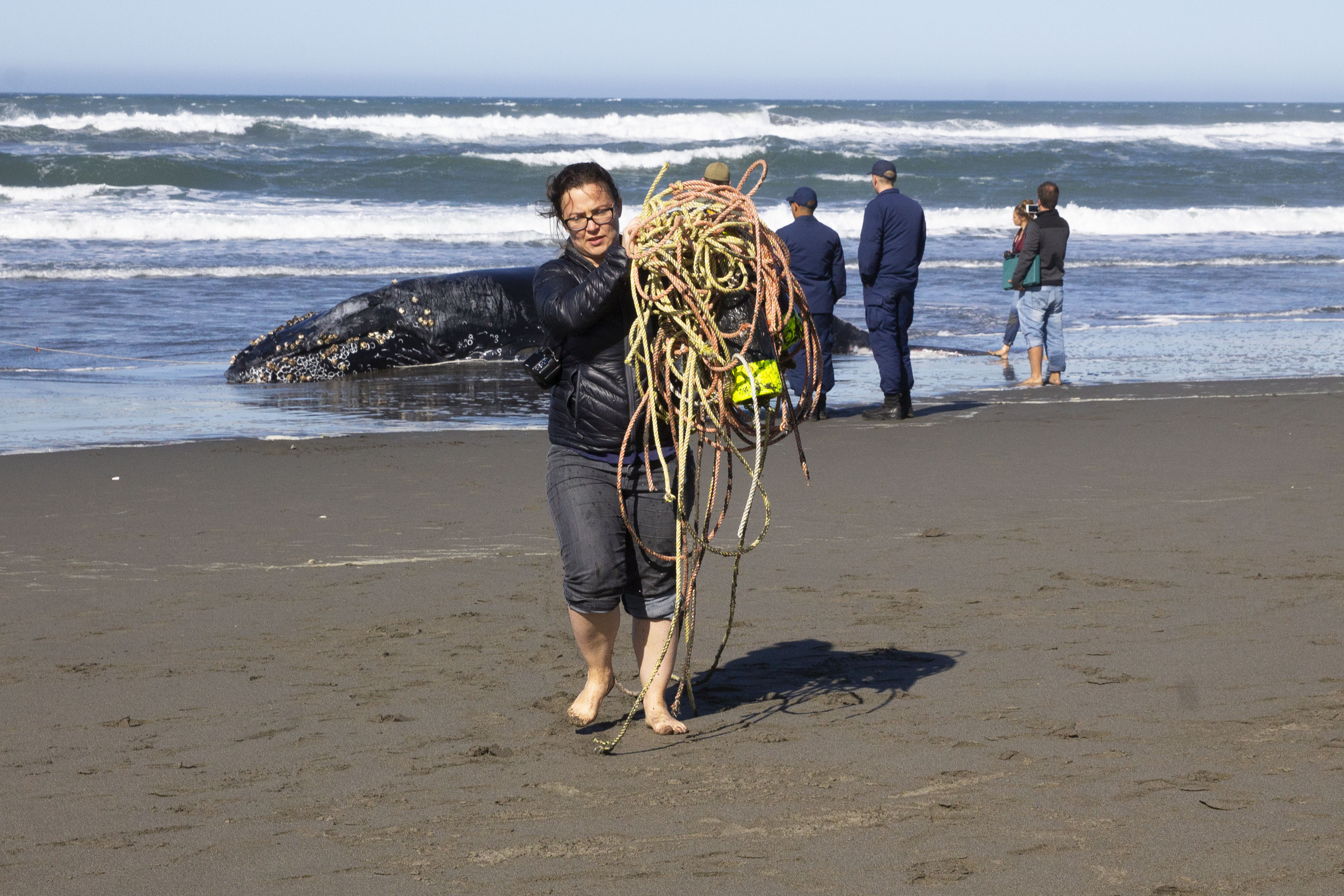
    As many may remember, a whale near Crescent City was found tangled in fishing equipment on shore. Two of HSU’s very own Marine Mammal Program went down to help. Despite efforts, the whale was unable to make it.

    This experience is like many others globally.

    According to NOAA Fisheries’ website, “Entangled animals may drown or starve because they are restricted by fishing gear, or they may suffer physical trauma and infections from the gear cutting into their flesh.”

    The reason this is such a killer? Fishing gear counts for the largest percentage of plastic in the oceans.

    Sea Shepherd Global wrote on their website, “Approximately 46% of the 79 thousand tons of ocean plastic in the Great Pacific Garbage Patch is made up of fishing nets, some as large as football fields, according to the study published in March 2018 in Scientific Reports, which shocked the researchers themselves who expected the percentage to be closer to 20%.”

    Ghost nets are nets that have stranded from their boats and continue catching marine life, tangling them and often creating mass bundles of nets.

    On Humboldt State’s Marine Debris webpage, a study they mention called “A Comparison of Plastic and Plankton in the North Pacific Central Gyre” by C.J Moorea, S.L Moorea, M.K Leecaster, and S.B Weisberg, explains that “in the North Pacific Gyre the mass of plastic out-weighted the mass of plankton (small marine organisms) by six times, despite the fact that the number of individual organisms was five times higher than the number of plastic pieces.”

    But it gets worse.

    “The same study found that 98% of plastics found were polypropylene/monofilament line (fishing lines), thin films and unidentified plastic fragments,” The HSU Marine Biology website says.

    “Lost/broken fishing gear such as netting and fishing string can entangle and kill large marine life such as sea turtles, dolphins, sharks, etc.,” Anna Caro, a third-year marine biology major at HSU, said in an email. “Most get trapped and struggle to escape, which usually makes the entanglement worse killing the marine life.”

    This means that while there is a demand for seafood, there is a risk of fishing gear becoming lost and potentially causing harm.

    “Scientists have still struggled to figure out the extent of the microplastics problem. Microplastics are being eaten by marine life and poisoning them, but not only is it terrible for the fish it is terrible for anything eating the fish including humans,” Caro said.

    Caro was able to learn more regarding marine debris through education at HSU in biology seminars and classes.

    Humboldt State also works closely with NOAA Fisheries to keep the oceans healthy and research them. Students can work with the Office of Response and Restoration’s Marine Debris Program to reduce waste and learn how to keep the oceans clean.

    Pacific Northwest Regional Coordinator Andrew Mason from NOAA expressed the issues of marine debris, especially fishing gear. Not only is this a marine loss, but an economic loss as well.

    350 species found entangled in marine debris, including all 7 species of sea turtle, 27.4% of seabird, and 39.8% of marine mammals, according to Mason.

    “It’s reaIly only these moments where we have our large sea life that are tangled up and it really brings awareness to the issue… it’s heartbreaking,” Mason said.

    Mason says that the problem itself stems from humans and extends beyond just lost fishing gear.

    “The scope of the issue is global, and for people to understand not just what they do on a boat, but it’s all of the waste we generate,” he said.

    But the issue can be worked on, and hopefully fixed. People can participate in cleaning events, as well as picking up debris if it is safe for them to do so.

    If debris is too large, like a ghost net, you can call the Department of Fish and Wildlife and inform them of the debris so it can be professionally handled. As well, if you find an entangled animal, call for help instead of handling it alone, as you or the animal may get hurt.

    But just picking up trash isn’t enough.

    “Stop use of single-use plastics and find ways to reuse our waste, recycling should not be the first choice since many plastics do not get recycled,” Caro said. It starts with striving for a zero-waste lifestyle and being aware of your waste and trying to find uses for it before trashing it.”

    NOAA also funds grants to clean up the marine debris.

    “Removal is treating a symptom, prevention is treating the root cause,” Mason said.

    For Mason, education is the key, providing people the sources to understand how to properly use fishing equipment as well as giving the general public information about how to discard their waste correctly.

    “The number one best way to address this problem and to help is to prevent these items from ending up in our marine environment,” Mason said.

    Education can teach people who may not live directly in contact with the ocean how they are affecting the ocean.

    “The ocean is key to our way of life and messing with the ecosystem can have unexpected impacts we are not yet fully aware of,” said Caro.

    “Everything is connected,” Mason said. “Everything we do has an impact.”
  • Pigs Compost on Campus

    Pigs Compost on Campus

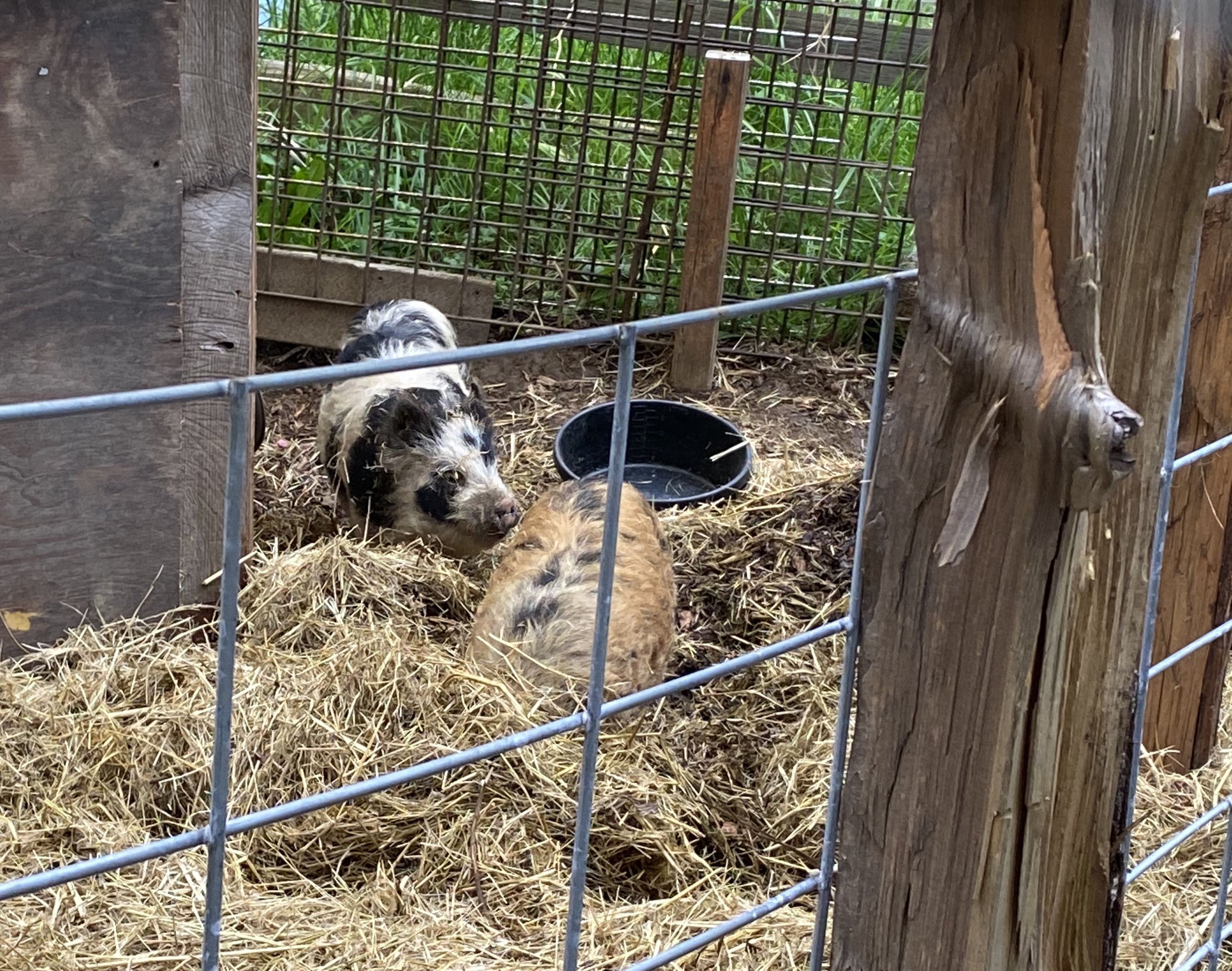
    A few weeks ago, two little piggies went wee-wee-wee all the way home to the Campus Center for Appropriate Technology. On-campus dining services like The J are working with CCAT by delivering their compost to feed the pig project. Instead of the food waste going to the bin, it can fill the bellies of the pigs.

    CCAT acquired the two baby kunekune pigs from Tule Fog Farm in an attempt to reduce Humboldt State’s organic carbon footprint.

    Ben Nguyen, the primary animal caretaker, farmer, project manager and a co-director of CCAT, explained that, depending on their nutrient demand, the pigs will eat as much or as little as they need in order to maintain healthy growth.

    “Usually what we pick up from The J is around 10 pounds of food a day,” Nguyen said.

    The kunekune pig is a small grazing pig that can survive on a low-calorie diet and can weigh anywhere from 150 to 400 pounds. Although different breeders may breed for a smaller size, the pigs from Tule Fog Farm average around 200 to 300 pounds, making them the ideal size for an on-campus composter.

    The pigs will probably be on campus at CCAT eating food waste for the next semester unless someone wishes to keep the project going through the summer and so-on, since Nguyen will be graduating in May.

    Some students are against keeping the pigs and are seeking to purchase the pigs and send them to a sanctuary. But for now, after the completion of the project, the pigs are arranged to be returned back to Tule Fog Farm.

    Before they were adopted by CCAT, Shail Pec-Crouse, Tule Fog Farm owner and farmer, introduced the pigs to a diverse diet. Tule Fog Farm pigs ate compost as a nutritious supplement to their natural grazing diet of fresh grass.

    “We take kitchen waste from a couple of local restaurants like Slice of Humboldt Pie and Los Bagels,” Pec-Crouse said.

    Pigs are omnivores and need a diverse diet consisting of grains, fats, protein and greens. This diverse diet makes them an excellent option for getting rid of food waste or any organic waste in general.

    According to Oxymem, a DuPont brand, when food waste is thrown in the trash and decays unnaturally among plastic and other non-biodegradable things in landfills, a toxic liquid called leachate is produced, which has a high ammonia concentration that isn’t easily biodegraded. Compost solves this problem by keeping biodegradable materials out of landfills so that it can continue its life cycle and be returned to the ground naturally.

    Robert Just, a local livestock veterinarian, described the relationship between human trash and pig diets as an evolutionary interaction. He explained that since humans and pigs have lived symbiotically for so long, their gut biomes may have adjusted to eating our over-ripe food waste.

    Pigs have digestive tracts that are unique to livestock animals, but are similar to the human gut. They have one simple stomach, just like people. Pigs are omnivores and need a diverse diet consisting of grains, fats, protein and greens. This diverse diet makes them an excellent option for getting rid of food waste or any organic waste in general.

    “Pigs aren’t indestructible though,” Just said. “And they are still susceptible to illness from molds and some fungus, but this can be easily avoided by cooking the food into a slop.”

    This project is one more step towards increasing sustainability on campus and problem-solving to reduce food waste.

  • So You Want to Compost

    So You Want to Compost

    Composting can be one of the most beneficial ways to handle waste

    Learn the steps to compost.

    Every Wednesday, the trash bin, filled with whatever waste was tossed during the week, goes to the curb to be picked up by Recology and shipped off to a landfill.

    Forty percent of the waste that ends up in landfills is food waste, according to Recology. This can include raw scraps from food preparation, old sandwiches left to rot and unwanted leftovers. When food scraps end up in a landfill, the material is not just waste, it’s being wasted.

    “The average American generates 4.4 pounds of garbage a day,” the Recology site says. “Don’t let your food scraps go to waste.”

    Illustration by Collin Slavey

    It’s a big deal if food waste gets tossed into landfills. Besides taking up space in our already overwhelmed landfills, food waste doesn’t decompose properly in such settings. For example, an apple that falls above ground breaks down into useful nutrients like nitrogen, which enriches the soil. Underground the apple isn’t able to break down.

    Buried in a landfill, the apple is in an anaerobic environment, meaning that it is starved of oxygen. Anaerobic decomposition creates some nasty byproducts. The most malicious of these byproducts are methane and liquid leachate. Both of these are pollutants with consequences.

    “Fortunately, avoiding these pollutants is simple. Just compost it,” international waste management firm ToWaSo said. “Food and yard waste can be reused and turned into nutrient rich compost. Composting exposes the green waste to oxygen, allowing it to decompose as it would in nature.”

    Humboldt State does compost food waste. According to an email from TallChief Comet, the director of sustainability, energy and grounds keeping with Facilities Management, HSU compost is managed in two ways. The Waste Reduction and Resource Awareness Program manages the composting bins on campus, while food waste is diverted from dining services.

    “The on-campus composting process is handled by WRRAP and is using the material from the public compost bins scattered around campus,” Comet said in an email. “This material goes into an Earthtub composting vessel, located at Facilities Management and processes about 10,000 lbs (5 tons) of material per year.”

    “The average American generates 4.4 pounds of garbage a day. Don’t let your food scraps go to waste.”

    Recology

    “The food-waste diverted from all the dining locations on campus is collected by FM waste and recycling staff into a large pre-composting container,” Comet said. “About every three weeks it is transported by Recology (a local waste hauler) to a vermicomposting facility in Dows Prairie run by The Local Worm Guy.”

    Comet emphasized that it is important to keep contamination out of the materials’ stream, and if someone is in doubt about whether or not to compost, trash it.

    “The best effort students can make is to not generate waste in any form to begin with,” Comet said. “For compostable waste they can achieve this by not purchasing more than they will use/consume during the anticipated period.”

    But composting may very well be appropriate. Composting may seem like an intimidating, tedious and smelly thing to do, but with a bit of practice it becomes second nature. Working with local resources like the Campus Center for Appropriate Technologies can help prepare a student for their own compost bin.

    Jacob Gellatly, an active member of CCAT, recommended that students learn about composting.

    “Before a student starts composting they should learn a few things,” Gellatly said. “It is critical to get educated on the process of composting. Learn the recipe.”