The Lumberjack


Students Serving The Cal Poly Humboldt Campus and Community Since 1929

Tag: Waste

  • So You Want to Compost

    So You Want to Compost

    Composting can be one of the most beneficial ways to handle waste

    Learn the steps to compost.

    Every Wednesday, the trash bin, filled with whatever waste was tossed during the week, goes to the curb to be picked up by Recology and shipped off to a landfill.

    Forty percent of the waste that ends up in landfills is food waste, according to Recology. This can include raw scraps from food preparation, old sandwiches left to rot and unwanted leftovers. When food scraps end up in a landfill, the material is not just waste, it’s being wasted.

    “The average American generates 4.4 pounds of garbage a day,” the Recology site says. “Don’t let your food scraps go to waste.”

    Illustration by Collin Slavey

    It’s a big deal if food waste gets tossed into landfills. Besides taking up space in our already overwhelmed landfills, food waste doesn’t decompose properly in such settings. For example, an apple that falls above ground breaks down into useful nutrients like nitrogen, which enriches the soil. Underground the apple isn’t able to break down.

    Buried in a landfill, the apple is in an anaerobic environment, meaning that it is starved of oxygen. Anaerobic decomposition creates some nasty byproducts. The most malicious of these byproducts are methane and liquid leachate. Both of these are pollutants with consequences.

    “Fortunately, avoiding these pollutants is simple. Just compost it,” international waste management firm ToWaSo said. “Food and yard waste can be reused and turned into nutrient rich compost. Composting exposes the green waste to oxygen, allowing it to decompose as it would in nature.”

    Humboldt State does compost food waste. According to an email from TallChief Comet, the director of sustainability, energy and grounds keeping with Facilities Management, HSU compost is managed in two ways. The Waste Reduction and Resource Awareness Program manages the composting bins on campus, while food waste is diverted from dining services.

    “The on-campus composting process is handled by WRRAP and is using the material from the public compost bins scattered around campus,” Comet said in an email. “This material goes into an Earthtub composting vessel, located at Facilities Management and processes about 10,000 lbs (5 tons) of material per year.”

    “The average American generates 4.4 pounds of garbage a day. Don’t let your food scraps go to waste.”

    Recology

    “The food-waste diverted from all the dining locations on campus is collected by FM waste and recycling staff into a large pre-composting container,” Comet said. “About every three weeks it is transported by Recology (a local waste hauler) to a vermicomposting facility in Dows Prairie run by The Local Worm Guy.”

    Comet emphasized that it is important to keep contamination out of the materials’ stream, and if someone is in doubt about whether or not to compost, trash it.

    “The best effort students can make is to not generate waste in any form to begin with,” Comet said. “For compostable waste they can achieve this by not purchasing more than they will use/consume during the anticipated period.”

    But composting may very well be appropriate. Composting may seem like an intimidating, tedious and smelly thing to do, but with a bit of practice it becomes second nature. Working with local resources like the Campus Center for Appropriate Technologies can help prepare a student for their own compost bin.

    Jacob Gellatly, an active member of CCAT, recommended that students learn about composting.

    “Before a student starts composting they should learn a few things,” Gellatly said. “It is critical to get educated on the process of composting. Learn the recipe.”
  • Mountain Biking Has a Sustainability Problem

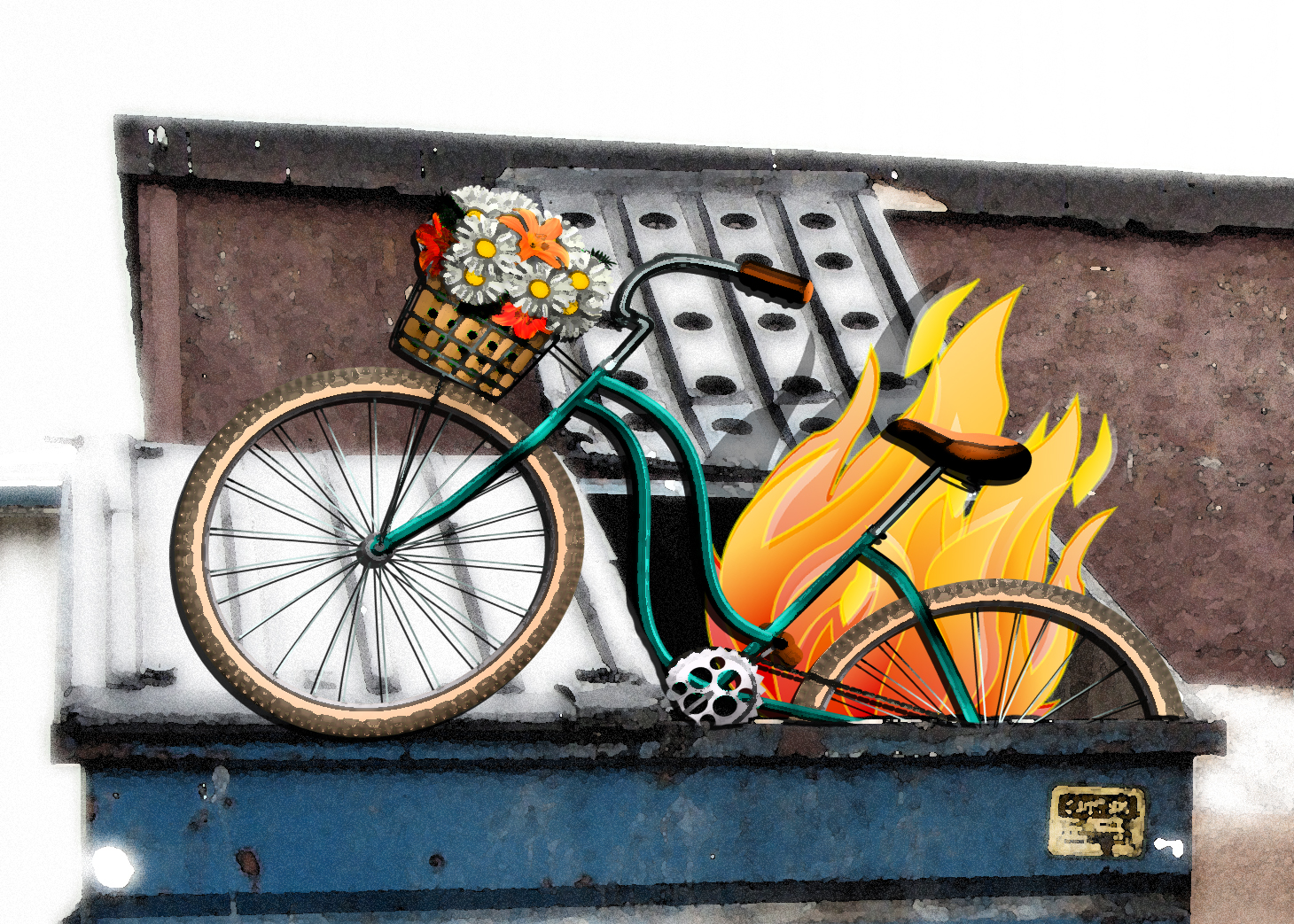
    Mountain Biking Has a Sustainability Problem

    With all the gear and gadgets, mountain biking isn’t as sustainable as it may seem

    For a sport that usually occurs in natural settings, and whose participants generally value the ecosystem and the world around us, mountain biking has a serious sustainability problem.

    Everything has an expiration date. No matter the maintenance, nothing is ever ‘for life,’ and nowhere is this truer than in the mountain bike industry. Chains stretch, tires bald or blow out, brake pads get worn down and bearings become crunchy and rough.

    Issues arise when one attempts to revive or service a bike. Many of the functions are delicate and precise, requiring fresh parts to operate smoothly. This means something as simple as a tune-up often results in cables, housing, tubes and tires being thrown away.

    Improper installation or use means that these parts break before they should and get replaced prematurely. Some people replace prematurely simply because they want improved performance.

    It’s hard to process this waste on an individual level, but walk into your local bike shop and look in the trash cans. Often, they’re filled with very un-recyclable items that are used, removed and replaced.

    Of course, the nature of the sport is that parts get worn down or broken and must be swapped. That so many of these parts get replaced prematurely or destroyed early due to user error is only part of the problem.

    With the way our world is headed, mountain biking is due for a rude awakening on the ways that it creates unnecessary waste.

    Other issues arise when we look at the bike industry and the way they market their high-end products. Often, these brands will swaddle their expensive parts in multiple layers of processed cardboard and plastics.

    Recently, I purchased a new shifter for my bike. The shifter is a small plastic pod, about the size of a mandarin orange. It arrived in a box that I could’ve fit my shoes into.

    Just because you can get away with selling drivetrain parts that cost as much as high-end electronics, doesn’t mean you need to package them like iPhones.

    If these parts were packaged in plastic bags rather than bulky cardboard, you could fit 10 times the items in a similar space, drastically cutting down on shipping material and resources.

    Usually, I give corporations a bit of lee-way with the way they package expensive items. It makes sense that they’d want to provide the customer with a sense of exclusivity for choosing to spend their hard-earned dollars on these parts. But with the news about our world’s climate becoming grimmer with every passing day, the mountain bike industry needs to step up and restructure their priorities to make the sport more sustainable.

    I’ve never met a mountain biker who didn’t care about the environment and the future of our planet. Unfortunately, when something breaks usually the whole bike is unrideable until the issue is corrected. Most of us just accept the impact of our sport as there aren’t many other options.

    With the way our world is headed, mountain biking is due for a rude awakening on the ways that it creates unnecessary waste.

  • HSU’s Waste Reduction and Resource Awareness Program offers services to students

    HSU’s Waste Reduction and Resource Awareness Program offers services to students

    By | Kelly Bessem

    School can be a mental and financial struggle, but doing your part to reduce waste on campus doesn’t have to be.  Humboldt State’s student-run Waste Reduction and Resource Awareness Program, also known as WRRAP, has been in operation for almost 30 years.

    The campus services they maintain are free to all students. These services include campus compost bins, water refill stations, zero waste supplies, events such as the clothing swap. Additionally, students can visit the Reuseable Office Supply Exchange House, where students can find free school supplies such as notebooks and writing utensils.

    Environmental science major Crystal Singletari was glad to find out that the ROSE House was there to provide an option other than paying expensive prices for new school supplies. 

    “The first two weeks of school I didn’t have enough binders to reuse and was super unorganized so I went to the bookstore, but they’re so expensive,” Singletari said.

    Rangeland resources major Ishmael Guerrero believes helping to reduce waste is good, but it is often difficult to keep track of waste reduction programs on campus.

    “I’m usually focused on school, work, or sports,” Guerrero said.

    WRRAP is set up to direct students toward reducing waste on campus and in the rest of their lives in simple ways rather than having to figure it out alone. Isabel Sanchez, a business major and natural resources minor has been working for WRRAP for more than two years. Sanchez explained how WRRAP can make waste reduction easier for students to understand.

    “It’s a network that allows for exchanges of waste reduction methods,” Sanchez said.

    Need some encouragement to live a less wasteful campus lifestyle? According to a 2015 estimation, Humboldt State University students collectively dispose of 266,314 pounds of waste on campus each year. That’s about the mass of four humpback whales. Though HSU students always seem to strive for improvement, there is still a whale of a problem.

    Check out WRRAP’s website at http://www.humboldt.edu/wrrap or email their student staff at wrrap@humboldt.edu. The program is there so that reducing waste doesn’t become another daunting school task on your checklist.