The Lumberjack


Students Serving The Cal Poly Humboldt Campus and Community Since 1929

Tag: Wildlife

  • Trespassing cannabis grows threaten natural spaces

    Trespassing cannabis grows threaten natural spaces

    By Krisanne Keiser

    The environmental impacts of legal and illegal growing operations are not well understood by many of the residents of Humboldt County, however, it is important that we are aware of how extractive industries impact the environment and all its relatives.

    “The rush mentality is what founded Humboldt County…people act like that was a long time ago and we have definitely moved on, [that] we’re this very green friendly place, we’re liberals, we’re leftists,” said Department Chair of Native American Studies, Cutcha Risling Baldy (Yurok/Hupa/Karuk). “This is how people think of Humboldt County, but what founded us is this Gold Rush and we have been rushing ever since…so after the Gold Rush ‘well, gold didn’t make us enough money, lets rush any kind of minerals that we can get’ and then after that ‘well that didn’t make us enough, let’s rush timber’…and I think we’ve been rushing since 1849.”

    Assistant professor of Native American Studies Kaitlin Reed (Yurok/Hupa/Oneida) is the author of “From Gold Rush to Green Rush.” In the book, she illustrates the correlation between the destructiveness of the Gold Rush period and the marijuana industry in Humboldt County (Green Rush).

    Reed’s presentation “Cannabis & Environmental Justice in Humboldt County,” explains that environmental injustice comes into play when settler-colonial infrastructures further dispossess and exploit Indigenous lands for capital gain.

    The marijuana industry perpetuates settler-colonial harm by damaging sensitive ecosystems and cultural areas that Indigenous peoples rely on for survival and health. Just like the Gold Rush, marijuana cultivation poses many threats to Native peoples who rely on the land and rivers for their livelihoods.

    According to Reed, trespass cultivation, in which growers illegally occupy public or tribal land to cultivate their grow sites, is the most harmful type of growing operation.

    “These types of grows are most frequently associated with the most severe environmental impacts,” Reed said.

    Trespass growers hike into the mountains and hills to clear-cut a crop site, which has a devastating impact on the sensitive biodiversity of that natural place. These growing sites are chosen for cover and secrecy, so it’s more likely that a grow sites will disturb highly sensitive bio-diverse ecosystems.

    In addition to clear-cutting, growers use and bring certain supplies that are horrible for the environment. These include soil that contains noxious chemicals, herbicides, and insecticides that are released into the earth as well as garbage, plastics, batteries, homemade invasive structures, vehicles, petroleum products, etc.

    Additionally, chemicals and other contaminants left by growers poison wildlife species like the West Coast Fisher. Reed explained that rodenticide is an over-the-counter rat poison which causes animals to bleed out internally after consumption.

    Research wildlife ecologist Mourad Gabriel led a study in 2015 that examined rodenticide poisoning in the West Coast Fisher population. It was concluded that between 2012 and 2015 the federally threatened species faced an increased number of deaths due to exposure to rodenticide poisoning from illegal pot farms.

    Reed explained that rodenticide is usually a slow death, and causes animals to be easy prey for predators. This creates a vicious cycle where the poison gets passed from animal to animal. It’s easier for predators to catch an animal that is slow and weak, and so the contamination process continues through the predator who consumed the poisoned prey.

    Indigenous communities are also heavily impacted by trespass grows. During our interview, Reed relayed a story that she heard from the Yurok tribe in which they located several abandoned trespass cultivation sites on their land.

    One site had a shocking one hundred five-gallon buckets,overflowing with human feces. Growers will often defecate in rivers, streams, and tributaries. Because marijuana cultivation requires a significant amount of water, the water levels become extremely low, magnifying the effect of those contaminates. Tribal members who consumed the contaminated water were struck with E.coli, including a Yurok Tribal Chairman.

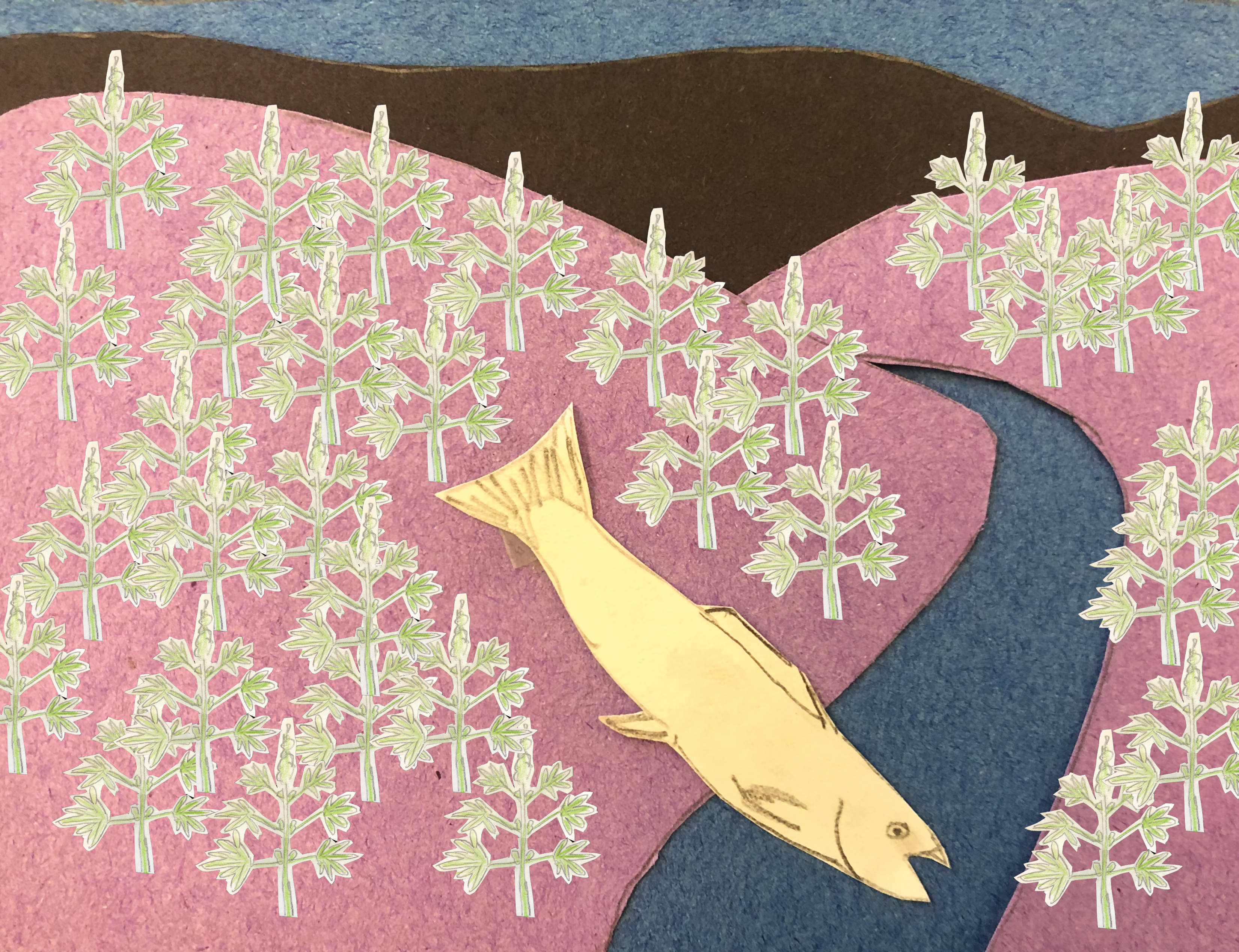
    “We ingest the water from our rivers. We’re salmon people, we depend on the fish in those rivers,” said Reed. “In a western framework, there’s a distinction between human beings and nature … settler colonial resource extraction perpetuates violence not only against the landscape but it also perpetuates violence against Indigenous bodies because we depend on that landscape.”

    Yurok tribal members are afraid to go out on the land to gather food and other cultural resources in fear of accidentally walking into a grow site, according to Reed. Typically, grow operations are dangerous and harbor some threatening people who will do what they must to protect their crops, including acting violently.

    “From a trespass cultivator’s perspective, your goal is to remain undetected. You don’t want anyone to find out what you’re doing or where you are,” Reed said. “It makes little difference if there’s an FBI agent approaching your grow or if it’s an eighty-year-old woman looking for hazelnut sticks.”

    She expounded that Indigenous peoples have many reasons to access their ancestral territory: to gather, practice ceremonies, pray and manage landscapes. However, doing so has led to tribal members being subjected to violence from trespass growers.

    “There have been stories of tribal members being held at gunpoint because they’ve accidentally stumbled upon a grow,” she continued, “I’ve had people tell me they are scared to go down certain roads in broad daylight because of trespass cultivation.”

    Today, around 60% of the marijuana grown in California is grown on public or tribal lands, and the responsibility of cleaning up environmental degradation left by growers falls to Indigenous communities.
  • Sweet Songs, Fancy Feathers, Birds Bang

    Sweet Songs, Fancy Feathers, Birds Bang

    The sex life of a bird is no simple thing

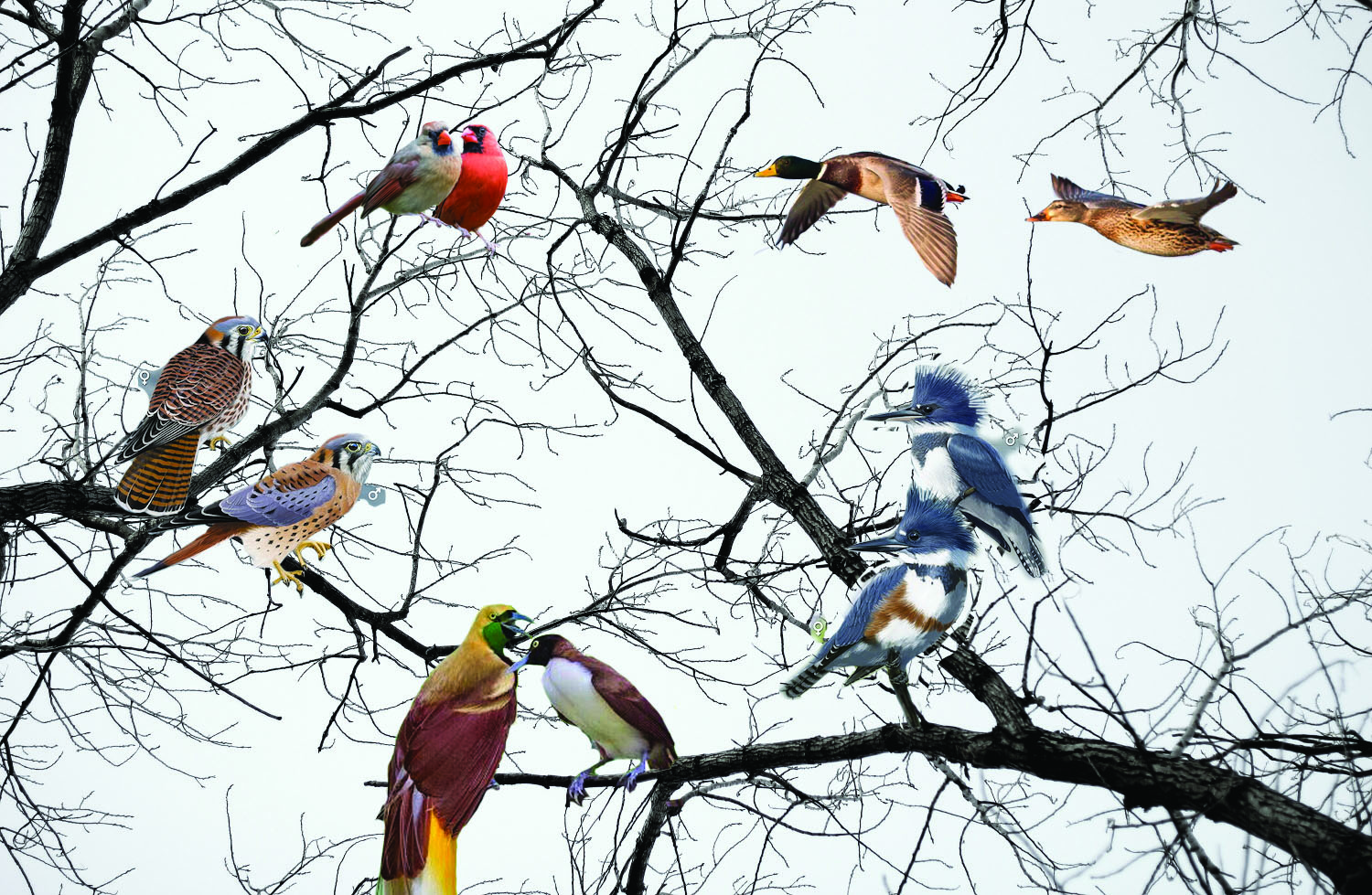
    Sex is a heck of a thing in the animal kingdom. Species of birds, insects, mammals and fish have developed a whole bunch of strategies to get laid. From mating dances to beautiful plumage to carefully engineered bachelor pads, the birds have come up with all sorts ways to strut their stuff.

    Wildlife junior Hannah LeWinter commented on how much effort birds put into reproducing. She remarked on the McGregor bowerbird’s tower—a three-foot-tall structure made of carefully placed twigs, attesting to the bird’s dedication.

    “When we think of animals, we assume they do the basic things like mate and get food and make shelter, but they really do have complex [behaviors] too,” LeWinter said. “They make these intricate structures to impress females to say that they are the best suitors but those structures serve no purpose besides attracting a mate.”

    “We think of animalistic sex of doing it only because you need to reproduce, but there are these animals that create these gestures like a pebble or a structure or a dance.”

    Hannah LeWinter

    Commitment to the craft is just the first step of courtship. The picky female bowerbird inspects her suitor’s structure, carefully judging sturdiness of the construction before joining the male on the forest floor. Then, the show really starts.

    The male bowerbird possesses the ability to imitate sounds and begins a showcase of what he’s learned. His voice can emulate everything from birds and animals in the forest to the sounds of human civilization.

    Once she’s satisfied with his performance, the male begins his dance. A chaotic shuffle from one side of his tower to the other, darting towards the female while flashing a bright orange haircut at her. Once he’s done with his groove, she submits and they do their thing.

    “We like to think we’re the only people or the only species who do that,” LeWinter said. “We think of animalistic sex of doing it only because you need to reproduce, but there are these animals that create these gestures like a pebble or a structure or a dance.”

    The McGregor bowerbird works every year to maintain his tower, but there is no expectation in the species to mate with the same female every year. Jeff Black, a wildlife professor at HSU who studies birds, published a collaborative book with 20 other ornithologists titled “Partnerships in Birds: A Study in Monogamy.”

    “We asked the question, ‘How special are bird partnerships or pair bond?’” Black said. “We asked, ‘How long do mates stay together?’ ‘Are they really faithful?’ ‘Do the faithful ones fare better than the ones that alternate and are less monogamous?’”

    The answer: it depends. Black and his fellow ornithologists quantified bird fidelity on a sliding scale ranging to very faithful to not at all faithful. They also investigated the behaviors between social pairs—pairs who spend their time together raising the young, foraging and nesting together—and genetic, or mating pairs.

    “Birds lay their eggs in a basket,” Black said. “When you look at all the 10,000 different types of birds, some birds even though they’re monogamous, when you look at their babies, the genes come from someone else.”

    “When you look at all the different studies, you can plot out how faithful they are. Swans are 100% faithful, the jays would be about in the middle and other species are just having sex everywhere.”

    Jeff Black

    Faithfulness or lack there of may have a couple of purposes, although the hypotheses are not totally fleshed out. One hypothesis is that, if a female searches for a new male mate, she may be looking for a more fit male than her social partner, and engage in what Black called extra-pair copulation.

    HSU River Ecologist Alison O’Dowd explained fitness is a measure of the ability for an individual to pass on their genes. Similar to natural selection, sexual selection is when a female looks for certain characteristics in their male partner, ranging from vibrant feathers to well constructed towers to perfectly executed dances.

    Black endorsed fidelity in birds. He said in geese and swans for example, more faithful pairs are more likely to successfully reproduce. Their offspring are also more fit for when they’re looking for a mate of their own. There may be a case for faith yet.

    “When you look at all the different studies, you can plot out how faithful they are,” Black said. “Swans are 100% faithful, the jays would be about in the middle and other species are just having sex everywhere.”

  • Voices of students in STEM

    Voices of students in STEM

    Travis Farwell is a Wildlife major with an emphasis in Conservation and Management. Farwell is back at HSU after taking a semester off to participate in a three-month field study working to identifying and track birds through bird banding. Bird banding is the practice of tagging birds with a plastic or metal band in order to number them so that they can then be tracked and studied for different research projects.

    The Wildlife Techniques class here at HSU helped to prepare Farwell for the work he did during the study.

    “I learned a lot just from the Wildlife Techniques professor, he’s been banding for a long time,” said Farwell.

    Farwell ended up processing and banding over 200 birds, so the techniques he learned in his Wildlife class really ended up benefiting him.

    “We would wake up at 4-something in the morning every day and set up everything so that we could catch birds, and it was a huge, migration that goes through a specific area right on this river,” said Farwell. “We caught what I believe is a threatened species, the Willow Fly Catcher.”

    During their study, they found the threatened birds nesting within a specific invasive plant that a conservation group was working to remove from the area. Because the field study was able to identify the birds as a threatened species, they were able to stop the removal of the plants to allow the habitat to remain for the birds.

    Alex Jamal
    Alex Jamal, a wildlife major, plans to join the Peace Corps after graduating. Photo credit: Kyra Skylark

    Alex Jamal is also a Wildlife major with an emphasis in Conservation and Management in his second year. Jamal is in the beginning of his time here at HSU and he is excited to learn the situational protocols and how to interact and handle the animals he will work with.

    Jamal has learned some of the basics that he hopes to carry with him as he moves on to harder classes, and in his future career after he graduates.

    “The amount of persistence you need to put into it and the amount of efficiency and protocol that you need to take within every step of what you are doing, that is something that I hope to take into whatever field I go into, just that type of consistency,” said Jamal.

    After leaving HSU, Jamal hopes to join the Peace Corps to help educate individuals on the reality of what is happening to the environment, and how that is affecting the animals.

    “I would like to go out and do public education, just let people know about how severe everything is becoming and what we could do for the species that we still have here,” said Jamal.

    Daisy Valencia
    Daisy Valencia, a general biology major, will be apart of a directed study with Prof. Steele where they will be researching gene mutations and antibiotic resistance. Photo credit: Kyra Skylark

    Daisy Valencia is a General Biology major that hopes to pursue a career in Veterinary Medicine after she graduates. Valencia is currently about to start a directed study with one of her professors, John Steele, where they will be looking into gene mutations.

    Valencia took professor Steele’s Introductory Biology course last semester, which spiked her curiosity on gene mutations and antibiotic resistance.

    “We looked at bacterial resistance and we tested multiple water resources here in Humboldt County, like the Humboldt Bay and Allen’s Marsh, we found that there was some antibiotic resistant bacteria in the water,” said Valencia.

    After learning about the antibiotic resistant bacteria, Valencia wanted to know more about antibiotic resistance.

    “That got me really interested in studying antibiotic resistance, how we can harvest it from natural resources and develop antibiotics that can help us battle antibiotic resistance, which is a really big problem now,” said Valencia.

  • Who Knew @ HSU? : The Wildlife Museum

    Who Knew @ HSU? : The Wildlife Museum

    Did you know the wildlife building has over 15,000 animal specimens. In this installment of Who Knew @ HSU? we take a look at the Wildlife Museum which offers a way for students to research animals close up.

    Video by Alex Hasenstab

  • This week in science (Jan. 25 – Feb. 1)

    This week in science (Jan. 25 – Feb. 1)

    By | Claire Roth

    “When we became the climate changers” Illustration. | Claire Roth

    Climate – When we became the climate changers

    When it comes to conversations surrounding climate change, there seems to be more agreeing to disagree than flat-out agreement. It’s a strange phenomenon for a topic having to do with the existence of our planet as we know it. A group of scientists recently set out to create a starting point for this pivotal discussion, effectively creating a timeline for climate change and its origins. The group published an article in the American Meteorological Society outlining estimations of climatic variation since before the industrial age. The goal of this was to contain better conversations of what is considered to be a “normal” climate for our earth within a definition of where the age of industry began. The group was spurred into action after analysis of ice cores displayed a spike in carbon dioxide emissions much earlier than the previously agreed upon beginning of industry. This means humans were affecting the global climate far earlier than originally believed. Research on this topic could prove hopeful in political spheres as well, helping policy makers to better perceive humanity’s impact on the planet.

    Source: BBC, American Meteorological Society

    “>0.001 percent human, ~0.999 percent pig” Illustration. | Claire Roth

    Cellular – >0.001 percent human, ~0.999 percent pig

    A new type of fetus has crossed the known boundaries of what is human and what is pig. Researchers at the Salk Institute of Biological Studies in San Diego were recently successful in their efforts to grow human tissue within a pig fetus. Human cells were inserted into a pig embryo, which was then implanted in a sow to attempt growth for 28 days. The purpose of this endeavor is to eventually find a way to propagate human organs within another animal. Many obstacles lie in the way between this team of scientists and success. Some of these obstacles include questions of morality by outside entities, a five-month difference in gestation time between humans and pigs and also the fact that the majority of embryos in the study did not make it even close to existing for the 28-day goal of the study. The scientific importance and significance of the study persists in the fact that healthy, available organs could one day save the lives of those in need of transplants.

    “Cat, Ph.D” Illustration. | Claire Roth

    Source: BBC, Cell Journal

    Wildlife – Cat, Ph.D.

    There is one question that can oftentimes make or break any relationship: are you a dog person or a cat person? If you’re a dog person and your first argument is to claim canine intelligence superior to feline intelligence, think again. Researchers at Kyoto University in Kyoto, Japan subjected cats to a series of harmless tests of intelligence. They found that cats are conscious of past enjoyable experiences, such as where a tasty treat was located. This means that cats, like dogs, may be able to associate certain human sounds and gestures with specific meanings.

    Source: BBC, Behavioural Processes Journal

    “Saccorhytus “R” Us” Illustration. | Claire Roth

    Evolution – Saccorhytus “R” Us

    Scientists have pinpointed the earliest known human ancestor. One thing is for certain: you are guaranteed to look nothing alike, unless you happen to be around 540 million years old and resemble an alien football. Researchers have identified fossilized remains of a millimeter-sized creature known as Saccorhytus that is currently the earliest known placeholder on the evolutionary timeline of humanity and numerous other species of vertebrates. Saccorhytus likely spent its days on the ocean floor hanging out between grains of sand, consuming lifeforms smaller than itself. Perhaps it also contemplated the millions of years it would take for evolution to take it through the stages of being a fish and into the millions more years it would take for evolution to finally craft it into a human.

    Source: BBC, Nature Journal

    “Plant some pollination” Illustration | Claire Roth

    Ecology – Plant some pollination

    A sharp decline in bee populations has resulted in many farmers resorting to hand-pollination, such as apple farmers in China. However, a recent international study may hold part of the key to saving the world’s key pollinators, maintaining agricultural wellbeing and improving the ecological health of our natural landscapes. Researchers from global locations studied the effect of removing exotic plants from secluded mountaintop landscapes on the success rate of pollination in those areas. They found that areas where there were more native plants displayed a wealth of pollinators, flowers and fruit. This was linked to the possibility of an interconnected web of life in these areas and stands as a testament to the importance of ecological restoration efforts around the world.

    Source: BBC, China Dialogue, Nature Journal

  • Who Knew? at HSU: HSU Marine Laboratory

    Who Knew? at HSU: HSU Marine Laboratory

    In this installment of Who Knew at HSU, we take an inside look at the Humboldt State University Marine Laboratory in Trinidad, Calif.  The lab is used for research in marine biology, fisheries and wildlife. It is also open for the public to enjoy.

    Video by: Alexandria Hasenstab

  • This week in science Jan. 16

    This week in science Jan. 16

    Graphic Illustrations and Written By: Claire Roth

    Politics – A glimmer of hope

    Perhaps one of the most hopeful developments so far in the world of 2017 science is President-elect Donald Trump and his affiliates’ acknowledgement of climate science. Though the terms ‘Trump,’ ‘science,’ and ‘hopeful’ rarely fit within the same sentence, this recognition stands in stark contrast with much of what President-elect Trump said in the past concerning climate science oftentimes publicly denying its necessity and the existence of climate change in general. BBC News reports that Trump’s “about-face” on these issues came gradually after his election and that he now is softening his opposition to key environmental steps such as the 2016 Paris Agreement.

    Source: BBC News

    Wildlife – Merging territories

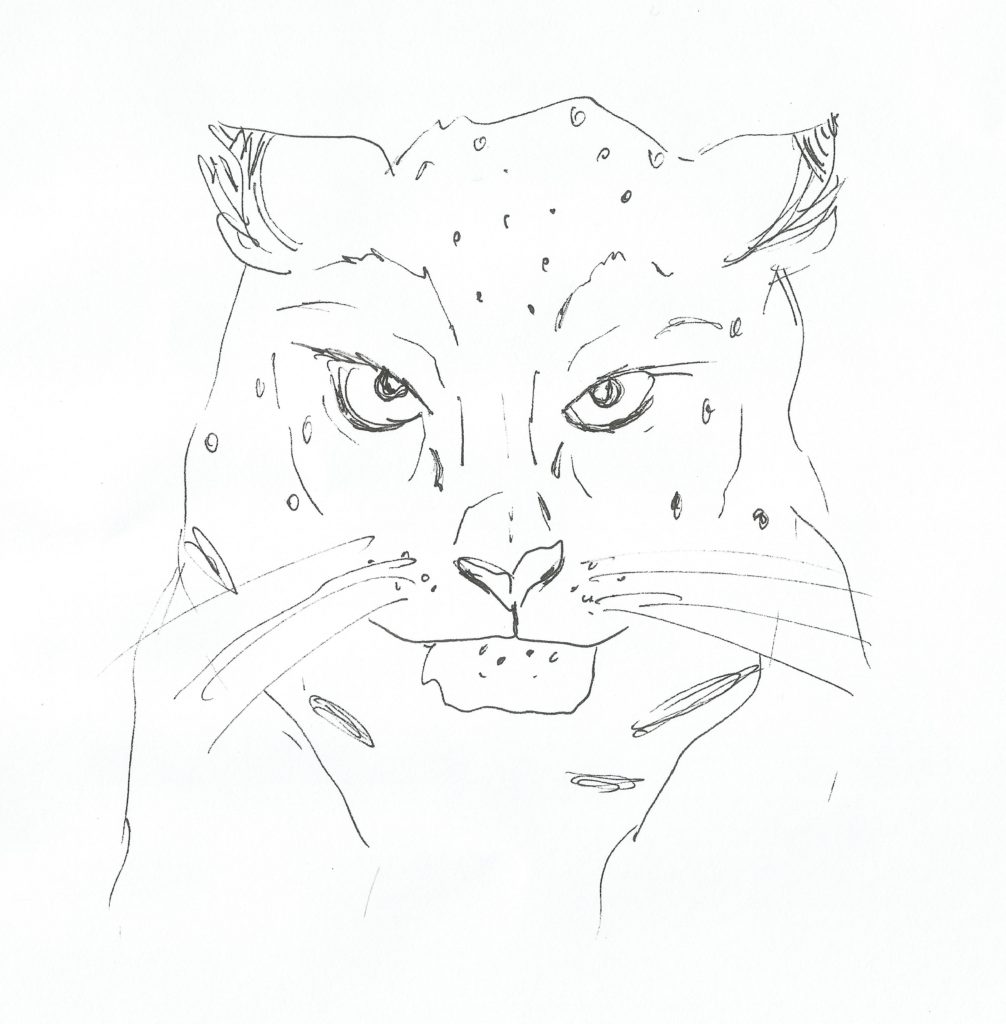
    Shifting treelines and warming temperatures as a result of climate change, have created a possibly troublesome overlap of territories between common leopards and snow leopards on the Tibetan plateau. The phenomenon had never beforehand been observed due to the big cats’ differing habitat needs, but wildlife scientists point to a warming climate as the culprit. Common leopards, usually residing in lower elevations than snow leopards, seem to have begun their ascent into snow leopard territory as temperatures continue to rise and treelines recede. This poses an issue to the already endangered snow leopard population.

    Source: BBC News

    Wildlife – Cooling caribou

    Many of us have a friend who’s dead-set on reducing their footprint on the global  climate, but what about a friend who’s reducing their hoofprint? As caribou roam their tundra home and munch on darkly colored shrubs, space is opened up for grasses that are oftentimes more lightly colored and therefore absorb less heat energy than their darkly colored shrub counterparts. Research suggests that the widespread amount of caribou grazing and the resulting decrease in retained heat energy on the earth’s surface has cooling effects on the ecosystem.

    Source: Anthropocene Magazine

    Food – Staying spicy, staying alive

    Researchers at the University of Vermont recently found a correlation between spicy pepper lovers and staying alive longer. A component present in peppers known as capsaicin is thought to be helpful in helping your body maintain a healthy vascular system and overall weight. According to a study by the University of Vermont there is a 13 percent increase in lifespan of those who enjoyed peppers during their lifetime.

    Source: Science Daily

    Language – Swearing by science

    If someone has ever told you that you need a swear jar, they’re probably right. However, science has given those of us who are “swear-happy” a new excuse to say f*** yeah. A team of psychologists at the University of Cambridge found that the more you cuss, the more likely you are to be telling the truth. The study found that the inclusion of swear words in one’s everyday jargon shows that honest beliefs are not being censored. Additionally, the language patterns of frequent swearers were studied and resembled the language patterns having to do with telling the truth.

    Source: Science Daily

    Wildlife – Moody worms

    “Ah, yes, I remember my moody teenage years fondly,” said no one ever. It turns out that humans are not the only animals that experience those ups and downs associated with adolescence. The Salk Institute for Biological Studies found that the brain chemistry of teenage roundworms causes them to act more irrationally than adult roundworms, exhibiting behavior such as taking their sweet time when seeking out food sources or choosing a direction to travel in.