The Lumberjack


Students Serving The Cal Poly Humboldt Campus and Community Since 1929

Tag: wiyot

  • The blood quantum conundrum

    The blood quantum conundrum

    by Matthew Taylor

    Over a century ago, two young women hid in the vegetation alongside the bay waters surrounding the small island of Tuluwat. Lying just off the coast of Eureka, Tuluwat is also known as Jaroujiji in Soulatluk, the language of the Wiyot Tribe. Those women’s English names were Matilda James and Nancy Spear. They were two of the few survivors of the Feb. 26, 1860 Wiyot Massacre. The massacre took place the night of the tribe’s most sacred of holy days, the World Renewal ceremony. Over 200 Wiyot people died that night at the hands of white Humboldt settlers. Nancy Spear and her sister Matilda James are my ancestors. I am a descendant of the Wiyot people, and yet I’m also white and thus experience white privilege.

    When my mother was little, my grandpa would often take her to the local powwows here in Humboldt. My grandpa is a registered member of the Wiyot Tribe and carries within him the history of our family’s struggles – a long history of generational trauma, mental illness, and alcoholism.

    My grandma, a non-Native person, was embarrassed to go to these events and cultural celebrations. She felt that because neither her husband nor children looked Native enough, they didn’t belong in that space. My mother and I grew up completely separated from that part of our family. Even today we are reluctant to reach back out to the tribe, not because we want government benefits or even full membership, but because we wish to gain what our family has lost – culture, history, heritage.

    Eddie Carpenter, a fellow reporter at the Lumberjack and registered member of the Hoopa Tribe, has had similar difficulties as a white-assumed Native person. Carpenter prefers not to be labeled as white-passing due to the term’s colonial history.

    “Despite being a tribal member I get mistaken a lot for being a white person,” Carpenter said. “As a child I kind of got bullied a little bit for being mistaken for that identity. Most of it was little microaggressions such as, ‘you don’t look native to me.’”

    We do differ in some experiences, though. Unlike Carpenter, my grandpa and his sister are the only members of my family who still make the federal minimum “blood quantum.” Also unlike Carpenter, I didn’t get the opportunity to be raised within my culture.

    “White-passing is an outdated term,” Carpenter said. “Because it is based on the ‘one drop rule’ of the Black/white binary categories within U.S. politics.”

    There is a lot of debate within Native American communities on the usefulness of blood quantum minimums. Some believe it helps to deter white people with minimal Native ancestry from taking government benefits that they often don’t need, while others, like Carpenter and I, believe that it is a harmful colonial system that has historically erased – and continues to erase – the existence and power of Native people. However, there is no doubt that Carpenter and I experience significant privilege due to our perceived whiteness. This is a truth we do not deny, and one that we try to actively be aware of when in Native spaces.

    “I do not self identify by colonial tools from imposed social structures that were used to conquer and divide my people from the inside out,” Carpenter said.

    I don’t wish to take up space that is not mine to take. But I don’t wish to deny a history that my family has nor reject a people, the Wiyot people, that are part of me.

    The experiences and connection that the Wiyot people have to this land is represented within my family. We are still healing from our generational trauma and we are still deeply in love with the land we now call Humboldt. In the years to come, my hope is to bring my family back into the community and to use my resources, connections and skills to give back to the tribe that gave me my mother, my grandfather, my great grandmother, and my life.
  • Gutswurrak official naming ceremony

    Gutswurrak official naming ceremony

    by Ione Dellos

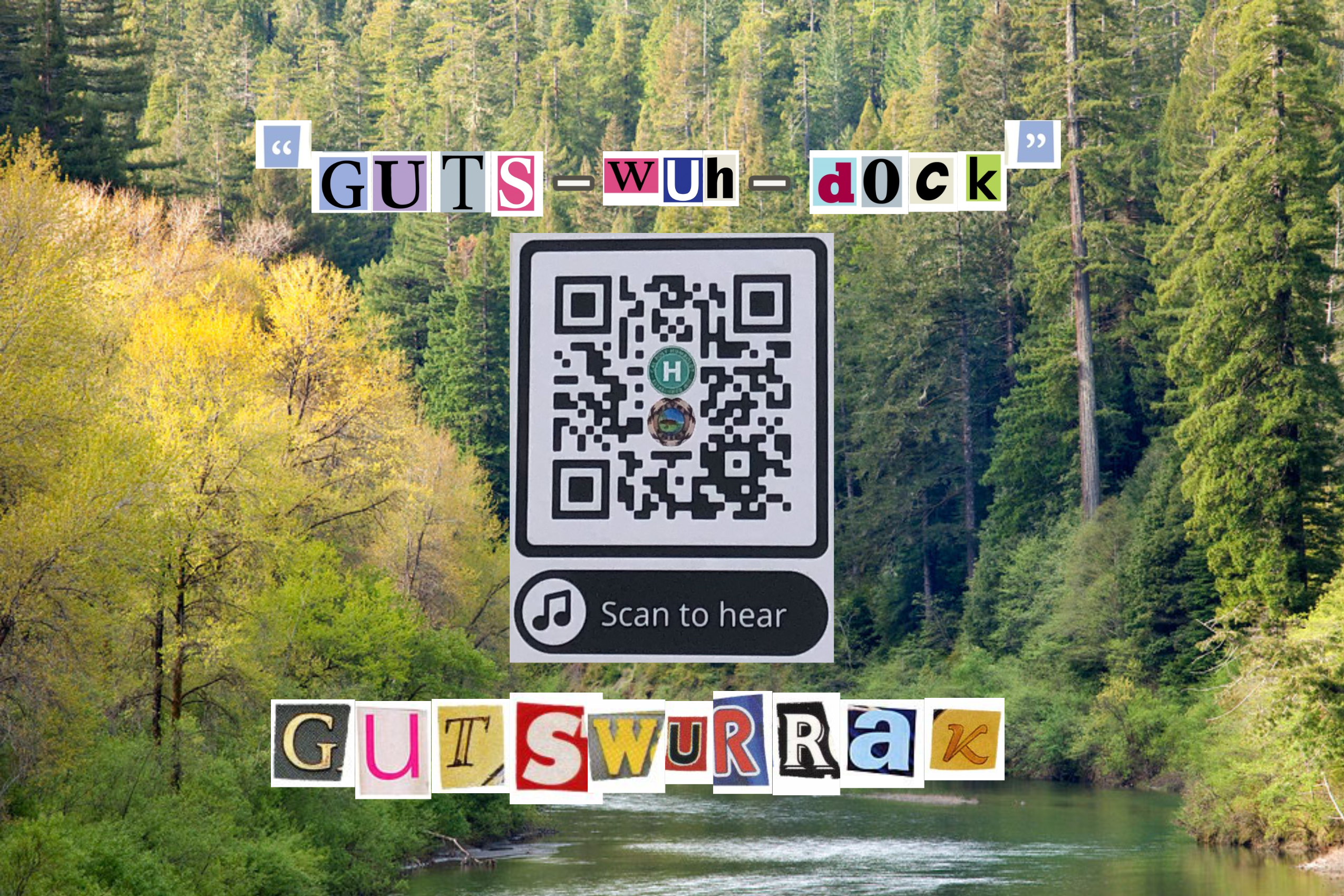
    On Wednesday, April 20th, the University officially renamed the Student Activities Center to the Gutswurrak Student Activities Center in a ceremony at the building located by the UC quad. Pronounced “guts-wuh-dock”, it is the Wiyot word for “many people gather”. The name for the student union was originally suggested by the Wiyot Tribe, led by Wiyot Tribal Chair Ted Hernandez. He was also a guest speaker at the event, and he expressed his gratitude to the University and to the students, who pushed the renaming effort.

    The event started right at noon, with opening remarks from Wendy Sotomayor, director of the SAC, and Micheal Moore Jr., associate director of the SAC, and the two read Humboldt’s new formal land acknowledgment. Working with the College of the Redwoods, Humboldt has developed the following land acknowledgment:

    “We acknowledge that the land on which Cal Poly Humboldt is located in the unceded territory of the Wiyot people who continue to live and thrive today. It is surrounded by the traditional, ancestral, and present homelands of several indigenous nations including the Hupa, Karuk, Mattole, Tolowa, Wailaki, and Yurok that make up Humboldt County.”

    Following the land acknowledgment, Vice President Jason Meriwether spoke about coming together with the local Native tribes, and on the importance of a name.

    Ted Hernandez gave his remarks after Meriwether’s speech and welcomed students and staff members alike into his home. He offered his blessings to the building, not just to the students who came to the ceremony, but for all students in the future.

    Adrianne Colegrove-Raymond, special assistant to President Jackson, unveiled a new special feature of the building, which is a QR code on the wall that links to a recording of Wiyot youth and adults pronouncing “gutswurrak”. Anyone who visits the SAC can now scan the QR code with their phone and hear the recording of the Wiyot word.

    It was a relatively small ceremony, although, despite the small size of attendees in the SAC, the speakers definitely filled the room with their presence. The event was originally set to be held in the SAC quad, which might have increased the number of students that attended, but was moved indoors to the SAC West Lounge due to the rain. The ceremony only ran until about 12:30, as the speakers were done giving their presentations at that time. Students filtered through the small crowd like minnows, darting from space to space to grab a complimentary t-shirt and a handful of free food on their way out.

    The renaming effort is part of Humboldt’s effort to bring Native histories to the forefront of the University, which has not been the case in the past. The University is attempting to build new bridges and improve their relationship with Native communities through community activities like the SAC renaming.

  • Breaking: Planning Commission Rejects Wind Farm Project

    Breaking: Planning Commission Rejects Wind Farm Project

    After three meetings, Humboldt County Planning Commission comes to Terra-Gen wind farm conclusion

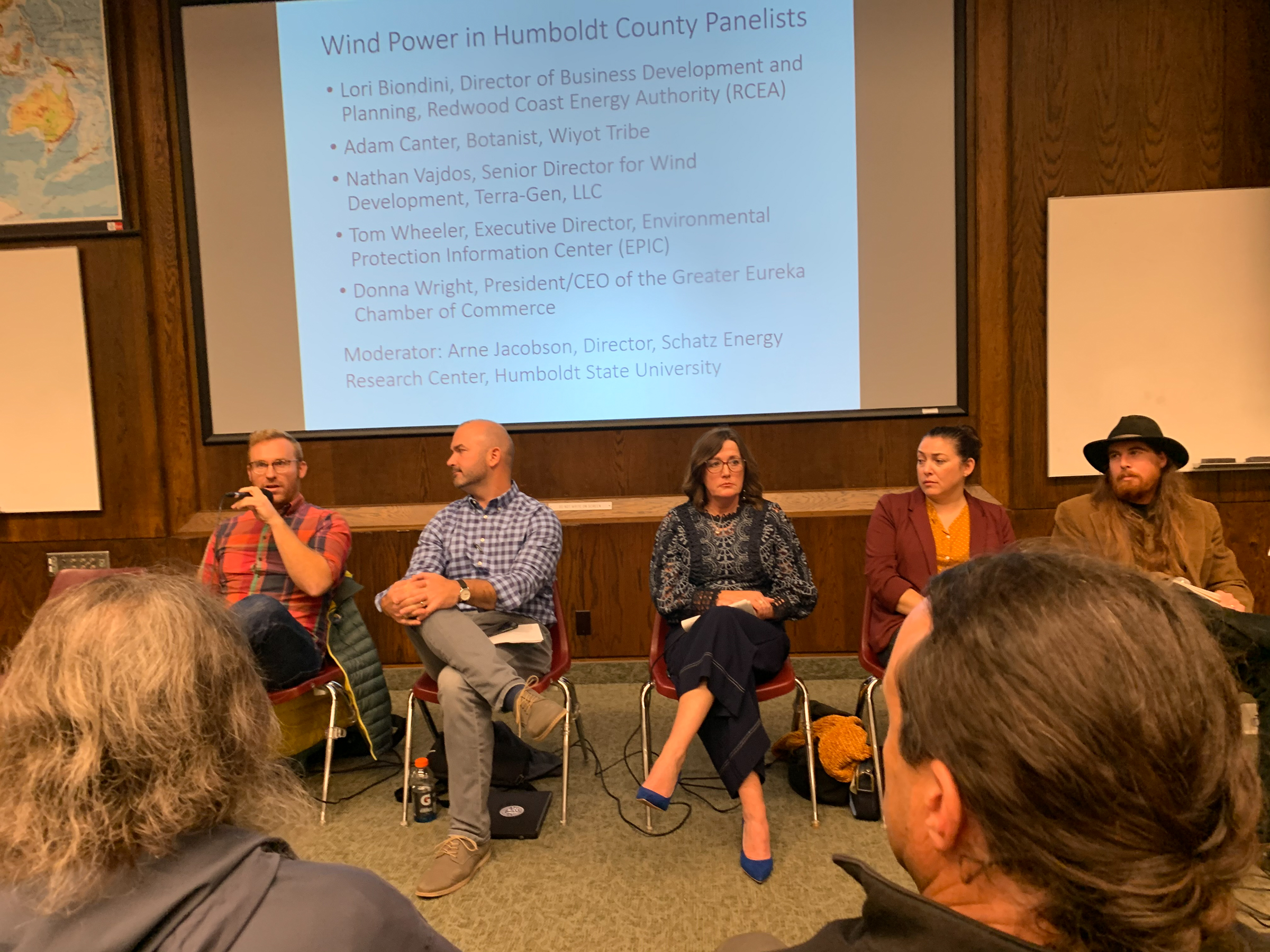
    In a 4-2 vote on Thursday evening, the Humboldt County Planning Commission rejected permitting for the Humboldt Wind Energy Project, a proposed plan to bring 47 Terra-Gen wind turbines to Bear River and Monument Ridges.

    The turbines would have been capable of producing half of Humboldt County’s energy needs.

    The Planning Commission held two previous meetings this month before reaching a decision. Both previous meetings and Thursday’s meeting saw huge crowds.

    The planned wind farm site was located in a sacred Wiyot prayer site and in a pristine wildlife environment home to several endangered species that would be impacted by the turbines.

    The opposition to the project cited visual pollution, an incomplete environmental impact report and inadequate mitigations as reasons to reject the plan. Project supporters cited an urgent need to reduce fossil fuel burning and reinforce the county’s energy resiliency.

    See more information on the project here.

  • Coming Home: Sacred Land Returned to Wiyot Tribe

    Coming Home: Sacred Land Returned to Wiyot Tribe

    After nearly 160 years in the hands of Eureka, Tuluwat, briefly known as Indian Island, returns to its rightful owners

    Wiyot Tribal members and Eureka community members were joyful, yet solemn, at the Eureka City Council meeting to officially return Tuluwat Island to the Wiyot people.

    Wiyot tribal elder Cheryl A. Seidner blessed the room in a prayer of welcome. In the prayer, Seidner welcomed people from the East and from all directions as she turned in a circle, speaking in her native language. The crowd was silent and respectful, and tribal members let out emotional “ho’s.” Seidner thanked everybody in the audience and asked them to rise.

    Wiyot tribal elder Cheryl A. Seidner speaks during the public comment section of the city meeting to return Tuluwat Island to the Wiyot Tribe while she is surrounded by supporters and tribe members at the Adorni Center in Eureka on Oct. 21. | Photo by Thomas Lal

    “This is something I’ve always wanted since I was a kid,” Seidner said. “I thought the island was always ours, not anybody else’s. So we came together and said, ‘Let’s do this, let’s make it ours.’ So I decided to be bold and ask the new mayor to give us the island they owned.”

    In 2004, 40 acres of Tuluwat were returned to the Wiyot Tribe. Oct. 21 marked the return of the remaining 202 acres. The tribe has been working with the City of Eureka for the last five years to make this happen, and this action marks the first step to repairing the damage caused to the tribe that began 100 years ago.

    Cutcha Risling Baldy, Ph.D, the Native American Studies department chair at Humboldt State University, delivered one of many moving speeches to the hundreds of assembled community members. Baldy talked about the future of the Wiyot people and how she knew, one day, they would come back.

    “I realized that native people were always making plans for our future and that we never gave up on our land or where we came from,” Baldy said. “That is the story I want people to know. I know that the story of Tuluwat, which people often refer to as Indian Island, has been one of a massacre for most people, but for me it has only been a place for world renewal.”

    Baldy once read a book about stories gathered from people about Tuluwat. One particular story was about a woman who was stuck in the mud after the violence on the island. While it may be a story of sadness, Baldy said it was a moment of strength and hope. The woman sang a mourning song because she knew she had to send her tribe off properly. Her strength showed she knew her kin would one day return to Tuluwat.

    HSU anthropology professor Gordon Ulmer acknowledged the significance of the day. Ulmer said the day should be a celebration of time immemorial, and that it displayed the vibrancy of the Wiyot tribe, despite the dark history.

    “What we see here is a very vibrant thriving community that lives in the shadow of genocide,” Ulmer said. “People remember the genocide, but what is rarely acknowledged -or at least to a much lesser extent- is that people are still here, the Wiyot are thriving. There’s a lot to celebrate here.”

    Eureka Mayor Susan Seaman began official proceedings by declaring the day as a moment in time that should forge strong bonds going into the future to create a long sought-after vision. Seaman prepared to take a vote from the council people while tension in the air grew as the crowd waited.

    “I move to authorize the transfer of Tuluwat Island to the Wiyot Tribe and I authorize the vote,” Seaman said.

    The Eureka City Council spoke on behalf of the motion, each member contributing a unique perspective to the magnanimity of the event. HSU Lecturer and Eureka City Council Member Natalie Arroyo wasn’t physically present, but she FaceTimed in and a representative shared a letter penned by her about Tuluwat.

    “This is the first known transfer of land from a city to a tribe of this kind,” Arroyo said. “We are all responsible to do what we can to actively participate in healing. I will be so bold to say under current conditions Eureka owns the land, but it was never truly ours.”

    The tension began to ease as Seaman’s voice fell over the crowd.

    “The vote to return the Tuluwat island to the Wiyot Tribe was unanimous and the motion passed,” Seaman said.

    Applause erupted from the audience. The crowd stood on their feet to clap and shout in joy.

    Seidner invited her family to the front of the auditorium to sing a song to the people gathered in the room. Seidner welcomed everyone in the audience and invited them to sing the song “Coming Home.”

    “I know that our ancestors knew this day would come,” Baldy said. “I think that we need to consider it an opportunity to think about our next steps in the future. People stand up and ask me, ‘What can I do?’ And I have one answer for them: you can start by giving all the land back. And now we know it’s possible.”

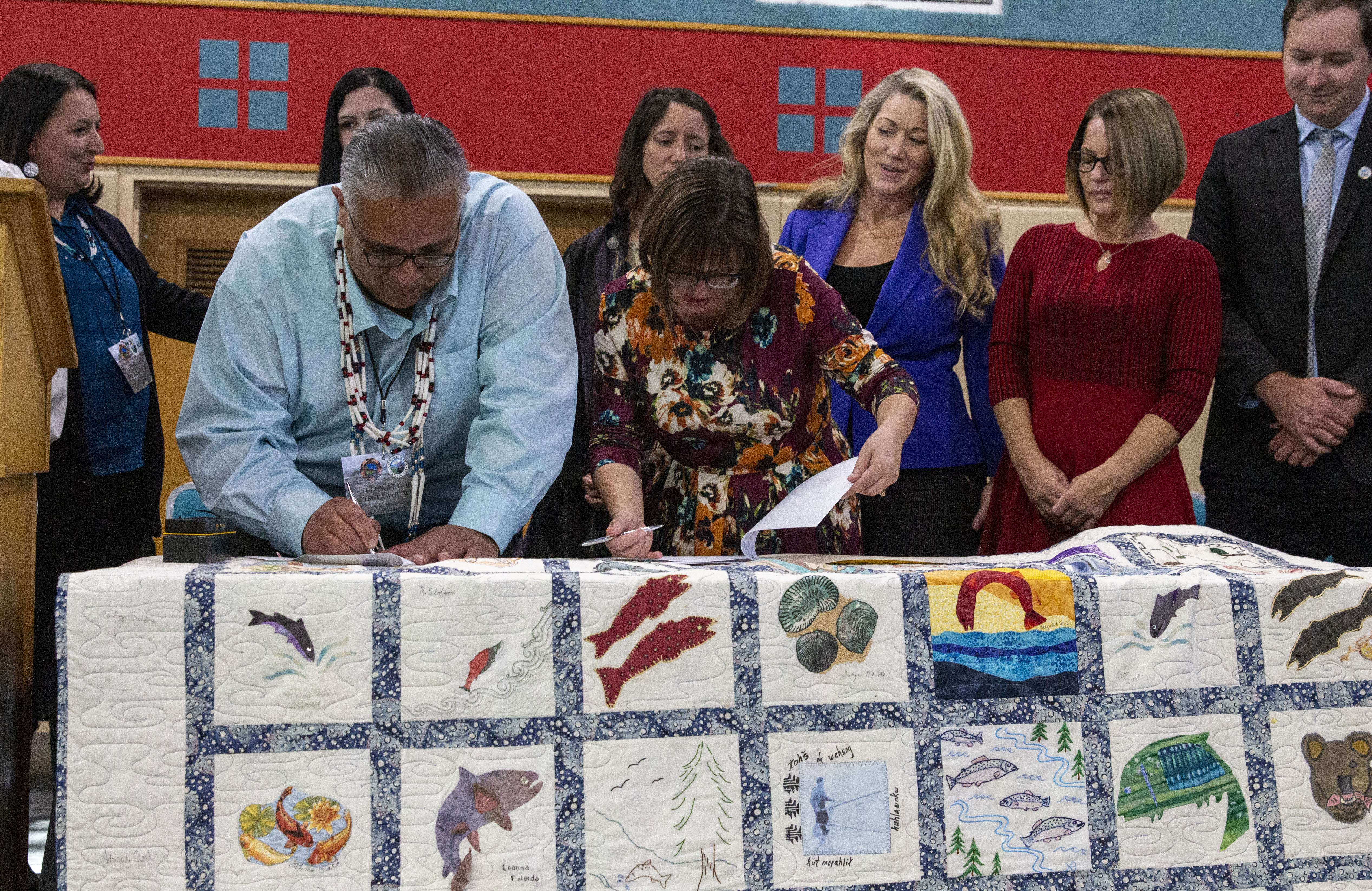
    The signing of the deed marked the end of the meeting. Seidner placed a quilt representing all who could not be present on the table, and the council people huddled around to officially return Tuluwat to its ancient owners.

    Wiyot Tribal Chairman Ted Hernandez and Eureka Mayor Susan Seaman embrace after signing the papers to officially return Tuluwat Island to the Wiyot Tribe at the Adorni Center on Oct. 21. | Photo by Thomas Lal

    Baldy concluded her address with honest praise. With the Wiyot land reparation, the people in the room could now envision a radical future.

    “A future with no dams, a future with salmon that are healthy, a future with our children that are singing, a future where we are dancing all the time,” Baldy said. “I know we’ve seen it and I know we’ve felt it, and I look forward to how amazing that is going to be. And I know that we can do it, and I look forward to how everyone in this room is going to make that happen.”