
The Lumberjack


Students Serving The Cal Poly Humboldt Campus and Community Since 1929

Tag: women in politics

  • She can breastfeed her child and serve the general public

    She can breastfeed her child and serve the general public

    She can run for office, but she can’t breastfeed her child in public without sexualization and aggressive backlash.

    It’s not a new argument or idea that the stigma behind women breastfeeding in public needs to change. If women are expected to be the primary caregivers of their children, we should respect their power in politics as mothers.

    Women are changing the way the public views their everyday lives, and they’re starting with their campaign ads.

    Krish Vignarajah, previously Michelle Obama’s policy director, is running for governor of Maryland. She is the only woman running in Maryland’s Democratic primary for governor, and she is presenting her motherhood and womanhood as one of her biggest assets.

    “I am no man,” she said in her campaign ad while breastfeeding her child. “I am a mom. I am a woman, and I want to be your governor.”

    Right behind Vignarajah is Kelda Roys, a Democratic candidate running for governor of Wisconsin. She too has been open about her daily life and responsibilities as a mother in her campaign ad where she discusses her work on banning a harmful chemical from baby bottles and sippy cups in the state of Wisconsin while breastfeeding her child.

    Roys said the moment was unscripted and she decided to keep it in the final cut. She also said she is used to the negative backlash she has received in response to the video.

    “You know what’s funny?” Roys said in a Fox article. “As a woman who has been in public life, I was the head of NARAL Pro-Choice Wisconsin and I was in the Assembly — I’m used to that kind of really disgusting, sexist language.”

    In general, however, Roys said she was met with positive reactions from men and women.

    These women should not be met with cringes or shaming. Their openness and transparency should be met with applause, admiration and support. Both these women are trying to express the need for women, including mothers, in politics.

    “This is my life,” Vignarajah said, as reported in a Baltimore Sun article. “It’s what moms have been doing forever, juggling work and getting things done. When women serve, you have better outcomes.”

    Both of these women have been met with negative backlash in YouTube comments that imply extremities such as exploiting children and womanhood for political gain.

    A user by the name of Barron Trump commented on the Vignarajah ad.

    “You literally stole a Lord of the Rings quote. Nobody cares if you have boobs and children. You’re literally doing what women should do, and have been doing, for 10,000’s of years.”

    A user by the name of Scalene Bandito commented on Roy’s video.

    “What is the point of aggressively breastfeeding? Congrats on your plastic reform bill or whatever. Should I release a campaign ad where I just start shaving right in the middle of it? I think I’d beat you!”

    Promoting family values is not a new technique to political campaigning. Pushing their gender and roles as mothers is strategic for their campaigns.

    If you can sexualize the act of breastfeeding, allow them to normalize it. If you can allow male candidates to promote their family values, allow them to normalize their maternal values as benefits.
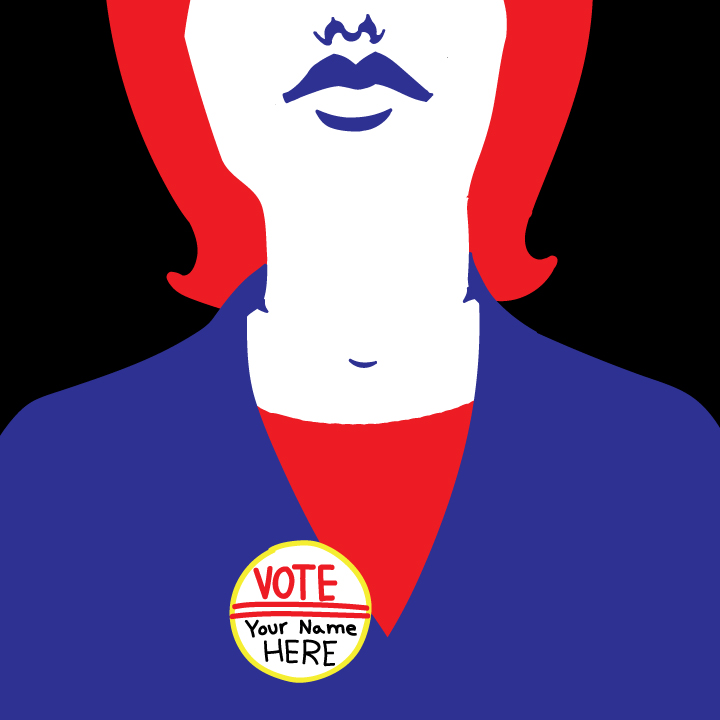
     

  • Year of the women 2.0

    Year of the women 2.0

    2018 is looking to be another year for woman in politics. Why stop now?

    1992 has often been declared as the last “Year of the Woman” for politics.

    According to the United States House of Representatives History, Arts & Archives website, “a record 71 California women were nominated to run in the fall elections for federal and state offices” in 1992.

    Now, according to Politico, a whopping 575 women “have declared their intention to run for the House, the Senate or governor.” But why stop there?

    The increase in political interest from women should encourage younger women to step forward more than ever before. Women starting college should even plan to run for government offices.

    Most government offices have age minimum requirements for candidacy.

    According to the U.S Legal website, “in the U.S., a person must be at least 35 years of age to be president or vice president, 30 years to be a senator or 25 years to be a representative, as specified in the U.S. Constitution.”

    The average age of college students is 18-24, and last fall, according to the National Center for Education statistics, an estimated 11.5 million women attended college this academic school year. That’s 11.5 million potential representatives. This doesn’t include women above the 24-year-old mark.

    For even slightly older students, opportunities as a senate, president or vice president, might already be available. Though the number of women declaring their intentions to run for office has increased since 1992, the fire needs to be fueled more.

    “Women make up only about a fifth of Congress, despite comprising half of the population,” Politico reported. “And only six states have women as governors, while 22 states have never had a female chief executive.”

    Change is coming slowly but surely as women see around the political shortcomings.

    In an article in the New York Times, several women decided to become politically involved after seeing, hearing and experiencing these shortcomings.

    “None of the women had seriously contemplated entering politics before,” the article said. “They had no money or organization. But they were dismayed with the direction of the country, they said, starting with the election of President Trump, and finally decided to act.”

    Currently, the youngest member of Congress, Elise Stefanik, is 34 years old. Though 10 years above the minimum, this should be seen as encouragement.

    Young age does not mean ignorance, and experience must start somewhere. Getting involved politically is a way to create change for anyone. Increasing women’s representation in local and federal government has never been more important.

    There’s guidance for you if you’re interested, yet hesitant. She Should Run is a non-partisan group that jump starts women on their path to running for office and directing them toward starting campaigns.

    Even if becoming involved seems a long way off, the time to start is still now, during the year of the woman 2.0.