The Lumberjack


Students Serving The Cal Poly Humboldt Campus and Community Since 1929

Tag: Women’s History Month

  • No Facts Justify the Pink Tax

    No Facts Justify the Pink Tax

    Businesses capitalize on gender-based price discrimination

    Gender-based price gouging often goes unnoticed, even though it affects the most basic items like clothing, menstrual products and toiletries.

    The pink tax, also known as the tampon tax, refers to women’s products that frequently cost more than equivalent male products. These taxed items aren’t necessarily centered around female hygienic products, but they often target that audience.

    March is dedicated to Women’s History Month, where past actions, sacrifices and challenges advocating for equal rights are respected and celebrated. The pink tax furthers gender discrimination and promotes the patriarchal setup of our society.

    Women pay more for products solely based on the product being used on a female body. This contributes to the suppression of female rights by unrealistically charging women more for the same products.

    The tax allows companies to take advantage of women’s products and manipulate the pricing to further profit. The New York City Department of Consumer Affairs conducted a study of the price differences between products which had male and female versions. The study found, on average, women’s products cost 7% more than men’s products.

    There are only five states which don’t tack on an additional tax for any women’s products—Alaska, Delaware, Montana, New Hampshire and Oregon.

    Research shows the female version of products like razors, clothes, shaving cream, facial cleanser and even children’s toys cost more on average than their nearly identical male counterpart products.

    Take a trip to the Target website and you can see the pink tax in action. A quick browse of Target brand razors will show the different pricing for men and women. A four-pack of women’s razors costs $2.99, while an eight-pack of men’s razors costs $4.89. That’s about 75 cents per women’s razor and about 60 cents per men’s razor.

    Pink taxes still exist in 35 states in the United States. There are only five states which don’t tack on an additional tax for any women’s products—Alaska, Delaware, Montana, New Hampshire and Oregon.

    Both New York and California look to join the five states of pink tax exemption by eliminating gender-based pricing discrimination. Governor Andrew Cuomo of New York is leading a campaign against the pink tax with a budget plan to remove all gender-based pricing. California State Senator Hannah-Beth Jackson motioned for the same action and argued for the removal of the tax through a demonstration provided in a press conference. Jackson placed two basically identical soccer balls on a table, one with a pink stripe priced at $8.99 and the other with a blue stripe priced at $6.99. Jackson showed gender-based pricing to be simply ludicrous.

    As of June 2019, 13 states made female hygiene products tax exempt, including Utah, Ohio, California, Connecticut, Florida, Illinois, Maryland, Massachusetts, Minnesota, New Jersey, New York, Nevada, Pennsylvania and Rhode Island.

    The essence of the pink tax is to further discriminate by gender and sexuality to create immense profit off of the subtle product differences. This makes money for corporate manufacturers and hinders the progression of gender equality.

    To participate in the pink tax revolution and help the gender equality cause, we advocate boycotting products that target women or supporting companies who fight against gender-based pricing. We encourage people to purchase from companies that don’t produce gender-specific products. Collectively, this allows us to retaliate against the existence of the pink tax in the first place.

  • Who’s your female idol? (Part 2)

    Who’s your female idol? (Part 2)

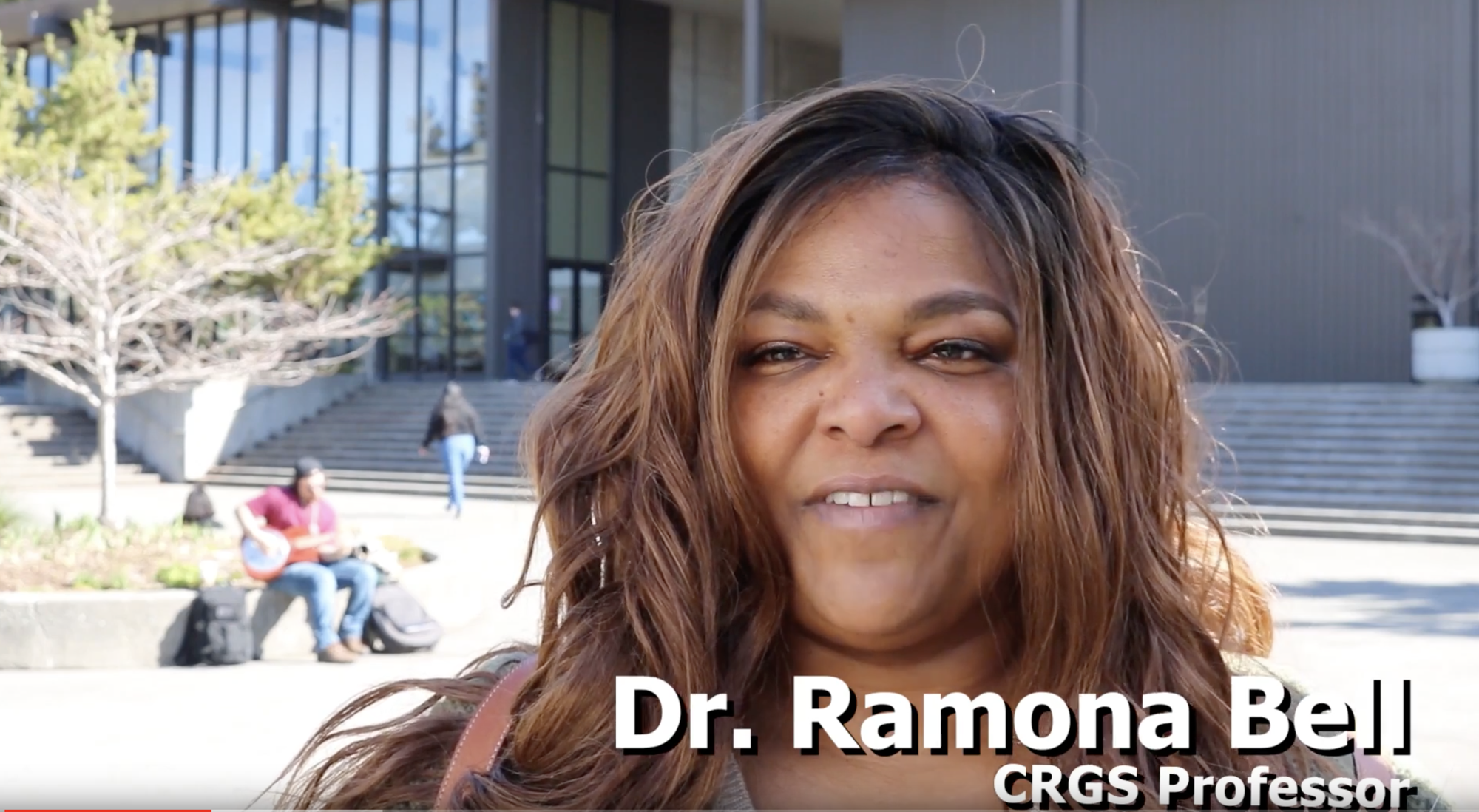
    In honor of Women’s History Month, we ask people at Humboldt State who their female idols are and why

    Share who your female idols are in the comments to be featured in future videos.

  • Who’s your female idol? (Part 1)

    Who’s your female idol? (Part 1)

    In honor of Women’s History Month, we ask Humboldt State students who their female idols are and why

    Share who your female idols are in the comments to be featured in future videos.

  • EDITORIAL: Badass womxn exist

    EDITORIAL: Badass womxn exist

    Represent the badass women in history

    It’s Women’s History Month and we want to talk about something that has been bothering us in the Lumberjack Newsroom: the lack of badass female representation in media.

    When there are badass female characters in a film or tv show, they’re usually relegated to the side for a male lead. Even when it comes to video game box art, you have publishers being pressured to not have a female on the front cover.

    With a surge of films and tv shows with female leads like “Wonder Woman” (2017), “Jessica Jones” and “Glow” we’re slowly getting more badass female representation. We would like to highlight some women in history that fall under this title.

    In 1941, Lyudmila Pavlichenko was 24 when she joined Russia’s Red Army to fight the Nazis. She joined the Red Army’s 25th rifle division as one of 2,000 female snipers. She rose to the rank of lieutenant in her division and killed 309 people, most of them Nazis.

    In June 1942 Pavlichenko met with President Roosevelt and First Lady Eleanor Roosevelt in an effort to convince the U.S. to support the European front of WWII. Pavlichenko and Eleanor Roosevelt got along well and developed a friendship with one another. When Reporters spoke with her, many of them criticized Pavlichenko for not looking ‘pretty enough.’ She was quoted as saying, “I wear my uniform with honor, it has the Order of Lenin on it. It has been covered with blood in battle.”

    In ’60s and ’70s Japan there was a gang known as the Sukeban girl gang that grew popular among high school girls. They were known to wear longer skirts and/or pants as a protest against the sexualization of young teens, and to give the middle finger to the traditional shorter skirts that girls were required to wear.

    They functioned similarly to the Yakuza gangs at the time with a strict code of honor, but focused on petty crimes like shoplifting and beating people up. Because of their popularity more films were made with a focus on all-female gangs like “Girl Boss Guerilla” and “The Pinky Violence.”

    When the Black Panther Party grew in Oakland in the 1960s, many young African Americans joined the group. One of them was 18-year-old Fredrika Newton. Newton disagreed with the image of how society portrayed the Black Panther Party as young African Americans carrying guns. Newton saw them as a group that helped African American communities by feeding them and getting them involved in local government.

    Newton married Huey Newton, co-founder of the Black Panther Party, and founded the Huey P. Newton Foundation after his death. The foundation serves to carry on the Black Panther Party’s efforts in helping predominantly black communities while archiving the history of the Black Panther Party.

    This is just a small selection of badass women in history. There are many more out there who’re ultimate badasses. Maybe there’s even a badass woman in your life who doesn’t have as much recognition.

    Whether it’s your mom who took you to your first football game, or a friend who gave you the best advice to make you feel better, give the woman in your life thanks for being a badass.

  • Zero to Fierce Festival for womanhood

    Zero to Fierce Festival for womanhood

    Celebrating the matriarchy and raging grannies.

    The Arcata Playhouse hosted the Zero to Fierce Woman’s Festival last week. More than 30 events took place from March 5-11. Events ranged from musical performances to movie screenings to meditation.

    On March 8, the Women’s International League for Peace and Freedom organized their seventh annual women’s day celebration inside the Arcata Playhouse.

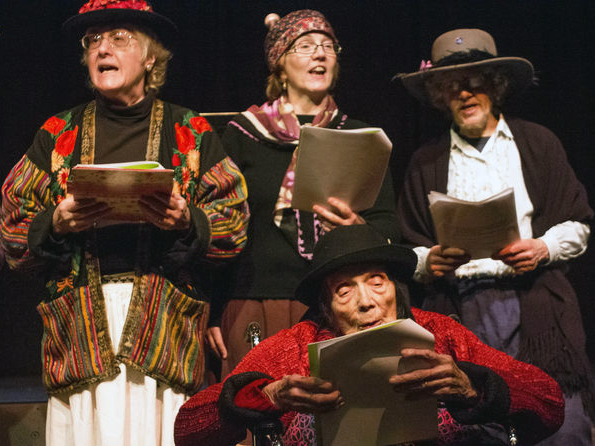
    An activist organization called the Raging Grannies made an appearance. The organization is composed of elderly women that mock the granny stereotype by dressing in mismatched clothes.

    Sandy Lynn has been a Raging Granny for five years. She grew up in Palo Alto and has been in Humboldt since 2001.

    “I like that we are not polished. When you are older, people give you slack,” Lynn said. “When old ladies sing protest songs, it makes it easier for others to hear hard issues, like rape or violence.”

    The Grannies sing well-known songs, but change the lyrics to add a political message. During the performance, Lynn played a ukulele.

    “The ukulele is easy to cart around and very granny-like,” Lynn said. “I have been performing since I was 12. I don’t get nervous.”

    An audience member, Angela Davis, said she loves to sing.

    “The older I get, the more I want to celebrate life,” Davis said. “Here, we breathe together. You can’t feel desperation or be depressed in a place like this.”

    Sue Hilton, member of Women’s International League, has been celebrating Women’s International Day since 1973.

    “We need to value women more than we do now in our society,” Hilton said.

    Humboldt State lecturer of women and Native American studies Sara Obenauer spoke on stage at the Arcata Playhouse. She grew up as a first-generation Filipino American woman, and was raised in a matriarchal society.

    “I was raised by women,” Obenauer said. “However, like many women across the world, I experienced masculine imbalance.”

    Obenauer spoke about the idea of masculine imbalance, meaning power is disproportional and is taken away from woman

    “I find it vital that we need to embrace and celebrate womanhood, since we live in a really sexist and misogynistic society,” Obenauer said. “I don’t think I need to stress how necessary this is for us, especially in our cultural-political climate.”

    Obenauer said we need to believe in ourselves and our abilities in order to put an end to self destruction.

    “Nothing new will be created until women collectively take the lead and heal within themselves,” Obenauer said.