The Lumberjack


Students Serving The Cal Poly Humboldt Campus and Community Since 1929

Tag: Yurok

  • Smelting in the water

    Smelting in the water

    Cal Poly Humboldt fisheries professor is working with local tribes to create better fishing stewardship practices.

    By Gabriel Zucker

    Jose Marin Jarrin is a new assistant professor in the department of fisheries biology at Cal Poly Humboldt. He is leading a new form of fishery science in Northern California, using empathy and understanding when talking with impoverished communities. He is originally from South America and he never forgets where he came from. 

    “Being Latinx, I’m also from a historically excluded community,” Marin Jarrin said. “So I saw a lot of similarities.”

    Marin Jarrin was recently awarded a little over $1.1 million from the California Climate Action Seed Grant to research climate change resilience by looking at tribal fishery practices. His goal is to reinvigorate Northern California fishery research, while also building a center that will last for years. 

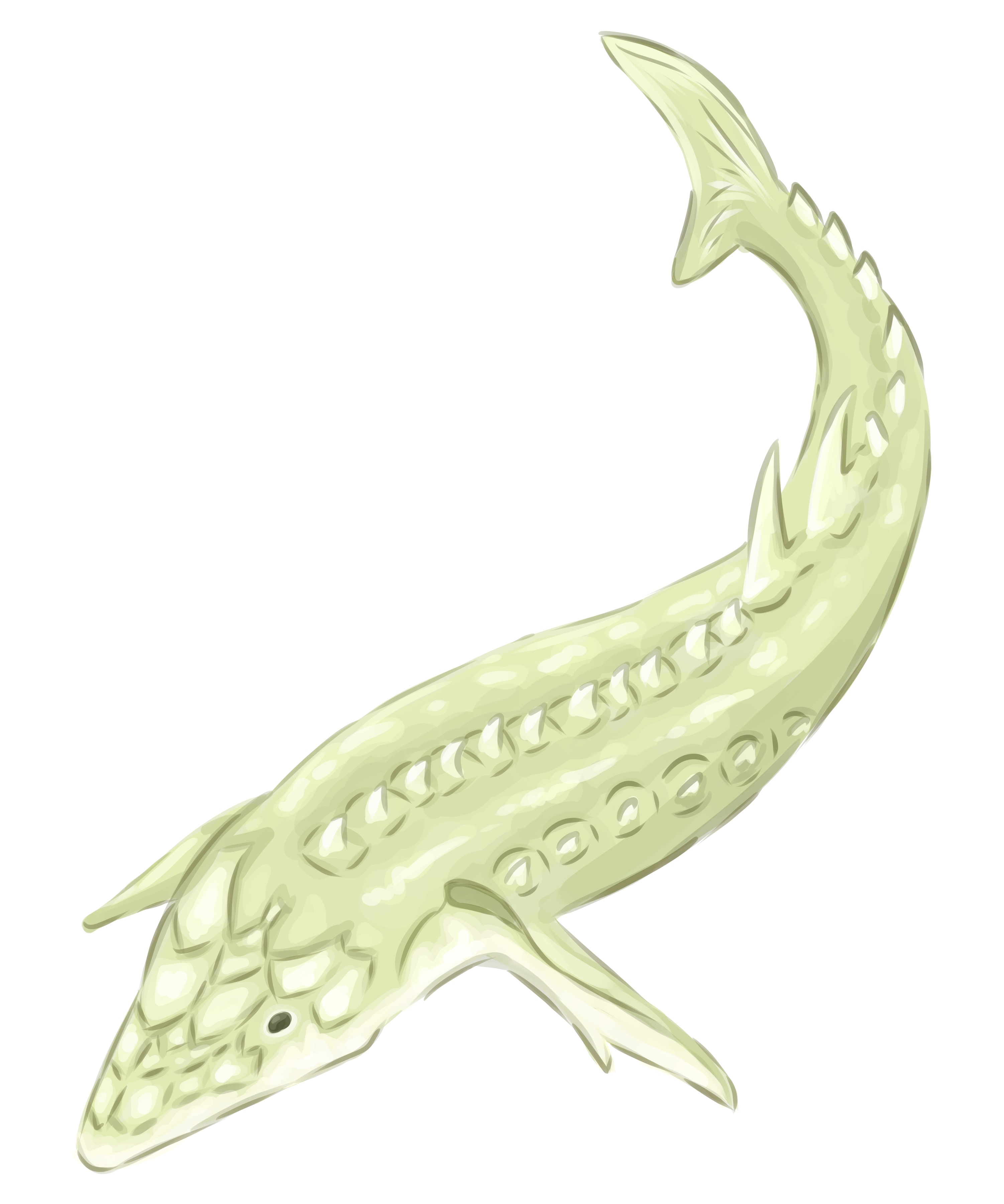
    He is working with the California Department of Fish and Wildlife and multiple local tribes, such as The Blue Lake Rancheria, Resighini Rancheria, Tolowa Dee-Ni’ Nation, and other smaller indigenous communities. Each native group was able to pick a fish that has historical and cultural value to their tribe. The fish that are being mainly researched are green sturgeon and smelt. Five grad students are working with Marin Jarrin, acting as liaisons for the different Rancherias. On top of doing research all over Northern California, the tribes and researchers have a monthly meeting where they go over the progress and find where they can improve.

    Creating a trusting relationship with the Indigenous communities is important. To solidify this relationship, Marin Jarrin signed a data sharing agreement with all of the tribes, giving them final say on what information is published. Historically this has not been the case, and some even admitted they had never been asked to do this before.

    “The researchers would go in, ask the tribes to participate, and then the tribes don’t get a say on how the data is used,” Marin Jarrin said. “And so, one of the things we wanted to ensure is that the tribes had complete ownership of that data. For the most part, they’re not too concerned about fishery species, they’re more interested in preserving their cultural data and history. What they don’t want is for people to just take information from them and disseminate in ways that are sometimes not correct or hurtful to the tribe.”

    Laurie Richmond is an environmental science and management professor at Cal Poly Humboldt. She has worked with the tribes for years, working a quarter time for California Sea Grant as an extension specialist. Where she connects local communities with coastal science knowledge. Her role for the study is in a partner advisory role, where she offers advice and direction when grad students need a new perspective. She has been working with Marin Jarrin since the beginning of the grant and is elated at the way he is going about his research.

    “I think it’s a really new way to be a scientist that I think [Marin Jarrin] is pursuing,” Richmond said. “It’s really exciting and it requires a lot of skills that scientists don’t always have, like building partnerships and facilitating and thinking about ethics. He’s done a great job of trying to learn those things, and he has some of those because of his unique background that he brings as a scientist.”

    To record the biodiversity of the fish in different areas, grad students are using environmental DNA metabarcoding techniques, giving them data about all of the animals that have come into that area.

    “If a fish swims by, it’ll leave its DNA in the water column,” Marin Jarrin said. “If you were to collect a sample and filter out the DNA from that, you can identify what species of fish was there. The idea is that if you then go around taking samples throughout the whole coast, you can identify all the fish – actually, not just fish. From bacteria all the way to mammals.”

    Before conducting this research, they had to work with the California Fish and Wildlife department. The advisor on the grant is Kenneth Oda, a former Humboldt State University student, who is with the Marine Region and works on the State Managed Finfish Research and Management Project. Oda gives advice and helps review the proposals before they are submitted. 

    “I was just asked to be an advisor… we approve protocols, if they’re gonna be taking fish, we need to have that spelled out, and the methodologies as well,” Oda said. “We review their permit application and then approve it. I also help them with protocols regarding surf perch and red tail.”

    Olivia Boeberitz, one of the graduate students on the team, just moved to Humboldt. She chose Humboldt partly because of this research project, and the opportunity to work closely with Indigenous tribes. She has been studying fisheries since 2020, focusing on fish that inhabit both freshwater and green water. This made the transition from inland to coastal easier. 

    “I’m working specifically with Blue Lake Rancheria on green sturgeon… I’m designing a project to get some baseline information on how green sturgeon are using Humboldt Bay,” she said. “There hasn’t been much of any research, at all, of green sturgeons in this area.”

    Boeberitz is in the methods phase of her research project. She is running through a couple ideas for data collection. She wants to use acoustic receivers, alerting if any previously tagged fish are using these areas. She is also planning to use satellite tags  on fish off the coast. None of the actual research will be conducted until the summer.

    Right now, she is most excited about working and meeting with the tribes. She has worked with tribes before, but never one on one.

    “I see and talk to them very frequently,” Boeberitz said. “As soon as I produce any drafts for my proposal, as soon as I come up with a schedule, they’re going to be incorporated every step of the way. Their feedback is both incredible and extremely valuable. I’m working on this project for them, they’re the center of this project. They’re guiding me – giving the guidance they need to start putting together what our goals are.”

    Marin Jarrin is changing how people view the scientific process. He is finding paths of communication that are not usually seen in western science. He is not just doing research, he is creating positive social change.

    “I want to help communities that have been historically excluded, to be better – better informed and the different techniques and methods they could be using to manage their fisheries,” Marin Jarrin said. “We want to empower people right. Our community to tribal communities, but to the community at large in the far north of California, so that they feel they are more capable of being stewards of their resources. But also, the students that we bring, we want to prepare the best students we can because they can go out… and bring this idea of diversity, equity, and inclusion to the next job that they take.”
  • New Yurok office will support South District

    New Yurok office will support South District

    by Andrés Felix Romero

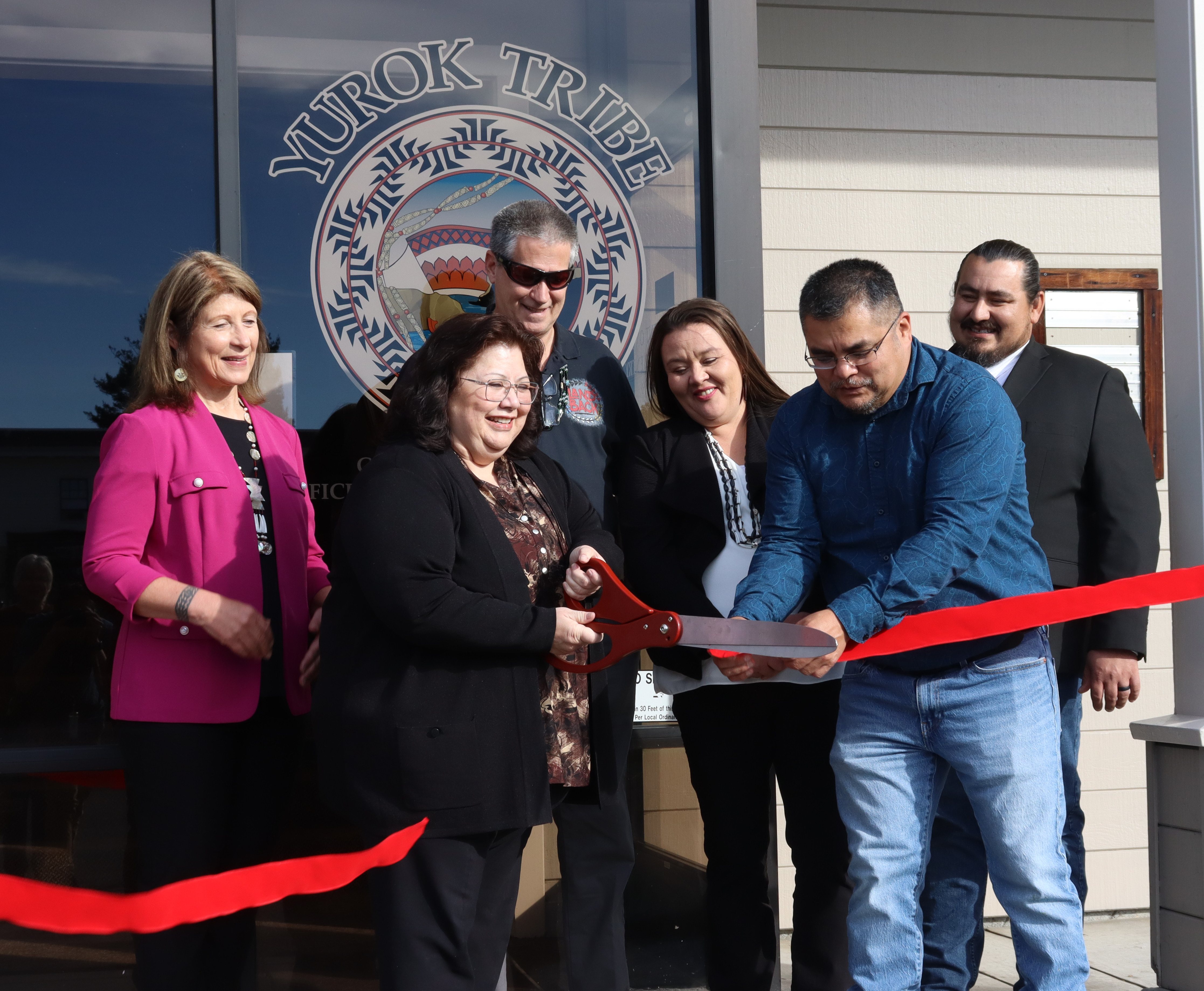
    On the first day of November on a pleasantly warm sunny afternoon at the edges of Old Town in Eureka, members of the Yurok Tribal Council gathered in front of their office building at 930 Third Street, Eureka. The council smiled as they cut the big red ribbon to signify the grand opening of their new office space for the Yurok’s court services. The new building houses a meeting place for the council within the South District. Eureka is located in what is known as the South District for the Yurok tribe.

    Among other duties, the council is responsible for managing the ancestral lands of the Yurok that they are in direct control of, as well as managing the salaries of tribal personnel.

    Lana McCovey is the council member of ten years who oversees the South District (and held the large scissors to cut the ribbon). McCovey was ecstatic about the opening of the space as now employees and residents can be closer to court services.

    “What we found is that there’s a large amount of employees and members down in this area,” McCovey said. “We found it necessary to accommodate them. People from [the South District], to do normal, everyday business, would have to drive to [Klamath] to get that done. So we want to be able to offer [tribal court services in Eureka] also.”

    This is the second office that the Yurok holds in Eureka; however, the 930 Third Street address focuses on court services. One service that the office will provide are diversion programs Court services that the Yurok offer in the space focus on supporting at-risk youth and elders, supporting victims of crimes such as domestic violence, probationary services, visitation services, foster services, and more. Space for council operations and an office for the tribal prosecutor also reside at the new address.

    The Yurok staff that occupy the new building have found the space to increase their productivity in a number of ways. Besides the new office being able to support individuals in Yurok’s South District, Court Director at the Yurok Tribe Jessica Carter notes the building is only blocks away from Humboldt County’s courthouse.

    “We can walk and get coffee and food,” said Carter, “And we can go to the jail if we have to file something or go visit our clients. Definitely accessible.”

    COVID-19 played an important role in the development of the office building, as it was paid for thanks to the CARES Act during the pandemic. The tribe acquired the building in 2020. After renovations, the court services began to steadily move their court services away from their previous location, the Aawok Bonnie Green Site. The former site was located at Worthington Elementary School, and the office there was a portable classroom. The Yurok are now able to house many of the employees hired during COVID, who now need an in-person desk to work at.

    “You can hire all the people you want for the job,” said McCovey, “but if you don’t have the space for them, then what’s the point?”

    The new office space is much larger than the previous location. Now that many of the court services within the Yurok court system have their own suite within the office space, communication has become more efficient. The Yurok Tribal Child Support Services (YTCSS) staff enjoy the opportunities for more efficient and safe communication with each other now that each program has its own suite to chat amongst themselves.

    The YTCSS staff is happier now that each court program has their own defined space within the new building. Each department has increased confidentiality thanks to the privacy and are able to speak to each other about cases rather than needing to communicate through emails.

  • Indigenous activism brings down Klamath dams

    Indigenous activism brings down Klamath dams

    Harrison Smith

    The Klamath salmon have been granted a reprieve. After decades of activism by Indigenous people, four of the six dams on the Klamath are finally coming down. Pacificorp, corporate owner of the dams slated for removal, was denied a renewal of their operating license by the Federal Energy Regulatory Commission in November of last year.

    The Klamath Basin is one of the largest watersheds in the continental United States. Melting snow in Oregon’s Cascade Range mixes with runoff from Crater Lake, frigid waters flowing south and west to fill Klamath Lake. In past years, Klamath Lake’s cold, high-nutrient water tumbled to the coast, providing habitat for dozens of salmonid species.  

    Until the dams were built. 

    “They haven’t had any salmon in over 100 years,” said Regina Chichizola, director of Save California Salmon. “The Karuk Tribe no longer has spring salmon even for their spring salmon ceremonies.” 

    Salmonid populations in the Klamath Basin have seen a staggering 95% decline since Copco 1 was built in 1918 and those numbers only continued to fall as the basin was strangled by the next three dams. 400 miles of river habitat have been either partially or completely blocked to fish passage, and Klamath salmonids were on the path to extinction. 

    “Having that acknowledgement is a really big deal, because it’s not just acknowledging that this is a bad deal the river’s been given, but also us as well,” said Brook Thompson, restoration engineer for the Yurok tribe. “And that our voice does matter. Sometimes when you protest, in activism work, it feels like nothing’s gonna change and no one is hearing you, and that’s the case; it feels like we were finally heard.”

     Thompson is a descendent of both Yurok and Karuk tribes, and a Ph.D. student. 

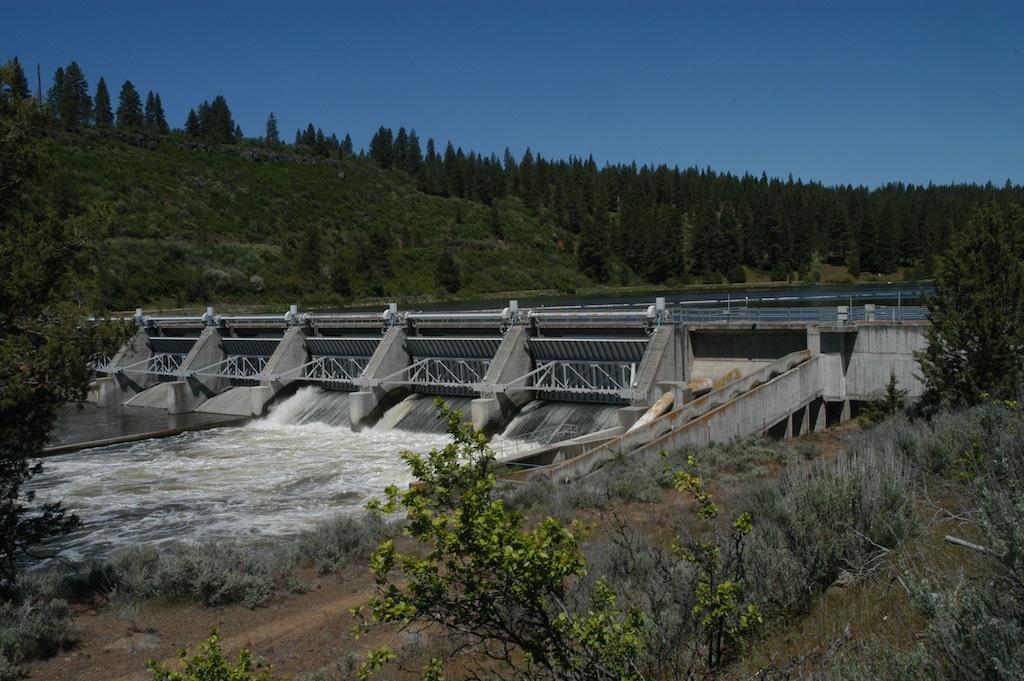
    There are currently four dams on the Klamath river. Copco 2 (1925) is slated for removal this year, followed by Copco 1 (1918), J.C. Boyle (1958), and Iron Gate (1964).  

    Photo courtesy of Regina Chichizola | Molli and son Chas smoke salmon over a firepit.

    Negative impacts

    The negative effects of the Klamath dams are numerous and interconnected. By slowing down the river, the dams allow the water to heat up in the sun. 

    “With that warm water, you get less dissolved oxygen, which the fish need to breathe,” said Thompson. “You get increased blue green algae blooms, which when they die, they take up dissolved oxygen, which, again, means less dissolved oxygen for the fish.” 

    The dams also cause the river to cut into the riverbed, by locking its flow into a narrow channel and preventing it from connecting to the wider floodplain.

    On September 19th, 2002, dead Chinook salmon began washing up on the banks of the Klamath. During the next week, over 60,000 adult Chinook would wash up on the banks of the river like a rotting carpet.

    “It was the day after one of the ceremonies,” said Thompson, who was present at the catastrophe as a child. “I was the same size as the salmon I saw the bodies of on the shore.” 

    This can be directly linked to the dams’ effects on the Klamath. The closely-packed conditions of the migrating Chinook and high water temperatures were a perfect environment for parasite Ichthyopthirius multifilis and bacteria Flavobacter columnare, which together ravaged the salmon population. Low flow from Iron Gate dam, due to irrigation runoff, was found to be a primary cause in the Fish Kill. 

    Indigenous sovereignty 

    The Yurok, Karuk, Hoopa, and Klamath tribes have been fighting for their rights to river governance and access for over a century. 

    “We’re fighting for our cultural sovereignty, making sure that we’re upholding our responsibility as human beings to make sure that we’re making this world a livable space for not just humans,” said Charley Reed, education director for Save California Salmon and descendent of the Yurok, Karuk, and Hoopa tribes. 

    Before colonization, Indigenous people depended on the Klamath as a primary source of food, with an average salmon intake of 450 pounds of fish per person per year. Today, that number has dropped to under a pound. 

    Activism

    In 1973, Yurok community leader ‘Aawokw Raymond Mattz took the issue of Yurok fishing rights to the U.S. Supreme Court and won. However, state and federal agencies continued to crack down on Indigenous fishing well into the 1970s. This sparked a period of protest now called the Fish Wars. Anti-dam protests continued sporadically for decades, but gained renewed purpose after the 2002 Fish Kill, according to Reed.

    “To get the U.S. to do things you have to sue them,” Thompson said. “That’s actually how we got the fishing rights back from my neighbor when I was a kid.”

    In the 2000s, dam protesters spent one week of every month traveling to protest. Reed’s father was deeply involved with the movement for decades. Protest efforts in the wake of the Fish Kill led to the founding of Save California Salmon, a nonprofit organization founded, operated, and led by Indigenous people. SCS along with other groups focused the energies of the Klamath Tribal communities onto the dams. In 2004, dam owner Pacificorp filed to relicense the four dams on the Klamath. This provided an initial objective for the activists—stop the relicensing. 

    The activists took a multi-pronged approach to the campaign for the dams’ removal. They applied public pressure on lawmakers and dam owners, as well as working with state and federal officials. 

    Activists traveled to Scotland in 2004 to demonstrate against the parent company of Pacificorp, Scottish Power, during a shareholders meeting. In 2005, Scottish Power sold Pacificorp to Berkshire Hathaway and activists continued the pressure.

    “2006 or 2007 was the first year we went to the Berkshire Hathaway shareholders meetings,” Chichizola said. “And even before that, we went to Pacificorp headquarters in Portland…. A big part of it was the community pressure for sure. Every step of the way, the community was there.”

    In response to the continued activism, the Berkshire Hathaway board changed the rules of their Q&A sessions in 2008 to forbid questions about the Klamath dams. 

    Activists succeeded in lobbying the California and Oregon governments to require extensive renovations of the dams before they could be relicensed — a major victory. The Klamath Basin Restoration Agreement (KBRA) between the states would have demolished the dams years ago and reallocated water for irrigation. It was killed in the house by republican congressmen Doug Lamalfa and Greg Walden. 

    In 2016, parts of the KBRA were salvaged to create the Klamath Hydroelectric Settlement Agreement. The KHSA was passed without congressional approval, but its passage was followed by another period of bureaucratic snarls that were only resolved last year. After relentless pressure from all sides, it proved far more expensive for Pacificorp to relicense the dams than to remove them. 

    In November of 2022, the Federal Energy Regulatory Commission denied Pacificorp’s license to operate its Klamath River dams, and the dams came under the jurisdiction of the Klamath River Renewal Corporation (KRRC). FERC credited Tribal activism for the government’s decision to decline Pacificorp’s license renewal. 

    Photo courtesy of Regina Chichizola | A pair of stalwart activists demonstrate in Scotland, 2005.

    Demolition and restoration

    Copco 2 is scheduled to be demolished this year, but much restoration work remains to be done before the basin is whole again.

    Extensive preparation must be completed on more than 400 miles of river that have been cut off from the greater watershed for the better part of a century, mostly on the lower river. The KRRC was created to carry out the restoration work. 

    “We’ve been collecting seeds for the last few years and then we’re growing plants,” Thompson said. “These native plant species will have a chance to take hold before invasives come in.” 

    Work must also be done to reconnect the river to the system of ponds and tributaries which fed it historically. All this will eventually restore habitat and favorable conditions for salmonids, according to Thompson.

    “All that habitat needs to be restored and that’s going to be creating more woodfill, creating different types of flow, so [salmon] can chill out in slower ponds or move up faster streams and try to get different types of food,” said Thompson.

    The Elwha Dam removal in Washington could give some insight into the Klamath’s future. 

    “As soon as a year after the Elwha dam removal, which happened just over 10 years ago, you saw salmon that were returning above the dam to breed, which is kind of crazy, because they haven’t been going there for generations,” Thompson said.

    For Reed, the victory felt bittersweet. It comes after many long decades of teeth-pulling effort, marked by the passage of loved ones and community members — stymied by corporate and governmental roadblocks.

     “There’s so many people who weren’t there that day that had passed on, but were very much a part of that effort in those early years,” Reed said. “If it wasn’t for them, it’d be really hard to imagine how we would have kept that momentum going, how we would have kept up the fight. It’s very much intergenerational.” 

    Reed plans to teach his daughter to fish when she’s old enough. By then, restoration efforts will be well underway.

  • Yurok Tribal Council hosts Summit on Missing and Murdered Indigenous People

    Yurok Tribal Council hosts Summit on Missing and Murdered Indigenous People

    by Andres Felix and Ollie Hancock

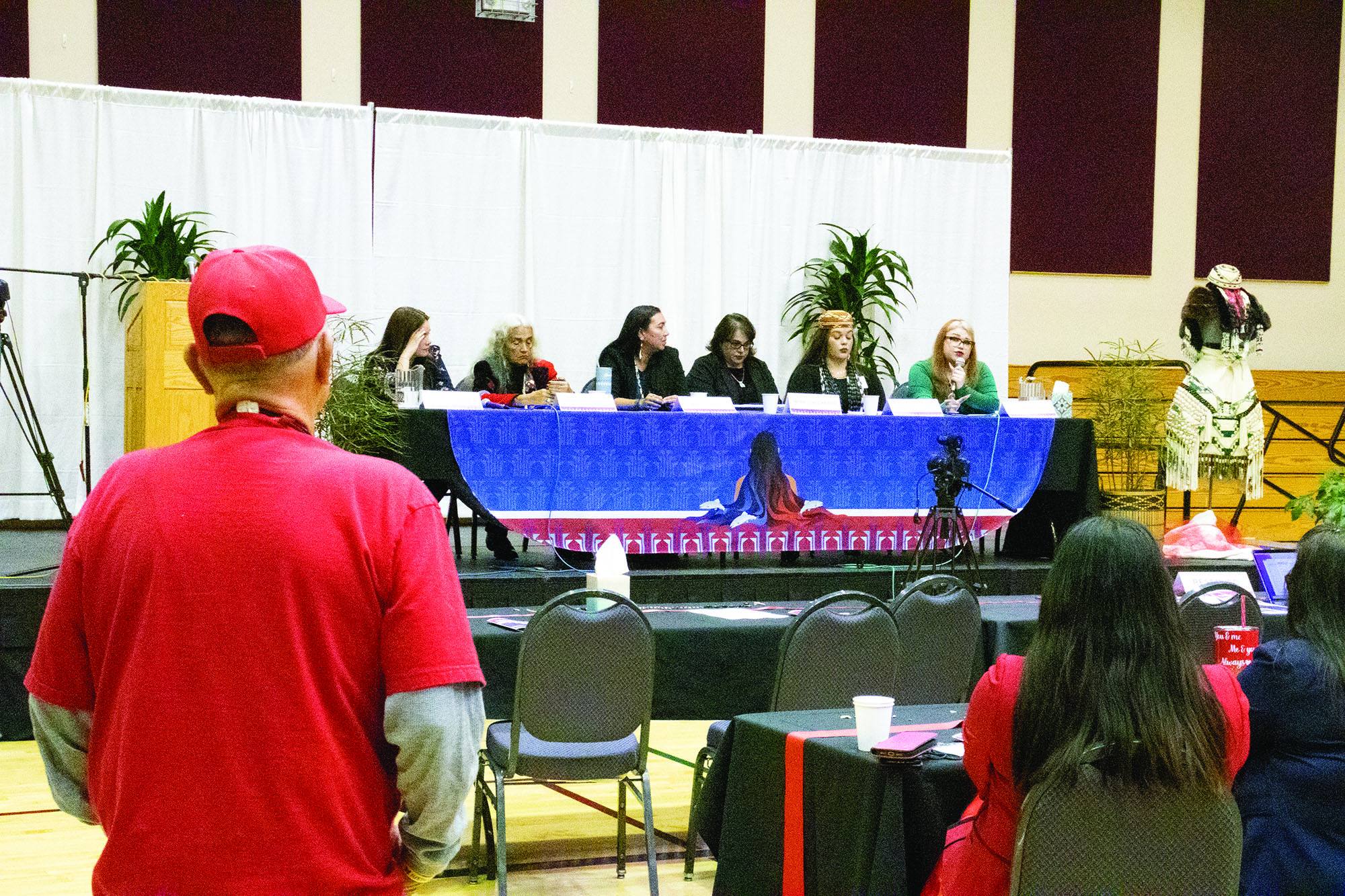
    On Oct. 4, The Yurok Tribal Council hosted the first inaugural Northern California Tribal Summit on Missing and Murdered Indigenous People (MMIP). Tribal leaders from across the state, as well as government and State representatives, gathered in Goudi’ni (known as Arcata, California) to discuss the pressing issue of violence against indigenous communities, with a focus on Californian Tribes. 

    “The crisis of missing and murdered Indigenous people has touched every tribal citizen in California and throughout the United States. This has gone on long enough. The time for action is now,” said Yurok Chairman Joseph L. James. “The purpose of this summit is to develop a series of mutually agreeable actions that tribal, federal, and state stakeholders can take in the short- and long-term to protect Indigenous Californians.”

    The National Crime Information Center reports 5,712 cases of missing Native women and girls since 2016. This contrasts with the U.S Department of Justice’s missing person database of just 116 cases reported. Complications in jurisdiction between state, local, federal, and tribal law enforcement make it difficult to pursue justice in these cases. According to the FBI, Native Peoples totaled 1,496 out of the total 9,575 active end-of-year missing person cases across the United States in 2020. The movement has recently moved from referring to the movement as ‘Missing and Murdered Indigenous Women’ to ‘Missing and Murdered Indigenous People.’ 

    The summit panels were open to comments from members of the audience. Ronnie Hostler attended the summit to seek justice for his missing granddaughter Khadijah Britton. Britton of the Round Valley Indian Tribes went missing in 2018. Hostler expressed he was upset with the lack of urgency from Mendocino County about his missing granddaughter. Hostler recounted how Mendocino county Sgt. Matthew Kendall told him there was nothing more he could do to solve his granddaughter’s case. 

    “I asked Matt Kendall if he was looking for any resources, and he said ‘no,’” Hostler said. “I said what about the FBI, and he said ‘they can’t do any more than what we’ve already done.’ He started telling me, ‘why don’t you go to the [Bureau of Indian Affairs]?’ Then he said a few harsh words about the Bureau of Indian Affairs.”

    Chief Greg O’Rourke of the Yurok police department describes how public law 280 impedes tribal law enforcement. 

    “[Public Law 280] takes jurisdiction away from tribal law enforcement and hands it over to the state,” O’Rourke said. “It means reservations rely on state law enforcement to provide a quality response, a timely response to the reservations when somebody is reporting a crime or a call for service.” 

    Dr. Blythe George spoke in the Primer on MMIP & Systems Change panel. The panelists broke the systemic obstacles to addressing MMIP. The panel explained how violence and assault against native women and men began with colonization, genocide, slavery, racism, and the sexual objectification of Indigenous people. 

    “With this issue, you have to realize that some days are going to be so hard, and you don’t want to come to work because it’s gonna be the day you get a call and you know the person.” George then told a story of a mentor who went missing. That experience pushed her into this field. 

    “We have to realize how heavy the work is, even on the good days when we sit here together and we can see tangible next steps,” George said. “So please take care of yourselves after today. Hug each other hard and realize that tears are a necessary part of this work, but it’s time to do something.”

  • Indigenous Food Sovereignty

    Indigenous Food Sovereignty

    Local food management practices of the Tolowa Dee-ni, Yurok and other indigenous peoples.

    *Editor’s note: A source in this story, Cynthia Ford, is the aunt of the Lumberjack writer of this story, Walker B. True*

    When colonizers landed on the North American continent, they were greeted with a land of plenty where deer roamed huge open pastures and wild fruits and vegetables grew in plenty. Colonizers viewed this landscape as a wild, untamed, underutilized and untouched landscape of economic opportunity.

    In fact, ecosystems across North America were meticulously managed by Indigenous peoples across the continent. Their traditional resource management practices have come to be known as a stewardship model.

    As defined by the Oglala Sioux Tribe of South Dakota, the Lakota Ecology Stewardship model states that “All beings, both living and nonliving, were related in that all shared and depended on Mother Earth for survival. The Lakota believe that humans were the newest nation on Earth, and as such were instructed to learn from the older nations: the rocks, animals, and plants. Thus, natural laws and relationships were carefully observed and emulated.”

    Locally, the Tolowa Dee-ni nation as well as the Yurok tribe made use of practices like prescribed burning to treat pests and to create better habitats for deer and elk to graze on.

    This form of management was used throughout the continent and began to die out as the land upon which they were practiced was colonized. These colonized lands were stripped of their resources and left in the hands of private landowners or The US government who had little to no understanding or care over the complexity of the ecological systems at play.

    The stewardship model and the food practices of Indigenous people have been limited by land acquisition programs and environmental devastation since the colonizers first set foot in America. Through the fight for their food sovereignty, Indigenous people are also fighting for tribal sovereignty.

    Cynthia Boshell is a program specialist working with the Rights of Mother Earth initiative through the Northern California Tribal Court Coalition. Since 2015, she is continuing to do work advocating for tribal food sovereignty.

    “When we are talking about food sovereignty what we are really doing is saying we are reclaiming our relationship to the foods,” Boshell said. “Not just the foods but if you are going to reclaim your relationship to the food you also have to reclaim your relationship to the land.”

    In the past the The Rights of Mother Earth initiative has helped enact ordinances and other regulations in order to protect the natural resources of the tribes a part of the NCTCC (Yurok Tribe, Hoopa Valley Tribe, Karuk Tribe, Tolowa Dee-ni’ Nation, Trinidad Rancheria and the Bear River Band of the Rohnerville Rancheria).

    Recently, the NCTCC received a grant from the Native American Agricultural Fund to do an assessment of tribal food systems under the stress of COVID-19 and fires. The project will be performed by the Rights of Mother Earth initiative spending the next year surveying tribal communities and their food system in order to understand how tribal food producers can be better supported.

    Boshell sees food sovereignty as a vehicle and process of bringing Indigenous communities where they want to be in regards to their food systems. Whether that be entirely reliant on local Indigenous food systems, or only partially, each tribe should have the agency to choose that for themselves.

    “Food sovereignty is not really a native concept,” Boshell said. “It’s more of a description of how we are reacting to a colonial system.”

    Cynthia Ford is a Habitat and Wildlife Manager for the Tolowa Dee-ni’ Nation in Del Norte County. Ford is responsible for educating community members and advocating for tribal food sovereignty.

    “We work with agencies and partners locally, like the forest service and the parks and local landowners to help come up with strategies to protect and perpetuate our resources.” Ford said.

    Alongside her vocational responsibilities to the tribe, she is also the wife of a Tolowa tribe member and the mother of three Tolowa children. She supports traditional, locally harvested foods like acorns in the fall, berries in the spring, a variety of seafoods like smelt, seaweed and salmon, as well as deer and elk.

    “The Tolowa people were rich, very food rich,” Ford said. “There was a large variety and great diversity of foods year round to eat from.”

    For Ford, food sovereignty means having the ability to access her own healthy, and sustainable foods.

    “That food security is really important for the tribe because that’s the basis for making us a healthy community,” Ford said.

    Without the ability to access these local food sources that, historically speaking, have always been available to them, tribe members are left without access to any healthy foods.

    “Our ancestral territory goes well into Oregon and covers a vast coastal area and into the Applegate watershed,” Ford said. “But here right now in Smith River where our modern day reservation lies, we have the Dollar General and a Fuel Mart, we don’t even have a grocery store.”

    Alongside poor access to healthy foods from local stores, traditional food practices like fishing have been impacted by commercial farming practices that threaten the Smith river’s estuaries with pollution from pesticides.

    According to the California Water Board, “the Regional Water Board’s water quality monitoring documented the presence of several pesticides used in lily bulb cultivation in some of the coastal tributaries of the Smith river during storm events.”

    Ford ends by speaking to the interconnected nature of land and how dependent people have to be one another in order to live in harmonious comfort and success.

    “’You got your 10 acres and your mule and you’re gonna harvest your land right?’” Ford said. “But it doesn’t work that way because what you do on your land affects what I do on my land”

  • Memes, Genocide and Teaching in a Pandemic

    Memes, Genocide and Teaching in a Pandemic

    With life disrupted, lecturer Kerri Malloy perseveres with flexibility and humor

    A professor noticed students often left Kerri Malloy’s class laughing. One day the professor asked what he was teaching.

    “Oh, that’s my genocide class,” Malloy said.

    Malloy teaches courses in the Humboldt State Native American studies department on colonialism and genocide. With such somber subjects, Malloy relies on humor and honesty to engage students. Now that classes have gone online during the pandemic, Malloy has employed those traits, alongside plenty of flexibility, to keep students connected.

    “The hurdle is going to be maintaining that connection with the students,” he said.

    He created class blogs for students to post what they want—questions, memes, dog or cat or reptile pictures. Glance through Malloy’s Instagram, Twitter or Snapchat accounts, and you’ll find lots of memes, like one he posted April 3 on Instagram:

    “The year 2020. Brought to you by the letters W, T & F.”

    “I think you have to walk into it—at least my plan is to walk into it—with an incredible amount of flexibility.”

    Kerri Malloy

    “I love a good meme,” he said in one of two Zoom interviews. He sat in his home office. Behind him, family photos and a Star Wars Yoda action figure topped a bookshelf. He wore glasses and a button-up shirt.

    Memes dominate Malloy’s social media accounts, but there’s more to the accounts than humor. They make him accessible to students. He receives messages on those accounts about class, and he replies happily.

    “There are times where I’m like, ‘Why am I doing this?’” he said. “And then I realize, I’m getting to see a different side of students, and my colleagues, too.”

    Malloy also emphasized the importance of flexibility.

    “I think you have to walk into it—at least my plan is to walk into it—with an incredible amount of flexibility,” he said. “And let them—let the students—help guide where we’re going to go.”


    Yurok and Karuk by heritage, Malloy was born on the Oglala Lakota Reservation in South Dakota, but he grew up on the Quinault Indian Nation Reservation in Washington.

    Marlon Sherman, chair of the HSU NAS department, knew Malloy from working together for the Yurok tribe. Sherman and Malloy have a family connection, as Sherman grew up on the Oglala Lakota Reservation where Malloy was born.

    “If it wasn’t for Kerri, there might not be a NAS department right now.”

    Marlon Sherman, chair of the Native American studies department at Humboldt State

    After working together for the Yurok tribe, Sherman and Malloy parted. About six years ago, Sherman asked Malloy to come to HSU to teach two courses for a semester.

    Shortly after Malloy came on board, Sherman had to take time off. He had cancer. Sherman returned in about a year, but Malloy became program leader and helped steer the department. Sherman said Malloy basically did all the work and helped the department hire two professors.

    “If it wasn’t for Kerri, there might not be a NAS department right now,” Sherman said over the phone.

    Malloy said Sherman was too generous, but there’s no doubt that Malloy works, a lot—so much so that Sherman joked it might be illegal.

    Malloy wakes up around 4:30 a.m. every day. He gets up so early partly because he finds those early hours productive, and partly because his back is built on metal rods and pins that make lying flat for too long unbearable. He’s not exactly sure how he damaged his back—maybe a car accident—but he had to have surgery that put him out of commission for three years.

    He estimated he’s on eight to 10 HSU committees, from the University Resources Planning Committee to the Diversity, Equity and Inclusion Committee. Malloy does this while teaching multiple classes as a lecturer—a position with an uncertain future amid HSU’s projected enrollment decline and budget cuts. He joked when asked how he has the time.

    “People usually don’t like my answer,” he said. “How do I have the time? A calendar.”

    Kumi Watanabe-Schock, a 23-year HSU employee, works in public programming and as the library media coordinator. She first met Malloy when he was an HSU student getting degrees in economics and Native American studies.

    Since then, Watanabe-Schock has worked with Malloy on committees and for classes. Every time she talks to Malloy, he seems to be attending workshops or giving talks around the world. She praised his willingness to help out.

    “He’s not good at saying, ‘No,’” she said over the phone. “I don’t know if he’s that way with everybody, but when you ask him to do a favor he always follows through and he always says, ‘Yes.’ So I really am appreciative, yeah. He’s a good person.”

    When not working, Malloy is more private. He has a husband and three dogs. He has two sisters and 14 nieces and nephews he tries to see every year. Around 8 p.m. every night, he tries to unwind. Maybe he’ll watch some TV, or maybe he’ll read a book about genocide. Fun.


    While COVID-19 has pushed teaching online, Malloy has found his courses as relevant as ever.

    A key concept in Native American studies is survivance, a portmanteau of survival and resistance. Survivance is about the living of Native American lives in the present tense. By surviving, Natives resist, and by resisting, Natives survive.

    Malloy said people must fight right now to have their voices heard, like many Natives must do at all times. He said individual voices humanize current events and prevent people from kicking the ball of reality down the road.

    On that note, Malloy told a story. Last summer, he taught Native history in a program that spent two days in Auschwitz I, the main site of the Nazi concentration camp. One day he stopped and looked out a window. The bizarreness of the situation dawned on him. Here they were, decades later, standing in a place of horror and trying to learn from it.

    A window at Auschwitz I, the main site of the Nazi concentration camp on August 20, 2019. | Photo courtesy Kerri Malloy

    Later that night he received an email from then-HSU President Lisa Rossbacher. She was checking in, so he wrote back.

    “If we can educate in such a place of incredible horror and death, we have the ability to change the world,” he remembered writing. “We really do. If we can actually go into these places and find this incredible darkness and turn it into something that allows us to reach out to other human beings and get us to talk to each other and push the things that really don’t matter aside, I think we can do this.”

    To get people to talk, Malloy uses humor, which he said can get us past anything—and Malloy does seem capable of getting past anything. It seems strange to call research on genocide a passion, but Malloy approved the descriptor.

    “Passion’s a good word for it, actually,” he said. “You’ll find that for those of that this is what we do, it is a passion.”


    Every student interviewed for this story agreed on a few descriptions of Malloy. He’s open and funny, they said, and he can be brutally honest. They warned against getting into an argument with him.

    “If you’re gonna have an argument with him, you better have good stats and have all your ducks in a row, because you’re not gonna win Kerri in an argument—I’ve tried,” HSU biology major Michelle Navarette said over the phone.

    “And he told me, like, ‘You can’t let the system fuck you up and throw you down.’”

    Michelle Navarette, Humboldt State biology major

    Navarette, a senior, first had Malloy for a 9 a.m. general education course. Once she got to know him, she tried not to miss his class. Since that first course, she’s tried to have a course with him every semester.

    Navarette’s appreciation of Malloy goes beyond the classroom. She said she was losing her job last semester due to discrimination from her boss. She didn’t know what to do, so she went to Malloy.

    “He sat me down and was like, ‘You know what, this is just a portion of how life is,’” she said. “’You’re gonna have these obstacles all the time.’ And he told me, like, ‘You can’t let the system fuck you up and throw you down.’”

    When she thinks of Malloy, she remembers his honesty.

    “I think he was like the first person to tell me, ‘This shit is going to be hard.’”


    As a lecturer of general education courses, he usually has to work for the attention of students. He goes into his courses hoping for students to leave with more questions than answers. Students have told him he gives too many assignments, but no interviewed students said Malloy graded harshly.

    “My philosophy,” he said, “is if I can get one brain cell to function per student on an assignment, we’ve succeeded.”

    Malloy once had a student he didn’t think he had triggered any brain cells in. Malloy said the student believed everyone should be committed to a single belief. Malloy respected the devotion, but he worried about the implications.

    About a year after the student left his class, Malloy received a message on one of his social media accounts. The student wanted to know if a site he shopped on looked like a hate group.

    “I went and checked the site out and went, ‘Yeah, this is definitely an organization that supports anti-Islam—very Islamophobic,’” he said.

    The student thanked him and decided to shop elsewhere. Malloy remembered that as a success.

    “It’s when you see those little things, you’re like OK,” he said. “Even at some small level, we were able to plant some idea, some seed that is getting people to think differently, or at least question.”


    Like many of Malloy’s students, Joshua Overington, an HSU environmental science senior, only took Malloy’s introductory Native American studies course for a general education requirement.

    The class was so good Overington signed up for more. He eventually worked with Malloy on the Northwest Genocide Project, an online archive Malloy manages.

    Overington also worked with Malloy on a research project on Tuluwat Island for HSU’s IdeaFest, which led into a research paper Overington is now finishing.

    “He is incredibly passionate in what he does and he is uncompromising in his views,” Overington said over the phone. ”If Kerri feels something or has an opinion, he always speaks his mind and really, he’s always the one who’s honest and puts himself out there. And that’s not something I see at all in other teachers.”

    “If we can make those connections on that level, this is much more understandable. And then we get to be more willing to go, ‘Alright, maybe I need to look in the mirror.’”

    Kerri Malloy

    Malloy likes to tell people teaching about genocide is fun. People usually give him a blank stare and change the subject. But if asked, Malloy will elaborate.

    “And what it means is not fun as in, ‘Yay, happy stuff.’ It means that it’s fundamental,” he said. “Atrocity is a fundamental part of the human existence. Peace is a fundamental part of the human experience. It’s understandable—we can understand why it happened, how it happened, what needs to be done to prevent it. And it’s necessary.”

    Malloy knows most people don’t want to talk about atrocities all day. To get past that, Malloy said we have to be willing to look at ourselves.

    Malloy tries to relate concepts directly to his students. He sometimes asks if students curate their social media profiles—do they post every photo they take? They admit they do some curating, and he suggested history books do the same.

    “If we can make those connections on that level, this is much more understandable,” he said. “And then we get to be more willing to go, ‘Alright, maybe I need to look in the mirror.’”


    Malloy teaches because he believes we’re all here to learn. He admits his own ignorance and encourages others to do the same. That openness to learning is perhaps what makes Malloy love his job. His willingness to let students guide his classes is perhaps what makes students love him.

    “I tell my students this directly: ‘This is not my class,’” he said. “’This is yours. You guys are the ones who are paying for it. I am just the tour guide on this expedition.’”

    Malloy always ends each of his classes—each chapter of the expedition—with the same message.

    “Go out and learn something,” he tells his students. “Go out and breathe.”

  • Yurok Tribe’s Connection to Klamath River Weakens as Ecosystem Declines

    Yurok Tribe’s Connection to Klamath River Weakens as Ecosystem Declines

    Indigenous Peoples’ Week provided an opportunity for the community to not only recognize native culture but learn about it

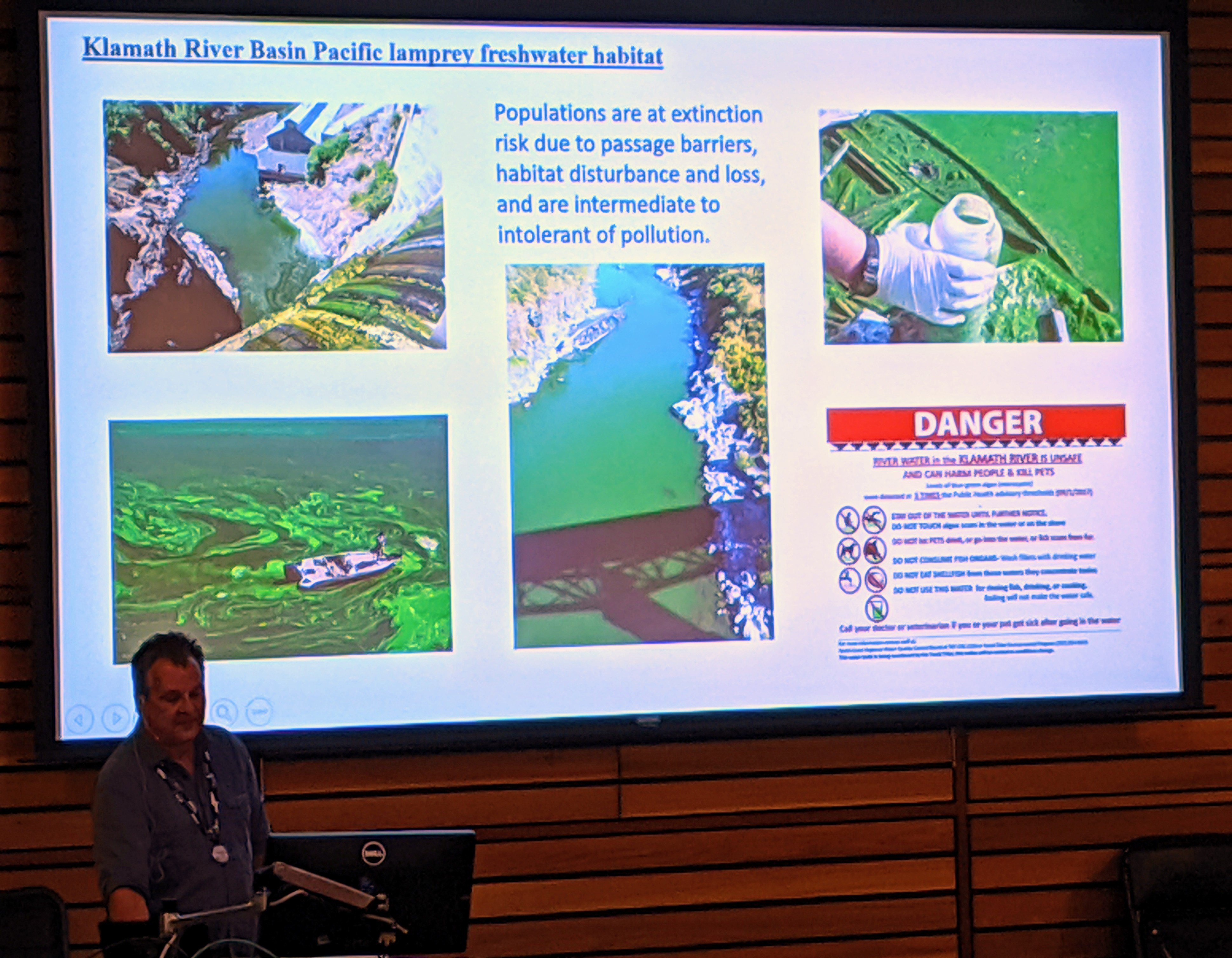
    Last Thursday Yurok Tribe member Keith Parker, a Humboldt State alumnus and fisheries and molecular biologist, gave a presentation on campus about the Klamath River, his work on Lamprey eels and the local ecosystem.

    As a tribal scientist, Parker gets to use his traditional knowledge from his Yurok heritage combined with his master’s degree from HSU to conduct field and lab work. The Klamath River is significant to the Yurok Tribe, as Yurok translates to “downriver people.”

    “I have a spiritual and innate connection to the land,” Parker said. “It’s not just a study subject for me, it’s not just empirical data. I have skin in the game, literally.”

    “I have a cultural connection. I live off that river, my kids eat off that river, we eat the salmon, the sturgeon, the lamprey, the elk, the deer and we harvest the roots.”

    Keith Parker

    Parker feels that his upbringing along with his academics makes him a better and more effective scientist. It is more than just conducting research for him, as he continues to learn and then teach others about a topic he feels passion for.

    “I have a cultural connection,” Parker said. “I live off that river, my kids eat off that river, we eat the salmon, the sturgeon, the lamprey, the elk, the deer and we harvest the roots.”

    The river has a rich history in native lore, being home to other tribes including the Karok and Modoc long before the earliest settlers came west. But in more recent years, the river has taken a decline in health.

    Some of the causes can be attributed to the damming of the river, preventing the water from flowing properly and allowing harmful algae to grow. Specifically cyanobacteria, commonly known as blue-green algae.

    The North Coast Regional Water Quality Control Board and the Humboldt County Department of Health & Human Services send out broadcast warnings, cautioning people to avoid swimming in areas that contain the algae.

    In July 2018, the Humboldt County Department of Health & Human Services issued a news release stating, “The presence of cyanobacteria has been previously confirmed in some water bodies within Humboldt, Mendocino and Lake counties including the South Fork Eel River, Van Duzen River, Trinity River, Clear Lake and Lake Pillsbury. It is difficult to test and monitor the many lakes and miles of our local rivers. Most blooms in California contain harmless green algae, but it is important to stay safe and avoid contact.” “It isn’t just a loss of biodiversity when you see a river system like that slowly dying, it’s a loss of cultural heritage as well.”

    Another effect of the damming is that the salmon find it much harder to swim to and from the ocean, which slowly harms the surrounding wildlife.

    “It isn’t just a loss of biodiversity when you see a river system like that slowly dying, it’s a loss of cultural heritage as well.”

    Keith Parker

    “Those fish leave as juveniles and they go out to the ocean and they come back later on in life much larger in size,” Parker said. “They then spawn and die, all those marine-derived nutrients that are in their flesh are absorbed into those forests.”

    Yurok culture is linked to the river in many ways, including using it for transportation and trade. The Yurok tribe would trade items downstream, from the ocean, as they looked to collect larger deer and elk from deeper in the mountains.

    “A lot of our people, even now, they’re breaking out in rashes from putting their hands in the water and taking the fish out,” Parker said. “The females of the tribe often weave baskets from roots they harvest from the water’s edge as well, and part of the method is sucking on the roots to soften them up so they can weave baskets and more. They are being affected as well.”

    The Lamprey eels used to thrive, and were something that the natives could smoke and preserve as their food throughout the winter. They used handmade eel hooks, which the men make by hand and include carvings that are personal to each individual.

    “When the women harvest those roots from this nasty river edge, when they’re making them they keep them in their mouth and they soften them up with their saliva while they’re making their basket, and they’re getting poisoned,” Parker said. “It isn’t just a loss of biodiversity when you see a river system like that slowly dying, it’s a loss of cultural heritage as well.”

  • Celebrating Culture and Success at the HSU Big Time

    Celebrating Culture and Success at the HSU Big Time

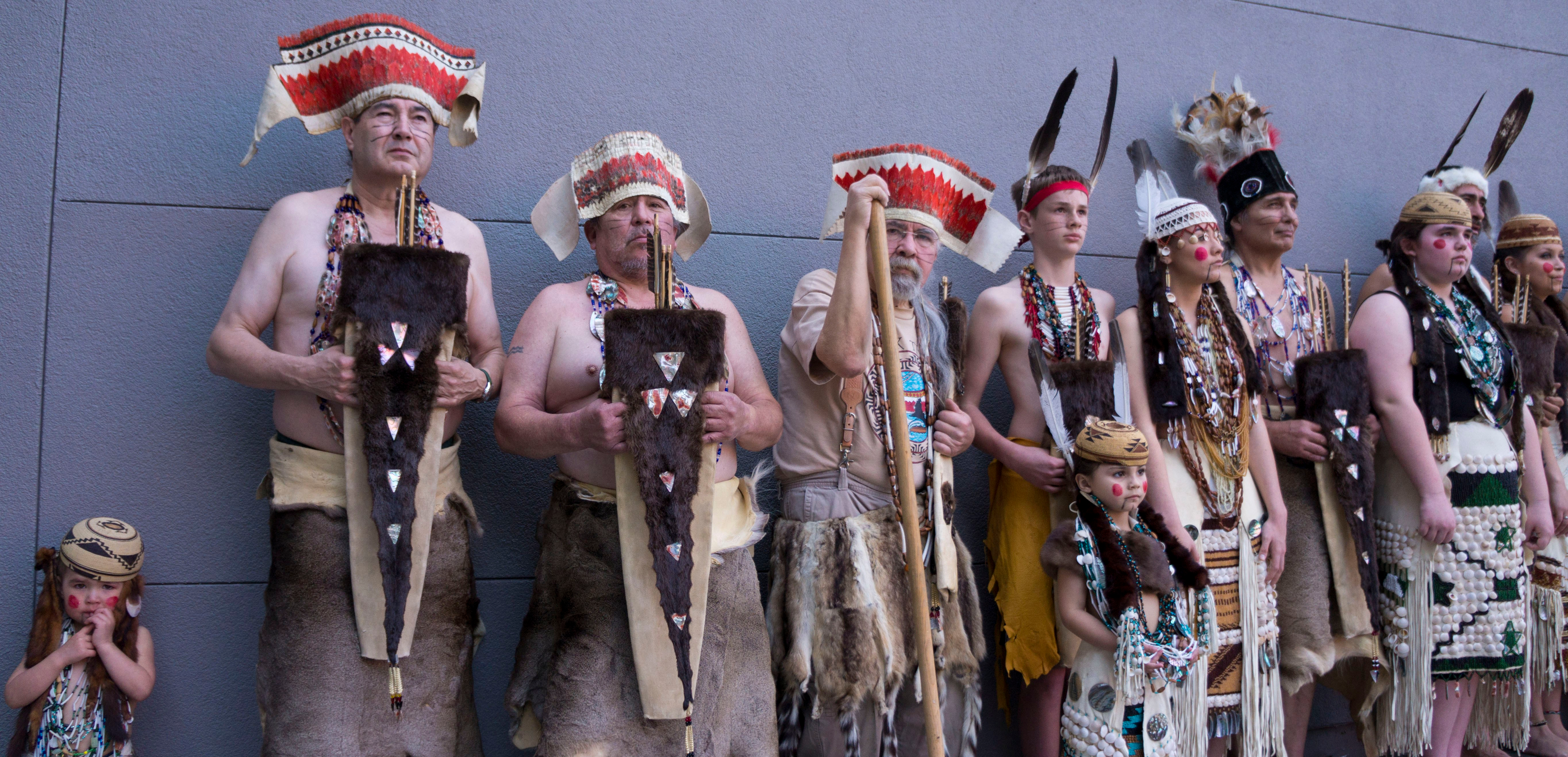
    The HSU Big Time, presented by the Indian Tribal & Educational Personnel Program, is a social gathering with dancing and cultural sharing events. What makes this event unique from other gatherings, is that it takes advantage of the campus to use this event as an educational opportunity for the community. Vincent Feliz, Chumash Master of Ceremonies, explained the songs and prayers during the event and introduced the dance groups from the Santa Ynez Chumash to the Tolowa Nation in Del Norte County. Each dance group also said who they are and where they come from, then lists the songs they sing. Along with the dance demonstrations, there were many cultural sharing events outside the arena that featured men’s and women’s gambling, basket weaving, carving, and a children’s tour of the fish hatcheries.

    Photo by Stella Stokes

    Feliz began the Big Time with a prayer with Julian Lang, a local Karuk storyteller. Then Feliz sang a grounding song with Lyn Risling, a local Yurok/Karuk/Hupa artist.When Feliz introduced the first dancers, the Maidu tribe, he explained they were one of the first tribes ITEPP invited to dance. They invited more tribes to dance and incidentally, Feliz said they decided to bring other California tribes. Chairs surrounded the dance arena in the West Gym, and each dance demonstration brought in a bigger crowd.

    After the Chumash singers finished, Feliz invited the ITEPP alumni and students who are graduating this year to the arena. He called out everyone by each name.

    “People wonder how we treat our introvert Indians,” Feliz said to the crowd. “We call them out.”

    A crowd of 30-40 people came, including some HSU faculty like Pimm Allen, who is one of the coordinators of the Big Time. They were met with a Chumash honoring song to thank them. Earlier that morning, ITEPP hosted an alumni breakfast to honor them.

    Photo by Stella Stokes

    Feliz emphasized the importance of  educated Indigenous people and the need for the Indigenous youth to succeed on a national and state level. On the HSU Fast Facts of the fall 2016 semester, there were a total of 89 students identifying as American Indian which makes up about one percent of the total student population. That population reflects the one percent of the national American Indian population in the U.S. at nearly three million citizens, according to the 2010 U.S. Census. The ITEPP’s mission is, “to facilitate and promote academic success and self-efficacy for primarily Native American Indian students at Humboldt State University.”

    Students in ITEPP like Bryce Baga and Adrian Romo would hang out at the Brero House, where ITEPP is located. They would study, talk to the advisors, or just hang out with other students. Baga also offers beading classes on his free time. He admits that being a double major in Native American Studies and Economics can be difficult.

    “It’s two completely different ways of thinking,” Baga said. “In my NAS classes, it’s all about community and connection. But in Economics, it’s all about-”

    “Supply and demand,” Romo said.

    “Yeah,” Baga said. “Just make money.”

    They were on the table to sell t-shirts to benefit ITEPP. There were more tables that featured non-profits and health programs from United Indian Health Services. The men’s gambling tournament was hosted by a newly founded non-profit called Ancestral Guard, whose goal is to teach Indigenous youth their culture. Founder Sammy Gensaw IV hopes to connect with Chile to fight for their water rights, just as the local tribes are fighting for water rights on the Klamath River. Having a student’s culture validated helps them succeed and help their communities, and the Big Time celebrates that.