The Lumberjack


Students Serving The Cal Poly Humboldt Campus and Community Since 1929

Day: April 11, 2018

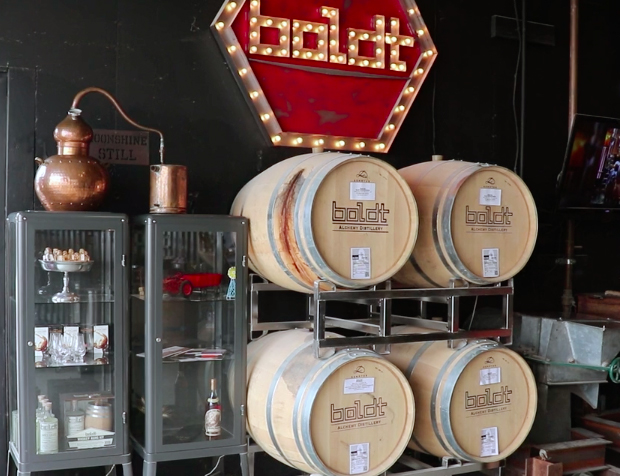
  • Alchemy Distillery holds its monthly Saturday open house

    Alchemy Distillery holds its monthly Saturday open house

    Alchemy Distillery is located at 330 South G St. in Arcata, across from the Arcata Marsh.

    On March 31, owners Amy and Steve Bohner held their monthly Saturday open house tour of their distillery. This open house includes free tours every hour from 2-6 p.m., along with complimentary drinks for visitors 21 years or older.

    The typical tour shows visitors how their signature BOLDT spirits are made, as well as the distillery process starting from grain section to bottling and labeling.

    The Lumberjack reporter Dajonea Robinson takes you behind the scenes.

    Video by Dajonea Robinson.
  • Consuming news safely

    Consuming news safely

    Sorting through the mainstream, and now local media

    When you turn on your local news TV station, you expect a solid mix of local and national news, and a variety of messages between stations.

    The news coverage from one area to the next will differ based on location.

    What you don’t expect is to be able to watch hundreds of news anchors, ironically reading the same script, on hundreds of different channels, about the importance of varied news sources and supported communities, like the companies owned by Sinclair Broadcast Group.

    Recognizing and understanding how to sort through the news, and have a well-rounded idea of what is happening, is important to processing the information you consume. Here are two important parts of journalism and fake news you should understand when consuming information.

    Understanding journalism objectivity

    Before diving into how to fact check and navigate the media, it is important to understand that objective journalism is incredibly hard, if not impossible, to achieve.

    People are inherently biased and influenced by the world around them. Journalists do their best, however, to inform the public, simply for the sake of the public.

    However, it is equally as important to understand that when it comes specifically to the news facet of journalism, journalists study, and are taught, to present the facts of a story from either side.

    This does not mean journalists agree with the information they have been given, but instead are presenting this information to the reader or viewer with as much objectivity as they can manage.

    The Society of Professional Journalists code of ethics is one of the most prominent professional ethics guidelines journalists follow, and sets the tone for what real journalism is supposed to be. These ethical principles exist to promote clear and concise reporting with four main facets: to seek the truth and report it, act independently, minimize harm and be accountable and transparent.

    For example, mainstream media outlets being owned by giant companies allows an argument to be made that these outlets are not independent, though they should work this way.

    Consider the case of Sinclair pushing right-based opinions and scripts to their newscasters across multiple local news stations. Sinclair also released a video in an attempted act of transparency, trying to inform the public why this script was given out. Deadspin, who released the compiled video footage of news anchors reading from their script, also provides this video in order to provide more detail to their story. This style of reporting leans toward writer bias, and is a little less formal than other outlets.

    In order to rise above the many messages media on all formats is designed to present to you, start with skepticism, and then some careful consideration. Make sure you’re digesting factual information, as opposed to fake news or misinformation.

    There are websites that specifically try to sort through political fact and fiction like the website Politifact.com. Politifact aims to provide fact-checking based journalism with principles based on “independence, transparency and fairness through reporting and clear writing.”

    Fake news in itself could be considered an oxymoron. News must be factual to be news. However, as the word of the year, and the biggest threat to our democracy today, knowing when you’re being fooled is vital.

    Skepticism and careful consideration

    As declared watchdogs of those in power, and also those who abuse their power, journalism is easily considered to be shady. The idea that journalists are out to dig up dirt and expose powerful or public figures for joy is an easy mistaken thought process to fall into.

    When you hear something on the news you find to be negative or shocking, understand there are news determinants that allow journalists to consider what is noteworthy and important for the general public to know.

    We take it upon ourselves as journalists to study these determinants seriously and with practiced objectivity. Knowing trust in the media is at an all time low, we encourage you to refer to other news sources when this happens.

    Use your skepticism of what you’ve heard reported and consider other articles or broadcasts on the same subject. Different reporting might present different facts. Even after studying a variety of sources, you as a reader or viewer may only have a small piece of the picture still. We as journalists have also considered multiple sources before presenting information so we are not failing our public by reporting on rumors or false information.

    Some websites exist to make this easier for you, such as Media Bias/Fact Check. This website lists specific sites and news sources that are either politically left-biased, centralized, right-biased or left-center and right-center-biased. You can find a list of questionable sources here as well. If you see a source on this list, they may not be the most trustworthy news outlet to refer to.

    Politifact, an outlet centered around fact checking, provides a truth-o-meter that follows the specific decisions and promises of politicians by following their actions and reporting back to inform the public whether their actions align with their words.

    The sources provided here are merely suggestions and are not an end all to fact-checking sources.

    Practicing the ability to step outside your own bias and recognize that of some media outlets to compare and contrast information is important to democracy.

    Always double check where your information is coming from and who might be influencing the message.

  • Letter to the editor

    Letter to the editor

    New Student Housing Community in the Works for Lumberjacks!

    Dear Editor:

    I’m pleased to announce that The Village, a new housing choice, is in the works for students attending Humboldt State University. As you probably know, HSU currently has room on campus for only about 25 percent of the students enrolled, which has made it difficult for HSU students to find housing year after year.

    According to a report funded by HSU, the Arcata housing market is so constrained, some students sleep in their cars or camp in the woods while they look for housing. There is currently demand for roughly 800 new student housing beds in order to address students’ housing insecurity and to support their academic pursuits.

    After various inadequate attempts to increase housing options, the city is now on the verge of having the most viable new housing choice for students in many years.

    The Village isn’t just another apartment building, it is planned as a purpose-built student housing community only half a mile from campus that specifically meets students’ needs with academic amenities such as spacious study rooms, computer lab and presentation room for individual or group study and collaboration, a fitness center with on-demand fitness programs, outdoor community space and secure covered bicycle parking. The Village will also have 24-hour professional on-site management, as well as peer mentorship from resident assistants that will be responsive to students’ needs. This property will also include many sustainable features including solar power, a bicycle-share program and electric vehicle charging stations, and will be built to environmentally conscious Leadership in Energy and Environmental Design (LEED) Silver standards.

    The Village will help improve the reputation of the Arcata community by creating more healthy competition in the housing market and energizing the local economy that is largely fueled by HSU and its students, and will introduce more diversity into the housing mix to reflect the diversity of today’s students and their needs.

    Despite the many positive benefits The Village will bring to the community, there are those who are actively trying to prevent current and future Lumberjacks from making The Village their home while attending HSU.

    If you are in support of the positive housing choice The Village will offer to HSU students and the community of Arcata and want to find out more, please visit this website: https://www.thevillagearcata.com/. You can also contact the Arcata City Council and let them know you support more student housing in Arcata, especially purpose-built student housing communities like The Village.

    It’s all about choices. Your support of this project can help ensure The Village is able to offer HSU students an exciting, new place to call home, and one that HSU students deserve.

    Percival Vaz
    Chief Executive Officer
    AMCAL Equities, LLC

  • Seeing is not believing: hidden disabilities in science students

    Seeing is not believing: hidden disabilities in science students

    Every morning, Humboldt State University senior and cellular molecular biology student Shazi Saboori wakes up next to a stack of pill bottles.

    “Depending on the day, I take between 8-10 pills, including Adderall when I wake up,” Saboori said. “I then eat something small, lay in bed for 30-40 minutes and wait for the Adderall to kick in, and allow me to have access to my brain.”

    Six months ago, Saboori was diagnosed with postural orthostatic tachycardia syndrome, or POTS.

    “There’s a part of my brain that cannot regulate blood flow,” Saboori said. “This causes me to get blood pooling, have a sudden drop in blood pressure and almost faint.”

    Saboori’s body attempts to increase the pressure drop through tachycardia, an extremely fast pumping of the heart while it’s at rest.

    “At one point, my resting heart rate was 214 [beats per minute],” Saboori said.

    In addition to tachycardia, POTS inhibits the left side of Saboori’s brain from communicating with the right side.

    “In my classes, I can’t just read the book and understand the material,” Saboori said. “I take a long time to make a master study guide, and to write and rewrite the material. I still get mediocre scores on tests.”

    POTS also causes Saboori to have anemia, or red blood cell deficiency, and gastric distress, which makes eating difficult. Saboori feels frustrated when people do not acknowledge her disorder, because it isn’t visible.

    “Many people have told me, ‘You don’t look like you’re sick,’” Saboori said. “I’m not looking for pity, or for people to lower their expectations for me. I’m looking for people to understand that [POTS] is not something I can control.”

    Michelle Goldberg, another HSU senior cell/molecular biology student, has ankylosing spondilitis (AS).

    AS is a form of rheumatoid arthritis (RA), which leads to joint degradation and inflammation of the surrounding membrane. Goldberg was first diagnosed at 12.

    “For awhile, I went to a support group for people with RA,” Goldberg said. “Most of the people there were adults. I was there with my dad.”

    RA causes Goldberg to experience pain in her lower body, center of spine, hips and joints.

    “When I feel good, I go to the gym, and do a little bit of elliptical and weight,” Goldberg said. “If it’s bad, I take some Aleve and put a smile on my face. Some days, I can’t stand up straight. Luckily, this has only happened twice since I’ve been at HSU.”

    Similar to Saboori, Goldberg recognizes that an invisible disability is not taken seriously.

    “Sometimes, I can encounter people who say, ‘You’re fine.’ But really, I’m not,” Goldberg said. “You can’t see what I have until my knees are really inflamed, and turned red.”

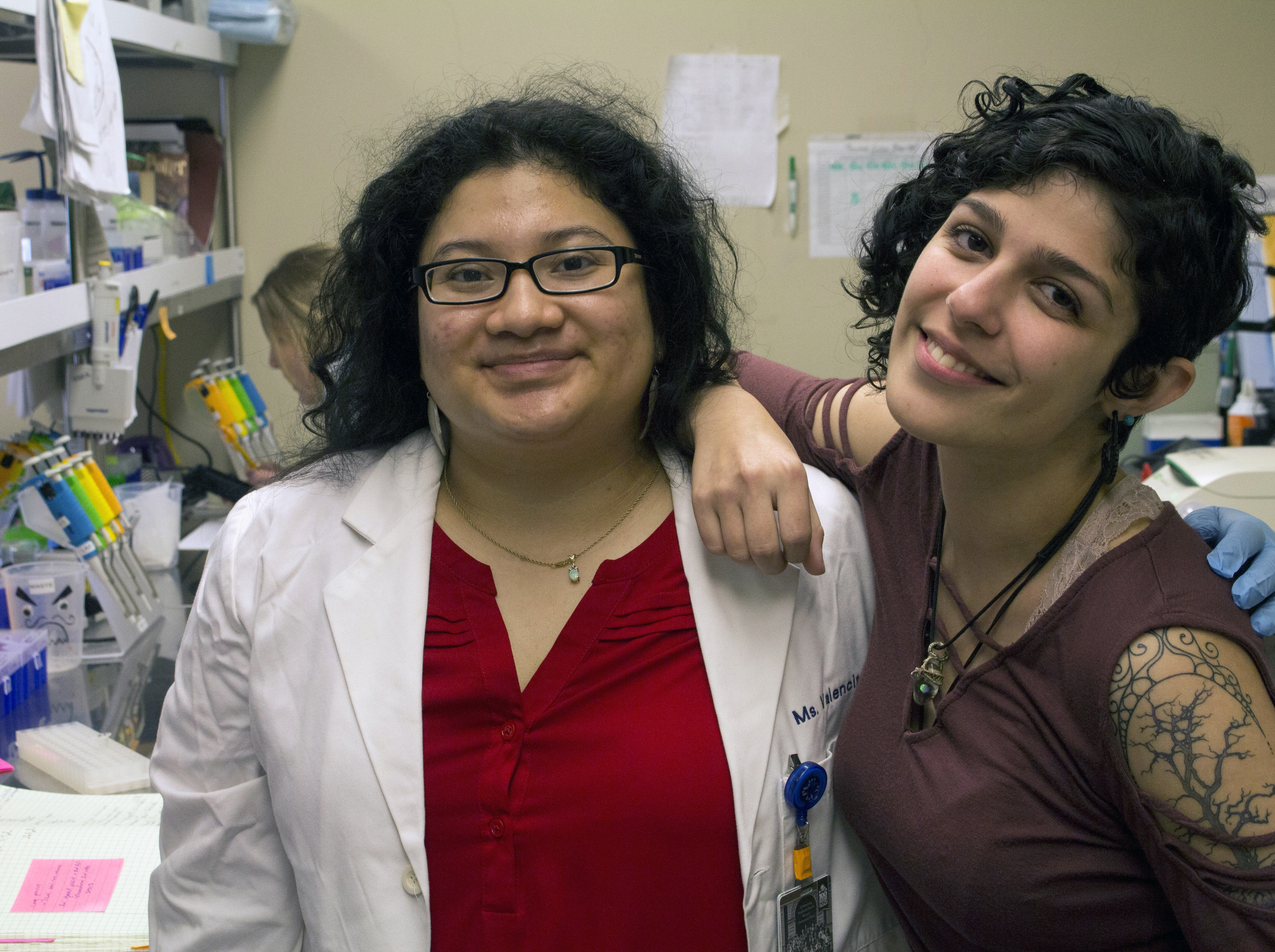
    Stephanie Valencia, also an HSU senior cell/molecular biology student, took eight years to finish a bachelor’s degree due to her hidden disorders.

    “I became friends with my microbiology teacher at my community college,” Valencia said. “She told me to get tested for a learning disability. I didn’t always have the best grade, but she believed I was a good scientist.”

    Valencia was diagnosed with a processing disorder, similar to autism and dyslexia. For people with processing disorders, learning new things takes a lot more time.

    “I wanted to know why I didn’t figure this out when I was younger,” Valencia said. “[My psychologist] said that a lot of people who are brown, like me, don’t get diagnosed until they’re in college. Elementary school teachers assume that brown students are dumb. They don’t push for students to go get tested.”

    When Valencia transferred to HSU, she began to suffer from anxiety attacks that caused her to miss classes. She was eventually diagnosed with generalized anxiety disorder, or GAD.

    “There’s a stigma about anxiety and depression in the sciences,” Valencia said. “People think that you don’t have the mental capacity to complete a rigorous program in STEM.”

    Valencia hopes to eventually become a physician-scientist in the field of neuroscience, even though the stigma around GAD could cause her some difficulty in pursuing her dream.

    “Unfortunately, people may not give you the opportunity to show that you could do it when they know of your disability,” Valencia said. “People think, ‘Oh, maybe she can’t.’ It’s the maybe that gets in the way of me being able to prove myself.”

    For more information on individuals with disability in the sciences, check out Dr. Mahadeo Sukhai and his book Creating a Culture of Accessibility in the Sciences.

  • HSU hosts CSU Native American Initiative council

    HSU hosts CSU Native American Initiative council

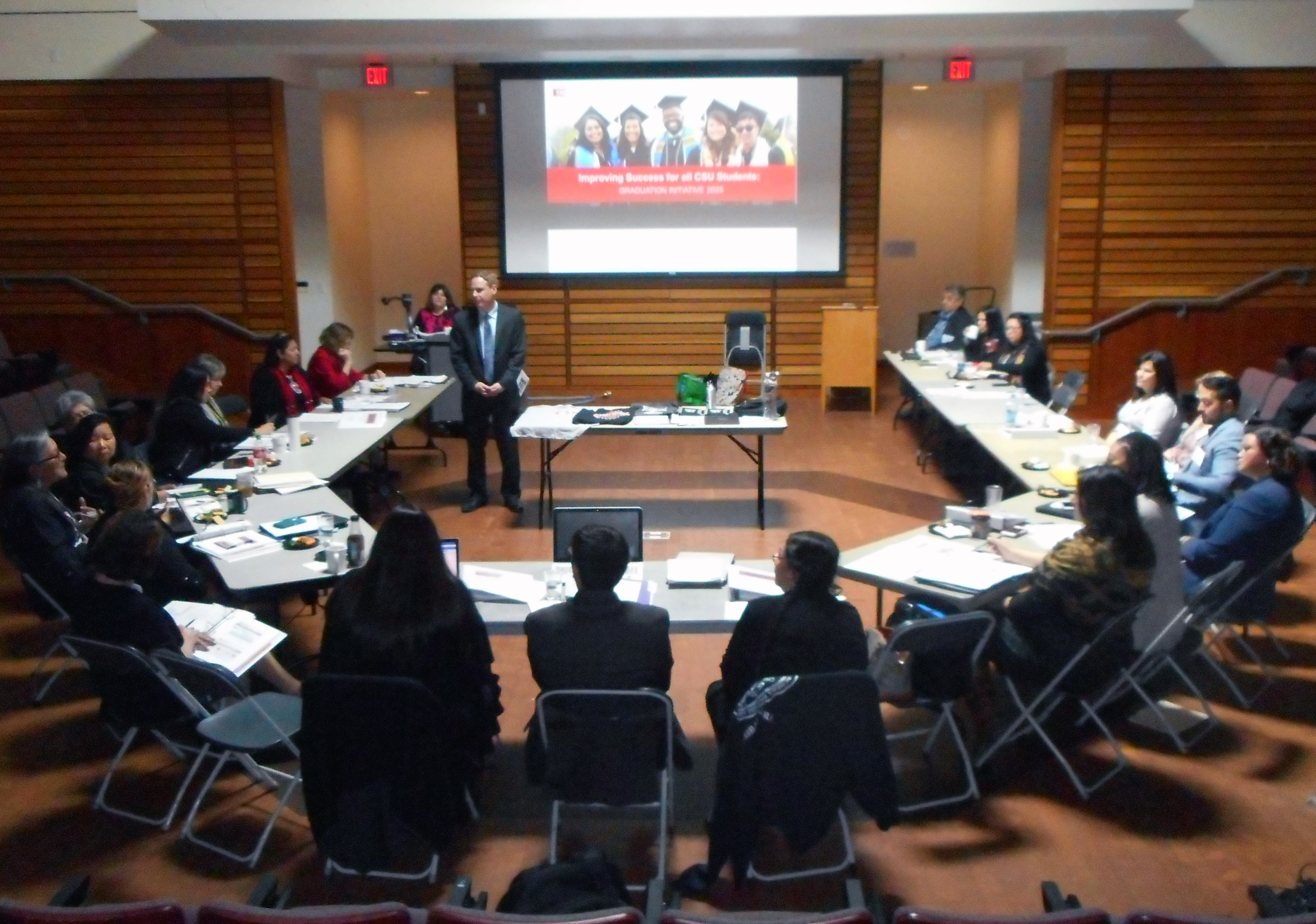
    The California State University Native American Initiative began in March 2006 as the result of a CSU summit with the representing leaders of 40 California Tribes discussing strategies to instill a pathway to higher education for Native American families. Humboldt State President Lisa Rossbacher will lead the Native American Initiative council.

    Last week, HSU hosted the California State University Native American Initiative statewide meeting in the Native American Forum on campus. Representatives from the California State University Chancellor’s Office, along with representatives from 19 of the 23 California State Universities, met with Rossbacher.

    Former HSU president Rollin Richmond was chair of the initiative, too. During that time, there were two summit meetings.

    Rossbacher was appointed by CSU Chancellor Timothy White to lead this initiative in February.

    “I am truly honored to be asked to serve as the presidential liaison with this council,” Rossbacher said.

    During the summit, Rossbacher laid out the overall goals of the Native American Initiative council.

    “One of our overall goals is to identify, share and support strategies that will help the graduation initiative [of 2025] and [Native American] student success. Strategies that will help us recruit students, retain students and graduate Native American students, and help them be successful beyond their time in the CSU,” Rossbacher said.

    Item two on the agenda was to support Native American studies research.

    “One of our goals is to engage and support faculty, staff and student research into the wide variety of fields related to Native Americans in the state and national Native American studies,” Rossbacher said.

    Another subject Rossbacher wanted to focus on was sharing information.

    “How can we share information that we are discussing and coming up with to support [Native American] student success? How do we share that with the tribal leaders throughout the state and the tribal communities? How do we share that critical information with the chancellor, his staff and the presidents throughout the CSU system?” Rossbacher said.

    The goals of the April 4 meeting were different than the overall goals of the Native American Initiative.

    The first goal of the April 4 meeting was to learn about updates and current CSU data on Native American student success, including recruitment, retention and graduation.

    “Look at the achievement gap or the opportunity gap that may be affecting Native American students on our campuses,” Rossbacher said.

    The third goal on the agenda was learning about some of the trends, practices and successes of the K-12 level and how that assists Native American students moving on to the California State system.

    The fourth goal of the meeting is developing strength.

    “Because I am the campus president, I want to be sure that you all know that there is something we are doing here at Humboldt State to accomplish those goals,” Rossbacher said.

    There are funds available from the Chancellor’s Office to support academic programming.

    “We do have funds that were established through the president’s council for underserved communities. It is a grant to the campus for academic preparation to strengthen the graduation initiative,” Maryann Jackmon of the CSU Chancellor’s Office said.

    “Funds can help students travel and see what is out in the world waiting for them after graduation,” Theresa Gregor, CSU Long Beach faculty said.

    The Tribal Liaison from the California State University of San Marcos, Tishmall Turner, is also the vice-chair of the Rincon Tribe.

    “President Rossbacher seems really genuine and sincere and she will do a good job of leading the Initiative,” Turner said.

    “President Rossbacher has been very supportive of Native American studies since she came to HSU,” Dale Ann Sherman, retired HSU Native American studies faculty said.

    The initiative will provide support to Native American faculty and students.

    “It gives you that lift to do the work. You don’t have to fight just to get to the point where someone will say go ahead,” Leece Lee-Oliver, CSU Fresno director of American Indian studies program and department of women’s studies said.

  • Struttin’ the walkway internationally

    Struttin’ the walkway internationally

    An international fashion show

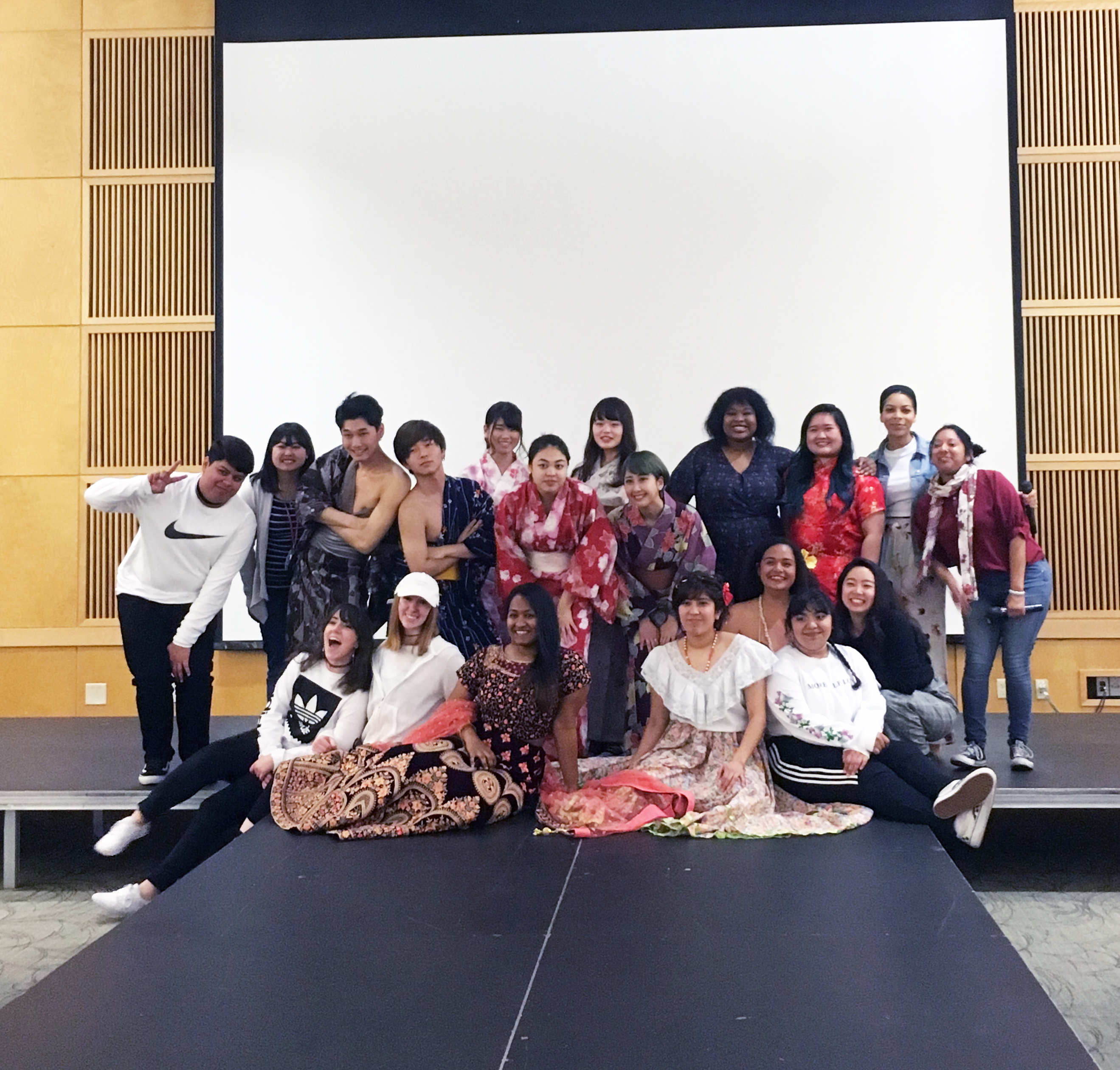
    Participants were invited to come dressed to represent their own cultural background or other cultures that interested them. Seven countries and cultures were represented with attire from China, India, Japan, Mexico, West Africa and Hawaii, as well as culturally significant and traditional dances from Mexico, Hawaii and Korea.

    Guests were greeted by Global Connections Club member and secretary Amanda Madden for the International Fashion Show at the Kate Buchanan Room on April 4. Her introductory speech highlighted the importance of inclusion and disregarding preconceived notions.

    “It is important that we sit here and keep in mind that this is a safe space,” Madden said. “We need to ignore cultural assumptions and preconceived notions regarding culture and tradition.”

    Representing her culture in dance and fashion was Humboldt State sophomore and Global Connections Club member Mikayla Kia, 20, dancing Hula ‘Aauna from Hawaii.

    “We just really wanted to put on another big event from the Global Connections Club for all the students involved, just before everyone leaves to go back home,” Kia said. “A lot of students are here with the IELI program from Japan, but it’s really sad because we just found out the program is getting cut after 30 years, and so this is the last group of students we get to host.”

    The IELI, or Intensive English Language Institute, was a foreign exchange program aimed to assist exchange students from 11 countries in acclimating to American culture and education, as well as becoming proficient in the English language. After HSU’s financial crisis was brought to light, the administration decided that defunding this program would help allocate funds to other exchange and international programs.

    “Even though it is really sad that this is the last group of IELI students, I feel like we are going out with a bang and they are all representing Japan today on the runway,” Kia said.

    Models on the runway strutted their stuff to the beat of legendary drag queen RuPaul’s hit single “Supermodel,” before stopping to talk about the cultural and familial significance behind their dress and presenting a brief powerpoint about the history.

    In addition to the fashion show, some models also took the opportunity to perform traditional or traditionally-inspired dances representative of their cultures.

    Anastina Steiber, Danny Flores, Caroline Mora and Dom Richards, members of the Global Connections Club, performed K-Pop-themed choreography to the song “As if It’s Your Last” by Korean girl group BLACKPINK. The group spent several weeks cultivating and rehearsing the choreography, which they debuted at HSU’s Lunar New Year celebration. They were inspired to do so by their love for dance and Korean culture.

    “We actually first performed this at this year’s Lunar New Year celebration on Feb. 16,” Steiber said, “and there weren’t too many people there so it wasn’t that intimidating, but today there were more people and the runway was pretty unnerving to dance on.”

    “I’m so sweaty, but that was awesome!” Richards said. “We all did so great, no obvious mistakes.”

    Mexico was also represented in dance by Daniel Gomez, 22, who performed an incredible rendition of the Jarabe in his fifth time at the International Fashion show.

    “I’ve been doing this since I’ve gotten here in 2013,” Gomez said. “I’m a dance minor here at Humboldt, and it’s pretty cool that Folklorico is taught here, but the program is definitely underfunded even though a lot of people are passionate about it.”

  • Women’s basketball reflects on CCAA title, NCAA tourney appearance

    Women’s basketball reflects on CCAA title, NCAA tourney appearance

    Fresh off a conference tournament victory and a NCAA tournament birth, it’s safe to say the Humboldt State women’s basketball team had a successful season.

    Before the season kicked off in early November, a lot of people could not have predicted such a successful year for the Jacks, much less a conference title.

    The players understood the expectations, but looked to make a statement and defy them. The team had formed a polarizing bond ever since they started practicing together, and they never looked back from there.

    “We all felt that we were a special group from the first time we met,” sophomore Tyra Turner said.

    Throughout the season, the Lady Jacks displayed a perfect match of comradery throughout the squad, and a burning desire to win. The team also had a great knowledge of their own limitations.

    “We’re a small team, so we spread the floor and try to get people to guard us outside,” junior Jovanah Arrington said.

    “I’m 5’10 trying to guard girls that are 6’3,” junior forward Isamar Conde said.

    This was on full display after they lost their first conference game to Chico State, but they responded by winning their next seven conference games.

    “Our offense struggled in the first couple of games, so we had to win games with our defense,” Conde said.

    Over that seven-game win streak, the team held opponents to just 57 points per game.

    This seven-game win streak was snapped by UC San Diego, who beat the Lady Jacks twice before facing off in the conference title game.

    After the loss to the UCSD Tritons, the Lady Jacks went 7-6 to end the regular season. This left the team’s fate for the tournament in question after such a strong start.

    However, the Lady Jacks still found themselves asking the same question over and over: why not us?

    “[Head coach Michelle Bento-Jackson] said to us before the tournament started, ‘Why not us?’” Arrington said. “We couldn’t find a reason why we couldn’t beat every team in [the tournament].”

    After beating Cal State East Bay and Cal Poly Pomona in the first two rounds of the tournament, HSU faced their toughest foe of the season in UCSD.

    The Jacks lost their first two games of the season to the Tritons, and the second game was decided by 15 points. As always, the team’s confidence did not waiver.

    “We almost beat them the first time,” Arrington said. “So why can’t we beat them again?”

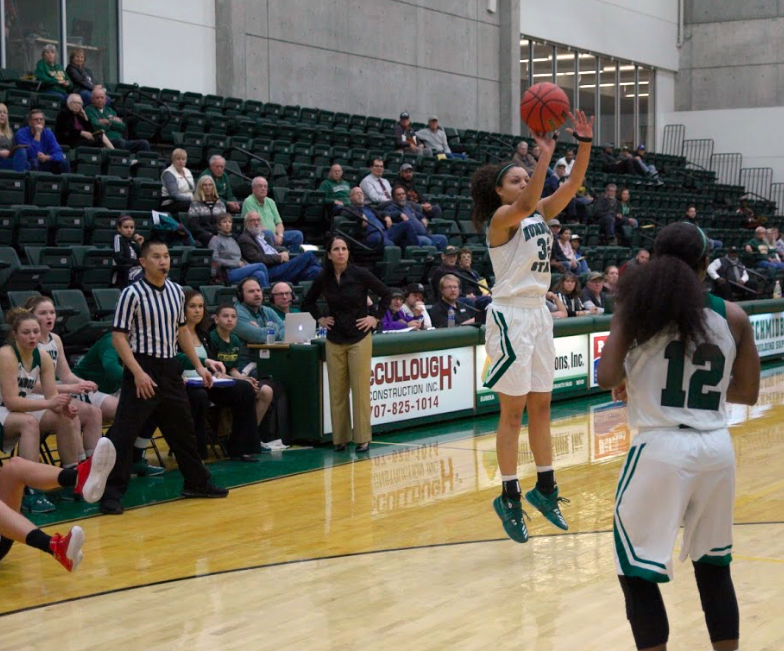
    HSU went on to win the title game 76-75 in a game that came down to an Arrington buzzer beater.

    “I didn’t think too much before the shot,” Arrington said. “If I had, then I probably wouldn’t have made the shot.”

    The win helped HSU qualify for the eight seed in the NCAA tournament, which matched them up with the number one seed, Azusa Pacific Cougars. The Lady Jacks upset the Cougars 66-60 before losing to Alaska Anchorage, 81-73.

    For everyone on the team, besides Turner (who played last season for Long Beach State), this was their first appearance in the NCAA tournament. While they did not get the result they ultimately wanted, HSU gained some very valuable experience.

    “I think we surprised a lot of people,” Conde said. “It’s a great feeling.”

    With many key players returning next season, the Lady Jacks will look to build on what they accomplished this season.

    “We came so far together as a team,” Turner said. “I just think that some of us are taking this as a learning experience for those of us who are going to be back for next year.”