The Lumberjack


Students Serving The Cal Poly Humboldt Campus and Community Since 1929

Month: January 2025

  • Donald Trump is Your President(?): Cal Poly Humboldt reacts to the presidental inaguration

    By Nick Escalada

    The interim period between the 2024 U.S. Presidential election day and Donald Trump’s official inauguration came on Monday, Jan. 20. At Cal Poly Humboldt, students and faculty alike have been expressing their strong opinions on this polarizing transfer of power from the very first day of classes. When campus reopened after the MLK Day of Service, which coincidentally lined up with the day of the inauguration, students gathered for a pro-Palestine march of resistance that put the University Police Department and the incoming Trump administration under the microscope. 

    Buildings were once again plastered with profanities and paint balloon explosions while hallways echoed with the now familiar drumming and chanting, but the crowd seemed charged with a fresher anger that one could only assume hailed from events of the previous day. Members of the protest shared a common sentiment of frustration and demoralization paired with insightful commentary on their motivations for taking action.

    Haley, an environmental science major, indicated her bleak expectations for the incoming administration while maintaining an air of hope as a dissident. “Generally [the next four years] seem not great, but I, like everyone here, came together to fight and protest [Trump]. Will anyone in power listen to it? Probably not, but we could still make it known that this is not a popular opinion amongst people.”

    Other students shared their concerns about particular policy decisions Trump promised to make in his second term. Ryan, a former biology major, declared his apprehensions. 

    “There’s a lot of things to be concerned about,” Ryan said. “A lot of dangers of accelerated political repression, anti-LGBT legislation, of accelerated ecological destruction.” 

    Ryan also shed light on the Georgia State Police’s killing of environmentalist Tortuguita, which was a major component of the march and an instance of police brutality he projects will be repeated under this new administration. 

    “This represents the fact that these multiple state governments are willing to spend such vast amounts of money and resources to push through these unpopular projects, demonstrates that they are actually scared of the power of popular, and that’s a very heartening thing, even if it’s awful.” 

    A natural resources student who goes by Skunk describes why he protests the new establishment through the march and beyond. 

    “The thing about this struggle is that you won’t care about it until it affects you personally, but by then it’s too late if you don’t speak up for the people who are being affected,” Skunk said. “I want to because I have a passion inside. But the thing is, if you don’t have anywhere to get it out, it can kill you — it can eat you inside. So, I want to inspire my fellow students and our communities like a ripple in a pond. I want the people who have been feeling unmoved by this to get out here and do something with us, because otherwise, nothing’s gonna happen.”

    “I expect that in the first 100 days of the new administration, President Trump will attempt to govern, in his words, ‘bigly,’” Dr. Stephanie Burkhalter, Cal Poly Humboldt political science professor, said. “He will concentrate on defining himself as the tough and decisive leader that America needs and wants. He has signaled to his populist supporters that he is willing to nominate loyalists to key positions in government leadership regardless of their lack of expertise or governing experience. Most of all, Trump seems driven to be perceived as meeting the expectations of his supporters and as competent in handling big issues that the country faces — whether or not that is truly the case. In this way he is like other politicians.” 

    Meanwhile, Professor John M. Meyer shared the disconcerting changes he noticed between the start of Trump’s 2016 term and his current one. 

    “The new administration is much more prepared to exercise power and opponents are much less visible,” Meyer said. “The administration is already taking advantage of this to initiate numerous executive orders on immigration, climate change, and foreign policy. I expect much more in the coming days. A goal is to overwhelm the opposition in order to maximize their impact. The immediate dangers are greatest for the most vulnerable among us, including people in the US without legal status, trans youth, and many others.” 

    These accounts may prove that the coming years could spell a dark time for many of us at Humboldt. However, those educated and impassioned about the policy issues that are now on the chopping block recognize that a future with positive change is still possible. A prominent bit of rhetoric against President Trump is that he is a threat to our very democracy, but it is uplifting to see that most people hold faith in that same democracy to ease the fears his administration now stirs. If anything, what has transpired on our campus in the past year should stand as an example of how changes of any magnitude can be made if enough people care.

    Nick Escalada is a sophomore at Cal Poly Humboldt majoring in wildlife conservation and management and minoring in journalism. He is thrilled to be spending his first semester on the Lumberjack team as a reporter, and is always on the lookout for a nature-related scoop. On his off days, you can find him hiking in the Arcata Community Forest, chilling on the beach, or grabbing a burrito downtown.


  • Local protestors against Trump march through Arcata and Cal Poly Humboldt campus

    Local protestors against Trump march through Arcata and Cal Poly Humboldt campus

    By Mia Costales

    One source did not give their name due to the nature of the protest and is referred to in the article with the pseudonym John Doe.

    By noon, a group of activists dressed head-to-toe in black had congregated in the Arcata plaza, flying Palestinian flags and bearing cardboard signs. Arcata community members gathered to protest in response to a national call to action against Donald Trump’s presidency on Tuesday, Jan. 21, as well as in support of the Palestinian martyrs and for Tortuguita, an environmental activist who was shot and killed by Georgia State Patrol officers in 2023. By 12:30 p.m., a group of several dozen people clad in black gathered around a large sign with the phrase “Fuck Trump, Viva Tortuguita, Free Palestine,” as a couple members of the group gave speeches. 

    Jasmine, a local activist who refrained from sharing her last name, gave a heartfelt speech in which they rallied the attendees to pursue a more anti-capitalist lifestyle.

    “What do we do?” Jasmine said. “We show up to events like this and we can organize our own. We can still contact our representatives or join class action lawsuits against Jared Huffman. We can help people like Leonard Peltier wants to. We can feed our friends or read a book together, sharing resources when we find them. We can boycott brands and products that are rooted in colonization and exploitation and we can disrupt their business. There are more people here who are doing the work to create an ethical future and you are wanted in that work however you show up, whenever you show up, however you can. It’s true that there is no power like the power of the people. We can bring the empire to its knees. Free Palestine, free Sudan, free Congo, fuck the U.S.A and fuck Donald Trump.”

    The group of protesters took to the streets around 1:00 p.m., marching up G Street. They blocked traffic as they marched up the road yelling chants such as, “Viva viva Palestina,” and, “When immigrant lives are under attack, what do we do? Stand up, fight back.” Their route took them past the Josiah Lawson memorial mural and up L K Wood Boulevard, where they eventually reached the library circle and made their way onto the Cal Poly Humboldt campus. 

    Protestors then marched from the quad to the forestry building, chanting, banging drums and drawing with chalk. Once they made it to the entrance of the forestry building, many entered the building, continuing to chant, play instruments and give speeches. Water bottles, burritos and flyers for Food Not Bombs Arcata were handed out. Faculty — such as Vice President, Chrissy Holliday, and Assistant Dean of Students, Heather Honig — attempted to mitigate the situation by asking protestors to clear a path for students. Protesters were quick to comply with requests and some even took it upon themselves to guard the entrance to ensure students could safely enter and leave the building. After leaving the forestry building, they marched over to the Natural Resources building where they continued to protest. As they were leaving, the fire alarm was pulled. The march continued on a path toward Harry Griffith Hall and eventually Siemens Hall. 

    “When I was in high school, I witnessed a city police officer attacking one of my classmates,” John Doe said. “And just doing research into the actions of the local police officers has led me down into a spiral of activism. I think now more than ever, community is something that is going to save us. Our governments obviously don’t represent us. Our oligarchs don’t represent us and we have to turn to each other.” 

    Mia Costales is a junior journalism major and the Life & Arts Editor for The Lumberjack. With an extensive background in music performance, she hopes to combine her love of music and the arts with her passion for localized news and activism to bring thoughtful and informed stories to the public. 

  • A tale of two films, horrors and thrills: Heretic and Nosferatu bid a chilling farewell to 2024

    A tale of two films, horrors and thrills: Heretic and Nosferatu bid a chilling farewell to 2024

    By Nick Escalada

    This past year felt like a prolonged clash of highs and lows for the film industry, with blockbuster hits like Dune: Part 2 and Furiosa: A Mad Max Saga being offset by the likes of Coppola’s disappointing Megalopolis and the universally ridiculed Madame Web.

    One 2024 genre that rarely let me down, though, was the horror/thriller movie, whose consistency was punctuated in the closing months by two standout releases: Scott Beck and Bryan Woods’ Heretic and Robert Eggers’s Nosferatu. As someone who’s only started to grow comfortable with the conventions of the horror genre, I’m delighted to have been kept on my toes by back-to-back films that shake up the formula in their own ways.

    Heretic is a movie that almost demands a second watch. It is meticulously written in a way that asks you to pay attention, but also to take the time to reflect on what is being said. Plotwise, it turns the “find the killer’s weakness” trope on its head by making the villain a pedestrian-looking chatterbox, and instead draws your terror from not knowing what he plans to do and why. Two door-to-door missionaries are at first thrilled to be welcomed in by a man eager to discuss their faith, but they soon get the feeling that they won’t be leaving unless they play their cards right in the conversation.

    As you might expect from a movie with this title, there is a hefty deal of religious commentary, much of which is unashamedly explicit. What I realized to some relief by the end, though, is that Heretic pushes no agenda of its own, and like any good work of art, it offers ideas only to facilitate discussion amongst its audience. This movie might spur you to evaluate your own faith and how different people and norms have shaped it, and if not, hopefully you’ll heed the warning it issues about judging intelligence and morality based on first impressions. Heretic is available now on Google Play, Prime Video, Apple TV, and Fandango, and I highly recommend it.

    Nosferatu is a different beast entirely. Getting my gripes out of the way, its biggest pitfall is being marketed as a horror movie. Being an almost shot-for-shot remake of a 1922 silent film that somehow induced fear back then, Robert Eggers understandably sought to make this iteration hair-raising for a modern audience while retaining full reverence for its source material.

    Unfortunately, I feel that the result is two hours of noise and embellishment surrounding a pretty underwhelming central terror whose mystique has been spoiled for over a century. The movie even seems to acknowledge this weakness, as it relies on cheap, nonsensical jumpscares in a few instances to artificially maintain its tension.

    This is not at all to say that I didn’t enjoy my time with Nosferatu. The film excels narratively as an exploration of unconditional love and sacrifice. Count Orlock acts less as a villain and more as a calamitous force of nature that tests each of the main players’ devotions to one another, which manifest in varied and progressively tragic ways over the course of the story. Jokesters online are already poking fun at Lily Rose Depp’s frenetic performance as Ellen Hutter, but I think that the vampire-induced delirium coupled with Ellen’s unyielding affection for her husband Thomas makes her character all the more sympathetic and heart-wrenching. The star-studded cast is warranted with each actor deserving their own praise, and I’ll give a special endorsement to fans of dark gothic and Victorian atmospheres. Nosferatu is still in theaters and I advise that you don’t miss it!

  • Reel Talk with Julia: Overloaded with mediocre biopics, A Complete Unknown fails to stand out

    Reel Talk with Julia: Overloaded with mediocre biopics, A Complete Unknown fails to stand out

    By Julia Kelm

    A Complete Unknown was released in theaters on December 25, 2024. The film was directed by James Mangold and follows Bob Dylan, aka Robert Allen Zimmerman, played by Timothée Chalamet. The plot is about Dylan’s early career in the 1960s and pursuing his very controversial and revolutionary decision that changed the course of folk and rock music in America forever.

    I have been excited about this film ever since I heard about its production in February of 2023. I was even more excited when I saw the trailer, and realized Chalamet looked pretty convincing as Dylan. 

    I’ve been a fan of Dylan ever since my dad played his records for me as a kid, so I had relatively high expectations for the film. However, after seeing it on Friday, Jan. 7, I left the theater feeling mildly disappointed, but not surprised.

    There were a few things I loved about this film. One aspect is that the film opens with Dylan going to find Woody Guthrie, played by Scoot McNairy, who he finds at a hospital in New York. 

    Just as some Bob Dylan lore, and to give some context for why this scene is so important, Guthrie is — in my opinion — the most influential American folk singer of all time. There is a clear chain of events for how his influence changed music forever. 

    Guthrie was Dylan’s inspiration and idol. Without him, Dylan would not have made the music he did. If Dylan hadn’t made his music, he presumably wouldn’t have given the Beatles marijuana — a moment that helped spark their evolution into creating more experimental and iconic albums, like Sgt. Pepper’s Lonely Hearts Club Band

    Are you following my insane string of logic here? 

    To put it more simply, Guthrie’s impact on music history is tremendous and underrated.

    Seeing the moment Dylan met his idol and then singing “Song for Woody” did put quite a smile on my face. I was hoping this would be portrayed in the film beforehand and was not let down in that respect. 

    In addition, Chalamet’s depiction of Dylan was fantastic. He sang comparably well to Dylan, and really portrayed how much of a dick Dylan is, which was great to see.

    I would not be mad in the slightest if Chalamet was nominated for an Oscar this year.

    Now I can’t say I outright hated this film, because I think hate is honestly too strong of an emotion. 

    Ever since the success of Bohemian Rhapsody (2018), we have seen an overload of mediocre biopics almost every single year since.

    I wanted so badly for A Complete Unknown to do something different. It needed to stand out in some way so it didn’t follow the overplayed rise to fame story we’ve heard over and over again. Alas, this film drags just like the rest.

    The film focuses way too much on Dylan’s scandalous relationship with Joan Baez, played by Monica Barbaro. Instead, the time could have been spent on what an artist does at the expense of everything and everyone else to create their art. Making for a more venomous twist on the traditional, and overdone musical biopic. 

    Dylan is one of the most notorious assholes in the music industry. To this day, you don’t know if you’re gonna get a good show or not. It just depends on whatever his mood is like. 

    Instead, he gets whittled down to his “voice of a generation” status without regard for the labyrinth of contradictions that snake through Bob Dylan as a person and his discography. 

    To conclude, I’m not against more biopics being made. I think they can be fun and memorable like Dexter Fletcher’s Rocketman (2019) or Baz Luhrmann’s Elvis (2022).

    It looks like we’re at least heading in a more creative direction with the release of Michael Gracey’s A Better Man (2024) which also just hit theaters on Dec. 25th. I won’t lie, the CGI monkey has me intrigued. 

    Whatever the future of biopics holds in Hollywood, I’ll continue to stay tuned in.

    Fingers crossed they don’t fuck up the Bruce Springsteen movie starring Jeremy Allen White. 

    Julia is a journalism major at Cal Poly Humboldt. She loves film and is a regular on Letterboxd. To quote Robin Williams in her all-time favorite movie, Dead Poets Society, “The powerful play goes on and you may contribute a verse. What will your verse be?”

  • LA-native Cal Poly Humboldt students and families impacted by Palisades and Eaton fires

    LA-native Cal Poly Humboldt students and families impacted by Palisades and Eaton fires

    By Savana Robinson

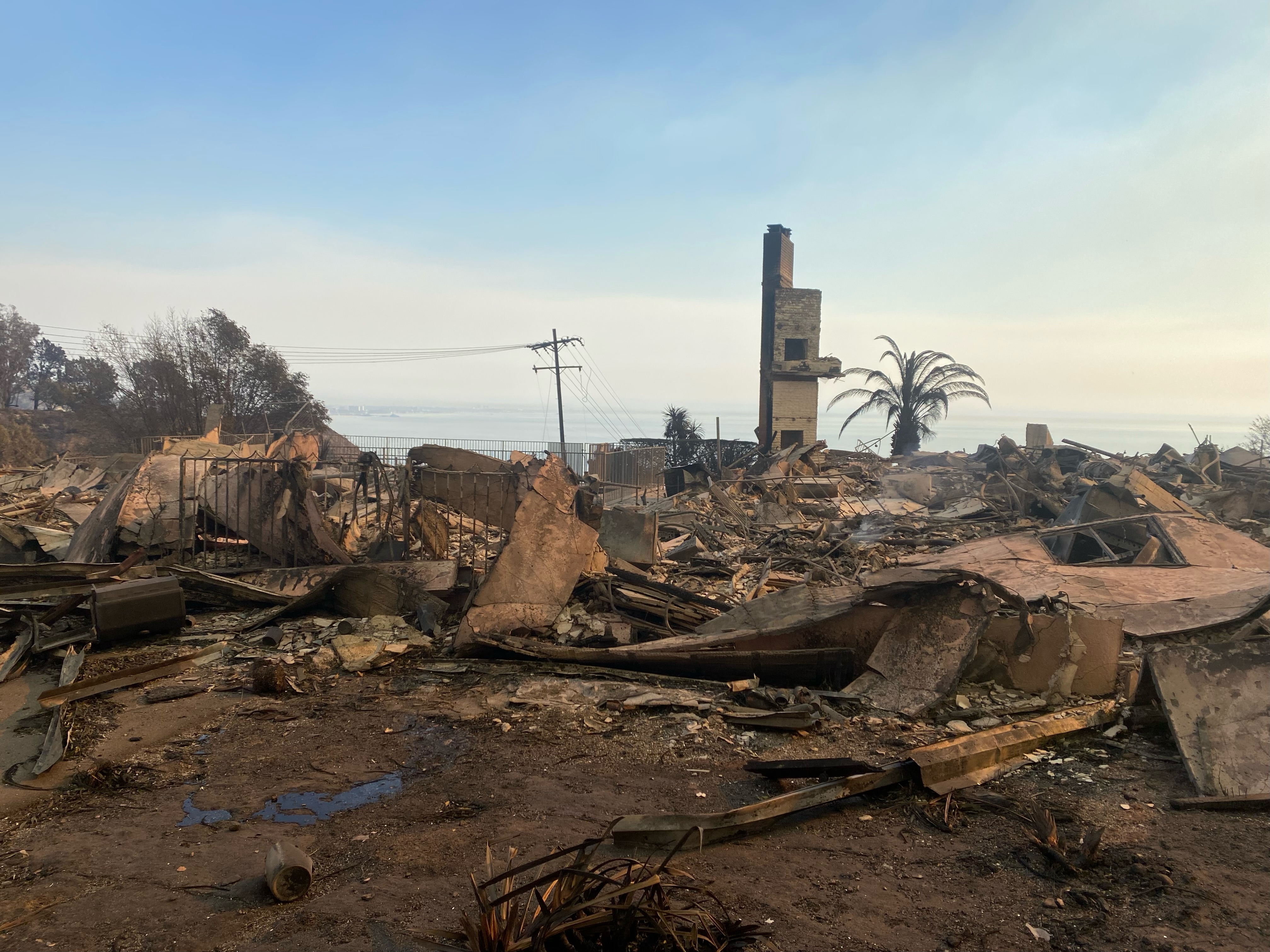
    On the evening of Tuesday, Jan. 7, Abby Miles opened the door to her family home in Altadena and saw the hillside on fire, flames quickly moving toward her. Miles screamed for her dad, then ran to help neighbors before grabbing some belongings and bags she had already packed for her return to Humboldt. By the time her family had their dogs and most cherished belongings in the car, the sky was bright red and ash was falling.

    “It was honestly a lot of running around and panicking,” Miles said. “What do you do when you open your front door and the whole mountain is on fire behind you?”

    The Eaton Fire started not far from Miles’ house. On Jan. 21, it was 89% contained, having burned 14,021 acres and destroyed 9,418 structures. Miles is a senior child development major at Cal Poly Humboldt.

    “The fire started in Eaton Canyon, which is right off of Altadena Drive,” Miles said. “And my house is two blocks over from Altadena Drive.”

    Miles and her family evacuated and went to several loved ones’ houses in the following days.

    Earlier that day, Charlotte Kuhner had to evacuate her home in the Pacific Palisades but found deadlocked traffic when she reached Sunset Boulevard. After taking 30 minutes to move 20 feet, Kuhner made it onto the Pacific Coast Highway before her neighbor, stuck further up Palisades Drive, was told by a police officer to abandon their car and run because the flames were so close, which he did. Later, Kuhner watched reports on KTLA5 of cars being bulldozed to give the firefighters passage up Palisades Drive. 

    That evening, Kuhner was at an Airbnb with seven loved ones who had all been displaced by the fire. Two days later, Kuhner found out that her family’s home was okay after her dad and brother went on foot to confirm that it was still standing. Most of the houses on Kuhner’s street survived, but two streets up, including a home she used to live in, everything had burned to rubble. 

    Several cars drive along a paved road lined by trees. In the background is a mountain overtaken by dark smoke.
    Photo by Michael Osswald | Cars evacuate on Palisades Drive on Jan. 7 as a plume of smoke rises over the mountains.

    Kuhner is a senior accounting major at Cal Poly Humboldt.

    “There’s homes still smoldering and burning and one house will be perfectly fine, and then the next eight [will be] completely destroyed,” Kuhner said. “It’s insane to see. It’s so devastating.”

    Kuhner, appreciative of the survival of her family home, mourned for her neighbors and those around her who were not as fortunate.

    “Me and a few people I know whose houses did survive are feeling crazy survivors’ guilt,” Kuhner said. “Our entire community is gone, but our house is still there. But what do you do after that? No one’s around.”

    As of Jan. 21, the Palisades Fire was 65% contained at 23,448 acres burned and 6,528 structures gone.

    Cal Poly Humboldt Counseling and Psychological Services (CAPS) Chair, Jacqueline Mayrand, explained the causes of survivor’s guilt and natural disaster-related trauma and what those experiencing it can do to cope. 

    “Survivor’s guilt basically occurs in the aftermath of a traumatic event that affected a group of people and some may compare their experiences to those of others who were less fortunate during the event, which can lead to feelings of guilt,” Mayrand wrote in an email. 

    Mayrand offered advice for those experiencing negative feelings in the aftermath of traumatic events.

    “I think talking to people who have been in similar experiences [is helpful], finding the support through friends, loved ones, co-workers who are willing to have these conversations, making sense of [it] with others,” Mayrand said.

    Miles’ uncle is a firefighter who grew up in Pasadena and Altadena and has fought the Eaton Fire since the day the fire broke out.

    “He actually has been staying at my house with his crew members because so many firefighters came from other places, and so many people were displaced from their homes,” Miles said. “He just texted my dad. He was like, ‘can we sleep on your couch?’ And so now, there’s five firemen just chilling in my house in the dark whenever they need somewhere to sleep, which is funny to think about, but also it feels really good knowing that there are people who are dedicated to this neighborhood.”

    Miles’ uncle was emotionally affected by the devastation caused by the fire, exacerbated by a lack of water.

    “He was just saying how he’s never felt like he’s been letting people down more,” Miles said. “His family home is a couple blocks down from my house, so it was really close to the fires. He just sounded so heartbroken.”

    The National Guard is blocking entry to both the Pacific Palisades and Altadena to prevent looting. Only some people with proof of residence and valid reason to enter were allowed past guards. Kuhner noted the strangeness of being barred from her neighborhood, especially when wanting to help.

    An empty, flat beach with pathways and fences installed on the sand, and a couple palm trees. The sun is swallowed up by a giant, looming wall of smoke.
    Photo by Charlotte Kuhner | Santa Monica Beach near the Beach Club on Tuesday, Jan. 7, after the start of the Palisades Fire.

    “It’s weird not being able to … go to my neighbor’s house and grab their things because I have some elderly neighbors who can’t go back in there until it’s completely 100% fine,” Kuhner said. “I just feel helpless. I want to help them, but I know it’s not safe.”

    In the days following the start of the fires, an outpour of support and resources were shared on social media. In the aftermath of the fire, Kuhner noticed amid the shock, the community came together.

    “Everyone has just been kind of looking out for each other, contacting each other. It’s been very supportive, but I think everyone’s really devastated and just in shock still,” Kuhner said. “I don’t really know how everyone else is feeling, but I know me and my family are at least feeling very supported.”

    Kuhner spoke about when they would return to the devastated area.

    “My dad and I were talking,” Kuhner said. “He’s like … ‘when we go back there, it’s just gonna be so quiet, it’s gonna be so eerie.’ We’re keeping the house for sure; I mean, it’d be stupid to move, but I don’t even know how long it’s going to be before we go back in. It’s scary.”

    Mayrand explained how people have a window of tolerance when it comes to everyday stress versus traumatic stress. The window includes everyday stressors that come with things like classes, homework and deadlines, but stress beyond that can cause duress. Mayrand listed things to watch out for when dealing with stress outside of that window, like hypervigilance, difficulty sleeping, relaxing or handling stressors of everyday life.

    “If it starts to be outside of that kind of window of tolerance where you start to feel like, ‘gosh, my anxiety has really risen and is no longer at a place that I feel like is manageable,’ and it’s starting to really be elevated,” Mayrand said. “That’s when I would start to, you know, pay attention and see if there’s additional support that you need, either with your group of friends, your family, to add more regulating skills or calming skills, or to [seek counseling].”

    Kuhner and Miles both spoke about their hometowns in L.A. County, compared to how they’ve been portrayed in the media.

    “I’ve been seeing a lot of news reports on social media and stuff,” Kuhner said. “There’s a few celebrities who live in this neighborhood; it’s pretty close to Hollywood. I’ve only seen news reports on that stuff, and it honestly makes me angry. It pisses me off because that’s only such a small portion of the community.”

    Kuhner gave insight on the Pacific Palisades community and how connected they are.

    “I want people to know that the majority of the community are hard-working families, and they’ve lived in L.A. their whole lives, they give back,” Kuhner said. “You go to the grocery store, you know someone who happens to know your brother and who happens to know your neighbors, and it’s just it’s such an interconnected community, and you don’t really get that in L.A., so it’s such a special place.”

    CAPS would like to encourage those affected physically or psychologically to reach out to schedule an appointment at caps@humboldt.edu or call (707) 826-3236.

    Savana Robinson is a senior journalism major and news editor of The Lumberjack, as well as a multimedia journalist at Redwood News. She loves motorcycles, cats and video games.

    A mountain in the distance is overtaken by fire and smoke at night, with dozens of houses nearby at the base of the mountain.
    Photo by Abby Miles | The view from the 210 of the fire while driving away from Altadena and moving towards Sierra Madre on Jan. 7.
  • What’s happening in LA? Breaking down the science behind the Palisades and Eaton fires

    What’s happening in LA? Breaking down the science behind the Palisades and Eaton fires

    By Jess Carey

    Southern California is facing one of the most detrimental natural disasters in recent history. Over 12,000 homes and businesses have been destroyed or damaged and at least 25 people have died in the wake of four wildfires that broke out across Los Angeles County early this year, as documented by The Los Angeles Times on Jan. 17. 

     A lack of rain coupled with extremely powerful Santa Ana winds created the perfect storm for flames to spread rapidly through vegetation and neighborhoods, overwhelming local firefighting resources and prompting mass evacuations. The Eaton Fire and the Palisades Fire have added to the growing list of destructive wildfire incidents in California’s recent history, raising questions about why and how this disaster occurred at such a scale, especially with wildfire season still months away. 

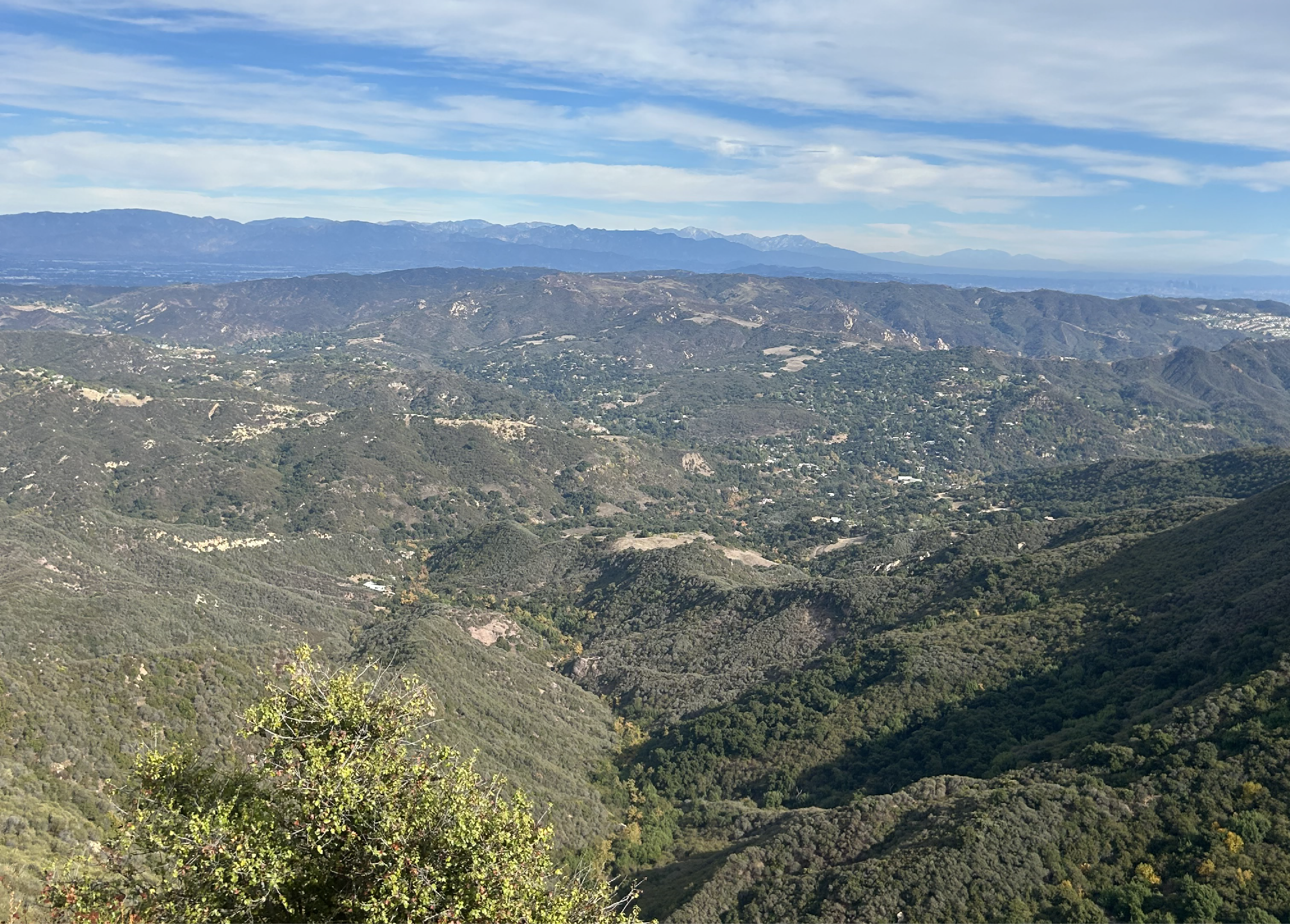
    Data from the Scripps Institution shows that California is getting hotter, seeing an average annual temperature increase of about 3 degrees since the early 1900s. Warmer temperatures coincide with a lack of rainfall, creating dangerous wildfire conditions as vegetation dries out. This year, L.A. experienced record-breaking temperatures throughout the summer and a significantly drier-than-usual fall and winter, receiving a scant 0.16 inches of rain since June, as documented by the Los Angeles Almanac in 2025. The chamise and manzanita chaparral, live oak woodland, and coastal sage scrub of the Santa Monica Mountains and the foothills of Angeles National Forest are constituted by oily and highly flammable plants that have evolved with regular fire return intervals. 

    Controlled burning is a land management technique where accumulated vegetation is burned intentionally during weather windows of low fire risk. The Chumash and Tongva peoples native to the Los Angeles basin light fires as a land management technique and cultural practice, opening up land for hunting and promoting ecosystem regeneration. Despite the benefits, this practice was historically repressed and even banned by the state’s 1850 Act for the Government and Protection of Indians. Many grassroots organizations and agencies, like the Cultural Fire Management Council or the Indigenous People’s Burning Network, are a part of an effort to reestablish burn cycles and cultural relationships to fire across the West. Controlled burning mitigates the buildup of dense vegetation, which in turn contributes to less fuel present when a fire comes through. However, according to the California Chaparral Institute, high intensity fires in chaparral environments are driven primarily by weather patterns and not by age or density of shrubland. 

    Cal Poly Humboldt fire science professor Jeff Kane notes that increasing the scale of controlled burns as a management technique may not be an easy solution to fighting wildfires in Southern California. 

    “The thing about chaparral is that if it burns once, it can be ready to burn again a few years later,” Kane said. “You don’t have fuel accumulation in quite the same way as we see in forests. It’s hard to say what else could have been done to prevent this situation. When you have winds that are that fast and strong, embers are blowing everywhere. The weather was so extreme that firefighters couldn’t fly planes to drop retardant, or even access some of the places that were burning.”

    In all of California’s most destructive wildfires, the brunt of property loss occurs around the wildland-urban interface. Neighborhoods like Altadena and Pacific Palisades are located in hilly, brushy terrain adjacent to and intermixed with large tracts of vegetation. Danger arises when homes are surrounded by this fire-prone and fire-dependent environment, especially if those homes are built out of flammable materials like wood. The city of Los Angeles has strict building safety codes for new construction in high fire danger zones, yet most development occurred before these laws were enacted, leaving older neighborhoods vulnerable. 

    Since 1960, the population of Los Angeles County has doubled, making it now the most populated county in the country, contributing to a persistent demand for new housing. However, 72% of L.A.’s land is zoned for single family homes, as shown by city zoning maps collected by the Othering and Belonging Institute. This means that it is illegal for developers to build apartments, tenements, or mixed-use buildings in these zones that make up most of the county. This creates pressure for developers to extend suburban sprawl into the hills and fringe of the city as lowlands are already developed, creating neighborhoods with high fire risk.

    A complicated array of factors combined to create these deadly fires, and as weather patterns become more extreme, it remains crucial to adopt preventative strategies now. Improvements in urban planning, fireproofing existing buildings and creating sufficient fuel breaks around neighborhoods can be significant steps towards safer communities. 

    “Events like this are going to keep happening,” Kane said. “And we need to come up with some creative solutions moving forward.”

    Jess Carey is a senior at Cal Poly Humboldt, majoring in biology and double minoring in botany and journalism, and the science editor for The Lumberjack. They are passionate about telling stories that are relevant to the community, branching their interests in science, music, and the arts.

  • Yes way José – We need a TJ’s 

    Yes way José – We need a TJ’s 

    By Noah Pond

    Ahhh, Trader Joe’s. What wouldn’t I do to have one here in Humboldt? Can you afford the food that you buy here in Arcata and Eureka? I cannot. Money isn’t necessarily the easiest thing to come by as a full-time student, but that doesn’t mean you shouldn’t be able to get delicious grub-grub for affordable prices.

    Trader Joe’s is ridiculously good for so many reasons. It has cheap frozen meals that are actually so buss and are ready in just minutes. I know most of you are not tryna come home after a long day at school or work, make rice for 30 minutes and then fry it with veggies or chicken for another 15-ish minutes. You could just buy a bag of that stuff from TJ’s for $2.99 — like, what? Some of you are spending so much on a different kind of bag when you could have a whole damn meal for three bucks.

    Not to mention the liquor section goes dumb — like a 6-pack of IPA for $5.99 is insane. That’s a dollar a beer. That’s the way beer was intended to be. At Safeway, which is where I see most of you loading up on booze on Friday and Saturday nights, a 6-pack costs $12.99. What if you want some shots? You stand at the alcohol aisle for like 8 minutes trying to figure out what the cheapest vodka is and you just settle on a 750ml bottle of Tito’s like always and pay $18. On the other hand, if you went to TJ’s, you could get the same size bottle 10 times distilled for only $9.99.

    I feel like I should be getting paid to write this because this jawn is sounding like an ad. My point is Trader Joe’s is blowing the other stores out of the water with their prices. 

    Another thing TJ’s does that no other grocery store can do is product mashing and entertaining package designs. They make things that you never knew could go together, and these fusions go together better than you ever could have imagined. The pickle-in-a-chip potato chips, pizza ranch salad kit, and their crispy potato & poblano pepper tacos are just a few great examples. 

    Also, think of how many job opportunities it would create up here. I have two roommates running all around Arcata and Eureka right now passing out resumes with no luck. 

    I know that Trader Joe’s is not the best company, and like any other major corporation they cut corners. But how can you get those sweet, sweet deals without a little rat shit in your wine? 

    The options in Arcata are The North Coast Co-op, Wildberries, and Safeway. The Co-op is lit, dude. If I was rolling in dough, I would go there constantly. Sadly, that is not the case, so I only drop in for the occasional sandwich when I’m feeling frisky. Wildberries is cool, I guess. Their breakfast sandwiches are pretty convenient, but it’s just as expensive as the Co-op, and don’t try to steal from them or you could probably be assaulted by a manager, which has happened before as reported by The Lumberjack in Feb. 2023. That leaves Safeway, which I know all you mofos are stealing from, so that makes it the cheapest option. At the Co-op and Wildberries, there is a little bit of a sense of community with all the nice dread-headed white people. I remember going to Trader Joe’s as a kid and looking all over the whole damn store for the little monkey or whatever other stuffed animal they had hidden. Getting the kids involved probably makes such a difference for the parents when shopping. 

    I don’t think union busting or denying the rules the labor board has laid down are right, but I also don’t have money to shop locally everytime I shop, and I know a lot of you are in the same boat. Trader Joe’s would take some pressure off my pockets at least while I’m in college. I have the whole rest of my life to shop locally and spend $20 on a half-pound of steak whilst I march around in my Birkenstock Bostons. 

    Noah Pond is a junior at Cal Poly Humboldt and the managing editor of the Lumberjack. In his free time enjoys fine wine, his skateboard, and discovering new ways the world works never seen before.

  • Trader Joe’s is a quirky, personable veil of lies

    Trader Joe’s is a quirky, personable veil of lies

    By Griffin Mancuso

    Trader Joe’s appears to encapsulate everything the average Humboldtian wants — a variety of produce, healthy foods and snacks, dozens of vegetarian alternatives, cheap booze, casual conversation with hot cashiers — all at an astonishingly low price. Everything down to the hand-drawn labels makes the store feel like a local farmer’s market, but that is what makes it so dangerous. Trader Joe’s quirky, laid-back aesthetic lulls you into a false sense of security and makes you forget that shopping there is no different than a Safeway or an Albertsons.

    Everyone and their grandmother wants a Trader Joe’s in Humboldt. At one point, that hope was so strong that the student body believed a satirical Dumberjack article claiming a Trader Joe’s was opening in the Depot. I once chose to extend a road trip by two hours just to stop in Redding and get food from Trader Joe’s. I love $4 wine as much as the next guy, but having a Trader Joe’s in Humboldt would ultimately leave destruction in its wake.

    We all know how large companies monopolize local markets and squeeze local businesses out of the picture. After the pandemic, this problem has only been exacerbated and many local businesses were forced to shut down or lay off workers. Stores in Arcata vanish soon after they arrive due to not being able to keep up with rent costs.

    As a result, if Trader Joe’s comes into the picture, local grocery stores like the North Coast Co-op and Eureka Whole Foods will be slowly suffocated. The allure of affordable chicken wraps and multigrain chips will result in the loss of jobs and access to locally-sourced produce. We will lose the places that add character to Humboldt and help connect us with our community. With apathetic billionaires soon to be in charge of our country, I’m not keen on giving large corporations more of my money.

    Beyond the oversaturation of grocery store chains, it is impossible to buy cheap food products without corners being cut. One of Trader Joe’s cheapest options for alcohol is their famous Charles Shaw wine, known as the “Two Buck Chuck” — although it is no longer $2. Bronco Wine has been able to keep production costs low with the location of their vineyards, using cheaper bottles and cartons, making a whopping 90 million gallons of wine a year, and fully automating the harvesting process with machines. 

    Selling wine at such a low price only reveals more questions and concerns about liveable wages for employees and where other cuts are being made. Large-scale wine production leaves more chance for potential contaminants in the wine, such as animal matter. 

    In response to these concerns, former CEO and creator of Two Buck Chuck Fred Franzia told CNBC, “If you worry about things like that, you shouldn’t eat anything, you shouldn’t drink anything. When the wine’s fermenting, they’re going to eliminate anything that’s possibly there.” 

    This apathetic and vague response does not reassure me about the possible presence of bird shit in my wine, or the ethics of the company in general. You’ll be getting what you pay for.

    This apathy is also present in Trader Joe’s company ethics as a whole. Last year, Trader Joe’s along with several large corporations like Amazon, Starbucks, and SpaceX sought to have the National Labor Relations Board declared unconstitutional. The NLRB is an independent federal agency that seeks to protect workers in the private sector and address unfair labor practices. Is the frozen orange chicken worth supporting union busting?

    I am well aware of how expensive shopping at local businesses is. My trips to my local co-op are infrequent and slightly painful for my wallet. It’s not realistic to only shop local, but even an occasional trip can contribute to our local economy. More importantly, your money will be going to people who live here and care about our community enough to deal with the hassle of owning a grocery store.

    Any potential benefits of a Trader Joe’s are not guaranteed and risk many people losing their jobs and businesses. The cost of items at local grocery stores reflects the care and effort of everyone involved. The money spent at a Trader Joe’s will just funnel up to Theo Albrecht Jr. and his family, who have a net worth of $14.2 billion. They do not need your money, and we do not need a Trader Joe’s.

    There is no ethical consumption under capitalism, but that doesn’t mean we shouldn’t try. The 597 Trader Joe’s locations will still be waiting for you when you travel out of town. Our local grocery stores only have one location, maybe a few if they’re lucky, so we should try to appreciate what they have to offer. They have an inherent knowledge of our community and you can take comfort in knowing who your money is going to. You can enjoy browsing through local produce and food products that you won’t find anywhere else. Trader Joe’s can’t replace that. 

    If you really want to shop at a grocery store with ethical issues and evil owners, you don’t have to look very far.

    Griffin Mancuso is a journalism major and managing editor for The Lumberjack. He has written stories for every category in the paper, but particularly enjoys writing human-centric stories. He has also freelanced for the North Coast Journal and News Decoder.

  • The Lumberjack Art Gallery – Jan. 22

    Curated by Griffin Mancuso