The Lumberjack


Students Serving The Cal Poly Humboldt Campus and Community Since 1929

Author: Megan Martin

  • OPINION: Former KHSU intern speaks up

    OPINION: Former KHSU intern speaks up

    A student’s perspective on the gutting of KHSU

    This shit is insane.

    I’m not sure how else to describe the shuttering of KHSU in the last month of my education.

    Interning for KHSU has been rocky from the day I signed the paperwork. I began in the summer of 2018. Katie Whiteside, the beloved program director, hired me and on my first day of work she was unexpectedly fired. We have since bumped into one another, but I was unsure of how to proceed when the only string we had tying us together had been broken so quickly. Now we have a lot more in common…

    The station also had a physical shift in my first days. The studios were moved from the top floor of the Theater Arts Building to the sunny, albeit noisy, Feuerwerker House.

    I mention these abrupt changes to point out that my time at KHSU has been anything but stable. I’ve come to expect some level of shaky ground, but not like this…this felt off the Richter scale.

    I finally felt this internship was paying off. Literally. I began getting paid for my work for the first time and I had my first solo-produced audio feature run on the station two weeks ago. It felt fitting that the culmination of my work at HSU would be disseminated professionally the day before I turned 30 and just a month before I graduate. I was already excitedly working on my next piece and I made plans to stay for the summer. This was Wednesday, April 3.

    Tuesday, April 9 KHSU held a going away party for HSU alum Michael Roccaforte at Richard’s Goat. We ate tacos, drank beers and espoused the success of (and waking up for) the pledge drive that had concluded just two days prior. Nobody had any idea it would be a going away party for all of us. I’m partially glad for that, because it was a blast.

    Wednesday, April 10 would be the last full day of KHSU as we knew it.

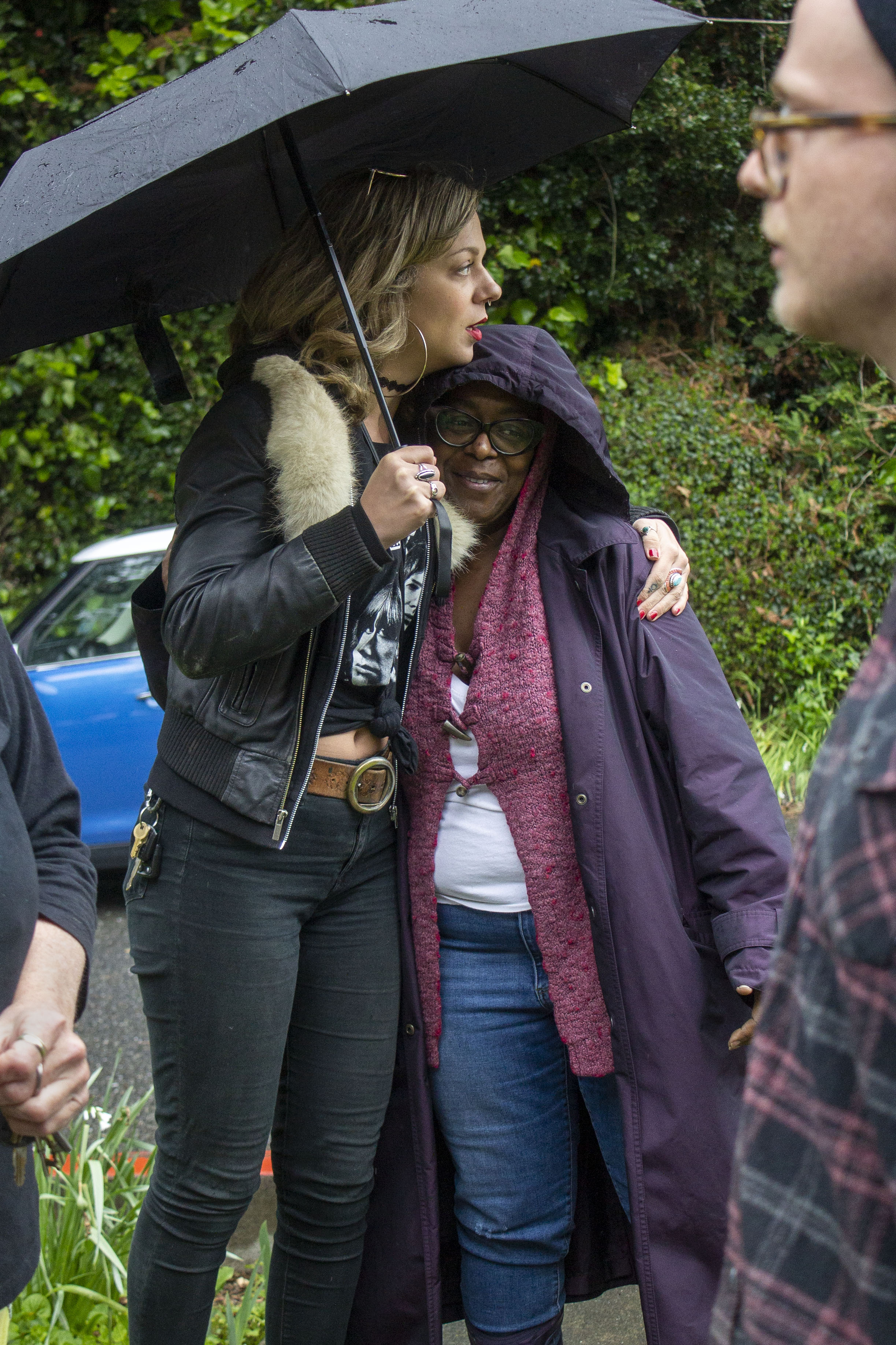
    Thursday morning KHSU was gutted of nearly all its employees. Two remained, but not for long. My only indication anything was amiss that day were the cop cars parked on either side of the studios. Nothing was said prior to myself or any other intern. We learned at the same time as everybody else, standing in the rain in front of the studio. Later that afternoon I read a story on the Lost Coast Outpost with a quote which vaguely informed me that I, as a student, might still have a job. Why was I reading the status of my employment through a news outlet instead of being told directly?

    Myself and the two other interns, Damian Jimenez and Destiny Hill-Brekke, received a generic email at 5:35 p.m. apologizing for the the silence on the university’s end, saying that it was an “oversight.”

    KHSU was shut down because it had “drifted” from the interest of the students. Which students? Hypothetical students? Because I’m a real student and I still had a deep interest in finishing my internship. I had an interest in the connections not to mention references I was gaining. I had an interest in the paycheck I counted on. I had an interest in having the last month (and summer) to fill out my portfolio with professional audio journalism, the thing I came to school for in the first place.

    KHSU wasn’t the first community institution to get cut by an ax-wielding budget committee and it likely won’t be the last, but I feel cheated. At least the football team got to finish their season before they got cut…

    To KHSU: You’ll be sorely missed by more than just me. From the bottom of my heart, thanks for experience and thanks for all the laughs.

    Megan “Midge” Martin
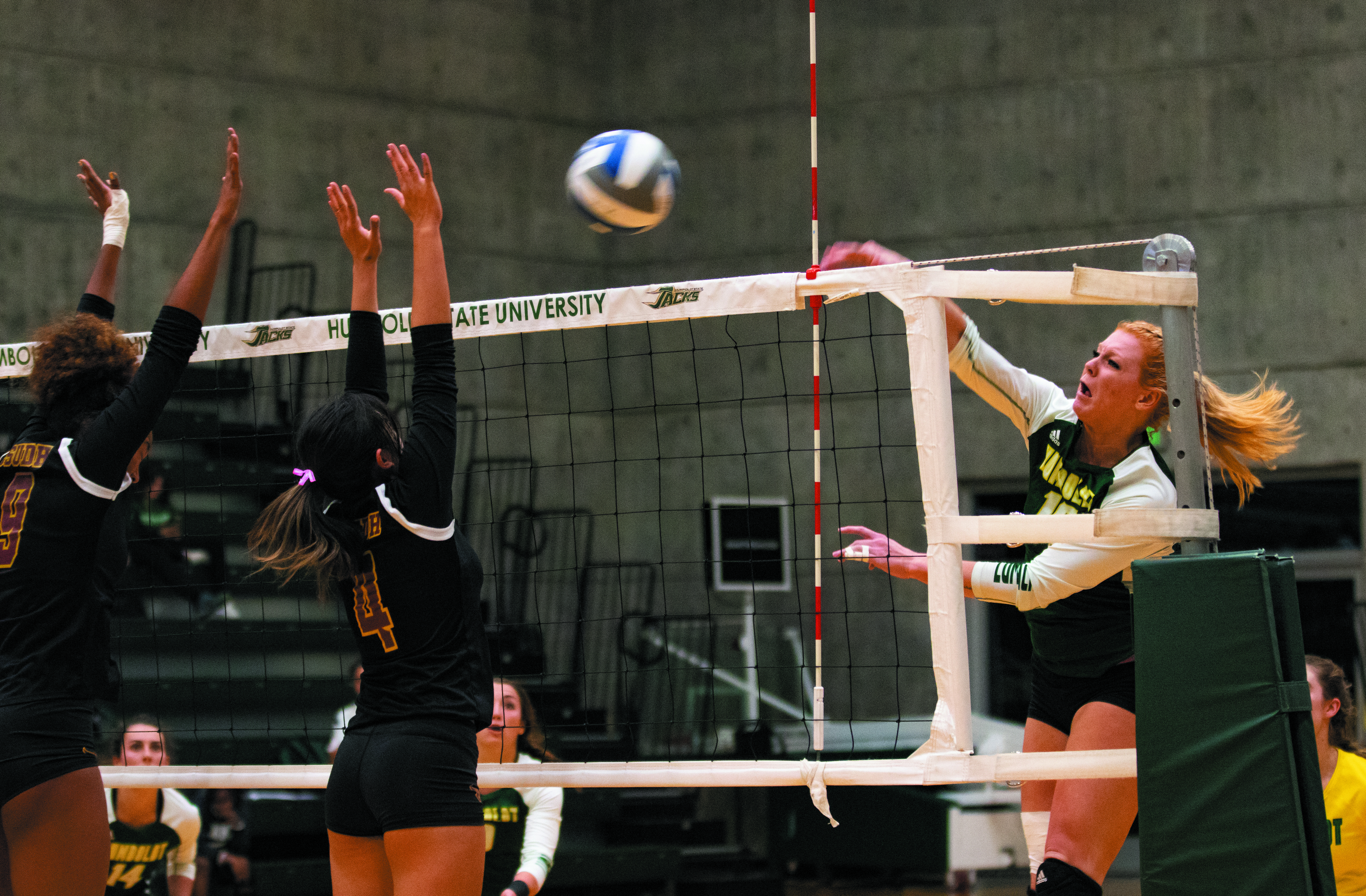
  • Q&A Meet the Athlete: Lauren Reid

    Q&A Meet the Athlete: Lauren Reid

    The Lumberjack catches up with Women’s Volleyball star Lauren Reid

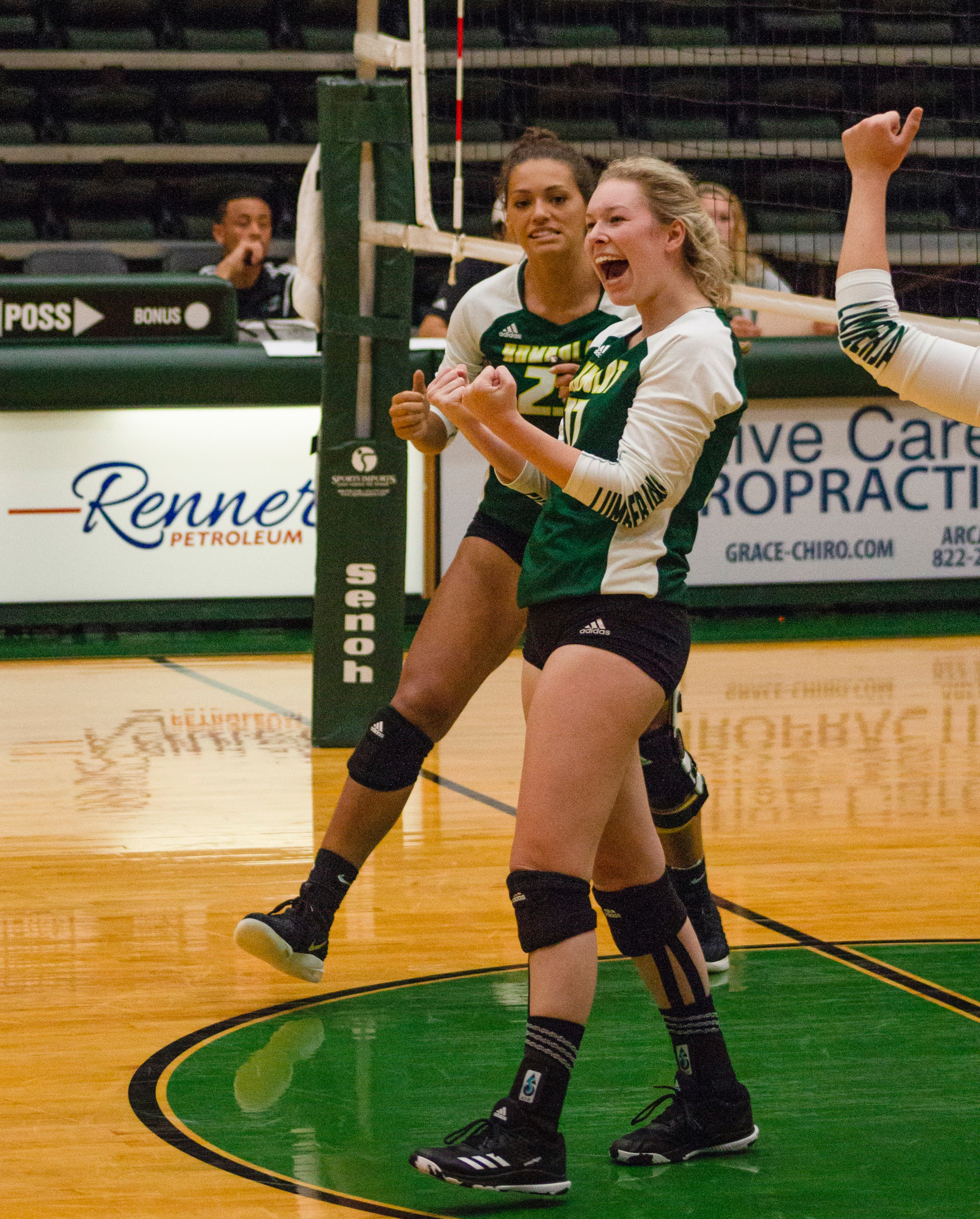
    Lauren Reid is a 20 year old, third year volleyball player leading the Lady Jacks in kills this season. She is from Riverside, California and is majoring in Elementary Education here at Humboldt State.

    Q: Why did you choose that major?

    A: I was kind of torn actually between that and kinesiology, but I’ve been surrounded by kids my whole life. My mom runs her own daycare out of our home and she’s been doing that my whole life. I grew up around kids and I coached over the summer. Helping and learning is what I love to do, so I just took that into teaching in the classroom.

    Q: What grade would you teach?

    A: I wanted to do younger kids until last summer when some of the kids I was coaching had a little impact on that! It’s the attention span. I want to be able to get to know their personalities. It was kindergarten. But now it’s fourth grade, fifth grade, but for sure elementary.

    Q: What do you miss most about home?

    A: I miss the sun. I’ll take any sunny day any chance I get up here. I miss feeling like I’m at home. I miss the smell of pollution to be honest, and the sun. I know that sounds crazy, but it’s true. I miss my family for sure.

    Q: What restaurant would you bring up here to Humboldt from home?

    A: Ohhhh, only one? “B-Dubs,” I miss “B-Dubs” a lot. I could go “hammy” on some wings at Buffalo Wild Wings.

    Q: Is it just the wings? Or do you like hanging out with your friends?

    A: It was always just fun to eat there and we’ve had a few parties there too. It’s just an overall good place to have fun and get good food especially if you like sports. I would bring the whole environment up here to NorCal and bless them.

    Q: What do you like most about being here in Humboldt?

    A: I like that I can be independent. Granted, I love my family to death and love all my friends but I like living under my own roof and having my own rules has been a real go-taker for me. One of the reasons I wanted to move away from home was because I wanted to grow up and learn to do things on my own. Grocery shopping for yourself and paying bills or whatever it may be.

    Q: What do you dislike most about Humboldt?

    A: I dislike the weather. Extremely. It gets really, I don’t want to be dramatic, but it gets really depressing. When it gets cloudy and rainy for weeks at a time I get so depressed. The sun literally brings me joy. That and the distance. We’re kind of by ourselves and lonesome up here. I want to get out of here but I don’t want to have to drive five hours to do that. We’re on an island! We’re trapped!

    Q: What position do you play in volleyball?

    A: I’ve played right side for the last two years. I originally played left side in high school. But this year I finally get to play left side again and I’m really happy about that!

    Q: Did you come here to play volleyball?

    A: Yes, I did. I wouldn’t be here without volleyball. I actually didn’t even know Humboldt was a school until I heard that a Humboldt coach was recruiting me. In these last three years it’s taught me more than anything did in high school. I’m grateful that it brought me up here because I’ve met some of my best friends that will last a lifetime.

    Q: Are you a competitive player or an emotional player?

    A: People actually think I look really pissed off when I’m playing or unmotivated, but I’m actually very, very competitive. I just stay to myself and stay very focused.

    Q: You’re killing it on the court, but the team hasn’t won a game yet this season. How do you deal with personal success when the team isn’t excelling in the same ways?

    A: It’s tough when you’re doing your job and doing really well, but your team isn’t winning. You get to the end of the game and you’re like, damn, the team lost but I got this many kills or whatever. I guess I’ve been torn a few times this season. If we can get a couple people getting 10 to 15 kills per game, then we’ll be winning. It would be a game changer.

    Q: Where do you see yourself in five years?

    A: I see myself done with college. I better be! Back home, for sure. And honestly hopefully teaching at the elementary school that I went to. I live half a mile from my elementary school. I mean, I won’t be living there anymore, hopefully I’ll be moved out by then! But I do love kids. So I hope that I can have a little baby bump or something, ya know? I really love kids and want to have them myself.

    Q: It’s time for my favorite question, who is your celebrity crush?

    A: I feel like I can’t just have one, but every time I see him on TV and in his music videos, I’m like, yeah, that’s the one. Maybe Drake!

    Q: Who is his competition?

    A: I only know their names in the show. Stefan and Damon from Vampire Diaries. But I don’t know their names, so I guess it goes to Drake!


  • Coast Guard gears up

    Coast Guard gears up

    Humboldt Bay Coast Guard prepare for the worst at Big Lagoon

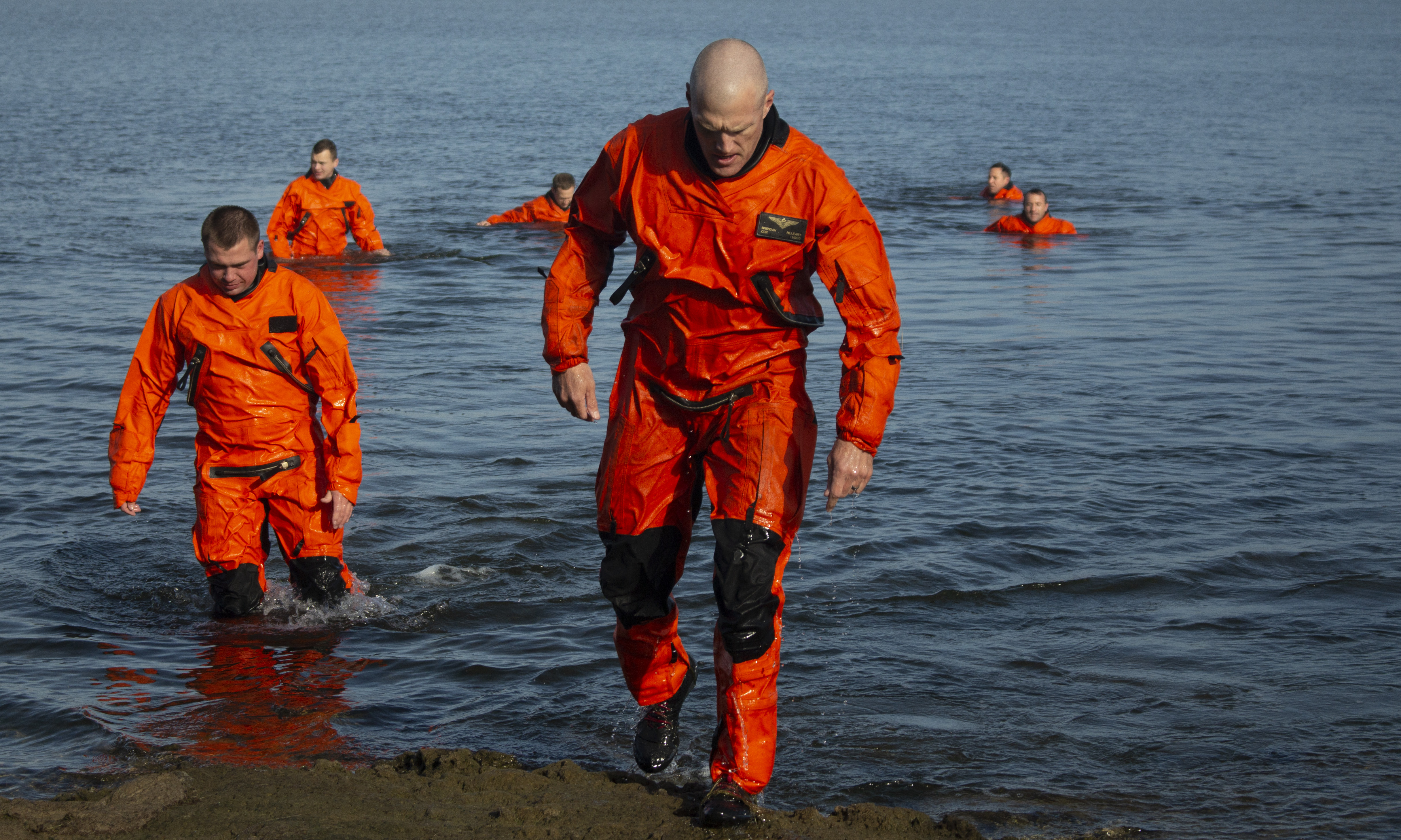
    Despite a barbecue filled with pulled pork and dogs begging for attention, a meeting was held at Big Lagoon Campgrounds in Trinidad with an ominous purpose. Though the setting was light-hearted, the crew donned orange and black suits, preparing for the worst case scenario.

    “The swimmer is basically dragging you through what seems like a monsoon or a mini-hurricane from the rotor wash coming off the helicopter,” said aviation mechanic Matt Lareau, age 28 from Springfield, Massachusetts, still wet after being hoisted up to the helicopter for the first time.

    More than 40 members of the Coast Guard aviation unit went to Big Lagoon on Oct. 11 to practice their annual “wet drills.” The drills involve four training scenarios built around surviving a helicopter crash. The training covered raft and swimming drills, pyrotechnic training with flairs, land survival and vest itemization drills.

    Chief rescue swimmer Chris Razoyk, age 40 from Haverhill, Massachusetts, said this training was a chance for the crew to come together and become well acquainted with procedures before they are in a stressful situation.

    “Today is a good opportunity for the flight mechanics, pilots, whatever, to get a feel for what it’s like to be under the helicopter,” Razoyk said. “And to feel what it’s like for us, for them, to be in a real situation.”

    DC.IMG_7864
    Matthew Lindblad sets off a smoke flare at one station of the annual Coast Guard aviation training Oct. 11 at Big Lagoon Campground in Trinidad. | Photo by Deven Chavannes

    The crew wore neon orange flight suits resembling space suits and waded out into the lagoon to learn how to stay afloat and wrangle each other into a raft of bad scenarios. They also wore bulky black vests to carry survival essentials that weigh 30 pounds on their own.

    Avionics electrical technician John Kummerer, age 28 from Columbus, Ohio, experienced his first round of wet drills.

    “It’s good to know what you have to do, in case god forbid you do go down,” Kummerer said.

    The land survival lecture covered the use of sticks and clothing to create makeshift splints in the event of a land crash involving injuries. Interesting tidbits, such as peeing onto cloth to make it stronger, as made famous in the movie Shanghai Noon, were dispensed to educate the trainees and to also keep the mood light, in opposition to heavy training.

    Kummerer found the lecture to be not only helpful in the event of catastrophe at work, but in day to day life here in Humboldt.

    “You’re hiking and you don’t have any of that gear on you and you realize that you can use sticks, rocks, whatever for tourniquets,” Kummerer said.

    Kummerer may have more use for this practical training now that he’s found a new passion here in Humboldt: disc golf.

    “I had never even heard of it until I moved here,” Kummerer said. “And now I love playing disc golf.”

    About a dozen pilots and technicians in the lagoon waited for their turn to be lifted up into a hovering helicopter and dropped back down again; a drill that simulated what rescue swimmers and victims experience during a real rescue operation. For some trainees, it was for their first time.

    DC.IMG_8098
    A helicopter hoists up the Humboldt Bay Coast Guard at the annual Coast Guard aviation training Oct. 11 at Big Lagoon Campground in Trinidad. | Photo by Deven Chavannes

    Lareau had his first experience being lifted out of the water during these drills. Lareau said he wasn’t scared of the experience at all.

    “The guy that was hoisting us up, I work with him every day,” Lareau said. “So I have really no doubt in my mind that everyone up there has our best interest in mind.”

    The crew in the Coast Guard have dangerous jobs, but they are a tight-knit group, which makes the job, and living in a secluded place like Humboldt County, a little easier.

    “Everybody makes sure that you don’t feel alone,” Lareau said. “We’re pretty close.”

    After the drills finished, the grill churned out burgers and pork sandwiches by high-ranking Coast Guard officers. The crew seemed relaxed and at home despite the high-pressure trainings they had just experienced.

    “It’s exhilarating,” Lareau said. “That’s why we took jobs like this in the Coast Guard.”


  • Three years to comply

    Three years to comply

    HSU has 3-year grace period after football cut to meet Title IX requirements

    With the effects of Title IX looming after the cut of football at Humboldt State, many fear the impact on women’s sports while others look forward to it’s advancement.

    HSU Crew member Bailey Cochran sees it as an opportunity to make women’s sports more competitive.

    “It might change the team to be more focused on being competitive and being successful,” Cochran said.

    HSU President Lisa Rossbacher’s decision to cut football on July 17 was due to budgeting concerns. The fight to keep the team started during the 2017 fall semester when Rossbacher announced the team would stay for another season as long as the community could put up the $500,000 that the University would match.

    The amount of money raised was cut short by $171,000, leading Rossbacher to announce the discontinuation of the football program.

    “It’s football that’s at risk,” Interim Athletic Director Duncan Robbins said, “not any other sports.”

    Title IX is part of a federal law that was passed in 1972 to allow for equal opportunities for men and women on college campuses. It’s broad in scope and is often used to open opportunities in athletics.

    Title IX requires that each university allow for equal opportunity in different ways. The number of athletes required to stay in compliance is directly related to the ratio of men to women on campus. It also encompasses dollars spent for gear and scholarships.

    With over 90 male athletes cut from the 2017 football roster, the fate of women’s sports at HSU has left some wonder about the future. Robins doesn’t mince words.

    “We’ve been trending more and more women dominated on this campus over time compared to years ago,” Robins said. “We have to try to keep up with that as an athletic department.”

    HSU’s campus currently has a ratio of about 47 percent male to 53 percent female. Because of that, the school needs more women athletes to stay in compliance with Title IX, which means the risk to women’s sports is lower. This means that sports teams with large rosters won’t be dramatically impacted.

    The Jacks women’s crew team competed at the Blue Heron Redwood Sprints Regatta on March 24. | Photo by Robert Cranfill.

    Women’s sports have three extra teams with no male counterpart. They are softball, volleyball, and crew. At the moment, there is no foreseeable way to add more male teams because of budgeting concerns.

    “Every time we add a sport, we add cost and we don’t have the money,” Robins said.

    Track and field is a dual gender sport, and because there are more men than women on our HSU track team, Robins does not believe it will be a huge problem complying with Title IX.

    “Turns out that there are a lot of young men who want to run and throw in college,” Robins said, “so we think we’ll have an easier time than in other places.”

    Jamey Harris, the head distance coach, a subcategory of the track team, said that women in the sport aren’t in immediate danger of being cut. He said they will still be recruiting women as well as men to grow the roster as a whole.

    Harris said the football teams termination won’t have “a huge impact, just a few more guys each year won’t be cut.”

    “At this point we turn away any male student athletes that are just not at the level that they need to be to be competitive right away,” Harris said.

    However, more men will now have the opportunity to be trained up and compete at the college level.

    In fact, being able to grow the roster on both sides will be advantageous to the track team as a whole. With 21 events and only 40 athletes on each team, the track team may benefit from the effects of Title IX.

    “Adding more athletes gives us more event coverage,” Harris said.

    Robins said that no change is easy in university level sports, but said HSU has excelled at balancing the roster numbers.

    “We’ve done a very good job at giving opportunities to women’s athletes,” Robins said. “On a typical roster size they might not have been given that opportunity.”

    Cochran, a junior and three year crew member, is a recipient of those opportunities. She had never considered crew as an option in college until she was handed a flyer and joined with a few other young women.

    She sees this as a growing opportunity for the crew team to take their competition to the next level. She thinks this may give the crew team the edge to be able to focus on specifics rather than training people up who have never been in athletics before.

    “We have so many people that it’s not necessarily all focused in on the people who want to get to championships right now,” Cochran said.

    Cochran does admit that taking away opportunities for women who have never competed before is a reality.

    “It’s a give and a take,” Cochran said, “depending on what aspect you’re looking at.”

    Tyla Turner (#12) floats between Cal State East Bay defenders Kayla Blair (#21) and Savannah McGill (#32) for the layup. | Photo by Zac Sibek.

    Students entering sports now as freshman don’t have much change to worry about. Schools are given a three-year period to come back into compliance after a major shift, such as the football roster cut.

    Robins said that this helps cycle through the current athletes so it doesn’t affect their graduation.

    “Every student athlete that comes in will want to know what their life is going to look like for the next four to five years,” Robins said.

    But after the abrupt dismissal of football, athletes may be left feeling uncertain. Cochran just wants open communication between administration and the student athletes.

    “I hope they don’t pull the same thing on us where we don’t expect that to happen,” Cochran said. “But then it does.”


  • Fact and Flattery

    Fact and Flattery

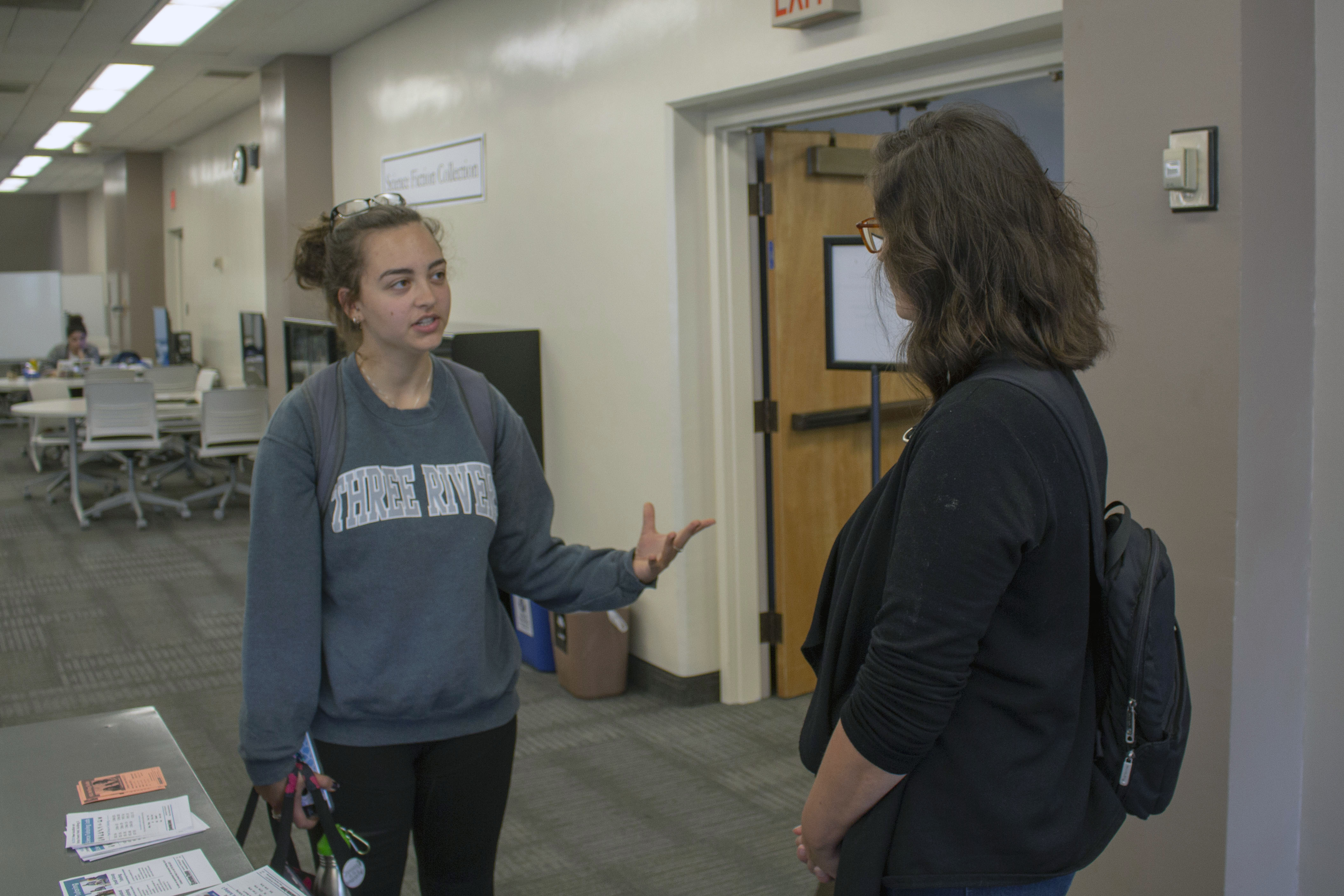
    The Academic and Career Advising Center hosted a grad school workshop for science majors in the Humboldt Scholars Lab in the library Sept 5. Career Adviser Kristina Hunt attempted to prepare prospective graduate students for what’s to come when applying to colleges across the country.

    Hunt clicked through slides aimed at arming students with application information and timelines often available, but almost never compiled into one place. The presentation was designed to streamline the process and nuances of applying to grad school.

    The to-do list was lengthy but calculated to optimize time and resources. The tips were varied, but insightful; ranging from hunting for fee waivers, to rationalizing a gap year, to quantifying the social compatibility of prospective new research groups.

    After the last slide faded, two students attending the seminar had mixed reactions to the workload ahead.

    Hannah Atwood, a student of environmental science and management, left convinced her window to apply had already shut.

    “I should have been at this presentation last year,” Atwood said.

    Atwood redrew the blueprints from research to a career in teaching.

    “I started working with a youth program when I moved here last year,” Atwood said. “And as Kristina mentioned experience in research being important, it made me realize that I already know I enjoy working with kids.”

    By shifting gears towards education, Atwood stands to save thousands of dollars and can expect to earn teaching credentials in one year at HSU.

    Though Atwood left the seminar courting other options, one student left with hope for the lengthy process.

    Junior student Matthew Lotakoon, who studies Hydrology in the Forestry department, is looking forward to grad school, and wants to be “at 100 percent.”

    “I want to put together a plan like I did in high school,” Lotakoon said.

    Assembling a plan hasn’t always been easy for Lotakoon. During his first two years at HSU, Lotakoon, like many others, struggled with balancing a full schedule and his part in the many clubs he’s joined. That’s in the past. The weight of what’s ahead isn’t stopping him from attempting to be the first in his family to bring home not only a college degree, but a Ph.D.

    Hunt sees many students in both Atwood and Lotakoon’s position. Building the foundation to implement the dream of grad school or otherwise is what she does daily in the Career Advising Center.

    “I try to pave a path,” Hunt said.

    She deals with many different types of students. Some, Hunt said, come in twice a week. Those students are on their own path to graduate school. It’s Hunt’s job to help put it down on paper. Others, she sees only once and is left to wonder.

    Hunt does have hope for the job prospects surrounding students pursuing careers at any level in science. Though the sciences, especially environmental, have seen public funding slashed, Hunt says there is hope in the private sector.

    With environmental innovations being funded by corporations, there are still research jobs available, with potentially higher pay. Hunt noted that companies like Apple are likely to pay scientists more than the federal government would.

    Science students at HSU have options after graduation. There is research work to be done right here in Humboldt County. There is still more literally everywhere else.

    Regardless of the next big step the seminar reinforced something for Atwood, a senior looking at graduation, that most students can relate to.

    “Applying for school again,” Atwood said. “It stresses me out.”