The Lumberjack


Students Serving The Cal Poly Humboldt Campus and Community Since 1929

Tag: Alumni

  • Cal Poly Humboldt alumni destroy women’s rugby team

    Cal Poly Humboldt alumni destroy women’s rugby team

    by Savana Robinson

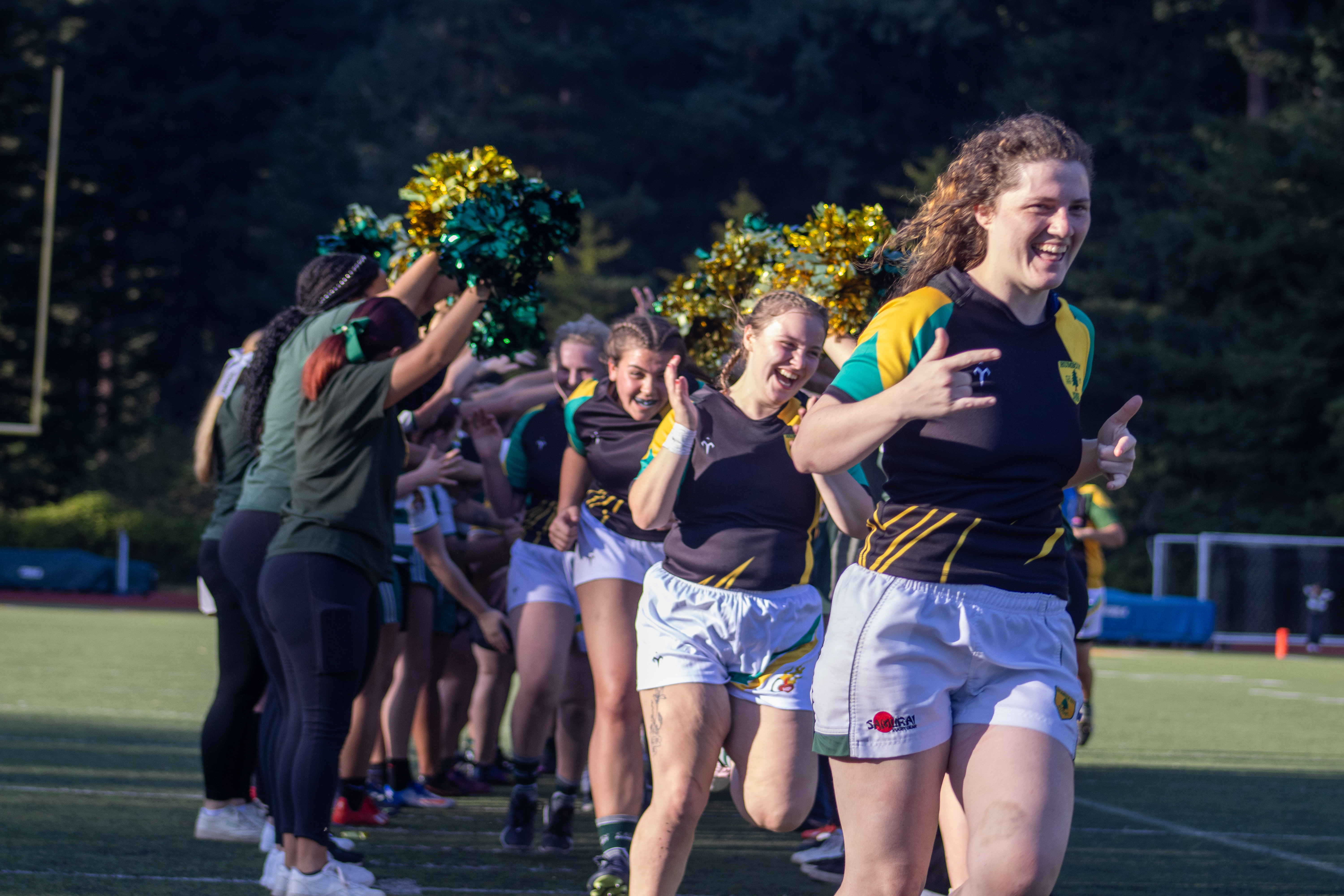
    The Cal Poly Humboldt alumni dominated the 2023 women’s rugby alumni game on Sept. 30. Both teams played for the same university and put their all into the match. With an end score of 87 to 5, the alumni defeated Cal Poly Humboldt, whose team is mainly made up of newcomers, many who saw their first game on Saturday.

    Cal Poly Humboldt’s team captain Courtney Campuzano caught a couple of breakaways in the game, meaning took off with the ball, escaping players trying to tackle her. Campuzano is a senior majoring in social work. Campuzano was excited to see so many alumni back to play in the match, stating it felt awesome to see alumni happy to come out. She noted that some new players played the most they ever had. 

    Rachel Gonzales runs with the ball to score during the Cal Poly Humboldt Alumni game on Sept. 30.

    “I saw these rookies get stuck in,” Campuzano said. “One’s been here for maybe two weeks.”

    Saturday was Ashlyn Broeland’s first game as a player for Cal Poly Humbolt’s women’s rugby team. A junior majoring in environmental studies with an emphasis in education, Broeland is number nine on the team. Her position on the team is scrum half, which is an important role because it forms the link between the forwards and the backs.

    “I’m really excited for our new players to get out there,” Broeland said. “This is a really good chance for them to learn the game.”

    Cal Poly Humboldt’s cheer team came to support Broeland, their cheer captain, who has been on the team for three years.

    Sophia Nielsen played on the alumni side, having graduated in 2021 with a degree in wildlife.

    Senior Courtney Campuzano avoids being tackled with the ball by Rachel Gonzales during the Cal Poly Humboldt Alumni game on Sept. 30

    “[The most fun part was] being with my teammates I haven’t seen in over a year,” Nielsen said.

    Wynnie Savageford graduated in 2023 with a bachelor’s in criminology and justice studies.

    “[I like] the camaraderie of being around everybody and just being back in the pitch together,” Savageford said.

    Head coach Catalina Leon was most excited for the team to put together the skills they’ve been working on in an actual game. Leon stated that the biggest part of their strategy was communication and putting those fundamentals to work.

    “We were able to do that because we were able to get some breakaways and it worked,” Leon said. “It also showed us the areas that we still need to work on.”

    Leon said that overall the girls played well, especially considering that the majority of the girls joined this September.

    Lauren Bankerd, a junior majoring in kinesiology, scored the only try (goal) on Cal Poly Humboldt’s side. It was her third career goal, having previously played one semester.

    “[The most exciting part is] sprinting down the line, the adrenaline pumping because you don’t know if someone’s behind you or not, and you’re just gunning,” Bankerd said. “The crowd screaming and everything.”

  • Humboldt alumnus brings back beavers to restore California wetlands

    Humboldt alumnus brings back beavers to restore California wetlands

    by Harrison Smith

    Originally printed March 1, 2023

    For millions of years, beavers have been the stewards of North American watersheds. Over a hundred million used to ply the streams of the continent. Hunting and habitat loss since colonization have reduced their numbers to somewhere between 10 and 15 million, and many ecosystems which historically relied on beaver stewardship are now absent of the aquatic rodents. In 1941, there were just 1,300 beavers in California. Symbiotic Restoration, founded in 2018 by CPH alumnus Garrett Costello, is a company which seeks to reverse this loss of habitat.

    “Our mission is to improve stream and meadow conditions to bring back the beaver,” Costello said, who graduated from Humboldt with a BS in environmental protection and management.

    Founded in 2018, Symbiotic Restoration (SR) has carried out all of their restoration projects in Northeastern California. Costello, who recently moved back to the county, hopes to partner with local Humboldt organizations to carry out restoration projects in the future.

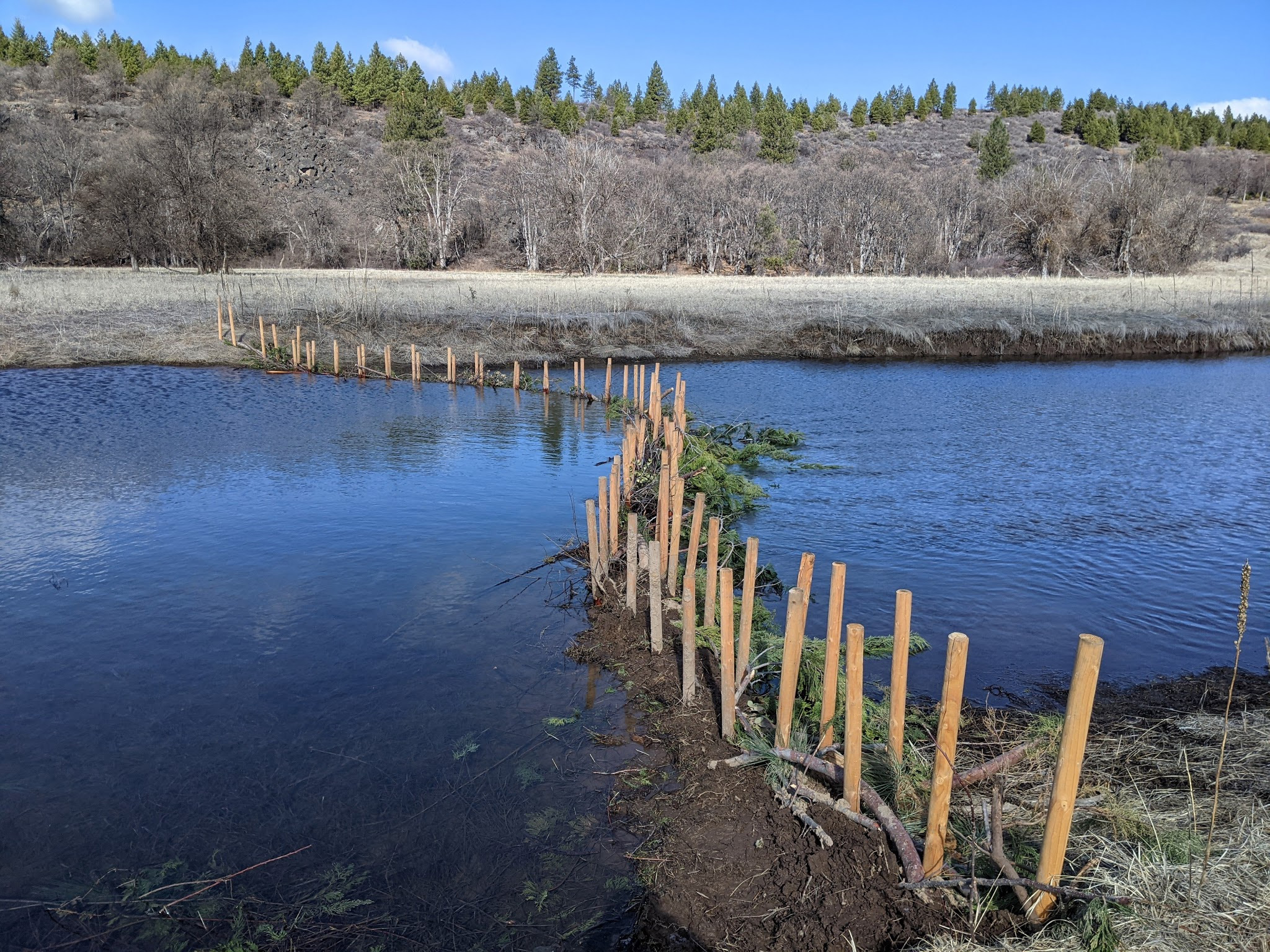
    The vast majority of SR’s restoration projects involve the building of beaver dam analogs, or BDAs. BDAs come in many forms depending on the size and condition of the stream, but they’re usually built as a short, unobtrusive lattice of maple limbs which act to trap sediment and slow the stream. Human activities, especially road construction and agriculture, cause interruptions to stream flow and increase bank erosion.

    “Let’s just think about cattle for a moment. They cross the same place every time. They are going to soften that soil and they are also going to punch it down a little bit,” Costello said. “Once the water starts falling into the drop, that fall of the water is what causes the erosion and then will continue to unzip.”

    BDAs are constructed at points in the stream where flow has been interrupted by a head cut, acting to fill the depression and preventing erosion from continuing upstream. 

    “As water hits that pond, it slows down and drops and that will slowly build sediment behind the structure, which then strengthens the structure and then it helps reconnect the floodplain because now we don’t have this incision,” Costello said.  

    Once the stream has been reconnected to the floodplain, the stream is able to meander more widely around. This turns a stream flowing quickly through a deeply cut channel into one which supports a wide, dense belt of riparian vegetation with its lazy flow. 

    Most of SR’s project sites are in places too remote for construction vehicles, where their use would undermine restoration efforts. Costello and his crew carry out their work the old fashioned way— with sweat, shovels, and axes. 

    “We’re not out there with heavy equipment, huge amounts of diesel, coming down into the meadow and potentially causing soil compaction, some disturbance to the vegetation,” Costello said. “We’re on foot and I have sleds. I don’t use wheelbarrows because the tires can cause little ruts, so we’re pulling everything on these duck hunting sleds.” 

    SR has worked closely with the Natural Resource Conservation Service, a subagency of the Department of Agriculture, which provides funding to ranchers and farmers on the condition that they meet certain restoration requirements. 

    “The program is to incentivize private landowners to do conservation efforts on their land,” Costello said. 

    One goal of SR is to involve the communities in which they work as stewards of the land, fostering a bottom up approach to conservation. 

    “Last year, we partnered with Point Blue Conservation Science… we had 50 kids a day come from local elementary through high school to build beaver dams and plant willows with us,” said Costello. For the children, it was fun to build beaver dams in their community creeks.

    “And all these kids were so stoked,” Costello said. “‘Oh yeah, go in the woods around here.’ Or,  ‘Yeah, my parents work for the timber company in the town. We go hunting out here’. They have that sense of place,” 

    Even though much of SR’s work is still focused in Northeastern California, Costello hopes to make connections with local Humboldt community organizations in the future. He recently spoke to students in a capstone restoration course, and hopes to form a dedicated Humboldt crew to work on restoration projects in the county. 

    “Volunteers come from all over too, so not only local communities, which we want to target to get that sense of place and stewardship.” Costello said. “Folks are coming from all over California that are interested in this because it’s really fun. We’re like kids playing in a creek.” 


    Disclaimer: This article was not paid for or endorsed by Symbiotic Restoration.

  • Humboldt Alumni speak out against Homecoming in Hawaiʻi

    Humboldt Alumni speak out against Homecoming in Hawaiʻi

    by Oden Taylor and Ollie Hancock

    Humboldt’s alumni organization, Forever Humboldt, planned homecoming this fall in Lahaina, Hawaiʻi, on the island of Maui. In an email, the alumni organization shared their plans for a “fun spin” on homecoming where they would “spread the Lumberjack spirit” in Hawaii.

    Colleen Chalmers, Sabrina Gailler, and over 255 other alumni felt this plan did not reflect their values and what they had learned at the university. Chalmers and Gailler drafted an open letter in dissent, hoping the university would reconsider their plans.

    Chalmers is a Native woman who graduated from Humboldt with a degree in Journalism and Native American Studies in 2013 and now works in communications, racial equity, and homelessness policy. She felt that Forever Humboldt’s plans contradicted what she studied. She also felt the homecoming event doesn’t align with the school’s own vision, core values and beliefs, and purpose statements. 

    “The University consistently says that traditional ecological knowledge is central to solving environmental crises,” Chalmers said. “Then, [they] don’t listen to traditional ecological knowledge when it comes to choosing the   location of their next homecoming event or choosing how to engage in recruitment for new students.”

    The school cites Traditional Ecological Knowledge—TEK as a core tenant of learning across curriculums. Traditional Ecological Knowledge, decolonization, and sustainability are all terms used across the school’s stated principles. Kānaka Maoli—people indigenous to Hawaiʻi have been outspoken about the negative impacts of tourism on their place and people. Many alumni who signed the letter left comments of disapproval and disappointment.

    “The reality is that centuries of colonialism and racism have taken a toll on Kānaka Maoli, the land, and the water,” Chalmers said. “America has illegally occupied Hawai’i for 129 years. An institution like Humboldt that cares about equity and anti-racist work should care about it in all their decisions. I don’t see that in this decision to go to Hawaii during this time.”

    Their open letter has gained signatures from current and former students across nearly 70 different majors, representing graduates from 1973 through 2022. The letter was also endorsed by two nonprofits, Hawaiʻi People’s Fund and Seventh Generation Fund. Kānaka Maoli alumni Brissa Christopherson signed the letter and left a comment for admin and event planners. 

    “As a Kanaka Maoli and lifetime resident of Maui, I would highly encourage changing location for this event,” Christopherson wrote. “Our Maui community has been facing over-tourism, detrimental to natural areas and depleting limited water, in addition to the covid epidemic. Please stop perpetuating colonialist behavior with the fetishizing of our island culture.”

    The university issued a statement that they heard the concerns raised in the open letter. The university cited recruitment efforts and alumni in Hawaiʻi as reasons for the location of the event. The university intends to follow through with its plans to host homecoming in Hawaiʻi.

     “[The Univeristy] will distribute information about respectful and low-impact tourism to those who will be participating,” School representative Grant Scott-Goforth said.

  • HSU Alum is a Super Bowl champion

    HSU Alum is a Super Bowl champion

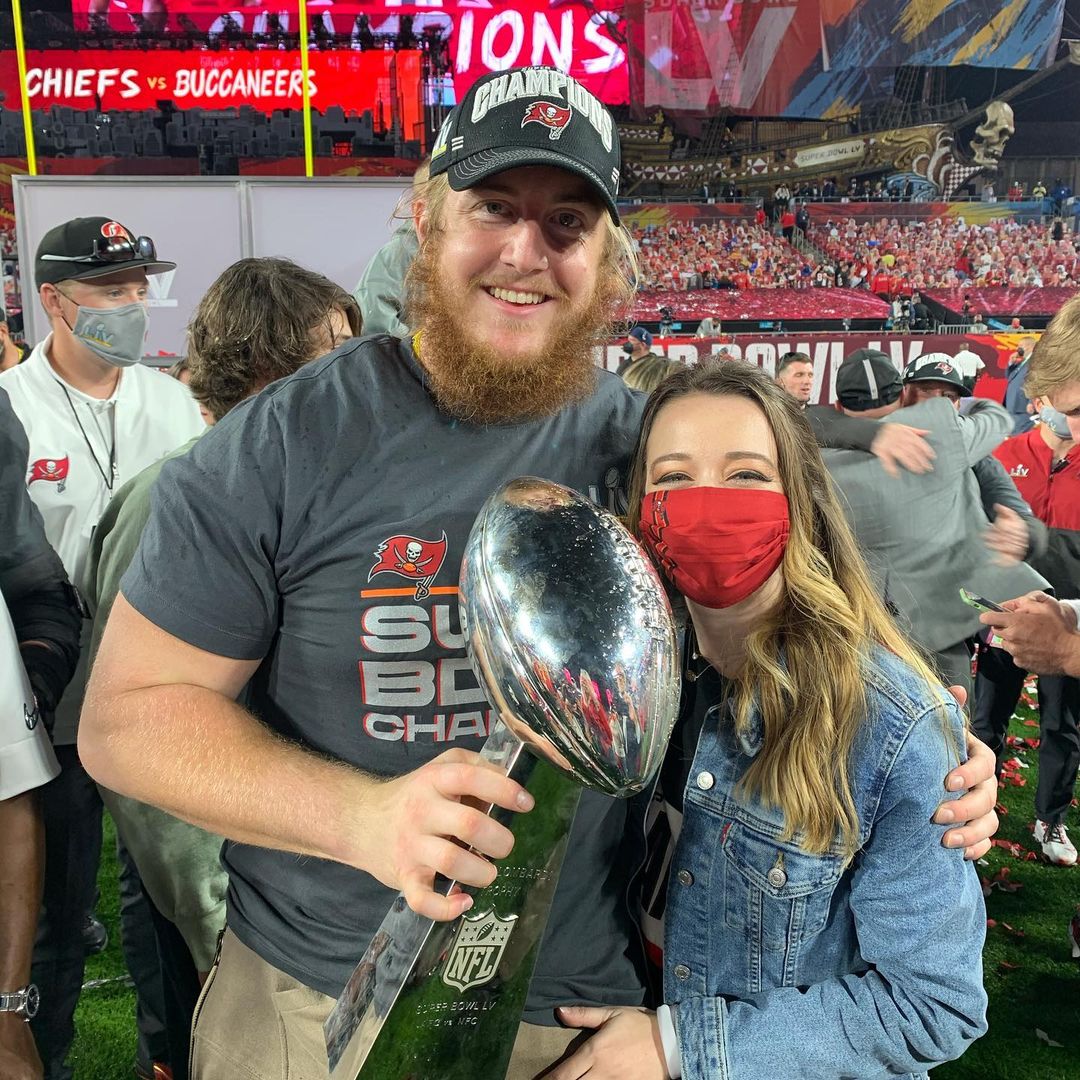
    Humboldt State University alum Alex Cappa did not play with the Tampa Bay Buccaneers in this year’s Super Bowl against the Kansas City Chiefs. However, after being a valuable piece in the Buccaneers offense throughout most the season, he will be going home with his first Super Bowl ring of his young career.

    Cappa has now played two seasons for Tampa Bay, but suffered a fractured ankle on Jan. 9 in the Wild Card game against the Washington Football Team. Though he was out for the Super Bowl, Cappa started in all 17 games of the regular season as quarterback and seven-time Super Bowl champion Tom Brady. This is a huge accomplishment for Cappa, one of HSU’s very own, in assisting Tampa Bay towards a Super Bowl Championship.

    Strength and conditioning coach Drew Peterson, who has been with the Athletic Department since 1991, remembers the first time he saw Cappa during one of their recruiting weekends. He recalls him being an unassuming, quiet and humble guy coming up from Dublin, California.

    “It was a big deal, you know, you have these large diverse groups of parents and potential players coming up here,” Peterson said. “And you know for two to three months it was every weekend. I remember his particular recruiting weekend there was a huge group of people, he was standing up in the back and he was this tall, skinny guy, with long, straggly blonde hair and I thought he was somebody’s family member.”

    Jonathon Rowe, an assistant offensive line coach at the University of Washington and former offensive lineman for the HSU Jacks from 2011-2015 shared his first impression meeting Cappa on his recruiting trip.

    “He was very soft-spoken and a little shy,” Rowe said. “But I found out rather quickly how hard of a worker he was, especially in the weight room. He came in at 245 lbs and by his redshirt freshman year he was 294 lbs.”

    Cappa spent a total of four years at HSU from 2013-2017. He studied kinesiology and did an internship his senior year with Coach Peterson, where Peterson recalled him becoming everyone’s favorite quite early on.

    “He was just always taking time with them, working with them and telling them what to do,” Peterson said. “He’s just this larger than life figure, and he was not anymore this tall straggly kid. He was a 300lb, sculpted football player.”

    It was during the 2018 NFL draft that he was picked up by Tampa Bay in the third round as the 94th pick overall. Cappa was originally projected to be a fifth round pick. This followed after his time playing in the 2018 Reese’s Senior Bowl and attending the scouting combine in Indianapolis.

    “My initial reaction when he was drafted to the Bucs was that I couldn’t have been more excited,” Rowe said. “Because I knew how hard he had worked just to get to that point.”

    It was a year later in 2019 that Tom Brady retired himself as a New England Patriot after winning the Super Bowl, leaving New England behind and looking toward Tampa Bay. This resulted in Alex Cappa becoming right guard to Brady himself.

    “I was even more excited when I found out he would be playing with probably one of the greatest quarterbacks to ever play the game,” Rowe said. “I’m extremely proud of him for how far he’s come and the position he’s put himself in. He’s only going to get better from here.”

    According to the NCAA, there are over 1 million students playing high school football in the United States. Of those students, about 73,000 actually participate in the NCAA and only about 16,000 of them even become eligible for the NFL draft. Only a mere 254 of those players are drafted, actually landing themselves a spot in the NFL.

    To play professionally is one of many young and collegiate athletes’ biggest dream. To be playing in the big leagues, sometimes alongside your childhood icons, can feel like an unattainable goal with the odds staked against you.

    But for Cappa, by putting one foot in front of the other, working hard and striving to beat those unimaginable odds, he did it. He accomplished what every young football player dreams of.

    “What a journey you know, to be passed over by everybody and [his] only place to go was Humboldt State,” Peterson said. “Pretty much every time they scan the camera on Tom Brady, you see Alex Cappa. All these highlights of Brady, I see Cappa. All these regular season highlights — there he is, number 65.”

    Looking back at his second season statistics as a starting guard, Cappa has been an integral player to Tampa Bay’s offensive, with over 1,000 snaps at the guard position and part of an offensive line group that held defenses to only 18% of Brady’s pass attempts pressured.

    Notably, he also took part in an offensive line that finished second in the NFL in sacks allowed per pass play and Cappa helped the Buccaneers’ offense rank at the third best offensive line in the NFL. It is an unfortunate moment for Cappa, Tampa, and HSU, that he didn’t get a chance to finish out the season with his team in the Super Bowl. But although he didn’t participate in Sunday’s big game, it’s important to recognize the magnitude of what he has accomplished since his recruiting weekend at HSU those years ago. He beat unimaginable odds, worked extremely hard and continues to be a tough, dedicated player with his eyes steadfast on success and accomplishment within the game of football. Brady attests to his strong-willed personality and grit through his first season playing with Cappa.

    “[He’s] one of the toughest guys we’ve had on our team,” Brady said in a press conference after Cappa was injured. “We’ve had a really great group up front, [including] guys who have filled in at different times. Cap has been there really the whole year, had a tremendous year. [He’s] a tough, hard-nosed football player.”
  • Retention Rate on the Rise at HSU

    Retention Rate on the Rise at HSU

    More Humboldt State students are electing to stick around, but there’s still work to be done

    Corrections: a previous version of this story incorrectly quoted Casey Park as saying “We’re absent as an institution.” The quote should have said “We were absent as an institution.” The story also wrongly included “interim” in Jason Meriwether’s title.

    Humboldt State revealed more students were staying on its campus rather than taking off for other schools or ventures in a Jan. 31 press release.

    Tracy Smith, the director of the HSU Retention through Academic Mentoring Program, said she was proud of the work she and her peer mentors have accomplished over the years.

    “I think Humboldt sincerely believes that whether students decide to stay at Humboldt or not is really a product of our entire campus community and off-campus community,” Smith said. “RAMP really is designed to support incoming students and them finding a place where they feel a connection.”

    “85 percent of new first-year students said if they were given the option to choose a college again, they ‘probably’ or ‘definitely’ would attend HSU again.”

    National Survey of Student Engagement, spring 2019

    A study done in conjunction with HSU by the National Survey of Student Engagement in spring 2019 provided some data on student perceptions of HSU.

    “85 percent of new first-year students said if they were given the option to choose a college again, they ‘probably’ or ‘definitely’ would attend HSU again,” the study said. “And 89 percent of first-year students said their overall experience was ‘good’ or ‘excellent’, compared to an overall CSU system rate of 84 percent.”

    Jason Meriwether, Ph.D., vice president for Enrollment Management, said a few things have contributed to the increased retention rates, including Enrollment Management staff and related faculty streamlining the registration process and connecting students with support services—all in an attempt to create a sense of belonging for students.

    “It’s the experience but it’s also the listening and packaging it into one,” Meriwether said. “So, all of that is about looking at the students and giving them what they’re asking for first, and using the resources that we have to create an experience for the student.”

    Meriwether said his staff’s hard work has paid off by meeting student needs.

    “We have to be aligned with what students are expressing that they need and putting ourselves in a position to support students,” Meriwether said.

    “There wasn’t attention given to the most affected and traumatized students. And those are the students who went back to where we recruit from and said ‘Humboldt is not a place for me,’ and ‘Humboldt is not a place for you.’”

    Casey Park, HSU alumna

    He noted a growing trend at HSU of transfer students outnumbering first-time freshmen. HSU has needed to move around campus resources to accommodate the influx of transfer students.

    “It’s about being nimble and seeing where the student population is going and meeting those needs,” Meriwether said.

    Meriwether added that in recent months, the Student Disability Resource Center and cultural centers have received major face-lifts, which, in turn, have opened up more doors for students.

    Casey Park, an HSU alumna, was glad for the rising number of retained students, but said the campus administration’s past actions around retention shouldn’t be ignored as a new wave of measures are enacted. Park is an Associated Students coordinator, but gave her perspective only as an alumna.

    “We are still going to need to reconcile the years where we were neglectful of students,” Park said. “It’s going to take a lot of really good decisions to hold ourselves accountable for that and kind of be like, ‘We were absent as an institution.’”

    Park said the HSU administration’s inaction regarding the Josiah Lawson case and other events affected previous student perceptions of HSU.

    “There wasn’t attention given to the most affected and traumatized students,” Park said. “And those are the students who went back to where we recruit from and said ‘Humboldt is not a place for me,’ and ‘Humboldt is not a place for you.’”

  • Student success in college

    Student success in college

    By|Charlotte Rutigliano

    With the start of the new semester upon us, students like senior Environmental Science major Kelcey Hein, strive for continued success during their time here at HSU without any added stress.

    “This year I want to enjoy the classes and appreciate what knowledge comes out of them without stressing out more than I have to,” said Hein.

    One way she plans to stress less is through her study methods. According to Hein, she only uses a quality pen and notebook because it is more motivating for her to have clean and fluid notes that she knows she’ll review and refer back to later.

    Quality notes are one tip HSU Alum Mary Osteen would give for student success, though that’s not the only one.

    Osteen, who graduated in 2004 with a degree in Political Science, said that it’s important for students to get to know and build a relationship with their professors.

    “Don’t remain a name on a paper, go the distance to build a relationship with each professor because education, to be deeply meaningful, is personal.” said Osteen.

    A statement recent Psychology graduate Dezi Villagomez would agree with.

    Villagomez said it truly pays off to go to your professor’s office hours, even though it may be a little terrifying.

    21215942_1537779426274392_1061477993_o.jpg
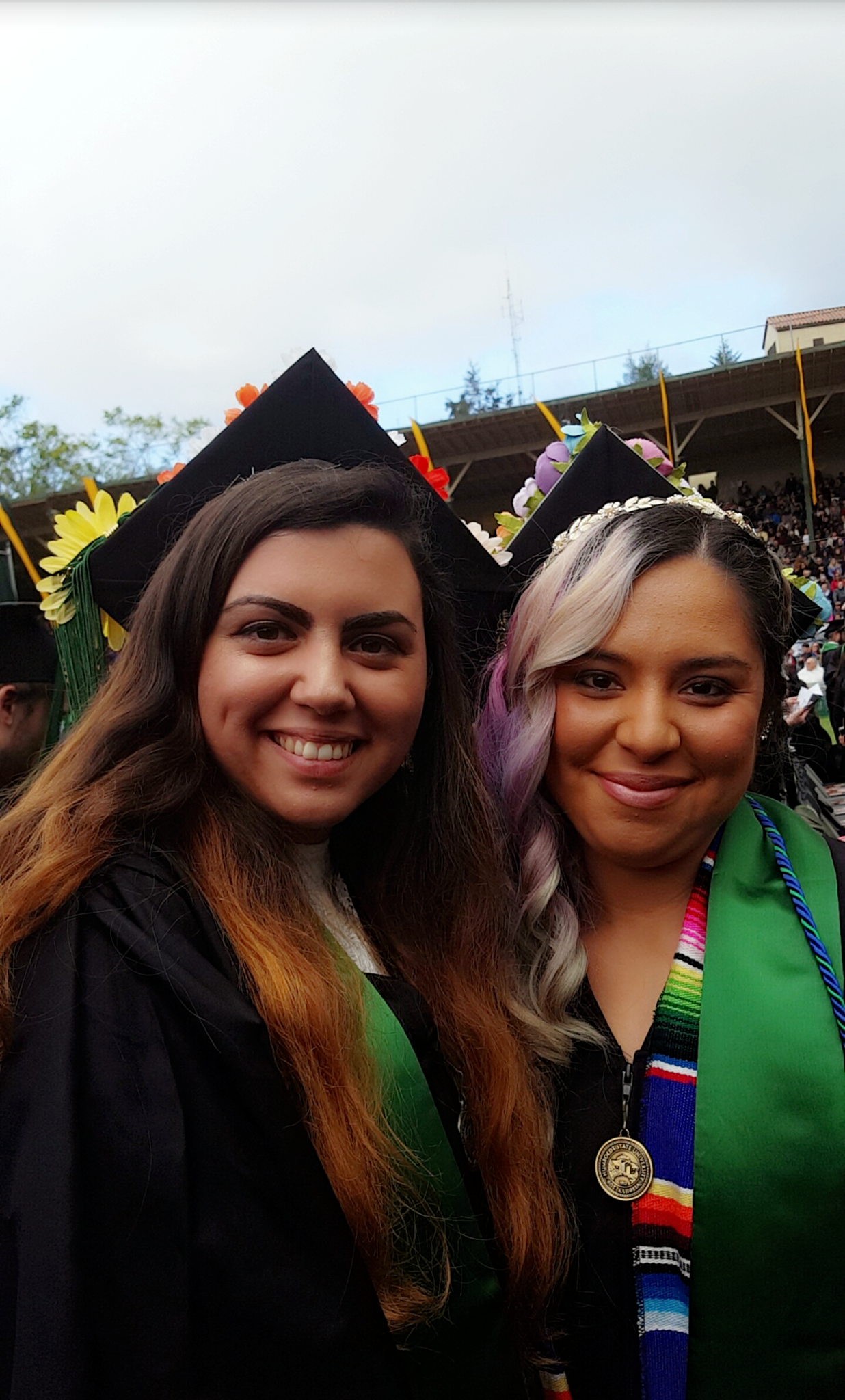
    Dezi Villagomez after graduation

    “They are here to help you and your needs,” Villagomez said, “go to them for advice, homework questions, or even academic and career advice.”

    Though professors aren’t the only resources on campus for students, Villagomez was one of many students who took use of the school libraries services.

    The libraries services include research help, checking out books, using computers and printers, reserving a study room and different skills workshops among others.

    It’s library resources like this that can help keep students focused on their classes and study sessions. Whether you are studying with a group or by yourself, our alums advise to not procrastinate, study a little everyday and not wait until Sunday.

  • The personality behind Burger Records

    The personality behind Burger Records

    Co-founder of Burger Records visits HSU

    By Sarahi Apaez

    The man behind Burger Records, Sean Bohrman, co-founded a record label and built a scene from the ground up.

    Bohrman graduated from HSU in 2004 with a minor in graphic design and a degree in journalism.

    Burger Records is a record label, a record shop, and a social media entity. Currently located in Fullerton, California , the record shop was an idea created by Bohrman and his bandmate and business partner Lee Rickard.

    Bohrman is from Anaheim and started the Burger Records label as a way to promote his band, Thee Makeout Party!, with his bandmate and business partner Lee Rickard.

    Once graduated from HSU, Bohrman landed a job as Art Director of a Fishing and Boating Company where he worked in a small cubicle where his coworkers had worked for 30 plus years.

    After four and a half years of working with this company, Bohrman decided to leave to pursue something bigger. By leaving his job six months early he lost out on about $12,000 since the company did not have to match his 401k.

    “But it was worth it,” Bohrman said. “It was the best decision I ever made for sure.”

    Bohrman has sacrificed his entire life for the label and the shop. For seven years he lived in the back of the Burger Records shop since it’s opening in 2009.

    There are currently 1,000 bands on the label and only five people on Burger staff working the shop, the label, publishing, and running social media.

    “We started a record label and a record store and had no idea how to run either,” Bohrman said. “I designed the website and I don’t know how to design websites.”

    Bohrman has very meticulous to do lists. His passion lies in discovering all of the music associated with Burger Records himself.

    “I’m a control freak, that’s why I do everything,” Bohrman said.

    “We never stop talking or working on Burger Records,” Bohrman said. “We put 100 percent of ourselves into this company.”

    Burger Records, for many people, will go down in history as a movement that happened. From 2009 to present day, Burger Records is a subculture for many youthful people to hold on to.

    Sean Bohrman speaking to journalism students at the Bret Harte House. | Photo by Sarahi Apaez

    What separates Burger Records from any other major record label is how they manage their social media. Every social media account is filled with content written by the character called Burger Records created by Bohrman who writes everything in all caps and three exclamation points.  

    Burger Records ventured into an untapped business in it’s time which is creating cassette tapes. The label creates cassette tapes for bands who are signed on to another label.

    ”It only takes two weeks to make a cassette tape which is convenient for when bands go on tour and need something to sell for their merch table,” Bohrman said. “It is also very inexpensive, it costs a $1.25 to make a tape and we make 250 for each band.”

    When the company started, they were first losing money because for the first two years they were supporting it with their job.

    “When we started I put 100 dollars in and Lee put 100 dollars in,” Bohrman said.

    His taste in music has also been a big help along the way.

    “I have a knack for discovering new music,” Bohrman said. “I’m going to take all of the good records here in Arcata, so don’t even try finding anything good later.”

    “Even if the store has failed I would still feel better about it than had I not ever done it and had I grown up and said ‘what if I started a record label.”

    Bohrman never saw himself as a trendsetter but that’s what he has done.

    “It’s really hard to sit and take in everything we’ve done and everything we’ve accomplished,” Bohrman

    Bohrman feels that whenever something amazing happens and it’s gone, then there’s always something on the horizon

    “Maybe later on in life I’ll get to appreciate all the really cool things that have happened,” Bohrman said.

    Bohrman and everyone who works at the shop tries to have the most fun while working long days and nights on Burger Records.

    “Everything we do is a joke,” Bohrman said. “We’re good at saying that’s so funny, let’s do that.”

    ADVICE: HOW TO START A BUSINESS by Sean Bohrman.


    • “It’s all about sacrifice, you’re going to have to skip meals, you’re going to have to work when other people are having fun.And if you’re out having fun there is someone else at home working to be better than you are,”
    • “You have to be working all of the time to stay ahead of everybody”
    • “It’s just total 100 percent dedicate to a cause, an idea, and following through with it, even with the stupidest ideas.”
    • “Stay true to yourself.”
  • Road Race in Trinidad

    Road Race in Trinidad

    The 52nd Annual Clam Beach Run

    By | Erin Chessin

    The fog cleared just in time for hundreds of runners to take their marks at the 52nd annual Clam Beach Run in Trinidad, Calif. An event hosted by the Greater Trinidad Chamber of Commerce. Friends, families, and locals united on a sunny Saturday afternoon and ran one of California’s most scenic road races.

    HSU alumni, Paul Matli, was amongst this crowd of runners on the start line.

    “I wasn’t nervous for this race because I knew it was going to be fun,” said Matli. “Clam Beach is one of the more exciting races I do every year. It’s a combination of rolling hills and flat ground, and the fact the last 2 miles are on the beach makes it more fun.”

    Runners could either register for the half marathon, 8 and three quarter mile, 5 and three quarter mile, or the 3 mile race. Each race started at the same time and place but runners had to turn off at a specific point in the town of Trinidad and take their designated path depending on the distance they signed up for. The half marathon began at 11:30 a.m. while the 8 and three quarter mile, 5 and three quarter mile, and the 3 mile races took off in the afternoon. The weather conditions were exceptionally good, with temperatures hitting just above 50 degrees.

    This was no ordinary road race. From the trails to the sand, runners made their way through thick forest and ascended down a rocky path to the beach. The scenery is impeccable and many runners found themselves distracted by the North Coast’s beauty. Kenneth Pocasangre, HSU alumni and a teacher at Fieldbrook Elementary, couldn’t help but enjoy the sights and sounds of the beach.

    “The scenery is what distracted me from the pain,” said Pocasangre, “I could see the ocean hitting the rocks, the fog drifting through the trees, the beautiful colors reflected by the sunlight, it was exhilarating.”

    Once the runners made their way through the forest, the road race ascended down to the beach. In the 8 and three quarter mile race, the last two miles ended on a long stretch of Clam Beach. Matli said this was the toughest part of the race as he struggled to get past the famous Little River that all runners must cross in order to reach the finish.

    “I fell in,” said Matli. “I tried to swim through the river but I ended up being carried down the stream and had to pull myself back onto the course.”

    The Little River isn’t forgiving, many runners found themselves struggling to get past the river since the tide was abnormally high as observed by Jocelyn Barber, a student at HSU studying environmental resources and engineering.

    “I noticed everyone was using the rope to get across the Little River since the current was so high,” Barber said. “ I decided to walk upstream and avoid the rope, running through the cold stream. There were people I could see being carried away by the water.”

    Pocasangre said his shins were problematic throughout the race.

    “I knew I had to keep pushing through in order to get to the finish line, as painful as it was,” said Pocasangre, who finished first place overall in the half marathon race with a time of one hour and 29 minutes.

    The Marching Lumberjacks, who perform at HSU’s football games and numerous other events, showed up at the finish line with enthusiasm and high spirits.

    “I picked up the pace, as much as I could,” said Pocasangre. “I could hear the music about a half mile away from the finish line. It was gratifying hearing the band playing from afar, helping you get through the final excruciating stretch of the race.”