The Lumberjack


Students Serving The Cal Poly Humboldt Campus and Community Since 1929

Tag: anxiety

  • How to cope with post election anxiety

    The election may be over but the emotional aftereffects can be difficult to manage

    In addition to handling mental health post election, students have reached the middle of the semester and are working to finish strong after adjusting to the new virtual learning conduction of class.

    Resources are available for all students during these stressful times. According to the Humboldt State University’s website, “Counseling and Psychological Services (CAPS) promotes the well being of students through outreach, consultation, educational and counseling services.”

    Students are able to utilize CAPS from traditional one-on-one counseling support, group therapy, Single Session Therapy, “Web-In Wednesdays,” a “walk-in” service for students, and on-call services from 9 a.m.-4 p.m. Mon-Fri.

    The university also holds formalized events in the virtual quad for students to attend and discuss their mental health with professionals.

    On Nov. 4, a student dialogue event was hosted to discuss the election.

    The event was led by professional therapists and counselors of HSU. It was a safe environment and a fully confidential meeting where students were able to talk about their recent feelings surrounding the presidential election, the pandemic or anything else on their mind.

    One of the hosts of the meeting, Cedric Aaron, is a multicultural specialist and staff psychotherapist at CAPS. His advice for students is to not ignore or minimize any feelings.

    “If we distract ourselves to the point of ignoring them, then our wellness tank will overflow and spill out onto different areas of our lives,” Aaron said.

    He also suggests students lean on their peers for emotional support even if it’s as simple as a text message or a written letter.

    The election has not only affected students but many individuals in our community. Aaron, as a Black man and candidate in a local election in Humboldt County, has had to discover ways to manage his own stress and anxiety. His fear for our community intensified these past few months of elections.

    “Maintaining a strong connection and being in space within my Black/BIPOC community was key in getting me through these stressful months,” Aaron said.

    Paula Nedelcoff is a staff psychotherapist and community outreach coordinator at CAPS. She suggests movement is a good way to relieve stress. Whether it’s walking or talking out our feelings, movement is what works best for her.

    “The faculty and staff at HSU are here for the students, we at CAPS want to support your needs,” Nedelcoff said.

    For more information about confidential support, contact CAPS at (707) 826-3236, Humboldt County Mental Health at (707) 268-2900 or the 24-Hour County Crisis Line (707) 445-7715.
  • HSU creates election coping resources for students

    Post election assistance for those that feel anxious about the future of the country

    From educational campaigns across social media to election dialogues, Humboldt State University provides students with resources despite the difficulty of being virtual. Check It! and Associated Students are working to give students the counseling and services they need.

    Students can also learn ways to keep themselves and others safe while taking part in community action. Faculty from Native American studies, history and environmental law will host a panel to discuss the history of elections, social change movements and impacts.

    “Our purpose and our responsibility is here to educate students about the importance of voting and why to vote, and then providing them the space if and when they need to or want to decompress,” said Kresl.

    Dean of Students Eboni Turnbow sent an email to students Oct. 30 to remind and students of HSU’s resources for the election.

    “We encourage our students to exercise their First Amendment rights in a safe and healthy way,” Turnbow said in an email. “For some this is on social media, others through dialogue with family and friends, and others through community action. Despite your preferred outlet, we want to help you be prepared.”

    Two election follow ups by Counseling and Psych Services, Associated Students, and the Dean of Students Office will meet on Nov. 4 at 5 p.m. and Nov. 12 at noon to discuss anxiety and fear following the election.

    El Centro, the LatinX center will discuss the elections this Fri., Nov. 6 at 3 p.m. as well.

    HSU also created the HSU Votes website to give students resources and information regarding voting and to give students resources while social distancing.

    “No matter which way this goes, there is going to be stress and anxiety and anger on both and on either side, not exclusively because of the outcome but because of the whole process,” said HSU Student Life Coordinator Molly Kresl.

    CAPS has drop-in hours on Wednesday and a crisis hotline for students who are experiencing any emotions post election, or if they just need to talk.

    Additionally, a virtual tool-kit has been created for students that provides information about self care, difficult dialogues, election education, resources and how to navigate emotions and stress during and after elections.

    “At the core of it is for students to know that we see them, we recognize them, and we value them,” said Kresl.

    HSU has recommended, not mandated, faculty to limit assignments if they can, check in with students and provide resources within their class. HSU recommended groups and organizations exercise activities this week to provide support to students.

    “Remember, feeling overwhelmed is human and natural, so using these vital resources is important to self-care,” Turnbow said in the email.

    Despite the election results, students are reminded that their vote matters, and HSU will be ready to support them in any way they feel and react.

    Wrenna Williams is a forestry and restoration major who is taking a gap year due to COVID-19. Williams voted and expressed the anxiety that followed, but won’t use HSU’s services due to it being strictly available for students currently enrolled.

    “Especially if I was living on campus still, I would totally go use those services. They’re great,” said Williams.

    Carlos Ochoa-Silvas, a freshman at HSU, mailed in his voting ballots a few weeks ago and expressed concern toward the election, the aftermath and riots. He said he would think about reaching out to HSU’s services if he felt too anxious.

    “I definitely think that it’s important for people who are more sensitive about the topic or people who want to express how they feel with the community and see other people’s views,” Ochoa-Silvas said.

  • Students Rely on OhSNAP! in Pandemic

    Students Rely on OhSNAP! in Pandemic

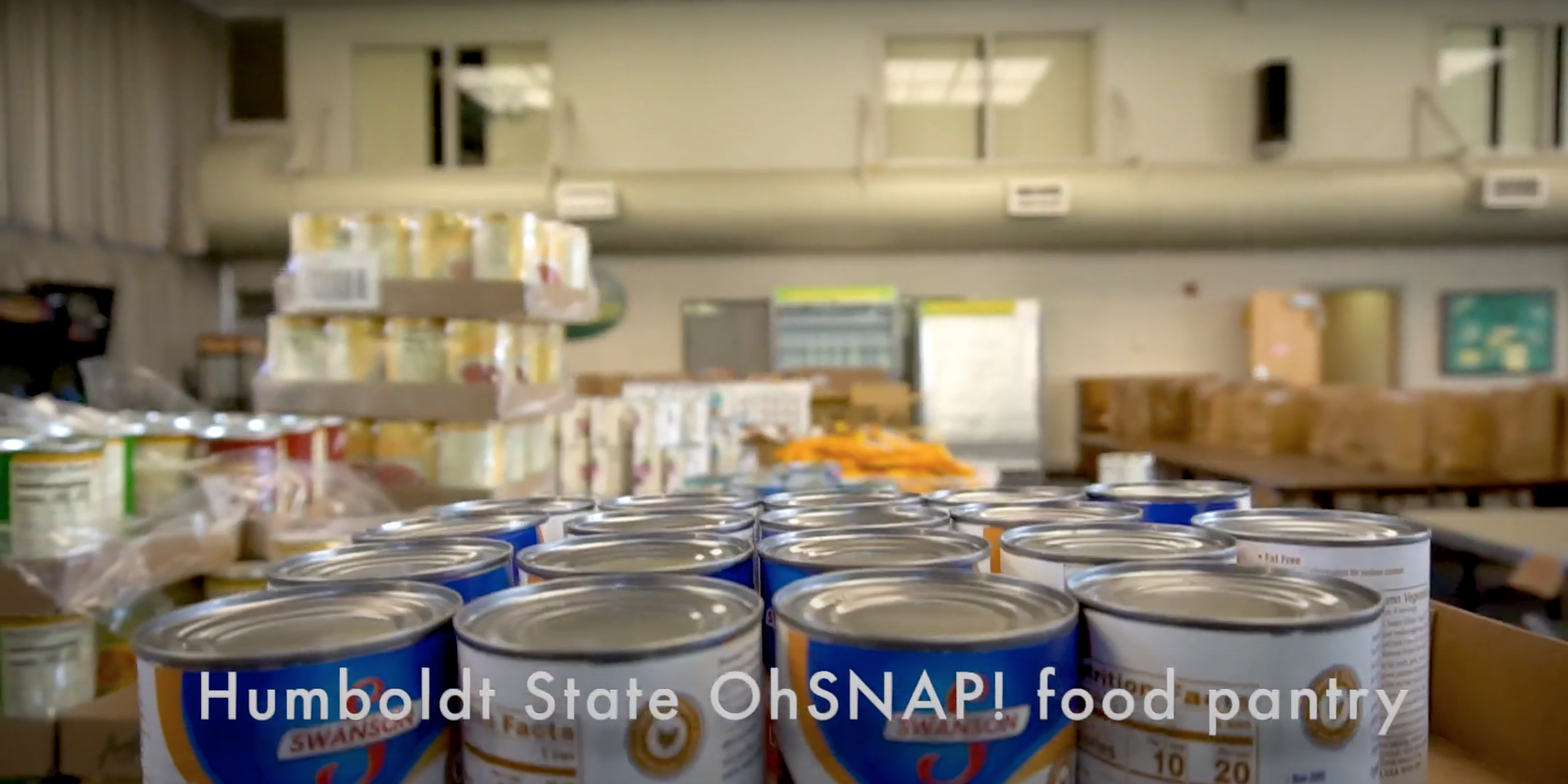
    On-campus food pantry provides for students in need

    With the J dining hall closed and grocery stores inducing anxiety, some students are relying on Humboldt State’s OhSNAP! pantry for food.

    OhSNAP! will remain open for the rest of the semester, serving students Wednesdays from 10 a.m. to noon and Thursdays from 1 to 3 p.m. on the bottom floor of the Jolly Giant Commons. OhSNAP! can also deliver food directly to you if you can’t make it to campus (email mira@humboldt.edu for more information).

  • Shelter-in-Place is Not a Productivity Race

    Shelter-in-Place is Not a Productivity Race

    Quarantine shelter-in-place offers escape for some and anxiety for others—both are damaging

    Inhale, pause, exhale. We are living through an unprecedented, intimidating and stressful time, but now is not the time to beat yourself up.

    While the world seems at a standstill, many people have taken this time away from their normal daily duties to start new hobbies, lose weight or even learn new languages. These tasks and goals are not a reflection of yourself, nor should they be used to show off your journey through social distancing.

    A 2013 study by a psychologist at the University of Michigan examined the effects of social media on people’s mental wellbeing. The study found that social media, Facebook in particular, does not facilitate beneficial social interactions.

    The same, and worse, can be said in regard to many other social media platforms. For example, Instagram can be a mindless escape for some but a shame-inducing harbor for others.

    There’s a constant creation of new challenges and trends coming up everyday, whether it’s the pushup challenge, #untiltomorrow or even celebrities singing tone deaf tunes. Or perhaps it’s a stream of self improvement posts and revitalized New Years goals.

    Whatever is clouding your social media feed, it doesn’t have to be a standard for you to live up to. This isn’t a productivity competition.

    Some of us might have more time on our hands, but that doesn’t make things easier—and some people still working or now taking care of children might not have more time. We are also still dealing with pre-existing mindsets on top of the stress of a viral global outbreak.

    Don’t waste this time comparing yourself to someone who’s lost 10 pounds walking in circles in their driveway or to someone who’s learned how to speak Italian while in quarantine.

    We need to have compassion for ourselves always, but especially now. The Centers for Disease Control and Prevention’s COVID-19 webpage provides a section for stress and coping information. This page offers insight to stress causes and outcomes all while underscoring the importance of knowing everyone deals with stress differently.

    Thus, we escape to viral social media trends for entertainment and relief.

    In a recent Vox article, writer Rebecca Jennings supports the flood of Instagram challenges. She argues people should continue this outpour of personal content because it offers connections that will stay in this ephemeral time.

    However, instead of cluttering a platform with more dog picture reposts or pictures of people wearing pillows as clothing that only distract from the now, we should contribute to the conversation by being honest and doing something that honors yourself and others. Let your friends on social media know how you really feel—open up, cry, laugh and inspire. If you’re up for it, of course.

    Don’t waste this time comparing yourself to someone who’s lost 10 pounds walking in circles in their driveway or to someone who’s learned how to speak Italian while in quarantine. Of course, if walking in circles in your driveway while rambling in broken Italian is your thing, go for it.

    Being honest with others allows for accountability. If you continue to keep up a guise of happiness when you’re truly suffering inside, you won’t receive the help you deserve.

    Speaking up about how you feel is a challenge more people should face. You don’t need to make immediate changes to improve, but you owe it to yourself to take the time you need.

  • Seeing is not believing: hidden disabilities in science students

    Seeing is not believing: hidden disabilities in science students

    Every morning, Humboldt State University senior and cellular molecular biology student Shazi Saboori wakes up next to a stack of pill bottles.

    “Depending on the day, I take between 8-10 pills, including Adderall when I wake up,” Saboori said. “I then eat something small, lay in bed for 30-40 minutes and wait for the Adderall to kick in, and allow me to have access to my brain.”

    Six months ago, Saboori was diagnosed with postural orthostatic tachycardia syndrome, or POTS.

    “There’s a part of my brain that cannot regulate blood flow,” Saboori said. “This causes me to get blood pooling, have a sudden drop in blood pressure and almost faint.”

    Saboori’s body attempts to increase the pressure drop through tachycardia, an extremely fast pumping of the heart while it’s at rest.

    “At one point, my resting heart rate was 214 [beats per minute],” Saboori said.

    In addition to tachycardia, POTS inhibits the left side of Saboori’s brain from communicating with the right side.

    “In my classes, I can’t just read the book and understand the material,” Saboori said. “I take a long time to make a master study guide, and to write and rewrite the material. I still get mediocre scores on tests.”

    POTS also causes Saboori to have anemia, or red blood cell deficiency, and gastric distress, which makes eating difficult. Saboori feels frustrated when people do not acknowledge her disorder, because it isn’t visible.

    “Many people have told me, ‘You don’t look like you’re sick,’” Saboori said. “I’m not looking for pity, or for people to lower their expectations for me. I’m looking for people to understand that [POTS] is not something I can control.”

    Michelle Goldberg, another HSU senior cell/molecular biology student, has ankylosing spondilitis (AS).

    AS is a form of rheumatoid arthritis (RA), which leads to joint degradation and inflammation of the surrounding membrane. Goldberg was first diagnosed at 12.

    “For awhile, I went to a support group for people with RA,” Goldberg said. “Most of the people there were adults. I was there with my dad.”

    RA causes Goldberg to experience pain in her lower body, center of spine, hips and joints.

    “When I feel good, I go to the gym, and do a little bit of elliptical and weight,” Goldberg said. “If it’s bad, I take some Aleve and put a smile on my face. Some days, I can’t stand up straight. Luckily, this has only happened twice since I’ve been at HSU.”

    Similar to Saboori, Goldberg recognizes that an invisible disability is not taken seriously.

    “Sometimes, I can encounter people who say, ‘You’re fine.’ But really, I’m not,” Goldberg said. “You can’t see what I have until my knees are really inflamed, and turned red.”

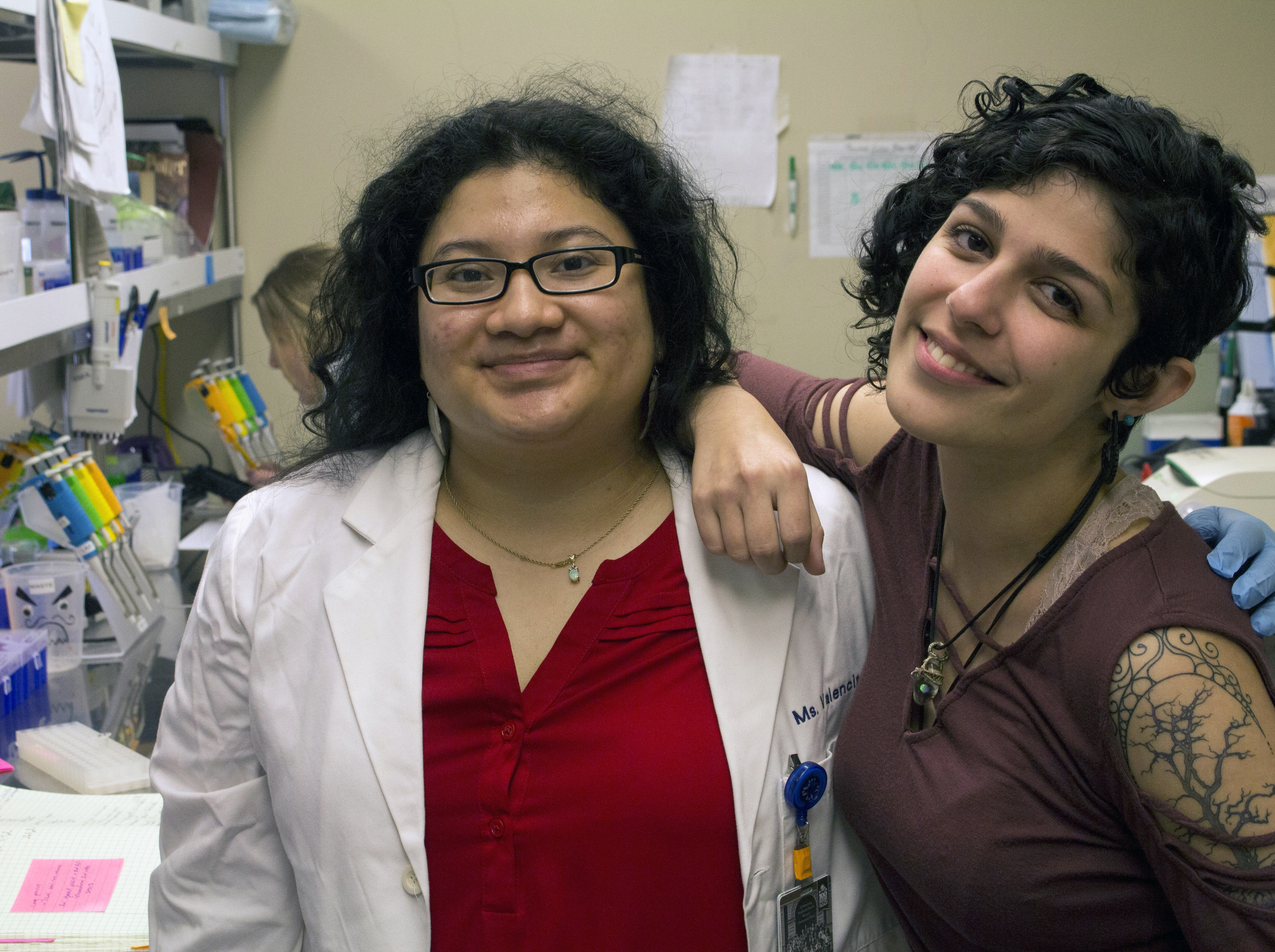
    Stephanie Valencia, also an HSU senior cell/molecular biology student, took eight years to finish a bachelor’s degree due to her hidden disorders.

    “I became friends with my microbiology teacher at my community college,” Valencia said. “She told me to get tested for a learning disability. I didn’t always have the best grade, but she believed I was a good scientist.”

    Valencia was diagnosed with a processing disorder, similar to autism and dyslexia. For people with processing disorders, learning new things takes a lot more time.

    “I wanted to know why I didn’t figure this out when I was younger,” Valencia said. “[My psychologist] said that a lot of people who are brown, like me, don’t get diagnosed until they’re in college. Elementary school teachers assume that brown students are dumb. They don’t push for students to go get tested.”

    When Valencia transferred to HSU, she began to suffer from anxiety attacks that caused her to miss classes. She was eventually diagnosed with generalized anxiety disorder, or GAD.

    “There’s a stigma about anxiety and depression in the sciences,” Valencia said. “People think that you don’t have the mental capacity to complete a rigorous program in STEM.”

    Valencia hopes to eventually become a physician-scientist in the field of neuroscience, even though the stigma around GAD could cause her some difficulty in pursuing her dream.

    “Unfortunately, people may not give you the opportunity to show that you could do it when they know of your disability,” Valencia said. “People think, ‘Oh, maybe she can’t.’ It’s the maybe that gets in the way of me being able to prove myself.”

    For more information on individuals with disability in the sciences, check out Dr. Mahadeo Sukhai and his book Creating a Culture of Accessibility in the Sciences.