The Lumberjack


Students Serving The Cal Poly Humboldt Campus and Community Since 1929

Tag: biking

  • Humboldt County boasts beginner-friendly bike camping

    Humboldt County boasts beginner-friendly bike camping

    by Valen Lambert 

    Do you like riding your bike? Do you like camping? Why not both! Humboldt county is a great place for beginner bike tourists to hit the road for the weekend to camp in its plethora of campgrounds and extensive open land. 

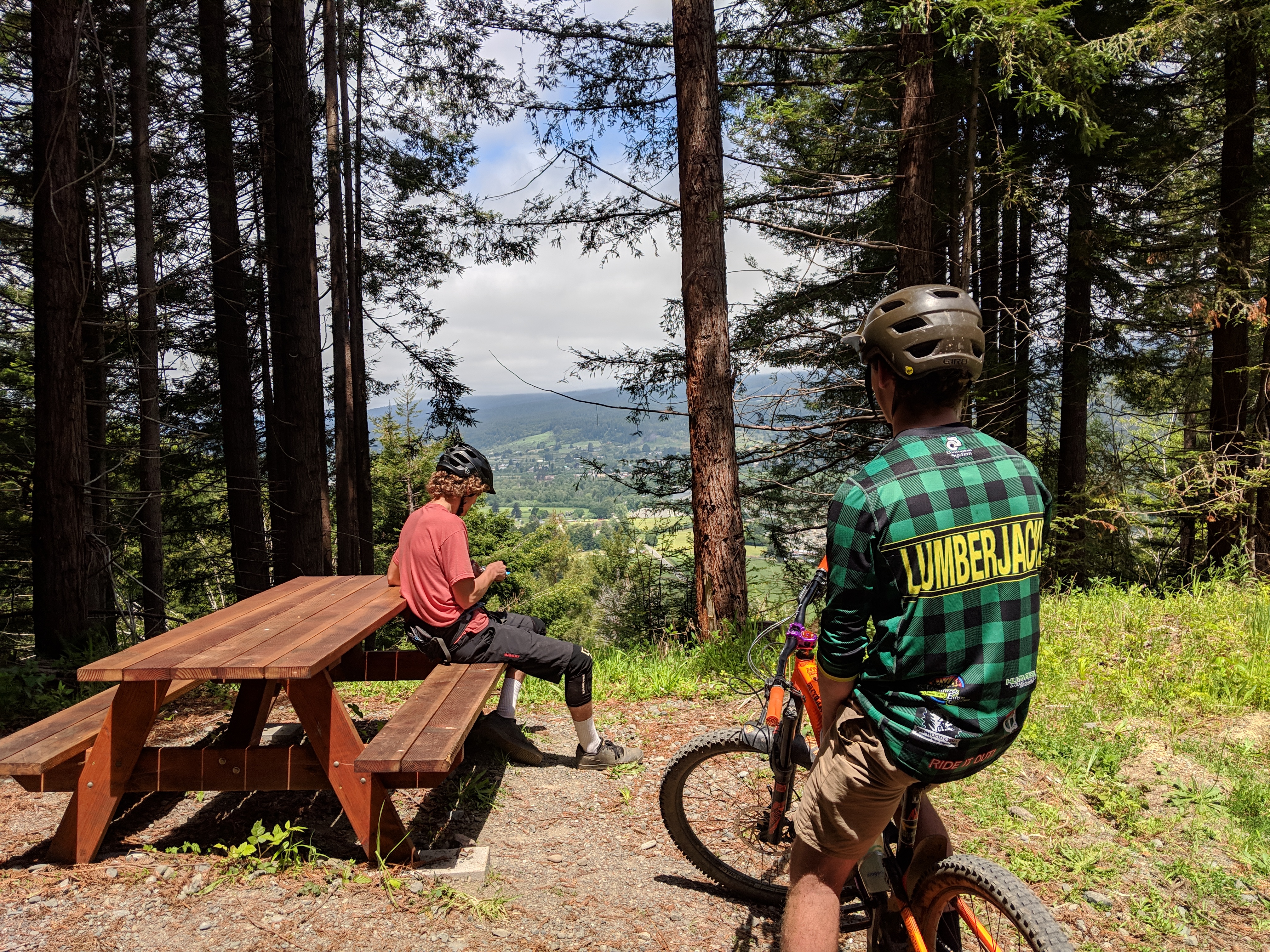
    This summer I rode my bike up the coast from Arcata to Crescent City, a total of 80 miles. Any time I go on a bike trip, I often hear people express their desire to do the same but feel like it’s beyond their reach physically or financially. I felt this way until a few years ago, when a group of women at my local bike shop hosted a beginner bikepacking workshop and group ride. 

    I’ve always been a bike commuter, but the longer mileage was new to me at the time. They lent me the bike bags to store my camping supplies and gave me the assurance I needed to do the ride. I’ve been hooked ever since. To be totally reliant on my own body, with everything I need on my bike, is the most liberating feeling I’ve ever experienced in my short existence. 

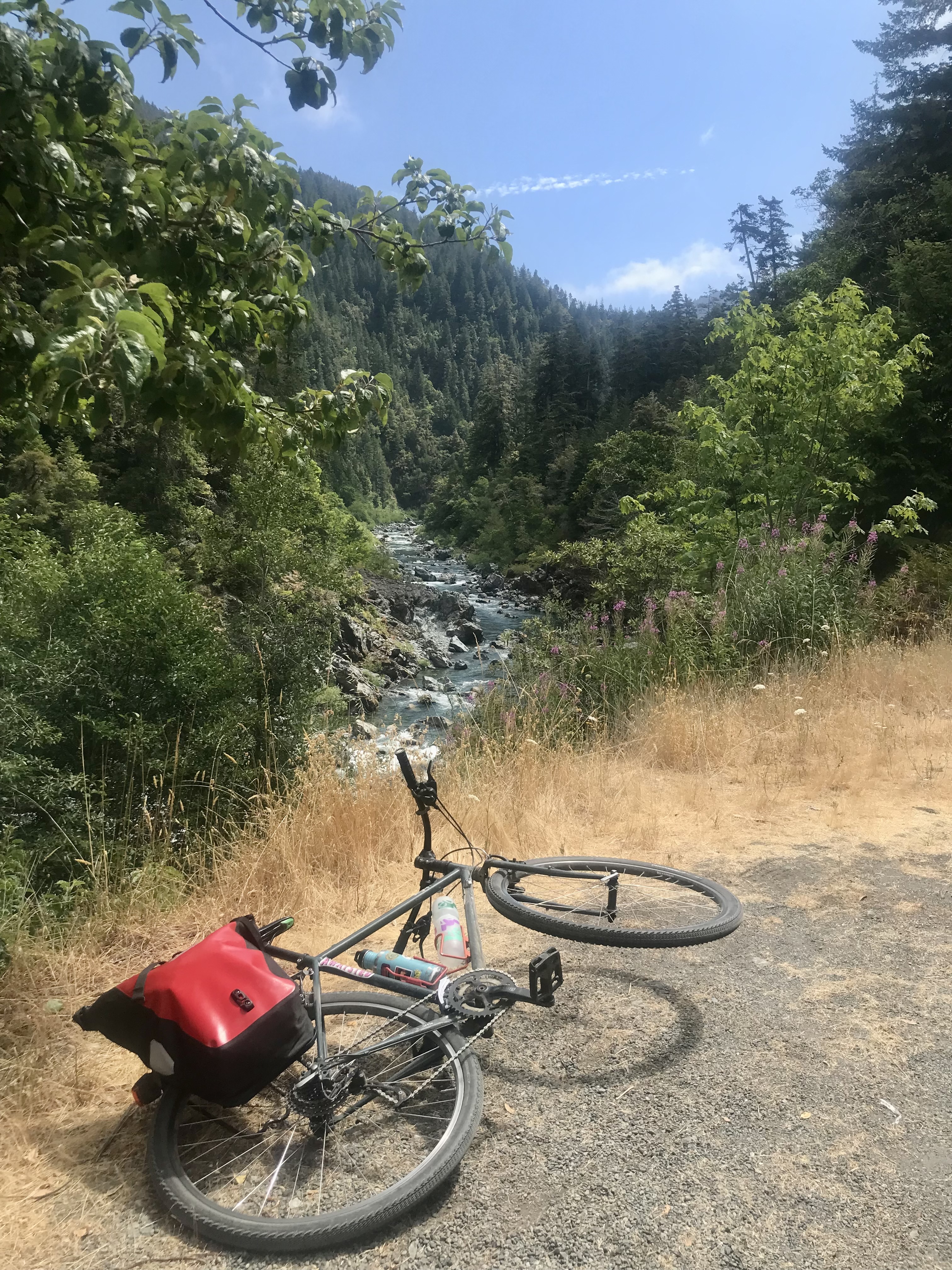
    Photo by Valen Lambert.

    The first day of my Crescent City trip, I biked 40 miles up to Elk Prairie Campground in Prairie Creek Redwoods State Park. Many campgrounds have hike and bike sites for the less vehicular travelers and are as cheap as $5 a night. 40 miles may sound like a lot to some, but if you’re able-bodied, you’ll find that you’re more capable than you think you are.

     Think of it this way: on average, a 40 mile day is typically (depending on elevation gain) a four hour ride, mainly spent in awe of the surrounding beauty. Depending on the time of year, that gives you plenty of daylight to take the time you need. The bike does a lot of the work for you, given you have several gears. Pedaling for a while is trance-inducing enough to make you forget you might be hurting. If you require frequent or long breaks, or feel you need to walk your bike at any point, you have every right to. Take some time and get yourself an ice cream, a beer, whatever. You’ve earned it.

    The second day was the remainder of the 40 miles to Crescent City, where I stayed with a friend. Biking Newton B. Drury Scenic Parkway through Prairie Creek State Park was an unforgettable experience. Redwoods hundreds of feet tall swaying above, a lush and verdant old growth forest stretching in either direction. Going over Last Chance Grade was a bit of a mortality trip to say the least – heavily trafficked, steep, logging truck after logging truck and little to no shoulder. But when you go up a hill, you come down a hill, and that hill is long and electrifying. I had to clean off all the bugs flying into my big fat smile. 

    Crescent City is a place I never thought I’d be excited to talk about but alas, it’s in close proximity to some of the most beautiful spots I’ve seen on the California coast. The Smith River is the largest undammed river in California; clear, blue, and serene as can be. The Tolowa Dunes provided some enchanting and remote gravel-biking trails. The Pacific is not nearly as threatening of an ocean as it is at many of Humboldt’s beaches – in fact it was rather inviting. Will I live, love, and die in Crescent City? No. Would I write an article about it? Absolutely. 

    Photo by Valen Lambert.

    I don’t think I’d recommend biking to Crescent City for a total beginner, only because of The Grade, but don’t fret because there’s plenty more opportunities for bike-bumming. Sue-Meg State Park is only an easy-breezy 23 mile northerly ride from Arcata, with plenty of hiking and bike sites. Roughly 25 miles north of Arcata is Big Lagoon State Park, equipped with hike and bike sites along, well, a big lagoon. Grizzly Creek Redwoods State Park sits on the beautiful Van Duzen River on Highway 36 and is a relatively flat 45 miles away.   

    First things first, you need a bike. Ideally with a rack on the back where you can hang your bags and strap whatever else on. Bike bags (AKA panniers) are pretty important, and can be found at Revolution Bicycles and Adventures Edge. You’ll also need some relatively lightweight camping gear. I personally just bring a down sleeping bag and an inflatable sleeping mat that I bungee on the top of my back rack, but some like to also pack a single-person backpacking tent. 

    Not sure if you want to drop some money on them yet? Check in with any camp or bike savvy friends of yours to see if you can borrow gear. Getting your hands on some bike bags and camping gear is your first step to freedom. The second step is to just start pedaling.   
  • Cyclists fill streets in honor of late Arcata woman

    Cyclists fill streets in honor of late Arcata woman

    by Liam Gwynn

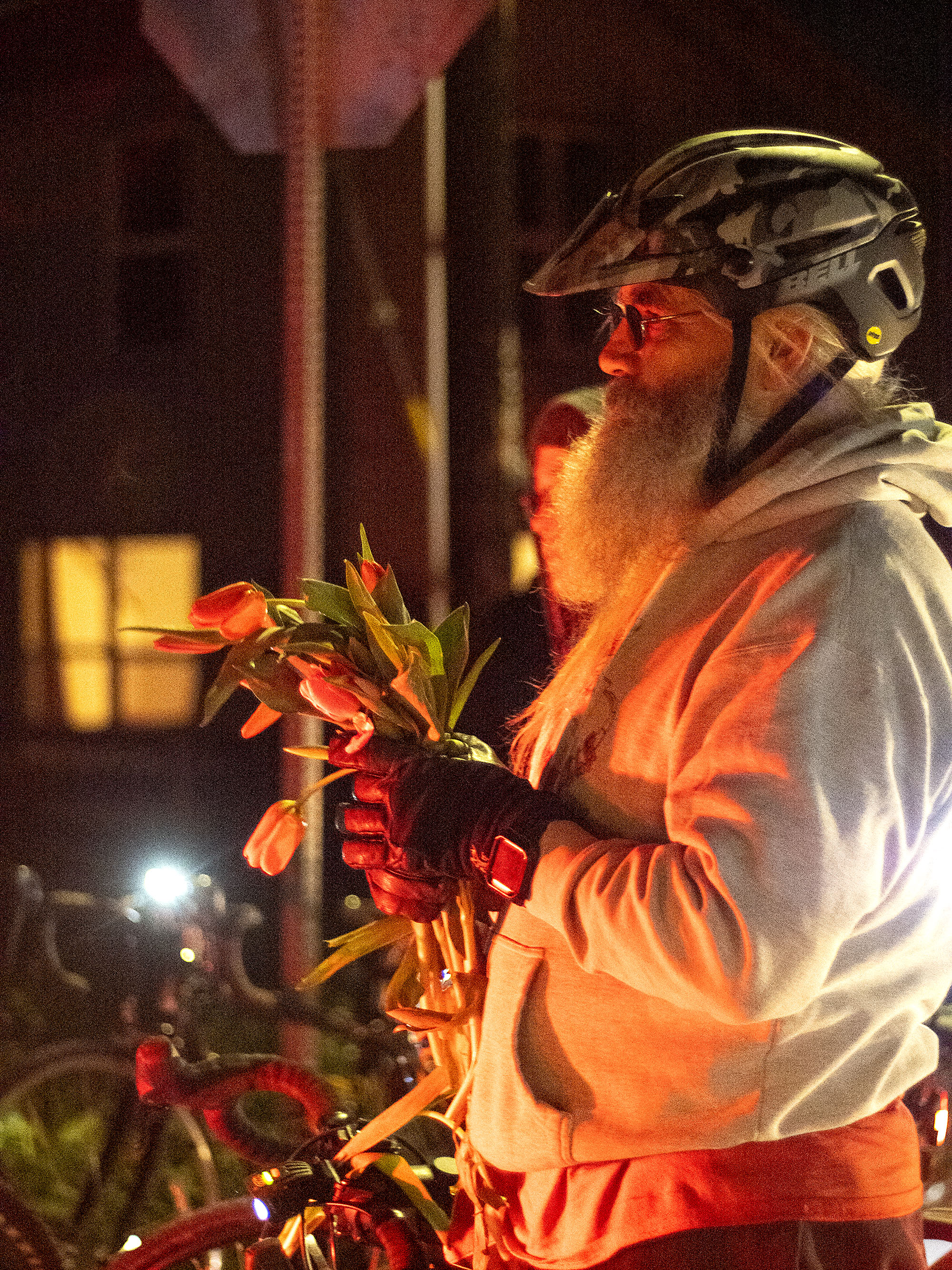
    Critical Mass cyclists took over the streets of downtown Arcata on Friday night, carrying flowers to the scene of a tragic accident that took the life of a mother. The bike ride was a memorial and demonstration to raise awareness for the problems facing cyclists and the dangers of unsafe driving.

    Photo by Morgan Hancock | on Friday Feb. 25 Critical Mass cyclists left flowers for the late Jennifer Garcia who was struck by a car in January near the intersection of St. Louis Road and Janes Creek Drive in Arcata, California.

    This January, a 40-year-old mother was killed in Arcata after attempting to cross a crosswalk with her child. In a heroic last act, she pushed the stroller out of the way, saving the child. The local branch of Critical Mass hosted Friday’s bike ride to memorialize her life and put pressure on the city to make infrastructure changes with pedestrian safety at the focus.

    The group met in the Arcata Plaza where organizers handed out flowers to bring to the locations of two accidents involving pedestrians getting hit by cars. The peaceful demonstration took up the streets and blocked traffic on K st, Spear Ave, and finally the crosswalk of the fatal accident on St. Louis road. The group ended the night by regrouping at the Plaza. They then took turns telling stories of dangerous encounters they had with cars while cycling.

    Critical Mass is a peaceful international movement with a focus on promoting ecologically-friendly transportation and raising awareness for safe driving. Jonathan Maiullo is the lead organizer for the Arcata branch and explained how Friday night differed from the usual rides.

    “It’s important that the city be aware that we are paying attention and when a cyclist is killed or injured, something needs to change,” said Maiullo.

    Photo by Morgan Hancock | Young cyclist Felix O’donnell, practices safety with lights at the Critical Mass group bike ride on Friday, Feb. 25

    He explained how this issue requires local development that gives more freedom and safety to cyclists.

    “In the city, we just want greater visibility and that would come with having clear and separated bike lanes,” said Maiullo.

    Carisse Geronimo is the social media manager as well as an organizer for Critical Mass Arcata. According to Geronimo, the biggest problem facing the cycling community is the interactions between people driving cars and cyclists on the road.

    Johnny Newsome said he put flowers in his vest during the Critical Mass bike ride that took place in Arcata on Feb. 25 to remember the woman who died on the crosswalk.

    “The whole interface between cars and pedestrians and cyclists’ safety is a big problem. I think our structure is all backward and we shouldn’t feel like we have to yield to cars,” Geronimo said.

    Critical Mass hosts monthly bike rides in the plaza, however, many new faces showed up for the first time in order to honor the mother who was killed, including community member Johnny Newsome. He was drawn to the event after he heard where the accident took place.

    “I go through that intersection where that lady was killed all the time, and I got to admit I drive through there too fast sometimes myself,” Newsome said. “And you know it needs to be addressed. Some change has to be made on the street.”

    Critical Mass meets in the Arcata Plaza on the last Friday of every month at 6 p.m.

  • Moon Cycles: queer-owned bike shop in Arcata offers alternative space in male-dominated industry

    Moon Cycles: queer-owned bike shop in Arcata offers alternative space in male-dominated industry

    Correction (2/4/22): Co-owners Sage and Sprout did not meet while looking for a job but instead meet years prior as mutual HSU students.

    Moon Cycles, a brightly colored bike shop located on the side of the road near the intersection of Foster and Alliance in Arcata, is hard to miss. The bike shop was founded in October 2016 by nonbinary duo Sage and Sprout, a queer tour de force.

    Sage and Sprout serve the local cycling community by offering a queer-friendly space that goes against the grain of the male-dominated bike industry. Even the shop name is a pun that alludes to queer identity.

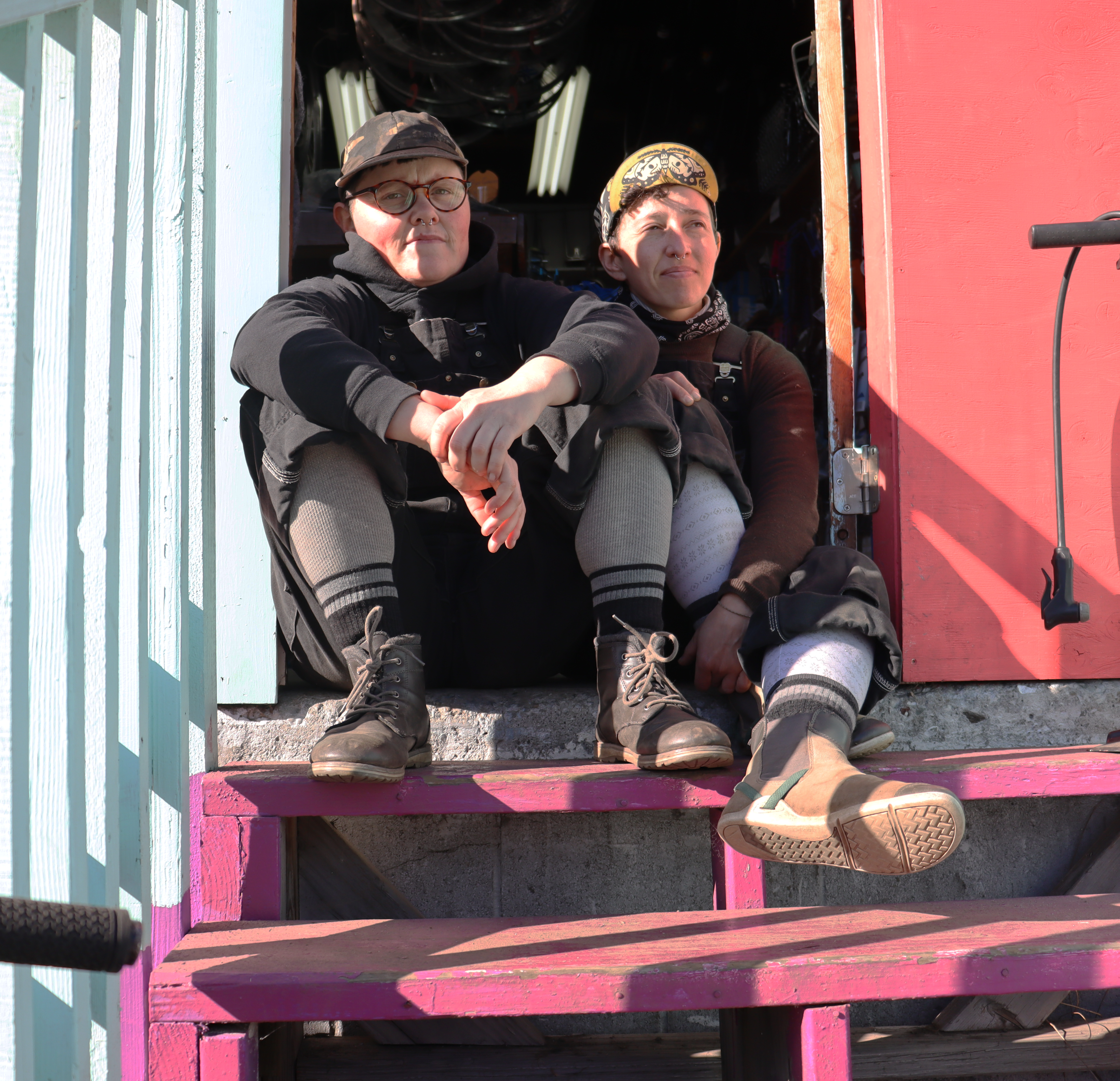
    Photo by Alexis Valtenbergs | Sprout standing in the doorway of their store Moon Cycles in Arcata on Jan. 27.

    “It’s a play on words, the moon being associated with femininity and the menstrual cycle,” Sage said. “Even if we don’t feel like women, the moon is a signal to our queerness and difference.”

    Sue Hilton, a 71-year-old lifelong bicyclist, is a regular customer at Moon Cycles. Hilton first caught wind of the shop in the L-Word, a lesbian newsletter based in Humboldt County.

    “My friend Susan did an article for the L-Word, so once I heard about it I started going,” Hilton said. “I loved the idea since I’m a big bike rider. Just that they’re great people, and they’re queer-friendly.”

    Although Moon Cycles is queer-owned, it’s not just for queer people. Moon Cycles an accepting space for everyone, regardless of gender or sexuality.

    “I’ve seen that especially with men but like most people, if they come in and they don’t know the words for things, they’ll feel apologetic,” Sprout said. “We’re not looking down on anyone for not knowing correct terminology or what the names of parts are or stuff like that.”

    Sage and Sprout met in Humboldt County while trying to find jobs at other bike shops, to no avail. After facing gender discrimination in the hiring process and being looked over in lieu of men, they decided to open their own shop instead.

    Photo by Alexis Valtenbergs | Sage (left) and Sprout (right) inside Moon Cycles in Arcata on Jan. 27

    “One year, neither of us could find jobs here,” Sprout said. “We kind of just started scheming and thought, ‘well, maybe we should just try to open a bike shop.’”

    “There’s an important caveat there,” Sage added. “Which is that I applied to all the bike shops here and I felt – I knew – I was being discriminated against and judged by my gender.”

    Sage won a mechanic scholarship from Quality Bicycle Products. The scholarship was an attempt to include more women and gender-nonconforming people in the bike industry.

    “They were trying to bring women – and gender-nonconforming people more recently – into the world of bike mechanics so that the whole industry can get more diversified,” Sage said. “And they can tip the balance a little bit away from men dominating the whole thing.”

    Ever since Moon Cycles opened, Sage and Sprout have played an integral part in tipping the balance in Humboldt. To learn more about Humboldt’s first and only queer-owned bike shop, check out @arcatamooncycles on Instagram.

  • One More Reason to Ride a Bike

    One More Reason to Ride a Bike

    Saving money and the planet at the HSU Bicycle Learning Center

    Humboldt State University’s Bicycle Learning Center made the transition in September 2018 from a student club to an Associated Students program umbrellaed under HSU’s Waste Reduction and Resource Awareness Program.

    Steven Sperling volunteers at the BLC while pursuing his master’s in business administration.

    “Bicycles are the most efficient form of transportation there is for human beings,” Sperling said. “Bicycles can and should save the world, period.”

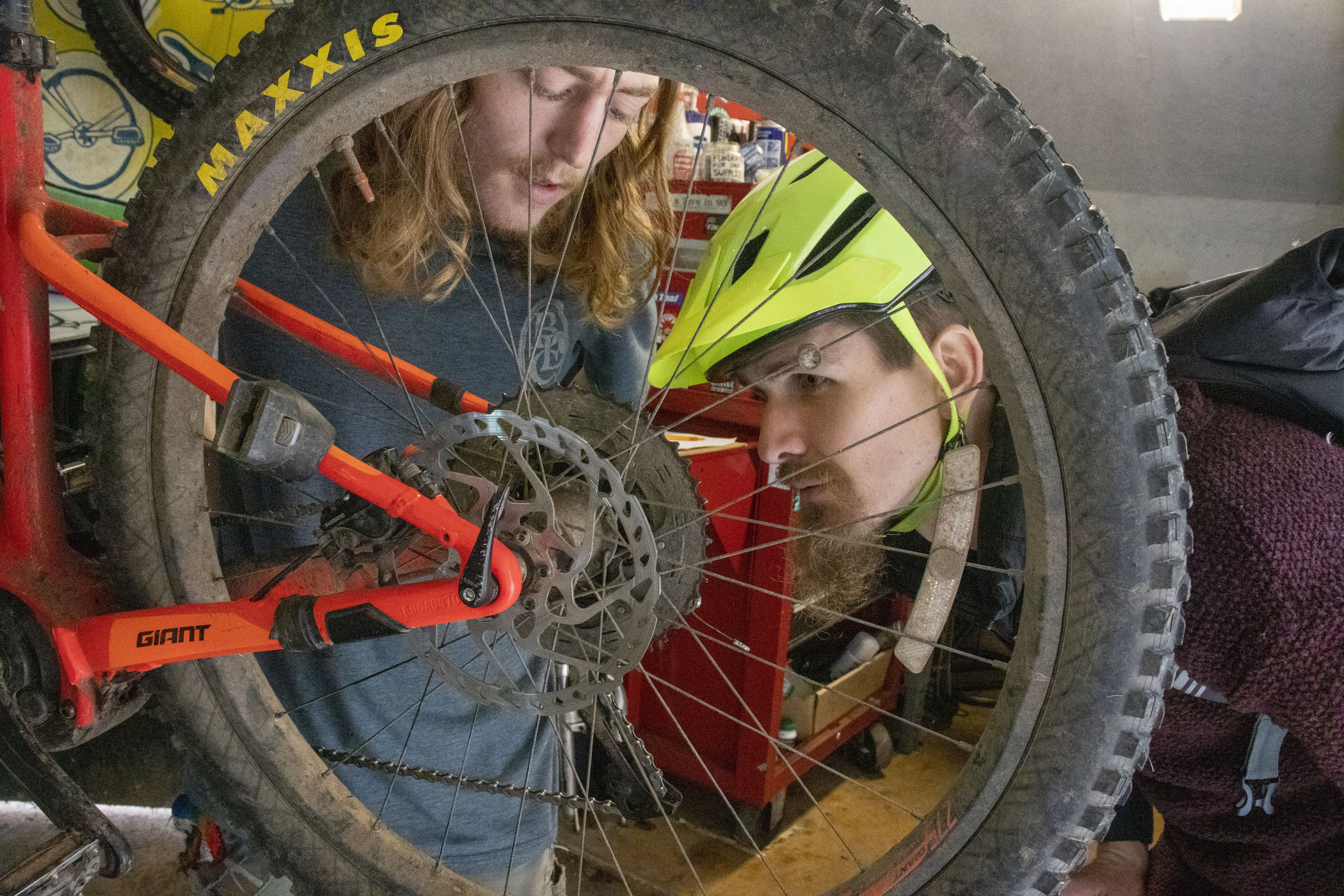
    Originally founded in 1992, HSU’s entirely student-staffed Bicycle Learning Center is a free resource available to all HSU students in need of bike repairs. The transition opened up two part-time instructor positions, paid for with student fees, that are currently split between three students.

    “Probably the biggest thing that I’m working on here is how to share my bicycle knowledge efficiently,” Sperling said. “Learning how to teach is one of the things that I’m most excited about learning while I’m here.”

    Current Director Julian Palmisano has been a member of the BLC since he transferred to HSU from Santa Barbara City College in 2017.

    “We all started as volunteers at the shop to serve and build community, utilize the resources and gain experience,” Palmisano said.

    The BLC does its best to provide all of the tools necessary for maintaining a well-conditioned bicycle, along with as many consumable parts that they can get their hands on. With a budget of only $800 provided by WRRAP, the majority of parts that cycle through the BLC are donations.

    “Sometimes we just don’t have stuff and we have to tell people like, sorry we can’t help. Which is a real bummer.”

    Colton trent

    Colton Trent is an instructor entering his third semester volunteering for the BLC.

    “The budget provides a buffer in case we run out of stuff,” Trent said. “But for the most part we can function pretty well trying to up-cycle and recycle things.”

    As a result of their small budget, the BLC can only provide a finite number of students with bicycle maintenance.

    “Sometimes we just don’t have stuff and we have to tell people like, sorry we can’t help,” Trent said. “Which is a real bummer.”

    The BLC encourages donations in the form of tools, bicycle parts and old bikes that will be refurbished and donated to a student-rider in need. All cash donations that the BLC receives go directly into the shop’s spare parts fund.

    In the fall semester of 2019, the BLC saw over 180 documented student visits, totaling over 100 hours of bicycle maintenance. By spreading the trend of using bicycles as a primary-method of transportation, the BLC is promoting a healthier lifestyle with a significantly smaller carbon footprint.

    Located in the eastern tunnel by the Redwood Bowl, the BLC is open 10 a.m. to 2 p.m. Monday through Friday, with instructors and volunteers standing by to assist and educate students in bicycle repair.

  • Mountain Biking Has a Sustainability Problem

    Mountain Biking Has a Sustainability Problem

    With all the gear and gadgets, mountain biking isn’t as sustainable as it may seem

    For a sport that usually occurs in natural settings, and whose participants generally value the ecosystem and the world around us, mountain biking has a serious sustainability problem.

    Everything has an expiration date. No matter the maintenance, nothing is ever ‘for life,’ and nowhere is this truer than in the mountain bike industry. Chains stretch, tires bald or blow out, brake pads get worn down and bearings become crunchy and rough.

    Issues arise when one attempts to revive or service a bike. Many of the functions are delicate and precise, requiring fresh parts to operate smoothly. This means something as simple as a tune-up often results in cables, housing, tubes and tires being thrown away.

    Improper installation or use means that these parts break before they should and get replaced prematurely. Some people replace prematurely simply because they want improved performance.

    It’s hard to process this waste on an individual level, but walk into your local bike shop and look in the trash cans. Often, they’re filled with very un-recyclable items that are used, removed and replaced.

    Of course, the nature of the sport is that parts get worn down or broken and must be swapped. That so many of these parts get replaced prematurely or destroyed early due to user error is only part of the problem.

    With the way our world is headed, mountain biking is due for a rude awakening on the ways that it creates unnecessary waste.

    Other issues arise when we look at the bike industry and the way they market their high-end products. Often, these brands will swaddle their expensive parts in multiple layers of processed cardboard and plastics.

    Recently, I purchased a new shifter for my bike. The shifter is a small plastic pod, about the size of a mandarin orange. It arrived in a box that I could’ve fit my shoes into.

    Just because you can get away with selling drivetrain parts that cost as much as high-end electronics, doesn’t mean you need to package them like iPhones.

    If these parts were packaged in plastic bags rather than bulky cardboard, you could fit 10 times the items in a similar space, drastically cutting down on shipping material and resources.

    Usually, I give corporations a bit of lee-way with the way they package expensive items. It makes sense that they’d want to provide the customer with a sense of exclusivity for choosing to spend their hard-earned dollars on these parts. But with the news about our world’s climate becoming grimmer with every passing day, the mountain bike industry needs to step up and restructure their priorities to make the sport more sustainable.

    I’ve never met a mountain biker who didn’t care about the environment and the future of our planet. Unfortunately, when something breaks usually the whole bike is unrideable until the issue is corrected. Most of us just accept the impact of our sport as there aren’t many other options.

    With the way our world is headed, mountain biking is due for a rude awakening on the ways that it creates unnecessary waste.

  • Downhill Dust

    Downhill Dust

    2nd Annual Mad River Enduro hosts 111 riders in Blue Lake

    On Saturday, the hills south of Blue Lake were filled with the sound of bicycles shooting down the trails. The 2nd annual Mad River Enduro hosted 111 riders who traveled through the five stages, twisting pathways created by Redwood Coast Mountain Bike Association. Riders took to the course at 9 in the morning and rode for 7 hours before retiring to the Mad River Taproom for drinks and the podium ceremony.

  • Bike Month rolls in

    Bike Month rolls in

    Two-wheeled transportation celebrated all month with a range of bike-related events

    Cyclists, rejoice! May 1 officially ushered in Bike Month, an international holiday that Humboldt County takes very seriously. Events will be happening all month long and a variety of businesses have stepped up, offering discounts and special deals for those who arrive by pedal-power.

    Oona Smith is a member of the Bike Month Humboldt Coalition, an informal group of bike enthusiasts and advocates that helps curate the events and deals being offered. She was tabling at the Trails Summit held last weekend in the Kate Buchanan Room, and said to many participants that “every month is bike month.”

    “Our goal is to normalize biking as a convenient, fun and accessible form of transportation,” Smith said. “Not enough people use bikes for those short, one to three mile trips that are beyond a reasonable walking distance.”

    One event that Smith expects to have a large turnout is Arcata’s bike-to-work day which takes place on Thursday, May 9. All you have to do to participate is ride your bike to work, but early birds or those in need of bike maintenance will want to make it out to the Arcata Co-Op from 7-9 that morning. A pop-up station will be offering free breakfast snacks and coffee for riders and free tune-ups if your ride has been acting up recently.

    A similar event will be held at the Eureka Co-Op on Thursday, May 16. There will also be a rally at noon on May 6 where cyclists can congregate in the Arcata Plaza for food, fun and bike tune-ups courtesy of Revolution Bikes.

    A variety of bike-friendly-businesses are offering their own special deals and discounts to celebrate this month. Highlights include Los Bagels offering free coffee and Richards’ Goat Tavern and Tea Room offering 25 percent off your tab if you mention Bike Month, both of these deals available May 5-11.

    Other events like a bike film festival, kid’s bike rodeo and an array of morning “pancake” rides with a complimentary breakfast will be happening throughout the rest of the month. Details for these events can be found on the Bike Month Coalition website at bikemonthhumboldt.org.

    The other major component of National Bike Month is the National Bike Challenge. Participants can register at the Bike Month Coalition website and use a tracking app like Strava to track the miles they travel by bike over the course of the month. The team or individual who logs the most miles wins a litany of discounts and prizes from local businesses.

    Last year Humboldt riders were able to log over 31,000 miles in just this one month. Thanks to an especially quick start this year, Smith thinks that Humboldt cyclists can collectively track more than 35,000 miles before the end of the month.

    Smith thinks that commuting by bike is not just a fun way to stay fit, but a way to de-stress on the way to work. She thinks it’s important for the future of our planet.

    “Cars should be the exception, not the go-to. We can’t treat our planet that way,” Smith said. “Bikes bring a quality of life that many haven’t been exposed to. They’d be surprised at the joy and freedom of simply riding a bike.”

  • They see me rollin’

    They see me rollin’

    By | Andre Hascall

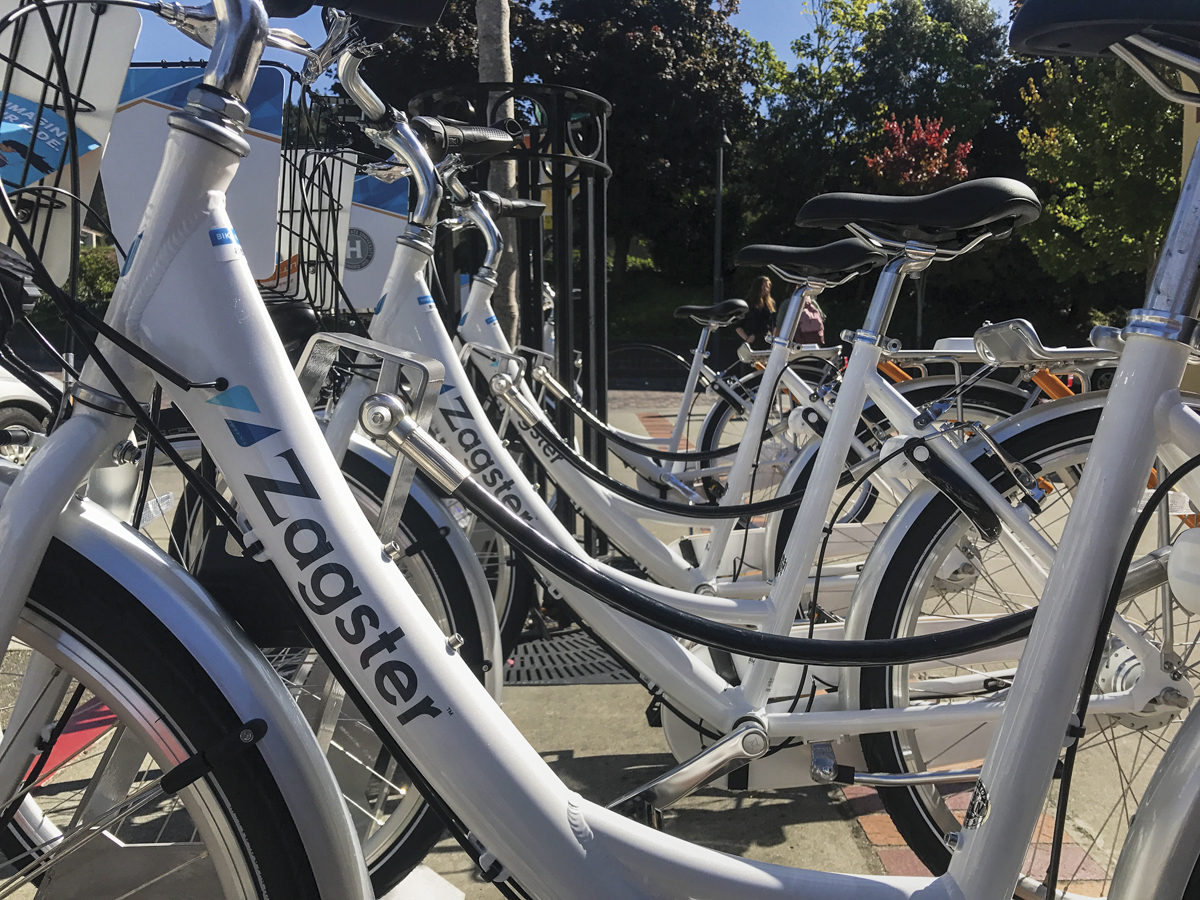
    This past week, seemingly overnight, HSU is offering a bikeshare system via Zagster. Zagster was founded in 2007 in Massachusetts, and it operates bike-sharing programs at universities and other locations.

    Transportation is always a hot-button issue on any college campus. Thanks to a generous donation from a former Humboldt State, Zoology professor we may have a solution.

    Of course everything costs money so one might wonder how this was affordable. Steve Bagley, an associate director with the office of philanthropy, had some insight on how the bike share program was funded.

    AHBikes8_Print_Color.jpg
    Zagster Bike Share at the bottom of the Jolly Giant Commons. Photo credit: Andre Hascall

    “He gave around $30,000 when he died to fund a few stations,” Bagley said. “That guy Manuel C. Kaster only rode a bike, real simple life.”

    Manuel Chernoff Kaster, more commonly known around Humboldt as Manny, donated $31,684 just weeks before passing away in May 2017. Manny was known for his simple life, his house in the woods and his fondness for bikes.

    In a time where ride sharing operations are all the rage, this is just another way for students and community members to get around. Of all the ride sharing programs available in Arcata, Zagster is the most environmentally friendly.

    Third year psychology student, JT Gibson noted that Zagster’s competitors offer quicker transportation.

    “They are going to have to compete with Lyft and Uber,” Gibson said. “There was already Zipcar, it might be better if people got their own bikes.”

    Zagster offers their services for two dollars an hour. If you get the $20 annual membership, the first hour of every trip is free. After the first hour, any extra hours will cost you two dollars.

    Uber or Lyft could cost you around eight dollars for a mile long ride. Zipcar gets more expensive, with a $25 initiation fee, a $70 annual fee and $7.50 per hour.

    Currently, similar to Zip Cars ride sharing service, Zagster is only located at HSU. One student, a third year international studies major, Jordan Schmidt, would like to see that change in the future.

    “I think it’s cool but it’d be cooler if they were off-campus too, like at bus stops,” Schmidt said. “That way we could get to and from campus easier.”

  • The challenge is ON

    The challenge is ON

    By | Robert Brown

    “Outdoor Nation is a fun way to get outside and be active,” Bridgette Hanson of Center Activities said. “That’s different for everyone, it’s why Humboldt won last year.”

    Open to students and anyone in the community, all you have to do is download the app, get out and take pictures of yourself, then post them to win prizes. The challenge is sponsored by REI, The North Face, eno, and Hydro Flask, and local businesses Adventures Edge, Minor Theatre, and Muddy Waters.

    “It’s so inspiring to live in this community,” Scott McCrary, student representative for ON said. “We have some of the most amazing nature spots here in Humboldt.”

    Some examples of ON Challenge events are guided walks, tidepool exploration, restoration projects, crafting, and volunteer events, also workshops on hiking, bike maintenance and birding.

    ON flyer.jpg

    “Our biggest event is Paddlefest,” Hanson said. “Around 200 people come to that event, some people get to try kayaking for the first time.”

    Each event accomplished earns a certain amount of points, for instance, backpacking, camping, and biking earn 10 points. Skateboarding, slacklining, and yoga earn 5 points. Birdwatching, gardening and stargazing earn 2 points. Add up points by completing as many events as you can and use them to redeem prizes.

    “A really fun event is the scavenger hunt,” McCrary said. “People follow clues through the week hidden in different places. Then take a picture with the clue once they’ve found them and post them in the app. to win a North Face backpack.”

    Along with an individual winner, schools are also competing to have the most number of people participating in their communities challenge. Last year HSU won the title of number one outdoorsiest school.

    “Winning was exhilarating,” one of last years winners, Ruby Garcia said. “Especially because we did it as a community and we won a $3,000 gear library that is available to students free of cost.”

    To find out more go to hsuoutdoors.humboldt.edu or www.oncampuschallenge.org

    “A big thank you to the Humboldt community,” McCrary said. “This wouldn’t be possible without the local radio and local sponsors.”