The Lumberjack


Students Serving The Cal Poly Humboldt Campus and Community Since 1929

Tag: Biology

  • Mammalogy and more: the wonders of the Vertebrae Museum

    Mammalogy and more: the wonders of the Vertebrae Museum

    by Emma Wilson

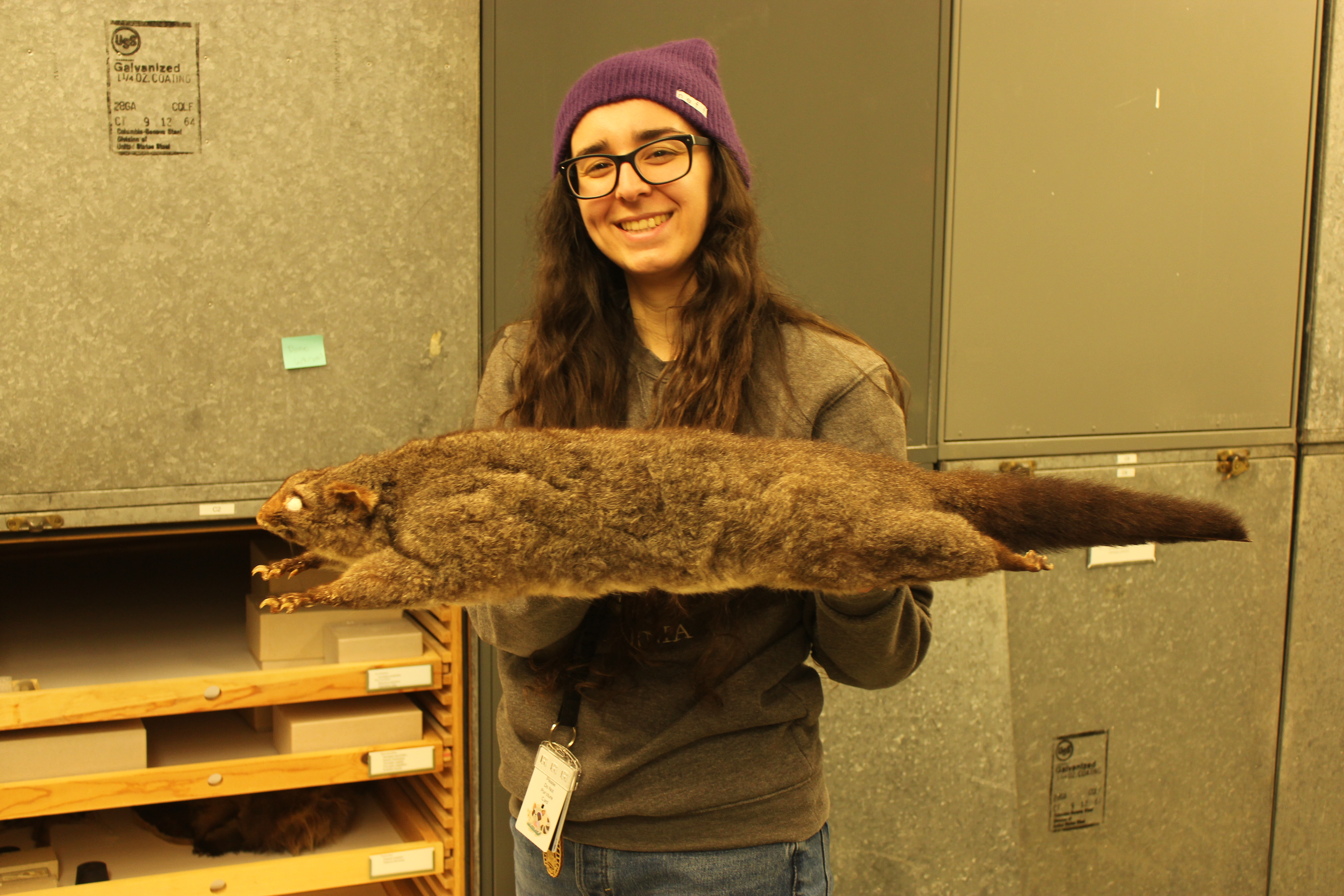
    In the depths of The Science C building, the Vertebrae Museum is home to carefully preserved specimens to help students understand the diversity and evolution of mammals. 

    Dr. Silvia Pavan, a professor at Cal Poly Humboldt and museum curator for the Vertebrae Museum, moved to Humboldt County in Jan. 2022. 

    “I teach mammalogy, which is a popular course a lot of students take in the natural science programs,” Pavan said. “Mammalogy is a class offered that covers lectures and labs. In the lectures, we cover general aspects of mammals, starting with the characteristics of mammals, origin and evolution of mammals. That’s the first part of the three main blocks along the semester.”

    The second block is functional morphology, a branch of biology that deals with the form and structure of organisms and their features. These include integument (hairs, glands and nerves), movement, acquiring and processing food, environmental adaptations mammals have to live in different habitats and communication.

    Finally, in the third part of mammalogy, the lecture covers more ecology, social systems and living in groups. In the mammalogy class, Pavan also talks about conservation and museum science. This includes what they do with museum specimens, and how museum specimens can inform us about diversity, evolution, conservation, ecology and aspects of mammals. 

    Digitalization and making data available online is one goal curators like Pavan are organizing. At the museum, guests can look at which species they have a tissue sample of that could be used to assess DNA sequence and what tissue collections they have. This is going to be part of the database as well so the scientific community can use the museum’s collection.

    “That’s what we are doing now. I think that’s the main thing for the museum, we are trying to make our collections broadly used for everybody,” Pavan said.

    The vertebrae museum is also home to a colony of dermestid beetles. These are tiny little insects that feed on dead animal tissue and clean flesh to the core of the bone.

    “When we prepare a specimen, and you get the flesh, it’s a way of getting the flesh out; they eat the flesh and they leave the bones,” Pavan said. “The beetle’s way of living off the bones and having the skeleton ready for being analyzed.” 

    Alyssa Semerdjian, the collections manager for the Vertebrae Museum, maintains the specimens and helps volunteers get their foot in the door.

    Anyone can volunteer at the Vertebrae Museum on Friday, from 12 p.m. to 5 p.m. If someone wants to come work on something, Semerdjian can show them how to apply.

    “If someone wants to come work on something, I’ll be the person that’s here to get them started and stuff,” Semerdjian said. “If they’ve never done it before, I’ll be the person to walk them through it. My job is general upkeep and database work,”  

    Semerdjian explains why mammalogy (study of mammals) and ornithology (study of birds) classes are important. Classes like these teach students about looking at details in a way that you don’t think about. This is true for anything where you’re looking at really fine-scale features.

    “For birds, specifically, going into that class, the birds are brown, and they fly around. Then as you start to see them, you see that there’s so much more, there’s so much diversity and you can’t go back to thinking that they’re all the same once you’ve seen that they’re different,” Semerdjian said. “Even within that, there’s a couple of things when you look at a bird, you want to look for — big wing, bar, size, shape, whatever — there’s like a list of features and it really taught me to zoom in on those features. You can see the bird for a second and it flies away, and just from having glanced at it, you can figure it out.”

    Having the skill of knowing what features to look for and how to apply them is useful in a lot of different contexts. If you can do that for one category, you can do that for any category. You just need to learn what features to focus on. There are some transferable skills like paying attention to the small details. 

    Knowing about the diversity that’s out there is important. There are people who didn’t know about some of the local species the university had until they checked out mammalogy. The really difficult mammals to find are some rare or endangered ones that people just don’t know about until they’re taught through these courses. 

    “If you want to do research or go into wildlife, taxonomy is important and is a big deal. In a lot of research fields, it ties into evolution and branches off into so many different niche fields that people can go into,” Semerdjian said. 

    Pricilla Ceja, a graduate student at the university, is in the biological science graduate program and is a TA for the mammalogy class with Silvia Pavan for the first time this semester.

    One goal Ceja hopes for in the future of mammalogy classes is to have more animal fieldwork. In zoology, there isn’t much to do with animals other than invertebrates. For bigger mammals, there isn’t really any way to see these mammals up close and alive. 

    “People in my class say, ‘Oh, how come there aren’t live specimens?’ And I’m like, well, there’s no one to take care of them, there is no one to catch them and then there’s nowhere to put them,” Ceja said. “There’s just no room for people to bring in space. There’s just not enough resources for live mammals.” 

    Ceja wants the Vertebrae Museum to be recognized more at the university because they constantly need volunteers. 

    Anyone who finds dead animals that were hit by cars or found deceased can bring them into the museum for research and volunteers. 

    “You’re going to see all the weird little stuff we have. I’m surprised by every lab too. Like I didn’t know we had a fucking wolf!,” Ceja said. “I was like what the heck is this? That is so cool.”
  • Students dive into oceanic research

    Students dive into oceanic research

    by Nina Hufman

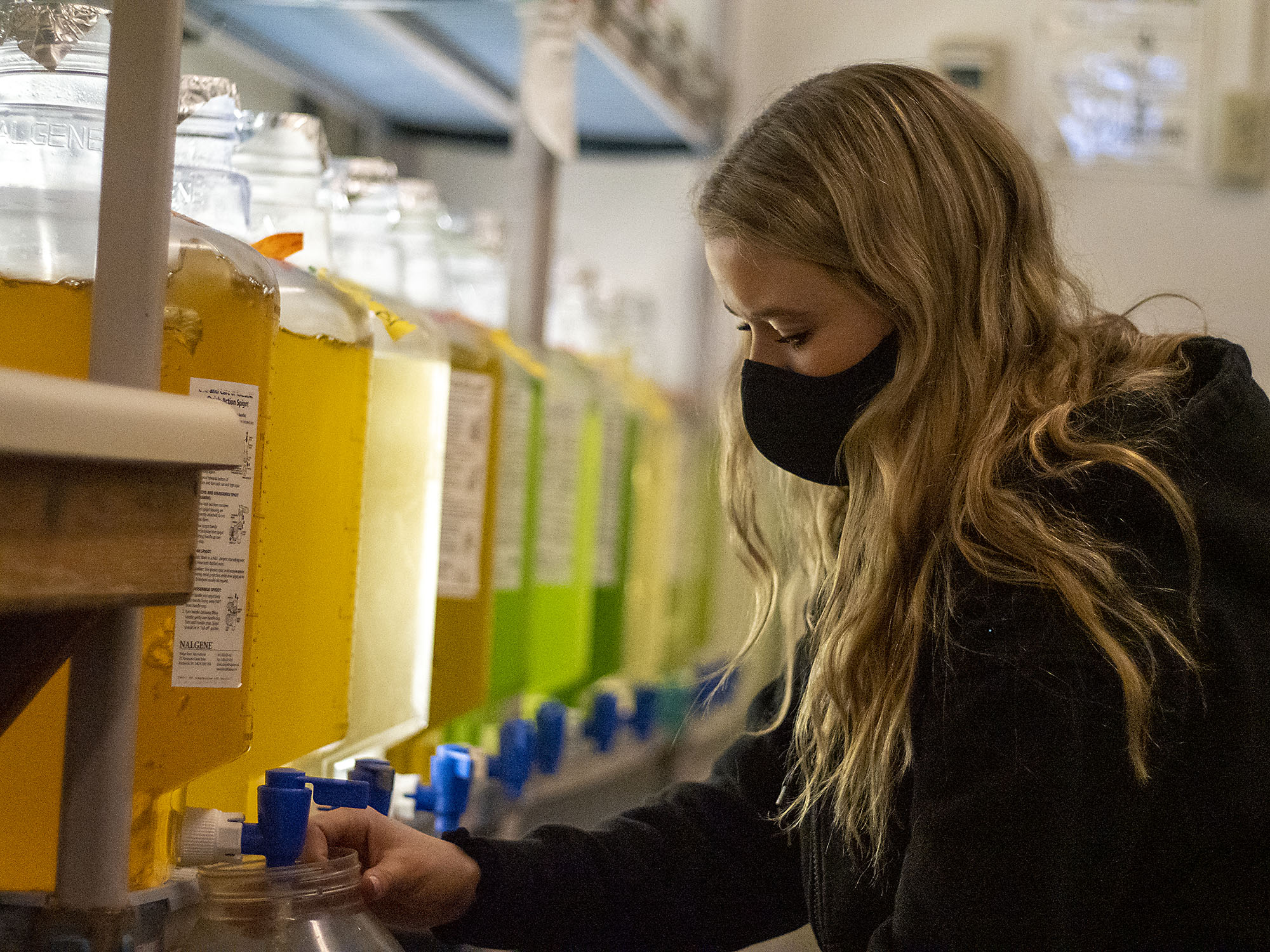
    At Cal Poly Humboldt’s marine lab, graduate students run between the workspaces and laboratories, students stir beakers of brine shrimp instead of cups of coffee, and Percy the giant pacific octopus (Enteroctopus dofleini) tugs on the fingers of the lab tech feeding him.

    Photo by Morgan Hancock | Percy the giant Pacific octopus (Enteroctopus dofleini)

    Percy’s isn’t the only interesting face one can see at the lab. Other notable critters include Gaia the red octopus (Octopus rubescens), Eleanor the Wolf Eel (​​Anarrhichthys ocellatus), and Butters the Albino Dungeness Crab (Cancer magister). Sea stars, baby jellyfish, sea urchins, clingfish, nudibranch, sea cucumbers, and anemones are among the lab’s other aquatic residents. There are also rockfish older than most of the people working at the lab.

    “There’s so much potential at this place for doing even more than we are now,” said Lab Director Rick Zechman.

    Although it’s currently closed to the public due to COVID-19, the students and staff of the Telonicher Marine Lab are offering guided virtual tours and virtual educational programs. Cal Poly Humboldt students also have the option to visit and explore the lab in person.

    If they want more experience than a visit will offer, students can sign up for courses in oceanography, fisheries biology, and marine biology, which all include instruction at the marine lab.

    Marine naturalist Jordyn Neal is in charge of tours.

    “Most of my job is public outreach,” Neal said. “I try to inform the public on the fish here, and conservation.”

    Neal gives guided tours of the lab and is in charge of the summer school program. She says that one of her main goals is to bridge the gap of scientific literacy.

    Neal is a fifth year marine biology major who is currently doing shark research outside of her degree. She takes CT scans of shark species living at different depths in the water column and looks at the morphology of their ears. Neal’s focus is on how the depth of the water in which a species lives impacts the structure of its ears.

    Photo by Morgan Hancock | Eleanor the Wolf Eel (​​Anarrhichthys ocellatus)

    The marine lab also hosts a number of grad students doing research projects, including Rose Harman. Harman is currently working on her master’s thesis and grant applications to fund her research. This summer, Harman will be studying habitat usage and predation of leopard sharks in Humboldt Bay.

    “Our new plan is to do field work combined with lab experiments,” Harman said. “One of my goals is to publish my research.”

    Graduate students Marzia Fattori and Kalani Ortiz are doing their research on growing bull kelp in Humboldt Bay. Ortiz’s project is focused on kelp as an agricultural product. She is currently growing the seaweed on string, and will be outplanting it to kelp farms in the bay until it reaches a harvestable size.

    Fattori’s project is focused on conservation. She is growing bull kelp on gravel and on ceramic tiles to see which substrate is more effective. In the second stage of her research, Fattori will grow the bull kelp in warmer water to examine the impact that rising ocean temperatures will have on kelp populations.

    The marine lab has two classrooms, a running seawater system, and access to the Coral Sea, a 90ft research vessel. Lab director Zechman says the lab is situated on an important part of the Pacific coastline, where students can expect a learning experience that is unique to Cal Poly Humboldt.

    “Our intention is to be a different kind of polytechnic,” Zechman said. “How many CSUs have a marine lab and a research vessel?”

  • Chopping Genes and Growing Brains

    Chopping Genes and Growing Brains

    Innovative research and a discovery in HSU’s molecular biology lab

    Biology professor John Steele guided a cell biology lab his first year at HSU wherein he wanted to teach students that cells need nutrients to survive. After 48 hours, the lab discovered quite the opposite. James Gomez, a current student in the lab, had the opportunity to research more into the groundbreaking discovery.

    “In science, you’re kinda looking for that unexpected stuff,” Gomez said. “Right after I came in, I was really excited to be a part of that. There was this thing that was happening that we particularly can’t fully explain, and I’m actually in the lab doing that science.”

    Steele’s experiment for his class involved students starving the cells of nutrients to trigger a state of autophagy, which is when the cell starts to consume itself. Steele meant to emphasize that cells needed nutrients like amino acids and lipids to survive. It was assumed that starving cells of key nutrients eventually killed them.

    Steele said the experiment was common, and was usually shut down after six to eight hours. Steele decided to run it for 48 hours instead, since that was the time between lab sections. When his class returned returned to the lab, rather than seeing a bunch of dead cells, they were decidedly more alive. The lab had made a discovery.

    Despite the cells being in autophagy in Steele’s experiment, they had stopped dividing and took on a strange morphology. Their metabolic rate was high—they were very much not dead.

    Now the lab, including Gomez, are deep in research. The lab is introducing pathway inhibitors, or drugs, to block basic cell functions, narrowing down the essential and non-essential. The project is open-ended, as students methodically look at every cellular pathway to determine the needs of cells.

    “What I love about this project is that it was born here,” Steele said. “Nobody else that I know of is working on this, outside of HSU. That’s an awesome process to be a part of, where students get hands-on training in phenotypic genetic screening and drug screening, and we get to learn about the basic biology of cells in doing this.”

    Steele encourages the students in his lab to explore the boundaries of their knowledge. CRISPR, Cas9 and stem cell cultures are unique tools available to these students, and they offer an opportunity to think outside the box and do creative science.

    Steele’s lab combines bio-technologies using unique stem cell cultures and genome editing techniques. The lab cultures stem cells—cells which can grow into any cell type—and chops up DNA using CRISPR, a revolutionary gene-clipping tool, to learn how rare neurodegenerative diseases develop in the brain.

    “There have been some really cool applications of CRISPR out there. And they’re just because somebody said, ‘I wonder if we could do that?’ and they did.”

    John Steele

    Steele’s graduate student Kyle Anthoney, on the other hand, is working on making a model of a rare disease called progressive supernucleogical palsy, which looks like a combination of Parkinson’s and Alzheimer’s diseases. The disease is a tauopathic disease because a main characteristic of the disease is a buildup of the tau protein, which blocks some necessary cell functions. To understand the finer details of the disease, Anthoney developed a new method for growing neurosphere cell types into what is, effectively, a miniature brain.

    Scientifically named 3D neural sphere cultures, these miniature brains offer a platform for researchers to study three types of brain cells at the same time. Anthoney’s method allowed him to organically grow neurons, oligodendrocytes and astrocytes, three dominant cell types in the brain, from human stem cells, so they would develop naturally like they would in a growing brain.

    Anthoney’s research is up for review in a number of scientific publications and his name is on some breakthrough scientific papers. He is contributing to research about progressive supernucleogical palsy and other tauopathic diseases. His research concentrates the tau protein in a miniature brain to simulate the symptoms of progressive supernucleogical palsy, and he is exploring how the protein and disease impact his lab-grown brain cells.

    “There have been some really cool applications of CRISPR out there,” Steele said. “And they’re just because somebody said, ‘I wonder if we could do that?’ and they did.”

  • So You Want to Compost

    So You Want to Compost

    Composting can be one of the most beneficial ways to handle waste

    Learn the steps to compost.

    Every Wednesday, the trash bin, filled with whatever waste was tossed during the week, goes to the curb to be picked up by Recology and shipped off to a landfill.

    Forty percent of the waste that ends up in landfills is food waste, according to Recology. This can include raw scraps from food preparation, old sandwiches left to rot and unwanted leftovers. When food scraps end up in a landfill, the material is not just waste, it’s being wasted.

    “The average American generates 4.4 pounds of garbage a day,” the Recology site says. “Don’t let your food scraps go to waste.”

    Illustration by Collin Slavey

    It’s a big deal if food waste gets tossed into landfills. Besides taking up space in our already overwhelmed landfills, food waste doesn’t decompose properly in such settings. For example, an apple that falls above ground breaks down into useful nutrients like nitrogen, which enriches the soil. Underground the apple isn’t able to break down.

    Buried in a landfill, the apple is in an anaerobic environment, meaning that it is starved of oxygen. Anaerobic decomposition creates some nasty byproducts. The most malicious of these byproducts are methane and liquid leachate. Both of these are pollutants with consequences.

    “Fortunately, avoiding these pollutants is simple. Just compost it,” international waste management firm ToWaSo said. “Food and yard waste can be reused and turned into nutrient rich compost. Composting exposes the green waste to oxygen, allowing it to decompose as it would in nature.”

    Humboldt State does compost food waste. According to an email from TallChief Comet, the director of sustainability, energy and grounds keeping with Facilities Management, HSU compost is managed in two ways. The Waste Reduction and Resource Awareness Program manages the composting bins on campus, while food waste is diverted from dining services.

    “The on-campus composting process is handled by WRRAP and is using the material from the public compost bins scattered around campus,” Comet said in an email. “This material goes into an Earthtub composting vessel, located at Facilities Management and processes about 10,000 lbs (5 tons) of material per year.”

    “The average American generates 4.4 pounds of garbage a day. Don’t let your food scraps go to waste.”

    Recology

    “The food-waste diverted from all the dining locations on campus is collected by FM waste and recycling staff into a large pre-composting container,” Comet said. “About every three weeks it is transported by Recology (a local waste hauler) to a vermicomposting facility in Dows Prairie run by The Local Worm Guy.”

    Comet emphasized that it is important to keep contamination out of the materials’ stream, and if someone is in doubt about whether or not to compost, trash it.

    “The best effort students can make is to not generate waste in any form to begin with,” Comet said. “For compostable waste they can achieve this by not purchasing more than they will use/consume during the anticipated period.”

    But composting may very well be appropriate. Composting may seem like an intimidating, tedious and smelly thing to do, but with a bit of practice it becomes second nature. Working with local resources like the Campus Center for Appropriate Technologies can help prepare a student for their own compost bin.

    Jacob Gellatly, an active member of CCAT, recommended that students learn about composting.

    “Before a student starts composting they should learn a few things,” Gellatly said. “It is critical to get educated on the process of composting. Learn the recipe.”

  • Green Thumbs at the Greenhouse

    Green Thumbs at the Greenhouse

    Dennis K. Walker Greenhouse provides a haven for a diversity of plant species

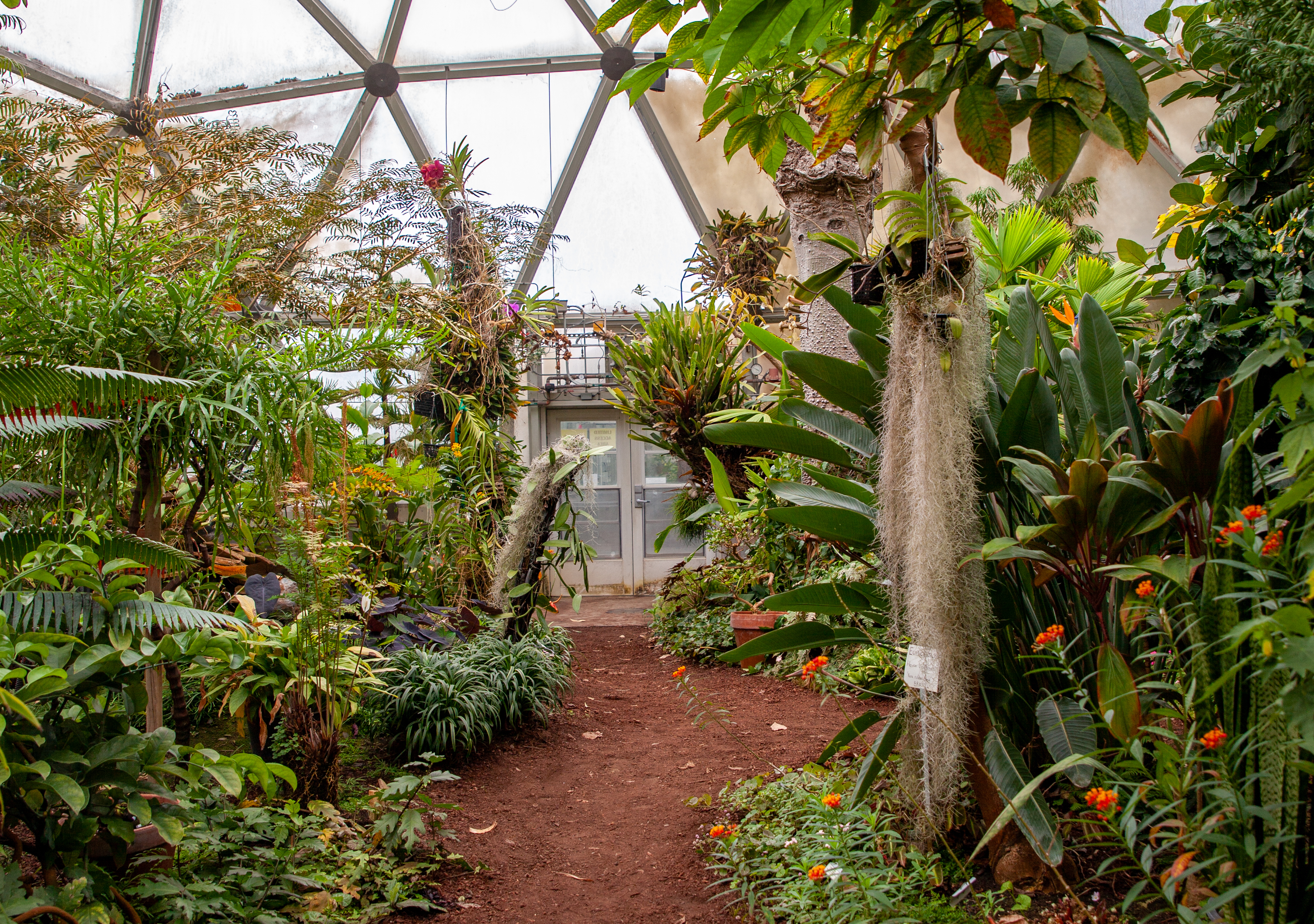
    A sky full of grey clouds smothers the sun and with a chilling breeze even the most layered person shivers down to their toes. One step into the Dennis K. Walker Greenhouse transports you away from the cold into a world of warm, enticing, vivacious plants.

    There are six rooms in the greenhouse: temperate, tropical, desert, fern, aquatic and the subtropical dome. Each room has an appropriate climate and a resident community of plants. Greenhouse manager Brianne Lee, along with student assistants Dabid Garcia and Courtney Harris, maintain the greenhouse at Humboldt State.

    “Essentially, the greenhouse is a living museum,” Harris said. “It’s something that we are trying to preserve here and not kill with love.”

    The large botanical collection contains more than 1,000 species of plants belonging to 187 families. According to the Department of Biological Sciences website, students and faculty studying botany and biology use the greenhouse and its plant life to research and learn.

    Harris, a botany major, said the greenhouse is a magical place, especially since there are only two student positions. After transfering from the College of the Redwoods in 2017 Harris was hired as an assistant.

    “It feels like a unique experience being that this is such a cool staple and an important part of the botany program,” Harris said.

    The job of a greenhouse assistant consists of maintaining the facility and its residents residents, which means sweeping the rooms, hand watering plants, managing pests and propagating plants.

    “Essentially, the greenhouse is a living museum. It’s something that we are trying to preserve here and not kill with love.”

    Courtney Harris

    Garcia, a rangeland resource science major, said that there’s a lot of care and research that goes into the plants, but the goal is to make sure the plants are happy and thriving.

    “Every species needs their own little formula of fertilizer,” Garcia said. “Some require more nitrogen than phosphorus and some others more potassium. We have to do our own research and sometimes that research isn’t available, so we’ll give the plant fertilizer and see how the plant reacts to it. A lot of our plants are really rare in the wild.”

    The trio look out for signs indicating whether something might be wrong, such as droopy leaves and discoloration. The team also checks soil moisture levels, but all plants indicate issues to caretakers in unique ways.

    “The biggest challenge is understanding how each plant reacts and responds to the care that we give it, and adjusting our behavior accordingly,” Harris said. “It requires a tremendous amount of teamwork and communication between us.”

    Harris added that some plants don’t like attention while others, if left alone, will wilt and die.

    Mihai Tomescu teaches plant morphology, plant anatomy, paleobotany and general botany. The trio’s work supports Tomescu in the botany department, as well as supporting the biological sciences. Faculty often use plant specimens during lectures and labs.

    “Plants don’t move, and yet they are exposed to pretty much the same challenges that we are exposed to in terms of surviving. There’s all sorts of stressors. They have to procure their food and because of that, just like other types of organisms, have to have some type of behavior.”

    Mihai Tomescu

    Tomescu said his area of expertise and research is plant structure, including topics like how plants are put together, how they grow, how they look and how their features evolve over generations. Some of his methods include digging deep into geologic time.

    “I know how they grow at the cellular level,” Tomescu said. “So coming from that perspective, I realized that one of the most fascinating things about plants that people don’t realize is that compared to us animals, and compared to what we think of in our culture about aliens, is that plants are more alien to us than the craziest aliens that human imagination has come up with.”

    In his classes, Tomescu has his students visit the greenhouse three to four times a semester for assignments and brings live samples for labs when examining roots, leaves, stems, cells and other internal parts of plants.

    “If you have a big botany program that emphasizes organismal biology, the diversity of plant groups and so on, then it makes sense to have something like this,” Tomescu said. “How else are you to teach your students about the diversity of plants if you can’t show it to them alive.”

    Some people may question the general interest in plants because at the surface they seem not to do anything. But Tomescu said that if you are able to slow down and get pass the green blur of a forest of plants, you’ll come to find some interesting organisms.

    “Plants don’t move, and yet they are exposed to pretty much the same challenges that we are exposed to in terms of surviving,” Tomescu said. “There’s all sorts of stressors. They have to procure their food and because of that, just like other types of organisms, have to have some type of behavior.”

    Plant behavior is what a plant does, including how it grows. According to Tomescu, plants have control of their growth, from the depth of their roots to the direction of their leaves.

    “The plant makes a lot of choices because growing in one direction or another means spending energy,” Tomescu said. “It’s very calculated — not consciously calculated– but basically plants sense their environment very well.”

    In the broader sense, he said that plants make him think. Tomescu hopes more people will become interested in plants since they are so different compared to other life forms.

    “It’s kind of exhilarating to realize that we live next to these super weird organisms,” Tomescu said. “It maintains this fascination that there are these organisms that do the business of living in a very different way from us.”


    The Dennis K. Walker Greenhouse is available to instructors and students in the Department of Biological Sciences, and access is limited by the availability of instructors or greenhouse staff.

    It is open to the public by appointment or when greenhouse staff are available. If you are interested in making an appointment contact Brianne Lee at 707-826-3678 or schedule a visit via email at bms561@humboldt.edu.

  • The evolution of biology 105

    The evolution of biology 105

    Do sports drinks lie about their sugar content?

    In biology 105, HSU oceanography major Courtney Dressler and her classmates tried to answer this question.

    “We are adding dinitrosalicylic acid into solutions of Gatorade and Vitamin Water Zero,” Dressler said. “The acid helps us identify how much sugar is in these drinks.”

    Dinitrosalicylic acid, or DNS, binds to sugar molecules in a solution. When this binding occurs, the solution’s color can transform into a shade between orange and red.

    Wesley Warren, also an oceanography major at HSU, explains how these color changes are detected.

    “We put the solutions into a spectrophotometer, which tells us how much light they absorb,” Warren said.

    Orange solutions absorb a different amount of light than red solutions. By comparing the sports drinks’ light absorbance values to those of the standards, or solutions with known sugar content, the drinks’ actual sugar concentrations can be determined.

    Dr. John Steele, one of the instructors for biology 105, elaborated on how this experiment fits into the course’s schematic.

    “Biology 105 provides an introduction to topics that a cell/molecular biology, microbiology and general biology major would encounter in their undergraduate studies,” Steele said. “[The experiment] is used to teach students how to make diluted solutions from a stock solution and how to determine the concentration of [molecules] in a given solution.”

    In prior semesters, two laboratory periods were given for students to complete the experiment and learn these essential techniques. Now, students are allowed three periods to conduct the experiment.

    A few other labs in biology 105 were also modified to include more time.

    Video by Linh Pham and Surya Gopalan.

    Dr. Brigitte Blackman, who teaches a section of biology 105, explained the factor that prompted these changes.

    “We try to take feedback from students every semester and change the course based on their comments,” Blackman said. “In past semesters, some students have felt the labs were too long and covered too much in one period.”

    “By spreading out the labs, we hope that students will be able to better understand the principles covered in lab and apply these principles to test a scientific hypothesis,” Steele said.

    For Marjani Ellison, an environmental science major who’s retaking biology 105, the order in which the experiments are conducted also seemed to change.

    “Last semester, the labs and lectures materials did not coordinate. I felt as if the two were separate classes,” Ellison said. “This semester, the labs follow the lectures. I feel that I’m actually learning this time.”

    In addition to student feedback, current trends and issues in biology also determine the necessary changes for the class.

    “Last semester, we incorporated the Small World Initiative into our laboratory curriculum,” Blackman said. “The initiative was introduced to the course by [professor] Mark Wilson. As part of this initiative, students sampled and grew bacteria from the local environment, such as the Arcata Marsh, then searched for bacteria that were producing antibiotics.”

    This semester, biology 105 replaced the Small World Initiative with gene-editing using CRISPR as the current topic in biotechnology.

    “CRISPR is a gene editing system made by two scientists named Jennifer Doudna and Emmanuelle Chapentier. To use this tool, all you need to know is the DNA sequence where you would like to make an edit,” Steele said. “Because of its versatility and popularity in biotechnology, bio 105 students need to learn the basics of this tool and the first step of building it.”

    Learning CRISPR at the introductory biology level could increase the horizon of opportunities for HSU students.

    “This topic has grown from being a sentence in a textbook to a paragraph, and soon, probably full sections of a chapter,” Steele said. “Biotech companies are looking for people who know how to use CRISPR and gene editing technologies. Learning this technique early could really put HSU students ahead of the competition.”

    Steele also claimed a selfish reason for teaching students CRISPR.

    “If more students know how to use this tool, then more students will be able to work for my lab,” Steele said. “My lab uses this tool everyday!”


  • Voices of students in science

    Voices of students in science

    By | Kyra Skylark

    Margaret Peck
    Margaret Peck, a Biology major with an emphasis in ecology and evolution, moved to Humboldt this past June. Photo credit: Kyra Skylark

    Margaret Peck, a Biology major with an emphasis in Ecology and Evolution, moved to Humboldt this past June. While drawn to the school’s Science department, Peck found great value in a class outside her major.

    “My Native American Studies course, I want to go into land management and a lot of that is working with the tribes of an area to get them back on the land,” said Peck. “To give the land back to them and have a kind of co-management. So I’m learning a lot of techniques to better understand where they are coming from and learn more about their history. So much of their history is not actually taught to us in our education or if it is taught to us, it is not anything remotely true or factual about what actually happened to them.”

    Learning history and communication skills in addition to her core science classes helps prepare Peck for possible career opportunities in the future.

    “I wanna help get people on the land and I really just want to be outside, that’s where I’m happiest,” said Peck.

    Darrian Francki
    Darrian Francki, a second year Forestry major with a concentration in Wildfire has changed his original goal since taking a variety of classes here at HSU. Photo credit: Kyra Skylark

    Darrian Francki, a second-year Forestry major with a concentration in Wildfire has changed his original goal since taking a variety of classes here at HSU.

    “When I first started at HSU I was thinking more of [a career in] national parks, but now that I’ve learned more, I’m open to anything within my major,” said Darrian Francki. “Whatever comes my way.”

    Cindy Luke
    Cindy Luke, an Environmental Science and Management major just started her second semester. Photo credit: Kyra Skylark

    Cindy Luke, an Environmental Science and Management major just started her second semester.

    “What brought me here was knowing that this was such a good place to be for environmental studies,” said Cindy Luke.

    Focusing specifically on Environmental Education and Interpretation, Luke hopes to teach individuals of all ages the value of being outside in nature.

    “Teaching all people in general, it’s important to start when they are younger, but it’s also important to know that they don’t stop learning,” said Luke.

    Luke is excited to be apart of the HSU community,

    “I have always loved the outdoors,” said Luke. “I was a single mom, so I went into accounting and business, payroll, because I already had an associate’s there. But I’ve always wanted to be outdoors and I’ve always wanted to share that love.”

    Conrad Stielau
    Conrad Stielau, a Forestry major in his second year is stoked to be going to school in the redwoods. Photo credit: Kyra Skylark

    Conrad Stielau, a Forestry major in his second year is stoked to be going to school in the redwoods.

    “It’s the Harvard of Forestry colleges,” said Conrad Stielau. “I’m a Forestry nerd, I deeply care about the trees, and there’s not a better place to learn.”

    Focusing on Wildland Fire Management within the Forestry concentration, Stielau is loving learning tools applicable for his future career.

    “In my Fire Ecology class, we’re understanding fire regimes,” said Stielau. “Basically how fire suppression in the United States has led us to the problem that we are in now, which is why we have more expensive wildfires and more severe wildfires every year.

    Stielau is enjoying all of his classes more than he anticipated.

    “Natural Resource Conservation is very cool, J. Dunks the man,” said Stielau.

    Stielau hopes to use what he leans at HSU to improve the current system.

    “I want to fix the US Forest Service,” said Stielau. “Basically fix America’s forests. I’m a younger generation of educated people in Natural Resource Science, all the people who have been making decisions in the last hundred years are old men. They don’t understand, they don’t think the same way. They still use plastic water bottles or they still drive their car half a block to work, they just don’t understand our sustainability mission.”

    Humboldt State’s commitment to environmental awareness and sustainability is what draws many students to the university, and they carry that after they graduate.

    “To bring a young fresh idea to it, a person like me who gives a shit– I give a lot of shits–it’s something I care about, I’m deeply passionate about Forestry,” said Stielau.

  • Voices of student science

    Voices of student science

    By | Kelly Bessem

    Voices of student science aims to highlight individual Humboldt State students majoring within the widespread realm of the sciences.

    ____________________________________________________________

    Isabella Knori, HSU Geography major with a minor in Geospatial Analysis. Photo by Kelly Bessem

    Isabella Knori is a senior geography major with a minor in geospatial analysis. Knori is originally from San Diego, Calif.

    “Geography allows you to learn about all different things that apply to a wide variety of disciplines,” Knori said. “When I came to HSU I was really indecisive and wanted to major in everything.”

    For her geography capstone project, Knori conducted a geospatial landscape analysis based on the historic habitats of California condors. This conservation mapping project found possible areas for California condor reintroduction in Northern California.

    ____________________________________________________________

    Kolbe Cathcart, HSU Biology major with an Ecology and Biodiversity focus, standing next to his redwood sapling “Toobee”. Photo by Kelly Bessem

    Kolbe Cathcart is a senior biology major with a focus in ecology and biodiversity. Cathcart grew up in Niles, Calif. 

    Cathcart chose his major because of a book he read growing up called “Dune” by Frank Herbert.

    “It’s about a lot of things but what interested me the most was the ecology aspect and the interaction between ecology and humans,” Cathcart said of the book. “I’m interested in looking at this interaction over thousands of years.”

    Cathcart is bringing a new perspective to the Humboldt State student-run aquaponics lab this semester by focusing on plants rather than fish.

    “Aquaponics is raising fish and using the fish waste to grow plants in that water,” Cathcart said. “It filters the water and then reduces waste production.” Cathcart is currently looking at the economic viability of aquaponics in Northern California.

    ____________________________________________________________

    Amber Hendershot, HSU Cellular and Molecular Biology major. Photo by Kelly Bessem

    Amber Hendershot is a sophomore in the cellular and molecular biology program. Hendershot is originally from Bangor, Penn.

    Hendershot is training to become an emergency medical technician and plans to apply to medical school.

    “I’m fascinated by the use of medicine for healing,” Hendershot said. “I would like to look into alternative medicine and see how it could become more validated through the scientific process.” Hendershot’s ultimate goal is to become a psychiatric or osteopathic doctor.

  • Who Knew? at HSU: HSU Marine Laboratory

    Who Knew? at HSU: HSU Marine Laboratory

    In this installment of Who Knew at HSU, we take an inside look at the Humboldt State University Marine Laboratory in Trinidad, Calif.  The lab is used for research in marine biology, fisheries and wildlife. It is also open for the public to enjoy.

    Video by: Alexandria Hasenstab