The Lumberjack


Students Serving The Cal Poly Humboldt Campus and Community Since 1929

Tag: Brianne Beronilla

  • The Weeknd shades Hollywood culture with Super Bowl performance

    The Weeknd shades Hollywood culture with Super Bowl performance

    The Weeknd performed at the 2021 Super Bowl halftime show surrounded by dancers wearing bandages around their faces, a statement about what the artist sees as a toxic Hollywood culture.

    Mara Johnson, a history major, said the halftime show is the only part of the Super Bowl she actually pays attention to, and the performance made her enjoy the overall game even more.

    “I thought The Weeknd did a good job, and I especially liked how he did a medley of so many songs,” Johnson said. “He had a good stage presence and his music appeals to a wide audience, so I think he was a good choice.”

    The halftime show was not the first time he has used bandages in a performance or publicized an unusual physical appearance. He posted a photo on Instagram in August 2020, posing for the MTV Video Music Awards with bruises all over his face.

    In November 2020 he showed up to the American Music Awards wearing bandages covering his face, similar to his dancers at the halftime performance. It looked as if he was in recovery from having major plastic surgery.

    On Jan. 5 he posted a picture on Instagram of his face, looking completely different, with defined cheekbones that looked like the result of intense plastic surgery with no caption or comment.

    Eibar Romero is an HSU critical race and gender major who thought the Weeknd’s strong message was effective.

    “In terms of Hollywood culture and connecting it to plastic surgery, he did do a good job because Hollywood is like the center of plastic surgery where a lot of famous YouTubers, popular social media influencers and celebrities get procedures done,” Romero said.

    However, Romero was not the biggest fan of the Super Bowl’s decision to have the Weeknd perform.

    “Honestly I don’t think he was a good person to choose for a Super Bowl game; he’s not a very exciting artist,” Romero said. `

    At the Super Bowl, he came out alone performing his well known 2016 hit, “Starboy.” Later, he started singing “I Can’t Feel My Face” as he walked through a mirrored hallway. He was followed by a large group of dancers wearing white bandages that covered their entire faces.

    Raul Barbosa, a forestry major, felt as though they could’ve chosen a better artist to perform at the halftime show.

    “I thought the face bandages were weird and not too significant, but thinking back now it could have, but it just wasn’t clear enough for me to understand at the time,” Barbosa said.

    Although there are mixed views on The Weeknd’s performance, his streams have increased 41% in the US since the Super Bowl, according to Billboard as of Feb 11.

  • Building Relationships Through ‘College Chats’

    Building Relationships Through ‘College Chats’

    The Humboldt County Office of Education is hosting Zoom sessions for high school and College of the Redwoods students, parents and anyone interested in learning more about HSU programs.

    These events are usually held in person every year but due to the COVID-19 pandemic, they are now happening online on Wednesdays from 12–12:45 pm.

    Jim Ritter is the HCOE College Connect Coordinator and the main host of the sessions.

    “College Chats are meant to be casual, and give students an opportunity to learn about subjects on the university level,” Ritter said.

    Ritter explained how College Chats can help students start to build relationships with HSU professors whom they might have a class with someday.

    “I think it is important for high school students to get accurate information about what they can expect in college,” Ritter said. “A really good way to do that is for the students to speak directly to professors and lecturers who teach in different majors. College Chats are perfect for helping this happen.”

    Even though these events are usually held in person each year, there are still positives that have come out of the situation. It has allowed students and parents from all over the community to join the meetings. The first event held on February 3 focused on kinesiology and was attended by students from Hoopa, Academy of the Redwoods, Arcata and Six Rivers High School.

    Every week there is a new HSU faculty member joining as a guest based on different majors. For the first session Justus Ortega, kinesiology department chair, joined to talk about his subject of teaching.

    “[College Chats] allow students and the department to discuss solutions to some of the hardest and most pressing issues that people face today including racism, social injustice and food security,” Ortega said.

    Jana Ashbrook is an Early Assessment Program Coordinator at HSU and the co-host of the events. She loves helping the students and cheering them on by sharing tips.

    “It seems the more time and experiences students get exploring and researching different careers and college majors, the more confident they feel in their college decision,” Ashbrook said.

    After experiencing the first session, Ortega has learned that the events are valuable for both students and parents to not only learn about different majors offered but also build relationships throughout the HSU community.

    “This event opened my eyes to each individual’s needs and concerns, and allows me to work with other faculty in our department, as well as other campus resources, to develop strategies that support each individual’s needs to achieve success and happiness at HSU,” Ortega said.

    Spring Semester 2021 College Chat schedule, Wednesdays from noon–12:45 p.m. on Zoom:

    • February 10 — HSU Psychology

    • February 17 — NO CHAT, President’s Week

    • February 24 — College of the Redwoods Nursing and Dental Programs. (This chat will run 1 hour from noon-1 p.m.)

    • March 3 — HSU Theatre Arts, Film, & Dance

    • March 10 — HSU Economics

    • March 17 — HSU Native American Studies

    • March 24 — HSU Art

    • March 31 — HSU Geology

    • April 7 — HSU Oceanography

    • April 14 — NO CHAT, spring break

    • April 21 — HSU International Studies

    • April 28 — HSU Critical Race, Gender, & Sexuality Studies

    • May 5 — HSU Child Development

  • Local Mexican Restaurant owner Esteban Gonzalez passes at 55

    Local Mexican Restaurant owner Esteban Gonzalez passes at 55

    Esteban Gonzalez was 55 when he passed away from pneumonia in relation to COVID-19 on January 12. The tragic news shocked the community and everyone that knew him, leaving behind a huge legacy and heartfelt memories with those who knew the well-known Arcata restaurant owner.

    Gonzalez was able to open his first taco truck in 2000. What started as just him and his wife selling food out of a trailer, expanded into a second location and became one of the most popular restaurants in town. After the pandemic started, his outdoor benches continued to be a convenient destination to go out to eat.

    Located in the heart of downtown Arcata, the restaurant provided high school and HSU students a delicious and positive place to stop for lunch or dinner.

    One of those students is Brandon Allen. He grew up in Humboldt County and went to Arcata High School.

    “This is just such a loss for the community all around,” Allen said.

    Allen remembered stealing a soda from Gonzalez in his freshman year of high school when Gonzalez caught him in the act. Allen felt so bad that he went back after school to apologize. Instead of punishing him, Gonzalez was actually happy to see him.

    “He was super understanding, letting me know that everyone makes mistakes,” Allen said.

    Even after high school, he continued to eat there and Esteban would still remember his order and want to hear about how he was doing.

    “Esteban was such an important part of my teenage years,” Allen said. “He taught me a lot without me really grasping it until much later.”

    Kyra Cohen, a senior at Humboldt State and an Arcata native started going to Esteban’s during their freshman year of high school.

    “He was the first in Arcata that all the high schoolers knew and loved. He’d help out kids when they were short of money, and simply had the best restaurant for Arcata kids,” Cohen said.

    Gonzalez’s restaurant was not only a great place to eat. He also created a fun and loving environment every time you walked in.

    Cohen remembers making jokes with her friends, and Gonzalez would just crack a calm smile. He’d often jokingly laugh and smile at them.

    “He’s the go-to for sure. I crave an Esteban’s burrito more than anything,” Cohen said.

    Brook Reeser is an HSU senior who grew up in McKinleyville. She worked at Redwood Day Camp during the summer, and she and all her co-workers would go to Esteban’s for lunch. They all called his burritos the “best they’ve ever had.”

    Arcata Main Street set up a GoFundMe page for Gonzalez’s family and has already surpassed their $15,000 goal with $28,116 as of Feb 1.

  • HSU students discover their own spark with “Soul”

    HSU students discover their own spark with “Soul”

    Pixar’s newest animation “Soul” teaches us multiple lessons that can be applied to our lives daily .

    The movie was released on December 25, 2020 and already has a 95% rating on Rotten Tomatoes. It tells the story of a man named Joe Gardner (Jamie Foxx) who lands his dream gig at the best jazz club in town. On the way, however, he falls into a dark hole that leads him to the “before life.”

    Throughout the movie, themes of compassion, empathy, and self discovery are discussed. Joe is faced with many challenges that help him rediscover his “spark” or purpose in life. The movie is family friendly that people of all ages will enjoy.

    Rachael Kee, is a junior at HSU majoring in psychology and communications who watched “Soul” with her boyfriend Rowan.

    “I loved the movie,” Kee said. “It had so many subtle but relatable themes throughout the film, which really made me think about my own life and my purpose,” she said. “This movie is honestly pretty emotionally intimate for couples to watch together.”

    “Soul” dives deep into the so-called “meaning of life” by teaching us multiple lessons throughout each character’s experiences. When 22 is put on Earth inside of Joe’s body, they become grateful for the little things in life, as small as just the appreciation of living and the ability to breathe fresh air.

    Rowan Feltges is a sophomore, fisheries major and Kee’s boyfriend who also enjoyed the movie.

    “The animation looked almost lifelike and the story was extremely introspective,” Feltges said.

    He not only enjoyed the visual aspects of the movie but also learned multiple lessons that he can use in his daily life.

    “Your passion does not define you as a person,” Feltges said. “What defines you is the pursuit to make oneself feel happy with life.”

    He emphasized that it’s important to not let your passions turn into addictions.

    “As people change and the world changes, so do our passions. It is how you adapt and overcome these changes to find true happiness and self gratitude,” he said.

    Paola Morgado is a senior majoring in chemistry. She enjoyed how “Soul” showed her that the main purpose of life is to simply live it.

    “My main takeaway from the film was, if you’re good to others, good things will come your way such as, second chances and ‘rediscovering’ your purpose,” Morgado said.

    “Soul” was released on Christmas Day, 10 months into a global pandemic. Though intended to be seen in theaters, Disney+ provides us with a thought provoking, heartfelt, and overall positive film we can watch without leaving our house.

    The movie has gained a significant amount of attention on social media in a short amount of time. It first intrigued Kee with its diversity, music, and psychological aspects.

    “Society tells us to grow up, get a job, and pay taxes, and never really allows us to connect to our souls in our individualistic way,” Kee said. “I feel a lesson that we can all learn from ‘Soul’ is that no matter how ‘lost’ or ‘unworthy of life’ one may feel, all it takes is the exposure of a new friendship or interest to pull you out of the darkness. Thus, don’t stop this crazy journey of life and keep going.”

  • Elementary education students learn to teach online

    Elementary education students learn to teach online

    Limited fact-to-face interaction challenges elementary education majors and K-8 students

    The pandemic forced limited face-to-face interaction between Humboldt State University’s Liberal Studies Elementary Education majors and currently enrolled K-8 students in Humboldt County.

    According to John Lee, a School of Education professor, community building amongst the LSEE students is easier in face-to-face classes. In an effort to build community in his classes, Lee used extended breakout group activities, games for students, breathing exercises, brain and music breaks and regular check-ins.

    “Feeling a part of a community or social integration is essential for learning,” Lee said. “It puts students at ease so they can focus on learning.”

    Fourth-year, undergraduate students and those in the teaching credential program started out the year teaching over Zoom. As more local schools opened up, HSU students were able to conduct limited face-to-face instruction with their elementary students using a hybrid instruction model.

    Stella Mantova, a LSEE major, teaches in a second grade classroom at Alice Birney School in Eureka. Because Eureka started the school year online, Mantova, her students and the other teachers experienced a huge learning curve.

    “Teaching over 20, seven-year-olds at once isn’t an easy task,” Mantova said. “But when you add in the fact that some of them are still learning to unmute their microphones, things become a lot more complicated.”

    Of all the challenges Mantova has faced since the pandemic began, connecting with her students has been the most challenging.

    “Online teaching seems like we don’t have as much time to get to know each other because we need to use the majority of our time to teach the standards,” Mantova said.

    Mother of three and LSEE major, Maxine Welch, missed interacting with her teachers and peers. Instead of being in a classroom, Welch watched pre-recorded lectures.

    “I would have liked to be able to be more interactive as an LSEE student, because I know a lot of my classes revolve around interaction,” Welch said. “Interaction with other teachers to learn their teaching techniques as well as interactions with students to learn how to adapt to the teaching needs.”

    Along with the effects the pandemic has had on LSEE students, the Children’s Center on campus had to adapt. Following local and state guidelines, the Center is currently operating at half-capacity. They’ve had to make several adjustments to ensure the children, parents and staff stay safe.

    Stephen St. Onge, director of the Children’s Center, is most concerned about the lack of social interaction between the children, classmates and teachers.

    “The team at the Center has had to revamp the way children and families are greeted, the number of students allowed in any classroom at a given time, and have had to modify their learning modalities and curriculum,” St. Onge said.

    Betsy Wilson, program director for the Children’s Center, added that the biggest challenges were keeping everyone healthy and making sure the Center stays staffed.

    “The hardest part about being an elementary education major right now is that everything always seems to be changing,” Mantova said. “Just when I think I’ve established a routine and I know what to expect from teaching and from my HSU experience, some new guideline shifts and I have to plan my life all over again.”

  • How to cope with post election anxiety

    The election may be over but the emotional aftereffects can be difficult to manage

    In addition to handling mental health post election, students have reached the middle of the semester and are working to finish strong after adjusting to the new virtual learning conduction of class.

    Resources are available for all students during these stressful times. According to the Humboldt State University’s website, “Counseling and Psychological Services (CAPS) promotes the well being of students through outreach, consultation, educational and counseling services.”

    Students are able to utilize CAPS from traditional one-on-one counseling support, group therapy, Single Session Therapy, “Web-In Wednesdays,” a “walk-in” service for students, and on-call services from 9 a.m.-4 p.m. Mon-Fri.

    The university also holds formalized events in the virtual quad for students to attend and discuss their mental health with professionals.

    On Nov. 4, a student dialogue event was hosted to discuss the election.

    The event was led by professional therapists and counselors of HSU. It was a safe environment and a fully confidential meeting where students were able to talk about their recent feelings surrounding the presidential election, the pandemic or anything else on their mind.

    One of the hosts of the meeting, Cedric Aaron, is a multicultural specialist and staff psychotherapist at CAPS. His advice for students is to not ignore or minimize any feelings.

    “If we distract ourselves to the point of ignoring them, then our wellness tank will overflow and spill out onto different areas of our lives,” Aaron said.

    He also suggests students lean on their peers for emotional support even if it’s as simple as a text message or a written letter.

    The election has not only affected students but many individuals in our community. Aaron, as a Black man and candidate in a local election in Humboldt County, has had to discover ways to manage his own stress and anxiety. His fear for our community intensified these past few months of elections.

    “Maintaining a strong connection and being in space within my Black/BIPOC community was key in getting me through these stressful months,” Aaron said.

    Paula Nedelcoff is a staff psychotherapist and community outreach coordinator at CAPS. She suggests movement is a good way to relieve stress. Whether it’s walking or talking out our feelings, movement is what works best for her.

    “The faculty and staff at HSU are here for the students, we at CAPS want to support your needs,” Nedelcoff said.

    For more information about confidential support, contact CAPS at (707) 826-3236, Humboldt County Mental Health at (707) 268-2900 or the 24-Hour County Crisis Line (707) 445-7715.

  • Film Department loses budget and resources

    Film Department loses budget and resources

    Annual Humboldt International Film Festival proceeds without a budget

    Ann Alter is chair of the film program at Humboldt State University. She and other film professors significantly adjusted their instruction to the new format of virtual learning. The department typically relies on in-class teaching, specifically, access to a film set.

    “Everything is modified,” Alter said. “The scope of classes, student activities, interactions between students and faculty, teaching, assignments, grading, equipment and facilities access and even the films we are able to show in our film studies classes.”

    Professor David Scheerer is also frustrated with the uncertainty of online teaching and how its affecting students’ education.

    “Teaching the incredibly complex and aesthetically challenging on-set techniques of the filmmaking process is virtually impossible,” Scheerer said. “There is no other way but hands-on instruction to teach students the actual professional practices in order to prepare them for post-graduation reality.”

    Teachers are still requiring students to work with a partner to complete assignments, expecting them to follow safety precautions.

    Bodhi Kim-Foulk, a senior film student, transferred to HSU in the fall of 2019. He believes working with another student will help him in the long run.

    “It’s probably for the best that we still have to find a way to work with others, because the pandemic is ultimately going to end at some point and overcoming obstacles in production is what filmmaking is all about,” Kim-Foulk said. “Learning to confront these challenges can only make us more resilient as artists.”

    Despite frustrations, Scheerer does what he can to look positively on the situation.

    “I have turned a lemon into lemonade by making this an excellent exercise in solving an entirely new series of practical production problems, while students must also solve the ‘usual’ creative problems to tell their story,” Scheerer said.

    Kylie Holub is a transfer student film major. With less time spent on socializing, Holub has had the opportunity to focus more on screenwriting.

    “It’s all about finding the silver lining in what we have to work with,” Holub said. “This is a crazy time to be alive and a crazy semester we are experiencing right now. But, filmmaking and writing films, I can say, have been a major component for keeping my spirits up.”

    The film program has also experienced a lack of mentoring opportunities this semester for beginning students. Not having access to work on a film set has been detrimental. According to Alter, this historically been a key strength of the film program. Additionally, the department’s annual Humboldt International Film Festival, a tradition dating back 53 years at HSU, was given no budget this year because of the pandemic.

    Michelle Cartier is a lecturer and first year coordinator of the festival. The budget issue has forced Cartier and their team to improvise a creative strategy to keep the event going. As of now, the festival is planned for April 22-25, 2021.

    The student run event includes four different categories of films: Experimental and Animation, Narrative, Documentary and Best of the Fest. For 2021, they’ve added new categories including COVID-19, Black Lives Matter and LGBTQ+.

    While the event has been held at the Minor Theater for several years, access to the Minor Theater is in question due to funding. The festival team is considering other options including drive-ins, a virtual format and other live venues.

    Along with the impacts on students’ education, the lack of resources is affecting opportunities for students post-graduation.

    “When [a student] gets to work on a professional film production, they have something meaningful to put on their resume,” Alter said.

    Film students and instructors avoid filming in crowded areas, keep their crews small and reduce the number of actors they work with. If anything, the pandemic has helped students become more creative and resourceful in the way they tell their stories.

    “HSU film students are resilient, passionate about film, and they have important, wacky, scary, adventurous, romantic, informative and moving cinematic stories to share with the world,” Alter said. “We will continue doing this in a safe and meaningful way through all the challenges that this pandemic is bringing for everyone.”

  • The class of 2021 scrambles to reach the finish line

    The class of 2021 scrambles to reach the finish line

    Seniors surrender to an unexpected finish to their college career

    Mary Swisher is a senior Humboldt State University athlete and an elementary education major who’s been impacted tremendously by the pandemic.

    “It’s honestly quite heartbreaking that this pandemic ended my collegiate career early,” Swisher said. “I also haven’t seen my family since coming to school in August because of the rules that Athletics has put forward.”

    Previously, Swisher’s education involved fieldwork and equipped in-person classrooms now, classes are strictly on Zoom and involve limited interaction with others.

    “All of the rules are in good meaning and are necessary,” Swisher said. “But I haven’t seen anyone but my roommates in months.”

    Madison Kiser, an HSU senior, was most worried she would miss social interaction with peers. To her surprise, Kiser is grateful for Zoom classes and the ability to interact with classmates.

    “I still get to be my social butterfly self thanks to Zoom and other ways to spend time together virtually,” Kiser said.

    Despite her frustration, Kiser is grateful her professors have been understanding with the situation.

    Danica Grier, senior softball player for HSU, had her final collegiate season cancelled after last year was cut short but is thankful for being able to complete school work on her own time and the deepened her bond with her roommates.

    “I was able to go home early where I met my boyfriend,” Grier said. “I was also able to get a puppy during this time since I was going to be home for the Southern California lockdown.”

    Alex Kandalaft, an HSU senior, stopped working when the pandemic began and made the decision to move back in with her family.

    “I moved back home, which is something that I did not expect to do in my wildest dreams, my last year of college,” Kandalaft said. “It’s definitely weird not being able to go out to bars on the weekends and social stuff like that but I’m making the most of it.”

    With the obstacles this semester has presented, Kandalaft wishes that she is given a proper ceremony to close out the end of her college career.

    “You never expect to experience your graduation in sweats, back in your hometown, watching a video recording over YouTube,” Kandalaft said.

    The virtual commencement for the class of 2020 sat poorly with the graduating class. As of Oct. 20, the format of graduation for the 2021 class is undecided.

    “If graduation would be online I would be really hurt,” Kiser said. “I know that the pandemic is serious and we don’t want any outbreaks. I think if we follow guidelines and think outside the box, we can have a rewarding in person graduation.”

  • COVID-19 forces students to create a dance studio in their home

    COVID-19 forces students to create a dance studio in their home

    At-home teaching sacrifices the quality of education for dance majors

    The switch to virtual schooling has challenged students majoring in dance. Online dance classes come with substantial obstacles. Audio lag from the instructor to the student makes it difficult for students and instructors to give accurate feedback.

    The preparation before each class is now more involved than in-person classes. Linda Maxwell, Humboldt State University’s dance program director, misses traditional instruction and finds it hard to create relationships with her students online.

    “Without the human connection, finding a way to connect to each student is simply more difficult and time consuming,” Maxwell said. “I personally can make less one-on-one connections in each class compared to a face-to-face class.”

    Instructors must modify their teaching style and specific assignments to be as inclusive as possible, catering to the small spaces students have available.

    In-person dance class consisted of the instructor faced towards the mirrors at one end of the room and students behind them mirroring their moves. Now, students are forced to learn choreography backwards, because of Zoom’s mirroring display.

    Alex Dyer, HSU senior dance major, biggest challenge is not having access to a full studio. Instead, Dyer designated a small section between her kitchen and living room for dance class.

    “Trying to choreograph dances for my classes in a small section at home has been very hard,” Dyer said. “Because I never really know if what I created will work.”

    Chloe Schmidt, a junior dance major, found a unique opportunity present that would never have been possible prior to the pandemic.

    “One of the most amazing things to come out of this situation is that dancers from all over the world can take classes from some of the best teachers out there,” Schmidt said. “There is never the same energy in a Zoom class as there is when in person, but still, pretty incredible to have the opportunity to learn from the greats even if you are a thousand miles away.”

    Considering the unusual conditions that dance students have endured, this experience has led them to become stronger individuals. Schmidt remains optimistic about the future.

    “This situation has made me and many other dancers learn how to keep our inspiration up and navigate our art form in new and challenging ways,” Schmidt said. “I hope the future of dance is going to be even more vibrant and innovative.”

  • Humboldt Election Forums Are Going Virtual

    Humboldt Election Forums Are Going Virtual

    In order to keep up community involvement, Eureka and Arcata city councils go online.

    There are 32 local races and nine measures that Humboldt County residents will be voting on this year.

    With so many decisions to make, it’s important to educate ourselves as much as possible. One easy way to get informed is through forums, which are all online this year. Forums are meetings where people discuss ideas and views on a specific or various issues.

    There are 15 community organizations who have come together to host a series of forums, Humboldt Candidate Forum. One of the organizations is Coalition for Responsible Transportation Priorities. Its Executive Director, Colin Fiske, said, “these forums are important because local elected officials make decisions that can deeply affect people’s everyday lives and our collective futures, but there is relatively little information available to voters in local elections.”

    President of Affordable Homeless Housing Alternatives, Inc. (AHHA), Nezzie Wade said, “The main goal of these candidate forums is to provide a platform so that the voters and our community can learn about the people running for office and their thoughts on issues or solutions.”

    Wade added, “The topic AHHA chose to cover with the candidates includes whether they are willing to work with non profits on non traditional options or alternatives for shelter and housing.”

    Two forums have passed and both can be found on Access Humboldt’s YouTube channel. The first forum, held on Sept. 18, featured the nine candidates running for two wards for the Eureka City Council. The second forum was held on Sept. 25 and included the 10 candidates running for the Arcata City Council.

    The final one will be held on Fri., Oct. 2, at 6 p.m. for candidates from McKinleyville and Humboldt Community Services Districts. The organizations will be asking the candidates questions on various topics. It will be broadcast on YouTube, television Channel 11, radio station KZZH, and Humboldt Candidate Forum’s Facebook page.

    David Cobb from Cooperation Humboldt spoke on the significance of this forum, stating “The most important thing about this candidate forum is that it brings together a diverse group of social change agents…who are engaging the electoral process to ensure that our voices are heard.”

    To learn more about the candidates running in Eureka and Arcata City Councils and ask any questions, visit Lost Coast Outpost’s General Election Page. You can also read previous questions and answers there and even register to vote.

    Information on the nine measures being proposed can be found Humboldt County’s Official, Local Measures page. You can read an impartial analysis for each, as well as arguments in favor of and against. Some include Measure F, a special tax to support the Arcata Fire Department, and Measure B, which would increase the total number of affordable housing units in Arcata, and more.

    “We won’t have a voting location on the HSU campus this year, due to COVID, it’s a closed campus,” according to the Humboldt County Clerk, Recorder, Kelly Sanders. Voting Assistant Centers and Ballot Drop Box Locations are still being finalized, and updated information can be found on the Humboldt County official website.

    “All registered voters in Humboldt County will be mailed a Vote by Mail ballot to ensure a safe and accessible voting option during the COVID 19 pandemic,” said Sanders “Mailing of Vote by Mail ballots will begin on October 5.”

    With the Coronavirus still prevalent, mailing your ballot is the easiest way to vote this year.

    Sanders recommended students refer to Humboldt County Qualified Candidates Presidential General Election Page for a complete list of races and the Local Measures page for all measures happening in Humboldt County.

    If you are 18 and older and haven’t registered to vote yet, make sure to do so on the official Humboldt County website.

    “While national elections get the most attention, local elections are also really important. I hope everyone tunes into the forums, educates themselves on the candidates and the issues, and votes,” Fiske said.

  • More Layers, More Protection?

    More Layers, More Protection?

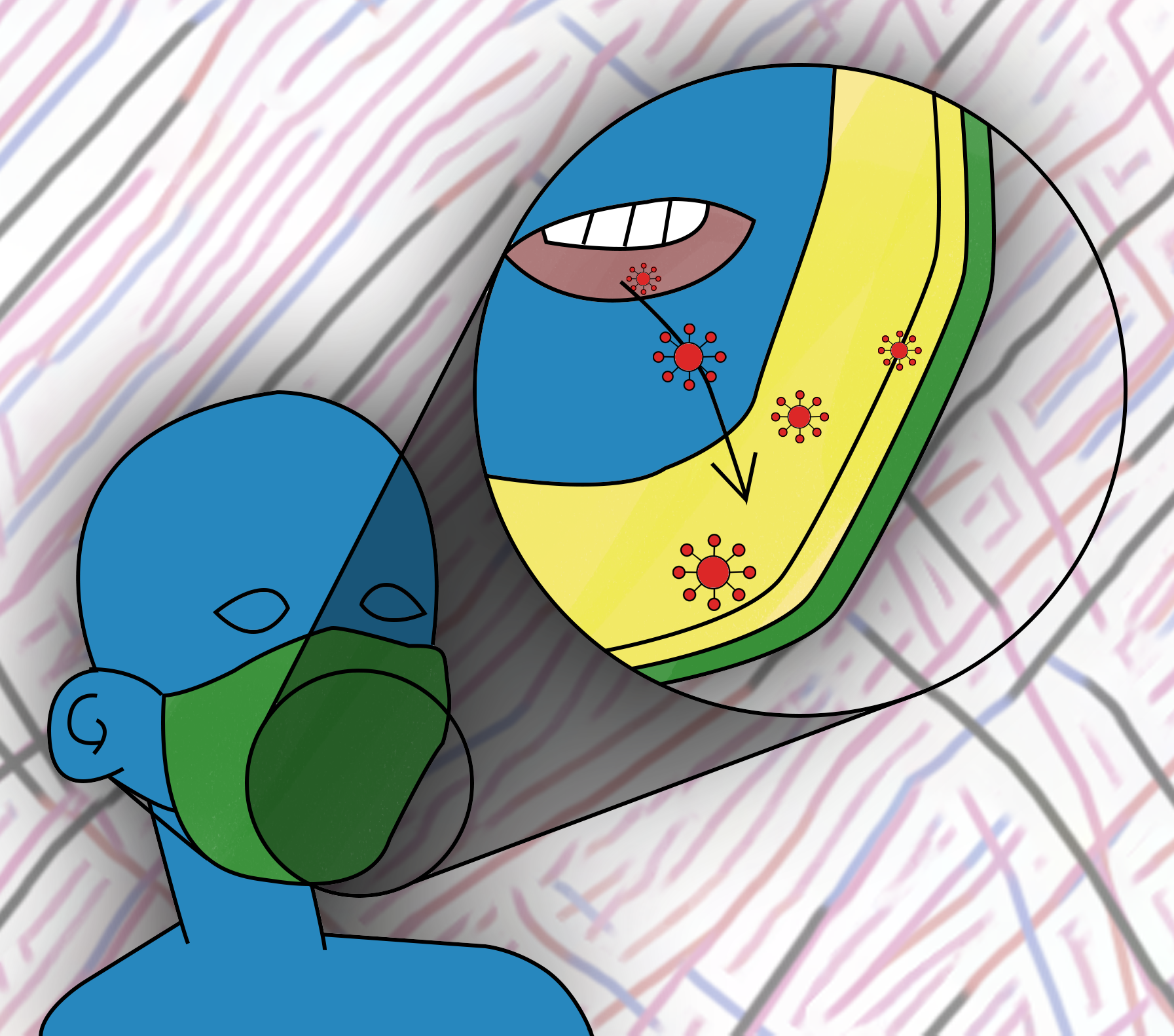
    Humboldt State demands double masking on campus, does more layers equal more protection?

    You’ve probably read the headlines: Wearing a Mask Prevents the Spread of COVID-19. But which mask you choose could affect how protected you and others really are.

    Masks were first mandated in Humboldt County on April 24 when Health Officer Dr. Teresa Frankovich introduced an order requiring all members of the public wear facial coverings while inside a facility other than their residence. Since Humboldt State University was required to close campus prior to that, the university announced safety precautions on Aug. 4, which included wearing face coverings with at least two layers of 100% cotton. This was done in conjunction with the reopening of campus for the fall semester.

    The Centers for Disease Control and Prevention (CDC) urges people to wear masks with at least two or more layers of washable, breathable fabric. Masks need to be worn covering both your mouth and nose at all times.

    Director of News and Information Aileen Yoo stated, “HSU is following recommendations from the CDC. Its website is also a great resource for information on different types of protective gear.”

    Karen Wilkinson, Joint Information Center representative, said, “The county looks to the California Department of Public Health and the CDC for guidance.”

    According to the Association of American Medical Colleges (AAMC), “studies have shown a double-layer cloth face covering was significantly better at reducing the droplet spread caused by coughing and sneezing, as compared to a single-layer one.”

    Mark Wilson, a microbiology professor at HSU believes that “the main goal of mask wearing is to reduce the emission of droplets and aerosols from a person infected with the coronavirus, by trapping emitted droplets in the fabric. Mask-wearing can reduce the transmission of airborne diseases like coronavirus.”

    Wilson added that when deciding on the type of masks, “the tighter the weave of the material, and the more layers it has, the more effective it will be at filtering out particles.”

    May Chu, an epidemiologist at the Colorado School of Public Health, as quoted by NPR said, “a good option is a mask made of two layers of a tight-weave fabric with a built-in pocket where you can place a filter.”

    A University of California, San Francisco article reported that based on a simulation, researchers predicted that 80 percent of a population who wear masks would reduce the spread of COVID-19 more than being on lockdown. Further, the Institute for Health Metrics and Evaluation projected that 33,000 deaths could be prevented by October 1 if 95 percent of the population wore masks in public.

    Many researchers have looked into N95 masks which are made out of many layers of fine polypropylene fibers. They are able to block at least 95% of small airborne particles but only when worn correctly. Though they are proven to be effective, the short supply should be reserved for medical professionals and first responders.

    A recent Duke study rated a fitted N95 and a three-layer surgical mask as the top two protectors, followed by two layer cotton masks.

    According to an article by Science Daily in July, a team of Australian researchers did a study comparing the effectiveness of single and double layer cloth face coverings. They used LED lighting to film the airborne droplets. Their results showed that double layer face coverings prevented more droplets from spreading.

    HSU students can be provided with double layer masks at the campus Police Department, the first floor of Student and Business Services building, Jolly Giant Commons, College Creek Market and the Parking Kiosk.