The Lumberjack


Students Serving The Cal Poly Humboldt Campus and Community Since 1929

Tag: City of Arcata

  • Festivities marked one year anniversary of entheogen decriminalization

    Festivities marked one year anniversary of entheogen decriminalization

    by Camille Delany

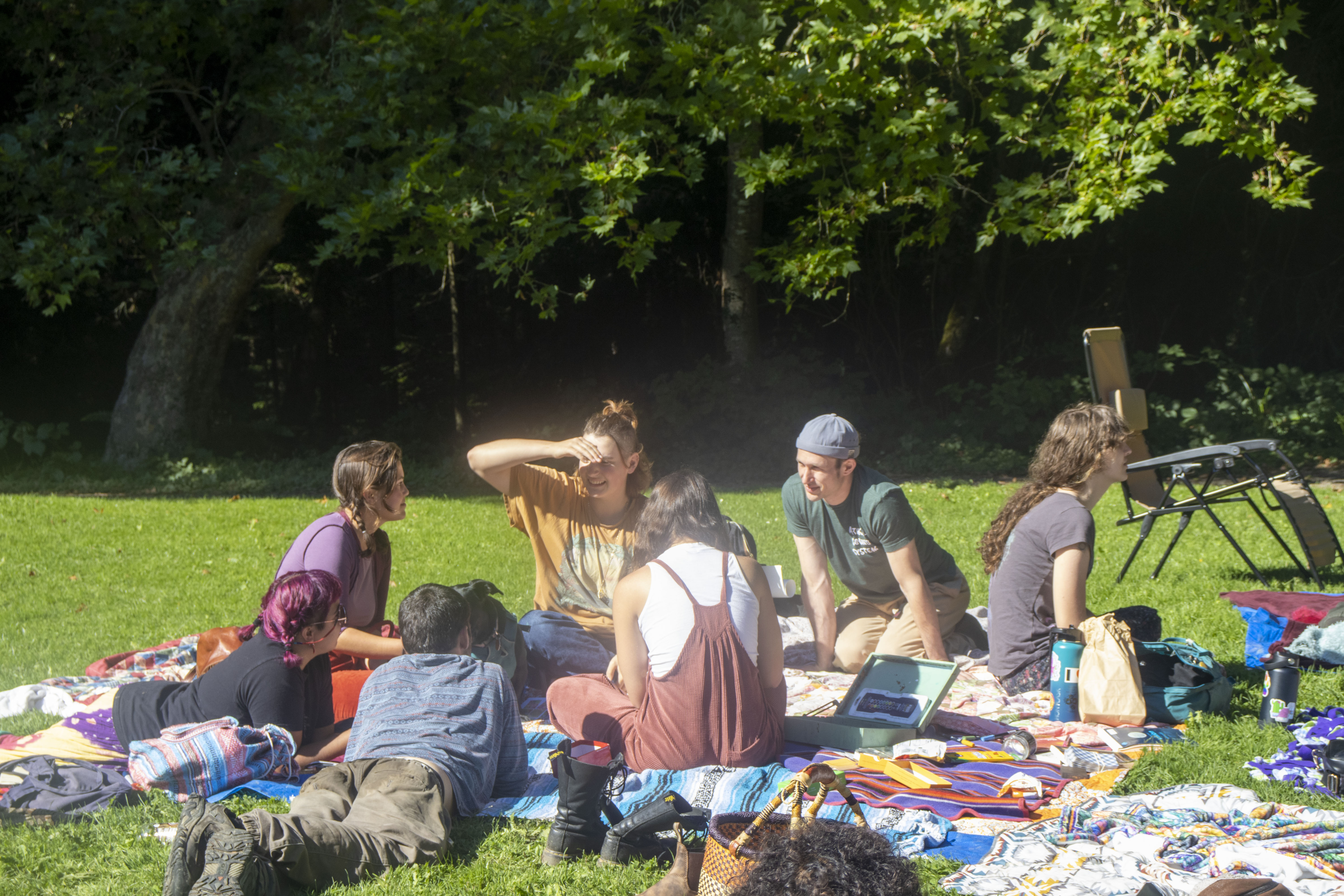
    Thursday, Oct. 6 marked one year since the passage of a resolution that decriminalized entheogens, or plant-based psychedelics, in the City of Arcata. Celebrations took place in Redwood Park at an event organized by Lissie Rydz of the Do Nothing Society and Danielle Daniel of Microdosing Humboldt. The sky had been overcast all morning, but as the event was underway the sun began to shine through the clouds, illuminating the colorful hammocks and blankets clustered in one corner of Redwood Park.


    Danielle Daniel, a local microdosing coach who led advocacy for decrminizalitation at the City Council meeting one year ago, reflected on a year of decriminalization in Arcata.
    “I’m just excited, and feel so blessed, and just like really relieved that everything’s fine,” Daniel said. “That was the big fear of decriminalization. Like, ‘What’s going to happen?’ ‘People will just be tripping in the streets!’ It’s like, no, it opens up access for people to heal.”
    The decriminalization process took a concerted effort from the community, the support of the Arcata City Council, and hard work on the part of organizers


    “Coming into it last year, it was really stressful. It took a lot of energy. It really drained me,” Daniel said. “It was freaking hard! And when it was decriminalized, I was so happy, but I was so drained at that time.”


    “Since then it’s just been really magical just feeling safe to be able to provide my services in educating the community about microdosing and the healing potential,” Daniel said.
    Daniel handed out free microdoses of psilocybin mushrooms (decriminalization permits the gifting, but not selling, of entheogens) in baggies that included a card with her contact information to adults over 21 with proof of ID.


    “There’s been quite a few people coming up to me that have never done [psilocybin] before and they feel safe enough to do it here,” Daniel said. “It’s very cool, witnessing that fear dissipating more and more.”


    Students mingled with members of the larger community as art supplies, snacks, and books were shared across vibrant blankets. Roslyn Gilbert, a Cal Poly Humboldt student, often attends Do Nothing events and values their atmosphere of friendly relaxation and inclusion.


    “Being a trans woman, I feel like there’s a lack of spaces in this world that are friendly to trans women without being explicitly queer,” Gilbert said. “This is a very safe place to be trans. It doesn’t feel like I have to carve out a safe area.”


    Hosting the event with Daniel was Lissie Rydz, who started the Do Nothing Society over the summer. With the Do Nothing Society, she aims to create public spaces for social relaxation in the face of growing productivity culture. The Do Nothing Society isn’t always entheogen-specific, but held Thursday’s “Microdose and Do Nothing” celebration in honor of one year of decriminalization.


    “I credit most of my growth as a person to psychedelics,” Rydz said. “So I think that it’s beautiful that [since decriminalization] there’s not all this fear and anger.”


    Rydz advocates for building community, enjoying public spaces, and making time to play. Do Nothing events are public and, when not held at Redwood Park, can often be found at houses of community members, local events, or a nice river spot.


    “It’s proof of concept by doing it,” Rydz said of decriminalization. “It’s not scary, it’s sweet!”

  • Arcata’s fourth annual State of the City presentation

    Arcata’s fourth annual State of the City presentation

    At this year’s State of the City Arcata, presenters reflected on the current state of Arcata and what the future of the city will look like after 2020’s year of challenges.

    The presentation featured several representatives from the city of Arcata, Equity Arcata and Humboldt State University. Each presenter reflected on the outcomes that stemmed from the past year and what it meant for the community going forward.

    “I’m going to share some perspectives that we learned in 2020,” said Karen Deemer, Arcata city manager.

    Deemer highlighted the importance of the spirit that was seen throughout the community as the pandemic hit during March of last year. As businesses closed and some chose to stay open, the Arcata community made a concerted effort to buy locally.

    As the pandemic was disrupting the norms of society and affecting businesses, it was also highlighting deeper societal problems within Arcata.

    Christian Boyd, the racial equity intern for the city of Arcata, and Janaee Sykes, the student intern for the Office of Diversity, Equity and Inclusion on campus, represented Equity Arcata. They spoke about the importance of resources for BIPOC within the Arcata community.

    “COVID-19 brought racial disparities seen throughout the nation to the forefront of society,” Boyd said.

    Sykes said from the death of George Floyd to racist videos on campus and then the racial tension that surrounded the election, many Arcata residents reported feeling uncomfortable within the community.

    Equity Arcata was established in 2017 after community members met with student focus groups to hear out their issues and create solution-based strategies.

    Sykes said that after the murder of David Josiah Lawson in April 2017, it amounted to a breaking point for the Arcata community and the county. The tragedy opened many eyes to the deep-rooted issues of racism and discriminatory acts against BIPOC in the community.

    “Arcata Chamber of Commerce is committed to working with Equity Arcata and working to make Arcata a more prosperous and welcoming place for all the community,” Molly Steele, executive director of the Arcata Chamber of Commerce, said as Equity Arcata closed their portion of the event.

    HSU President Tom Jackson and Jenn Capps, the provost and vice president of academic affairs at HSU, spoke about the current state of the university, as well as plans for the future, specifically on becoming a polytechnic school.

    “We have been operating in emergency mode as a university,” Jackson said. “We are really trying to work on building infrastructure first then building for the future.”

    This includes planning for the fall semester and what that looks like amid vaccination distribution. Jackson emphasized that although the collective notion is that everything should be okay in the fall, science and technology are telling us to remain cautious.

    The university is trying to plan the best fall semester that it can, but it is very reliant on keeping the community and students safe.

    As for what the university’s plans are for the long term, Capps presented the projected timeline of the polytechnic self-study that will be conducted throughout this next year.

    “A lot of what is a polytechnic is already HSU,” Capps said.

    There are already two polytechnics that have been designated in the CSU system, but none that already exist in the Northern part of California. HSU would represent the region as a polytechnic through a collaborative approach with Humboldt County, the campus community, and the CSU Chancellor’s Office.

    Consultation of the Polytechnic Self-Study is expected to start at the beginning of March and continue throughout the summer. The expected due date for the completion of the self-study is Sept. 1.

  • Students shocked at Arcata Community Forest logging

    Students shocked at Arcata Community Forest logging

    COVID-19 hampered the communication of logging plans between the city of Arcata and new members of the community

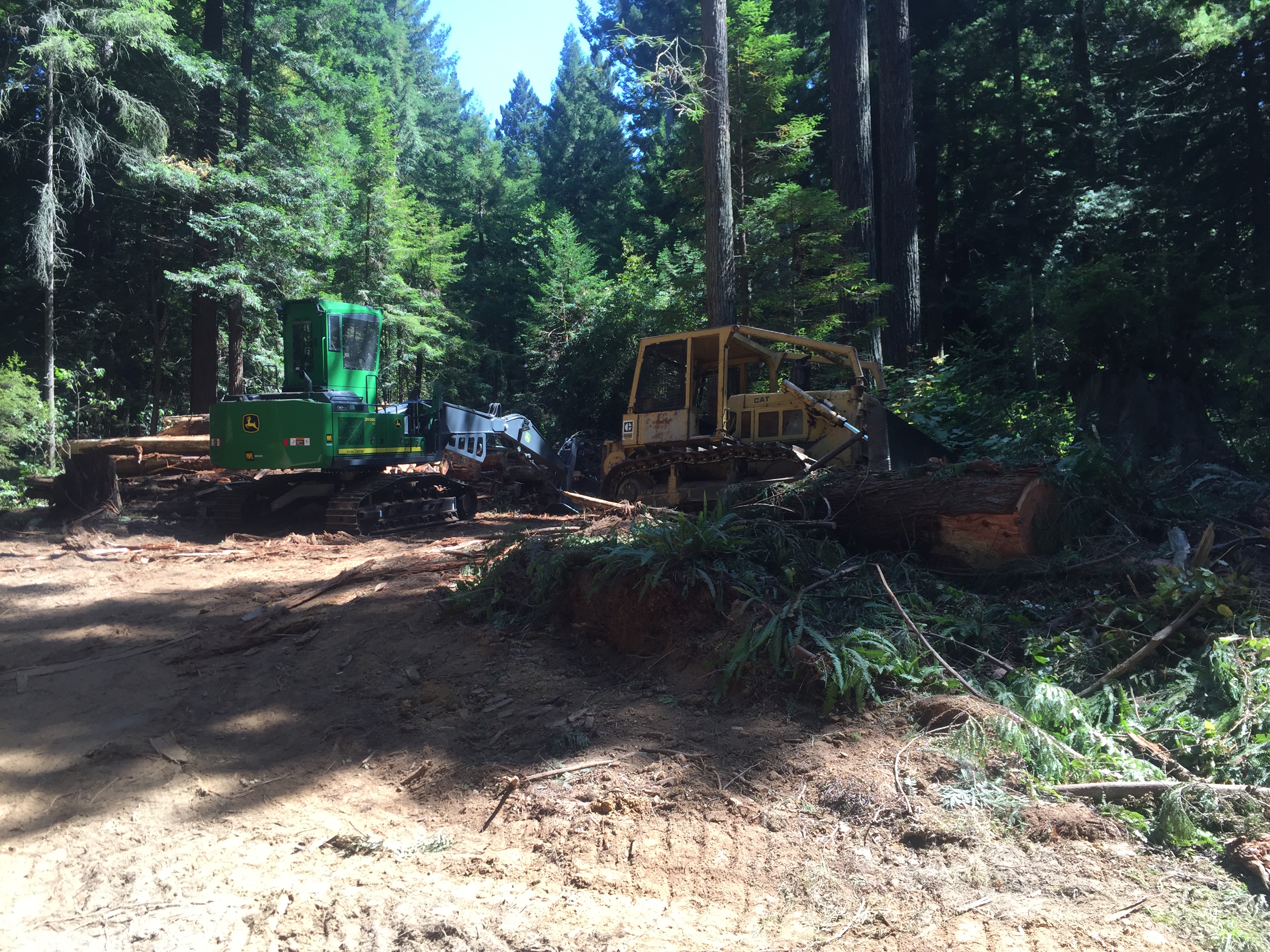
    Lumberjacks with heavy equipment felled redwood trees in the Arcata Community Forest during the last two months, shocking some Humboldt State University students who regularly use the park. The City of Arcata uses timber harvest money to fund the management of the park and purchase additional park land in the area.

    HSU senior Isaac West downhill bicycles the trails most days. He was disappointed when he came across the heavy equipment in the park near Fickle Hill Road, and a friend told him a section of the bicycle “jump trail” had been ruined.

    “We have trees burning down everywhere,” West said. “It just seems like a really bad time to be cutting them down.”

    Karlee Jackson, an HSU transfer student majoring in environmental studies, said many students she talked to hadn’t heard the tree cutting was happening, and were shocked by it.

    “I am so mad they are cutting down these trees when so many trees have already been cut down,” Jackson said. “Why wasn’t it discussed with the community?”

    Jackson acknowledged that COVID-19 may have made it more difficult to consult with the community, but said she would have liked the city to have found another way to engage the community before cutting.

    Mark Andre, Arcata City director of environmental services and former HSU watershed management graduate student, said community engagement in the forest’s management was greatly impacted this year due to COVID-19.

    “The biggest challenge to us is to explain to new people who are moving here,” Andre said. “During this COVID-19 year [community consultation] has not been as perfect as it could have been.”

    Andre prepared the current Non-Industrial Timber Management Plan which allows some logging in local community forests. It was approved in 1999 and therefore public comment is not required each time the city wishes to cut, but the city is required to submit a Notice of Timber Operations (NTO). The city did issue a press release and convened the city Forest Management Committee, made up of appointed experts, although some regular meetings were canceled this year due to COVID-19.

    The NTO includes an impact analysis on spotted owl populations, and the steepness of the grade to ensure the cuts do meet environmental regulations.

    Greg King, executive director of the Siskiyou Land Conservancy and one of the first-ever Redwood tree-sitters, said he supports the efforts of Andre and the city.

    “I’m pretty skeptical when it comes to most logging,” King said. “It almost surprises me to say I support this.”

    King said he was far more concerned about the practices of logging companies owned by the billionaire family, Fisher, and Green Diamond Resource Company. Together these companies own roughly half of all redwoods in existence and regularly get “incidental take permits” which are essentially licenses to kill endangered species found while cutting.

    “What you see is a lot of faux [or fake] sustainable logging, but that’s not what you see here,” King said.

    He hasn’t read the forest management plan, but King encouraged students and community members to keep a close eye on the city. He is impressed at the “light touch” of the operations, and how the city has been able to purchase additional land in the area for conservation with the money from the park’s timber harvest. But King does believe public notice could be improved.

    Andre said he has been working for the city since 1984 and since then the size of the forest has doubled. In the past decade about 30% less is cut annually compared to the 1980s. The city originally purchased the park and instituted the arrangement to use timber harvest money to purchase additional land for conservation after a city bond measure passed in 1979. Andre said since then the city has set standards in sustainable forestry and community based forestry even winning an award from the Forest Stewards Guild.

    Regarding the recent destruction of a section of the downhill bike trail Andre said, “If we damaged the jump trails it’s going to be rebuilt this fall anyway.”

  • Trust in police weakens as Chapman resigns

    Trust in police weakens as Chapman resigns

    As students, we have reasonable expectations of safety so we can focus on academic success without fear. This is not the reality for Humboldt State University students of color, both on campus and in the community. Both the Arcata Police Department and HSU have a long way to go to gain the trust of students of color.

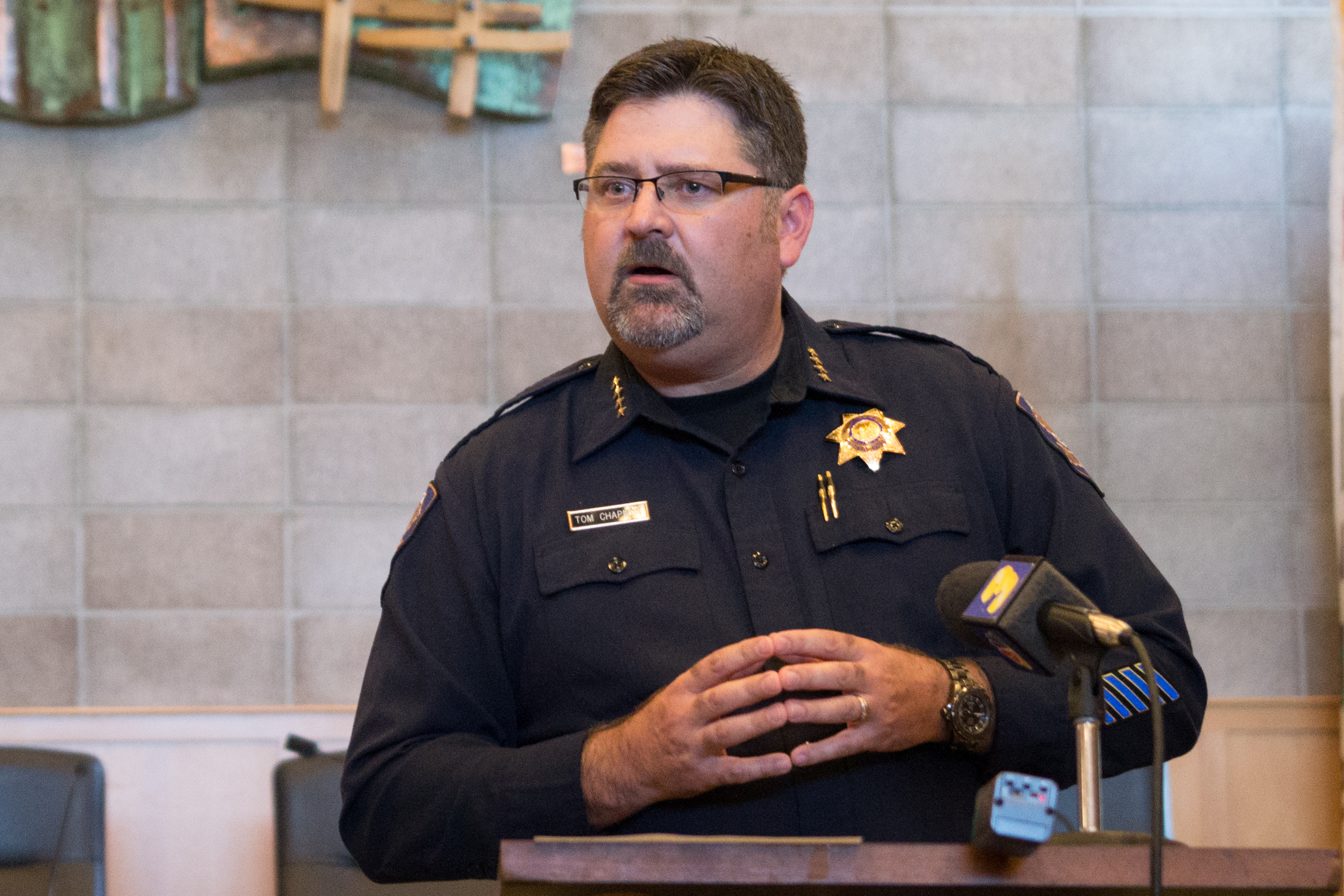
    The recent resignation of APD police chief Tom Chapman only worsens public confidence in local law enforcement.

    A good deal of community members, including HSU students, are aware that 19-year-old HSU student David Josiah Lawson was murdered at an off-campus party in Arcata on April 15, 2017.

    McKinleyville resident Kyle Zoellner was arrested at the scene of the crime, but released on May 5, 2017, due to lack of evidence connecting him to the murder.

    There is a clear and serious disconnect within our community regarding racial diversity. Because Lawson is black and Zoellner is white, racial tensions tightened in the community. And as one group tries to engage with the community about race and public safety, others view such meetings as a way to promote white guilt.

    To this day, no one is in custody of Lawson’s open homicide case.

    Former FBI agent Tom Parker, who offered his investigative services on the Lawson case for free, resigned on April 9. According to the North Coast Journal, Parker said a lack of trust and cooperation by the APD led to his decision to resign.

    “It was clear they were holding back things and not telling me the truth,” Parker said. “They had things going on and they wouldn’t tell me what they were.”

    Chapman announced his resignation the following day without reason.

    Following a press release by the City of Arcata announcing Chapman’s resignation, Arcata City manager Karen Diemer followed up with local media concerning both departures.

    “[Chapman’s] decision does not stem from any one single thing,” Diemer said. “It is a combination of personal reasons and professional judgement on what he believes is best for the department and himself.”

    In regards to the Lawson case, Diemer said the APD continues the investigation without Chapman.

    “The investigative team for the David Josiah Lawson case is solidified with members of both the Arcata Police Department and District Attorney Investigators office,” Diemer said. “This team will stay in place and focused on the case through its completion.”

    Parker’s claim that the APD withheld information raises major concerns. While it’s reasonable to conceal information from the public during an open investigation, why wasn’t the APD willing to cooperate with Parker?

    Also suspicious is the timing of Chapman’s resignation. Why did Chapman resign the day after Parker terminated his contract with the APD and just five days before the one-year mark of Lawson’s death? Coincidence would be an unbelievable excuse.

    While there’s only so much we can do in a case like this, we can demand more from from our law enforcement and other officials. Check with the City of Arcata, the Arcata Police Department and the Division of Student Affairs at HSU about the investigation. Don’t just do it once, but follow up as well.

    We must stand in solidarity of not just the Lawson case, but for students of color. By remaining quiet, local law enforcement will prioritize less pressing issues and no progress will be made. We need to stand up for ourselves because the ones who should protect and serve us are stepping down.

  • “It was infuriating to see that the Arcata Police Department did not show up”

    “It was infuriating to see that the Arcata Police Department did not show up”

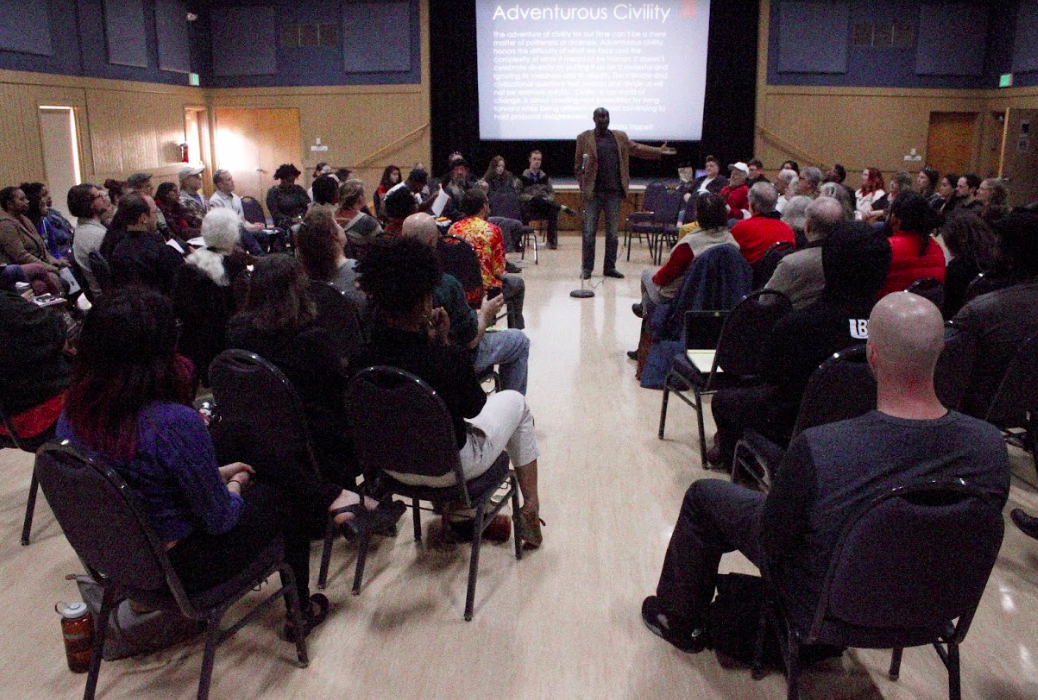
    City of Arcata supported a Dialogue on Race forum at the D Street Neighborhood Center on March 22.

    Mayor of Arcata Sofia Pereira attended the forum in hopes to create a space for the Arcata community to discuss racial discrimination.

    “There’s a lot of pain in this community based on what people of color have experienced here. It’s not going to be overnight, ending that pain,” Pereira said. “The more we have a space for these conversations and concrete actions, we can take [those] as individuals and as a community. I think that can get us to place of healing.”

    Pereira wanted to absorb everything that was discussed in the forum in order to get a sense of the right direction to take moving forward.

    “As for the next steps, I heard the feedback for making sure that we have representation from the Arcata Police Department, along with making sure we’re inviting Humboldt State’s administration,” Pereira said.

    Arcata mayor Sofia Pereira attends the monthly forum on race and public safety at the D Street Community Center on March 22. Photo by Nick Kemper.

    The City of Arcata gave Pastor Roger Williams the opportunity to facilitate the discussion on race.

    “I’m here because it’s a heart condition of mine, where I want to see people come together. I know it’s not easy, but it’s a passion of mine,” Williams said. “In a potentially charged environment with potentially angry people, with city hall here in the same building and in the backdrop of an unsolved murder, it went well.”

    Williams said that the point of the forum gue was to make people more aware of the fact that we live in a community where racism exists. He wanted to make those unaware of it to address racism in their community.

    “It’s not so much about black folk standing up and talking about race because we’ve been doing it forever,” Williams said. “It’s white folks taking some responsibility for themselves and not just not taking responsibility for being woke, but trying to wake other people. Come with an open mind and with the intent to understand [than] just reply. That’s where grassroots change happens.”

    Community member Paula Jones speaks at the D Street Community Center forum on race and public safety on March 22. Photo by Nick Kemper.

    Community member Erik Rydberg went to the forum, because he felt that the subject of race in this country needs to be talked about everywhere, regardless of how uncomfortable it makes people feel.

    “We need to understand the construct of race,” Rydberg said. “What it means historically in this country and why it was developed by the elite ruling class in this country in order to keep a select few people in control of the apparatuses of society.”

    Rydberg said this discussion matters to him, because he has experienced the injustices people of color have endured in this country, particularly in California.

    “As an indigenous person, the legacy of genocide and the holocaust of the American Indian, especially here in California, is an erased history,” Rydberg said. “[It] makes people who are really proud to be American extremely uncomfortable to talk about what’s transpired here in California, as far as the colonization of my continent.”

    Rydberg was one of the many people who decided to speak out at the forum. He decided to share the realities of racism, because he felt that it would be helpful to hear from an indigenous person’s point of view.

    “It was infuriating to see that the Arcata Police Department did not show up,” Rydberg said. “You’re in a position of authority. You need to be the most educated on this. You’re holding people’s lives in their hands every time you put [on] that belt buckle with your gun in it, every time you hop in your car with your shotgun [or] every time you have an AR-15 with you, with the legal authority to use that force.”

    Rydberg has a message for people who didn’t attend the forum.

    “You can’t stand in solidarity with somebody if you don’t know anything about their culture or their people,” Rydberg said. “Authority figures need to be [the] ones packing these kinds of events to learn about the people whose lives you hold in your hands.”


  • 11 months and no justice for Josiah

    11 months and no justice for Josiah

    David Josiah Lawson was a victim of a hate crime and has become the poster child of the racism that exists in Humboldt County. Though the Arcata Police Department has been working through the investigation using physical evidence and witness statements, the trail remains cold in the pursuit to bring justice to Lawson.

    Lawson was a black 19-year-old criminal justice student at Humboldt State when he was stabbed to death at a house party in Arcata on April 15, 2017. The efforts of local authorities attempting to solve the case of his death fall short to this day. Those who spoke up after the incident hold little water in the eyes of the law due to conflicting reports of hearsay and lack of evidence. So much is against Lawson under these unfortunate circumstances.

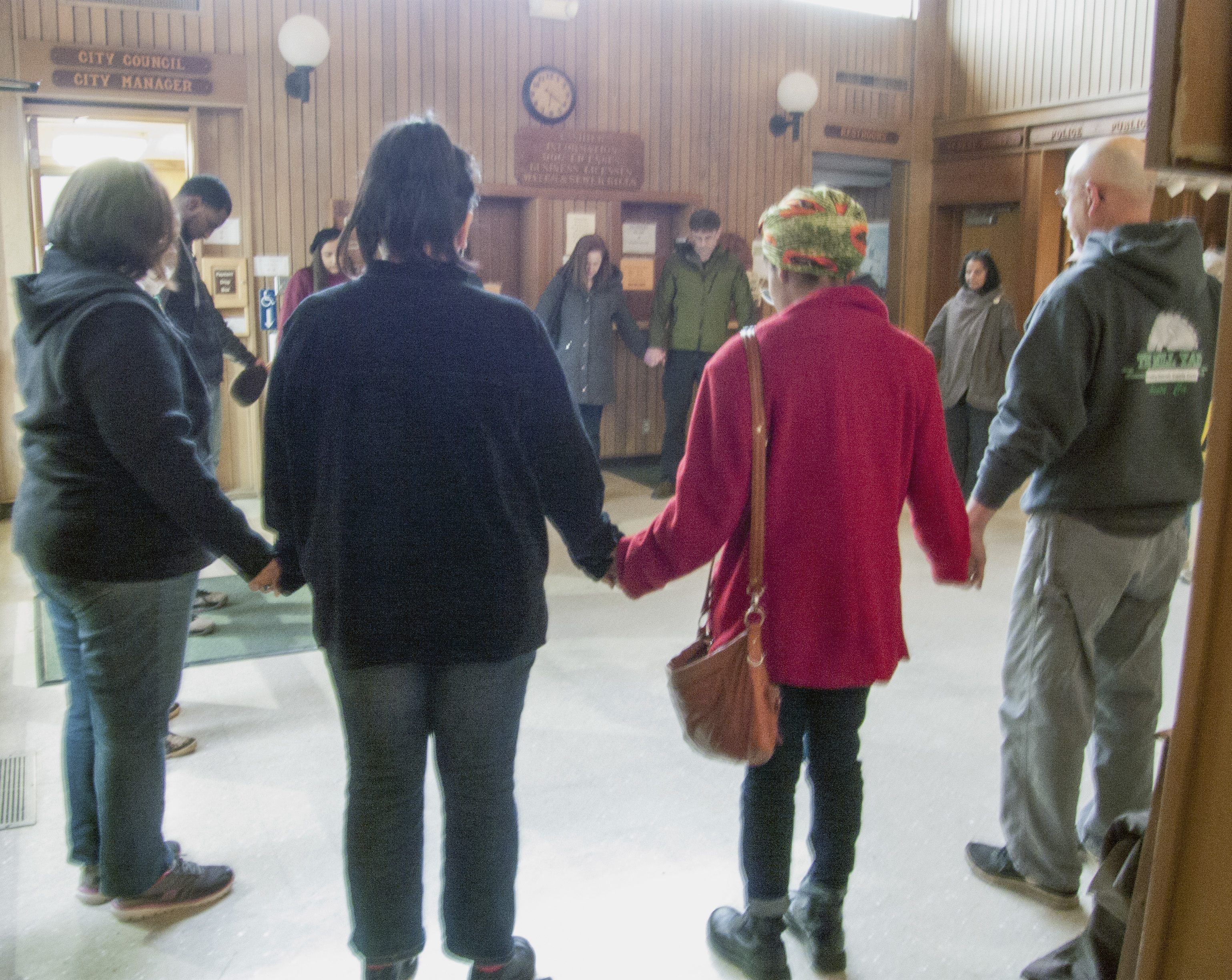
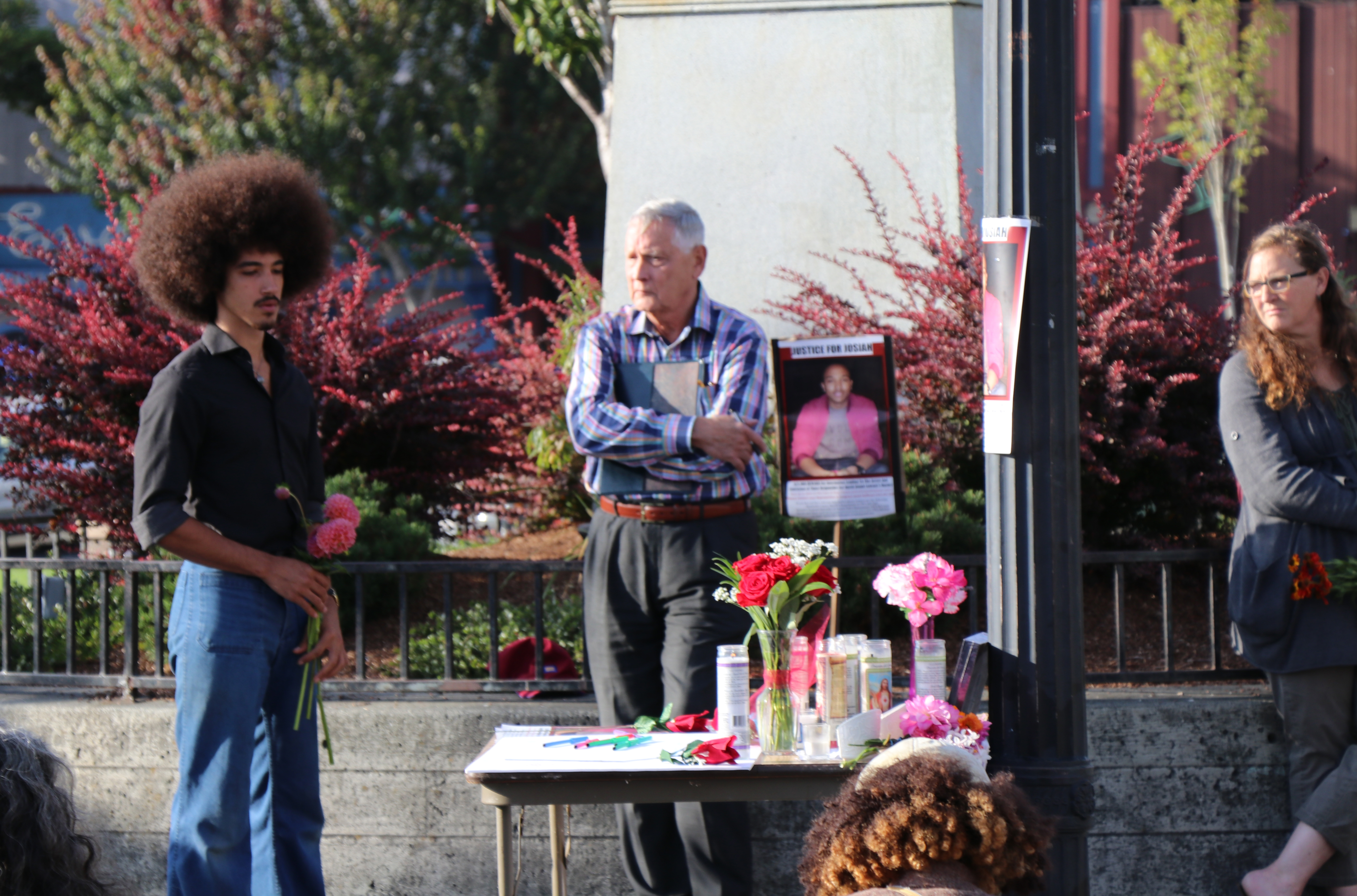
    A vigil has been held for Lawson every month since his untimely death last April. The turnout of the 11th vigil on March 15 at Arcata City Hall was lower than usual due to spring break and heavy rain, but over a dozen people participated in solidarity of Lawson nonetheless.

    During the vigil, Alex Foster, a leading force in finding justice for and preserving the memory of Lawson, said mixed messages aired by the media continue to hamper with the development of the murder case.

    “There’s a lot of rumors and false narratives, especially from newspapers,” Foster said. “It’s just different perspectives.”

    McKinleyville resident Kyle Zoellner was arrested for allegedly stabbing Lawson, but was released by Judge Dale Reinholtsen for lack of evidence. During the preliminary hearings, contradicting testimonials by eyewitnesses include Zoellner’s physical condition when Lawson was murdered.

    In a report by Mad River Union, Zoellner’s family said Lawson was stabbed to death while Kyle was unconscious due to a brutal assault. However, the Lost Coast Outpost reported Elijah Chandler, a friend of Lawson who was at the scene of the crime, witnessed Zoellner “drop something shiny on the ground” a moment after discovering someone had been stabbed. Conflicting reports such as these only muddy the waters of the case.

    What students, police officers, politicians and other community members need to understand is that the murder of Lawson brings up broader issues of social injustice and public safety.

    If people continue to downgrade the importance of this case or stay disinterested, then we are doing ourselves a huge disservice. We are allowing criminals to get away with hate crimes in a town that brings in innocent students year after year.

    Despite some of the challenges Foster and other tenacious supporters face, the search for justice carries on.

    Though the case remains open, relentless efforts are made to not only keep Lawson’s memory alive, but to spread awareness about the injustices that people of color still face in the area.

    April 15 will mark the one-year anniversary of Lawson’s death. Though details for the next vigil are in the works, tentative plans include a community gathering at the Arcata Plaza and a march to the D Street Neighborhood Center. Full details will be announced on the Justice For David Josiah Lawson Facebook page.

    In addition, the City of Arcata is supporting a safe space for a Community Dialogue on Race on March 22 at the D Street Neighborhood Center, located at 1301 D St. in Arcata. The meeting starts at 5:30 p.m.

  • City of Arcata plans for future student housing projects

    City of Arcata plans for future student housing projects

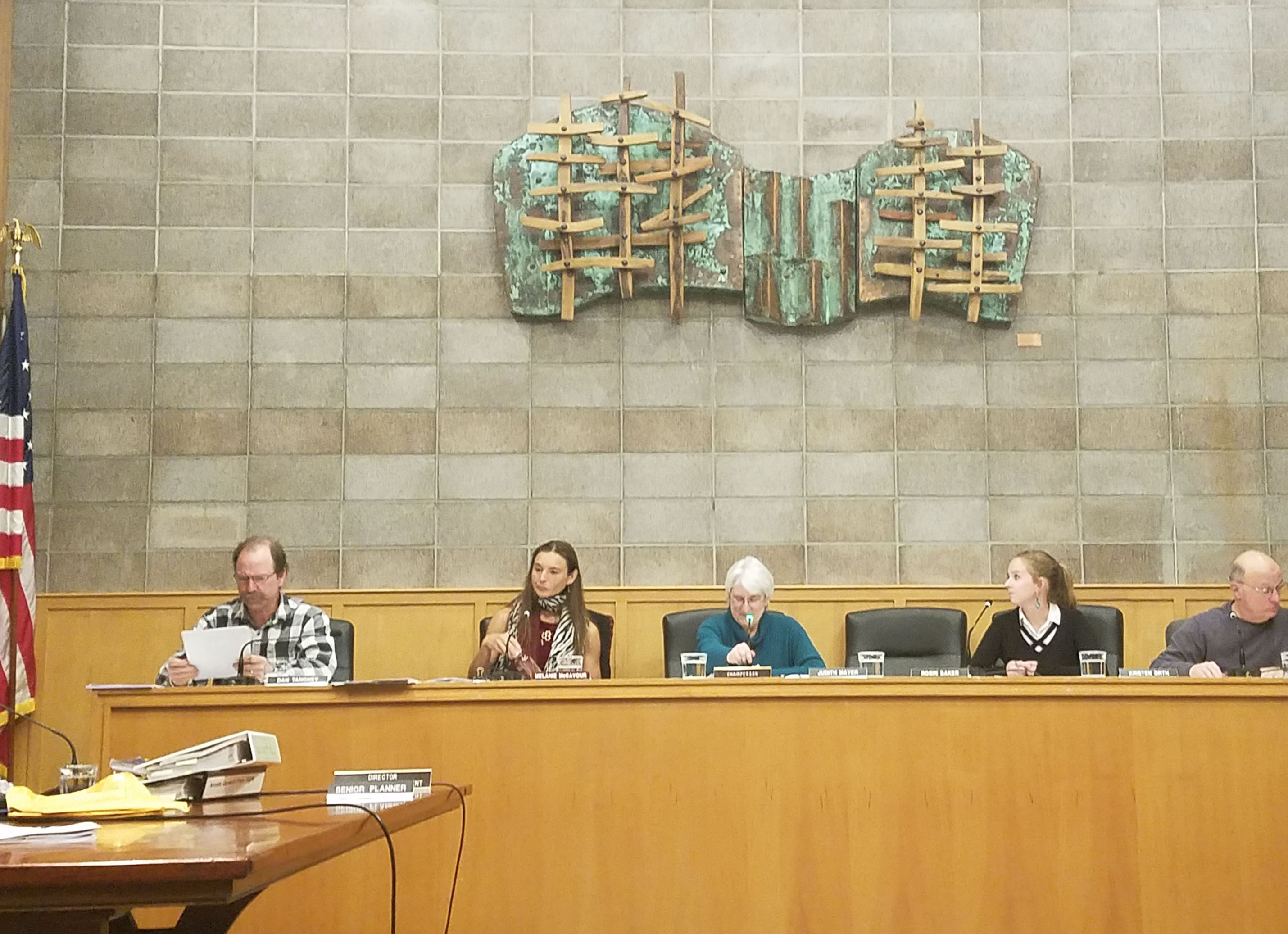
    City of Arcata’s planning commission met on Feb.13 to discuss construction projects that are in progress around town. Details of a future project located at the end of St. Louis Road and Eye Street, known as The Village Student Housing Project, were also discussed.

    “We know that there is a need for student housing,” City of Arcata’s director of community development David Loya said.

    Patrick Shanahan of Humphreys & Partners Architects reviewed the projected plan for the site, as this was the seventh continuation of these hearings.

    The plan is said to be four buildings of around 210 units each. They will be a suite of four single units with a common kitchen.

    The commission agreed on Feb. 13 that two of the buildings would be four stories tall and the other two would be three stories tall. The project is designed specifically for students so it will include study rooms and recreation areas.

    “We want the recreation areas to be a highlight of this project,” Shanahan said.

    The commission has recognized the eco-friendly interests of many Humboldt State students and has made sure solar panels, as well as other options to use sustainable energy to power these buildings, are available.

    “I would like to see more edible plants on the plan,” Melanie McCavous, commissioner for the City of Arcata, said. “I know there is a strong desire from students to find sustainable food.”

    While the public hearing was once again continued to another date, the commission is confident they will be able to make a recommendation to the city council after the next hearing.

    “We are going to need more information from the developer before we can really agree on a decision,” chairperson of the planning commission Judith Mayer said.

    While construction is still waiting for approval to begin, it is looking bright for future HSU students to have more possibilities for housing.


  • Future housing developments for students in Arcata

    Future housing developments for students in Arcata

    As the busy students of Humboldt State University get back into the swing of things, some students are in the unfortunate situation of being homeless.

    While many think no actions have been taken, it is easy to notice the many construction projects that have popped up around town.

    The one closest to campus is located on Foster Avenue. These buildings are beginning to catch attention.

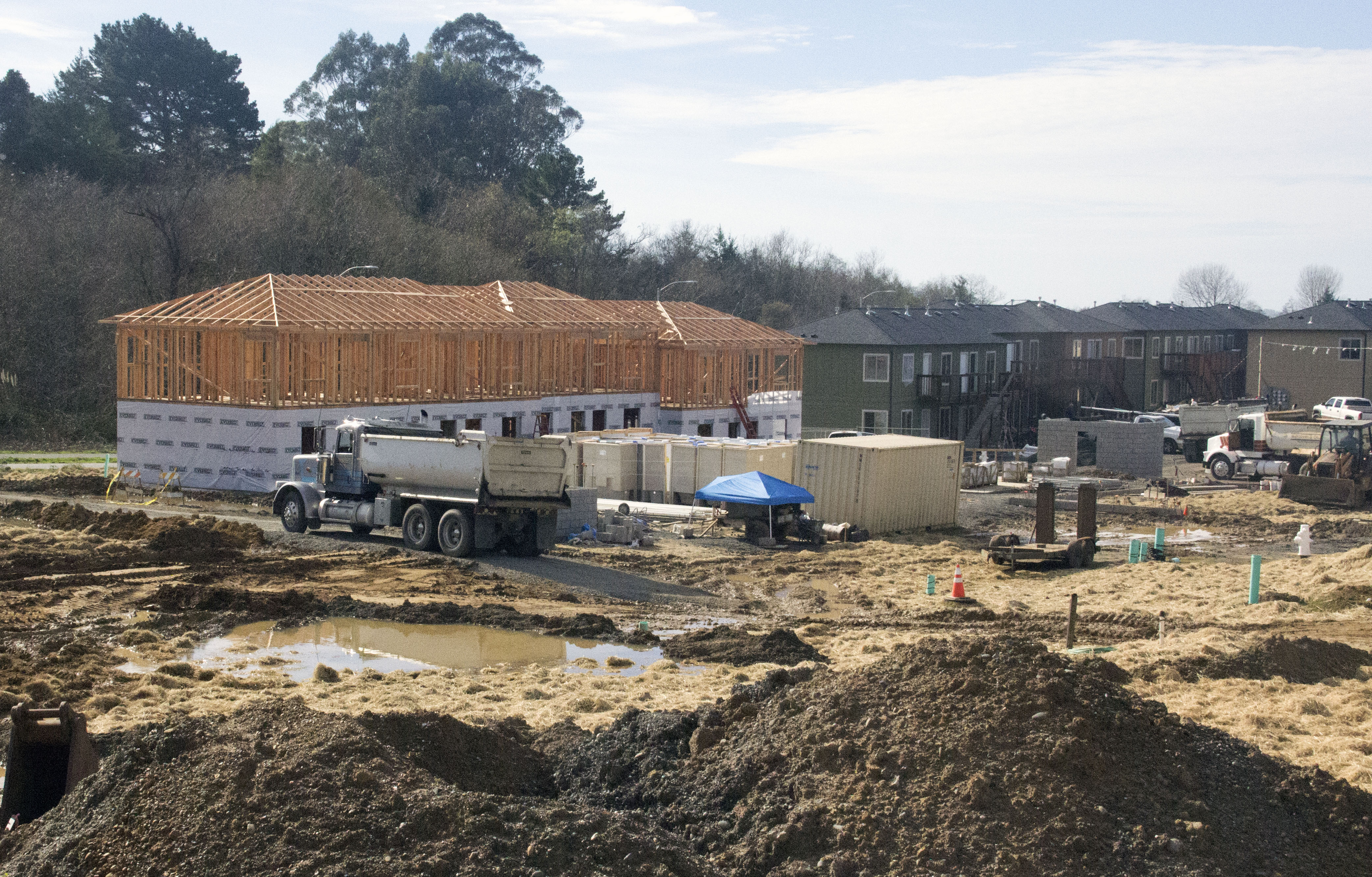
    According to Alyson Hunter, City of Arcata’s senior planner, this construction is part of a project known as the Sunset Terrace Apartments.

    “The city had known the developer’s plans for the site long before construction started,” Hunter said.

    Construction began in 2014 in several phases. The property developer, Kramer Investment Corp., posts pictures of the construction process on their website.

    It is going to be a 142-unit apartment complex consisting of solely one bedroom and one bathroom units.

    While Alex Hunt of Kramer Investment Corp. was unable to release more information, he said that the first phase was nearing completion.

    “We’ll have to coordinate with PG&E to finish the first phase,” Hunt said.

    At this point, rent prices are unknown, but residents of other properties managed by Kramer Investment Corp. say similar units go for around $700 per month.

    Recent HSU graduate Nathaniel Matteson had been homeless for three months last semester.

    “I was looking really hard and I could not find anything,” Matteson said. “It would have been really nice to have something like this as an option.”

    Future students of HSU may not have to worry about housing as much as students are today, as this project is not the only one in the area. On Feb. 13, a city council meeting will be held to discuss further steps on what is known as The Village Student Housing Project.

    According to City of Arcata’s website, it is proposed to house 800 beds specifically for students. It will be a multi-story complex at the end of I Street and St. Louis Road, which is across the freeway from campus.

    These projects could make housing a smaller problem than it is among the students at HSU. As for now, the eventual completion and opening of the Sunset Terrace Apartments will decide whether homeless students will have some relief of trying to find a place to live.


  • Sea levels rising in Humboldt County

    Sea levels rising in Humboldt County

    Jennifer Kalt of Humboldt Baykeeper released a community call-to-action through the Northeast Environmental Center in Feb. 2017 to discuss the need for preparation against sea level rise within the area. In the press release, she compares the California Coastal Commission Sea Level Rise Policy Guidance, adopted on Aug. 12, 2015, with the policy plans for the cities of Eureka and Arcata.

    The California Coastal Commission was established by voter initiative in 1972 and was made permanent by the California Coastal Act of 1976. Their goal is to protect and enhance California’s coast.

    Cristin Kenyon, a local Supervising Analyst with the California Coastal Commission, was able to explain some of the responsibilities of the organization.

    “So the Coastal Commission, we basically permit development in the coastal zone but we also certify local governments, policies and regulations as local coastal programs,” Kenyon said. “We can delegate jurisdiction to them so that within their jurisdiction they get to issue the coastal development permits, and we just serve an appeal function.”

    When the local governments are certified, it allows for them to control their own development of coastal areas. However, their decisions still have to be in accordance with the Coastal Commission’s regulations and must go through the proper channels to be approved. Analysts like Kenyon help to evaluate development applications and process them on to the Coastal Commision.

    “The Coastal Commission is the body that actually makes the decisions,” Kenyon said. “So I get applications for development, review them and write a staff report… recommending approval… denial or approval with conditions to the commission.”

    The Coastal Commission’s 2015 Sea Level Rise Guidance report was created as a set of interpretive guidelines and examples to help communities and governments prepare for sea level rise.

    They are not a set of regulations, but a well-compiled source of information provided by the “best available science” in order to help communities make more educated development and policy plans.

    In Kalt’s press release, she also discusses parts of the Coastal Commission’s 2015 Sea Level Rise Guidance report.

    “The Coastal Commission’s 2015 Sea Level Rise Guidance is based on the best available science, and forecasts sea level rise of 0.5m (1.6’) by 2050 and 1.5m (4.9’) by 2100,” Kalt writes.

    The Intergovernmental Panel on Climate Change (IPCC) came out with the most updated global scale assessment of sea level rise in 2013. These projections may be updated soon based on more recent information, according to Kenyon. But when the Coastal Commission’s 2015 Sea Level Rise Guidance came out, the 5th Assessment Report (AR5) was the most factual prediction. Because the IPCC altered the model inputs between AR4 and AR5, this model was the most updated. Additionally, the IPCC AR5 accounted for melting ice sheets as an increase in sea level rise.

    The IPPC 5th Assessment report concluded, “a rise in global average sea level by 10-39 in [26 to 98 cm] by the year 2100 [relative to mean sea level from 1985 to 2005] depending on the emissions scenario.”

    With different studies continuing to show an increase in sea level rise, more communities are working to establish plans and policies to prepare. In Kalt’s press release, she identifies the three basic strategies in preparing for sea level rise:

    1. Protection with higher levees, dikes or seawalls

    2. Adaptation by elevating structures, increasing setbacks along streams and floodplains, and restoring coastal wetlands to absorb wave energy

    3. Relocation of buildings and infrastructure, while prohibiting new development in areas at risk

    These main strategies are the base of most sea level rise planning projects. The Coastal Commision uses these adaptation strategies when assessing coastal resources.

    “It’s just going to be a really tricky situation along the coast of California, because there’s so much development in these vulnerable areas,” Kenyon said. “And with sea level rise there’s going to be even more areas that are highly vulnerable.”

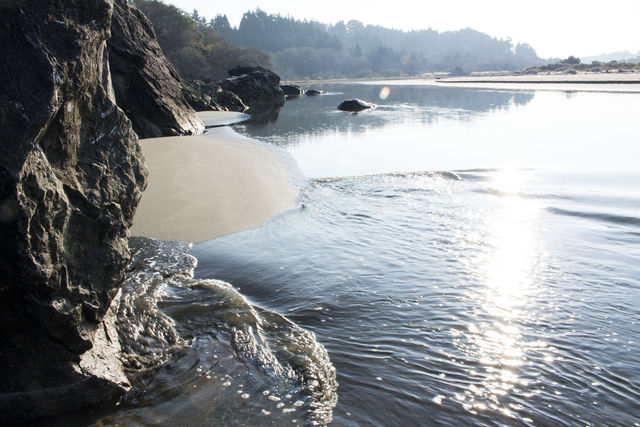
    The Humboldt County coastline is particularly vulnerable, because in addition to the sea level rising, the ground beneath the area is sinking deeper due to tectonic subsidence.

    “We know that Humboldt Bay is subsiding, so the Humboldt Bay is actually going to be impacted greater than other places,” Kenyon said.

    Over the last couple years, Environmental Planner Aldaron Laird has been working on creating sea level rise risk assessments for the Humboldt Bay, the cities of Eureka, Arcata and other areas of Humboldt County. He has extensively researched the area and how it can be expected to respond to sea level rise considering our unique location and vulnerability to the rising waters.

    “Humboldt Bay has subsided from tectonic activity and the open ocean has expanded through thermal expansion,” Laird said. “With the two together, we have had the highest rate of sea level change on the entire west coast of the United States right here in Humboldt Bay.”

    Because we are in a higher risk area, Humboldt County as a whole have received state funding to help them prepare for sea levels rising. Laird has completed risk assessments to help the local governments determine how to best prepare.

    “The vulnerability assessments that have been completed are essentially an inventory of what is at risk and in what areas are they at risk, and when they may be impacted by sea level rise,” Laird said.

    Kant continues to summarize parts of Laird’s Sea Level Rise Vulnerability Assessment for Eureka in the press release.

    “Environmental planner Aldaron Laird recently completed Eureka’s Sea Level Rise Vulnerability Assessment, which found that by 2050, sewer lift stations, sewer lines, and the Murray Field airport will be the most at-risk public assets,” Kalt wrote. “By 2100, the Chevron Fuel Terminal, bulk cargo docks, drinking water and stormwater systems and contaminated sites will be most vulnerable.”

    Kalt then goes on to use Laird’s research as well as the Coastal Commission’s Guidance report to evaluate the policy plans made by the City of Eureka in their latest general plan update draft.

    “In mid-December, the City of Eureka’s staff unveiled draft sea level rise policies that recommend planning for only six inches of sea level rise by 2050—in defiance of Coastal Commission guidance,” Kalt wrote. “This approach is at odds with common-sense strategies to plan for the future and could result in costly damage by putting new development in areas vulnerable to flooding.”

    While it may be disheartening to read that the City of Eureka is not planning on following the guidance of the Coastal Commission, it is not the end of the policy debate. The general plan for Eureka is still in its draft form, but it is expected to be completed in the fall of 2018. Until it is fully completed, the public has a say in what is in the plan and can work to change the sea level rise preparation policies.

    Kristen Goetz is a senior planner with the City of Eureka working on the city’s General Plan Update.

    “There will be public hearings prior to the general plan update which will include the sea level rise goals and policies,” Goetz said. “Then there will be the process with the coastal commission, during which time there will be at least one public hearing and maybe more, depending on how that process goes with them.”

    “We’re looking at a planning horizon right now of 2040,” Goetz said. “So in 18ish more years, the planners who are with the city at that point in time are going to be doing another general plan update. They are going to be 20 years closer to that 2100 point in time and they will have a much better idea of what the forecasted levels are for sea level rise… and how they are going to affect the City of Eureka.”

    With Eureka planning for 2040, there is a chance the community may not be prepared to deal with the situation well. Unless something dramatic happens to demonstrate that sea levels are rising faster than already anticipated, the city plans to continue with their original plan.

    “If something happens between now and the next general plan update, for example, and sea level rise is increasing faster than what the studies are showing right now… then I think that the City of Eureka would speed up our review and our planning for the protection of infrastructure or retreat,” Goetz said.

    However, if you don’t want to wait for some random natural disaster that increases the rate of sea level rise there are simple things you can do as a member of the community to impact the policy around sea level rise. Almost a year ago Humboldt Baykeeper Jennifer Kalt wrote the press release asking the public to get involved, in which she urged community members listen to the science that is telling us our home is vulnerable.

    The time to get involved is now.

    The Humboldt Bay Sea level Rise Adaptation Planning Project was released in two phases the first in January of 2013 and then the second phase in February 2015, then Laird completed the assessments for the cities of Eureka and Arcata.

    Most recently Laird finished the assessment for Humboldt County, “the Humboldt Bay area plan that covers all the unincorporated area on Humboldt Bay,” said Laird. Laird just completed the Sea Level Rise Assessment for the rest of Humboldt County, planning to send the final assessment over to the Coastal Commission on Jan. 12, the document can be expected to be released to the public within the next week.

    With all of the risk assessments done and about to be available to the general public, community members now have more resources than ever to help determine how the area needs to prepare for sea level rise. It also means that the local governments will be working on new policies based off of the new information. Sea level rise is happening and it seems slow. But a prediction of 10-39 in. by 2100 could happen faster than we think. Further, accounting for six inches of sea level rise for the year 2040 may not be enough.
  • David Josiah Lawson’s four month vigil

    David Josiah Lawson’s four month vigil

    IMG_3317
    Mayor Susan Ornelas answers questions from community members at a vigil for David Josiah Lawson, August 15, Arcata Plaza. | Photo by Curran Daly

    By Iridian Casarez and Curran Daly

    What began as a vigil for HSU student David Josiah Lawson turned into a conversation about the safety and acceptance of people of color in the community.

    Four months after the death of HSU student David Josiah Lawson students and community members organized a vigil to remember Lawson.

    The night started with a message from Charmaine Lawson, Lawson’s mother, through Chryste Johnson. Johnson works as a faculty member in the social work department. Johnson is connected to students on campus through her work. She puts together student support programs during Spring  Preview plus.

    “Whatever the students need me to do, I would do,” Johnson said. “Today, they needed me to read this message from Charmaine.”

    Johnson read the message Lawson’s mother wrote to the crowd.

    “I am D.J.’s voice and I’m going to continue to fight for him,” Lawson said.

    In the message, Lawson’s mother shared a speech that Lawson wrote in the summer of 2015, in which he spoke about his mother being his father figure.

    Julio Torres a.k.a. Julio Perdido performed a song he wrote for Lawson called “3 Chords for the Movement.” Torres wrote the song for Lawson.

    IMG_3204.JPG
    Julio Torres performs “3 chords for the Movement” at David Josiah Lawson’s vigil, August 15, Arcata Plaza | Photo by Curran Daly

    “For me music helps me get through anything,” Torres said. “It’s the biggest tool that can push for change.”

    The vigil facilitator who did not want to give their name, said to the crowd that they are more than welcome to ask questions about the case. When the facilitator addressed the time it is taking for police to investigate the case, Susan Ornelas, mayor of the city of Arcata spoke to the crowd.

    “I hate that this is taking so long,” Ornelas said. “The city and I personally contacted the Department of Justice and they can only help us with the forensics of this case.”

    According to Ornelas, the Arcata Police Department has hired a private investigator, an ex FBI agent, to help with the case. Ornelas said to the crowd that she urges anyone to come forward who was at the party to talk to the police.

    Chelsea Trillo is a master of social work student who identifies as brown and queer. Trillo said to the Mayor “How am I as a brown person going to tell others that they are safe here?” Trillo said she believes this situation is an isolated one. Trillo said she wanted to give an accurate presentation of Arcata to people who are coming into the community.

    Erin Youngblood-Smith, a master of social work student, also addressed the issue of the safety of people of color.

    “We come here because we feel we can make this a better place,” Youngblood-Smith said. “Students of color represent themselves.”

    Mayor Ornelas responded by naming all the efforts the community has put together to try to make the city feel safer for students and people of color.

    Sarah Torres, a native community member, began to ask the Mayor to put Arcata at the forefront of a movement to deal with racism in Humboldt county. She referenced past racial injustices in the county’s history and called for the city to act as the catalyst for change in Humboldt county.

    “The system is not set up for people of color,” Torres said. “Arcata can set the example by taking down the statue of Mckinley.”

    The discussion continued with the Mayor answering questions from additional audience members.

    The vigil ended with a prayer from an HSU student. It has been four months since David Josiah Lawson was stabbed at an off-campus party.


  •  Enough talking, time for action

     Enough talking, time for action

    By | The Lumberjack Editorial Board

    It should not have taken the murder of David Josiah Lawson for the City of Arcata and the HSU community to take the threats of safety to our students of color seriously.

    City of Arcata, HSU, Lawson is not your only failure. For every year students of color are denied simple amenities like housing based on their skin tone, for every semester a minority student feels ostracized and forced out by the community, and for every day a minority student is afraid to walk down certain streets, the City of Arcata, and Humboldt County, and HSU have all failed.

    The community has a tendency to ignore concerns deemed uncomfortable, like discussing racial tension. Sure, we talk. At HSU we have many race talks, annual social justice summits, and quarterly forums addressing racial discrimination. But talking is not enough.

    The Lumberjack is calling upon HSU to institute new offices devoted to community integration and student safety within the community. It is time to act, not again wait to react.

    Talking, alone, doesn’t address the problem. It does little more than create a short-term unresolved conversation about an issue that continues from one generation to the next.

    Racial discrimination in our community is recorded, protested, and still left unchanged. We have been conversing for years now. It is time for HSU and the community to stop shying away from the real struggles people of color in the community face. We must call out discrimination when we witness it and make a firm stance against discrimination.

    Despite eye-witness testimonials, Josiah’s killer Kyle Zoellner is not charged with a hate crime. Zoellner does not need to be crucified as a radical white supremacist, but we can at least stop ignoring the systematic racisms that corrupts police departments and communities.This was no simple assault. This was a racially motivated attack.

    Too often change follows tragedy, instead of the other way around. Murder shouldn’t have been the cause that made the community pause and realize the harsh reality of living as a minority in an isolated region, low in diversity. The bubble HSU has long fought to exist in has been irrevocably popped.

    *Updated 4/27/2017