The Lumberjack


Students Serving The Cal Poly Humboldt Campus and Community Since 1929

Tag: covid-19

  • COVID-19 forces students to create a dance studio in their home

    COVID-19 forces students to create a dance studio in their home

    At-home teaching sacrifices the quality of education for dance majors

    The switch to virtual schooling has challenged students majoring in dance. Online dance classes come with substantial obstacles. Audio lag from the instructor to the student makes it difficult for students and instructors to give accurate feedback.

    The preparation before each class is now more involved than in-person classes. Linda Maxwell, Humboldt State University’s dance program director, misses traditional instruction and finds it hard to create relationships with her students online.

    “Without the human connection, finding a way to connect to each student is simply more difficult and time consuming,” Maxwell said. “I personally can make less one-on-one connections in each class compared to a face-to-face class.”

    Instructors must modify their teaching style and specific assignments to be as inclusive as possible, catering to the small spaces students have available.

    In-person dance class consisted of the instructor faced towards the mirrors at one end of the room and students behind them mirroring their moves. Now, students are forced to learn choreography backwards, because of Zoom’s mirroring display.

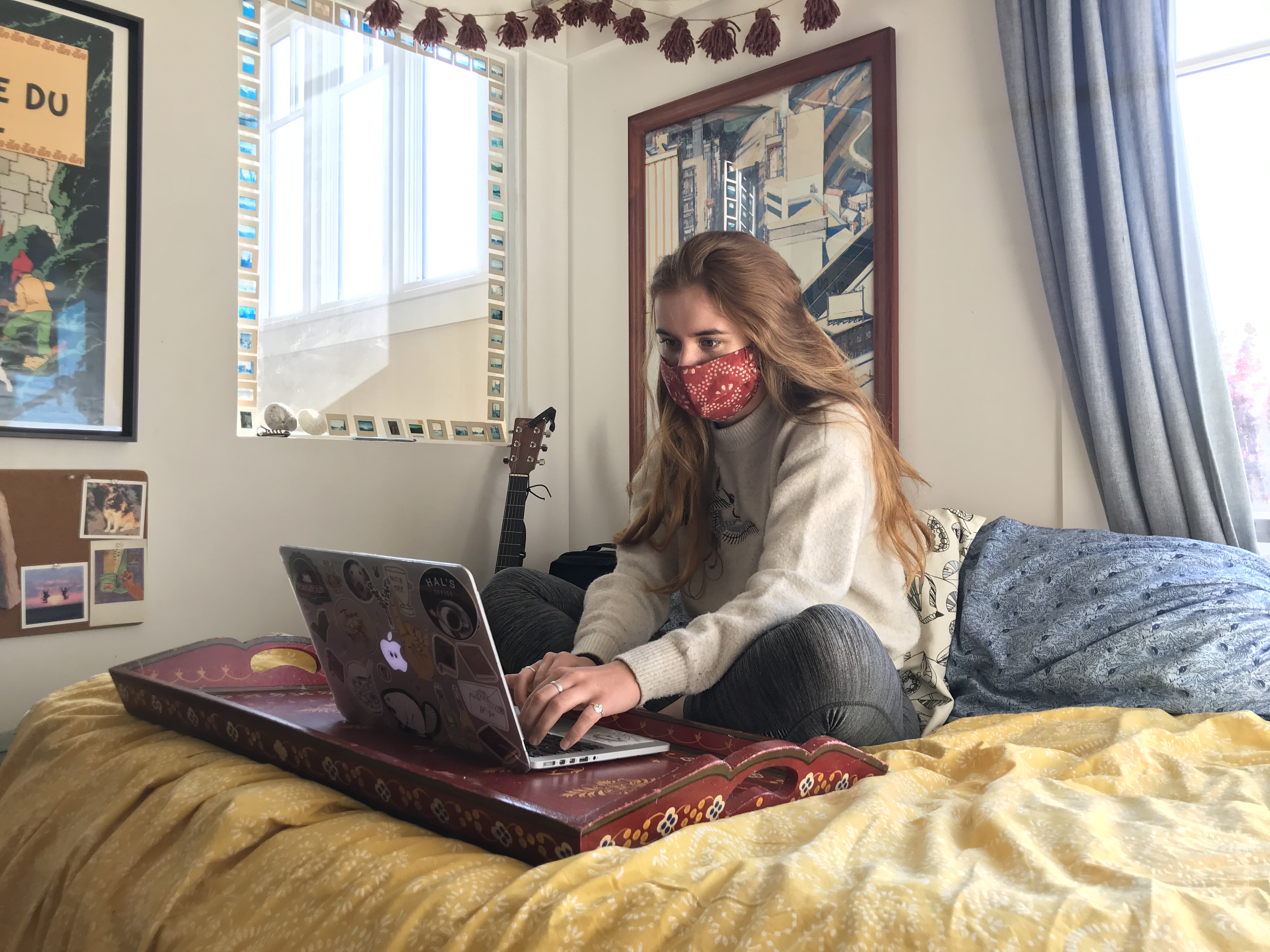
    Alex Dyer, HSU senior dance major, biggest challenge is not having access to a full studio. Instead, Dyer designated a small section between her kitchen and living room for dance class.

    “Trying to choreograph dances for my classes in a small section at home has been very hard,” Dyer said. “Because I never really know if what I created will work.”

    Chloe Schmidt, a junior dance major, found a unique opportunity present that would never have been possible prior to the pandemic.

    “One of the most amazing things to come out of this situation is that dancers from all over the world can take classes from some of the best teachers out there,” Schmidt said. “There is never the same energy in a Zoom class as there is when in person, but still, pretty incredible to have the opportunity to learn from the greats even if you are a thousand miles away.”

    Considering the unusual conditions that dance students have endured, this experience has led them to become stronger individuals. Schmidt remains optimistic about the future.

    “This situation has made me and many other dancers learn how to keep our inspiration up and navigate our art form in new and challenging ways,” Schmidt said. “I hope the future of dance is going to be even more vibrant and innovative.”
  • WRRAP’s fifth annual Zero Waste Conference goes virtual

    WRRAP’s fifth annual Zero Waste Conference goes virtual

    HSU’s eco awareness program continues providing support to campus during the pandemic

    Humboldt State University’s Waste-Reduction and Resource Awareness Program team will be hosting seminars and workshops online, raising awareness of environmental justice, local resources, the zero-waste lifestyle and providing eco-friendly DIY techniques, like making your own deodorant.

    This year Oct. 19-23, WRRAP will be holding its annual Zero Waste Conference virtually.

    The virtual setting grants more accessibility for speakers to attend. Beyond the clothing swaps and physical demonstrations, WRRAP sacrificed the semester for the safety of students. The new policies come at the cost of student interaction.

    Amanda McDonald, WRRAP’s program manager, said the biggest obstacle in their path this semester is reaching students.

    “Typically, there’s multiple table events that we work throughout the semester that really get students engaged in waste reduction just by walking through the quad,” McDonald said. “That kind of interaction is so much harder with students being online.”

    The WRRAP staff is smaller this semester, they are still provide students on campus with resources through the Reusable Office Supply Exchange program, the Bicycle Learning Center and the campus compost project.

    The ROSE program simultaneously reduces waste and provides students with free access to school supplies donated by the community and former students.

    Sam Kelly, director of ROSE, said the program is operating as usual with extra precautions and shorter hours of operation.

    “We definitely have more stuff in here right now than past semesters,” Kelly said. “Just because we don’t have a lot of people coming in and taking it.”

    The BLC, located on the eastern end of the Redwood Bowl, is offering free bike repairs to students, staff and faculty. Service differences include wearing masks and social distancing during repairs.

    COVID-19 restrictions currently forbid the BLC from allowing volunteers, which has forced them to cut back their hours.

    Justin Delgado, a BLC instructor, said it has also made the days a lot longer without someone else in the shop.

    “Typically we get about one person, at least when I’m here, per day right now,” Delgado said. “It used to be prolly five or six.”

    The compost team continues providing campus with their weekly services, however with a fraction of the employees present, their load is significantly lighter.

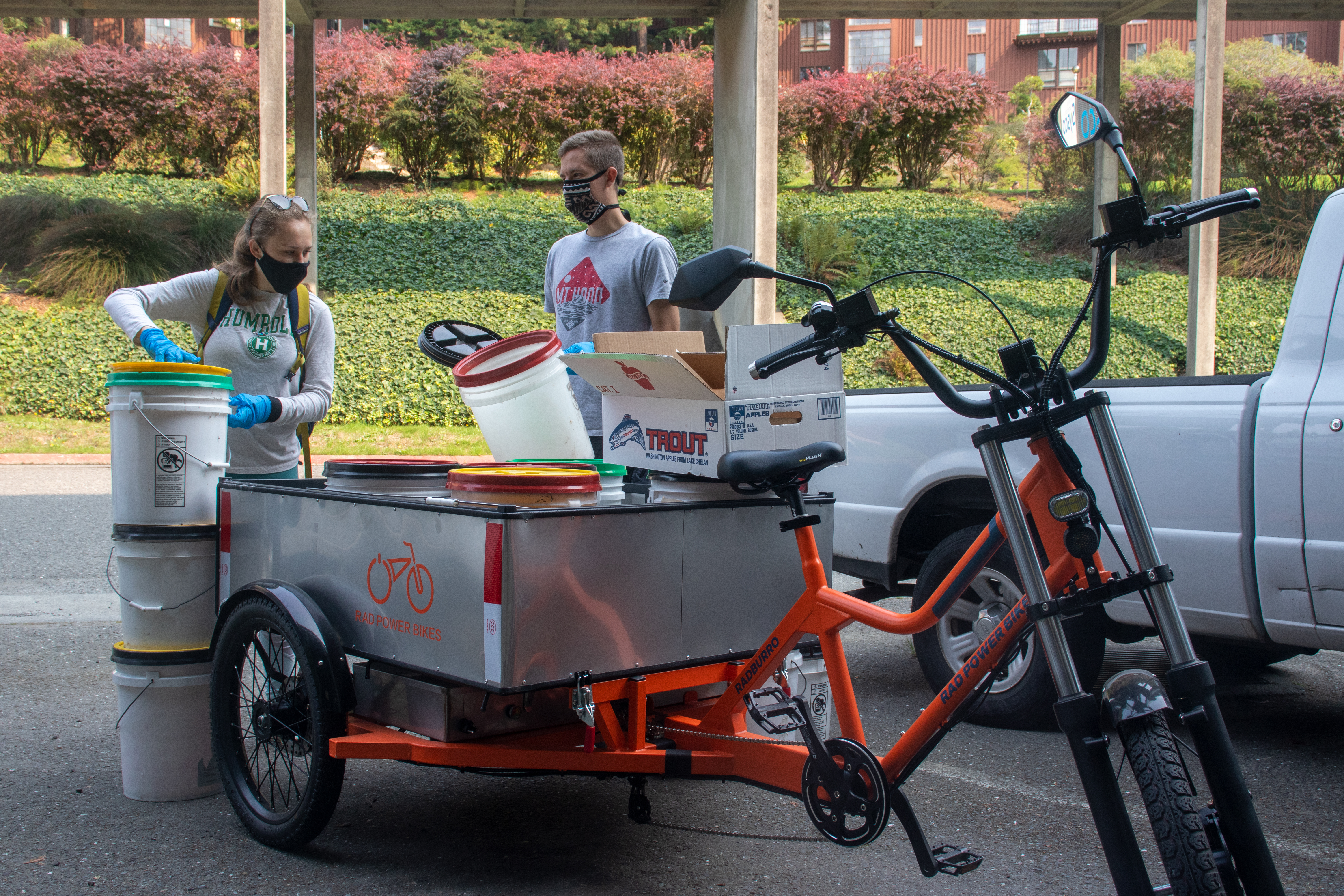
    The team recently made the switch to an electric mountain bike this semester for compost collections. While much more energy efficient than the electric facilities vehicles they used in the past, in its current state, the trailer they’re hauling behind the E-bike can only hold a fraction of the buckets.

    WRRAP’s compost collection process has switched over from electric facility vehicles to an electric mountain bike for energy efficiency. The downside to the switch, is the trailer the bike pulls behind it can only hold a fraction of the compost buckets.

    Krissi Fiebig, the director of the compost branch of WRRAP, said they intend to team up with the BLC and modify the trailer possibly into a tower to fit more buckets.

    “I don’t know how aerodynamic that would be,” Fiebig said. “But it would get the job done.”

    The compost team is beginning a new partnership with the Campus Center for Appropriate Technology, allowing students access to properly dispose of their food waste. Additionally, providing free fertilizer towards the end of the semester, to any students who show up.

    McDonald expresses concern in the programs future with several of the student staff members expecting to graduate in the spring. Finding replacements will be challenging given the virtual format that’s currently planned for the rest of the academic year.

    “I’m just nervous that it’s going to harm the integrity of the program,” McDonald said. “When we do hire new people, I want them to understand the history of this program and the legacy that they’re stepping into and carrying on.”

    Though they can’t currently accept casual volunteers, the WRRAP team currently has intern positions available and leadership positions opening soon for students interested in the future of our planet.

    “Being one of the people on the WRRAP branches really helps to remind me to reduce my own waste,” Fiebig said. “And just to be more conscious than I already was of the things I consume and what I do about my life.”

  • Humboldt State reconsiders spring break

    Humboldt State reconsiders spring break

    Proposal to move spring break to a later date generates controversy

    On Sep. 29, Humboldt State University’s administration announced an idea to move spring break for this academic year from Mar. 15-19 to Apr. 5-9, 2021.

    In the meeting, Jen Capps, Provost and Vice President for Academic Affairs, explained the student and community health argument behind delaying spring break.

    “We face some challenges around making sure that our faculty, our students, staff, et cetera are safe, and how to bring folks from out of county into county, quarantine them, provide face-to-face instruction,” Capps said. “And then if they leave for spring break, what I’m hearing from facilities and different folks is they just don’t have the capacity to then require students to quarantine again.”

    A few suggestions for how to maneuver the situation were made by University Senate members including Cindy Moyer, an HSU music professor.

    Moyer pitched the idea to have break or rest days spread throughout the academic year to divert students from traveling and returning home.

    “Five carefully strategically spaced days off spread out over the weeks in the middle of the semester,” Moyer said. “So that students are getting some time off, but not getting enough time off that they will go home.”

    Monty Mola, HSU physics and astronomy professor, argued that spring break should begin a week later. The decision to move around spring break would have ripple effects on the greater HSU community.

    Giovanni Guerrero, a fourth-year environmental science management major, believes moving spring break to early April would be too much of an adjustment for students and faculty.

    “There’s a lot of stress on my back as a student, and I’m sure a lot of stress on the backs of teachers as well [as] our professors to meet deadlines and to carry out our rigorous university expectations,” Guerrero said.

    Guerrero added that the spring break would give everyone a chance to emerge from isolation and take a breather from responsibilities.

    “I think there’s a direct correlation with mental health. Right now we’re in a different sort of situation, virtual learning,” Guerrero said. “Sitting here at my desk inside my room for six hours a day, doing homework, attending classes and then doing my work with Associated Students. I have very little breathing room. Having a break, like a week break, where I don’t have to stay inside my room all day is super beneficial.”

    Rich Alvarez, the Diving and Safety Officer in the HSU Scuba Diving program, is less concerned about the psychological impacts of a later spring break and more concerned about the practical implications.

    For his diving certification program, Alvarez typically takes his students to Mendocino for open water dives where the diving conditions are more stable than anywhere in Humboldt. However with COVID-19 restrictions, he is only able to travel within the confines of the county.

    “Traditionally, Trinidad doesn’t really get to the point where we would feel safe taking students into the water there until April and sometimes even late April,” Alvarez said. “So if they shift spring break to the fifth through the 12th, the question becomes, can we meet with them after spring break? And it kind of sounds like a no.”

    If Alvarez can’t meet with his students after break to finish their diving certification, they will be unable to partake in open water dives.

    “That takes that whole month of April out of contention, and then we were looking at trying to, either way, putting students into water conditions that may not necessarily be safe for what we’re trying to do, or having to get people most of the way through their certification, but not able to do the open water dives.”

  • UC Board issued notice of termination

    UC Board issued notice of termination

    University Center Board Members address Humboldt State University President’s notice of termination

    The Oct. 8 University Center board meeting discussed a Sept. 24 email from Humboldt State President Tom Jackson issuing a 90-day notice of termination.

    The notice requires the board to fix problems like a $300,000 line of credit to the North Humboldt Recreation and Park District and refusing to participate in the President’s review of the UC programs.

    The NHRPD runs the Arcata Community Pool. According to Faculty Representative Mark Rizzardi, Ph.D., Humboldt State University has worked with the group since 1993.

    The UC group disputed these claims.

    Wendy Sotomayor, interim executive director, called the notice disheartening and unexpected. Sotomayor noted that the board is actively engaging in discussions on how to respond.

    Additionally, the group reached out to their legal counsel for advice and expects to have a draft of an initial response in the coming weeks.

    “It’s hard to imagine what would happen if the UC were to actually close,” Sotomayor said.

    Faculty Representative Steve Martin, Ph.D., pursued the idea. Martin responded directly during the board call addressing future concerns.

    “What would happen if we were to close permanently?” Martin said.

    Martin posed that the closure of the UC allows HSU to hire private organizations and groups for services without the need for approval from a board.

    Earlier this year HSU worked with Aladdin, a food catering company that provides meal services to universities across the country like Fairmount University and Purdue University Fort Wayne. The administration did not go forward with any contract or agreement with the Aladdin group.

    Further complicating the matter is the projected loss of 2.2 million dollars in the UC budget.

    Due to COVID-19 restrictions and regulations, operations that fall under the control of the UC Board have been temporarily closed or operating in a limited capacity. These include the campus information desk, The Jolly Giant, College Creek Marketplace and the campus bookstore.

    With reduced foot traffic due to shelter-in-place guidelines combined with the decrease of students on campus, dining services has taken an exceptionally hard toll. Even while operating at reduced capacity.

    Sotomayor estimated that there are 675 meal plans active on campus, a drastic decrease from previous years.

    “We would need 1200 meal plans to break even,” Sotomayor said during the Zoom call. “At 675 we are not even close.”

    While the future seemed unclear, Rizzardi noted that the next course of action needed to be made soon.

    “In order to cancel it within the 90 days, we would have to start now, and that’s not something we want to do,” Rizzardi said. “Get ready to drop things so that way if he says no we can act fast.”

    The board members noted that they had not been given any further clarification from the administration on how to tackle, refute or respond to the notice.

    During the meeting, members made a movement to formally ask for a representative from the President’s office to be present during the next session on Oct. 22.

    “It takes two to tango,” Martin said. “We need to some response from them, otherwise they can just ignore us for 90 days and then say it’s terminated.”

    The last day for the board to fix changes is Dec. 23. If unable to provide solutions, the UC board will be terminated on Dec. 24.

  • HSU offers housing to forest service firefighters

    HSU offers housing to forest service firefighters

    Firefighters who test positive for COVID-19 will be housed on campus to complete their quarantine period.

    Humboldt State University will provide quarantine housing to United States Forest Service firefighters in the event that someone on their teams tests positive for COVID-19. Housing will be for the individuals who were potentially exposed to positive COVID-19 individuals.

    HSU has set aside two dormitory buildings, Maple and Hemlock, which can house up to 20 firefighters each.

    Firefighters are expected to avoid the dining halls and not share spaces with students. The US Forest Service is requiring employees to adhere to quarantine orders, limiting them to individual rooms. Rooms are located in the same building, separate from housing residents.

    HSU has not been requested to provide meal delivery. The US Forest Service has contracts with vendors for meal delivery.

    All of the protocols were developed by the CDC, California Public Health and Humboldt County Public Health. Similar to the isolation rooms that have been set aside for HSU students who’ve tested positive, rooms will be sterilized prior to forest service stays and again after they’ve left.

    Aside from COVID-19, Forest Service firefighters have stayed overnight for transition housing during the fire season.

    Stephen St. Onge, associate vice president for student success at HSU, is impressed with the university’s speedy response towards CAL Fire’s request.

    “There was a group that was moving from one fire to another and couldn’t find a place to stay,” Onge said. “We mobilized and we’re able to support that, I am proud of HSU for being able to do that.”

    The group that stayed on campus slept for a few hours until transitioning to the next fire. None of the firefighters that stayed overnight were tested positive for COVID-19. A contract is currently in the works to see if CAL Fire needs more transition housing from HSU.

    Typically, fire agencies try to keep hotel rooms open for fire evacuees by finding alternative housing. During COVID-19, it is extremely important that they find non-congregate living for quarantine.

    As a state entity with lots of amenities in a rural region, HSU often partners with state, local, and federal agencies, nonprofit organizations and others to provide support.

  • Sports Bubbling for controlling Coronavirus

    Sports Bubbling for controlling Coronavirus

    Science behind social bubbling casts doubt on the security behind implemented safety practices

    How many Superbowl parties have you been to? Drunk bodies stacked on top of each other. Frantic embraces. Hollering and crying. Sports, both play and spectation, is all about physical expression. And each one of those mass expression events carries the potential for an outbreak of COVID-19.

    According to the CDC, the virus is more likely to spread through close contact than through airborne transmission. Packing tightly into bars, gathering in stadiums, cheering and hugging are all likely to spread COVID-19. Early in the year, scientists linked a soccer game in Italy to a massive outbreak, with the true toll difficult to track.

    The danger doesn’t just come from the stadium, but also all the orbiting viewing locations. Simply social bubbling by quarantining the team, coaches, staff and media doesn’t cut it when major transmission events may happen as a result of independent viewings of sports broadcasts in addition to attendance of official events.

    Transmission through close contact may be more likely than airborne transmission. Contact sports may be more dangerous than sports with significant distance between players. Baseball has faced bumps in the road, with an outbreak in the Miami Marlins, but football requires more contact, and therefore more risk. The NFL recently suffered its first major outbreak in the Tennessee Titans, signaling a failure of their non-bubble model

    Realistically, models of disease spread must consider a wide range of variables. Changing numbers of susceptible individuals, changing likelihood that a susceptible person will encounter a sick person, increasing numbers of recovered individuals, the implementation of safety measures, and frequency of social gatherings like sporting events are all variables that matter when mapping disease transmission. But simple exponential growth is the basic reason why uncontrolled disease can overwhelm local healthcare at the beginning of an outbreak.

    One person has it, they give it to two people in a day. Those people give it to two more people each then next day. That’s four new people who can give it to two more people each. That’s eight new people and in a few weeks many more have it. It doesn’t realistically work that way on a large scale due to a wide range of important factors, but it’s a useful model for how outbreaks can begin in previously uninfected communities.

    Now say one person on a football the team contracts COVID-19. Then that one person gives it to 14 people through close physical contact. So, 15 people have it. They go out into the community and give it to 2 people each in a day. Our starting number is higher, so the growth is faster. Those 15 give it to 30 people, those 30 give it to 60, those 60 give it to 120, and so on.

    This clear danger is just one reason that hundreds of college teams have been cut due to the pandemic. These cuts impact athletes, athletic programs, schools and local economies. Specifically, Football often funds the rest of a school’s athletic program. If it goes, so might every other sport. Sports matter on a local level, not just as a national industry.

    That’s where the bubble solution comes in. The team and everyone who supports them cuts themselves off from the rest of a community. No one leaves, everyone gets tested constantly. It’s a bubble.

    In practice, it’s difficult. That’s hundreds of people quarantining together, with further levels of quarantine within the bubble. The people with the most contact, such as the players and coaches, must stay away from the other staff as much as possible, effectively forming bubbles within bubbles. Then the staff with the most contact to the players stays away from the staff undergoing the least risk.

    All of those bubbles on the edge of popping, delicate planning, and vigilant testing for only a chance to keep the team safe. There are severe consequences if all those measures fail. And none of those intense measures accounts for what happens outside. It can’t account for people huddling around their TV, packing into bars, or embracing when victory is declared.

  • HSU art students create their way through quarantine

    HSU art students create their way through quarantine

    Artists at HSU are experiencing somewhat smooth sailing this semester

    Factoring in all the tools, materials and space art students require to create, they more or less have access to everything they need at HSU.

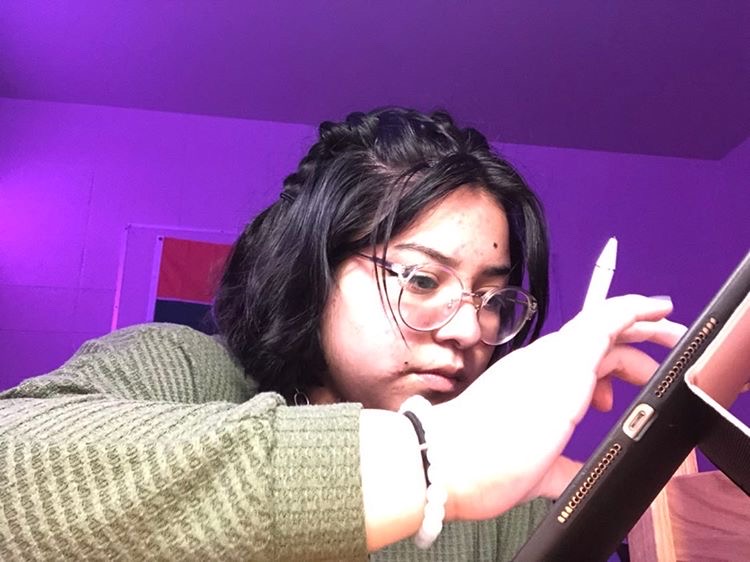
    Studio art major at HSU, Nicole Velazquez, already does online sketching on her own time. With her recent courses, however, she’s been focusing a lot more on class related artwork.

    “I mostly do digital art right now, because of my classes,” Velazquez said. “It keeps me a little more occupied.”

    So far, Velazquez has experienced somewhat rudimentary quarantine classes, leaving her with more time to improve her artistic abilities and explore new art forms. Lately, this hasn’t involved traditional art.

    “I don’t really have time,” Velazquez said. “I’ll sketch like here and there.”

    Velazquez hasn’t had many issues with online art courses but she misses in-person instruction. When it comes to art, she often draws her creative inspiration from others.

    “I like getting criticism,” Velazquez said. “I just feel like, if I don’t have someone telling me something, I will personally bring my art piece down.”

    Brittany Sheldon is an instructor in the Art department whose main course revolves around art history. Sheldon is still adapting to the new normal of teaching.

    “It is all based on equity,” Sheldon said. “Just trying to be as equitable as possible and accessible as possible for my students, while also trying to recreate whatever I do in the classroom normally.”

    Sheldon’s classes this semester are mostly asynchronous. By allowing students to have more flexibility, Sheldon hopes this will make her classes more accessible for students.

    “I have Zoom office hours and I was doing weekly Zoom sessions that were optional,” said Sheldon. “Students didn’t get a grade for that – it was an opportunity for them to come and ask questions or talk to each other.”

    At this point, students enrolled in Sheldon’s courses this semester seem to be passing. Sheldon has relaxed deadlines for assignments and is doing her best to be helpful and understanding but it is hard to tell how her students are doing from a screen.

    “I field their emails and just respond with empathy,” said Sheldon. “I am just trying to be there for my students.”

    Alex Pickrell majors in child development at HSU and minors in studio art. They’re using their excess quarantine time to explore more art forms and experiment with current projects.

    “I’ve also started doing collages with my old pieces,” Pickrell said. “Which I’ve never done before.”

    Living off campus, Pickrell has more room to explore their creativity as well as different art forms. They have their own space to create and express themselves without distractions.

    “I’ve been living off campus for about three years, so I kind of turned my apartment into my own little art studio,” Pickrell said. “It makes it a really nice space to work.”

    Pickrell typically creates abstract artwork. They’re currently taking two art classes where they’re exploring entirely new styles.

    “I decided to do left hand vs. right-hand painting,” Pickrell said. “Just because I usually only paint with my right hand and I’ve only ever done a set of paintings once.”

    The struggles of quarantine are plentiful, but Pickrell figures, we can either wallow in our misfortune or we can rise to the occasion and make the best of a bad situation.

    “I’ve just been trying to get out of my comfort zone,” Pickrell said.

  • Students shocked at Arcata Community Forest logging

    Students shocked at Arcata Community Forest logging

    COVID-19 hampered the communication of logging plans between the city of Arcata and new members of the community

    Lumberjacks with heavy equipment felled redwood trees in the Arcata Community Forest during the last two months, shocking some Humboldt State University students who regularly use the park. The City of Arcata uses timber harvest money to fund the management of the park and purchase additional park land in the area.

    HSU senior Isaac West downhill bicycles the trails most days. He was disappointed when he came across the heavy equipment in the park near Fickle Hill Road, and a friend told him a section of the bicycle “jump trail” had been ruined.

    “We have trees burning down everywhere,” West said. “It just seems like a really bad time to be cutting them down.”

    Karlee Jackson, an HSU transfer student majoring in environmental studies, said many students she talked to hadn’t heard the tree cutting was happening, and were shocked by it.

    “I am so mad they are cutting down these trees when so many trees have already been cut down,” Jackson said. “Why wasn’t it discussed with the community?”

    Jackson acknowledged that COVID-19 may have made it more difficult to consult with the community, but said she would have liked the city to have found another way to engage the community before cutting.

    Mark Andre, Arcata City director of environmental services and former HSU watershed management graduate student, said community engagement in the forest’s management was greatly impacted this year due to COVID-19.

    “The biggest challenge to us is to explain to new people who are moving here,” Andre said. “During this COVID-19 year [community consultation] has not been as perfect as it could have been.”

    Andre prepared the current Non-Industrial Timber Management Plan which allows some logging in local community forests. It was approved in 1999 and therefore public comment is not required each time the city wishes to cut, but the city is required to submit a Notice of Timber Operations (NTO). The city did issue a press release and convened the city Forest Management Committee, made up of appointed experts, although some regular meetings were canceled this year due to COVID-19.

    The NTO includes an impact analysis on spotted owl populations, and the steepness of the grade to ensure the cuts do meet environmental regulations.

    Greg King, executive director of the Siskiyou Land Conservancy and one of the first-ever Redwood tree-sitters, said he supports the efforts of Andre and the city.

    “I’m pretty skeptical when it comes to most logging,” King said. “It almost surprises me to say I support this.”

    King said he was far more concerned about the practices of logging companies owned by the billionaire family, Fisher, and Green Diamond Resource Company. Together these companies own roughly half of all redwoods in existence and regularly get “incidental take permits” which are essentially licenses to kill endangered species found while cutting.

    “What you see is a lot of faux [or fake] sustainable logging, but that’s not what you see here,” King said.

    He hasn’t read the forest management plan, but King encouraged students and community members to keep a close eye on the city. He is impressed at the “light touch” of the operations, and how the city has been able to purchase additional land in the area for conservation with the money from the park’s timber harvest. But King does believe public notice could be improved.

    Andre said he has been working for the city since 1984 and since then the size of the forest has doubled. In the past decade about 30% less is cut annually compared to the 1980s. The city originally purchased the park and instituted the arrangement to use timber harvest money to purchase additional land for conservation after a city bond measure passed in 1979. Andre said since then the city has set standards in sustainable forestry and community based forestry even winning an award from the Forest Stewards Guild.

    Regarding the recent destruction of a section of the downhill bike trail Andre said, “If we damaged the jump trails it’s going to be rebuilt this fall anyway.”

  • The HSU ceramics department fires back up

    The HSU ceramics department fires back up

    Experienced ceramics students are back in the lab this semester

    Following a graceless transition to online learning in the spring, ceramics students are receiving a drastically improved experience this semester.

    When the COVID-19 pandemic first went into effect, forcing students to finish the spring semester from home, ceramics students were among those who drew the shortest stick.

    According to Ryan Hurst, who has been teaching ceramics at HSU for nine years, when classes were moved online, the hands-on experience that students signed up for was no longer possible. They were instead tasked with drawing up sketches, studying research and development and critiquing other artists’ works.

    “It wasn’t ideal,” Hurst said.

    This semester has been a continuous adjustment according to Hurst. Gaining access to the building as well as the proper equipment to record demonstrations over the summer was an uphill battle.

    “I didn’t get either of those things until two weeks before it started up, so the plan kind of went out the window,” Hurst said. “I’d reformulated plans leading up to the end of the summer and some are working and some aren’t, but it’s a crazy adjustment.”

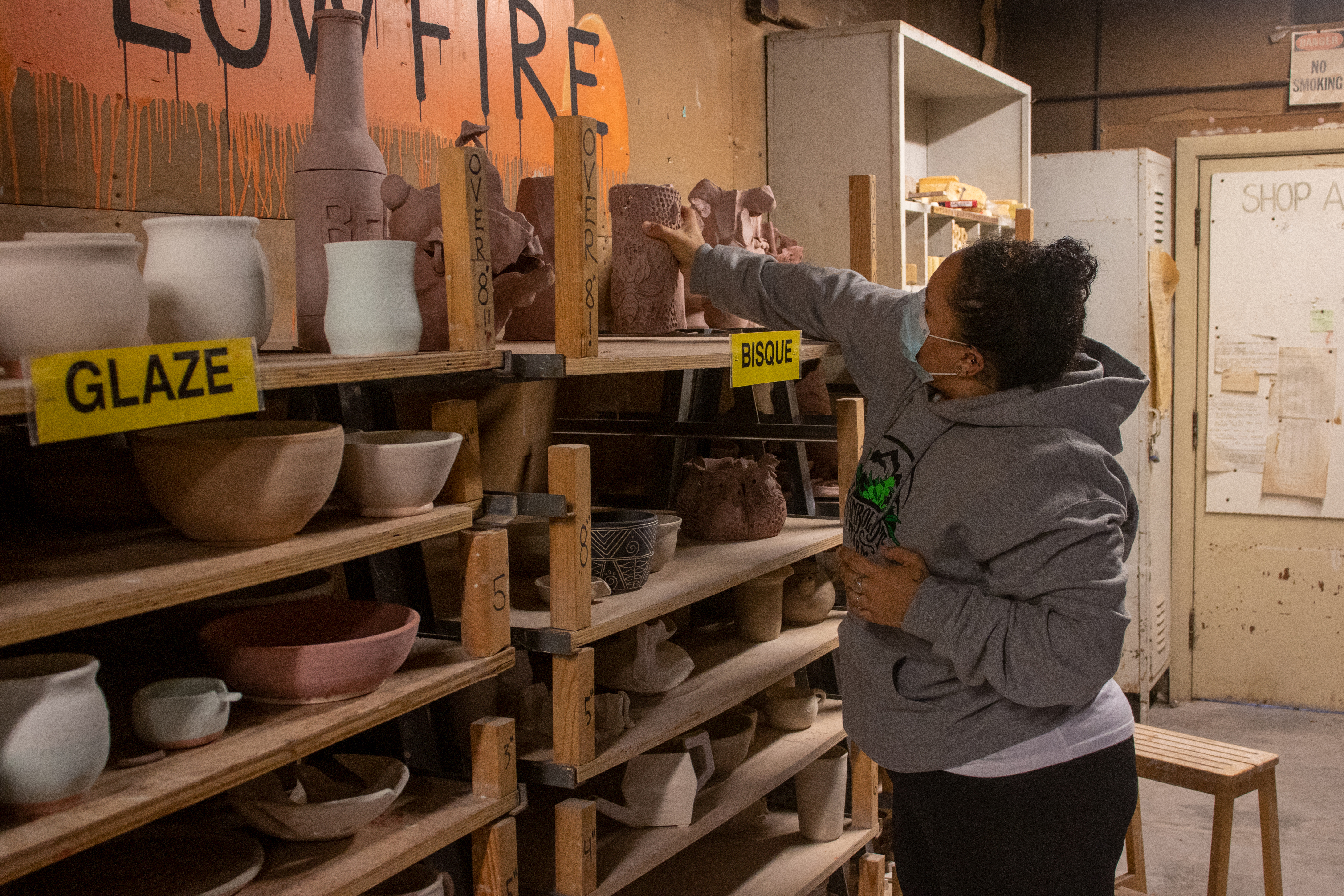
    At the start of the fall semester, each student was given a kit to take home, including basic ceramics tools and the clay they would receive in a normal semester. Beginning ceramics students will be creating almost entirely from home this semester, because of the new lab capacity put in place by COVID-19 protocols. Meanwhile, intermediate and advanced level students are granted some access to the building, with portfolio development students receiving first priority.

    “They have paid their dues and deserve the last moments of their academic career to do as much as time allotted them,” Hurst said.

    Jenna Santangelo is a former student and now lab technician for the ceramics department. After six years of classes, this is Santangelo’s first year as a staff-member. According to her, the beginning students are able to accomplish almost all that’s required of them in a normal semester from the comfort of their homes, assuming they possess the space.

    “Working at home is possible,” Santangelo said. “But it’s pretty messy and a lot of people don’t really have the space necessary for it.”

    Melissa Martin is a graduate psychology major with an emphasis in academic research. She takes ceramics as a therapeutic ritual each time she’s nearing the end of a chapter in her education. This semester, she’s preparing to close the final chapter as she puts the polishing touches on her thesis. Taking the beginning ceramics course this semester and not having access to a lab has changed the way Martin approaches her projects.

    “I think that you’re a little bit more restricted of how much work you can actually do,” Martin said. “I also was a very avid wheel thrower, so that’s also been a real big challenge. Now I’m doing a lot of hand building stuff so I really have to hone in on different skills.”

    One thing not included in the kits the university handed out to ceramics students this semester was a proper kick wheel for throwing pottery.

    “The kick wheels are, I think, like 400 pounds,” Santangelo said. “Which isn’t really feasible for most students to move.”

    Despite the disappointments and also experiencing challenges with creating a comfortable workspace at home, Martin is remaining optimistic.

    “We’re just learning how to be resilient in this world. We’re still trying to accommodate the best that we can,” Martin said. “But it is still a challenge and we’re still learning little bit by little bit, each time.”

    Maximus Landon is brand new to the ceramics program this semester. Landon took the class in hopes it would help them enjoy school again. Unfortunately, the barriers introduced by the online format have taken away from some of the enjoyment.

    “Because I’m really new to all of this, I’m not entirely sure what exactly I’m doing,” Landon said. “I’m not sure if I’m scoring things wrong and I’m not sure if I make this dent too large if it’s just going to have the entire side fall off, so it’s a lot of trial and error by myself and it’s not very fun for my anxiety.”

    Likewise, Hurst has been very anxious this semester about the safety of his students and the quality of their education.

    “It’s definitely not an ideal thing,” Hurst said. “But a lot of students have just been really happy to still be able to work with clay, even if it is at home.”

  • COVID-19 cheats the college system.

    COVID-19 cheats the college system.

    Asynchronous classes allow students flexibility at the cost of self-discipline.

    Following the disastrous transition to online learning, students returning this fall express concern about the quality of their college experience moving forward.

    Matthew Moretti is a botany major at Humboldt State University. Moretti took spring semester off after a particularly challenging fall but decided to return because he felt it was his only option in the pandemic.

    “If there’s any time to rush through the rest of college, I feel that online courses are in a way easier, even if they have their unique challenges to them,” Moretti said. “I think the asynchronous classes are particularly difficult and I need to have a lot more self-discipline than I think I have any other semester before.”

    Moretti’s biggest gripe with online learning is missing out on the practical knowledge that comes with the hands-on experience of lab classes. He’s delaying as many labs as possible, in hopes they’ll be held in-person in the near future. Unfortunately, Moretti couldn’t avoid taking an online entomology, study of insects, lab this semester.

    “We will not be able to collect or curate insects,” Moretti said. “Which I feel is a real disservice to really understanding the ins and outs of the insect properly. You lose a lot without being in person.”

    Chris Bignery, HSU wildlife major, plans to become a herpetologist, working with amphibians and reptiles. His online lab means missing out on educational field trips and important labs with species samples, but he couldn’t risk losing his spot.

    “It’s the class I’ve been waiting for, for three years,” Bignery said.

    Bignery came down from Oregon to live on campus this semester because he loves Humboldt’s redwood forests, beaches and small cities. Although claiming the county has everything he needs, Bignery described his life on campus this semester much more bleakly.

    “It’s like a prison,” Bignery said. “It’s very lonely.”

    Sara White, environmental studies major, enrolled in two classes that were moved online at the last minute. Regardless, she’s carrying a positive attitude into the semester.

    “Honestly, I’m really excited, I like all of my classes so far,” White said. “I mean, I wish that things were different obviously but I’m still happy to be here.”

    White was attending community college last semester and like other students was forced to convert to online learning mid-semester. Her only concerns are the three asynchronous classes she’s signed up for.

    “I feel like it’s a little bit harder to keep track of things,” White said. “I think that’s true of being online in general. It feels like things can get lost in the void.”

    Drake Woosley, HSU mathematics major, believes asynchronous classes are much more efficient because he doesn’t have access to an internet connection at home, so he has to walk to campus every time he has class. He feels, generally speaking, there’s a lot less being covered this semester than in normal circumstances and the tuition should reflect that.

    “It’s an online school, it shouldn’t be the same tuition. That’s kinda ridiculous,” Woosley said. “There’s almost nothing— no facilities are open. You’re not getting anything other than the accredited university online degree.”

  • HSU student celebrates life post quarantine

    HSU student celebrates life post quarantine

    Elise Fero recounts her experiences after 10 days of isolating in her dorm

    Isolation felt like home, not the home you want to be in, the home you’re stuck with until life gives you an opportunity for change. I spent days journaling and staring out the screen door at a single pinecone stuck between the boards of the porch I wasn’t allowed to step foot on.

    After ten days, I finally received the call informing me it could be my last day in isolation. My first thought, ‘well shucks I just ordered groceries.’

    As excited as I was, something inside me was terrified to leave. Most of my anxiety surrounding COVID-19 had disappeared. I was recovering fast and my parents, friends and boyfriend all tested negative, but I was experiencing a new kind of anxiety. Life after COVID-19.

    My life had suddenly become full of consequences I had no control of. I watched friends lose opportunities because they were required to quarantine after spending time with me. I feared the current science could be wrong, that my release could be lethal. I was consumed by an overwhelming fear that someone could’ve died because of me. Yet selfishly, all I wanted was to be set free.

    When I was cleared for release, I let out a sigh of relief and broke out into tears and uncontrollable laughter. The second the call was over, I opened the door and felt the cool air rush past me without the filter of a screen standing between us for the first time in over a week. The simple act of stepping outside was an indescribable joy I’ve never felt before. I was finally able to pick up the pinecone that had stared at me for so long.

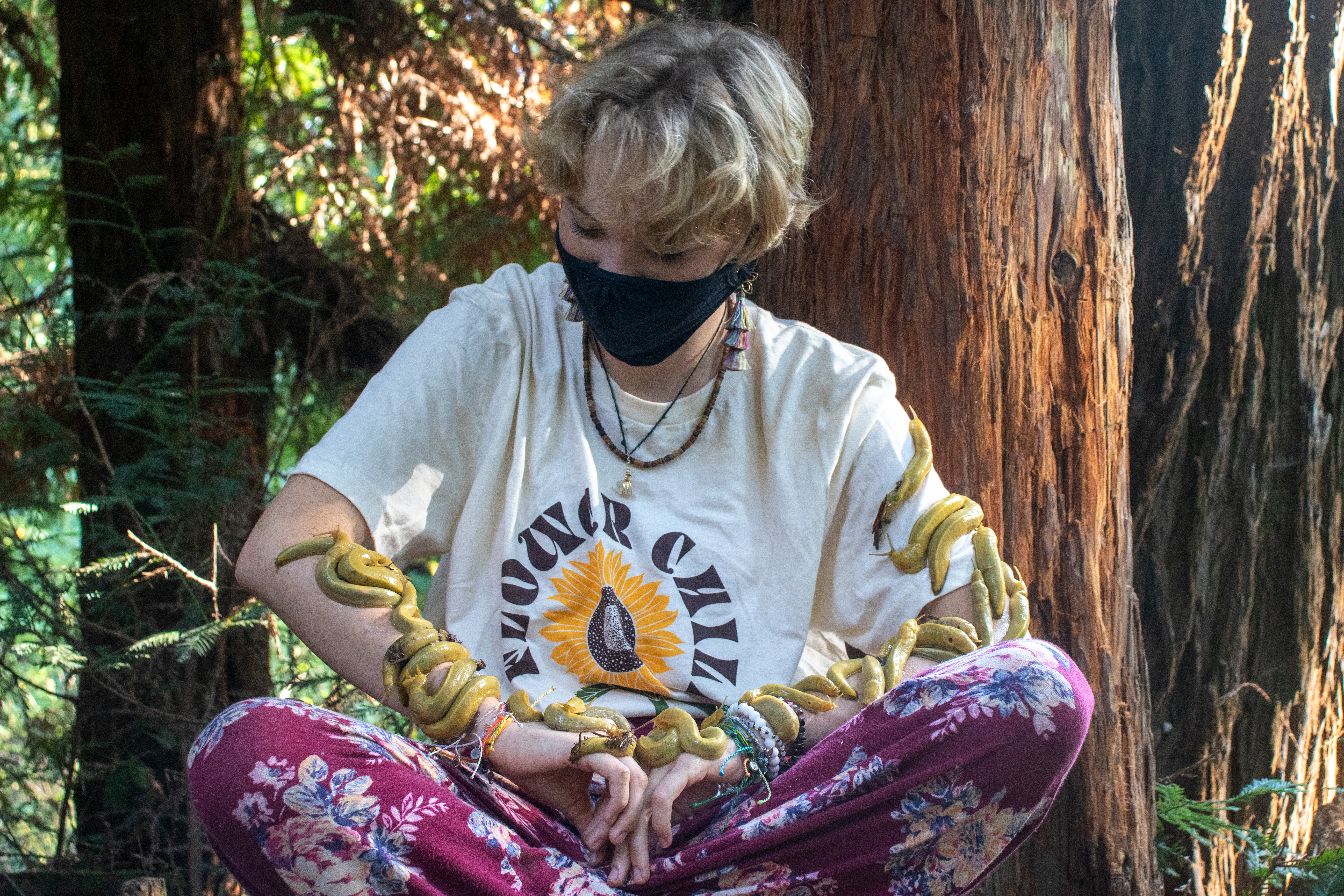
    During those ten days in isolation, I’d planned exactly what I’d do when I was released. My list consisted of finding a dog to pet, reuniting with an army of banana slugs and going to the beach.

    I was determined to return to the coffee shop where I had received the bad news that I tested positive for COVID-19. That first sip of coffee tasted like the conclusion to my horror.

    I’ve never felt closer to nature than that day, on the beach and in the forest. The same day, I was reunited with my best friends the banana slugs.

    For the next week, I spent as much time as possible outside. I abandoned my introverted tendencies and greeted everyone I saw. It was an awakening. For the first time, I experienced the world without taking it for granted.

    Coronavirus was not just unpleasant, it was living out the nightmare the world warned us to fear and facing the possibility of dying alone. The experience robbed me of all my comforts and left me deserted. Watching others claim that my illness was a lie and that they would never catch it. To be honest, I never thought I would either.

    This virus is not prejudiced. It will try to kill anyone given the chance. Doctors pour their lives into patients who may not live to see tomorrow. Family members are forced to say goodbye, praying it’s not for the last time. Survivors are absorbed in guilt after watching others die from the virus they passed on. It never leaves your mind, the fact that you could’ve been a statistic on the list of those who passed.

    For those who experience this virus, I share my story to provide you comfort. I was lucky to have survived. Not everyone is. I always had it in the back of my mind that others in isolation spend their final days alone.

    I thank the universe this wasn’t my fate and for giving me more time to share my story and grow from it.

  • When in-person sports can’t be a reality, fantasy delievers

    When in-person sports can’t be a reality, fantasy delievers

    The Lumberjack guide to fantasy football

    2020 has been a year of disruption felt throughout the globe let alone Humboldt State campus. Like most industries in America, live sports has been subjected to repercussions stemming from the COVID-19 pandemic.

    With most states banning the gatherings of large amounts of people, sports organizations such as the NBA and MLB have attempted to salvage the remaining portions of their seasons in order to keep fans entertained and revenue coming in. As the fall has drawn closer many have worried the pandemic would stifle the incoming football season. Though the arenas in which these teams rival for the next few months may be empty, the fans at home are champing at the bits for the action their hearts long for.

    Despite the current pandemic stifling most ways fans enjoy football season, one thing remains as popular as ever: Fantasy Football.

    Though it might be daunting from an outsider looking in, fantasy football is a pretty easy game to get into for fans of all ages.The first step of the game for any prospective fantasy football franchise owner is finding a league.This can be accomplished by joining or starting a league with a group of friends, coworkers or family members, if not joining a league online.

    For the novice beginner with no previous experience we suggest joining a league with people you know first. Each league ranges in size from eight to sixteen team owners.The league fee also ranges from group to group, often varying from twenty to a few hundred dollars per individual participating in the season.This pool of money is then distributed to the team that come in first place.

    Fantasy football is a game that can be learned as the season progresses but the gist is that the better your players perform during the regular NFL season, the better they will perform each week against other teams in your league. The players’ stats from each week are added up and the team with the most points is the winner.It is important to start your franchise off with a solid roster. As draft day approaches here’s a few tips and tricks that will help you curate a team that will hopefully perform well throughout your season.

    Select players that you project will continue to perform well from last season.

    Be weary of players that have the same by weeks during the season because this will dramatically affect your teams chances of winning during such weeks.

    Steer clear of players that are prone to injuries, suspensions or any lackluster performance from previous seasons.

    At the end of the day what you learn throughout the season will be as a result of trial and error. Have fun with it, learn from your mistakes and don’t be afraid to take a chance on certain opportunities that may arise during the season.

  • Lumberjack editor tests positive for senioritis

    Lumberjack editor tests positive for senioritis

    Not the senior year I anticipated or signed up for.

    For the previous three summers, it had been a tradition of mine to spend time in Colorado with my father’s half of the family. My first summer working 50 hours a week in the bow shop, without the time to explore and appreciate the nature of a mostly foreign land. It only took a few weeks before I began to grow homesick and impulsively withdrew my enrollment at San Diego State University and submitted a late application to Humboldt State University.

    My first couple weeks at HSU were typical to that of any new school. New faces and new spaces took warming up to, but it was hardly a choice. Majoring in journalism, I found myself faced with the earth-shattering task of walking up to complete strangers and asking them personal questions in the first week of beginning reporting. This was quickly followed by photo assignments that required me to take pictures of strangers and ask for their names, for print publication. I found myself interviewing professionals in their field, on camera, for video production class.

    First semester opened my eyes to a reality where most strangers are willing and eager to share their experiences with anyone willing to show interest. Those experiences became a newfound passion for sharing the stories of my community.

    Unfortunately, for me especially, the semester was not without a few hiccups. Less than two months into classes, northern California’s largest power-supplier, Pacific Gas & Electric, was forced to shut off their customers’ electricity in efforts to reduce the risk of causing more wildfires. These blackouts not only interrupted HSU instruction and ultimately cost me learning opportunities with scrapped assignments, the first and only full day without power happened to be my 21st birthday. Instead of going out with my friends, having my first legal drink in a bar, I spent the night listening to Kid Cudi in the dark like I was thirteen again.

    The pitfalls of my first semester at HSU didn’t stop there. In one of my rare random acts of kindness, I agreed to give a ride to a stranger. Unfortunately, in life, when you give some people an inch, they’ll take a mile. Non-confrontational by nature, my inability to tell others ‘no’ landed me 30 minutes later with the middle-aged man I’d picked up telling me to ‘hand over the keys.’

    Believing my lack of cooperation would be met with violence and me losing the keys to my car, I complied with his demand. Although my car turned up a few weeks later, all of its contents stripped, I wasn’t able to enjoy winter break because my roommates moved out without notice. I spent most of my time scrambling to find a new place and my new roommate.

    Despite the emotionally taxing events of the fall semester, everything seemed to fall into place for the spring. My first semester reporting for The Lumberjack. The first story I wrote about the HSU Bicycle Learning Center found its way into the hands of administration and the BLC budget was increased. I was immediately hooked.

    By the time California reacted to the COVID-19 pandemic, cancelling in-person instruction at HSU and putting the shelter-in-place policy into effect, writing for The Lumberjack had become my only priority. When assignments in other classes were significantly shrunk and cancelled altogether, I wrote more articles to pass the time.

    Over the summer, my annual Colorado trip to visit the family was cancelled by the pandemic. It’s been over a year now since I’ve seen my little sisters and my brother Travis. As I navigate my life in the pandemic, I’ve come to realize now more than ever, the power of family, the people standing by your side when you need them most. I’ve come to find a second family in the friends I’ve made in my short time with The Lumberjack and despite the disappointment of returning to online instruction in the fall, I’m grateful to be returning home.

  • House Hunting in the heat of COVID-19

    House Hunting in the heat of COVID-19

    Housing struggles at Humboldt State continue to be a problem for students

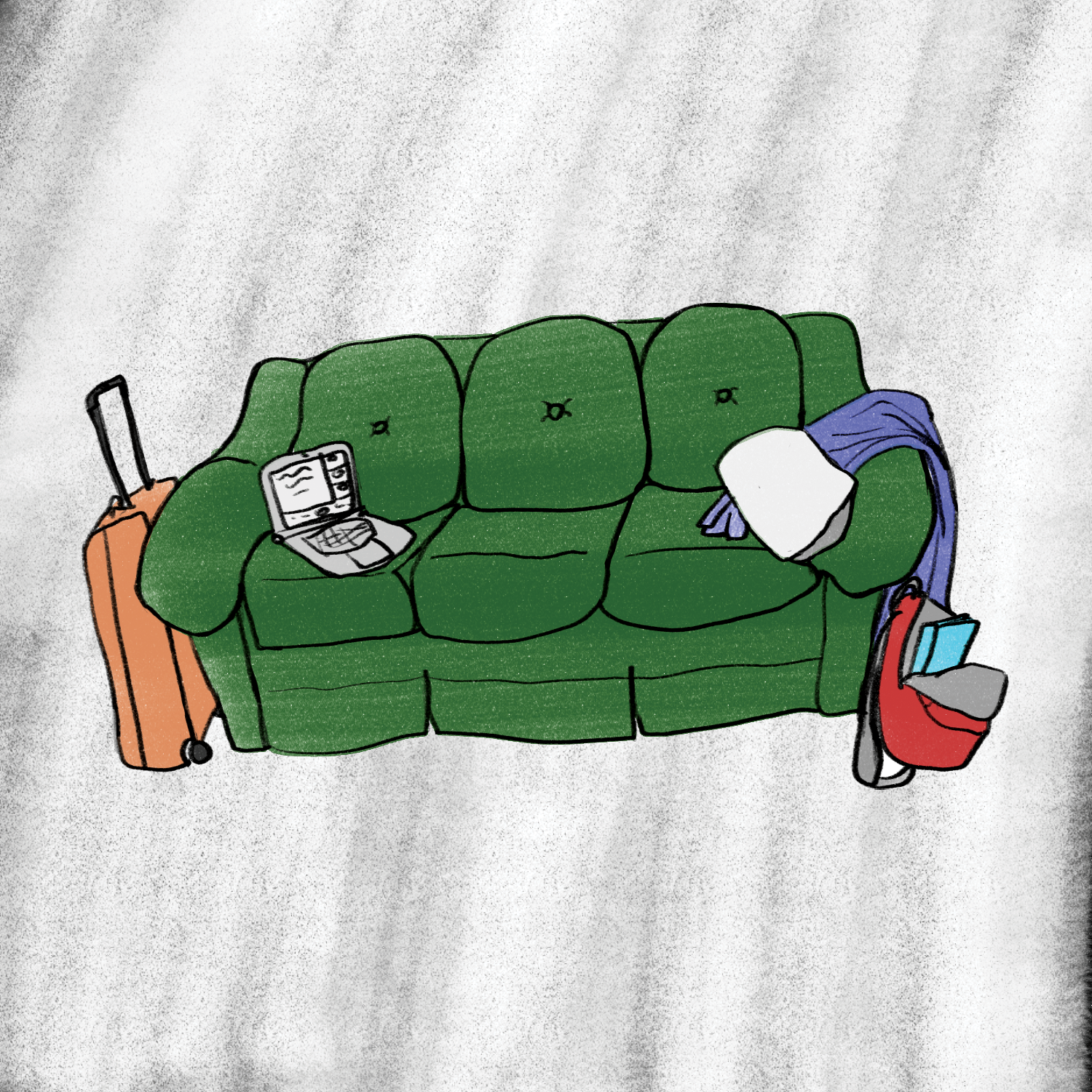
    Homelessness at Humboldt State University is a major issue. The mess is only becoming more muddled and students are left to fend for themselves.

    Senior at HSU majoring in history, Alfred Silva, is mostly living out of his car. His housing search has been limited because he owns a dog and because he’s a single male, which according to Silva is unattractive to landlords. Not having an address has proven particularly challenging for him.

    “I need to take medication all the time,” Silva said. “Now I don’t have anywhere for my medication to be mailed to my house. So, I gotta figure out other ways to get it. I gotta go to the doctor’s office and bug them there and it’s kind of hard.”

    Silva has been looking for alternative methods of living including camping, but hasn’t had any luck.

    “I can’t find anywhere to camp,” Silvia said. “The only place I found that will allow me to sleep is the back of the HSU parking lot.”

    If anything, Silva believes COVID-19 has attracted more people to Humboldt than in past years, and that’s become a big roadblock for him when it comes to finding a home.

    “I think the influx of people coming into town right now is just ridiculous,” Silva said. “It’s like you got people that are not even students – many, many, many people that are not even students – they’re just flooding the place right now.”

    On the flipside, Silva believes the landlords are as equally guilty in manufacturing the housing crisis in Humboldt County.

    “It kind of hurt their wallets a lot because they’re relying on HSU students to pay rent all this time and then when they took off and that happened, it really hurt them,” Silva said. “So now they’re just trying to survive like everyone else but charging rent. When one person’s drowning, they’ll do anything to survive. They’ll even drown another person.”

    In a similar situation, HSU senior and biology major Grace Rhoades, moved back up to Humboldt because of a job opportunity they got working for one of the labs at HSU. Landing secure housing has been difficult, but they’re grateful to be subletting a friend’s house until the end of the month.

    “There’s just a lot of applying for things, application fees,” Rhoades said. “With COVID, you don’t even really get to see anything or meet anybody in person, you just pay the fee and then like maybe a third of the time they get back to you about the status of your application.”

    Even with a roof over their head, Rhoades is still feeling the anxiety of not knowing where they’ll live next month.

    “I’m definitely a homebody, I like to know that I have a place,” Rhoades said. “I’ve kind of moved away from home and that’s not really much of an option anymore.”

    HSU Off-Campus Housing Coordinator Chant’e Catt recognizes how students are being affected by COVID-19 and finding housing.

    “What’s been really hard is students who moved out of town needing people to take over their leases and landlords not being really flexible sometimes with that,” Catt said.

    For Catt, another issue that arises is between roommates because of disputes over the extent to which they will abide by COVID-19 rules while sharing a communal living environment.

    “People have wanted to break their leases because their roommates don’t respect the restrictions around COVID,” Catt said. “Which puts them in precarious situations where they have to find a new place to live or find somebody to replace their roommate, which could put them into situations where they can’t pay rent.”

    Catt has her doubts surrounding the idea that COVID-19 contributed to homelessness at HSU.

    “I don’t know if COVID changed anything,” Catt said. “I feel like it’s all the same and that’s because it’s always been so bad.”

  • Humboldt State Athletes stay fit safely during pandemic

    Humboldt State Athletes stay fit safely during pandemic

    COVID-19 is not an excuse to stop sweating.

    Student athletes do not have the luxury of taking a break because once COVID-19 is over, it is right back to the game they play. Athletes not only have to worry about the lack of open gyms, but also the ongoing social justice movement that swept across the country. Some athletes found it easier to cope and build a healthy diet and workout routine around these problems than others.

    Benicio Benavides-Garb, a sophomore soccer player for HSU, has stayed in shape by using his personal weights and running. Benavides-Garb lifted with his barbell and set of dumbbells whenever he could. The running app Strava played a large role in Benavides-Garb’s fitness still being at a top level.

    “Strava allowed me to try and break all my previous records I had on all my runs before,” Benavides-Garb said.

    Benavides-Garb has also stayed in shape by passing the soccer ball with his little brother. Benavides-Garb’s passing has really improved since he trained with his little brother. The training not only improved both of the brothers’ skills, but also their relationship.

    “Practicing with my little brother has led to a lot of bonding between the two of us,” Benavides-Garb said. “We are probably the closest we have ever been.”

    One athlete has taken the all natural approach to staying in shape for their season. Kahanu Amantiad is junior and member of the Humboldt Rowing team. Amantiad trained over summer on her rowing machine. The rowing machine was essential in Amantiad staying in shape for her season. Additionally, Amantiad has been surfing all quarantine in her home state of Hawaii.

    “I’ve spent most of my days surfing at my secret spot,” Amantiad said. “There are about two other people in the lineup, so we socially distance very easily. I’ve been working on my bottom turn and a couple snaps here and there.”

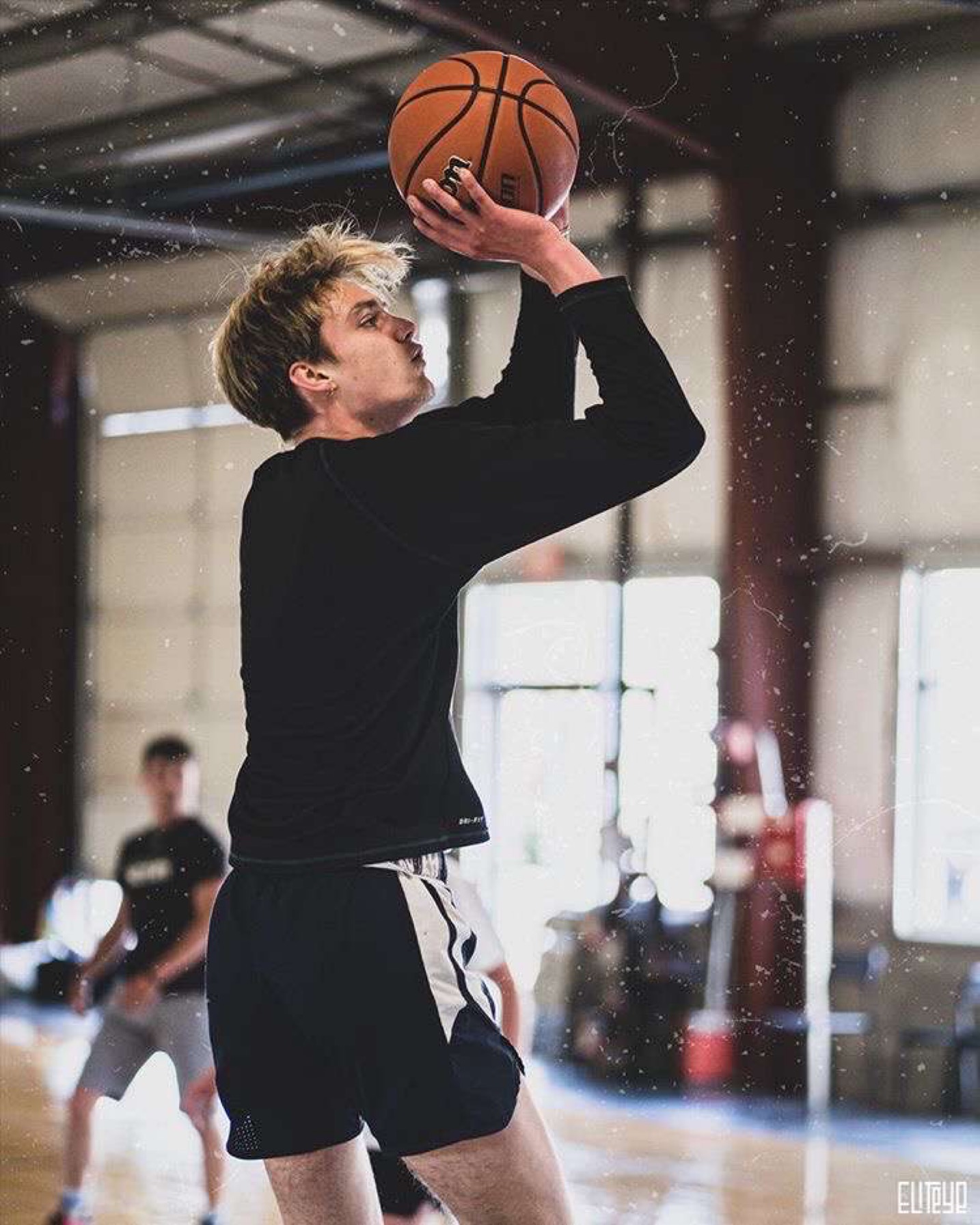
    For some athletes like sophomore basketball player Joey Rodrick, there are more distractions to training than just COVID-19. Rodrick spent most of his time in quarantine lifting in his homemade weight room and training with a socially distanced trainer. When quarantine was over and parks reopened, Rodrick was able to play with the top talent of Portland. Rodrick worked on his jumpshot and other moves for his upcoming season.

    “Playing with the best of the best definitely allowed me to work on my skills and improve as a player for HSU,” Rodrick said.

    However, training came to a halt when Rodrick chose to be a part of a call for social and racial change. Protests rightfully proved to be more important than playing basketball for Rodrick.

    “It’s been hard to train and practice because of all the protests,” Rodrick said. “I have been taking part in them and have really been adamant on doing my part for social justice.”

  • Students Find Creative Ways to Pass Time in Quarantine.

    Students Find Creative Ways to Pass Time in Quarantine.

    An inside look at how Humboldt State students’ are staying busy with pandemic hobbies.

    Just because life has begun to resemble a sci-fi movie, doesn’t mean students aren’t having fun. Abiding by COVID-19 protocol, students are cooped-up indoors more than usual. While video games, Netflix and sleeping becoming more common in the household, others have chosen instead to spend their time creatively.

    Rebekka N. Lopez, a music education major at Humboldt State University, was the drum major for the Marching Lumberjacks in the spring. When classes were brought online and health-guidelines were put in place, the Marching Jacks’ season was cut short and they remain on the bench this semester. Undeterred, Lopez continues to practice through quarantine.

    “That’s what I did almost every day this quarantine,” Lopez.

    Lopez enjoys practicing as a hobby and intends to pursue a professional career in music. Recenty, she’s been learning to play new instruments.

    “I play a couple, I play the flute and the saxophone mostly and, I’m still learning other instruments like ukulele, guitar, clarinet and piano,” Lopez said. “It’s my job to know even more than that so I’ve got a long way to go,” Lopez said.

    Hobbies are not only great outlets for self-expression, they can also make it easier to co-exist with the anxious attitude of the difficult times we live in. HSU psychology major Madelynne J. Avila uses some of the extra time she has during quarantine to practice singing.

    “For me personally, singing has always been an outlet for you know relieving stress and just kinda getting my mind off of whatever may be going on right now,” Avila said.

    Along with singing, Avila also enjoys volunteering. In the spring, before quarantine, she volunteered at her local animal shelter and at a local wildlife rehabilitation hospital. Once quarantine started, volunteer opportunities were no longer available. She was able to transfer into the education department at Lindsay Wildlife Experience and continues helping those in need.

    “Volunteering has been something that I’ve really wanted to do for a while, and really kinda just go all into it,” said Avila.

    Jared Schroter, a sophomore at HSU, is an Eagle Scout with the Boy Scouts of America, the highest rank earned by completing various tasks and demonstrating expert survival skills. Schroter is also a leader in the Venture Scouts program, composed of male and female scouts between the ages of 14 and 21.

    “I started to make a crew when I was 18 because I aged out of Boy Scouts,” Schroter said.

    As the president of crew 200, Schroter continues to plan and hold meetings over Zoom, keeping him more or less occupied most days. Schroter also enjoys outside activities like golf to fill in gaps during the day.

    “I’m horrible at golfing but I’ve become somewhat decent at it now,” Schroter said.

    Being stuck inside for long periods of time is not healthy, so for students willing to follow social-distancing guidelines, like anthropology student Scarlet Chapman, they can still experience the joy of nature.

    “I’ve been getting out a lot, spending a lot of time in nature,” Chapman said. “Been trying to put my phone down more.”

    One of Chapman’s new quarantine hobbies is drying flowers. She got inspired to spend her time more creatively when she saw friends posting their hobbies on social media.

    “I saw a lot of gardening on Instagram,” said Chapman. “And I was like ‘oh that looks fun’, so I’ve been adding to my garden outside,” Chapman said.

    Quarantine can be an opportunity for personal growth for those willing to work for it. Finding the silver lining and keeping yourself on track will help repel negativity and boost morale.

    “Just to know that even during quarantine you’ve improved on something or you’ve like gotten better at a certain skill, I think that’s really great for personal morale and you can only get so much from watching a show,” Lopez said.

  • More Layers, More Protection?

    More Layers, More Protection?

    Humboldt State demands double masking on campus, does more layers equal more protection?

    You’ve probably read the headlines: Wearing a Mask Prevents the Spread of COVID-19. But which mask you choose could affect how protected you and others really are.

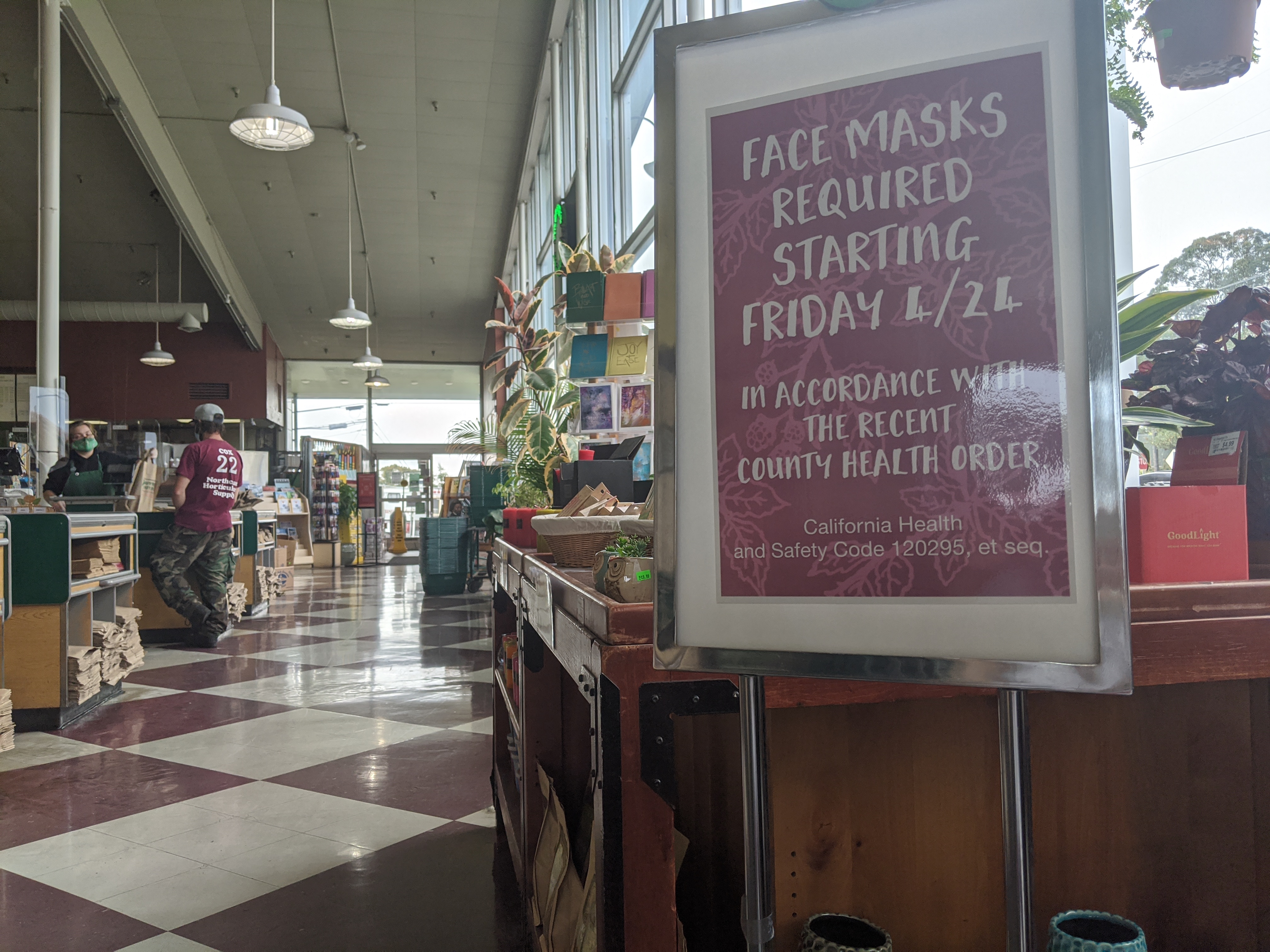
    Masks were first mandated in Humboldt County on April 24 when Health Officer Dr. Teresa Frankovich introduced an order requiring all members of the public wear facial coverings while inside a facility other than their residence. Since Humboldt State University was required to close campus prior to that, the university announced safety precautions on Aug. 4, which included wearing face coverings with at least two layers of 100% cotton. This was done in conjunction with the reopening of campus for the fall semester.

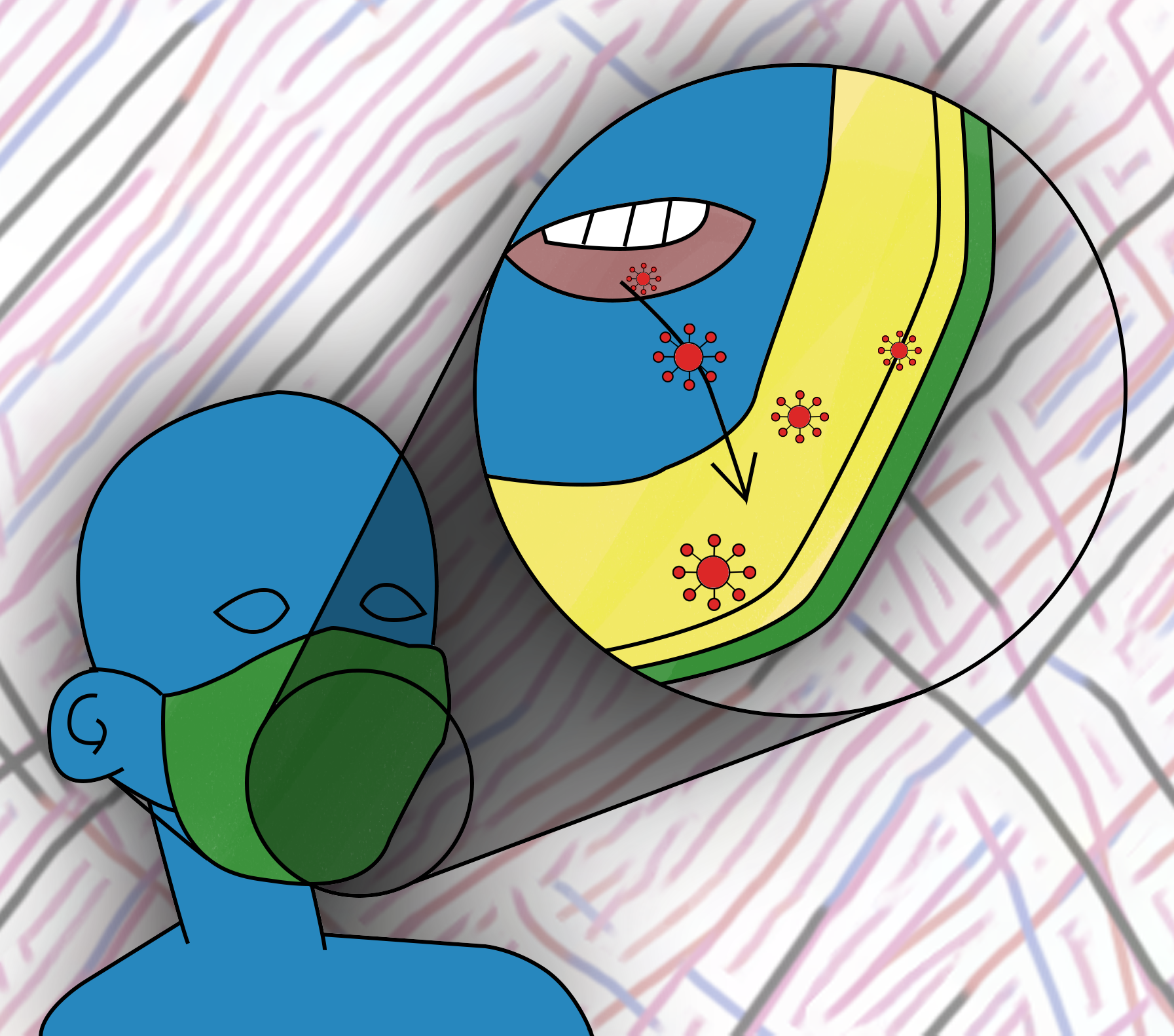
    The Centers for Disease Control and Prevention (CDC) urges people to wear masks with at least two or more layers of washable, breathable fabric. Masks need to be worn covering both your mouth and nose at all times.

    Director of News and Information Aileen Yoo stated, “HSU is following recommendations from the CDC. Its website is also a great resource for information on different types of protective gear.”

    Karen Wilkinson, Joint Information Center representative, said, “The county looks to the California Department of Public Health and the CDC for guidance.”

    According to the Association of American Medical Colleges (AAMC), “studies have shown a double-layer cloth face covering was significantly better at reducing the droplet spread caused by coughing and sneezing, as compared to a single-layer one.”

    Mark Wilson, a microbiology professor at HSU believes that “the main goal of mask wearing is to reduce the emission of droplets and aerosols from a person infected with the coronavirus, by trapping emitted droplets in the fabric. Mask-wearing can reduce the transmission of airborne diseases like coronavirus.”

    Wilson added that when deciding on the type of masks, “the tighter the weave of the material, and the more layers it has, the more effective it will be at filtering out particles.”

    May Chu, an epidemiologist at the Colorado School of Public Health, as quoted by NPR said, “a good option is a mask made of two layers of a tight-weave fabric with a built-in pocket where you can place a filter.”

    A University of California, San Francisco article reported that based on a simulation, researchers predicted that 80 percent of a population who wear masks would reduce the spread of COVID-19 more than being on lockdown. Further, the Institute for Health Metrics and Evaluation projected that 33,000 deaths could be prevented by October 1 if 95 percent of the population wore masks in public.

    Many researchers have looked into N95 masks which are made out of many layers of fine polypropylene fibers. They are able to block at least 95% of small airborne particles but only when worn correctly. Though they are proven to be effective, the short supply should be reserved for medical professionals and first responders.

    A recent Duke study rated a fitted N95 and a three-layer surgical mask as the top two protectors, followed by two layer cotton masks.

    According to an article by Science Daily in July, a team of Australian researchers did a study comparing the effectiveness of single and double layer cloth face coverings. They used LED lighting to film the airborne droplets. Their results showed that double layer face coverings prevented more droplets from spreading.

    HSU students can be provided with double layer masks at the campus Police Department, the first floor of Student and Business Services building, Jolly Giant Commons, College Creek Market and the Parking Kiosk.

  • Graduating Into Uncharted Waters

    Graduating Into Uncharted Waters

    HSU graduates attempt to navigate a world turned upside-down by COVID-19

    In May, Humboldt State University graduated hundreds of students, as it does every year. Unlike past years, graduates didn’t get to shake hands with their respective dean and receive a diploma on-stage in front of their friends and family. Instead, the class of 2020 was graduated over a mass-Zoom call.

    Claire Matulis graduated last May with a degree in psychology. She recalls the graduation experience as passable but regrets not witnessing it firsthand.

    “It was interesting to have the Zoom graduation,” Matulis said. “I still had my family on, we had a Zoom going on watching the slideshow and there was a part of me that kind of wished I had the in-person graduation.”

    For former HSU film major, Will Schorn, this was only the beginning of a long and winding road to finding a job. Schorn had an internship with the HSU football team as a videographer but got axed when the program was cut. He’s since gotten back on the market, looking for similar positions.

    “With COVID impacting so many sports, especially if you’re not playing at the top level – if it’s not professional sports – it’s been really difficult to find a job filming sports right now,” Schorn said.

    “It’s difficult for people to feel like they’re building community now because, like, I’m sitting here in my room by myself talking to a screen and even though I know I’m communicating to a person, there’s a different feeling to communicating this way than it would be sitting face-to-face.”

    Madison Hazen

    Other students have had less trouble finding work, even if it is remote work. Madison Hazen is one recent graduate who fits that bill. An anthropology and religious studies double-major, Hazen was able to land a job in English-language learning support and reading intervention support for elementary school students, through the AmeriCorps company. While Hazen feels very fortunate to have found a job at all, she’s not too fond of working in a virtual setting.

    “At the school I’m at, I’m going to have like forty-plus coworkers, who are people I’m not going to see face-to-face at all,” Hazen said. “I think it’s difficult to feel kind of like you’re fully becoming integrated into that work environment.”

    Although Hazen remains optimistic for the future of former students but admits that she misses interacting with other people in a physical space.

    “I definitely took it for granted as a student and having the physical community taken away or being removed from the physical community really helped me appreciate it,” Hazen said. “It’s difficult for people to feel like they’re building community now because, like, I’m sitting here in my room by myself talking to a screen and even though I know I’m communicating to a person, there’s a different feeling to communicating this way than it would be sitting face-to-face.”

    Like Hazen, Matulis was able to find a job in her field. Working as a child and family specialist for a non-profit called Evolve Youth Services, Matulis acts both as a mentor and a therapist for adopted kids. Unlike the others, Matulis is remaining in Humboldt for the time being.

    “I love Humboldt and I’m actually really grateful that I’m here in the time of the pandemic,” Matulis said. “My family is in much more populated areas in L.A. and Riverside and Ventura. Here out on the trail, I don’t have to worry about there being as many people and I feel like everybody is very conscious of wearing their masks and keeping their distance, so I feel grateful to be here.”

  • Face coverings are vital to preventing spread of COVID-19

    Face coverings are vital to preventing spread of COVID-19

    Humboldt State University taking necessary first step by requiring students and faculty to wear face coverings on campus.

    Humboldt State University, after being closed since March, has reopened six months after the COVID-19 outbreak in the United States. HSU was approved by the California State University system to offer “limited face-to-face courses this fall,” according to the HSU website. Considering the circumstances, HSU is taking the right precautions to keep both the students and faculty safe.

    The university announced safety precautions on Aug. 4, which includes wearing face coverings with at least two layers of 100% cotton. These are required on campus at all times, both indoors and outdoors. HSU will provide students with face coverings at the campus Police Department, the first floor of Student and Business Services building, Jolly Giant Commons, College Creek Market and the Parking Kiosk.

    Other precautions include practicing social distancing of six feet at all times when possible, refraining from gathering in groups, staying away from crowds, frequent washing of hands with soap and water and using hand sanitizer when soap and water are not available. The commitment to the precautions established by HSU represents a social responsibility that keeps us safe, as long as we follow them.

    Although wearing masks is uncomfortable, research has shown that they prevent transmission of coronavirus when worn correctly. The Centers for Disease Control and Prevention states that the spread of COVID-19 mainly results from settings where people are in close contact with each other, so the use of masks are especially effective in environments such as universities.

    Different kinds of masks “block [the] virus to a different degree, but they all block the virus from getting in,” said Dr. Monica Gandhi, an infectious disease physician at the University of California, San Francisco, to The New York Times. No matter what type of face coverings people wear, it is still much more protective than not wearing one at all.

    It’s also important to wear masks correctly, covering both one’s mouth and nose at all times. They need to be secured to the face without being too loose or too tight, making sure people are still able to breathe. They also need to be worn hands-free. Working at a grocery store during this pandemic, I’ve seen multiple people’s masks fall to their necks and they try to hold it up to their face, which leads to the spread of particles. Touching masks is unsanitary, so washing hands with soap and water is critical. The risk of spreading respiratory particles is much higher if the mask is not worn correctly.

    Masks are only one of many protocols HSU has enforced. Students were instructed to follow safety protocols on Aug. 15 when over 200 of the 800 students moved into on-campus housing. All students were expected to self-quarantine for 14 days following their move-in day. Considering the risks of the spread of COVID-19, the university made the correct decision to reduce the number of students allowed to live in on-campus housing. It was also decided to make all rooms single occupancy.

    Following health protocols is crucial, especially during a global pandemic. Wearing masks on campus has been mandated for all students and faculty members, and will be a major part in limiting the transmission of COVID-19. It will be especially important this fall when some students and faculty will be taking part in hybrid learning, which includes limited face-to-face contact.

  • Living on Campus during a Pandemic

    Living on Campus during a Pandemic

    Humboldt State University reopens campus and student housing for new incoming students.

    Universities across the nation are experiencing a drop in enrollment this year due to COVID-19 and Humboldt State University is no exception. With around a thousand new students moved into single-occupancy rooms on Aug. 17, HSU remains determined on reopening campus and providing student housing for the fall semester.

    Among those returning is second year HSU student, Bryce Hunt. Hunt lived on campus prior to in-person instruction ending and he knew he would be returning to campus.

    “I had already made my decision internally,” Hunt said. “I knew a majority of my friends were coming back up and I needed to get out of my home and my hometown.”

    For Hunt, the adjustment to life on campus during the pandemic has been fairly easy. While he admits the absence of resources such as in-person advising has been a hindrance, he feels the school is taking strong protective measures.

    “I like that they’re offering free coronavirus testing,” Hunt said. “They’ve been open about the fact that they have had cases.”

    Hunt feels that campus is safe as long as everyone takes proper precautions and follows the advised county health guidelines.

    “Even with everything going on, I want to be here, because I’m happy here.”

    Adrian Black

    “I feel fairly comfortable,” Hunt said. “I know I’m taking the protective measures so I can to be safe. I don’t think it’s bothering me as much as it did after spring break.”

    Adrian Black, a second year student at HSU, is staying off-campus but remaining in Humboldt. Without any in-person classes, Black made their decision partially out of want, and partially out of need.

    “I don’t really have any other place to live,” Black said. “My parents don’t have room for me. Besides, I really like living here. Even with everything going on, I want to be here, because I’m happy here.”

    While they had previously considered not returning to HSU after last semester’s disorganized attempt at online classes, Black decided to give this semester a try. Driven by both a passion for learning and a fundamental hunger for something to do, Black returned. However, they’re disappointed in the lack of resources and social-outlets available to students.

    “A lot of the charm of being a student is being on campus, interacting with students and faculty,” Black said. “I feel like clubs and such are going to be lacking since we can’t do in-person meetings. It limits what types of clubs are allowed and accessible and puts a damper on social lives.”

    With students and faculty better prepared for online classes, new precautions in place and the world adjusting to a new reality, they believe that it can be a good semester.

    “I have high hopes, and I hope that by next year, things will have gotten better,” Black said.

  • Students Stay Home Scared to Learn in Pandemic Times

    Students Stay Home Scared to Learn in Pandemic Times

    Students stay home this semester with concerns of health and quality of education.

    In the midst of the global pandemic, Humboldt State University students have chosen to stay home and attend classes virtually or not at all this semester, citing living expenses, health concerns and quality of education as factors in their decisions. Given most classes will only be offered virtually this semester, there’s much less incentive to be present on campus.

    Ahead of their return, the HSU health department informed students of the risk in coming back to campus and the new safety protocol including wearing masks, practicing social distancing and a mandatory COVID-19 test followed by two weeks of self-quarantine upon arrival.

    Calista Tutkowski, an environmental science major, is one of the students staying home and continuing her education online. Tutkowski’s family lives in Colorado and she decided coming back to campus wasn’t worth the risk. In her time on campus, Tutkowski made lots of friends that were also from out of state/from all over the country

    “All of them coming back to one place felt like a recipe for disaster,” Tutkowski said.

    While Tutkowski’s lab-classes were deemed deserving of in-person instruction this semester, her concern outweighed her desire to return.

    “It just wouldn’t feel like a safe environment,” Tutkowski said.

    In Colorado, she’s employed as an essential worker and frequently has to interact with customers that don’t abide by social-distancing protocols. Tutkowski also has the financial advantage of staying in her parents home and avoiding the cost of out-of-state tuition with the cost of housing in California, it wasn’t worth her return.

    “It’s like pulling teeth with some people,” Tutkowski said. “I could just be making money here if I stayed home.”

    Oliver McVay, a psychology student, online learning was never an option. The shift to online-instruction last semester in response to the initial outbreaks of COVID-19 cases, students like McVay, who suffers from a learning disability, were left to fend for themselves.

    “There wasn’t a lot of face-to-face stuff,” McVay said. “It was more just, here’s the assignment, turn it on canvas by this day at this time.”

    McVay experiences difficulty teaching himself the material and felt he wasn’t receiving the education he paid for, so he decided to take the year off.

    “Last semester, I didn’t really learn anything from my online classes,” McVay said. “I just felt like it wasn’t benefiting me.”

    Former HSU student, Chase Ervin, also found learning online too challenging in the spring and decided not to return for the fall.

    “I knew that online schooling was going to be difficult,” said Ervin. “I went from like all A’s to all B’s and C’s.”

    Students like Ervin and McVay require a proper learning environment to tap into their potential.

    “I was lacking a lot of focus,” Ervin said. “There were a lot of distractions at home that I wouldn’t necessarily have at school.”

    Whether students patiently await their return to the classroom or carry on pursuing an online education, it’s clear the virtual teaching methods do not benefit or cater to all students.

  • A Simple Favor, Wear Your Mask Correctly … Please

    A Simple Favor, Wear Your Mask Correctly … Please

    Wearing a mask correctly shouldn’t be a hassle or the worst part of your day.

    All I ask is, “Ma’am, can you please put your mask over your nose?” “Sir, your mask needs to be worn at all times. Thank you.” “Yes, masks are required here.”

    When a mask is being worn correctly, it has to cover both the mouth and nose. Think of it this way, the mask is meant to prevent any respiratory droplets from spreading to other people and elements around you. These particles come from your mouth and nose.

    These face coverings aren’t much, but they are one of the best defenses we have, alongside staying home and social distancing. Now, who would have thought that such a simple and minuscule request can cause such hostility and chaos?

    I’m a retail worker in a small business. I wear a mask, over my mouth and nose, for five hours a day and expose myself to locals and tourists. Some days, I’ll be in contact with 20 people and other days, I can be in contact with close to 100 people.

    I will never understand why people try so hard to fight against wearing face masks correctly.

    I fear for my life and sanity every day. There are crazy stories circulating around the internet of customers harassing and assaulting workers for trying to enforce these health orders. A retail worker in Modesto was brutally attacked, a crazy lady in Trader Joes in North Hollywood making a huge scene and the worst, most extreme case I have heard so far, a security guard being shot and killed.

    My co-workers and I always brace ourselves for whatever may happen for calling someone out. We have gotten glares, we’ve been ignored, ridiculed and even belittled just for asking someone to wear a mask or wear it correctly. We have had out-of-state tourists obnoxiously defy the rules we have set for our store, for them to then leave our store and express how much they hate California’s rules.

    C’est la vie de 2020.

    I will never understand why people try so hard to fight against wearing face masks correctly.

    There have been customers that have come in and complained of not being able to breathe with the mask on. My solution is to stay at home. If you cannot breathe with a mask on, you’re already vulnerable and should not be outside. If you’re bothered at the thought of wearing a face covering for 10 minutes in a small gift shop, maybe you shouldn’t be out and shopping for home decor.

    In order for many of these small businesses to be open, they needed to be approved by the state. My boss had to fill out a very lengthy form to re-open her business. She had to describe every action we, as employees, would do to ensure we are all safely navigating this pandemic.

    If you see any shop with state/county paperwork taped in their front window, they had to apply to re-open as well. If a customer or employee ends up testing positive, the entire shop has to be shut down.

    These face coverings are for the safety of yourself and those around you. This isn’t a time to be individualistic, this is a time where you need to put your ego aside and realize that your selfish actions can potentially harm a business, a person next to you or the family they go home to.

    Wearing your mask correctly to cover both your nose and mouth won’t kill you, but refusing to do it at all can.

  • Humboldt State Proceeds with In-person Instruction

    Humboldt State Proceeds with In-person Instruction

    With President Jackson and Dr. Frankovich at opposite ends of agreement on in person classes, students caught in the middle feel COVID-19 is inevitable.

    As Humboldt State University moves forward with a hybrid fall 2020-21 semester, starting online before transitioning to an in-person format from Sep. 8 until Nov. 6, community leaders are unsure about the future safety of students on campus.

    In a recent set of emails between HSU President Tom Jackson and Humboldt County Health Officer Dr. Teresa Frankovich, made available via Freedom of Information Act requests to the Lost Coast Outpost and North Coast Journal, at times the two leaders appeared at odds with how to proceed with the semester.

    Frankovich stated concerns with students returning to dorms and classes, mainly that enclosed shared spaces like dorm kitchens and bathrooms presented an increased risk of spreading infection. Frankovich asked for a possible pause to the start of the semester, so that COVID-19 testing labs within the county could properly prepare for the increased influx of new and returning students.

    Jackson replied within the same email chain initially with confusion about the timing of the sudden request before attempting to reassure HSU was following all local and state ordinances regarding proper social distancing and safety.

    During the Aug. 18 media availability briefing, Frankovich addressed the emails stating “Let me make one thing clear: This is not a case of ‘othering’. It is a case of trying to make safe choices for the entire community in the midst of a pandemic. This is about trying to juggle competing needs for testing resources across skilled nursing facilities, agricultural settings, tribal communities, local public schools, businesses and organizations, and the community as a whole.”

    Frankovich also reiterated that the Humboldt County Health Office was still confident in HSU’s plans and ability to handle the situation, praising the HSU planning team for their continued effort.

    “I think they’re working on constructing an environment that is as safe as possible considering the pandemic that we’re in,” Frankovich said.

    Those plans were put to the test when on Aug. 17, as students began moving into the dorms, a campus-wide email was sent out stating that HSU had it’s first confirmed COVID-19 case.

    By the end of the week, two more students and a faculty member tested positive as well, though emails state that the faculty member’s case was not connected to student move-ins.

    While the identities of those who tested positive are being withheld for privacy, an email notification sent out on Aug. 20 said “HSU is working closely with Humboldt County Public Health, which will determine whether there are members of the campus community who need to be advised of their contact with affected people.”

    Testing will continue for students who have moved in during a fourteen-day quarantine period to ensure safety.

    Blake Hefner, a biology major and resident advisor for the College Creek dorms, expressed both concern and hope after reading the initial emails regarding the first confirmed case.

    “If they’re willing to bring students during a pandemic, we are going to see how they are going to handle that and how they are going to value our lives,” Hefner said.

    Lori Alcantara, a journalism major, said that as soon as she saw the email, she went to show her roommate.

    “We were both kinda surprised that it was so quick,” Alcantara said. “At the same time, I feel relieved that they’re keeping track and not just trying to pretend that it isn’t happening.

    Alcantara felt comfortable with the idea of in-person classes, trusting the students around her and the university to accept the new social responsibility of sanitizing workplaces and classrooms. Alcantara had one in-person class for the fall semester and stated that the professor had already reached out and reassured students that proper cleaning will occur before students arrive and when they leave.

    “I think what will matter then will be everyone’s ability to clean after themselves, use hand sanitizer and wear their masks,” Alcantara said. “I think if everyone could do that… then I’m not particularly worried.”

    Frankovich said during her media availability briefing that “…the presence of this case doesn’t change our plan going forward except that we want to make sure we are doing the testing and trying to monitor progress on isolation quarantine should it occur.”

    Hefner felt that the cases meant that students had to step up to the occasion and help shoulder the responsibility and pressure.

    “It’s a lot of realizing that this is bigger than us as people,” Hefner said. “Moving back means you’re part of a community now, and being part of that community you have to respect the guidelines that are going to take place.”