The Lumberjack


Students Serving The Cal Poly Humboldt Campus and Community Since 1929

Tag: covid-19

  • Students struggle to navigate COVID-19 safety post-pandemic

    Students struggle to navigate COVID-19 safety post-pandemic

    by Zachary Mink and Griffin Mancuso

    While COVID-19 regulations have become more lenient at Cal Poly Humboldt, many students are still contracting COVID-19 and are unsure of where to find resources.

    EG.5 (Eris) is one of the newer variants of COVID-19 in the United States, known for being highly contagious. The Center for Disease Control and Prevention (CDC) predicts that Eris made up about 24.5% of COVID cases in the U.S. over the last two weeks. The second most common variant, FL.1.5.1, made up about 13.7% of cases. 

    Currently, the data on the number of student COVID-19 cases and which variant students are contracting most often is unavailable.

    Dobby Morse, a graduate student in English who lives on campus, contracted COVID-19 in mid-August. They initially tested negative and assumed they weren’t contagious despite their symptoms.

    “After like the third or fourth day, there was this burning lump in my throat and I couldn’t speak,” Morse said. “So, I went to the health center to try and get help and they tested me there. They said I had [COVID-19] and I had to go into lockdown.”

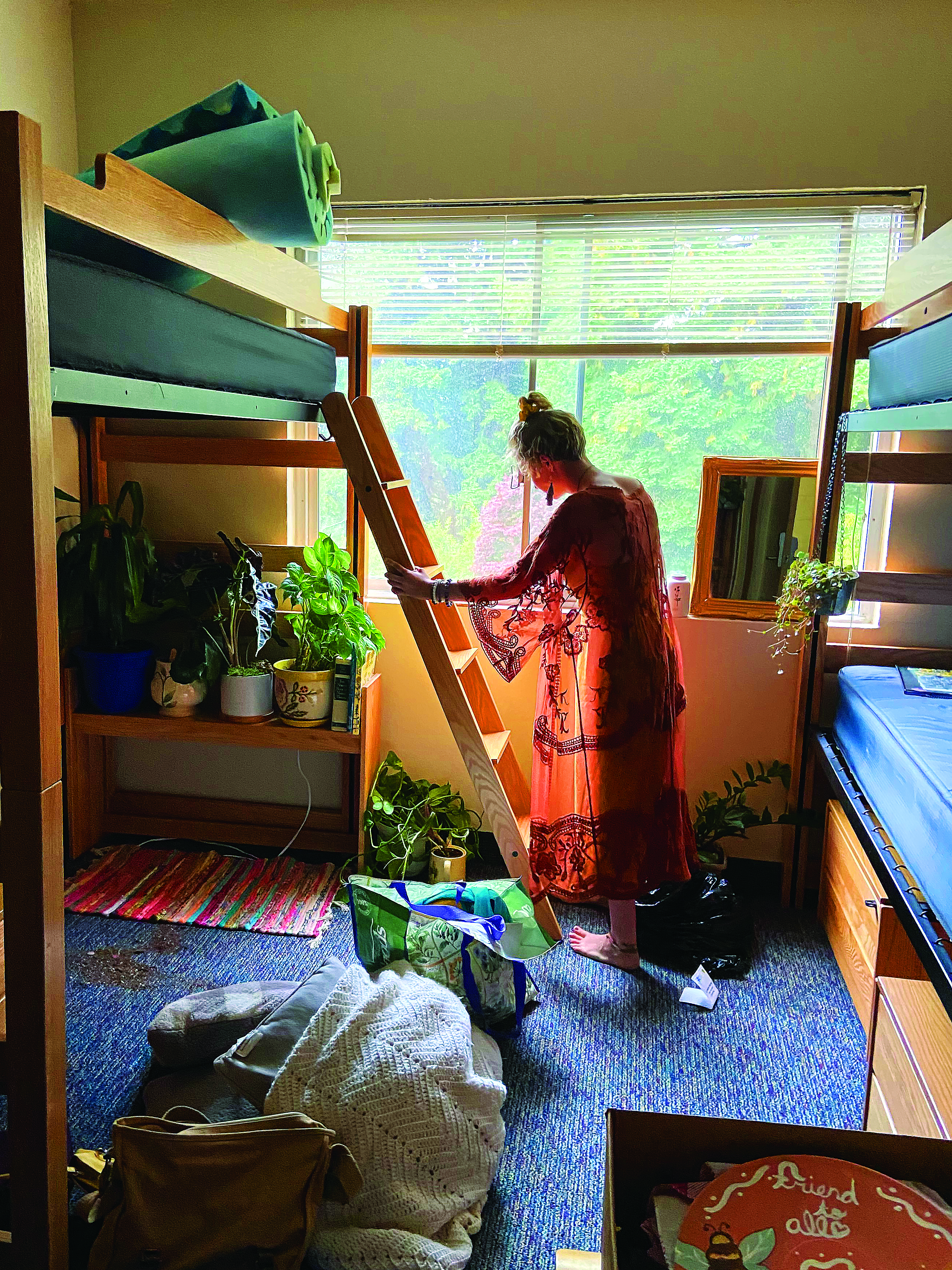
    Because they were living with a roommate, Morse stayed in a quarantine room in the Cypress dorms for six days with one bedroom, a bathroom, and a mini kitchen with a broken stove. They tested again five days after their visit to the health center and had a positive result.

    “I tried to extend my room for a couple more days, but the housing person said that I wouldn’t be contagious after 10 days,” Morse said. “But there’s internet health websites that say you can be contagious for up to 20 days.”

    According to the CDC, those with moderate or severe COVID-19 should isolate for at least ten days, but those with a severe case of COVID-19 may still be contagious and need to isolate for up to 20 days.

    Many students believe that precautions still need to be taken in regard to COVID-19.

    “I don’t think people are as aware of it or as concerned about it as they should be,” Morse said. “Because I did have one person be like, ‘Oh, you have COVID[-19]? But I’m not scared of COVID[-19],’ and kind of got in my face.”

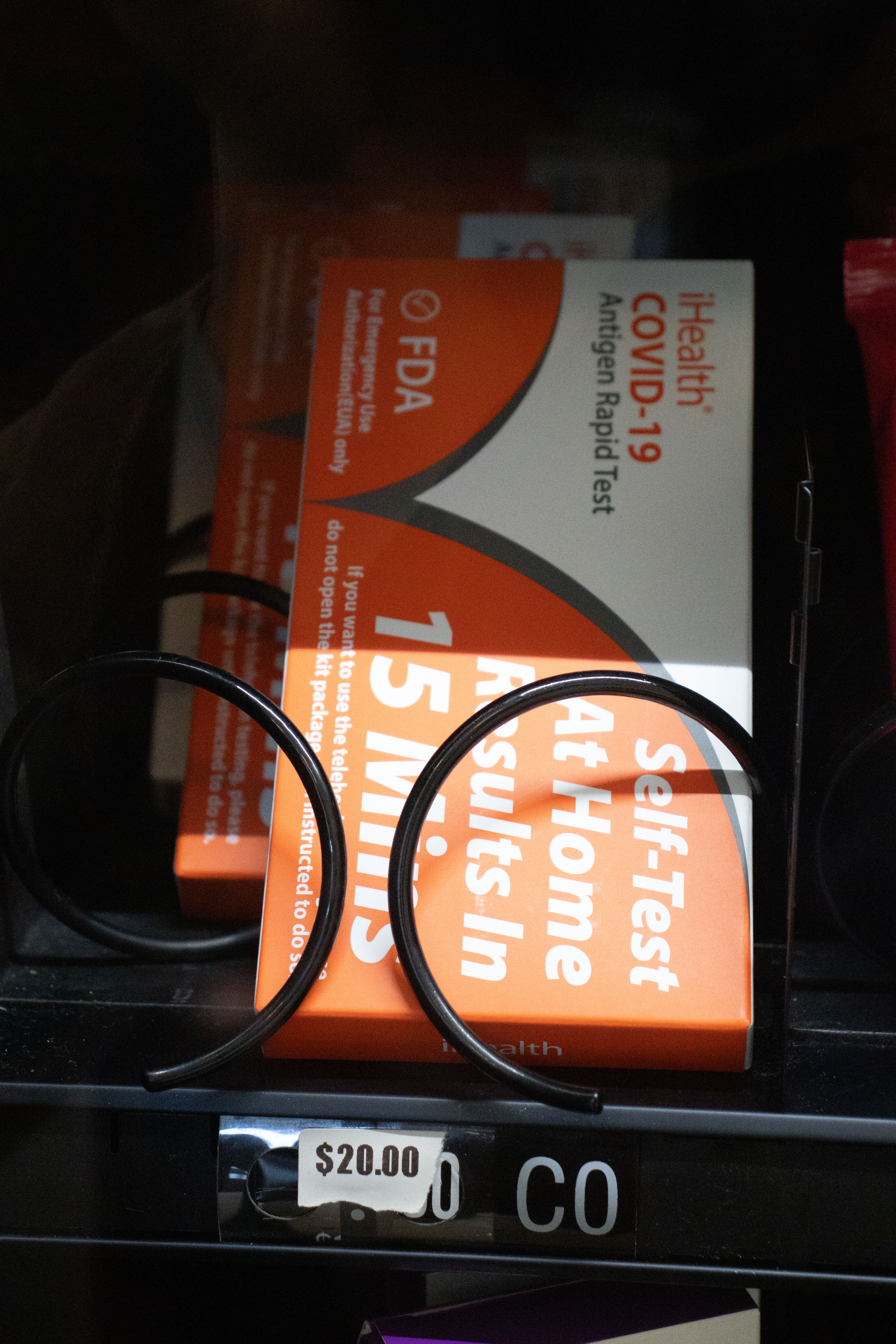
    Emma Kral, a senior at Cal Poly Humboldt, contracted COVID-19 a week after moving into the dorms. COVID-19 left her unable to prepare for her classes, disrupting the beginning of her semester and leaving her feeling tired and unsettled. She was able to get a rapid COVID-19 test from one of the health vending machines on campus, and wants to see students and faculty taking more precautions.

    “I think masking should be a lot more common on campus,” Kral said. They also thought more ventilation in classrooms would be helpful.

    Many students aren’t aware of the vending machines on campus that carry COVID-19 rapid tests or the resources available in the Health Center. Some students said that they want to see more free masks available around campus. Most frequently, students requested that the school take an active role in addressing the rising number of COVID-19 cases among students and listen to student feedback.

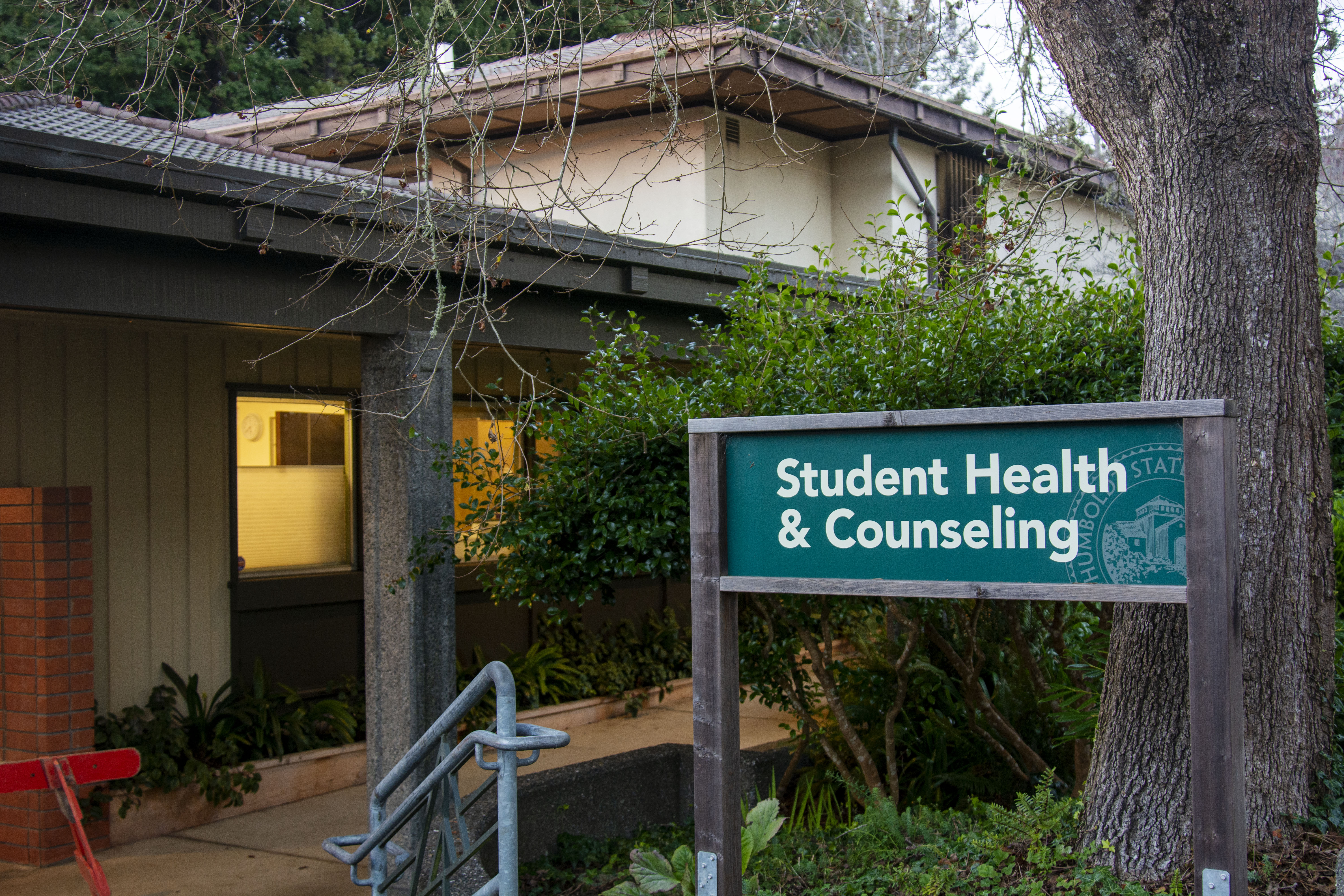
    Photo by Griffin Mancuso. The Student Health Center on campus.

    According to the Cal Poly Humboldt website, students who are symptomatic can make an appointment at the Student Health Center to see a medical provider. If you are unable to get to the Student Health Center, 2-packs of rapid COVID-19 tests are available in health vending machines for $20 each.

    Free 2-packs of rapid COVID-19 tests are currently available to all students at the Student Health Center, but students can only get one pack of tests at a time.

    The Student Health Center currently does not provide COVID-19 boosters, but students can sign up for an appointment or find walk-in clinics near them on myturn.ca.gov. Locations in Arcata and Eureka that have the updated COVID-19 vaccine are Walgreens, CVS Pharmacy and Rite Aid. Safeway locations currently have a limited supply of the updated COVID-19 vaccine.

    The Lumberjack reporters made multiple attempts to contact Jennifer Saford the Executive Director of Student Health & Wellbeing Services, Mira Friedman the Lead for Health Education and Medical Clinic Support Services, Aileen Yoo the Director of News & Information, and Grant Scott-Goforth the Communications Specialist, through email and in-person, but all were unwilling to provide a comment on COVID-19 tests and resources at this time.

    Covid Vending Machine Locations:

    Nelson Hall East (across from Goodwin form)

    Gutswurrak Student Activities Center (1st floor by the Depot)

    Jolly Giant Commons (3rd floor next to housing cashier)

    College Creek Mail Room Lobby

    Creekview Dorm Lounge (must be a Creekview resident to access)
  • As students return to campus post-COVID, so do club sports

    As students return to campus post-COVID, so do club sports

    by Alina Ferguson

    COVID-19 disturbed, disrupted, and delayed many lives and events over the past few years. Club sports at Cal Poly Humboldt were no exception. Sport clubs that have been around since the 90s had to be put on hold, as none of their members could meet in person. Some clubs had to completely cancel competitions, events and all club activities. Now that it is once again safe to gather, club sports are making a comeback. Various clubs on campus are seeking to grow their numbers, and are once again practicing and competing as a group. 

    Archery

    The Archery club has a team that travels for competitions. This club is reliant on frequent practices, which was difficult to do away from the field. This year, with the participation of new freshmen, club membership is finally growing.

    “To join you need no experience or gear,” club president Zachary Gaydosh said. “Our practices [are] at the Student Recreation Center next to the football field on Saturdays 3 p.m. – 6 p.m. [and on] Thursdays 7 p.m. – 9 p.m.”

    Disc Golf

    Photo courtesy of Evan Connors | Disc Golf Team tournament in Monterey 2021

    President of the Disc Golf Club Malcolm Silva said he is looking for new members. Club membership was negatively impacted by COVID, as members could no longer meet together. Also, at the start of the pandemic, many of the players that had been on the team were in their final years at Humboldt and have since graduated. While the club as an organization was affected, Silva thinks the restrictions on activities during the pandemic were to the benefit of the solitary sport in some ways. When there was nothing else to do, many people just went out and practiced playing the game. The club itself could not partake in any competitions. 

    “That really gave us the time to hone our craft and get a lot better at it,” said Edwards Silva. 

    Silva said that they are losing a good chunk of their team this semester and he definitely wants to get more people in the Disc Golf Club this year.

    “We do Redwood Bowl every Sunday and on Wednesdays we do putting practice, that’s just where you throw the target at the basket,” said Edwards Silva.

    Slacklining

    If readers are interested in walking amongst the trees, so to speak, Slackjacks is the club for that. Slacklining is very popular among both students and locals. 

    Slackjacks is for all levels, including beginners. Most common slacklines are 1 inch or 2 inches in width; beginners would most likely start on a 2 inch. 

    Photo courtesy of Tori Lindvall | Aang Sterling on the line

    Aang Younger, a club member, said the real secret to walking on a slack line is mental. 

    Club President Joseph Aguilar mentioned the club was really born in 2018, but then had to take a hiatus during COVID. It has been difficult recruiting new members.

    This club not only teaches you to slackline, but it is also about community. Many people get together to jam, hangout, or even study for tests. 

    “We always have people who come and play guitar,” Sterling said. 

    Sterling also said they bring spirit cards, snacks, and circus props.

    “It’s just a bunch of kids playing,” Sterling said. 

    The Slack Jacks typically meet at the Mad River Pump Station on Sundays, known as Slack Sunday by its members. They have a loosely set time of 12:00 p.m. – 12:30 p.m. 

    Cycling

    Humboldt’s Cycling Club formed between the years of 2008-2009.

    Club president Ian Bowden says he feels that the pandemic definitely impacted this club; the season they were about to embark on in 2020 was completely canceled.

    “As a team we were struggling to find a way to organize any meetings and schedule COVID-safe group rides,” Bowden said. “During the 2020 season if we were to see people riding in the forest at the same time we would only wave before going down and continuing to ride alone.” 

    This kind of isolation impacted club morale and only a few people showed up to races in 2021. 

    Bowden said this season is gearing up to be one of their best yet. He feels they are back to nearly full membership. They are excited about their growing membership of 25 cyclists.

    “I personally have made great efforts to unite people and recruit riders to join the club, personally asking people when I see them riding in the forest if they go to the college,” Bowden said. “I love the cycling community in Humboldt and foresee a definite increase in interested people as the years keep coming.”

    The cycling club does both mountain and road racing. The club season opening on the 24th and 25th was hosted by Bowden. 

    “I am extremely excited for this race, as it is the first one that I have organized,” Bowden said, prior to the event. “I think we will have a good turnout from the schools in the division.”  

    Trash Pandas Soccer
    The Trash Pandas is a co-ed soccer team that welcomes players of all levels. They are technically not a club in the eyes of the university, though they do hold similar activities. They meet for practice every day on the field behind College Creek, and played their first game on Tuesday, Sept. 20 at 7 p.m. at the indoor soccer field.

    This group is for those who enjoy playing soccer, but may want less commitment than being on a university team. 

    “It’s cool to see the people who didn’t know how to play a couple weeks ago, are playing against the Division 2 soccer team,” said Zach Meyer. 

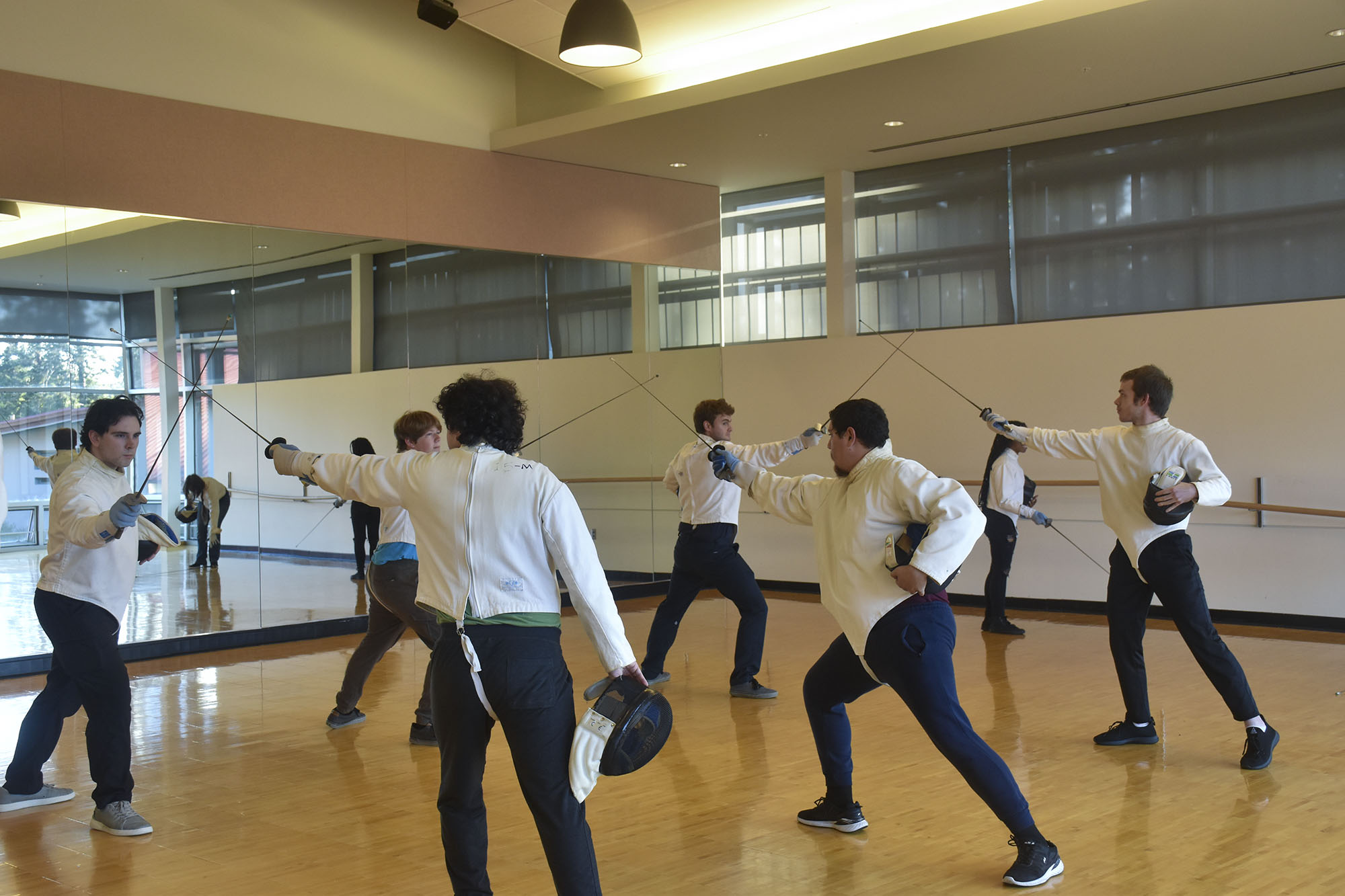
    How do I join?The Club Sports section of the Recreational Sports page on the University’s website illustrates more options, including fencing, Ultimate Frisbee, and men’s crew. Follow the Archery club’s activities @humboldtarchery on Instagram, and keep up with the Slack Jacks @humboldt_slackjacks.

  • Upperclassmen, your jealousy is warranted

    Upperclassmen, your jealousy is warranted

    by Elise Fero

    Our lives were in empty dark rooms in the dorms, where sitting in the halls and talking was prohibited. Masks were to be on everywhere. Even the volleyball court outside the building couldn’t be used. We couldn’t be social. The only life we saw on campus was deer.

    This was my experience of freshman year during 2020-2021. Living in a tiny dorm with two bunk beds but no one to fill them; just my emotional support cat Winnie Fig and I, away from home for the first time in a new state. Online classes left the campus completely dead. No one played guitars in the music quad, no one rushed to class on their skateboard, and no one ate in the Depot. 

    Now it’s the Fall of 2022 and here come the incoming freshmen, ready to go to classes in person, to meet new people who aren’t hidden behind masks. What a different experience than my own freshman year. I can’t help but feel as if I have been cheated out of an exponential time in my life. Someone tell me why this is fair!

    Maybe I’m being ridiculous. People died in this pandemic and it affected other lives way more than mine, but I know plenty of others who feel just like I do. Our incredibly expensive education that we spent in our dorm rooms didn’t give us the classic “college experience” that others received before us (and after us.)

    I always imagined college to be the best years of my life, but the pandemic forced us all into silence, into being more antisocial than many of us were to begin with. 

    It’s not as if I didn’t get to have some classic experiences. Even after having COVID-19 during my first week of freshman year, I still found myself on the Lumberjack newspaper staff. During that semester we created a family inside the department, even though we only knew each other through a screen. 

    I have since changed my major multiple times, but the journalism program was my savior when the world shut down. For that I am eternally grateful.

    Now an environmental studies major, I still work for the Lumberjack. I am also starting to  meet people in my new major in-person– just like the freshmen are. 

    My jealousy is a bit extreme, I must admit. These new students are getting the experience I dreamed of. They can go to events without fear. They can dance through the halls of their dorms laughing and talking with other people. They can meet people! My gosh, they can meet people. What an advantage they have, which I didn’t get until this year. 

    It was hard to make friends and I often felt very alone. I remember the only times we saw our friends in those early days were when we snuck into the forest to say hello with our masks on. How scandalous! 

    I’m so happy for the freshmen, I truly am. They get the experience they deserve. And while they lost some of high school, I still think they’re getting the better end of this deal. I wish I missed parts of high school instead! I mean, I hated high school. 

    I know so many people who met the love of their life in college, a hope I always had as a kid. How could I do that while fully online? I just have to believe everything happens for a reason. The freshmen? They have endless opportunities for friends and love and joy in college social life. I wish I had that, too. 

    Let me express my gratitude as well. My freshman and sophomore years were still beautiful experiences that I wouldn’t trade for the world. But for those upperclassmen feeling jealous as you watch freshmen embark on their college journey, you aren’t alone. I promise, you aren’t alone.

  • COVID-19 cases make a comeback

    by Sophia Escudero and August Linton

    Positive COVID-19 cases are once again on the rise in Humboldt County. According to the Humboldt County Public Health Department, 137 confirmed cases were reported between April 19 and April 26, bringing the total number of confirmed cases in Humboldt County up to 17,311.

    A Humboldt Notification was sent out to the campus community in response.

    “The University encourages the campus community to continue wearing face masks,” the email reads. “We want to remind everyone that N95 masks are recommended and effective for reducing transmission for the wearer.”

    Tina deProspero is one of the COVID-19 testing staff currently working on campus. Despite the inherent risk of exposure that comes with her job, she says that she’s not that worried about being infected. She hasn’t tested positive since she started this job in August 2022

    “I make sure I’m wearing my N95, and if somebody looks like they’re going to sneeze I’ll put my goggles down,” said deProspero.

    According to deProspero, about half of the people come to the testing center are “weekly testers,” those who are mandated by the university to test weekly as a result of their vaccine exemption or other special circumstance. Visiting sports teams make up another large portion of the people they test. DeProspero says that she always sees an uptick in testing after breaks and after weekends.

    While mask restrictions have been lifted for campus, the CDC recommends wearing a mask indoors regardless of vaccination status if you are sick, have been in close contact with someone who is sick, live with someone who is at high risk, or are in a county with a high COVID-19 Community Level. The current level for Humboldt County is low.

    University testing services now require that students and staff being tested have insurance coverage. DeProspero said that in the case that a patient does not have insurance, the testing center gives them a rapid antigen test.

    “That really bugged me though, I was like, we better be able to test everybody,” said deProspero.

    Aside from wearing a mask, hand washing, avoiding crowds and poorly ventilated spaces, and socially distancing are still strongly recommended.In an interview with the Washington Post, National Institute of Allergy and Infectious Diseases Director Dr. Anthony Fauci said that although rates of death and hospitalization have been decreasing, the pandemic is still active.

    “Right now we’re at a low enough level that I believe that we’re transitioning into endemicity. We’re not in the full-blown explosive pandemic phase,” Fauci said. “That does not mean that the pandemic is over. A pandemic means widespread infection throughout the world.… In our country we’re transitioning into more of a controlled endemicity.”

    That outcome is what deProspero is also anticipating.”I’m just hoping that it’ll work its way through,” she said.

    Free N95 and surgical masks can be found at the College Creek Mailroom, the Jolly Giant Commons mailroom, the University Police Department, the Admissions Welcome Center, the Library, and the Gutswurrak Student Activities Center.

  • Administration calls professor’s accusations into question

    by Liam Gwynn

    Dr. Christopher Aberson came forward to the Lumberjack with a story about how he was symptomatic and asked to teach online but was denied the opportunity and asked to teach in person instead. Provost Jenn Capps responded to these accusations after Aberson’s story was released. Capps claims that a majority of the time teachers are allowed to change modality, however, they have to meet certain requirements.

    According to Capps, a professor seeking a modality change has to be verifiably ill and then has to seek approval from their department head to change modality. In cases like Aberson’s where the department head is the one asking, they have to seek approval from Capps directly. Capps couldn’t speak on Aberson’s case specifically due to confidentiality reasons, yet she was able to speak on similar hypothetical situations.

    “I’d say eighty percent of the time a request for a change is being granted, when it’s not being granted, it’s because perhaps a person is operating off of being afraid or they are like ‘something could happen therefore I don’t want to teach in person I’m just going to shift my course online and I’ll let you know when I wanna come back,’” Capps said. “Well, that’s not somebody who is sick and that’s not the agreement that was made with the students.”

    Aberson never tested positive for COVID-19 but he did claim he was symptomatic. In times where COVID-19 takes up the majority of the conversation, people are still getting sick with other illnesses and it can be confusing when symptoms of one illness overlap with COVID-19 symptoms. According to Capps and school policy, just coming in contact with COVID-19 is not enough to warrant staying home or teaching online.

    “For students, faculty, and staff our current policy is that if you are vaccinated and you come into contact with somebody with COVID and you’re masked and vaccinated, that doesn’t mean that anything needs to change,” said Capps, continuing. “What you need to do is continue about your work and life and monitor and keep doing wellness checks, and if you start to experience symptoms then you get tested and isolate.”

    Strangely enough, that is what Aberson was trying to do according to his accounts of the event. He came into contact with COVID-19, started feeling symptoms, and then requested a modality change. Aberson was under the impression that his request was possibly denied due to him being outspoken against different school policies. When asked about whether this was a genuine possibility, Capps firmly denied any bias in the deciding process.

    “Oh of course not, that would be all kinds of wrong,” Capps said. “It’s just really centering on a couple of things, making sure the student gets the instructional experience that they desired and making sure that faculty and staff and student health is protected.”

  • Symptomatic and want to teach online? Steer clear of Cal Poly Humboldt

    by Liam Gywnn

    Dr. Christopher Aberson came into contact with COVID-19 the weekend before he was supposed to teach. He requested the school let him teach over zoom and his request was denied. The school would not let him switch his modality despite the Omicron surge and the numerous COVID-19 cases reported on campus.

    “I was told I was not authorized to change modality. After several emails, clarification came that I could not move online. I have symptoms. I am well enough to teach. Not allowed to,” said Dr. Aberson.

    Dr. Aberson is the Professor of Psychology at Cal Poly Humboldt and came into contact with the virus after one of his son’s friends tested positive. He claims that this issue is larger than his individual case.

    “My issue with the surge has and continues to be that faculty who agreed to teach in person are not being allowed to change to online. Faculty agreed to teach in person at times when it seemed we had gotten over the hump and were headed toward a better situation,” said Dr. Aberson in an email, he continued. “In both the fall and spring semesters, as I understand it, most requests to change to online were denied. Both semesters began during surges.”

    Dr. Aberson has been outspoken about a number of issues on campus and believes that could be playing into why he wasn’t allowed to teach online.

    “I have been outspoken about under-compensation of chair duties — it is a full-time job but during the summer and other off times, we are grossly under-compensated for our time. Also, campus safety and working conditions during both the delta and omicron surges,” said Dr. Aberson.

    The California Faculty Association (CFA) negotiated a Memorandum of Understanding (MOU) with campus administration regarding teaching during COVID-19. The document was signed by CFA and Cal Poly Humboldt management. Dr. Aberson presented a passage from the MOU that explicitly supports his position.

    “During the time that an employee may be waiting for an appointment or for testing results every effort should be made for them to be able to work remotely,” states the MOU.

    Prior to Dr. Aberson’s situation, the CFA had already made an official statement addressing the administration and their lack of leniency.

    “No faculty member should be forced to work in conditions that put themselves or their loved ones at risk, especially when there are alternatives,” states a press release provided by the CFA.

    CFA Humboldt president Loren Cannon still supports this idea and thinks the administration needs to be more flexible in situations like Dr. Aberson’s.

    “We have urged that Administration approve all such requests for temporary, or sometimes permanent change in modality,” said Cannon.

    Cannon acknowledges that for some cases transitioning to online can be difficult, however for many other classes transitioning online for a week or two is relatively easy.

    “I believe that at this time, as we still are not ‘in the clear’ of this incredible health crisis, we need to trust each other and make decisions that recognize the complexity of individual context,” said Cannon.

    Leadership has yet to make an official statement regarding the MOU breach and has also failed to respond to our request for an interview.

  • Disconnected

    by Cheyenne Wise

    These past few years have created this heavy and strange feeling that has found itself settling on my chest. It’s a constant feeling of disconnect—a disconnect from my peers, professors, friends, and even family. I’m staring at a black screen or the muted faces of people I should know, but it feels like I’m watching a TV show.

    I was 21 when COVID-19 hit, and now I’m 24. I’ve already lost most of my early 20s, and I don’t know when I’m ever going to get it back. A lot of people are telling me, “well, you could have gone out and partied with your friends or traveled” as if COVID-19 doesn’t exist or like I’m not terrified of getting sick. I was supposed to be a graduate and living in another state working a dream job, but here I am, sitting in my room in my hometown, waiting for my next class to start while getting ready for work. I’m not unhappy with where my life is, but I’m not exactly delighted with everything. I love my jobs, my coworkers, and the fact that I’m living with my childhood best friend, but some part of me is mourning the loss of what could have been, just like many people.

    I miss having exciting conversations with my peers and being excited about my classes. The disconnect and lack of inspiration are like a smack to the face when I sit down to log onto Zoom for my lecture. I’ve become one of those black screens that remains muted, and I hate it. Even writing has become a struggle for me. I’m a storyteller, but all I have is nothing when I sit down to write. There’s no ‘aha’ moment of what story needs to be told or list of potential events to look to reporting on.

    I know I’m not alone in this feeling because I see it everywhere. Other college students are no longer being inspired by their studies. I just wish I had some great advice on mediating a solution, but I don’t. It’s a dreadful feeling, and I feel a particular type of guilt for not having a remedy.

  • There are no safe options for restaurants during the pandemic

    by Ian Vargas

    While there was only a lockdown for a short period of time in 2020, a lot of restaurants weren’t open for indoor seating. Businesses typically ended up dropping employees they didn’t need. They also had to adjust to significantly less income, and many closed down as a result.

    That’s obviously bad for the restaurant and the people who got fired, but the alternative is that both the employees and customers would have died of COVID-19.

    With the advent of the vaccine most of that has changed; most restaurants are open for both indoor and outdoor seating. They frequently stress social distancing and wearing a mask on your way in, but people are rarely seen sitting very far apart. Cal Poly Humboldt’s dining options have followed the same trajectory. As soon as people could get vaccinated, everything went back to mostly normal.

    Like many students, I’m very poor. When I came up to Humboldt and started looking for work, I did as many do and went to one of the restaurants nearby. This was when everything was still take out only. Businesses had been losing employees like crazy, so getting into something wasn’t too hard.

    Working in any place that has a lot of people coming in and out seems risky, but thankfully I did not typically have to see any customers. I could at least remain mostly isolated, aside from my coworkers. Once people could get vaccinated and everyone started reopening for indoor seating, that changed.

    Now I’m in close contact with unmasked and dubiously vaccinated customers all the time, my job feels very unsafe. Vaccines have given people a lot of inadvisable confidence about their safety. Vaccinated people can still get sick very easily, and even when you don’t get sick there is a danger of spreading disease with an asymptomatic infection.

    Restaurants are particularly dangerous in this regard since there isn’t any way to eat and keep your mask on. Food going down doesn’t push the germs back into your lungs. Walking in with a mask just to take it off as soon as you sit down doesn’t sound like an effective way of limiting the spread of an airborne disease.

    I don’t think restaurants are doing anything wrong, everyone has to get paid somehow after all. Rather, I think that they’re in a position where there isn’t any good options for a response. The initial 2020 lockdown should have been longer and more consistent, and everyone should have received monthly stimulus checks.

    Unfortunately that didn’t happen, which places people in the unfortunate position of risking whatever new strain comes around. At some point, one of them is going to start getting people way sicker than before and there’s no way we’re going to be able to deal with it. More places will close for good and more people will lose their jobs or their health.

  • I traveled and got COVID-19

    by Angel Barker

    Last week I talked about how one of my main fears while traveling during a pandemic is contracting the virus. Well, it happened. To get back to the United States, you have to show a negative COVID-19 test within the last 24 hours. My trip was planned from Thursday to the following Friday. I got tested on Thursday, Jan. 20, and planned to fly out on Friday, Jan. 21. The test came back negative, and I genuinely felt fine.

    I get home Friday night and still feel fine, just tired from traveling. Saturday and Sunday roll around, and I am still okay. On Sunday evening, I feel a trickle in the back of my throat and think nothing of it. On Monday morning, I go to work as usual at 3:45 am, absolutely exhausted with a sore throat. I figured I was dehydrated. It was the same thing on Tuesday, except a cough had developed.

    I called my doctor because it was getting to the point of being sick. Having asthma makes me immunocompromised, and I have never had a cold that was just a cold. It always turns into pneumonia or bronchitis, so I was worried. I really do not have the time to be sick as a full-time student working part-time.

    The nurse comes in and talks to me about my symptoms and wants to test me since it had been five days since my last test. It comes back positive. The doctor sends me home with a quarantine flyer, which is the end.

    Before I went to Mexico, I received my booster shot on Jan. 3. I tested positive 22 days after I got my booster shot. The symptoms I had weren’t mild, but they also weren’t super severe. I had a cough, sore throat, fatigue, headache, runny nose, shortness of breath, body aches, etc. I think my weirdest symptom was that my teeth hurt like it felt like I had braces again, and I had just gotten them tightened. I also had shooting pains in my back.

    Three people so far have blamed it on travel or on me for traveling. It felt very judgmental and almost degrading. I could have gotten it at work, school, the grocery store, or from people I know. I am pretty sure I got it in a restaurant in Mexico, but the same thing could have happened here. Don’t blame me for living my life and having fun.

    I do not think it is fair to judge the ones you love or anyone for that matter on their decisions to travel or whatever they do in their personal time, especially if they are safe. I wore a mask on the plane, the airport, around town, and in the restaurant except when eating. I did my part, and I still got COVID-19.

  • Dating in the time of COVID

    Dating in the time of COVID

    by Krisanne Keiser

    None of us thought we would wake up one morning and be told that we could no longer make connections the way we were used to. COVID-19 became a part of our daily lives, affecting us at every turn.

    Dating during a worldwide pandemic has impacted us all in unique ways, including CSH students.

    Local resident and Cal Poly Humboldt alumnus Olivia Brock shared their experience.

    “Dating during COVID times for me is for sure more online now at the beginning of talking to someone,” Brock said. “It definitely restricts what we do … all the dates I’ve been on have been outside usually somewhere in nature with a mask on.”

    Once you’ve managed to meet someone, COVID-19 precautions also complicate bringing them home. Having roommates means that bringing over a new flame has to involve conversations about masking, exposure, and testing.

    “But once enough of the outside dates and FaceTime dates have happened and it feels worth it, then we could move forward with figuring out how to add someone to our exposure bubble. It’s a lot of logistics and communication,” said Brock. “I enjoy FaceTime dates a lot, because I don’t have to leave my house and they’re easier to schedule.”

    Building connections online does have its advantages, according to Brock. She says it forces her to be more engaged in the conversation, because that’s the only way there’s any hope of forging an online connection.

    “Overall, COVID has forced me to go slower in relationships and communicate boundaries more effectively,” she said.

    History major Victoria Bankson often worries about the vaccination status of potential partners. She says that if the person she’s interested in has purposely chosen to avoid getting vaccinated, that completely changes her opinion of them and weighs into her decision to ultimately not date them.

    “I’m not going to mess around with somebody who’s unvaxxed, that’s just not right,” Bankson said. “We don’t have the same values if you’re that way.”

    She also shared that conversing online isn’t the most enjoyable way for her to get to know someone, but that having a phone conversation feels more intimate and comfortable.

    “I don’t like texting online, and I don’t feel like I’m the best communicator that way,” Bankson said. “I’m much more of a ‘give me a phone call’ [person,] which is very much opposite of what things are now.”

    Junior Franziska Daumberger doesn’t feel like COVID-19 changed the dating scene for her personally, but acknowledges that it added some new challenges.

    “People would either be careful about COVID and say like ‘oh I’m vaccinated’ or ‘I wear a mask’ or wanting to meet in outdoor places,” said Daumberger. “And then that’s further stipulation upon whether or not I was interested in them or not … if they didn’t care at the height of it I was like ‘I don’t wanna be even knowing you because your beliefs don’t align with mine.”

  • Not all masks are made equal

    Not all masks are made equal

    According to Cal Poly Humboldt regulations, face masks are required everywhere on the campus, and at all school functions. Amid the predicted peak of the Omicron surge, mandated masking is a key part of the university’s strategy to prevent widespread transmission of COVID-19.

    Humboldt County Health Officer Ian Hoffman has confirmed that the Public Health Department has been in contact with Cal Poly Humboldt with regards to the university’s COVID-19 regulations.

    “We, as Public Health, have continued to offer, you know, clear guidance on how to make public spaces safe, which includes things like masking, distancing, testing, vaccinations – they are doing all of those things at HSU [Cal Poly Humboldt], and we have been in communication with them,” Hoffman said. “So, I think the ultimate decision is up to them.”

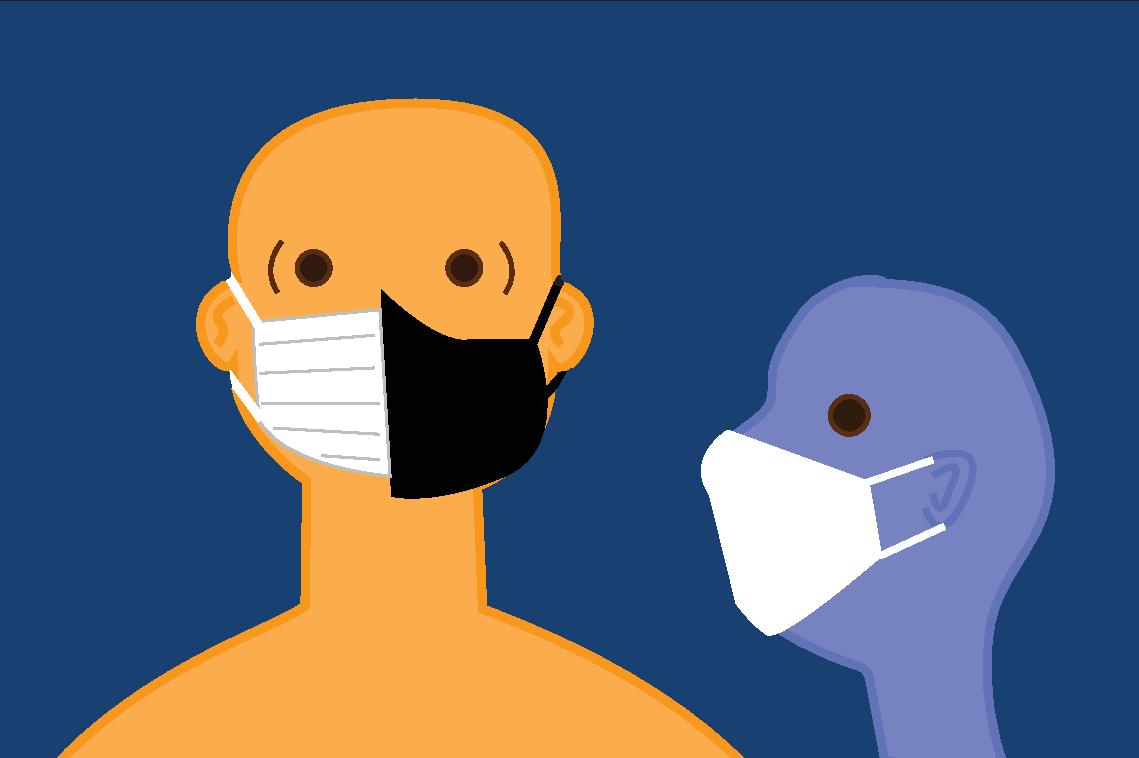
    Graphic by August Linton

    Not all masks offer the same amount of protection, to the wearer or to those around them.

    According to the CDC, NIOSH-approved N95 masks are the best, followed by KN95s and surgical masks. Cloth masks rank the lowest, although it is noted that layered, finer fabrics are more effective than loosely woven or single-layered varieties.

    Whatever type, it is important that masks be well-fitted, with no gaps around the nose or edges. A surgical mask underneath a cloth mask may resolve fit problems.

    County Health Officer Hoffman suggested double-masking for all types except N95s. He also cautioned against masks with one-way vents.

    “Those vents … protect the person wearing it, but they’re not protecting anyone around them,” Hoffman said.

    Despite their efficacy, Cal Poly Humboldt does not currently require that students wear N95s.

    “The reason N95 Masks cannot be mandated on campus is that there are some situations where N95 masks can exacerbate medical conditions for the wearer,” the university stated in a Campus Ready email update. “The campus community is encouraged to wear N95 masks if they are able.”

    Free N95s and surgical masks are available at College Creek Mailroom, JGC mailroom, UPD, Welcome Center, the Library, and the SAC.

  • Traveling as a student during COVID-19

    My whole life I’ve been told to “travel young,” “travel while you still can,” and “travel now because it only gets harder as life goes on.” I gained my love for travel my freshman year of high school when I had the amazing opportunity to go to Mexico with my aunt and uncle. Since then I have gone three more times. I have also been to Dallas, Texas and California’s bordering states. Traveling is one of the things that I love to do most. I was supposed to go to Costa Rica in 2020, but like many other people that year, I had to cancel my trip due to COVID-19 rapidly spreading through our world.

    When I went to Dallas during the summer of 2021 for two weeks, it showed me how much I missed traveling and seeing new places, people and cultures. Right now, the only thing that has been holding me back is school.

    The pandemic has been hard to navigate as a young adult and as a student, but I try to find silver linings in everything. With most courses still online, I have been able to adjust my schedule so that the majority of my classes are on Zoom or are completely asynchronous, which gives me the opportunity to travel this semester.

    Keeping up with school while traveling is a whole monster in itself. Operating in a different time zone has its challenges. You have to figure out what time it is at home versus wherever you are and keep track of what time classes meet. Trying to discover new places while having class also presents a challenge because your time management skills have to be at a peak level, not to mention the fear of contracting the virus in the process and not being able to get back to the US if you leave.

    During this school year, I have been able to go to Mexico twice. Yes, I am privileged to do this since I work for an airline, but what can I say? This is a field where you can mix business and pleasure. The first time was only for two days, so I went to the class that took attendance and was able to do my homework in the airports. This last time, however, was for a week and I was able to attend the first week of classes online. One of the struggles of starting the semester abroad is not having access to textbooks, but I found a way to survive.

    Even as a full-time student, I have managed to find a way to travel and see the world. It is difficult but it is so possible and so worth it. I encourage you to try and see the world. Stop staring at your computer screen in your apartment trying to get an education. Do the same thing on a beach somewhere, or in an Airbnb a few hours away. Just live your life.

  • Stop the surge

    Recently, I saw a petition that advocated for the delay of in-person HSU classes by two to three weeks. Is this too much to ask? Logically, I think that what these advocates stand for deserves careful consideration. Humboldt county’s rates of coronavirus cases are the highest that they have been since the beginning of the pandemic. As of January, the county has averaged 213.9 cases on a weekly basis. Throughout the CSU and UC systems, an abundance of schools have decided to do remote learning for the first month. Why should Humboldt State be an exception to this? This reminds me of any disaster movie ever made. The last group people want to listen to is the scientists. We’re in the middle of a global crisis, yet people and our own institutions want to deny it. It almost feels like the world is on fire, however, I’m one of the few that sees the fire and acknowledges it as an inherent problem with our society. We cannot have another surge! Our local facilities don’t have the capacity to house any more COVID-19 patients. A couple of months ago I was trying to find an appointment for gallbladder surgery. Usually, medical emergencies would have been taken care of at Saint Joseph Hospital in Eureka. Instead, I was scheduled for surgery at Mad River Hospital in Arcata, supposedly because all of the hospital rooms at Saint Joseph Hospital were at full capacity. With rising numbers, I can only imagine how hard it would be to find an appointment for gallbladder surgery now as compared to then.

    The coronavirus has also disproportionately affected Indigenous communities in the inland area. As of January 13, 2022, Public Health Officer Eva Marie Smith has detected an Omicron case in the Hoopa Valley Indian Reservation. With a total of 109 active cases, Smith believes that the tribe is likely experiencing a mix of Delta and Omicron with a predominance of Omicron within the next few weeks. Due to the latest Covid surge, Hoopa Tribal Chairman Joe Davis has authorized a level 4 shutdown of all non-essential operations for at least two weeks. The Omicron surge has also recently caused staff shortages at Saint Joseph Hospital.

    Early studies suggested that the Omicron variant can just as easily infect vaccinated people as it can the unvaccinated population. It can be said with confidence that anyone can be infected by the widespread virus. In addition, it would be wise for Humboldt State to require all students to be tested weekly regardless of their vaccination status. Vaccinated people are just as likely to transmit the Omicron variant as someone who is unvaccinated. If that isn’t enough, it can also reinfect. It seems no matter how much you tell someone to not touch the stove, they have to touch it for themselves in order to figure out what the consequences are. By signing the petition, we can mitigate such catastrophic events from further happening.

  • New roommates and COVID concerns

    New roommates and COVID concerns

    Spring semester has begun, and like many other Humboldt State students living on-campus, the lone twin XL mattress in your room has probably been filled with a randomly selected roommate during your last few weeks of the fall semester.

    Before I get into any details, this is not some big scheme I have to get my three new roommates out of my apartment or to make anyone feel unwelcome here at HSU. If you’re paying tuition, who am I to say you aren’t welcome in my shared apartment, which is technically school property.

    The issue is that I’m scared of my roommates and I think many other students feel the same. I’m not terrified at the fact that three more people in an apartment I already shared between two other girls may cause some bathroom lines, extra dishes in the sink, and more people to be noise-conscious of. I actually am looking forward to the company. I’m terrified of how easy it is to spread COVID-19 or Omicron, or whatever variant has sprung up since this has been published at the rate the virus has been mutating.

    My campus apartment is small. It holds one room for our one toilet and one shower. There are three rooms all shared between six of us with a tiny kitchenette. I don’t know much about my new roommates yet. Where they’ve been, who they’ve seen, if they are immunocompromised, or what. I also don’t think I have the right to ask or know. I just have to cross my fingers and hope to God when I move back that they’ve taken the precaution to get tested before they move in so we all don’t end up in isolation our first two weeks of the semester getting late bagged meals delivered to our door.

    Still, who am I to be wary when the concern goes both ways. They know nothing about me, where I’ve been, who I’ve seen, if I’ve been tested or not, and they probably assume it may be inappropriate to ask as well. We’re all sleeping with one eye open, peering over at the possible positive COVID-19 test our roommates or myself can easily become.

    Soon enough we’ll begin interrogating each other at the door about who we’ve seen and where we’ve been to avoid a repeat of March 2020, where the fateful email to flee our residence halls came because of the lack of isolation rooms on campus and influx of cases.

    Sounds pessimistic but could easily be our reality as it has been before. Humboldt State is not being transparent enough to its student body, especially those paying to live on campus and eagerly moving up to Arcata for their first taste of on-campus classes. These are exciting times and I wish my new roommates could experience them COVID-free but the risk is far too high to do so. HSU needs to implement stricter testing for anyone moving back to campus and rethink the possibility of in-person classes soon to make those living on campus and those entering campus for classes feel safer and to avoid another COVID-19 breakout.

  • The HSU student’s guide to COVID-19 in spring 2022

    The HSU student’s guide to COVID-19 in spring 2022

    There is currently a surge in COVID-19 infections worldwide and in Humboldt County due to the rise of the Omicron variant. In an article titled “Potential Rapid Increase of Omicron Variant Infections in the United States,” the CDC has cautioned that this iteration of the virus is more transmissible than previous forms.

    “Increases in infections are most likely due to a combination of two factors: increased transmissibility and the ability of the variant to evade immunity conferred by past infection or vaccination,” the article states.

    Most spring semester classes at HSU are planned to take place in person, even as county infection rates soar beyond any previous peaks. According to county data, Humboldt County saw a peak of 256 new COVID-19 cases on Jan 3. This dwarfed the Delta variant peak of 101 new cases on Aug 9, 2021.

    However, hospitalizations remain well below the rates recorded during the Delta peak of August 2021, according to the NYT’s data sets.

    It is inevitable that some students will be exposed to and catch COVID-19. The responsibility of each is to limit their personal risk while also protecting others from infection.

    Following the HSU masking guidelines and getting your vaccine booster as required by the University will make you less likely to contract the virus. Vaccine boosters also greatly reduce the chance of a severe or even symptomatic infection.

    A study released by the UK Health and Security Agency found that, “Among those who had received 2 doses of Pfizer or Moderna, effectiveness [against symptomatic disease] dropped from around 65 to 70% down to around 10% by 20 weeks after the second dose.”

    Boosted individuals enjoy a re-up of their protection: “65 to 75% [at 2-4 weeks,] dropping to … 40 to 50% from 10+ weeks after the booster,” according to the study’s findings.

    “Deadline for full vaccination, including a booster shot, is Jan. 23,” according to the CSU Chancellor’s vaccine mandate. Exemptions are available, on the condition that recipients commit to a weekly test.

    After a positive COVID-19 test, you are required to contact Student Health & Wellbeing Services at (707) 826-3146 and report your infection. You may also be advised to get a PCR test if you tested positive with a home test.

    Testing positive for COVID-19 means you should also keep a close eye on your personal health. Mad River Hospital’s guidelines for at-home assessment of COVID-19 symptoms state that a persistent fever of 103-104°F, bloody material produced when coughing, and/or difficulty breathing are signs that you should go to the ER.

    In the absence of more severe symptoms, the hospital’s website advises that infected persons “keep warm and rest as much as possible … take plenty of fluids … and for fever, take Tylenol in normal doses.”

    Once you’ve taken care of your health, you should also take steps to limit the exposure of people around you to the virus.

    According to Humboldt County isolation and quarantine guidelines, those who test positive for COVID-19 must isolate for at least 5 days.

    “Isolation can end if a test collected on or after day 5 is negative and the individual is not experiencing symptoms or symptoms are resolving,” states the county website. The guidelines also advised to “wear a well-fitting mask around others for a total of 10 days.”

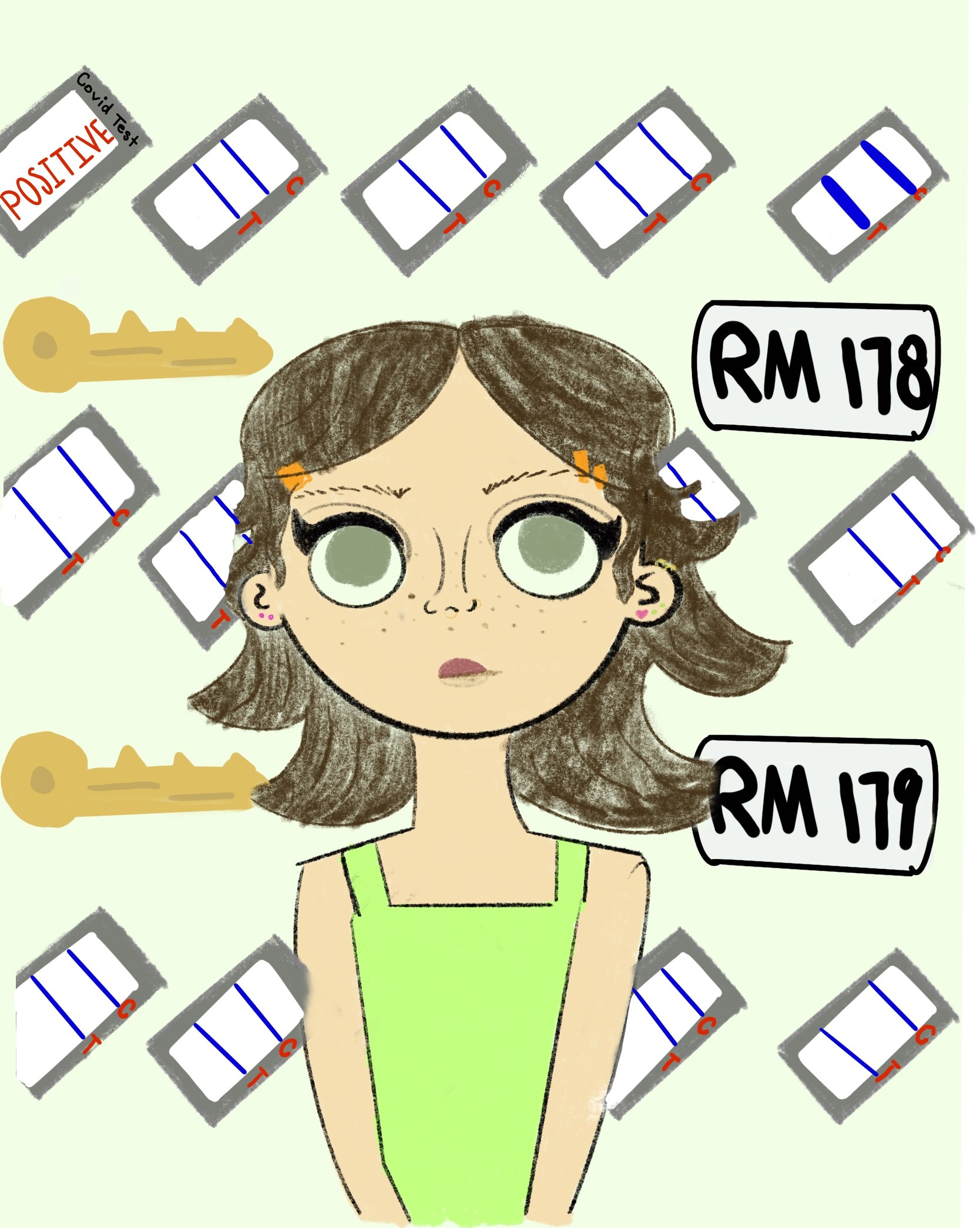
    Graphic by Morgan Hancock
  • University requires booster by January 23

    University requires booster by January 23

    Starting Jan 23, students, faculty, and staff must be fully vaccinated to use campus facilities. This Humboldt State announcement was made in December shortly after students left for break. Anyone not able to receive a vaccination or booster can submit for an appropriate exemption. Following an updated certification date, the university said the likelihood of infectious spread in the classroom will be low given vaccination requirements, mandatory testing, masking, and other efforts made by the school.

    In a press release sent to all students earlier this week, HSU clarified full vaccination status as ”attesting that you are fully vaccinated (including a booster if eligible) or have submitted for the appropriate exemption.” Recipients of the Pfizer and Moderna vaccines are eligible for boosters five months after completing their initial series. Johnson & Johnson recipients can get a booster two months after their initial dose.

    The university asked that those who have already received the booster should go into their student portal and complete the attestation about vaccination status. Students can do so by logging into their Health Portal at myhumboldt.edu. To find a vaccination clinic in your area, visit My Turn California (myturn.ca.gov). However, clinic availability in some areas is limited, including Humboldt County.

  • COVID-19 defines society’s future mental health

    COVID-19 defines society’s future mental health

    Though it’s still far from over, the effects of the COVID-19 pandemic could last a lifetime.

    All CSU campuses offer mental health services with a range of options available, included in the cost of student fees. Operations Coordinator and Staff Psychologist for HSU’s Counseling And Psychological Services program Dr. Elizabeth A. McCallion said their services are especially valuable now that students are facing additional stressors brought upon by the pandemic. Though in-person services are currently unavailable, CAPS is operating at full capacity, offering all of the regular services, virtually.

    “Students come to counseling at CAPS for a range of reasons and I think it’s really important to recognize that,” McCallion said. “We are not just a support for students who are in a crisis situation, though we do provide that support as well.”

    For students curious about the practice or grappling with issues of any size, CAPS provides an opportunity to uncover the answers to some of your questions. For those who decide it’s not for them, McCallion especially recommends placing emphasis on the prioritization of our emotional health.

    “Getting good sleep, nutrition and physical exercise have been shown to have really positive benefits on our mental health,” McCallion said. “So, I think looking at our health behavior and our lifestyle choices can be really key to making sure that we’re taking care of our emotional health.”

    Professor of Psychology Gregg Gold believes the effects of isolation will remain, to some capacity, with those who live through the pandemic.

    “There will probably be some permanent mental health issues for those of us who spent a year and a half alone,” Gold said. “I don’t think you could say that’s not going to have some kind of effect on people.”

    Gold said the pandemic lifestyle has generated more loneliness and frustration in his life as he battles with motivation and concentration droughts. The monotony of quarantine is largely to blame, Gold said, giving us nothing to look forward to with each day being the same as the last. The most significant factor influencing this is the deprivation of genuine, in-person human interaction.

    “It’s a basic human need to be around other people, face to face,” Gold said. “We’ve evolved to crave the company of other humans because the more friends we have, the bigger our network, the more we can ask others to do things we can’t do for ourselves, the more likely we were in the very recent past to be able to survive and even today, [we’re] much more likely to be successful.”

    Our time in isolation is not only damaging to our present well-being, according to Gold. Each day we spend contained inside the walls of our homes, interacting only with a familiar few and the algorithms of our social media accounts, we are being deprived of opportunities to explore new ideas.

    “When you’re out in the real world, you actually run into people that might think differently than you do,” Gold said. “That tends to broaden your view.”

    Though some are willing to place their own lives and those of others in immediate danger in order to go about life as usual, the majority of people are less inclined to make the sacrifice.

    “If you can’t [socialize] safely it means there’s underlying tension and fear and that takes the fun out of it,” Gold said. “It’s like trying to go out and party the night before you have a major midterm, how much fun are you really gonna have?”

    While millions of people lost their homes, their loved ones, and their lives to COVID-19, it can put those who’ve been more fortunate in a position where they don’t feel comfortable feeling sorry for the lesser losses they’ve suffered in their own lives, Gold said. The reality, however, is that the individual struggles we face now will be significant in our entire lives.

    “It’s easier for people to become depressed,” Gold said. “If you think about it, [depression] is the reaction you would expect, given the circumstances.”

    The increase in depression among American citizens is evident by the increased rates of substance abuse and suicide since the pandemic began, Gold pointed out. These reactions also come from severe anxiety surrounding financial and health insecurity. According to Gold, the two are one in the same in this country, where our physical and mental well-being are treated as commodities.

    Masters Student and Associate Professor of Sociology Travis Cunha began work on his thesis around the same time COVID-19 reached the United States and explored how different countries initially navigated the pandemic, specifically in regards to business practices. Given the high volume of jobs that have moved online and are planned to remain there, Cunha is concerned for smaller communities that rely upon only a few providers for a high volume of jobs, as he expects more outsourcing of labor than ever when the pandemic has finally passed.

    Cunha is curious to see what will come of all the vacant buildings left over from businesses that were forced to leave. He fears outside sources will capitalize on the opportunities and feed off the people who are in need of relief. This is especially a problem in low-income communities of color.

    “It was already like that even before the pandemic. These communities aren’t getting the resources other communities are,” Cunha said. “Since the pandemic, those things have just been made a lot worse.”

    According to Cunha, the most shameless offenders are the loan companies by allowing opportunities for business owners to remain open, for families to keep their homes and for students to pursue their educations. With a contract guaranteeing significant profits, loan companies have nothing to lose and everything to gain.

    “It’s not a coincidence that they’re opening places where communities have been hit the hardest,” Cunha said. “These communities need loans and grants and stuff to recover from this pandemic because they got no help during the pandemic, so I think it could be a recipe for disaster in that sense.”

    Unlike the psychological trauma that will follow us out of the pandemic, the financial burden that will plague the post-pandemic society is entirely avoidable if we were to come together in solidarity, recognize the problem and create a solution.

    “I would hope that after this is over, people wouldn’t dismiss the views of scientists as politically motivated when they tell them something they don’t want to hear,” Gold said. “But the incredible ability of people to completely deny reality even when it’s right in front of them is profound.”

  • Animal Crossing New Horizons, The Quarantine Game

    Animal Crossing New Horizons, The Quarantine Game

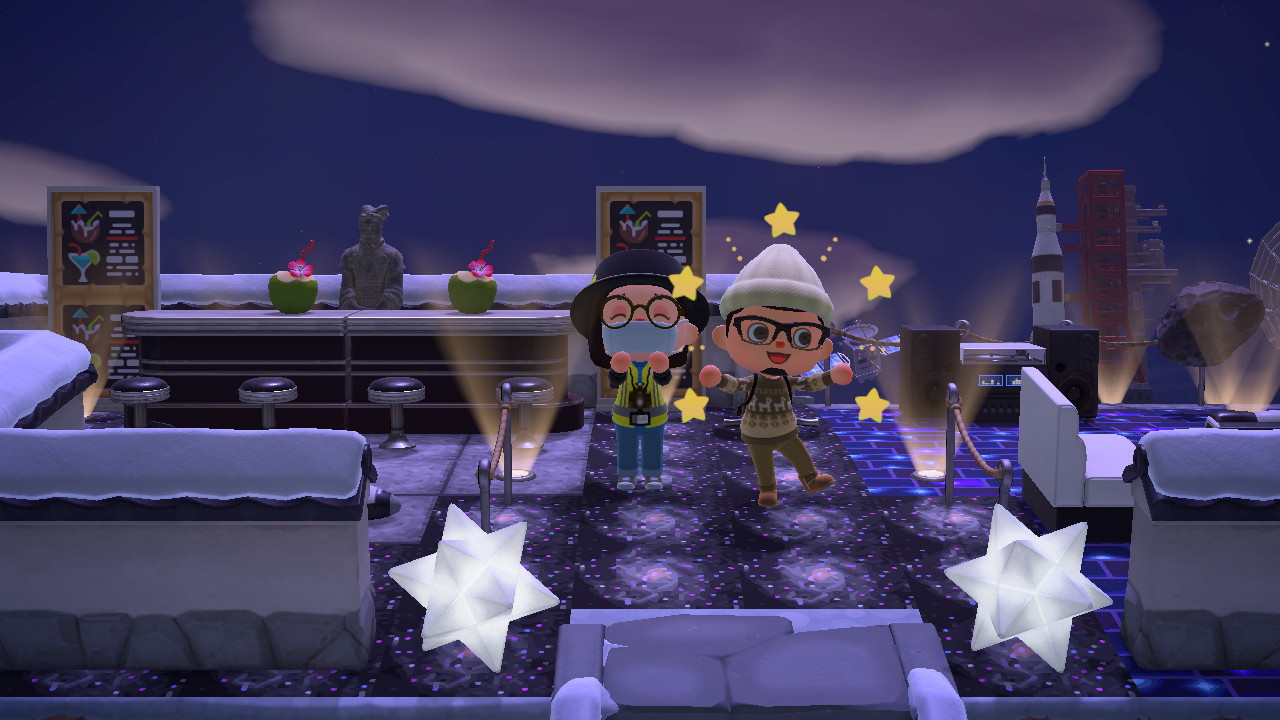
    Animal Crossing New Horizons came out towards the beginning of quarantine in the \on March 20, 2020. It became instantly popular with students, but have they continued to play?

    Ash McElroy, a creative writing major, enjoys the game and the aspect of creativity and freedom the game creates.

    “I got Animal Crossing New Horizons literally the day it came out, I spent a solid month playing it,” McElroy said.

    McElroy enjoys games such as Animal Crossing New Horizons where you get creative freedom. The game includes terraforming, design, and the the ability to shape the overall look of an island itself while offering a bit of structure.

    “I like there is structure even after you’ve finished the game, you still have more options to continue playing,” McElroy said.

    The hype around the game centers on the relaxing and calming gameplay that students can use. Even now it’s still popular.

    “I definitely think it is still very popular, there are whole communities for designs and how to decorate your island,” McElroy said. “But I do think the hype has gone down.”

    Although not everyone who bought the game at first enjoyed it as much in the long run. Monica Vidaurre, an anthropology major at Humboldt State University, bought the game when it came out and it didn’t stick as much.

    “I decided to download it because it was the hype at the time,” Vidaurre said. “I’m always looking for something new to play and so I downloaded it and when I started playing it I thought it was really boring.”

    Vidaurre tried all the activities in the game but it just wasn’t as fun as other games she had played, although she liked the design and overall “cuteness” of the game. Once she reached the ending of the game it wasn’t the hype she thought it would be.

    “It really wasn’t for me, after playing it I regret having it,” Vidaurre said.

    Chris Lee, a wildlife major, played previous titles in the franchise and bought New Horizons the day it came out. Lee has continued to play the game and enjoys its relaxing nature and creative freedom.

    “I like how relaxing it is, it’s different from games, but it is more of something that I can escape into and work on my island and customize things the way I want,” Lee said.

    New Horizons has frequent updates which add more and bring people back to the game as well as adding aspects from the previous Animal Crossing games.

    Part of the appeal of Animal Crossing New Horizons is the connection factor, it is a friendly game where one can visit other friends’ islands and communicate. Especially in a pandemic, being able to visit friends’ worlds without risk is another fun aspect.

    “It still is popular but not to the extent when it first happened,“ Lee said. “I think a lot of people saw it as something came out for us because of quarantine and we are all able to still connect and have some sort of social aspect.”

  • A quick rundown of a few COVID-19 vaccines

    A quick rundown of a few COVID-19 vaccines

    Pfizer–BioNTech and Moderna mRNA Vaccines

    Vaccines usually function by injecting a safe version of a virus into a patient’s body. Sometimes it’s a whole virus, parts of a virus, or a different virus that can still teach our immune system about the intended target virus. The vaccine essentially gives our immune cells a dummy to fight so they are prepared for the real thing.

    mRNA vaccines are different. Cells in your body contain DNA, a code for creating the proteins we’re made of. They function as a set of instructions for building our bodies. mRNA, or messenger RNA, plays a critical role in the process of interpreting your body’s instructions for making proteins.

    So, instead of injecting a virus, some COVID-19 vaccines inject pieces of mRNA. Using the dummy analogy, the injected mRNA are instructions for our cells to create their own dummies to learn from.

    Those dummies take the form of specific proteins like the ones found on the surface of infectious agents. Our cells build the dummy proteins, recognize that the proteins should not be in our bodies, then send our immune system to fight the dummy proteins. This builds our immunity, but the process takes time.

    The two COVID-19 vaccines currently approved for emergency use here in the United States are both mRNA vaccines. The dummy that the mRNA in the vaccine helps our body make is a harmless piece of a protein found in the spikes of the virus that cause COVID-19. The spikes are what give the virus access to our cells, so they are an effective and easy target.

    This mRNA process has been the target of widespread misinformation. Though you may hear otherwise on social media, the mRNA does not alter your DNA, it only uses the process of creating proteins to construct the dummies for our bodies to fight. The mRNA is destroyed in the process.

    Vector Vaccines

    These vaccines use a harmless virus to deliver DNA to your cells. Once injected, it then works in a similar way to the mRNA vaccines. The DNA delivered by the harmless virus acts as instructions for your cells to create dummy proteins for your immune system to fight.

    The harmless virus does not replicate itself. The DNA that it injects into your cells does not replicate or become a permanent part of you. Rather, it is destroyed when the immune system fights the dummy protein.

    Though many of the mechanisms are like the mRNA vaccine, vector vaccines are easier to transport. The DNA is not as fragile as the mRNA.

    No vector vaccines are approved in the United States as of publication, but there likely will be approved vector vaccines in the near future.

    The Oxford–AstraZeneca vaccine is a vector vaccine that may see approval in the United States. Russia’s Sputnik V vaccine, China’s Convidicea vaccine, and Ad26.COV2.S, also known as the Johnson and Johnson vaccine, are all vector vaccines.

    Inactivated Virus COVID-19 Vaccines

    These three vaccines are not approved in the United States as of publication but are approved in other parts of the world. They function like conventional vaccines with a safe version of the virus injected and used as a dummy by the body’s immune system.

    BBIBP-CorV was developed and approved in China. It has less storage and transportation requirements, making it easier to distribute. The developers claim it has a slightly lower effectiveness than the mRNA vaccines, but there is a lack of publicly available data and some conflicting numbers surrounding its use.

    CoronaVac was developed in China as well. Though approved in some countries, it has a much lower effectiveness than either the BBIBP-CorV vaccine or the mRNA vaccines.

    BBV152 was developed in India and is approved for monitored emergency use within the country. The effectiveness of the vaccine is not yet known.

  • Updates on Testing and Vaccinations for COVID-19 at HSU

    Updates on Testing and Vaccinations for COVID-19 at HSU

    Coronavirus testing will be available for all HSU students and employees in a matter of days. Here are some details on testing and vaccinations for students at HSU.

    Testing

    Beginning this month, Humboldt State, in cooperation with HealthQuest, will be offering free coronavirus tests on campus for all HSU staff, faculty, and auxiliary employees. An HSU ID will be needed when it comes time to take the test but HealthQuest will only bill insurance directly, so there is no need to worry about paying up-front.

    Students who are residing on campus will be tested when they move in and then again seven to 10 days later. These students will be contacted by Housing regarding arranging testing appointments.

    Athletes will be frequently tested as mandated by NCAA and County Public Health protocols.

    Vaccinations

    The University is currently working with County Public Health on plans to give out the vaccine to all HSU staff, faculty, and employees who would like to receive the vaccine when available. HSU aims to administer vaccinations to students when allowable based on state and county prioritization and vaccine availability.

    Additionally, all Humboldt County residents who want to be given the COVID-19 vaccine are able to submit their contact information through an online interest form to be alerted when doses are available for their tier.

  • COVID-19 Testing for Move-in Day

    COVID-19 Testing for Move-in Day

    Move-in day is Feb 19, and the Student Health Center is preparing to test the many students returning to campus after winter break. Due to the sharp rise of COVID-19 cases in California at the end of 2020, the school pushed back the date for students to return to their dorms. Now, hundreds of students from all over are returning to HSU and the Student Health Center is getting ready to test all of them, particularly if the planned return to limited face-to-face classes begins in the fall semester.

    According to HSU spokesperson Grant Scott-Goforth, the school has been testing constantly to keep an eye on campus COVID-19 cases.

    “They have been administering a few hundred tests per week, but that’s expected to go up as students move back and face-to-face classes commence,” Scott-Goforth said. “The Health Center has conducted a total of 5,013 tests since they began testing.”

    All this comes not long after a new strain of the virus, which is more contagious, was first reported in Humboldt County. While Humboldt had been lucky enough to have relatively low rates of positive cases, those numbers have steadily increased and pushed the county into the highest restrictive COVID tier. This comes at a time when many still do not qualify for vaccines and those who do have difficulty getting them.

    HSU is anticipating about 350 students which may increase the number of positive significantly. According to Scott-Goforth the positivity rate on campus is relatively low.

    “The positivity rate is 1.3% among students, and has increased slightly since testing began,” Scott-Goforth said. “For comparison, the positivity rate for Humboldt County is 4.03% and statewide it’s 6.9%.”

    Continued lockdown means the negative effects on students’ mental health are likely to continue as well. According to Student Health Operations Coordinator Elizabeth McCallion. The counseling office is maintaining several programs made to help students deal with stress and to socialize with other students on campus.

    “We have two support groups that students moving back on campus would particularly benefit from,” McCallion said. “The first is Breaking Isolation, which is focused on finding support, connection, and understanding in this time of social distancing. The second is the living on-campus support group, which is a great group for building community with others living on campus.”

    The links to both support groups can be found on the Counseling web page.

    Despite the risks and challenges of living on campus during the pandemic, many students remain hopeful that the school will provide adequate safety precautions to keep them from getting sick or helping them if they do with quarantine rooms and medical care. HSU student America Hernandez thinks the school is doing a decent job at keeping students safe.

    “I do think they are doing a good job,” Hernandez said. “Since they require COVID tests to move in and encourage self-evaluation of symptoms.”

  • $11 Million of Uncertainty: HSU receives an additional federal stimulus package

    $11 Million of Uncertainty: HSU receives an additional federal stimulus package

    On Feb. 4, Humboldt State University released a press release saying that the institution has been granted another $16 million in federal stimulus funds. At least $5 million is specifically designated for emergency financial aid grants for students. How the remaining $11 million is going to be used has yet to be determined.

    According to Enrollment Management Director Jason Meriwether, the money designated for students can be requested now by students who are in need of financial relief. Students who do want to request the fund immediately can contact Peggy Metzger, Humboldt State’s financial aid director. An email will also be sent out to students notifying them that they can ask for emergency funding.

    “The funds are an incredible resource for our campus to enhance safety protocols, evolve instructional space and technology, expand student support, and improve operational efficiencies,” Interim Vice President for Administration & Finance Sherie C. Gordon said in a press release.

    The university is seeking the help of key staff, faculty, and student groups across campus to ensure a unanimous decision on where the funds are going to be allocated.

    The request for the campus community’s help comes as groups across campus feel indifferent about the allocation of these funds.

    On Dec. 9, 2020 Humboldt County’s Faculty Association launched a campaign to push pause on cutting classes or faculty positions in the midst of the COVID-19 pandemic.

    The campaign also addressed that planning for budget cuts two years from now is premature because the Biden administration may approve a stimulus package before the end of the school year that could have the potential to make a financial difference for HSU.

    Grant Scott-Goforth, HSU’s communications specialist, responded to questions regarding how these one time resources could be used to potentially tackle HSU’s budget deficit and allow them to make adjustments to the $20 million reduction plan.

    “The $20 million budget shortfall makes ongoing spending reductions necessary,” Scott-Goforth said in an emailed statement. “The CARES funding is intended to support students and to offset losses and pandemic related costs.”

    Each university in the CSU has felt similar losses to HSU. CFA members within each institution are challenging their administration to take advantage of allocated funds in equitable ways with faculty and staff in mind.

    On Feb 4, the United Students Against Sweatshops student organization held a CSU statewide call to stand in solidarity with CFA members. The importance of students and faculty coming together was emphasized throughout.

    The group discussed the need for Chancellor Joseph I. Castro to put an end to layoffs across the CSU as they highlight the CSU’s $1.7 billion in surplus funds.

    “The spin they try to do with this money is that they will never say it is a surplus, they will always say that it is a designated balances and reserves,” Alex Vermie, one of the panelists on the call who was representing as a research analyst for Teamsters Local 2010 said.

    The pandemic has caused universities across the CSU to suffer unpredictable losses. HSU is currently in a position to use the additional $11 million to help support students, as well as tackle a multitude of pandemic related issues.

    The University is taking input through Feb 28 and will announce the final decisions in the first week of March.

  • Dining during COVID: how restaurants and patrons are adapting

    Dining during COVID: how restaurants and patrons are adapting

    Local restaurants have had to quickly adapt to COVID regulations. With lowered capacity, mask enforcements and staff cuts, the restaurant business has been highly impacted.

    Restaurants have had to consider the risk of reopening and shutting down again, struggling to make ends meet and the financial burden that comes with staying open during COVID.

    “I have a personal family friend who owns a small little café, and they are definitely struggling because of all the equipment they bought in order to code for COVID dining, just to have it shut back down,” HSU student Mollie Donaldson said.

    With COVID cases rising and the constant release of precautionary measures to be taken as tier levels change, many have wondered if it’s worth dining in and risking getting infected.

    “I don’t believe it’s safe to dine inside at restaurants, there are so many risks involved and unknown factors, even with sitting a booth away from someone or a family,” Jade Graham said, “I’ve had my family do a majority of our cooking at home or takeout. Dining out has its risks, not only for customers but employees as well.”

    Café Brio in Arcata is one of the many restaurants that have strictly abided by regulations to serve the community.

    “We ask that all patrons wear a face covering while on the premises, except when seated at one of our distance compliant tables,” reads the home page of their website. “Hand sanitizer and medical-grade face masks are available at our entry host station. We prioritize the health of our patrons and staff and are currently open to the public outside the building only.”

    Many eateries are providing to-go options to support their businesses and community members have come to their aid in keeping their doors open. Whether you’re enjoying a to-go order or a safe and socially distanced meal outside, we can support our local restaurants.

    In a time of isolation and lockdown, restaurants can provide a safe outlet to socialize. Everyone doing their part to be safe can help slow the spread of COVID.

    “Everything is super crazy right now and that feels like the one thing that makes me feel like things are somewhat normal. Supporting local businesses is important when so many things are up in the air for them,” student Layah Soriano said. “If we’re all taking the necessary precautions, then I think it’s safe to enjoy that bit of normalcy.”