The Lumberjack


Students Serving The Cal Poly Humboldt Campus and Community Since 1929

Tag: covid

  • COVID-19 Testing for Move-in Day

    COVID-19 Testing for Move-in Day

    Move-in day is Feb 19, and the Student Health Center is preparing to test the many students returning to campus after winter break. Due to the sharp rise of COVID-19 cases in California at the end of 2020, the school pushed back the date for students to return to their dorms. Now, hundreds of students from all over are returning to HSU and the Student Health Center is getting ready to test all of them, particularly if the planned return to limited face-to-face classes begins in the fall semester.

    According to HSU spokesperson Grant Scott-Goforth, the school has been testing constantly to keep an eye on campus COVID-19 cases.

    “They have been administering a few hundred tests per week, but that’s expected to go up as students move back and face-to-face classes commence,” Scott-Goforth said. “The Health Center has conducted a total of 5,013 tests since they began testing.”

    All this comes not long after a new strain of the virus, which is more contagious, was first reported in Humboldt County. While Humboldt had been lucky enough to have relatively low rates of positive cases, those numbers have steadily increased and pushed the county into the highest restrictive COVID tier. This comes at a time when many still do not qualify for vaccines and those who do have difficulty getting them.

    HSU is anticipating about 350 students which may increase the number of positive significantly. According to Scott-Goforth the positivity rate on campus is relatively low.

    “The positivity rate is 1.3% among students, and has increased slightly since testing began,” Scott-Goforth said. “For comparison, the positivity rate for Humboldt County is 4.03% and statewide it’s 6.9%.”

    Continued lockdown means the negative effects on students’ mental health are likely to continue as well. According to Student Health Operations Coordinator Elizabeth McCallion. The counseling office is maintaining several programs made to help students deal with stress and to socialize with other students on campus.

    “We have two support groups that students moving back on campus would particularly benefit from,” McCallion said. “The first is Breaking Isolation, which is focused on finding support, connection, and understanding in this time of social distancing. The second is the living on-campus support group, which is a great group for building community with others living on campus.”

    The links to both support groups can be found on the Counseling web page.

    Despite the risks and challenges of living on campus during the pandemic, many students remain hopeful that the school will provide adequate safety precautions to keep them from getting sick or helping them if they do with quarantine rooms and medical care. HSU student America Hernandez thinks the school is doing a decent job at keeping students safe.

    “I do think they are doing a good job,” Hernandez said. “Since they require COVID tests to move in and encourage self-evaluation of symptoms.”


  • Shopping online saves lives and kills local business

    Shopping online saves lives and kills local business

    As our collective shopping behaviors change to accommodate the COVID-19 pandemic, Amazon feasts on the misfortune of millions of Americans struggling to pay their rent and keep food on the table.

    According to data gathered by Yelp, approximately 60% of businesses registered with the app that shut down when the pandemic first reached the United States will never re-open. Only including the 5.3 million active, claimed local businesses registered with the app, as of August 2020, nearly 100,000 American businesses have been forced to permanently close their doors.

    Many corporations have also experienced varying degrees of drowning during the pandemic, with retail chains closing over 8,700 stores in America in 2020 according to the Coresight Research report. This number comes in just shy of 2019’s record breaking 9,300 closures that’s predicted to be broken in 2021, with over 2,000 closures already in the first month alone.

    This downward trend of brick and mortar retail is an ongoing result of the 2008 real estate bubble burst. Combining a struggling economy with a rise in popularity of e-commerce – allowing customers to seek out the best possible deal through a variety of providers at the click of a button – brick and mortar retailers were forced to significantly discount their prices in order to convince an especially stingy consumer base to buy. With shoppers becoming accustomed to the new prices, retailers were forced to adjust or disappear. This phenomenon has gone on to become infamously known as the “retail apocalypse,” claiming over 1.3 million American retail jobs in the last decade alone.

    The enormous gap in the market created by the retail apocalypse has been seamlessly filled in by e-commerce. While tens of thousands of brick and mortar stores have closed over the past decade the internet’s online shopping Goliath, Amazon, has massively multiplied in size, increasing their 2010 net income by a factor of almost 10 in 2018 and growing their employees by a factor of nearly 20 in that same amount of time. To meet the increased demand for online shopping created by the COVID-19 pandemic, Amazon hired over 400,000 new employees in 2020 alone, bringing their total employee count over 1 million.

    Amazon has achieved such massive growth so quickly as the result of a business model that is essentially built around one core concept Jeff Bezos refers to as “customer obsession.” Amazon’s ultimate goal is to create loyal customers that won’t just return once, but hundreds and thousands of times. They do this with the assistance of a website the company has collectively invested billions of dollars and man hours into, in order to connect customers with as many possible items they’re interested in, in as few clicks as possible.

    Providing additional incentive for customers to spend even more money and time engaging with the brand, Amazon’s Prime membership includes free shipping on all items and access to Amazon’s video and music streaming services for the price of $119 per year – a number small enough for almost one in three Americans to justify the purchase and large enough that they will be especially inclined to get their money’s worth out of their subscriptions. Combining the perks of membership with a consistent and vast stream of products that appeal to the consumer and a pricing model specifically designed to undercut the competition, they become unstoppable.

    In order to consistently provide the best prices for a vast variety of products on the internet, Amazon trades off especially low net profits on sales for the increased business their prices attract. In fact, the majority of the corporation’s income is actually generated by the Amazon Web Services. Essentially, this means that Amazon has been reducing businesses to rubble left and right for the past decade, all so they could eventually capitalize on their popularity and finally make a decent profit from a virtual cloud.

    With the pandemic stoking the fire of the retail apocalypse, as is the case with climate change, we are fast approaching a point of no return. While faceless retail corporations will continue to exist in some capacity for those who refuse to conform to the online platform, private businesses will someday become a thing of the past if we can’t collectively escape the “every man for himself” attitude our society has adopted.

    We need to look past the immediate future and understand that helping others ultimately helps everyone in the long run. So, instead of outsourcing your next purchase for a cheaper price, whatever it may be, invest in a business from your local community. Take pride in watching your wealth spread, rather than sulking in the shame of knowing you’re feeding the beast that intends to devour the businesses your neighbors have devoted their lives to.

    Author’s Note: This righteous rant brought to you by a shameless Amazon Prime member. Do as I say, not as I do and together we can save the small business.

  • How to throw a COVID friendly Super Bowl party

    Though Super Bowl may look and feel different this year, it is not to say there isn’t fun to be had and an array of commercials to be watched. Anyone reading this truly only care about the commercials? We thought so. To all you football fans and commercially driven spectators, we are here to give you the ultimate guide to throwing your first ever pandemic-friendly Super Bowl party.

    First thing first, the big game between Kansas City Chiefs and Tampa Bay Buccaneers will air Sunday, Feb. 7 at 6:30 p.m. ET (3:30 p.m. PT) and will be held at the Raymond James Stadium in Tampa. This serving as a first in Super Bowl history where a team will play at their home field. Also, this will be marking a historic moment for Buccaneer Quarterback Tom Brady, as this will be his first Super Bowl not playing for the New England Patriots. Brady previously played a total of 20 seasons for the Patriots and won 6 Super Bowl championships, the most of any quarterback.

    Alright, alright. Enough about that. You want to know how to throw a COVID friendly Super Bowl party. That is why you’re here, we get it. Look no further. There are many ways and options you can tackle this, no punt intended.

    1. Host a virtual watch party:

    You may do this a few different ways. One is with our beloved Zoom. If you don’t know what Zoom is in 2021 then I really don’t know what to tell you other than you must live under a rock. To watch via Zoom, simply have all participants stream the game while Zooming one another. CBS will be streaming the game for free at their website. We’d suggest utilizing app services like DoorDash, UberEats, Postmates, etc.. or supporting a local restaurant that is offering delivery, that way all participants can order from the same eatery, making it feel as though you’re together. You may also host/join watch parties from sites like Hulu Watch Party or Teleparty.

    2. Host an outdoor watch party:

    This option is obviously weather dependent. If you plan to host an in-person party be sure to check the CDC guidelines for how to do so safely. If you’re offering food, which we assume you are, we suggest cooking something easy like burgers. But make sure to plate the food yourself, as the host, following proper protocol. Make sure you have hand sanitizer stations and that people wear their masks whenever possible. Opt for foods like shish kabob’s, burgers or sliders, make individual hummus veggie dips in their own mason jars, or set aside small individual cheese boards for each attendee. You may also consider a BYOP (bring your own picnic) party, so kind of potluck but not really.

    3. Play games and don’t forget to make it memorable:

    Have Super Bowl predication bets going, try to guess the commercials, what the overall theme of commercials will be, or opt for a Super Bowl Commercial Bingo and offer a prize for the winner or play Super Bowl trivia and assign teams. The options are endless so have fun with it. But most importantly, stay safe.

  • New Covid Strain Touches Down in Humboldt

    New Covid Strain Touches Down in Humboldt

    Humboldt County is one of the most isolated counties in California. From this came low numbers of coronavirus cases, a luxury that other counties in the state didn’t have. That has all changed recently. Cases have shot up in every county in California and now there is a new coronavirus strain making its way around.

    Known as L452R, this variant largely remains a mystery to local health officials and there has only been one confirmed case for this new strain in Humboldt County as of publication.

    Humboldt County Health Officer Dr. Ian Hoffman believes that while the new variant may be unique, it is not necessarily more dangerous than other current strains.

    “I think from just knowing about the other variants, symptomatology should be the same. The UK variant doesn’t show any worse outcomes, it’s just more transmissible,” Hoffman said in a video interview with the Humboldt County Department of Human Health and Services.

    Clairissa Keesey, an HSU senior and a studio art and business marketing double major, is on edge about possibly contracting the new coronavirus strain given her job.

    “I’m a healthcare worker, I work with direct patient contact as a caregiver, so it definitely makes me nervous,” Keesey said. “But I just got the vaccine so I’m hoping it works.”

    The guidelines and practices surrounding coronavirus in Humboldt County remain steadfast.

    HSU’s Campus COVID Safety Coordinator Jennifer Sanford outlined some of the ways that HSU is readying itself for the onset of the L452R variant.

    “The campus emergency team, and advance planning team both meet twice weekly and continue to be responsive to new developments in terms of campus plans,” Sanford said in an email interview. “We are keeping an eye on the new strain and other happenings and these will be considered in plans concerning the current semester, summer, and fall.”

    On a county-wide level, Dr. Ian Hoffman doesn’t foresee any new rules being enacted, even with the arrival of this new strain.

    “There should be no change in our practices because the things that we do to prevent the new strains are the exact same things we do to prevent the old strains,” Hoffman said. “So that would be: distancing, masking, avoiding gathering, washing hands.”

    For Sanford and her group, the landscape of the situation is constantly evolving and thus they need to be ready for anything.

    “In a nutshell, plans adapt as new information comes to light,” Sanford said in an email interview. “Lots of on-campus testing will continue moving forward and we are looking now at how to get the vaccine out to the campus community in an efficient manner as soon as it is available.”

  • The vaccine rollout creates more controversy

    The vaccine rollout creates more controversy

    Following the tireless debate that we began to witness in March over wearing masks and the continued misuse of the social distancing mandates, we should not be surprised that continuing to adhere to these guidelines post-vaccination is questionable to some.

    Yes, according to the Center for Disease Control, the Pfizer-BioNTech vaccine is 95% effective, but that doesn’t mean you should throw away social distancing measures just yet. Although it is highly effective, the vaccine is not perfect and health care professionals remain uncomfortable with “returning to normal” after the first couple rounds of vaccines have been distributed. Dr. Michael Saag, professor of medicine at the University of Alabama, compared the pandemic to a wildfire, saying the vaccines take fuel out of the fire.

    The small chance of getting COVID-19 after receiving the vaccination continues to grow as cases are still on the surge within many counties, especially Humboldt. On Jan. 26, in a virtual meeting of the Humboldt County Board of Supervisors, they indicated that although the state has lifted stay-at-home orders, Humboldt County is still in the purple tier and is expected to stay there for several weeks.

    In a new model released by the CDC, we see that around 60% of new COVID-19 cases have been linked to asymptomatic spread. The concern of scientists is that those who have been vaccinated could potentially still have the ability to spread the virus, even if they are not likely to get sick themselves. The common misconception is that once you are vaccinated, you are immune to the virus, but there is not enough evidence that suggests this to be true.

    “If they were asymptomatic but equally contagious, then that’s going to have quite an impact on the epidemic,” said Richard Menzies, an epidemiologist who directs the McGill International TB Centre in light of the new CDC model addressing asymptomatic spread. Dr. David Ho, a virologist working on developing monoclonal antibody therapies for COVID-19 at Columbia University added that it sometimes takes up to one month, or slightly longer, for protective immunity to set in after vaccination.

    It is especially important during this time that those who’ve been vaccinated continue to wear a mask and adhere to social distancing guidelines. As we move through the following weeks, to ensure the effectiveness of newer vaccinations, those who are already vaccinated have an important role.

    Since vaccine distribution began in the U.S. on Dec. 4, the CDC’s daily data tracker shows that we have administered more than 30 million doses as of Monday, Feb. 1. In order to achieve herd immunity through vaccinations, experts believe 75-80% of the population or more would have to be vaccinated.

    Vaccinations are massively important in combating COVID-19, but simply administering doses to the public is not going to be enough in ending the pandemic. The best way to ensure that we are doing our part for our community is to continue adhering to mandatory state guidelines: wear a mask, wash your hands and keep your distance.

  • Embrace the idea of spending another year in isolation

    Embrace the idea of spending another year in isolation

    The never ending year has finally come to pass, but the cause of our suffering remains.

    When COVID-19 made its way to the United States in early 2020, the uncertainty surrounding the virus brought society and the American lifestyle to a sudden halt as businesses across the nation closed their doors and citizens locked themselves inside their own.

    As we approach the anniversary of quarantine, cases continue to rise at an alarming rate and the end of the pandemic is nowhere in sight. A new year has begun, the period of denial has long since passed and the time has come to accept and adapt to the circumstances of the pandemic, if we as a society place any value in escaping them any time soon.

    Consider this: cared for properly, the average flesh wound will heal in a matter of days. Left untreated, however, and exposed to harmful contaminants, the same wound can become infected, spread to a larger area and in extreme cases lead to the death of the damaged limb or even the host. To neglect taking the proper measures to heal the wound would be an irresponsible act that would present unnecessary risks. To intentionally expose the wound to harmful contaminants would be an unthinkably reckless act that would surely cause further harm. Now, think of it like this: COVID-19 is essentially a series of massive, infected flesh wounds we’ve allowed to spread across the body of the human race for nearly a year now.

    While the majority of people have enough sense to wear a mask in public and stay home when they get sick, in this instance, the bad apples overwhelmingly spoil the bunch. With the extremely contagious nature of COVID-19, unnecessary gatherings – especially involving anti-mask COVID-deniers, who typically come in contact with a significantly increased number of people – pose a direct and immediate threat to the entire species, as proven by the massive spikes in cases and deaths surrounding each major holiday since the pandemic began.

    The effectiveness of complete lockdowns and strict public health control measures in preventing the spread of COVID-19 have been proven time and again in Italy, the United Kingdom and especially New York, where devastating initial outbreaks were contained to manageable positions before the holiday season. The simple solution to escaping this nightmare has been clear since nearly the beginning, if only we would pay the virus the attention and respect it deserves: stay home and it will be over before we know it. Unfortunately, that’s proved to be easier said than done.

    The bottom line is if you’re not willing to be a part of the solution, you’re actively contributing to the problem. By walking around in the world without taking the necessary measures to protect yourself from the virus, you put millions of other lives at risk, you invite the virus to extend its stay, and you spit in the face of all the people doing everything they can to avoid getting sick.

    With daily cases still coming in near the peak, unless we collectively agree to adhere to the restrictions already proven to work, we can look forward to another year of ignoring the increasingly attention starved elephant in the room, while we wait for the vaccines to come to our rescue.

  • Homelessness in Humboldt, CA

    This is the first trailer of a homeless documentary created by HSU students. We have spent months filming and will continue to film throughout the next year. Follow the heartbreaking stories of the homeless community around Humboldt county and the organizations who are out trying to help in any way they can during the COVID-19 pandemic.

  • From Colorado to COVID-19 self-isolation

    From Colorado to COVID-19 self-isolation

    HSU Freshman’s experience catching coronavirus.

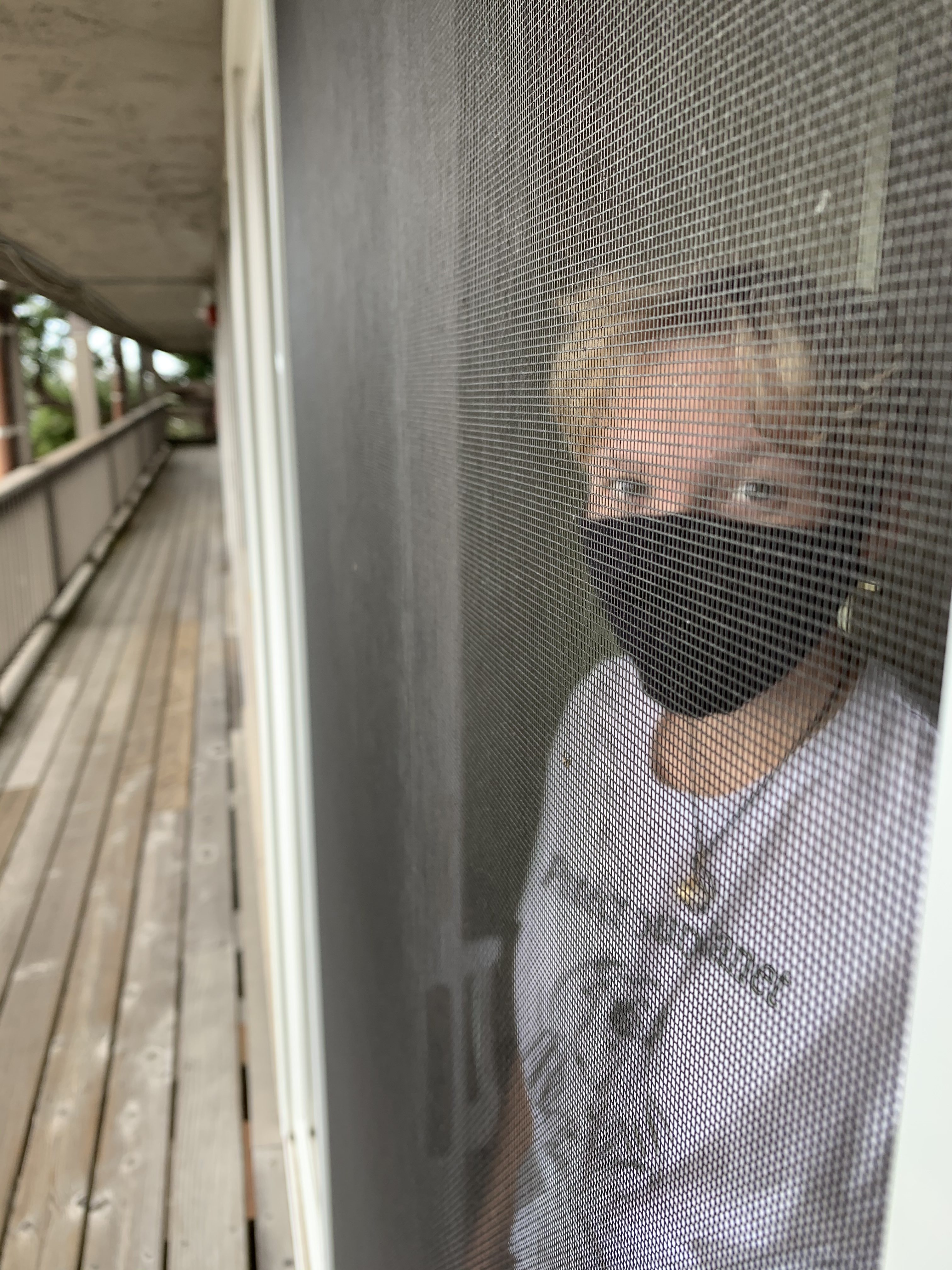
    After losing the second half of my senior year to the pandemic and missing out on new friendships at a new school, I begin my college journey isolated in a campus apartment, where my only access to the outside world is through a screen door I’m not allowed to open.

    Coming from dusty and deserted Western-Colorado, all I’ve wanted to do since I was accepted to Humboldt State University is explore. An area surrounded by redwood forests and ocean was a dream alone, but it’s also home to the majestic, wild banana slug – I had to see one! But first, there were a few things to do.

    On Aug. 17, I took my mandatory COVID-19 test and excitedly began moving things into my dorm, arranging a plethora of houseplants and a cozy corner for my pet tree frog, Terra. Very quickly, this became my new home. Aug. 18 was orientation day – I’d quickly adjusted and felt ready to conquer the world at HSU. That afternoon, I explored campus and the forest, making not just one, but an entire slimy armful of banana slug friends. My dream had come true, at the cost of only a few tiny slug-bites.

    Before my parents returned home on Aug. 19, we met at a local coffee shop to say goodbye; that’s when I received the call informing me my COVID-19 test had come back positive. It was as if suddenly the world started spinning; I was speechless. I never imagined it would be me who caught COVID-19; afterall I’m young and otherwise healthy. But this pandemic has taught us what we think we know to be true is often not the case.

    I wish I could say we rushed to my dorm, but instead, we stepped out of line and just stood together in shock. It occurred to me, I’d experienced possible symptoms of the virus earlier in the week – shortness of breath, nausea, low appetite, fatigue and headaches – however, each is also a symptom of my anxiety-disorder and it’s unclear which was the cause. My parents asked questions, but all I could think was of myself and every person I’d seen, connected by a piece in my contaminated puzzle. Suddenly, guilt and anxiety filled my entire being. I began to suffer a panic attack.

    It took a moment to start my car as I fought to catch my breath; my whole body felt as if it were collapsing. I called my boyfriend in Colorado but all he could understand was how afraid I was.

    This fear was never for myself; this fear was for others. Fear for my parents, for my friends, for my boyfriend and his family – fear for people I passed in the grocery store and for those I worked with. I never worried about myself. I worry about the damage I caused, unaware I carried the virus. It all felt like my fault. It felt like I’d let down the entire world.

    I was moved to a new room where I said goodbye to my parents and the company of others for at least a week. Over a thousand miles from home and yet it doesn’t seem nearly as far as the four walls separating me from beginning this new chapter of my life.

    In a state of constant fatigue and boredom, I sleep most of the day, only waking when my phone rings. Doctors, health centers and housing, all call several times each day asking similar questions and often I can’t tell them apart. When you’re only allowed in one place, you don’t have much aside from your thoughts. Is this my fault? Did I do something wrong? Should I stay quiet about it? When will they let me leave this room?

    My new room has a kitchen and a bathroom, a beautiful view through my screen door and plenty of food. HSU staff checks in consistently, doing everything they can to help me through this. I feel like I have a whole team of friends working to guarantee my health and safety.

    Despite everyone’s help, I’m still on my own. My main source of optimism is knowing my isolation is protecting others. Recognizing how our decisions affect others is the first step in preventing the spread. Sure, a mask is uncomfortable, but so is being locked in a room for seven days and so is losing someone you love because precautions weren’t taken.

    For those who don’t believe in COVID-19, it is real. It is harmful. It is possible for anyone to contract. We all believe we’re invincible until we’re not. My battle with COVID-19 continues, but I know someday I‘ll be able to step outside again and I will find another banana slug.

  • Humboldt State Violated California Law by Requiring Registration for a Public Meeting

    Humboldt State Violated California Law by Requiring Registration for a Public Meeting

    HSU briefly required registration for two public webinars as a security measure

    Update, April 22: Humboldt State Vice President of Enrollment Management Jason Meriwether penned a letter to The Lumberjack, making the case that HSU did not violate California law. Read it here.

    Editor’s note: Grace Caswell is a student in Journalism Department Chair Vicky Sama’s media law course. Almost the entire staff of The Lumberjack has also had Sama as an instructor in journalism courses.

    Humboldt State University hosted public meetings via Zoom to inform the public about its projected enrollment decline and budget cuts April 13 and 15. However, as a security measure protecting the university from “Zoom bombings,” HSU enacted mandatory registration requirements prior to entering the meetings in violation of California state law.

    “Zoom bombings” describe a new term for an infiltration or hijacking of a Zoom session with the intent to harass and disrupt the session. With an increase in Zoom users, from 10 million in December 2019 to more than 200 million in March of 2020, Zoom CEO Eric S. Yuan released a statement April 1 detailing additional measures being taken to enhance Zoom security over the next 90 days.

    HSU Vice President of Enrollment Jason Meriwether claimed HSU has experienced Zoom bombings and enacted the registration as an additional security measure. The additional measures required the public to respond twice via Google forms before being sent the Zoom meeting invitations, basically giving the administration, a government body, the power to sift through and deny public access.

    An approved registration screen for one of HSU’s enrollment and budget webinars held April 13 and 15.

    HSU Chair of the Department of Journalism and Mass Communication and media law professor Vicky Sama alerted and engaged with HSU administration, specifically Meriwether, on the violations being committed.

    “Using ‘security’ reasons to require the public additional registration to access a public meeting on the people’s business does not satisfy the openness and liberties that our Constitution provides,” Sama said in an email. “In addition to violating state law that I explained in my earlier email.”

    “The unintentional message is that some people are not welcome and/or we at HSU don’t want the public to know what is going on.”

    Vicky Sama, HSU journalism chair

    Sama said the additional requirement for the public to register prior to receiving an invitation was tantamount to reviewing their qualifications.

    “The email did not justify the registration nor did it outline its purpose, raising suspicions that the university doesn’t want certain people to attend or know what is going on,” Sama wrote. “The unintentional message is that some people are not welcome and/or we at HSU don’t want the public to know what is going on.”

    Specifically, HSU’s actions against the public violated the Brown Act and Bagley-Keene Act. Both California state acts provide assurance of rights to the public. Sommer Ingram Dean, staff attorney for the Student Press Law Center, explained how these security measures directly conflict with both acts.

    “Section 54953.3 of Brown says ‘A member of the public shall not be required, as a condition to attendance at a meeting of a legislative body of a local agency, to register his or her name, to provide other information, to complete a questionnaire, or otherwise to fulfill any condition precedent to his or her attendance,’” Dean explained in an email.

    “Section 11124 of Bagley Keene says ‘No person shall be required, as a condition to attendance at a meeting of a state body, to register his or her name, to provide other information, to complete a questionnaire, or otherwise to fulfill any condition precedent to his or her attendance.’”

    Sommer Ingram Dean, staff attorney for Student Press Law Center

    Additionally, Dean cited the Bagley-Keene Act and the measures it provides ensuring the public’s rights.

    “Section 11124 of Bagley Keene says ‘No person shall be required, as a condition to attendance at a meeting of a state body, to register his or her name, to provide other information, to complete a questionnaire, or otherwise to fulfill any condition precedent to his or her attendance,’” Dean wrote.

    Sama informed Meriwether of the illegal activity violating both the Brown and Bagley-Keene Acts April 13, citing the specific sections mentioned above. In response, Meriwether continued with the registration in place and adjusted the meetings by offering public links.

    “Since this issue was just raised today, it appears to me that the best thing to do is to move forward with today as planned,” Meriwether said in an email. “We will also explore hosting a third event. We will provide both the option for registration and the public link for the already scheduled event on Wednesday. The entire point of having these events was to be transparent.”

    Since then, the links to the April 13 and 15 meetings went public. However, the concern more surrounds HSU’s decision to filter through the public’s right to access a public meeting regarding matters directly impacting them.

    The registration requirement, Sama wrote, amounts to intimidation and goes against the spirit of openness and transparency, and “reeks of sneakiness.” In a time of crisis, government bodies can use the mirage of security to deny the public their right to voice their opinions. Ultimately, it can amount to an abuse of power against the public.