The Lumberjack


Students Serving The Cal Poly Humboldt Campus and Community Since 1929

Tag: Dr. Teresa Frankovich

  • Humboldt County skips from yellow to red tier

    Part of a statewide effort to slow COVID-19 cases, Humboldt county enters a heavily restrictive tier.

    Humboldt County moved into a heavily restrictive tier as part of a statewide COVID-19 response. California saw a rise of cases within the past weeks, reporting 57,000 new cases within the past seven days. Governor Gavin Newsom said this will slow down any plans of reopening.

    Part of a 40 county reorganization, Humboldt has been moved from the lowest tier into the second highest tier, with 4.8 cases for every 100,000 tests conducted.

    42 percent of positive, reported Humboldt county cases have occurred within the Latinx community, despite making up only 12.3 percent of the population according to 2019 US Census Bureau data.

    In a Humboldt Health Alert sent out on Nov. 16, Humboldt County Health Officer Dr. Teresa Frankovich said that the current case rates could possibly move Humboldt into the most restrictive tier.

    “Since the state first implemented the Blueprint framework, they’ve signaled that they could move faster if conditions warranted,” said Frankovich. “Our recent data shows why that makes sense because this virus is moving faster than we have ever seen, and rapid response can help to slow the upward trajectory.”

    Under the new tier list all bars, breweries and distilleries will be closed while wineries can be open outdoors only. Restaurants, retail shops and places of worship can be open “…indoors at maximum 25% capacity or 100 people, whichever is fewer,” according to the Humboldt Health Alert.

    The CDC and the Humboldt Department of Health and Human Services both highly advise against having gatherings for the holidays as this will most likely increase the spread of COVID-19.

    “We simply need to stop traveling and stop gathering, especially indoors. It isn’t safe, and it is impacting our schools and our business communities,” Frankovich said in the health alert. “The upcoming holidays need to be single household celebrations if we want to get through this pandemic with fewer hospitalizations and fewer lives lost.”

    Nationwide, cases continue to spike. The New York Times is currently tracking around 11.4 million cases reported nationwide and nearly 250,000 deaths attributed to the virus, as of time of publication.

    The Center for Disease Control has predicted that “…the number of newly reported COVID-19 deaths will likely increase over the next four weeks, with 5,500 to 13,400 new deaths likely to be reported in the week ending Dec. 5, 2020. The national ensemble predicts that a total of 260,000 to 282,000 COVID-19 deaths will be reported by this date.”
  • Humboldt County’s public health officer

    Humboldt County’s public health officer

    Dr. Teresa Frankovich resigns after 8 months

    Dr. Frankovich took on the role of Humboldt countries public health officer back in Jan., less than a month before the county reported its very first case of COVID-19.

    Frankovich submitted her resignation to the Board of Supervisors, which will take effect when the new replacement is hired.

    Frankovich says that due to the emergence of COVID-19 and the amount of responsibility it requires, the health officer position has changed from the part-time position to a full time commitment.

    She added that it makes the most sense to plan for a replacement when we are in a fairly stable position.

    “I am grateful for the opportunity I have had to witness, first-hand, the integrity and commitment of an amazing team and for the incredible support of many of our elected officials and community members, who embody the best of what drew me back to Humboldt,” Frankovich said.

    Moving forward, Dr. Frankovich plans to work in a part-time capacity under the new Humboldt County Deputy Health Officer, Dr. Josh Ennis.

    Dr. Frankovich released a letter to residents regarding her full resignation that can be viewed online.

    https://humboldtgov.org/DocumentCenter/View/88983/SEP2-Letter-of-Resignation-PDF

  • More Layers, More Protection?

    More Layers, More Protection?

    Humboldt State demands double masking on campus, does more layers equal more protection?

    You’ve probably read the headlines: Wearing a Mask Prevents the Spread of COVID-19. But which mask you choose could affect how protected you and others really are.

    Masks were first mandated in Humboldt County on April 24 when Health Officer Dr. Teresa Frankovich introduced an order requiring all members of the public wear facial coverings while inside a facility other than their residence. Since Humboldt State University was required to close campus prior to that, the university announced safety precautions on Aug. 4, which included wearing face coverings with at least two layers of 100% cotton. This was done in conjunction with the reopening of campus for the fall semester.

    The Centers for Disease Control and Prevention (CDC) urges people to wear masks with at least two or more layers of washable, breathable fabric. Masks need to be worn covering both your mouth and nose at all times.

    Director of News and Information Aileen Yoo stated, “HSU is following recommendations from the CDC. Its website is also a great resource for information on different types of protective gear.”

    Karen Wilkinson, Joint Information Center representative, said, “The county looks to the California Department of Public Health and the CDC for guidance.”

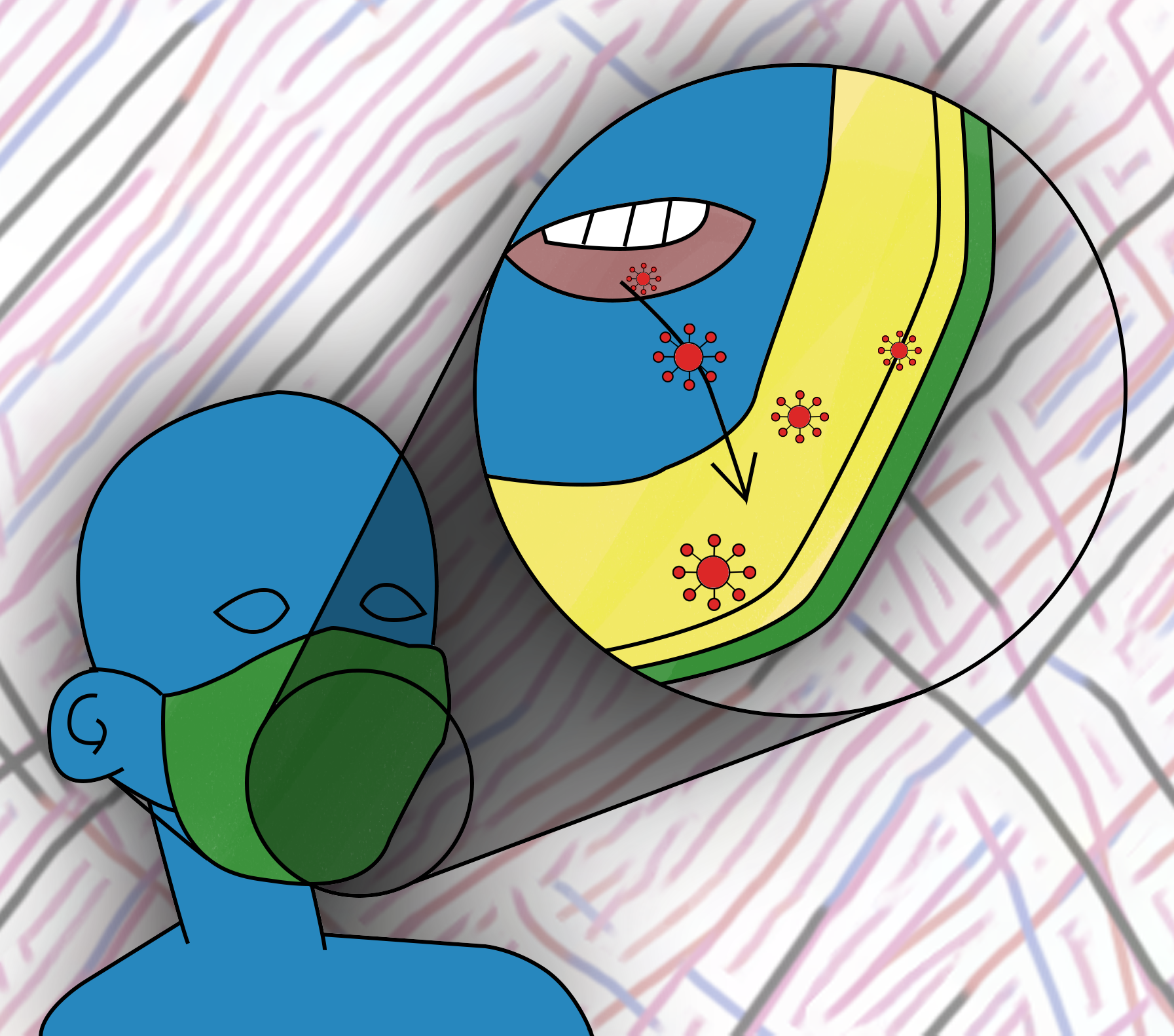
    According to the Association of American Medical Colleges (AAMC), “studies have shown a double-layer cloth face covering was significantly better at reducing the droplet spread caused by coughing and sneezing, as compared to a single-layer one.”

    Mark Wilson, a microbiology professor at HSU believes that “the main goal of mask wearing is to reduce the emission of droplets and aerosols from a person infected with the coronavirus, by trapping emitted droplets in the fabric. Mask-wearing can reduce the transmission of airborne diseases like coronavirus.”

    Wilson added that when deciding on the type of masks, “the tighter the weave of the material, and the more layers it has, the more effective it will be at filtering out particles.”

    May Chu, an epidemiologist at the Colorado School of Public Health, as quoted by NPR said, “a good option is a mask made of two layers of a tight-weave fabric with a built-in pocket where you can place a filter.”

    A University of California, San Francisco article reported that based on a simulation, researchers predicted that 80 percent of a population who wear masks would reduce the spread of COVID-19 more than being on lockdown. Further, the Institute for Health Metrics and Evaluation projected that 33,000 deaths could be prevented by October 1 if 95 percent of the population wore masks in public.

    Many researchers have looked into N95 masks which are made out of many layers of fine polypropylene fibers. They are able to block at least 95% of small airborne particles but only when worn correctly. Though they are proven to be effective, the short supply should be reserved for medical professionals and first responders.

    A recent Duke study rated a fitted N95 and a three-layer surgical mask as the top two protectors, followed by two layer cotton masks.

    According to an article by Science Daily in July, a team of Australian researchers did a study comparing the effectiveness of single and double layer cloth face coverings. They used LED lighting to film the airborne droplets. Their results showed that double layer face coverings prevented more droplets from spreading.

    HSU students can be provided with double layer masks at the campus Police Department, the first floor of Student and Business Services building, Jolly Giant Commons, College Creek Market and the Parking Kiosk.

  • All aboard the plague ship

    All aboard the plague ship

    Reopening the school in any capacity must have been the worst idea possible. There was not enough preparation for letting students come back to Humboldt State University. While it is understandable that every student has their own reasons for living on campus, the risks are high. HSU President Tom Jackson made it clear that suspending move-in dates and face-to-face instruction until a later date was prejudice and not necessary.

    With cases spiking in recent days, the community is at risk. In a press release from the Humboldt County Joint Information Center, people between 20 and 29 have the highest percentage of new COVID-19 cases locally. Young adults are becoming the primary carriers of COVID-19 and are spreading it unknowingly.

    Humboldt County Health Alert recently rose to a Level 3, which means “High Risk- Many cases with conditions for community spread, with many undetected cases likely. Limit everyday activities to increase safety.”

    Opening up the university to a thousand students in a single week is like pouring salt on a fresh wound. Although Arcata is open to tourism for the economic stimulation, the town was not ready for it. When Arcata first opened back up to the locals, the cases were low and stable. Then tourism started to pick up. Travel has put the community in danger and is a contributing factor for the rise in cases.

    There is a large elderly and retiree population in Arcata and surrounding communities, like Eureka and McKinleyville. Humboldt County Public Health Officer Dr. Teresa Frankovich stated that the transmission can, in time, contribute to increased exposure for older individuals who are of higher risk of serious disease and even death.

    Letting a large amount of students move in during the middle of a pandemic in a small town was not a good judgment call. The protocols and guidelines put in place by HSU can go wrong in various ways.

    While the single occupancy rooms for student housing were supposed to be a way to shelter in place, there are common areas that the students will share with their housemates such as the living room, kitchen and bathrooms. On the Humboldt State Campus Ready website, it was vaguely mentioned that these common areas will be limited and if violations persist, they will be restricted. But with student housing employees matching one to every hundred students, the likelihood of knowing these violations are occurring are nearly impossible.

    With five students and one faculty member having tested positive, HSU has made COVID-19 testing mandatory for student residents throughout the semester. However, the Student Health Center states on the Campus Ready website that testing will be done “in a limited capacity due to a nationwide shortage of tests.”

    Regarding limited face-to-face instruction, the administration is putting the responsibility on the students to ensure they stay healthy. If a student were to test positive for COVID-19 while at HSU, it would be their fault for not following the guidelines to satisfaction, instead of the university’s for being open. The best way to keep students safe is to not have contact with other students. That risk became a reality when a thousand new, incoming students decided to move on campus.

    Dr. Frankovich and President Jackson should not have agreed to open the campus in the first place back in June. There had to have been consideration of the possible influx of cases during the summer months with tourism. Not to mention, fall and winter months correspond with the influenza season. Incoming students will not just be battling COVID-19 but also the flu, the symptoms of which are almost identical.

    There were a lot of important individuals that conversed in making these decisions. Unfortunately, the people being put at risk obviously weren’t a part of the conversation.

  • Humboldt State Proceeds with In-person Instruction

    Humboldt State Proceeds with In-person Instruction

    With President Jackson and Dr. Frankovich at opposite ends of agreement on in person classes, students caught in the middle feel COVID-19 is inevitable.

    As Humboldt State University moves forward with a hybrid fall 2020-21 semester, starting online before transitioning to an in-person format from Sep. 8 until Nov. 6, community leaders are unsure about the future safety of students on campus.

    In a recent set of emails between HSU President Tom Jackson and Humboldt County Health Officer Dr. Teresa Frankovich, made available via Freedom of Information Act requests to the Lost Coast Outpost and North Coast Journal, at times the two leaders appeared at odds with how to proceed with the semester.

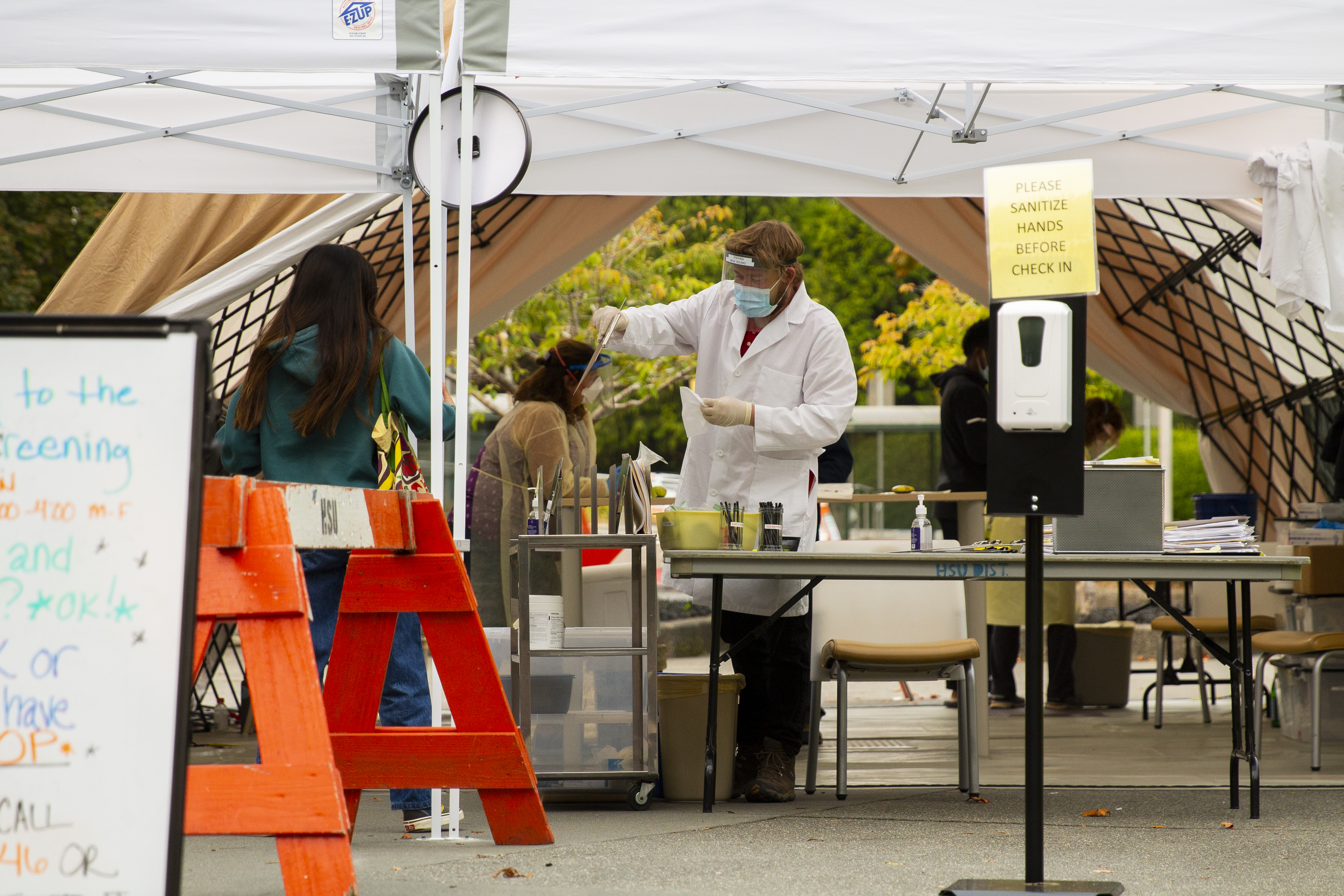
    Frankovich stated concerns with students returning to dorms and classes, mainly that enclosed shared spaces like dorm kitchens and bathrooms presented an increased risk of spreading infection. Frankovich asked for a possible pause to the start of the semester, so that COVID-19 testing labs within the county could properly prepare for the increased influx of new and returning students.

    Jackson replied within the same email chain initially with confusion about the timing of the sudden request before attempting to reassure HSU was following all local and state ordinances regarding proper social distancing and safety.

    During the Aug. 18 media availability briefing, Frankovich addressed the emails stating “Let me make one thing clear: This is not a case of ‘othering’. It is a case of trying to make safe choices for the entire community in the midst of a pandemic. This is about trying to juggle competing needs for testing resources across skilled nursing facilities, agricultural settings, tribal communities, local public schools, businesses and organizations, and the community as a whole.”

    Frankovich also reiterated that the Humboldt County Health Office was still confident in HSU’s plans and ability to handle the situation, praising the HSU planning team for their continued effort.

    “I think they’re working on constructing an environment that is as safe as possible considering the pandemic that we’re in,” Frankovich said.

    Those plans were put to the test when on Aug. 17, as students began moving into the dorms, a campus-wide email was sent out stating that HSU had it’s first confirmed COVID-19 case.

    By the end of the week, two more students and a faculty member tested positive as well, though emails state that the faculty member’s case was not connected to student move-ins.

    While the identities of those who tested positive are being withheld for privacy, an email notification sent out on Aug. 20 said “HSU is working closely with Humboldt County Public Health, which will determine whether there are members of the campus community who need to be advised of their contact with affected people.”

    Testing will continue for students who have moved in during a fourteen-day quarantine period to ensure safety.

    Blake Hefner, a biology major and resident advisor for the College Creek dorms, expressed both concern and hope after reading the initial emails regarding the first confirmed case.

    “If they’re willing to bring students during a pandemic, we are going to see how they are going to handle that and how they are going to value our lives,” Hefner said.

    Lori Alcantara, a journalism major, said that as soon as she saw the email, she went to show her roommate.

    “We were both kinda surprised that it was so quick,” Alcantara said. “At the same time, I feel relieved that they’re keeping track and not just trying to pretend that it isn’t happening.

    Alcantara felt comfortable with the idea of in-person classes, trusting the students around her and the university to accept the new social responsibility of sanitizing workplaces and classrooms. Alcantara had one in-person class for the fall semester and stated that the professor had already reached out and reassured students that proper cleaning will occur before students arrive and when they leave.

    “I think what will matter then will be everyone’s ability to clean after themselves, use hand sanitizer and wear their masks,” Alcantara said. “I think if everyone could do that… then I’m not particularly worried.”

    Frankovich said during her media availability briefing that “…the presence of this case doesn’t change our plan going forward except that we want to make sure we are doing the testing and trying to monitor progress on isolation quarantine should it occur.”

    Hefner felt that the cases meant that students had to step up to the occasion and help shoulder the responsibility and pressure.

    “It’s a lot of realizing that this is bigger than us as people,” Hefner said. “Moving back means you’re part of a community now, and being part of that community you have to respect the guidelines that are going to take place.”