The Lumberjack


Students Serving The Cal Poly Humboldt Campus and Community Since 1929

Tag: DREAMERS

  • Dreams in Between

    Dreams in Between

    Cast and crew of “Dreamers: Aquí y Allá” shed light on complexities of immigration

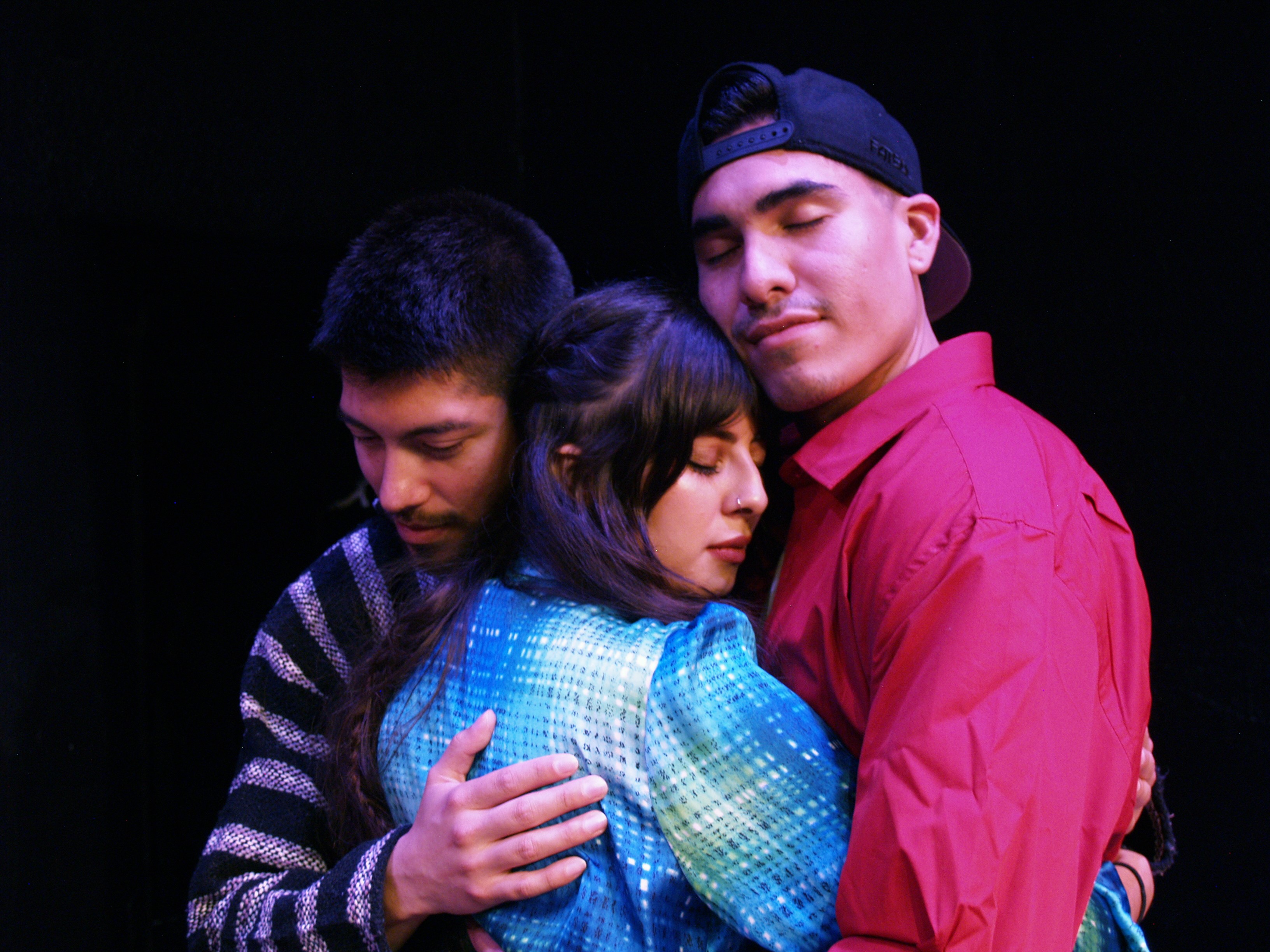
    The story starts in the blue and red lights that bathe a replica-sized model of a wall. Not just any wall, but The Wall, the most southern one that separates country from country, family from family and the hopes of migrants for better opportunities and life.

    In that obscurity, bodies shift and take steps until they’re center stage and in full view. They face you, you face them and under the spotlight, the stories of immigrants and Deferred Action for Childhood Arrival recipients begins.

    “Some of these scenes will break your heart because they show so much humanity,” Co-Director Andrea Carrillo said. “Humanity is such a great big theme within this story. You can’t help but connect and feel compassion for these individuals.”

    The Humboldt State University Theater Arts, Film and Dance Department presents “Dreamers: Aquí y Allá.” The script was written by Andrea Caban, her students, and a collaboration from source material provided by Armando Vazquez-Ramos and the California-Mexican Studies Center.

    Students in the California-Mexico Dreamers Study Abroad Program, DACA recipients and immigrant community members gave testimonials and interviews for the script.

    Troy Lescher, co-director and HSU associate professor, came upon the script in spring 2018 when Caban emailed the script to all 18 California State Universities in hopes they would produce the show.

    “I was blown away by the humanity of the story,” Lescher said. “As soon as I read it I said to myself, ‘We have to do this show at HSU.’ I mean, because of our social justice mission, commitment to minority voices on stage, how timely this issue is and this play had HSU written all over it.”

    The play follows the memories and lived experiences of immigrants and DACA recipients who then obtained advance parole, which gave them opportunity to travel to Mexico and reconnect with their culture and families.

    Carrillo said that they go through time jumps and include the audience as they break the fourth wall in various scenes from start to finish.

    However, circumstances prevented the play from happening until fall 2019. Lescher reached out to theater arts graduate students Carrillo and Amy Beltrán via email. They said that they were overjoyed about directing the play.

    “For me the biggest thing was to evoke empathy within the community because a lot of the community, as well as in Humboldt County, can be either on the middle ground or can be very conservative,” Carillo said. “These are human beings with their own experiences, their own love, their own families, and that was a big thing for me to show that to them.”

    But just as the directors were compelled to tell this story, so too were the actors.

    Business marketing major and theater arts minor Victor Parra, who plays Mateo, said he knew it was important for him to get involved when he heard about the script.

    “As an actor and artist this is the kind of stuff that catches my attention,” Parra said. “This is the kind of work that I want to do personally.”

    Parra said it’s important to remember that the play is a cumulation of many stories, real stories, and that these are real people who struggle everyday. These were stories close to him because he experienced similar struggles back home.

    “We have to keep working to give spaces for minority voices to be heard, especially voices that aren’t heard very often.”

    Troy Lescher
    Co-director

    “I brought a lot of personal past into this and it was my own decision,” Parra said. “Nobody asked it of me, but because I relate to this.”

    Parra plays Mateo, who in the play fears being deported and leaving his child and mother behind. He said that is what happened to him when one of his parents was deported not too long ago, and he brought those feelings into the production.

    “I envision my own family,” Parra said. “That’s what I just had to bring to the table because it’s so important. We need to say this. We need for our voices to be heard and something needs to happen.”

    Lescher knew that he wanted to encourage and open the production to more students, so he reached out to El Centro Académico Cultural Coordinator Fernando Paz, Interim Executive Director of the Office of Diversity, Equity and Inclusion Edelmira Reynoso and Multicultural Center Coordinator Frank Herrera.

    The result was that out of 11 cast members, six of them were non-theater majors and four of them performed for the first time.

    “This story hits differently,” Carrillo said. “It resonates differently with people. It’s such an immediate connection with a lot of Latinx people and people of color. It made sense that we had so many new faces in the theater.”

    Lescher said that the challenges DACA recipients struggle with is a big part of the conversation, because their voices are often unheard or aren’t highlighted in the news.

    “We have to keep working to give spaces for minority voices to be heard, especially voices that aren’t heard very often,” Lescher said.

  • ‘Dreamers: Aquí y Allá’ Preview

    ‘Dreamers: Aquí y Allá’ Preview

    Theater Arts Department presents a production that transcends borders

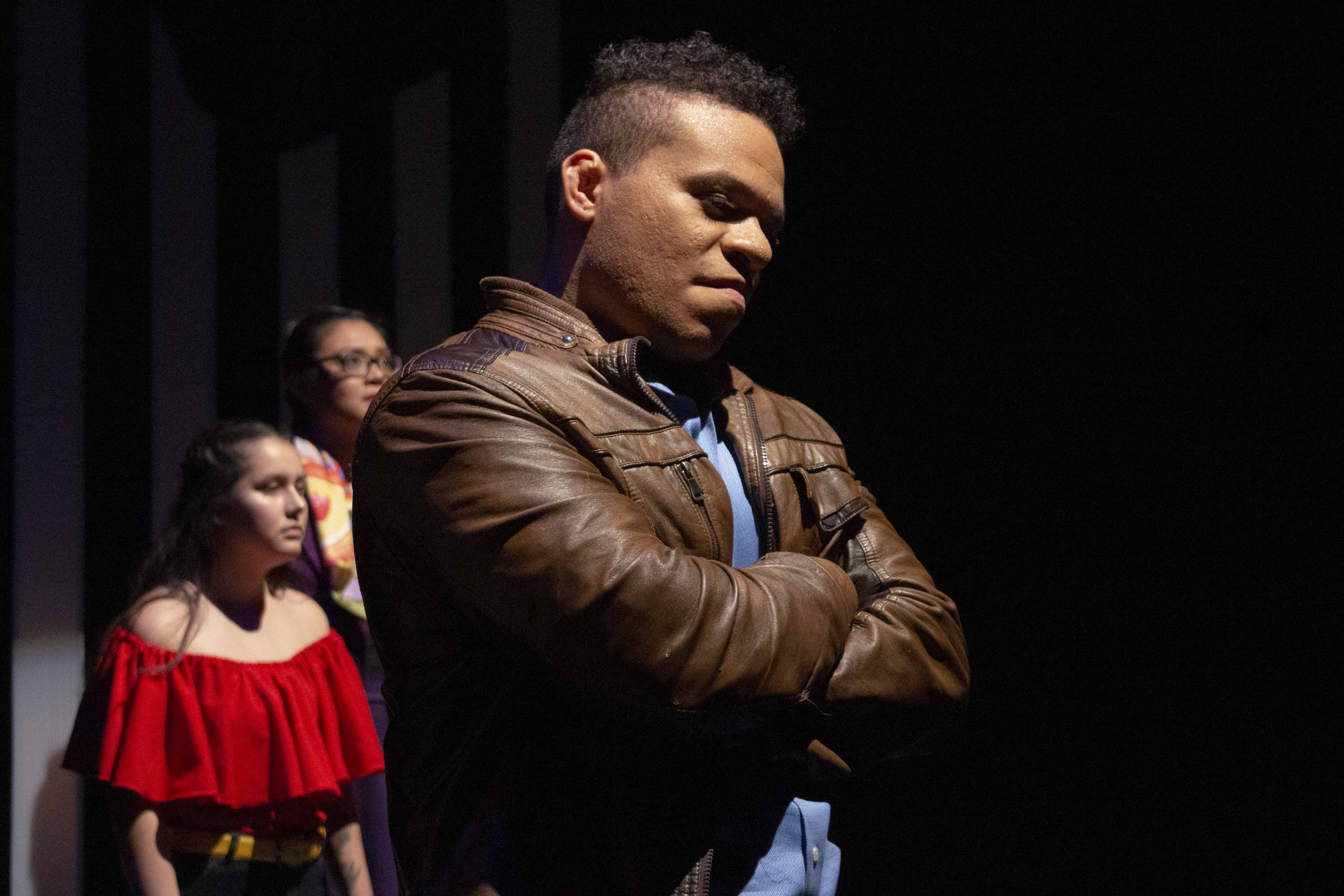
    The room is dark, the audience silent. On stage, right before your eyes, a story begins to unfold. Actors stride onto the set, and within seconds, they transport their audience into a world that deals with fears of family separation, job loss and deportation.

    But that world is reality, as the actors break the fourth wall and address issues for immigrants and Deferred Action for Childhood Arrivals recipients.

    “I read the script and I thought, ‘Wow, this needs to be told,’” Co-Director Andrea Carrillo said. “I know that there’s a good portion of undocumented people living in Humboldt County as well. It’s a great way to show the community that we see you, we hear you and we want to do what we can to share your experiences and your voices on stage.”

    Humboldt State University’s Theater Arts Department will premiere a production of “Dreamers: Aquí y Allá” this weekend and next. The show features testimonials and interviews from students in the California-Mexico Dreamers Study Abroad Program, DACA recipients and community members.

    “I’d say for people who have heard the story and don’t necessarily connect with the politics, I’d say, stay open minded about it. You never know what you might experience or learn. You might surprise yourself as an individual.”

    Andrea Carrillo

    The production is co-directed by theater art graduate students Amy Beltrán and Carrillo along with Assistant Professor Troy Lescher. “Aquí y Allá,” first produced at California State University, Long Beach, was written by Andrea Caban and presented as a collaboration between Caban, her students, material provided by Professor Armando Vazquez-Ramos and the California-Mexico Studies Center.

    “This is a story that needs to be heard. You need to be here and sit with it and listen intently and openly as well,” Carrillo said. “I’d say for people who have heard the story and don’t necessarily connect with the politics, I’d say, stay open minded about it. You never know what you might experience or learn. You might surprise yourself as an individual.”

    “Aquí y Allá” opens Dec. 6 in Gist Hall Theatre and continues Dec. 7, 12, 13 and 14 at 7:30 p.m. There will be a matinee at 2 p.m. on Dec. 15. Tickets are $10 for general admission and $8 for student and seniors. For tickets, visit the Center Arts website or call 707-826-3928.

    After the show on Dec. 6, representatives from HSU’s Scholars Without Borders and Centro Del Pueblo will present on DACA initiatives. Following the shows from Dec. 12 through 14, Professor Vazques-Ramos will present a 30-minute lecture called “Dreamers 2020: What’s Next?” followed by a Q&A.

  • Keep the dream alive

    Keep the dream alive

    Immigrants are the backbone of the United States, but anti-DACA protesters think they could do without them entirely.

    The Deferred Action for Childhood Arrivals, a polarizing immigration policy that allows certain individuals to enter or remain in the United States, was established by the Obama administration on June 15, 2012.

    Those who meet the guidelines for DACA receive a renewable deferred action, or immunity from deportation, for a period of two years and a work permit.

    According to a Sept. 4, 2017 report by the U.S. Citizenship and Immigration Services, there are approximately 690,000 active DACA recipients, or Dreamers, of which about 548,000 are from Mexico. Trump repealed the DACA policy on Sept. 5, 2017, announcing the termination of the policy on March 5.

    However, the Supreme Court announced on Monday that they refuse to take up the case, leaving the fate of Dreamers in limbo once again.

    Center of American Progress said our country is estimated to lose $434 billion annually in gross domestic product if Congress decides to put a fork in DACA. What this means is the cost of goods and services would eventually rise with the success of mass deportation of immigrants. Inflation would further burden lower and middle class Americans who make up the better part of the U.S., while wealthy elites remain virtually immune to financial setbacks. In other words, economic inequality would worsen as a result of deporting Dreamers.

    Deporting Dreamers would diminish diversity, which would favor white nationalists who wish to establish cultural dominance. Further, the lack of culture in the United States would ruin the overall character of our country, replacing our melting pot for something less palatable.

    Despite the widespread fallacy that immigrants take away jobs from American citizens, or overindulge in government benefits, the truth is immigrants contribute to economic growth.

    “Immigrants contribute mightily to the economy, by paying billions in annual taxes, by filling low-wage jobs that keep domestic industry competitive and by spurring investment and job-creation, revitalizing once-decaying communities,” Douglas P. Shuit and Patrick McDonnel of the L.A. Times said. “Many social scientists conclude that the newcomers, rather than drain government treasuries, contribute overall far more than they utilize in services.”

    But intolerance carries on as the Trump administration and anti-DACA hardliners push to bring an end to the DACA policy, which would result in the wrongful deportation of people who enhance the wellbeing of Americans. Undocumented immigrants who commit heinous crimes do exist, but that is far from the majority of law-abiding immigrants who are trying to make better lives for themselves in the land of the free.

    While the fate of Dreamers remains uncertain, pro-DACA supporters are urged to get involved. Reliable resources to protect Dreamers are available online, including American Civil Liberties Union and National Immigration Law Center. United We Dream is the largest immigrant youth-led network in the country. They offer tools and strategies to take action, such as launching grassroots campaigns or signing a petition to Congress that endorses DACA.

    Power in numbers can make a difference, as we recently witnessed on a local level with the removal of the McKinley statue. Educate yourselves with immigration policies, pertaining specifically to DACA, so you can stand up for what is right if you run into anti-DACA supporters.

    The U.S. Immigration and Customs Enforcement, or ICE, has been raiding immigrants under the dominance of federal law, including Dreamers in sanctuary cities. Another way of supporting Dreamers is assisting them in the event of a raid, such as translation or explaining their rights. Understanding immigration policies during such a confrontation could make a world of a difference.

  • Fighting For D.A.C.A.

    Fighting For D.A.C.A.

    Rally Underway in response to Trump’s Retraction of D.A.C.A


    By|Michelle Meyers

    The smog and ash from the fires finally began to clear, yet it was emotion that hung heavy in the air this afternoon at the UC Quad. After the Trump administration announced this Tuesday that it will formally put an end the Deferred Action for Childhood Arrivals Program, or D.A.C.A. An end date was placed on the legal protections that were granted to approximately 800,000 undocumented people who entered the country as children. In response, M.E.Ch.A (Movimiento Estudiantil Chicano de Aztlan) De Humboldt State held a rally that took place this afternoon in the UC Quad. Students, faculty and members of the community came out in support of the Latinx community and those who may be affected by the recent retraction.

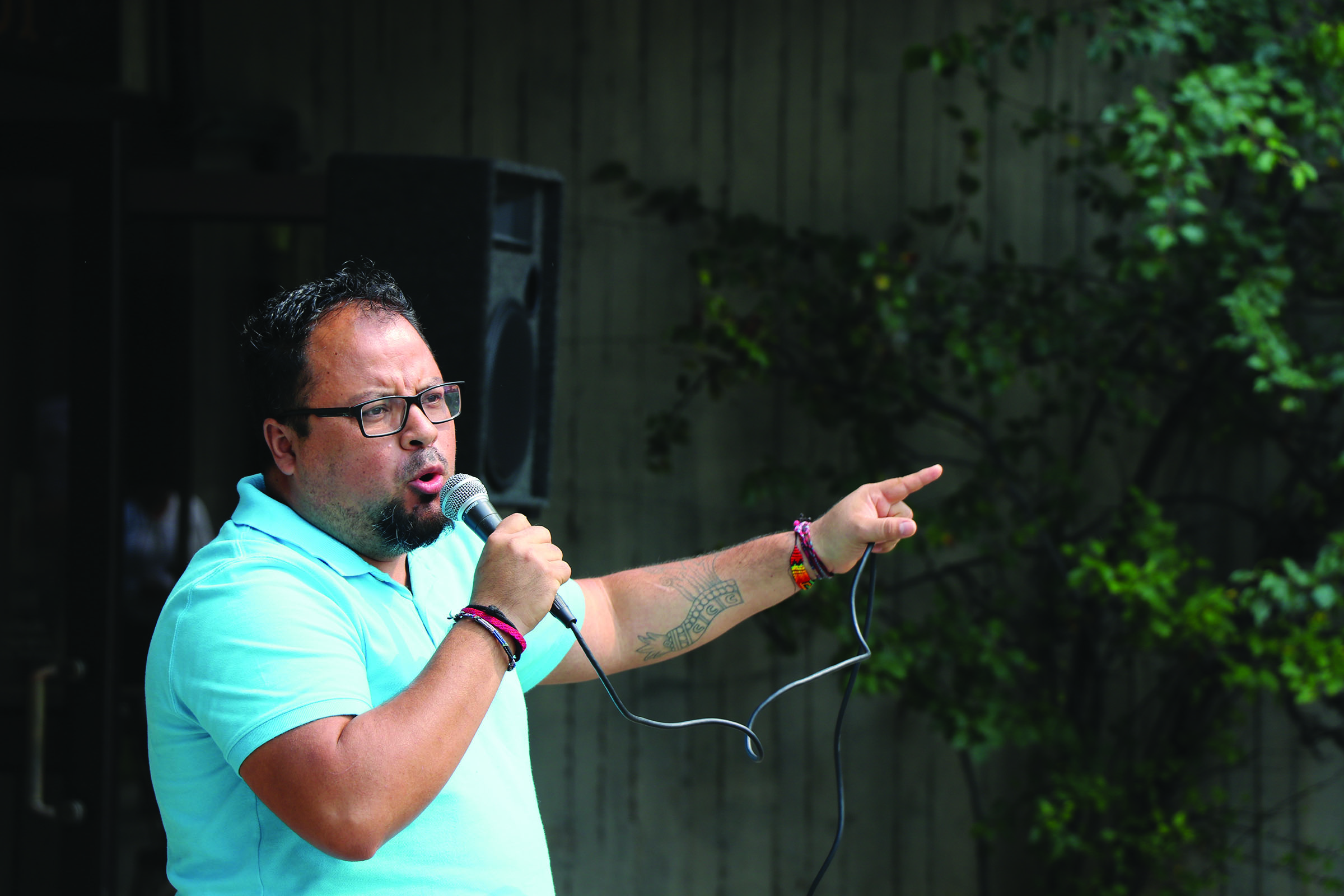
    As Karla Sanchez strolled calmly up to the microphone, the crowd quickly grew silent. Sanchez is an HSU student, member of M.E.Ch.A. De Humboldt State and a DREAMER. When she started to tell her story, her voice shook ever so slightly, and her eyes began to water. Sanchez’s parents brought her to the United States when she was only two years old. This year, she walked across the university graduation stage, but now Sanchez is here in the UC Quad to prepare for the next stage of her life in the face of the retraction. Even under the weight of her situation and with the fate of the Latinx community in clear view, it only took her a moment to strengthen her spine and speak before her local community with power and with pride.

    “Come out of the shadows and don’t be afraid,” Sanchez said. “We are supported in the school.”

    Sanchez said she felt that community support and action is vital, and she kindly turned to the crowd to ask for support.

    “Start speaking in your classroom, bring up the problem, ask what’s going to happen,” Sanchez said. Daca3_Print_Color.jpg

    Anayeli Auza is yet another HSU Student, member of M.E.Ch.A. De Humboldt State and DREAMER that came to the rally to voice her support for the Latinx community and stand in solidarity. Auza came to the United States when she was just one year old. While reflecting on her childhood after moving to the United States, she posed the question, “How do you tell a 12 year old that a paper defines their opportunities?”

    The answer to that question, she couldn’t provide. Both then and now. As of Tuesday, an unshakeable sense of worry and fear hangs over Auza regarding the future and the futures of other DREAMERS in the community.

    “People who are walking around don’t know what’s going to happen. Stay strong out there,” said Auza.

    While spirits were low in the face of a future so uncertain, the support was evident. The concrete seats, lawns and the balconies lining the UC quad were packed with students and members of the local community, some part of the Latinx community and others allies, but they had come to lend ears to listen, express their support and stand in solidarity with the Latinx community.

    In the midst of the rally the crowd began to chant,

    “Defend D.A.C.A, Down with Trump, Down with U.S. imperialism.”

    “This country is built on the blood, sweat and tears of immigrants,” said Cesar G. Abarca, Assistant Professor of the Department of Social Work.

    Abarca came out to speak on behalf of the Latinx community and those who support them, expressing not only a, “need to recognise that fear,” regarding the implications of the retraction within the Latinx community, but a great need for support from those outside of the community.

    “We need you right now, a lot of us are in the shadows,” said Abarca.

    In an email sent Tuesday afternoon to HSU students and staff, President Lisa A. Rossbacher expressed her support for students affected by the retraction, saying that, “Humboldt State University stands with you, and we care about you. We’re going to keep doing all we can to help you succeed in school and become Humboldt alumni.”

    In addition, she also expressed her feelings about the retraction itself.

    “I’m frustrated by this short-sighted thinking of our leadership at the national level. I want America to do better. We need America to do better.” said Rossbacher.

    “By doing so with no alternative solution in place, our government has created uncertainty and fear for hundreds of thousands of people, including thousands of college students.”

    Rossbacher also came to speak at the rally to show her continued support for HSU students affected by the reaction.

    “I was horrified by the announcements today,” said Rossbacher.

    “I join all of you who are part of D.A.C.A., especially our students.”

    “We are human beings, damn it,” said Marisol Ruiz, who came to the rally to stand in solidarity and act as a voice for her community. She spoke from the heart with intensity and integrity. When speaking about how her mother was deported when she was young, she turned to the crowd to offer them a piece of advice

    “Don’t feel alone,” said Ruiz

    When HSU student and Dorm Community Advisor Steph Cardenas found out about the event yesterday, she immediately began filling the walls in her dormitory with flyers for the event.

    “Silence is violence,” said Cardenas

    Cardenas feels that it is pertinent to be a voice in such a time, because to her, “being silent is being on the same side.”DACA.jpg

    Here are a few things you need to know if (Now that) D.A.C.A is repealed:

    • If the DACA program ends students enrollment and tuition will not be affected. In addition, funding under the DREAM Act will not be.
    • Depending on what action the government takes, you may not be able to continue to work on campus or other place of work. Federal law forbids employers from knowingly employing individuals who lack proper authorization to work in the country.
    • For undocumented students traveling abroad, it is likely that they will not be able to re-enter the U.S. upon return.
    • If you are traveling within the U.S., you should be permitted to travel within borders, but you may be asked for identification or about your immigration status.
    • If you you encounter Customs and Border Protection, they are authorized to verify your status. CBP agents can conduct a search if they have, “particularly probable cause.” Motorists are not required to consent to a search. If you have DACA, you can bring a copy of your EAD and your approval notices just in case you are asked questions.
    • If you come in contact with a police or immigration officer, observe your rights granted by the U.S. constitution.
    • If you are concerned about keeping your family safe, you can help them develop a safety plan as well as inform them of their rights. See the Immigrant Legal Resource Center Family Preparedness Plan.

    Scholars Without Borders is located on the second floor of the Multicultural Center.