HSU exclusively reverts back to online instruction on Nov. 9 and students aren’t happy
As Humboldt State University transitions back to exclusively utilizing online instruction starting Nov. 9, students return home for the holiday season. Traveling students are faced with the difficult decision to return to campus for the spring semester.
Diego Celis is a cellular molecular biology major with two semesters left until graduation. Celis has off-campus housing and a kitchen job in Humboldt. He expects to return for next semester after spending the holidays with family.
“I think my biggest incentive [to come back] is definitely just to have my freedom up here,” Celis said. “I do have family back home, but I can’t move back home because I have a dog and my family is all split up, so there’s not really anywhere that I can move back to.”
Online instruction had a significant impact on Celis’ education which reflected most prominently in his grades. He felt online learning created a disconnect between lecturers, students and information retention.
“I hate it. I hate it so much,” Celis said. “It’s not immersive. It’s pretty disconnected. They’re just sending you information and your absorbing it all as best you can, kind of teaching yourself.”
Judith Escobar, a zoology major, originally decided to come to HSU because of its positive reputation regarding hands-on learning. Escobar has found online learning especially obstructive to her education and lab work.
“I can’t really learn how to work with the tools and the instruments correctly,” Escobar said. “Right now, for chemistry and biology I’m just looking at my professors doing the lab and it doesn’t really do me any justice.”
Diego Naranjo, freshman at HSU, lives in the dorms. Naranjo feels the greatest impact from online learning on the lack of social interaction with classmates.
“Online has been pretty tough,” Naranjo said. “I think socially, I kind of depend on going in class and having a different setting, so that’s been really difficult.”
Without any in-person classes this semester, Naranjo feels disappointed in the college experience currently offered by HSU.
“I kind of thought there would still be activities that are encouraged,” Naranjo said. “I just wish there was more stuff going on.”
Despite the experience falling short of Naranjo’s expectations, the times he spends mingling with like-minded learners, makes him grateful he choose to come to Humboldt.
“My head space has changed and my mentality towards school has changed a lot,” Naranjo said. “Being up here has definitely changed my perspective on a lot of stuff that I don’t think I would’ve had, had I stayed in my hometown.”
Naranjo plans to return to Humboldt in the spring, after heading home for the holidays.
“[Learning online] really taught me how valuable in-person stuff is and human connection is,” Naranjo said. “I don’t think this is gonna end any time soon, so I just hope that the school gets better at moving with it, rather than kind of waiting it out for things to go back to normal, which it seems like is happening right now.”
Project Rebound, seeks to help students on campus who have experienced incarceration
Project Rebound was founded by John Erwin, Ph.D in 1967 at San Francisco State University, before it began to branch out to other campuses in the state. Erwin’s goal was to help students who were formerly incarcerated achieve educational success. This year, HSU joins the list of California State University’s to officially integrate the program.
For Program Coordinator Tony Wallin, the work done by the group is personal. Wallin, who recently graduated from HSU, came to the campus after his own run-ins with the law. When he arrived at HSU, Wallin said he didn’t feel entirely like he belonged.
“For a year, it was essentially just me, working by myself,” Wallin said.
After almost giving up his first year here, Wallin would go on to create the Formerly Incarcerated Students Club at HSU with encouragement and help from others.
Kory Lambert, office coordinator for Project Rebound, said he felt the same out of place feeling Wallin felt when he first arrived at HSU.
“When I first came to HSU, I don’t know if it was self imposed, but it took me a whole semester to learn about Oh SNAP!,” Lambert said. “I think people take it for granted, they know these programs are there but they don’t really think about them.”
Lambert is an environmental science major focusing on social justice with a minor in scientific diving. He is looking to study how disasters and natural events disproportionally affect marginalized communities.
Lambert had just turned 18 when he was arrested in 2013. The arrest lead to him being kicked out of his community college and off the football team.
“That set me on a way different path,” Lambert said. “It’s kind of a different experience from people who just never went through that.”
Project Rebound tackled these problems by working on programs that focus on education and prevention. Their motto “From G.E.D. to PhD” reinforces the idea of an inclusive education.
According to the official statement provided by HSU, Project Rebound has a “…95% graduation rate while the CSU system as a whole has a 25% rate who finish within four years and 61% within six.”
For many, getting a degree is the first step in being respected and taken seriously when trying to reintegrate into society.
“A degree is a piece of paper,” said Wallin. “But if you’ve been formerly incarcerated it makes people go ‘okay, I’ll listen to you.’”
Project Rebound has spent the summer writing to current Pelican Bay State Prison occupants who are interested in pursuing their education inside and outside of its walls.
According to Lambert, interest expressed by prisoners surround the possibility of voting and getting involved in politics. Proposition 17 on the California ballot would reinstate the voting rights of many formerly incarcerated individuals if passed.
Due to COVID-19 regulations, the group has not been able to visit the supermax prison in Crescent City in-person, but hope to host workshops on things like tuition and classes in the future.
Currently the group hosts regular Zoom meetings to discuss future events in addition to check-ins, and listening to anyone in need who has past incarceration history.
“It doesn’t matter if you’ve spent a day in jail or 30 days in prison,” Wallin said. “We don’t discriminate.”
Where we were, what went wrong & how we build a brighter future
This is a letter to the editor from Humboldt State University Education Department Chair Eric Van Duzer, Ph.D. It has been edited only for minor punctuation and grammar style preferences.
As I reflect back on nearly 30 years at Humboldt State University, first as a student and then for the past 20 years as a faculty member, I wanted to share some of the thoughts that I have about HSU’s current situation and where the campus might go from here.
As a student I experienced a remarkable education where faculty were fully invested in my intellectual and personal development. There were so many opportunities to explore areas of interest and develop new ones. I have spent many hours trying to encapsulate the nature of the schooling I experienced in a way that would really represent the experience.
The best analogy I have been able to come up with was that HSU offered a graduate education to undergraduates. The small classes typical of graduate school encouraged faculty to fully invest in their student’s growth. The university, set so far from the oversight of CSU headquarters in Long Beach, offered a great deal of flexibility to shape our experiences.
This would be impossible today. In those days HSU had the third smallest class sizes in the 23 campuses of CSU. But more than that, it had a unique faculty ethos that reflected nearly 100 years as a student-focused institution that exalted excellence in teaching above all else.
I was the first student CEO of the Institute of Industrial Technology, a self-supporting club that allowed us to use the skills and knowledge we were developing to grow in business acumen, engage in manufacturing and light construction on campus as well as conduct experiments for local agencies. In its second year, Bill Wilkinson used the institute to earn enough profit making desks for campus offices that it paid for several pieces of expensive equipment for the department.
This would be impossible today. In those days HSU had the third smallest class sizes in the 23 campuses of CSU. But more than that, it had a unique faculty ethos that reflected nearly 100 years as a student-focused institution that exalted excellence in teaching above all else.
Faculty came to campus because this is where they wanted to spend their career. Unlike most universities where faculty play academic hopscotch building their resume through research reputations and earning ever-higher salaries as they bounce from college to college, HSU faculty built their reputations on teaching. These were inherently local reputations, not very valuable if one wanted to move on, but rather a reflection of the values and attitudes associated with a culture of excellence in the service of students’ intellectual growth.
As anyone who has worked with university budgets will tell you, graduate education is expensive. That is why through the first 100 years, the administration and other services were done on a shoestring. It was common for a variety of upper administrative positions to be filled by faculty who served temporarily. Staff was thin and overworked and processes were slow and inconsistent.
What happened? In the early 2000s the CSU was facing the onslaught of a Generation X student bulge. Chancellor Charles Reed decided the best strategy to deal with this situation was to homogenize campuses so that if a student could not get into Sacramento State because it was impacted, they could simply go to another campus and get a similar experience.
Yet, the campus, with significant leadership from the faculty, focused its significant resources on classroom instruction, and through that dedication, produced exceptional graduates who were deeply committed to HSU when they graduated.
I remember an administrator in the early years telling me that he had been in a restaurant on the East Coast and overheard a group of students talking at a nearby table. He was so impressed with their sophistication and the values they held he found out where they came from and immediately applied for a job at HSU.
He was the first person hired under then-president Rollin Richmond to manage our enrollments in the early 2000s. The diversity on our campus is a credit to him and Richmond, who reached out across the state to bring in students from urban areas. Sadly he became disillusioned and left. So did most of the faculty leaders.
What happened? In the early 2000s the CSU was facing the onslaught of a Generation X student bulge. Chancellor Charles Reed decided the best strategy to deal with this situation was to homogenize campuses so that if a student could not get into Sacramento State because it was impacted, they could simply go to another campus and get a similar experience.
Shortly thereafter the upper administration received inflated titles and significant raises in an apparent effort to reduce resistance. Then the attack on the faculty began.
Naturally, faculty on campuses such as HSU who were proud of their traditions and niche identities resisted. Fiercely. At one point, three campus presidents, including Rollin Richmond, suffered through votes of no confidence by their faculty as they implemented this strategy.
To achieve the required changes in the face of faculty resistance, campuses, including Humboldt, began shifting to a corporate structure of top down management. Faculty who had held a privileged position in campus life were systematically reduced to workers with only a symbolic voice in campus decisions. The administration turned its focus inward towards improving the functioning of the bureaucracy. They eliminated administrators such as Rick Vrem, an ethical provost, who refused to implement changes that hurt the traditional focus on instruction.
Vrem was replaced with a provost who had no such compunction. Shortly thereafter the upper administration received inflated titles and significant raises in an apparent effort to reduce resistance. Then the attack on the faculty began. Nearly 80 faculty positions were eliminated over several years and during the same time period, a similar number of new staff positions were created and filled to support administrative functions.
Over the majority of the intervening 15 years, budget reductions for academic programs have been the norm: reductions in staff, program availability and courses. This year it was a 6% cut, last year another and many like it before. The funds have been shifted to an ever-expanding variety of administrative initiatives.
Now we sound more like a parks and recreation office than a university. Come for the redwoods, the beaches, the bike riding—that is wonderful and I love it, but it is not why people pick a university.
We spend nearly 68% of our budget on administration and campus facilities. Despite the results of a study commissioned by Rollin Richmond’s administration that showed the two most important factors that cause a student to come to HSU are quality of education and availability of the program they are interested in, both have been repeatedly attacked, sliced and diminished.
It is surprising that no one seems to notice that every time we cut academic programs, fewer students want to come here. And when fewer students come here, the budget suffers and HSU responds by cutting academic programs even more severely—a cycle the faculty in 2004 described as a “death spiral.”
As we address our current crisis and try to figure out what we need to become in order to grow back to a sustainable enrollment, we might want to engage in some soulful reflection. What would cause a 20-year-old to come to a place five hours from major centers of civilization and spend four years with us? What do we have to offer them that is so valuable, so different from what they can get at any of the other CSU campuses which are closer, cheaper and offer a great deal more college life in the community?
We stopped selling the small classes and close academic relationships with faculty when the hypocrisy became too much to bear as campus priorities shifted. Now we sound more like a parks and recreation office than a university. Come for the redwoods, the beaches, the bike riding—that is wonderful and I love it, but it is not why people pick a university.
When I arrived here as a faculty member in 2000 we had one staff member, John Filce, doing institutional research. He was wonderful and badly overworked. I am sure he still is. Now we have nine staff members listed in the directory in the Office of Institutional Effectiveness, including a vice president. I am sure their work is valuable, but to pay for it we had to cut 64 class sections.
Today, we are an organization of inflexible rules and their keepers.
We have proliferated the bureaucracy, which is unfortunately necessary to achieve top-down control of a professional organization. Had our leadership studied industrial technology with me, they would know what companies in the 1970s learned: that this form of management is ineffective and inefficient in a professional organization.
To achieve control requires monitoring, which in turn requires more staff. For a top-down organization, where the vast majority of employees serve at the will of their manager, fear prevents innovation and compliance is key. Before the shift to this model, administrators were problem solvers. In fact, the standing joke in those days was that everything was an exception. Faculty, staff and administrators had the flexibility to serve the needs of students even when it required bending the rules.
Today, we are an organization of inflexible rules and their keepers. It has greatly diminished the effectiveness of the organization and its ability to make decisions that best serve our students. The resulting bureaucratic culture has seen a proliferation of forms, rule books and rigid adherence to often dysfunctional orders.
This is no way to run a university. Perhaps a grocery store, but not an organization of 500 highly educated experts with thousands of years of collective experience. Top-down decision-making, particularly when the president and upper administrators are drawn from institutions that do not share the culture and values of the campus, is inherently poor compared to what would be possible if faculty once again had a meaningful voice in campus affairs.
No student has ever come to HSU because we have a wonderful registrar’s office or because the president’s office is fully staffed. These only matter when they impact the quality of the education a student receives.
The proof of this is apparent everywhere at HSU. When Rollin Richmond came, he had no interest in what made HSU special. Like a white suburban principal coming to a school in Watts, he thought he knew what needed to be done to remake the university into his vision of a modern institution. That ignorance has cost us immeasurably. Today we face the consequences. The failure to fundamentally change direction of subsequent presidents has simply deepened the mess. We now have a new president, perhaps we can find a new vision.
In my view there are two key concerns that need to be addressed from a rational and values-driven perspective. First, an effective budget model that allows funding to follow enrollment is essential to support growing programs while shifting resources to where they will best serve student needs and interests. This can refocus the campus on providing the service/product students come here for—classroom instruction—and it is essential.
There are so many amazing faculty and academic staff here. They are people with a heart for their students, struggling in a system that constrains and conflicts with their efforts. Let their voices guide the future and we may yet have one worth celebrating.
No student has ever come to HSU because we have a wonderful registrar’s office or because the president’s office is fully staffed. These only matter when they impact the quality of the education a student receives.
Second, we have to decide how we are going to rebuild the excellence we once were known for in our student’s academic programs. The day Rollin Richmond refused to give the Outstanding Faculty Award to a physics professor (selected by the faculty based on his ability to delight and inspire students) because that professor had not published, is the day we snuffed out the soul of the old HSU campus.
Now we need to find out what animates us in ways that provide an experience worth the isolation, cost and struggles required to live in this remote community. Redwoods are not enough; we need a reinvestment in education.
I am retiring from HSU at the end of this May. I am sad to see what has happened to my university. There are so many amazing faculty and academic staff here. They are people with a heart for their students, struggling in a system that constrains and conflicts with their efforts. Let their voices guide the future and we may yet have one worth celebrating.
What students think of the 2020 presidential candidates on offer
The 2020 presidential campaign season has been in full swing for months. Candidates have risen and fallen. Media coverage of the race has been pervasive. Scandals, conspiracy theories and online warfare have all grabbed media attention. Headlines are filled with heart attacks, race-faking and corruption allegations. Voting begins in earnest this February with the Iowa caucuses. So, who will Humboldt State University students support going into election season?
“I really have no idea what’s going on right now,” HSU student and competitive rower Travis Wills-Pendley said.
The Lumberjack’s presidential poll from Oct. 2019.
Wills-Pendley is one of the many students choosing to let the dust settle before making any decisions. Californians don’t vote until March 3, so students will have a chance to see how candidates perform in other states before voting.
Although most students stayed away from the chaotic primary coverage, the majority said they would likely vote for the more left-wing candidates. Vermont Senator Bernie Sanders was frequently mentioned, along with Massachusetts Senator Elizabeth Warren and Hawaii Rep. Tulsi Gabbard.
“I care a lot about education. I have a bunch of younger cousins and I really want to make sure they get a good education.”
Elise Guerrero
Elise Guerrero is a wildlife major who focuses on climate change policy and progressive advancement in education.
“Currently I’m definitely voting for either Bernie Sanders or Elizabeth Warren,” Guerrero said. “I care a lot about education. I have a bunch of younger cousins and I really want to make sure they get a good education.”
Meanwhile, biology major Nathan Johle thinks there is a lack of effective climate policy among the democratic candidates.
“I care a lot about environmental policies,” Johle said.
“This will be the first time I can vote in a presidential election, so I might as well use my right.”
Nathan Johle
Johle previously supported the climate action-focused campaign of Washington Gov. Jay Inslee. However, Inslee dropped out of the race in August 2019.
“If I’m going to support a politician it’ll be Tulsi Gabbard,” Johle said. “This will be the first time I can vote in a presidential election, so I might as well use my right.”
Johle doesn’t identify with a certain political party. Instead, he chooses candidates based on their individual positions.
“I have beliefs,” Johle said. “I don’t like to put them between two labels.”
He expressed concern that students vote for candidates without doing their research, a sentiment echoed by fellow student Kitty Quintrell.
“I don’t like making a conclusion until I’ve got my own research,” Quintrell said. “That’s one of the main things I’m going to be doing before I submit my vote.”
In the short time before California votes, some states will have already decided. The popularity of the candidates will be much clearer. Momentum will be gained by some and lost by others. Due to the shifting field of the democratic primary, students are resorting to a tried and true method—waiting until the last minute to cram.
Students, faculty and allies of the California State University system from all 23 campuses made the journey to the State Capitol to send Gov. Jerry Brown a message, it is time to fully fund the CSU.
Video by Dajonea Robinson.
Allison Rafferty is a biology major and was one of many students who came down on a bus from Humboldt State to join the demonstrations on April 4. Rafferty rode down to represent HSU and to call for funding for the CSU system.
“I request Gov. Brown to consider opening the fund that he’s allocated for CSU,” Rafferty said. “The CSU requested money and Gov. Jerry Brown approved a third of that. Right now, they’re in revisions. In May, they’re going to post their revisions and in June, they’re going to propose the final budget that goes to a vote.”
Rafferty hopes more funding will come through so people in her major and others will be able to get classes and graduate on time.
HSU student warns others of the potential outcome of funding crisis. Photo by Dajonea Robinson.
Jacqueline Delgado is also an HSU student. Delgado decided to come to the Capitol to stand in solidarity with everyone and to get justice for Josiah Lawson.
“I’m also here to get [Justice for Josiah] and this unsolved murder to be recognized. It is an unsolved murder of a fellow student that was murdered a year ago in Humboldt County,” Delgado said. “The school and the county does not recognize that this happened. It has been an entire year that nothing has been happening and we’re trying to get this movement to be heard. We will no longer be silenced.”
David Bradfield is the California Faculty Association representation chair and board of directors member who now lives in Humboldt County. Bradfield spent 34 years teaching music and digital media arts at CSU Dominguez Hills. Bradfield decided to take the trip down to the Capitol.
“I care very deeply. I spent 34 years teaching at Dominguez Hills and I care very deeply about the mission that we do, the people that do that mission and the people that we serve,” Bradfield said.
Reza Sadeghzadeh is a communications major at HSU. Sadeghzadeh traveled with his peers to the Capitol from HSU to express concern of the insufficient funds of the budget.
“Since they cut the whole CSU budget, we’re going to see a tremendous negative effect on our campus. A lot of professors are being laid off, activities and cultural centers are being defunded, so it’s a very serious issue,” Sadeghzadeh said. “The governor really needs to understand that the students here and the students in the CSU are the future of the welfare of California. In order to thrive as a state, we need to take care of the foundation, which is the students.”
HSU students not only stand in solidarity with fellow CSU peers during the rally, but demand justice for their fellow student. Photo by Dajonea Robinson.
Elizabeth Phillips is a student on campus who also came down on the bus from HSU.
“Students like me who need an education are about to be priced out of our education. Education is not for the people, it’s not supposed to be free. They don’t want us to get an education so we’re stuck working the remedial jobs,” Phillips said. “We need to see more people of color being a part of the faculty. The only way we’re going to get there is if we can afford to get in the door. I’m $25,000 in debt just from two years at HSU. That’s a lot of money, and for other students, I don’t want them to take on that burden. So I’m here for the future, and I’m here for me, now.”
Phillips works for the Multicultural Center as the social justice summit co-coordinator. Phillips is also a part of a loose coalition of students who started the walkout for WASC to protest the budget cuts.
“I worry that if we give the CSU full funding for free tuition, the students will get it for the first couple of years, but then after, people get greedy and start skimming the surfaces,” Phillips said. “I’m happy that we’re here, but I want people to keep a watch and understand we don’t need as many administrators as we have. We need more students and faculty, counselors–there’s other stuff that we need that we’re just not allocating our resources correctly. Everyone needs to watch out for the future.”
Take it from a two-time Humboldt State University drop out: do not give up. One of the greatest disservices college will do for you is force you to choose a major at an age you’re not even positive what your dating preferences are yet. At an age when you’ve had under a quarter of a century of life experience and maybe two jobs, if any, having to choose a major that will dictate your career for the rest of your life is downright unfair.
So if you find yourself at the age of 21 or 22 still working through college courses, on your third major switch or not decalred, do not freak out.
“Education is a journey, not a race,” is an adage students should familiarize themselves with sooner than later.
Some will graduate high school, jump right into choosing an academic focus with no problems and move on in four to five years. They will achieve exactly what they expected, and this is perfectly okay. On the other end of the spectrum, it is perfectly okay to take six to eight years for students to find out what they excel at or are passionate about before finally achieving the grades that reflect that passion.
I had to fail out of HSU twice to land myself at Citrus College in Glendora with the blank slate I needed to discover what I was good at. I had tried choosing business administration as a major. I had switched to communications and, for multiple outlying and personal reasons, still found myself moving home to Southern California in 2013 as a declared failure.
Four years later, I am returning to HSU with two associate transfer degrees in communications and journalism and a passion. I have peers and colleagues who are way farther ahead on their academic journey than I am. But with my return, I bring recognition, expertise and a work ethic that took four extra years than the average student to develop. I am back, and I come with pride for the extra time and work I had to put in to get here at the ripe age of 26.
My advice to other students struggling to find their way is to ask for help, utilize school resources and above all, know when you may need to take a break and do some soul searching. When you’re ready, jump back into college and let your studies help you find your way.
The big corporations want the politicians to turn higher education into a factory that produces blue and white collar workers because the corporations need individuals that are trainable. But there is more to it!
Programs like Humanities and Social Sciences are under attack by politicians like Marco Rubio, the person that said: “we need more welders and less philosophers.”
The underlining message is that public schools should teach us less about the world and more about the working world.
Donald Trump’s most recent presidential memorandum to the Secretary of Education will also reassure you that “it is critical that we educate and train our future workforce to compete and excel in lucrative and important STEM fields.”
Read between the lines! Trump is trying to manage public school programs that teach students how to be obedient workers.
In other words, the Trump administration is steering the working people away from courses that focus on critically thinking. They want to make sure that the 1% does all the thinking for us.
To be fair, STEM students do have more career opportunities than students in other programs. But that should not make the other programs inferior to science, technology, engineering and math. It would be like comparing apples to oranges.
These “soft” or interdisciplinary programs are just as important because they cultivate leaders with ethical decision-making abilities. But this notion would bring empowerment to the working class that would threaten the 1%.
Knowledge is power. When the people become educated, they are more inclined to be critical of their surroundings, the public discourse and their history. As a result, the people start making impressive egalitarian changes in society.
A perfect example of that is the current transformation of Columbus Day to Indigenous Peoples’ Day.
Hopefully, you can see why the few people at the top would want to make sure that our education does not get out of line. Emphasizing STEM programs is a smart tactic on their part to deter us from gaining social consciousness.
There is more to Trump’s job growth rhetoric and it is not just about increasing our nation’s gross domestic product. It is harder for politicians to manipulate the people when the people start thinking outside the box. With that said, I leave you with this question: Is Trump’s education plan undermining your intellectual autonomy?
Settling for a lower grade is frustrating when you’re trying to get the grade you want. It’s time to get rid of our old, outdated grading structure!
There is a new way of grading that allows students to get the grade they deserve. It‘s called specification grading. The “specs” grading system has no ambiguities because students will know from the first day of class exactly what grade they will be getting. It sounds too good to be true, but this is how it works.
The professor will tell their students the first day of class that they must successfully meet a set of specification proposed in the syllabus. For instance, to get an A, the student must write four essays, pass three exams, finish two projects and provide the class with one presentation. If a student could settle for a B, they will have to complete and pass fewer tasks. You get the idea.
The professor will also give a token to every student so they can use it to redo an incomplete assignment. Additionally, the instructor will provide more assignments and exams than the amount required to get an A. Therefore; students have a chance to redeem themselves if they fail an assignment or test.
Dr. John Meyer, a Politics professor at Humboldt State University, has experimented with this method of grading.
“[I] very much liked it,” said Meyer. “It encouraged the class to focus on the things that matter.”
Further, the students are inclined to apply themselves more in class since they know exactly what it takes to get the grade they want.
“There’s something wrong with the way we’re grading that isn’t being talked about nearly enough,” said Dr. Linda Nielson, director of the Office of Teaching Effectiveness and Innovation at Clemson University. “Grades [only] account for 2.4% variance of career success.”
Our current grading structure does not fully correlate with how much we learn. Sometimes the difference between a B+ and an A- comes down to the discretion of a professor. In other words, their final decision may be dogmatic and unfair.
It is important for a learning institution to acknowledge all of its options. Now is the time to start talking about a new way of grading that will boost our education so we can focus more on learning than worrying about the uncertainty of our grades.
TRiO is a federally funded outreach and student services program aimed to provide services for students with a disadvantaged background.
Upward Bound is one of eight national programs within TRiO. The program is designed for first-generation college students who exhibit the potential and interest to strive in college. As members of this program, students benefit from resources such as financial aid assistance and academic counseling.
Upward Bound has been serving the Humboldt and Trinity school districts since 1965. Within these counties, the program is affiliated with six local high schools: Hoopa Valley, Arcata, South Fork, Southern Trinity, Hayfork, and Trinity.
Arcata High senior, Tatyanna Keeling said Upward Bound has been particularly helpful with financial aid counseling, as well as deadline reminders and reinforcement.
This year, Upward Bound received a five-year $1.25 million extension grant. Each five-year renewal, new advancements are developed into the program to ensure quality improvement, as well as operational funding.
With the funding, Upward Bound began their new summer “Bridge Year” program. This feature strives to provide participating high school seniors with an immersive college experience.
Upward Bound Director at HSU, Jen Dyke said the summer is the best time to get students committed to following through with their college plans and there is no better way than to allow participants to become “real college students.”
For the duration of the five-week summer program, students live in the Cypress Residence Hall and get a head start on college courses, all provided by TRiO.
For the remainder of the school year, students have access to college and career counseling, as well as academic and financial tutoring. The program also organizes and engages students in local social and cultural events, as well as college campus touring.
Shayna McCullough, a 21-year-old senior majoring in Social Work is an alum from Upward Bound. She said Upward Bound instilled pride in her. As a first-generation student, she has found a lot of emotional support and inspiration in fellow colleagues who also participate in Upward Bound.
Upward Bound is just one of the three TRiO programs at HSU. Other federal-funded programs, including Talent Search and Student Support Services, which all aim to ease the transition of disadvantaged students from high school to college.
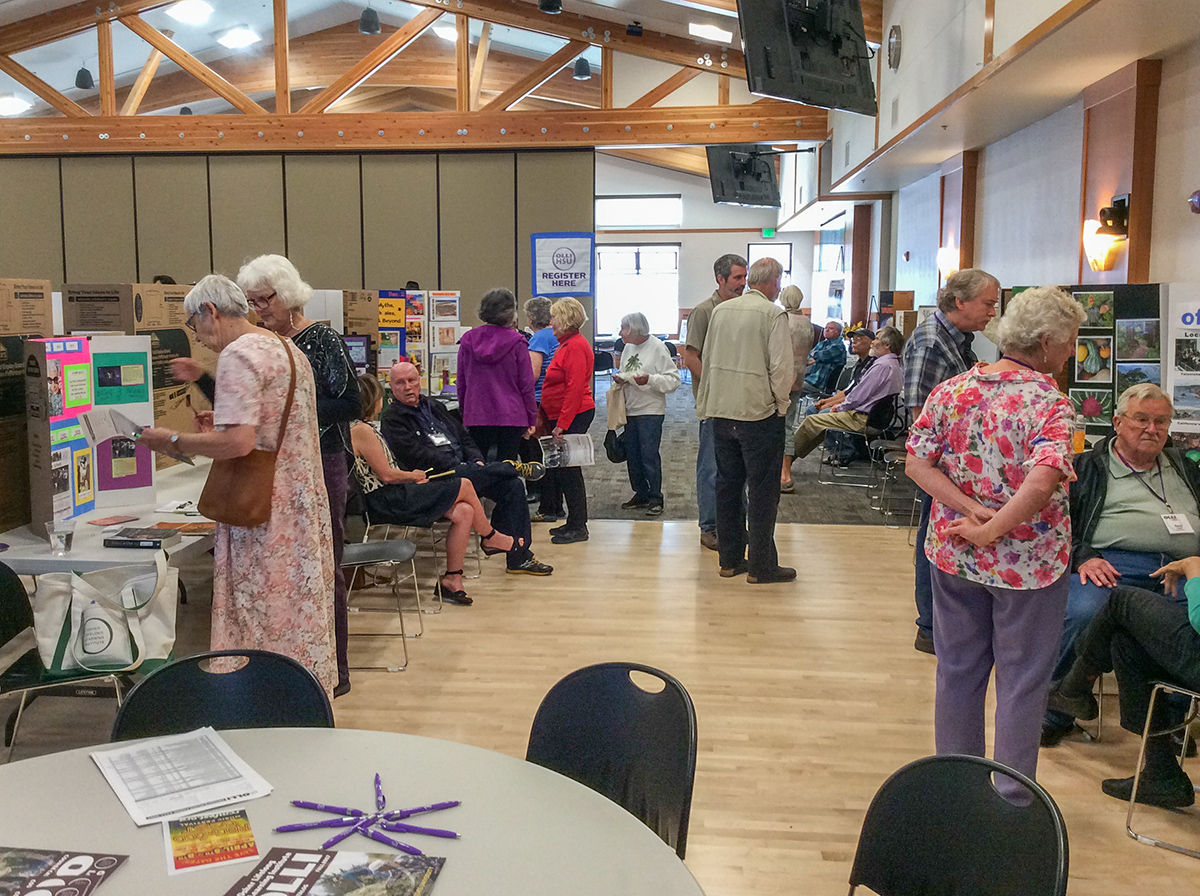
When California businessman and philanthropist Bernard Osher founded the Bernard Osher Foundation of San Francisco in 1977 he created more than just a place for people to learn, he created a community. During Saturday’s open house, people from all over Humboldt were invited to come see what classes are being offered this semester and meet the teachers and staff at OLLI.
“After Osher attended his 50 year high school reunion, he said there were two types of people in the room, one type that is waiting to die, and the other type who are learning new things and starting new lives and building new interests.” said Sheila Rocker-Heppe, Director of OLLI.
With over 120 OLLI’s nationwide, it is the largest continuing education organization in the United States. Every OLLI is created differently based upon its location and the interests of the people in the community. All classes are specially designed short courses with no exams or grades, with subjects varying from religion and genealogy to bridge and dance.
“We have moved way beyond the expectation that anyone had for continuing education,” Rocker-Heppe said.
Some classes take place in a traditional classroom setting, but others explore different areas of the community and beyond to teach classes such as kayaking, history or geology. OLLI programs are structured with a learning component in mind. When a person takes a yoga class, they learn the history and vocabulary of yoga as well as the movements.
“When we first started OLLI, the planning grant, which is judged by attendance, didn’t think we would have 500 members to maintain a lifelong learning institute,” Rocker-Heppe said. “We surpassed that number and signed up 1300 members our first year, and have maintained that number for the last 8 years.”
There is a solid connection between OLLI and their communities, in particular Humboldt State University. The people who attend and teach at OLLI are a vibrant, excited and energetic group of people with an age range of 50 to 95 years old. A number of retired faculty from HSU and the Cal State system teach classes, continuing with their passion to teach and serving the community.
“I think that really shows the interested and the interesting people that are a part of OLLI,” Rocker-Heppe said.
OLLI relies on $35 annual membership costs and donations from the Friends of OLLI, who are also members. Donations allow OLLI to stretch into new areas and offer scholarships to offer extended educations to all people in the community, regardless of income.
“Many of the teachers at OLLI have donated their salaries to provide scholarships for others to attend classes,” Rocker-Heppe said.
Courses are usually between two and six weeks long and there are over 100 courses to choose from. OLLI members also receive a 20% discount on select Center Arts events. Every Monday OLLI offers a free presentation to anyone in the community that is primarily focused on teaching people some of the local business origin stories, “how to” courses such as how to create a will, or just cut loose and share ghost stories.
Many members volunteer their time and talents to create an atmosphere that feels truly enriching. OLLI is always looking for volunteers and there are several ways to help, by joining the OLLI advisory committee or the OLLI curriculum committee, by becoming a classroom assistant, or start a Special Interest Group. Call 826-5880 for more information.
One person died and eight others were injured in a car collision on Highway 299 Monday afternoon.
Source: News Channel 3
-Myers Flat burglary and shooting
Three people have been detained after a burglary and shooting in a Myers Flat home. Ramon Aviles, Ervin Dixon, and Alberto Garcia were arrested and transported the Humboldt County Correctional Facility. Two other suspects are still being searched for.
Source: News Channel 3
-Humboldt geologist
Lori Dengler, a tsunami and earthquake expert, commemorated the 1992 Cape Mendocino Earthquake at the Clarke Museum Saturday. The earthquake was a 7.2 magnitude temblor that hit the region on April 25, 1992 and caused over $60 million in losses.
Source: Times Standard
U.S.
-The Tax March on Trump
People marched and demanded President Trump to release his tax returns all throughout the United States on Saturday. The “Tax March” was organized in more than 150 cities and wanted to call attention to Trump’s refusal to disclose his tax history.
Source: Newsweek
-Facebook live homicide
A man broadcasted himself killing an old man on Facebook live Sunday afternoon. Steve Stephens, 37, shot and killed Robert Godwin, 74, as an act of revenge on his girlfriend. Authorities are still searching for Stephens and have offered a $50,000 reward for his whereabouts. On April 18, Stephens was chased by the Cleveland Police Department in Erie County in Pennsylvania. The chase culminated with Stephens killing himself in his car.
Source: CNN
-Arkansas Supreme Court
The Arkansas Supreme Court cancelled eight scheduled executions on Sunday. The executions were going to be the first executions in the state in a decade. Death-row inmates and their legal teams had been fighting the courts on their executions.
Source: The Washington Post
World
-Education in Chile
As lawmakers prepared to debate planned reforms, thousands of students took the streets in various Chile cities to protest demand improvements to the nation’s higher education system.
Source: Reuters
-Syrian civil war
At an evacuation point on Sunday, a deadly explosion reportedly killed at least 100 people, including dozens of children, government supporters and opposition fighters.
Source: NBC News
-Former south Korean president
The former South Korean president, Park Geun-hye, was indicted for bribery and abuse of power. Park was forced from office in March amid a massive corruption scandal that engulfed not just her government but also major companies like Samsung and Lotte Groups.
The 2018 Trump administration budget is an utter catastrophe for college students. If you thought a 5 percent tuition fee increase was worrisome, well, look out. The cuts to the Department of Education alone will have you rethinking the decision to attend college altogether. While the White House is holding up the promise to increase defense funding, the budget slashes programs that help college students. When you analyze the full impact of these cuts, things aren’t looking pretty for the low-income students. The budget slashes funds for the Federal Pell Grant, also known as FAFSA, by $3.9 billion. FASFA is the largest federal grant program according to the National Center for Education Statistics. The FAFSA program helps students and families making less than $40,000 a year. Because the FAFSA is a grant, students don’t have to repay the money or incur student loan debt. Students count on the FAFSA to not only help with educational costs but also for their livelihood. For some, the Pell grant can mean anything from affording school supplies or food, to housing. Without the aid of FAFSA low-income students aren’t left with many options to fund their education and seek a better life. If you were hoping to find help through the other programs within the educational system, unfortunately, the cuts don’t stop with FAFSA. In the Trump budget, the Department of Education stands to lose a total of $9 billion. The reductions concentrate on all of the programs intended to support low-income students. The budget eliminates the Federal Supplemental Educational Opportunity Grant Program – another federally funded grant programs meant to help low-income students. The budget also reduces funding for the Federal Work-Study Program allocation and various college scholarship programs for both STEM and humanities majors. These aren’t even the cuts that are going to cut funding to primary education. College students with children are most impacted by the proposed cuts to federally funded after-school programs. The cut eliminates $1.2 billion from the budget allotted to the 21st century Community Learning Centers program which is responsible for before-and-after school programs. On top of all of these cuts, the passing will mean that Secretary of Education Betsy DeVos will succeed in getting taxpayers to fund charter schools and private school vouchers. The budget adds a $168 million for charter schools and puts away $250 million for “new private school choice program.” If this Trump budget proposal is an initial outline for what could be, students and future generations should worry about the affordability of higher education. Without education, the low-income are left to rot in the bottom of the barrel. America was and is made great by the ability for those without money to become educated and seek the same life as those born into privilege. Taking away the only way many low-income students are able to attain education is paramount to erasing the American dream and replacing it with chains.
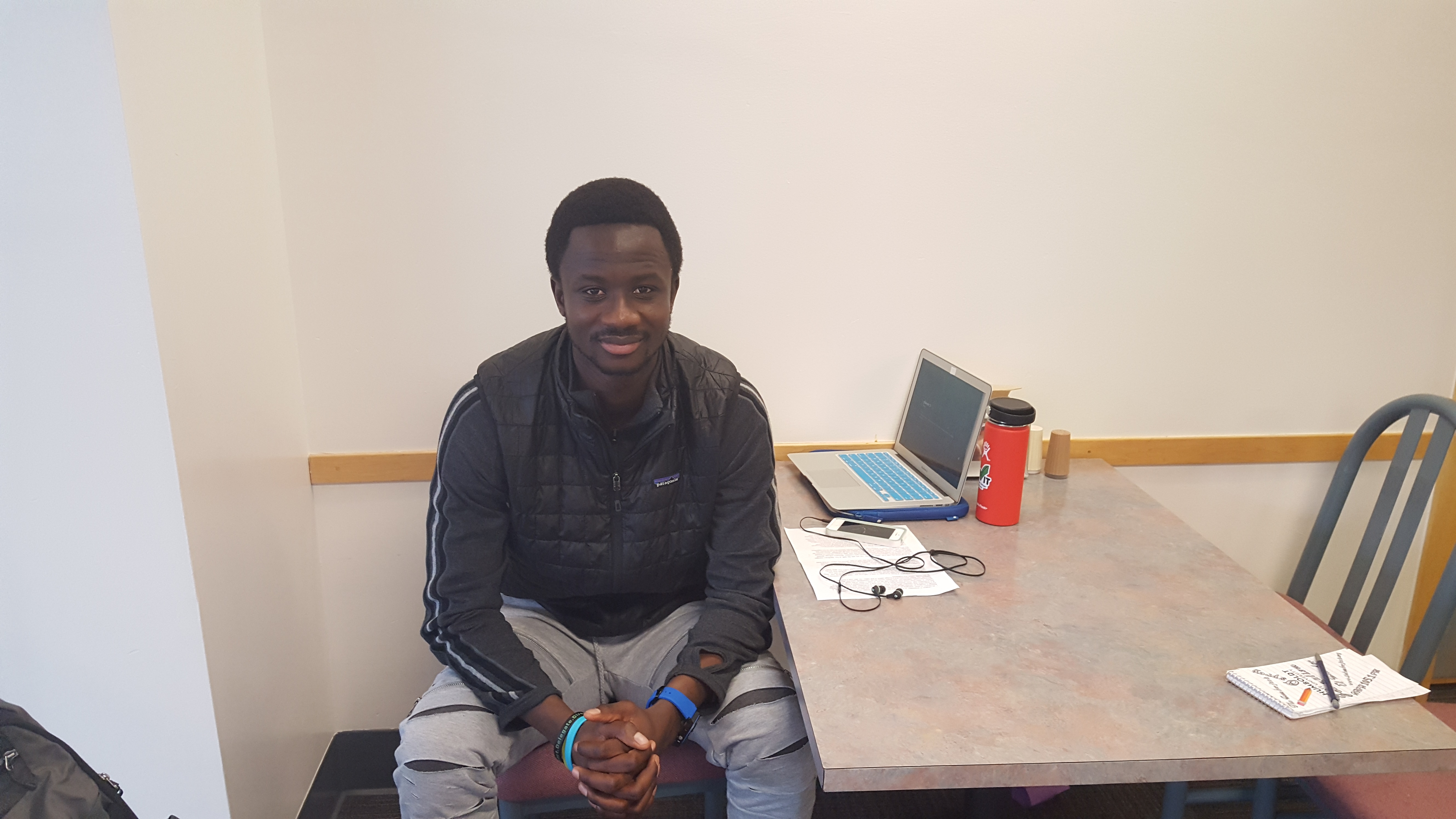
Moussa Sy is a 21-year-old junior at HSU, majoring in environmental science. Sy moved from the country Mali, located in West Africa, to Ojai, California in 2011 at the age of 16.
Every year scholarships are given to African students, to give them the opportunity to come to America and study. The scholarship is good for three years.
Sy was awarded this scholarship and began attending a boarding school in Ojai, where he was determined to learn English.
One of the toughest things for Sy was learning English once he came to the United States. Back home in Mali, he grew up speaking French and a mix of other African dialects.
It took Sy about a year to learn the language, he would study night and day trying to master it, while taking an English as a Second Language course at his boarding school.
Humboldt State was not Sy’s first choice when he thought about college. Sy had hopes of playing Division two, or Division three basketball before an injury hindered his plans. Sy broke his leg during his senior year of high school, which lead him to start considering other options in college besides playing basketball.
Humboldt State’s Environmental Science program caught Sy’s attention, and with a combination of the program and the Humboldt scenery Sy chose to attend HSU.
Upon arrival at HSU Sy attempted to join the Humboldt basketball team, however lingering injuries prevented him from playing.
This did not deter Sy from playing sports. In the fall of 2016 Sy joined the HSU soccer team and played the position of center guard. Sy felt welcomed by the guys on the squad from the very first day of practice. Sy admitted it was a little strange being the new guy, but his teammates helped him make an easy transition to team.
Sy was forced to stop playing after only one semester do to a heavy school and work load. Sy is currently enrolled in 15 units and works 20 hours per week on campus.
“I would wake up at 5 a.m. every day to get to the 6 a.m. soccer practice. I would not get home until 10 p.m. which left no time for studying or doing homework, just go straight to bed to wake up for practice the next morning,” Sy said. “ It was just too much to handle.”
Thinking back on his first week at HSU, Sy recalled it being an interesting environment.
“The smell, and people were so different here at HSU, it was a little overwhelming seeing all the people,” Sy said. “The redwood forest stuck out the most though, that and the air was more pure than city air.”
Due to financial issues Sy has been unable to return to his home in Mali to see his family, specifically his mother who was Sy’s hero growing up. Sy’s father would travel a lot for work while Sy was growing up, so his mother acted as head of the household.
Back home Sy would play or watch soccer every day, his favorite team is Manchester United. Sy knew that in America soccer was not the most popular sport, but had to admit he was still shocked that people here really do not follow as much as back home in Mali.
Sy’s plan for after graduation is to stay in America for awhile, perhaps around Santa Barbara, California, and gain some experience in the working world. Once he returns home, Sy hopes to help the underprivileged children of Africa.
“Children are the future, and I would like to one day build my own orphanage to help the children of Africa,” Sy said.
The war on our public education system is on. Betsy DeVos’s appointment as the Secretary of Education is the first indication that our education system is in trouble. DeVos’s devastating record of promoting the deregulation and privatization of schools is the signal for all public school students to arm up with their cell phones and keep their representative’s on speed dial.
DeVos showcased her ignorance on running the public education system during her confirmation hearing which was only compounded by the denial of the second round of questioning.
DeVos has never worked with or attended public school. She has no government experience or experience in running a large organization, and yet she has been deemed fit to run our nationwide education system.
The last two decades of DeVos’s life has been dedicated to the promotion of for-profit charter schools that offer weak accountability standards. DeVos also tirelessly advocates for vouchers to redirect public funding to pay for these private and religious schools.
The problem with this is that the money would come directly from taxpayers’ pockets. You and me. Not only would we have to pay for these new schools, but we wouldn’t have the opportunity to check their credibility or hold them to basic education standards.
DeVos has extreme views on the way our schools should run. In a 2001 interview with The Gathering, a Christian philosophy organization, DeVos said she wants to use these vouchers to “confront the culture in ways that will continue to advance God’s kingdom.”
Critics of DeVos are worried about student civil rights. Devos has made it clear that she doesn’t understand the Individuals with Disabilities Education Act and it is possible and likely, that DeVos may move to reverse the Obama administration’s direction on LGBTQ student accommodations and the policies dictating how to handle instances of sexual assault.
Our public education system needs reform. Not to be gutted and replaced with an unchecked privatized corporation.
Free food, films, and lectures from professors working internationally.
By Morgan Brizee
International Education Week is back at HSU. During International Education Week students, staff, and the community can listen to speakers address what is going on around the world from those doing research and work across the globe.
The International Education Week events are being held Feb. 13 through 17 from 9 a.m. till 9 p.m. in room 209 in the library fishbowl (unless otherwise noted on the schedule).
Ariana Hendren, a 22-year-old HSU International Studies major, is the president of the Global Connections Club at HSU and is responsible for managing the volunteers that work at each event.
“The lectures of International Education Week are both motivational and helpful for those who are interested in gaining more information about traveling and working abroad or studying international issues,” Hendren said.
Most of the speakers of the event are professors who work at HSU and do international research. Other speakers who are not HSU professors are the key note speaker which is Dr. Marga Gual Soler who is the project director at the Center for Science Diplomacy at the American Association for the Advancement of Science, Dorothy Ngutter who is a diplomat in residence, Erik Jens who is an instructor at the Department of Defense, and Sarah Sedlack who is an HSU alum and founder of a sex education program in Kenya called “What’s Not Said”.
Dr. Alison Holmes, HSU assistant professor of politics and program leader of the international studies department, said that school usually gets the guest speakers by anyone who is interested usually because it is hard to get people who are available to come up to HSU.
“Who we can get is often the first criteria,” Holmes said. “I’ve been working hard in the last two or three years to ensure CPS [College of Professional Studies] and CNRS[College of Natural Resources ] also have speakers and are engaged and having the keynote seemed like a good way to make sure that our colleagues in CNRS were also really involved in International Education Week.”
Holmes is also speaking during International Education Week on Feb. 15 at 9 a.m. in room 209 in the library fishbowl. Her lecture is called Global Diplomacy: Upside Down and Backwards.
International Education Week this year will have a different impact than past years because of President Donald Trump’s “Muslim” ban.
Mathew Derrick, HSU assistant professor of geography and co-organizer of the International Education week, said that international education is of most importance now because of what is going on politically.
““International education is always important, but it is especially important at this point in time,” Derrick said. “In short, it is critical that HSU students–and the broader citizenry–develop higher levels of geographic-global literacy.”
The definition of geographic-global literacy from National Geographic is the ability to use geographic and global understanding and reasoning to understand far-reaching decisions.
During International Education Week students can enjoy food, music, and films from around the world to fully submerse themselves into learning about the different cultures.
Celicia McLean, a 22-year-old HSU International Studies major, said that she is going to go abroad for work after she graduates in May so she is excited to listen to related speeches.
“International Education Week has a wide variety of discussions on issues and other aspects about our world presented by incredibly knowledgeable and experienced scholars,” McLean said. “The evening events are especially great locations for cultural exchanges through food, film, and music and are a must for a culture enthusiast, like myself.”
Even after graduating HSU, some students still feel connected and feel a want and need to give back to the school in some way. Sarah Sedlack graduated from HSU in 2013 with a BA in Psychology and was excited to be able to share her progress of the campaign, What’s Not Said, with the school during International Education Week. She will be giving her lecture on Feb. 15 at 10 a.m. in room 209 in the library fishbowl. Her lecture is called Let’s Talk Sex (In Kenya). Her lecture is talking about her campaign with teaching people to normalize talking about relationships and sexual health.
“It also feels amazing to be sharing a passion project and receive so much positive feedback from the community here, both on and off campus,” Sedlack said. “Because when communities benefit from international prevention efforts in the face of major sexualized violence and public health issues, all communities everywhere, benefit because we are all connected.”
Whether students are wanting to travel abroad for fun, work, school or just want to learn about what is going on around the globe, International Education Week will go over all of these and more.
Christiana Frye, HSU coordinator at the International Center, said that students should choose a couple of interesting lectures that are being given whether it be educational or just for fun.
“There’s all different kinds of things from all over the world, information about Africa, information about food justice, teaching abroad,” Frye said. “I also encourage people to attend one of the fun things in the evening because there is free food, on Monday night, there is good international food.”
Undocumented students have a right to an education and a safe place to foster that education. Students shouldn’t have to worry about being prejudicially profiled and deported. The new Trump administration’s policy on immigration is threatening to do just that.Fear for the well-being of our undocumented students has existed at HSU throughout Trump’s campaign and has only increased since his inauguration. President Rossbacher released a statement Jan. 31. Reassuring the HSU community that the administration stands in support with our undocumented students and is exploring options, but with our cities of sanctuary under fire we want to know what concrete actions HSU can take in protecting our community. Trump’s executive order, Enhancing Public Safety in the Interior of the United States, threatens sanctuary cities and school campuses. The order states that sanctuary jurisdiction ‘willfully violates Federal law in an attempt to shield aliens. Under the new administration, any place maintaining sanctuary status is to be denounced. Punishment for not cooperating with this directive is the removal of federal funding. Rep. Duncan Hunter, California Republican, introduced legislation that extends this consequence to sanctuary campuses that do not work with Immigration and Customs Enforcement.This affects University federal funding through the financial aid program and student loan debt forgiveness. The law calls for 100 percent compliance with federal immigration requests. If the threat of the withdrawal of funds is credible, how does HSU plan to take care of not only the undocumented students but students who can’t handle the fiscal burden this executive order could levy? Hearing the words of support from administration is always comforting. Undocumented students only want the opportunity of higher education and a chance to make their way just like American citizens. This attempt to create a safe haven is more than appealing but under federal law, what are our real options? The Lumberjack urges HSU’s administration to do more in the way of making our student community feel safe and secure during their time at HSU.
This website uses cookies to improve your experience. We'll assume you're ok with this, but you can opt-out if you wish. Cookie settingsACCEPT
Privacy & Cookies Policy
Privacy Overview
This website uses cookies to improve your experience while you navigate through the website. Out of these cookies, the cookies that are categorized as necessary are stored on your browser as they are essential for the working of basic functionalities of the website. We also use third-party cookies that help us analyze and understand how you use this website. These cookies will be stored in your browser only with your consent. You also have the option to opt-out of these cookies. But opting out of some of these cookies may have an effect on your browsing experience.
Necessary cookies are absolutely essential for the website to function properly. This category only includes cookies that ensures basic functionalities and security features of the website. These cookies do not store any personal information.
Any cookies that may not be particularly necessary for the website to function and is used specifically to collect user personal data via analytics, ads, other embedded contents are termed as non-necessary cookies. It is mandatory to procure user consent prior to running these cookies on your website.