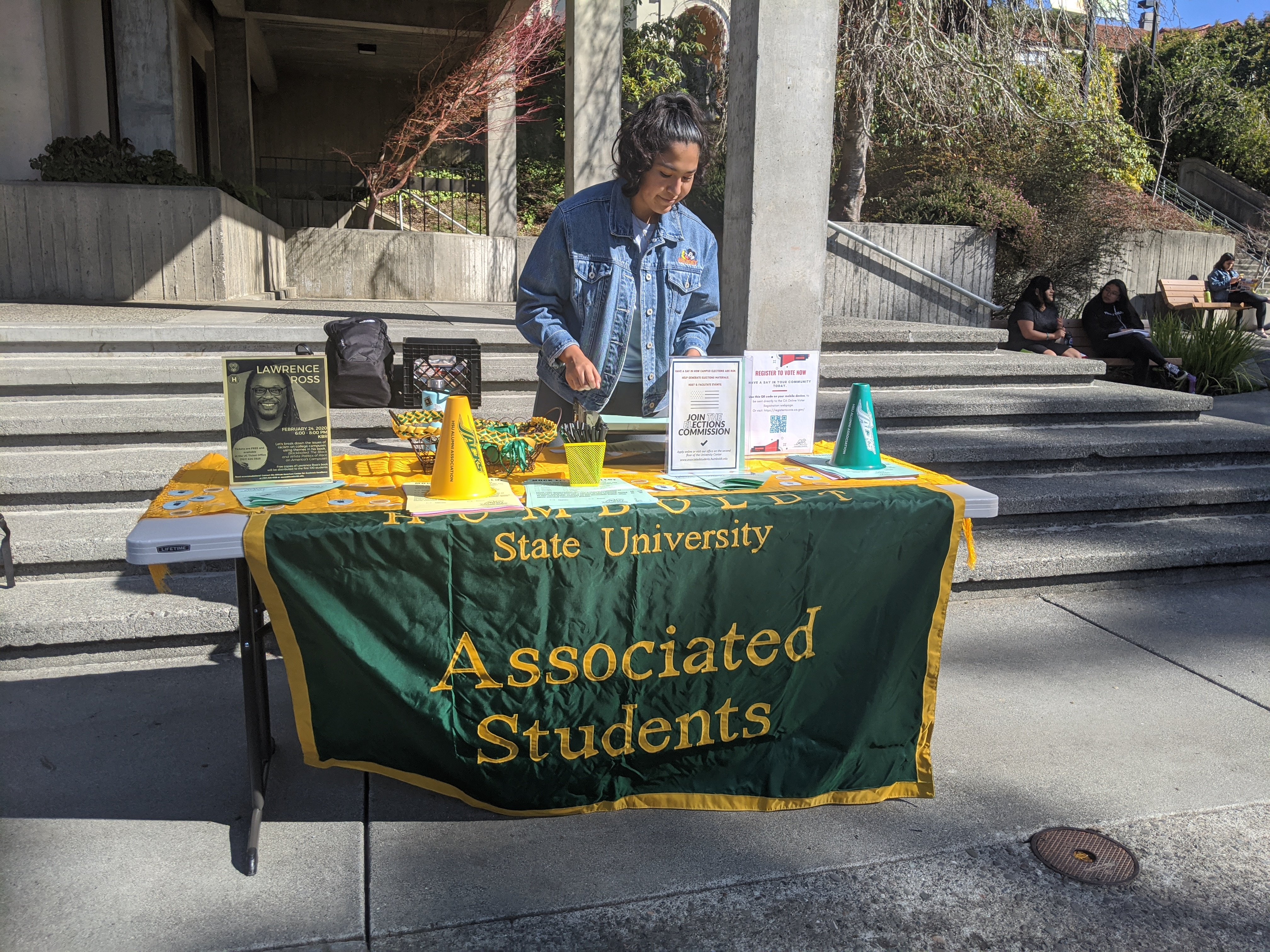
Associated Students’ elections are coming fast, yet empty seats and uncontested positions stay plentiful. Fifteen positions stand open for election with only nine candidates on the ballot and write-up so far. Current A.S. members Chase Marcum and Giovanni Guerrero are running for the only contested seat, the presidency. Students have until April 14 to run as a write-in candidate, however.
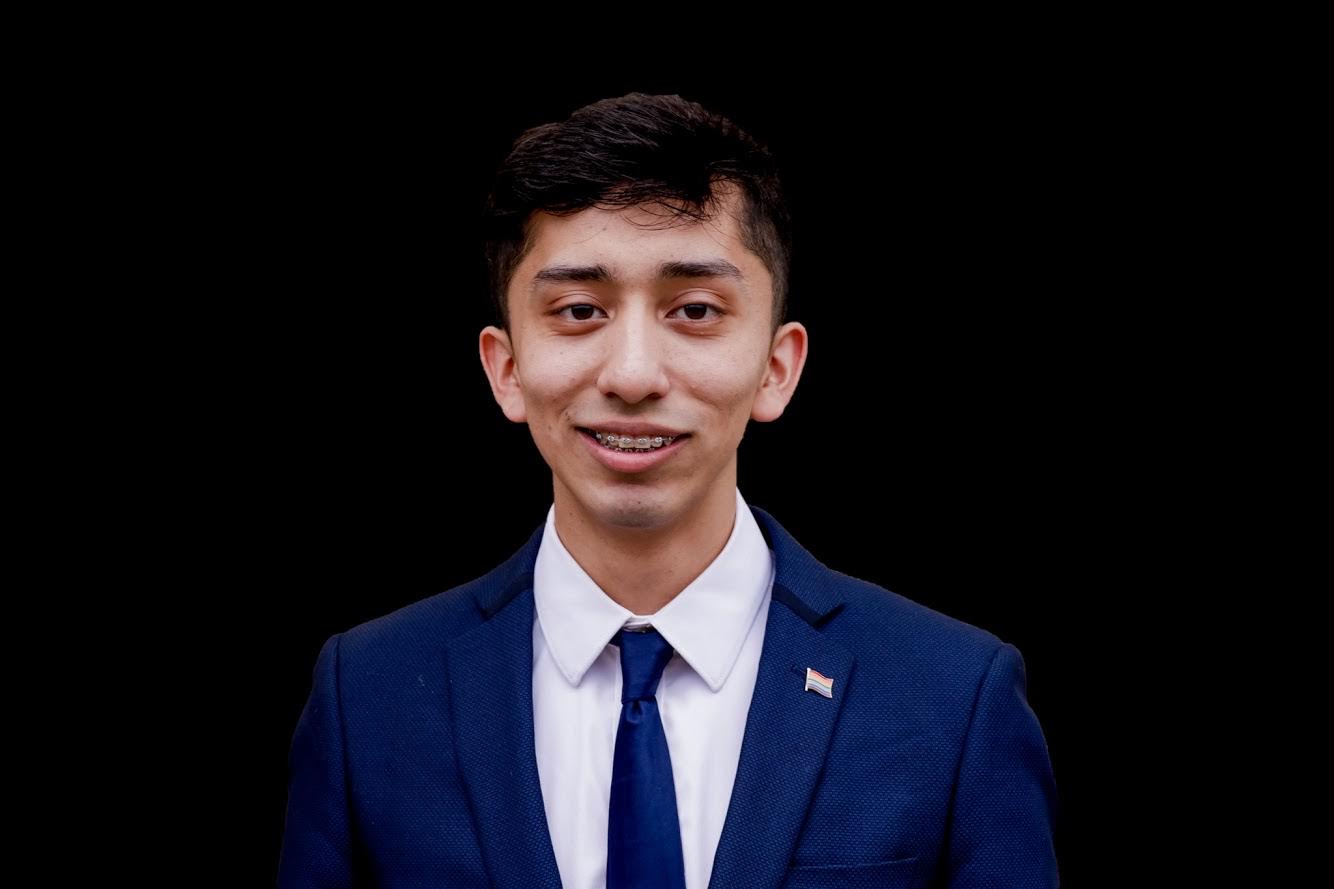
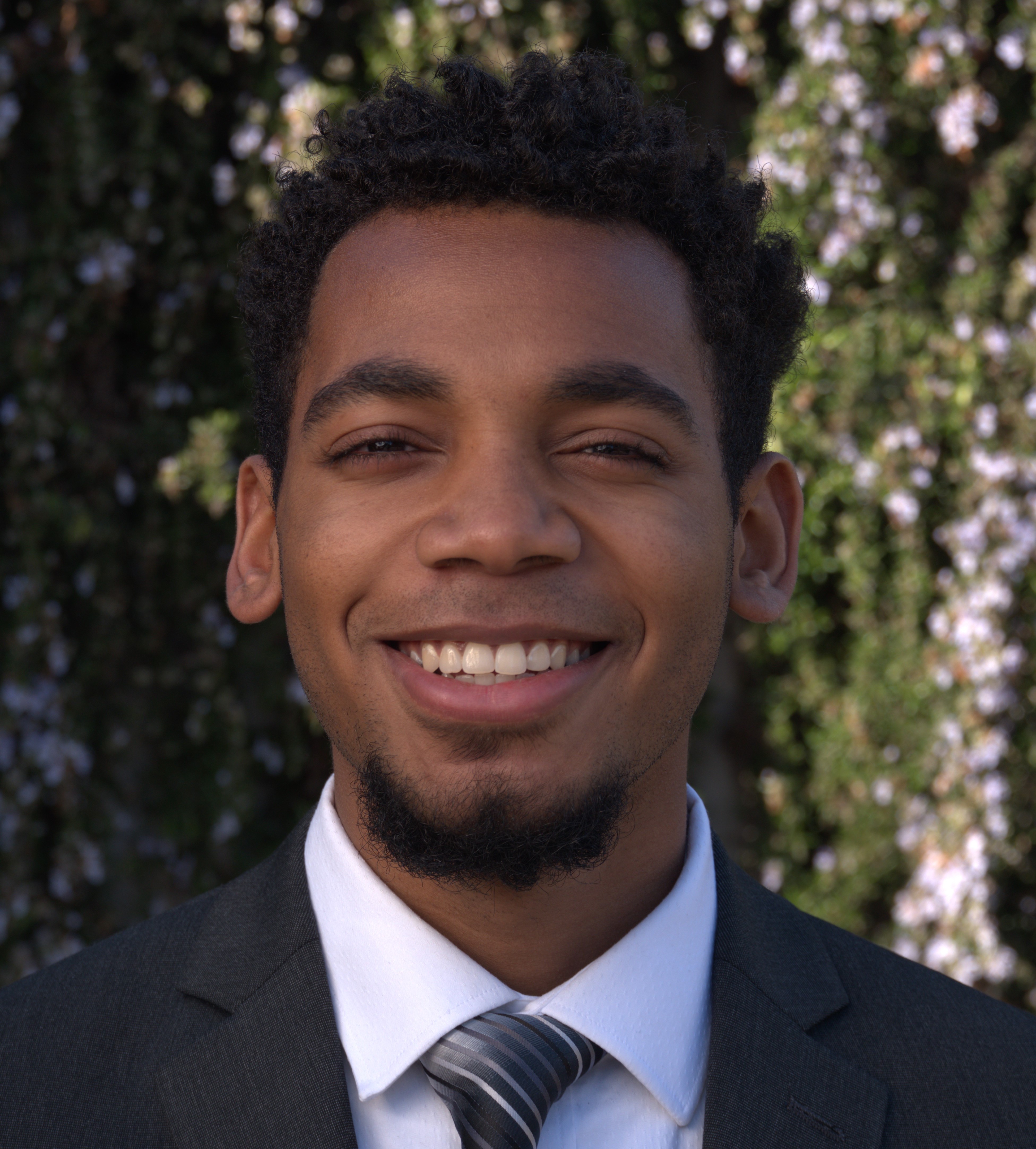
Four particular candidates bring unique attention from outside the rotation of previous A.S. board members. One such candidate is Sawyer Chrisman, a communications major, seeking out the position of Administrative Vice President. Similar to most eventual members of the A.S, Chrisman was encouraged by a current member to run.
“I’m good friends with Chase,” Chrisman said. “We were talking about A.S because beforehand when I got to Humboldt, I was president of my student government community college.”
Other first-time A.S. members running for positions include Payton Belle, Gerardo Hernandez, and Sebastian Taylor.
Elections will take place between April 18 to April 22 via emails sent to each Cal Poly Humboldt students’ official school email. The election will be done by choice voting, in which students choose candidates from most preferred to least preferred. The candidate who receives the most preferred votes in an amount of 50% plus one wins. Certain positions which represent the university’s specific colleges, such as the College of Natural Resources & Sciences Representative, may only be voted on by students majoring in that particular college. Before elections take place, however, candidates will be expected to participate in a public debate and campaign speech on April 14.
“Candidates will debate against those candidates that are running under the same position,” current A.S. President Lizbeth Cano Sanchez said. “It will be a 20-minute debate [for each position]. These debates will take place via a Zoom webinar and in-person in Nelson Hall East 106.”
Candidates who run uncontested are only expected to give a speech. Prior to and after the debates, candidates are highly encouraged to campaign all across campus after seeking approval at the Office of Student Life located within the SAC. This is especially imperative to late write-in candidates whose names will not explicitly be found on the ballot.
“Do not pressure anyone, do not make anyone feel like they need to vote for you,” Cano Sanchez said. “We do not want to make our students uncomfortable, especially if you’re about to be one of their leaders.”
Final results will be first published on April 25 and the transitional A.S. Board meeting on May 6.
Only 5.6% of students eligible to vote did in last year’s A.S. election cycle. In order for a true majority of student participation, the A.S. must encourage a little under 3,000 students to vote. A lack of time and contesting candidates only serve to prove the difficulty that the association has ahead of itself. For more specific information about the elections, you can email as-staff@humboldt.edu or call (707) 826-5410.
News Editor Carlos Holguin explains why he is worried about the next four years.
I remember sitting with my Dad on Nov. 3, 2016, and silently watching the election results come in.
It was his first election, having just become a United States citizen after years of being a permanent resident. He was always on the outside looking in, encouraging everyone in the house to vote every primary and general election.
The happiness I saw earlier in the day when he cast his first ballot was drained away with each new state’s results.
After Michigan’s results were announced I decided to call it, having to go to bed with the knowledge that the country let my father down. He stayed up until the last states were called, going to bed with the belief that the country he loved so much did not love him back.
For the next four years, that haunting realization would rear its head on more and more frequent occasions. Red hats and flags striking fear, hate speech spray painted on the walls and yelled from passing trucks. Fourth of July celebrations were spent inside in fear of violence.
With those grim reminders came the terrifying conclusion that nothing was going to change. Every few months a new scandal would come and go, ones that would end ordinary presidencies, and I would become more scared of the responses from his followers locally and nationally.
No matter who wins the presidency in this current election, I, along with many other Latinx and BIPOC around the country, am still going to be scared. Scared of the possible violence that may come with whatever the results may be.
Since the announcement of his campaign, President Trump has had an uncanny way of bringing hate and vitriol to the surface. For some it was a wake up call to what America really was, but for the rest of us it was nothing new. The quiet parts were just being spoken out loud.
It may be an uncomfortable truth for some, but one that many in my place have faced. The United States will also be a land knee deep in the blood of a racist history that still stirs trouble into the modern day.
A history of scapegoating Latinx people with things like Operation Wetback, where over a million Latinx people were forcibly removed in the largest mass deportations in US history, and its everlasting effects on the immigration system that cages asylum seekers.
It is reflected in the of killing Indigenous tribes under the guise of Manifest Destiny and the unjust killing of Black people at the hands of police brutality.
That’s not something that can be put back under the floorboards of this nation.
Hate that strong never fades away. It won’t under a Biden presidency, it certainly won’t under a Trump presidency. It will continue to fester, divide and instill fear into the marginalized masses across the nation.
I remember one of the first nights after moving to Arcata and going to the store late at night to buy supplies for a bonfire. The cashier, who was so friendly to my friend turned to me, the warmth from his face fading and said, “what do you want, boy?”
A few months back a stranger driving by called me a wetback as I stood on the corner waiting to cross the street.
Both times I continued along as much I could without letting it show, much like I did when I heard those same words and comments at age 8, 15, 18 and every year since.
It’s the same words that I expect to hear after Nov. 3, as the country once again reveals its true colors. Every year of my life the United States has refused to face the consequences of the past to create a future where I, and others in my position, won’t be scared every four years.
Columnist Dobby Morse shares their take on the presidential candidates
I tried. I tried to watch it, but like everything else Trump is involved in, it was a farce.
Within the first 15 minutes, Trump dodged the question as to when the new justice should be nominated by talking about Amy Barrett’s qualifications. He lied about his very public taxes, called the Coronavirus the “China plague,” implied that Biden was stupid for forgetting the name of a place and bragged about football, of all things.
I am by no means, a fan of Biden. He is a creepy old white guy that has been accused of inappropriately touching several women. Trump has done much worse. Biden has a plan for the Coronavirus, including free testing, Personal Protective Equipment and a nationwide mask mandate.
He has a plan for the climate crisis that includes the Green New Deal, rejoining the Paris climate accord and an end to fossil fuel subsidies. Trump, as Biden said repeatedly, does not have a plan.
Trump’s biggest problem is the inability to self-reflect. The media has been largely negative towards him. He is a pathological liar and it is the media’s job to expose lies. He has shown no ability to listen to experts or politicians who do not undeservedly love him.
Rather than take a minute of his 74 years of life to reflect on why people don’t respect him, he goes on defense.
Biden, despite Trump’s opinion, is smart. He brings up his experience as a senator and vice president to show he knows how to do the job. He talked about the Coronavirus deaths as people, rather than statistics. He talked about Trump’s history of lies and lack of a plan to showcase his opponent’s incompetence.
A horrific outcome of the debate is an increase in recruitment for the White supremacist group, Proud Boys. When asked to condemn them, Trump replied, “Proud Boys, stand back and stand by.”
The hate group has since adopted this quote as a slogan and an endorsement by Trump.
We live in a world where incredibly dangerous people are world leaders. We live in a world where fundamental and private rights are in danger. We live in a world where a few people can decide the course of history.
So vote. Check your registration status, and if you aren’t already getting election mail, find out why. History has its eyes on you.
Dobby Morse is a columnist for The Lumberjack and is an HSU student.
Newly Elected Associated Student Board prepares from the 2020-21 school year
Former Associated Students, Student Affairs Vice President and AS Legislative Vice President Jeremiah Finley will be returning to Humboldt State University next year as the President of AS.
“We’re here to deliver some genuine change,” Finley said. “We’re in a place where we haven’t been before. But I’m optimistic and we should all be optimistic about the direction we’re about to head in.”
Over the summer Finley will be focusing on creating guidelines for allocation processes and beginning to tackle the four-point approach he campaigned on.
“It’s gonna take more than just one person to advocate that something happens,” Finley said. “My leadership style is not centralized. I’m very much a person who’s gonna take input from everybody.”
Finley acknowledges there are students on campus that didn’t vote for him, and not without reason.
“Ultimately, I know that 258 students voted for the runner-up. With that being said, I know 258 students still believe that those points that that candidate brought up were valid, so we want to recognize that.”
Unique to this year, the new AS board will be meeting several times through out the summer, to get a much needed head start.
“This platform allows me to be a voice for all students. I don’t take that for granted.”
Jeremiah Finley
“I think that the work needs to be done,” Finley said. “That way when we move into the actual academic year, we’re able to hit the ground running.”
AS Representative for the College of Art, Humanities and Social Sciences for the 2019-2020 academic year, Montel Floyd will be returning to the AS board next year to serve as an At-Large Representative. He chose to shift roles to gain access to the entire student body.
“This platform allows me to be a voice for all students,” Floyd said. “I don’t take that for granted.”
Malluli Cuellar, Social Justice Equity Officer for AS 2019-2020, is also moving into a new role as the Legislative Vice President-Elect. Cuellar chose to run for the new position largely due to her interest in chairing the Board of Directors.
“I hope to foster an inclusive and welcoming environment at each Board of Directors meeting,” Cuellar said. “While also making sure that Associated Students is running as best as it can internally, and that our codes and bylaws are setting up Associated Students to be the best it can be.”
Floyd intends to spend his next year with the board focusing on breaking down communication barriers between students and administration and ensuring student safety.
“I love advocating for students,” Floyd said. “Listening to their concerns and finding ways to solve the concerns as a collective is what I do best.”
Cuellar believes in the power of student advocacy and students’ collective ability to promote institutional change on campus.
“I want to push for Associated Students to continue to actively uplift the student voice and encourage our students to become involved in the governance of our campus by joining committees or writing resolutions.”
Malluli Cuellar
“The student advocacy that occurs within Associated Students is what inspired me to run for elected office for the very first time,” Cuellar said. “And it is what has kept me involved with Associated Students.”
One of Cuellar’s goals for the coming year is to build and foster an environment that is inclusive and provide a safe space for collaborative thinking and change.
“I want to push for Associated Students to continue to actively uplift the student voice and encourage our students to become involved in the governance of our campus by joining committees or writing resolutions.”
With only seven students elected to the AS board for 2020-21, there are still plenty of positions open for students interested in joining. Incoming AS President Finley advocates that all students take the opportunity to share their voice.
“I would recommend everybody to do it,” Finley said. “It’s empowering. You get the chance to show who you are and put your twist and your spin on what advocacy is and what it should look like, and you end up creating some really creative solutions to old problems.”
Giovanni Guerrero makes his case for the Associated Students presidency
Born and raised in southern California, Giovanni Guerrero is an openly gay, first-generation Latinx student. Coming to the end of his junior year, this is Guerrero’s first time running for a position with Associated Students, and he’s aiming straight for the top—the presidency.
While Guerrero lacks a background with AS, he might make up for with a background working with the Federal Government. Last summer, he attended an internship with the Bureau of Land Management Eastern States division in Washington D.C. The division is an office of the BLM, a branch of the Department of the Interior. He spent time working with fellow interns in a geospatial segment of the Eastern States division—work that involved collaborating on several projects simultaneously.
As an environmental science major, Guerrero brings preservation into the discussion as the foundation of his platform.
“We have resources on this campus that help those students. And I think it’s very essential that we prioritize those resources and make sure that those resources aren’t seeing drastic reductions.”
Giovanni Guerrero
“We have some terrific resources on this campus, but over the next two years we’re gonna be facing $20 million in budget reductions, and that’s a big, scary number,” Guerrero said. “Those reductions will probably come in the form of student interests. So, it’s very important that we recognize the challenges that we’re gonna face, and we’re very vocal about it so that we can protect important resources.”
Humboldt State University is home to many students in need, including those facing housing and food insecurities, as well as mental health issues.
“We have resources on this campus that help those students,” Guerrero said. “And I think it’s very essential that we prioritize those resources and make sure that those resources aren’t seeing drastic reductions.”
Guerrero advocates for more energy to be spent on the promotion of these resources. One idea is to feature a ‘program of the week’ on the HSU homepage because the current navigation system does little to support them.
“I really wanna focus on promoting what Humboldt State has to offer,” Guerrero said. “Because our resources can’t serve the students that they’re meant to serve if they don’t know they exist.”
“I think he would be a great leader because he understands the complexities in debates, that sometimes we have to find productive ways to maintain arguments we can’t end, and because he is so eager to make HSU a better place for students who feel left out.”
Aaron Donaldson, debate team coach
As the only upcoming senior running for the position, Guerrero has the most respective experience on the HSU campus and the challenges faced by its students.
“I’ve been very fortunate to experience different areas around campus,” Guerrero said. “It’s really opened up my perception to how diligently students are working.”
As well as working for Recreation Sports on campus, Guerrero also worked at the J. He’s also involved in several student clubs including the running, climbing and debate clubs.
Aaron Donaldson, coach of the debate team, praised Guerrero as a genuine, sympathetic listener.
“I would describe Gio as thoughtful, careful as an advocate and a good student,” Donaldson said. “I think he would be a great leader because he understands the complexities in debates, that sometimes we have to find productive ways to maintain arguments we can’t end, and because he is so eager to make HSU a better place for students who feel left out.”
If elected president, Guerrero intends to improve HSU’s social media. That way students interested in attending the university will know what the campus has to offer. He advocated that all students take advantage of the opportunities at hand, especially clubs.
“His ability to anticipate, plan for and respond to issues in dynamic and creative ways makes him an asset to any group or team he chooses to be a part of.”
Katherine Earle, Recreation Sports
“Clubs have really helped me to connect with other people, and I think they’re really essential to building community on campus,” Guerrero said. “That leads to retention as well. If you feel connected to your campus and where you live and where you study, then you’re more likely to stay.”
One of Guerrero’s bosses at Recreation Sports, Katherine Earle, spoke highly of his performance.
“Gio has already proven himself to be an effective leader while working for Rec Sports at HSU,” Earle said. “His ability to anticipate, plan for and respond to issues in dynamic and creative ways makes him an asset to any group or team he chooses to be a part of.”
Another priority for Guerrero, as president, would be to ensure the security of student jobs.
“A lot of students depend on those jobs and I think the more opportunities we have on campus, the more attraction we will get at HSU, and more retention,” Guerrero said.
One of the biggest short-comings of AS, according to Guerrero, is active student engagement.
“You could probably go up to any student on this campus and ask them, ‘Do you know what an Associated Student does or who they are?’ And they’ll probably tell you ‘No, I have no idea.’”
Guerrero wants to create avenues to engage with the student body and inform them on what’s going on at an administrative level and within AS.
Guerrero said this will help prioritize what students want from AS. If he wins, Guerrero is aware he has his work cut out for him, and he said he’s up for the task.
“I’ve faced a lot of different barriers and a lot of different challenges, and just in general, it’s really helped me to be a resilient person,” Guerrero said. “And I think that’s the key to success. Cause you’re gonna face a lot of obstacles throughout life, and have to learn how to handle those obstacles.”
Associated Students Legislative Vice President Jeremiah Finley runs for the presidency
Former Vice President of Student Affairs and current Associated Students Legislative Vice President Jeremiah Finely has placed his hat in the race for the 2020-2021 AS presidency.
Majoring in political science, Finley’s passion for politics can be traced to the last presidential election.
“When I watched the 2016 race, I think something just awoke within me,” Finley said. “It got nasty, it got dirty, and that’s something that I don’t want to see happen ever again.”
“When he walked into our first meeting, I knew he was going to be a great leader then.”
Jourdan Lamar, Resident Hall Association president
A sophomore in high school at the time, Finley didn’t put his passion into practice until arriving at Humboldt State University. In his first semester, Finley became president of the Cypress Hill Council after attending the info session and receiving encouragement from the council to run. Current Residence Hall Association President Jourdan Lamar first met Finley when he joined the council.
“When he walked into our first meeting, I knew he was going to be a great leader then,” Lamar said. “He was advocating, asking questions, joining other organizations to learn more about HSU. Since then, I have had the opportunity to work alongside him in many organizations on campus, seeing him become a great student leader.”
From day one, despite the threat of consequences, Finley said he’s made it his number one priority to place students’ interests first.
“Due to this I have been penalized a lot, in various different ways,” Finley said. “Whether it be not getting the votes I needed to pass certain legislation, or not receiving the same type of social treatment. Ultimately, I bet on the students consistently. I think that all my students are worth it.”
Jeremiah is a super bright and motivated student leader, both in AS as the legislative VP and housing as an RA. On multiple occasions, he has combined those roles by educating his residents about current issues on campus as well as bringing his residents to campus events.”
Jenessa Lund, executive director of Associated Students
Finley began making regular visits to the AS office in his first semester on campus, familiarizing himself with the organization. He attempted to apply for the position of social justice and equity officer, but was turned down due to lack of a college GPA. He returned the following semester and was appointed to the position of student affairs VP in February of 2019.
Executive Director of AS Jenessa Lund has worked closely with Finley since he became a part of the board.
“Jeremiah is a super bright and motivated student leader, both in AS as the legislative VP and housing as an RA,” Lund said. “On multiple occasions, he has combined those roles by educating his residents about current issues on campus as well as bringing his residents to campus events.”
Finley’s favorite thing about being part of AS is watching students engage with one another and the various programs on campus.
“When I get the chance to see how my advocacy helped them along the way, those moments are my favorite moments,” Finley said. “I get to interact with folks, I get to hear about their passions, what they’re excited about, what they’re doing.”
“It’s been tough. It’s been really hard trying to navigate that, especially as a person of color in this predominantly white institution. It’s really difficult to make sure I can still be myself, but at the same time, be professional.”
Jeremiah Finley
Beyond the rewarding big-picture projects, Finley finds plenty to be proud of in his daily routine.
“My day-to-day experience is something special,” Finley said. “It’s always fast-paced, there’s always something new going on—so you have to really adapt quickly to the changing scenarios. One thing you hear in the morning could be totally different from what you hear in the afternoon. And it’s been tough. It’s been really hard trying to navigate that, especially as a person of color in this predominantly white institution. It’s really difficult to make sure I can still be myself, but at the same time, be professional.”
Despite everything HSU has to offer, including various programs and resources, a sense of community on campus and the attention paid to student voices, Finley sees endless room for improvement.
“I don’t think anything should really stay the same, and I mean that,” Finley said. “There’s just too much complacency and I think there’s a lot that needs to change.”
Finley intends to place more emphasis on incorporating student engagement within AS.
“Yeah, we have the AS board of directors, but that’s really geared towards AS and what AS wants to do,” Finley said. “But I feel like we don’t have a place where all students can come together to talk about what we all want to do and want to see happen. So, if we can make a central hub where we can talk and just listen to each other and hear what we want to do as a collective, then I think we can truly start generating some great ideas to change the way this campus runs.”
Finley said he understands the struggles college students face, whether it’s coming up with enough money to pay bills or buy groceries, providing for your family or setting aside time for schoolwork.
“But ultimately you just gotta keep going, you gotta keep fighting. And so I’ll keep fighting, I’ll keep going and I’ll keep being persistent, that way I can make sure I can advocate for students.”
Jeremiah Finley
“It’s just this balancing act and I think there’s a lot of things that can be easier for students, things that I currently have no direct control over,” Finley said. “So, if I can put myself in that position to really help, then that’s what I want to do.”
As legislative VP, Finley referred to his magnum opus, his great work, as the AS Constitution, Codes and Policies. He put together a full constitution revision packet over the course of the 2019-2020 school year, including new bylaws and revisions for out-of-date codes and policies. Presented to the board back in February, the revision wasn’t passed.
“It hurt,” Finley said. “It really did hurt when the board decided not to think carefully or listen carefully to what I was saying. I think from that moment I knew that if I wanted to bring the change that I want to see in HSU, and I think that we all deserve here, then I can’t continue in this role.”
Finley said he’s not only prepared, but is determined to take on bigger challenges and face greater consequences in the name of improving the lives of students.
“Some days are good, some days are better than others,” Finley said. “But ultimately you just gotta keep going, you gotta keep fighting. And so I’ll keep fighting, I’ll keep going and I’ll keep being persistent, that way I can make sure I can advocate for students. And come election time, I have faith that I’ll be elected for AS president for the next academic year.”
The South Carolina gaffe is only his most recent in a series of slip-ups
In a speech given in South Carolina Feb. 24, Joe Biden asked for support in his campaign—but he may have forgotten what exactly he was campaigning for.
“My name is Joe Biden, I’m a Democratic candidate for the United States Senate,” Biden said, a Democratic candidate for the United States presidency.
This, however, was not the first time that Biden has slipped-up on the campaign trail. During the Nov. 20 Democratic debate in Atlanta, Georgia, The Guardian reported Biden said he was supported by the only African American woman to be elected to the Senate, Carol Moseley Braun.
“We have this notion that if you’re poor, you cannot do it. Poor kids are just as bright and just as talented as white kids.”
Joe Biden
Senator Kamala Harris, who was on stage with him, had to chime in and remind him she was also an African American woman elected to the Senate.
One of his most glaring slip-ups was during a town hall meeting in Iowa hosted by the Asian and Latino Coalition. According to a New York Times article, Biden was talking about education and challenging students.
“We should challenge students in these schools to have advanced placement programs in these schools,” Biden said. “We have this notion that if you’re poor, you cannot do it. Poor kids are just as bright and just as talented as white kids.”
He did attempt to amend his statement when he continued.
“Wealthy kids, black kids, Asian kids, no, I really mean it,” Biden said.
This isn’t the only gaffe that puts into question his views on race. On June 18, 2019, during a fundraiser event in New York, Biden recounted his time in the Senate in the 70s. Specifically, working with Mississippi Senator James Eastland and Georgia Senator Herman Talmadge, two senators who opposed civil rights and desegregation, according to CNN. He was comparing the Senate from that period to the Senate today.
The big question regarding this most recent slip-up is whether or not it will affect his poll numbers that currently have him sitting in second place behind Bernie Sanders.
“At least there was some civility. We got things done. We didn’t agree on much of anything. We got things done. We got it finished,” Biden said. “But today, you look at the other side and you’re the enemy. Not the opposition, the enemy. We don’t talk to each other anymore.”
Kamala Harris spoke out again against Biden.
“To coddle the reputations of segregationists, of people who, if they had their way, I would literally not be standing here as a member of the United States Senate, is, I think it’s just, it’s misinformed,” Harris said.
Even before this election cycle, Biden has made questionable remarks regarding race. According to an article by CNN, when he started his 2008 presidential race, he referred to Barack Obama in a way that drew scrutiny from many people.
“I mean, you got the first mainstream African American who is articulate and bright and clean and a nice-looking guy,” Biden said during an interview with the New York Observer.
The big question regarding this most recent slip-up is whether or not it will affect his poll numbers that currently have him sitting in second place behind Bernie Sanders.
Mike Bloomberg is just another billionaire with outdated views looking for attention
We’ve all seen the campaign ads. “Mike will get it done,” they profess. What exactly has he done? He’s had 64 sexual harassment cases brought against him. He’s expanded the infamously racist stop-and-frisk policy in New York. He’s spied on the Muslim community. And he has bought his way into the primary.
Not to bring everything back to another bigoted New York billionaire who got bored with having too much money and went into politics, but Mike Bloomberg certainly does remind me of someone.
Were it not for the mark on the ballot calling him a Democrat, people would assume based on his fiscal policy and social track record that he was at least a centrist-Independent, if not a conservative-Republican.
Despite being a registered Republican from the beginning of his political career up until 2007, and an Independent until 2018, he chose to run as a Democrat. Presumably, to gain the support of both Republicans and party-line Democrats.
He’s an authoritarian, plain and simple. Party isn’t the real issue here. He cares about power.
Bloomberg has a long history of bigotry. While his predecessor, Rudy Giuliani, first implemented stop-and-frisk, it was under his watch that the program grew to the widespread excuse for police brutality and racial profiling.
When it was brought up by critics that New York police officers were disproportionately targeting black and brown communities, he gave the rationale that, “That’s where all the crime was.” In addition, he justified having undercover officers stalk Muslim New Yorkers as preventative measures against another 9/11.
“We had just lost 3,000 people at 9/11,” Bloomberg said in an interview with PBS Feb. 27. “Of course we’re supposed to do that.”
If anything, Bloomberg is a more dangerous version of Trump. He’s smart. He knows that putting up a polished front and playing up the establishment card will make him look like the opposite of the current president.
Aside from his dubious past, Bloomberg’s current policy proposals are anything but progressive. While his website claims that Bloomberg will defend equal rights for LGBTQ+ Americans, he has stated as recently as 2019 that he considers transgender individuals as just “some guy in a dress,” or “he, she, or it.”
On his website, aside from a reference to overturning the military ban, he has nothing to say on transgender rights. By considering equal rights for the transgender community to be reaching too far, he betrays the entire LGBTQ+ community.
Being progressive is about supporting the oppressed and the marginalized. No ally insults the people they claim to stand with behind their backs and considers the value of their identities negotiable.
According to his website, his plan for climate change is to “restore America’s leadership in fighting the global climate crisis, propel the United States toward a 100% clean energy future, make environmental justice a national priority.” These promises are all incredibly vague, and his campaign has been silent on the specifics of how they’d achieve any those goals.
General promises of somehow solving climate change aren’t going to help us. If we want this planet to be livable for ourselves, our children and our grandchildren, we need to take serious and quantifiable steps to ensure it. The science says we need ambitious action. All he offers are glossy advertisements.
If anything, Bloomberg is a more dangerous version of Trump. He’s smart. He knows that putting up a polished front and playing up the establishment card will make him look like the opposite of the current president.
I’m not afraid that he couldn’t defeat Trump in an election. If Bloomberg wins the Democratic primary, the general election won’t matter. It’s a self-serving billionaire in office either way.
Mock election prepares HSU students for local issues on ballot
Humboldt State University’s Associated Students held a mock election with the help of the Politics Club Feb. 24 in the University Center Quad. On the ballot were candidates for both the Democratic and Republican primaries, as well as local election measures.
“We’re gathering data from the student population about what would happen if we held the election today,” Legislative Vice President of Associated Students Jeremiah Finley said.
The mock election gave students the opportunity to take a closer look at which candidates were on the ballot. When the results are released, students can gain a new insight into the perspectives of other students.
“Some of the measures that were posted—I was like, ‘What is this?’”
Tashenea Young
“We’re trying to make sure our students at HSU are more educated about the decisions that they’re making,” Finley said. “This will give the students the opportunity to go back in and really investigate.”
Tashenea Young is a computer science and math education major who felt more informed about the upcoming election because she participated in the mock elections.
“Some of the measures that were posted—I was like, ‘What is this?’” Young said.
Young said mock elections like the one on Monday are a step in the right direction for helping to inform the student body, but events like the mock election need more publicity to reach more people.
“It’s better than nothing,” Young said.
Real measures weren’t the only questions on the ballot. It also included a mock referendum on fluoridated water.
Paul Hilton, an HSU politics major and member of the Politics Club, helped organize the mock election. He was curious about how students would vote concerning fluoride. He said that although there wouldn’t be a referendum on fluoridated water on the ballot in March, it was close to being on the ballot in November.
“It was a step away from Arcata putting it on the Arcata ballot,” Hilton said. “After a whole lot of community city hall meetings and discussions, it was a 3-2 vote to not put it on the ballot.”
Hilton hoped the mock election would help professors as well as students.
“One of the questions was, ‘What day of the week is worst for you when it comes to nighttime deadlines?’” Hilton said. “So, one of those actually has informative results that we’ll tally up that might be able to go to professors.”
Although Hilton was glad for the mock election, he thought there was room for improvement. The ballots were printed on colored paper and didn’t resemble voting material. Hilton said this may have discouraged potential voters.
“People are more likely to pick up a pamphlet,” Hilton said. “If I was just going by, I’d be like, ‘What’s this kid’s construction paper kind of stuff just hanging out? I’m not interested in this.’”
California votes Tuesday, March 3. Associated Students are now more experienced for their real elections, and students can take more knowledge on local issues to the polls.
In 1960, the Kennedys tried to steal the White House. A Kennedy ended up living in the White House, so they may have succeeded. Maybe they stole the election, maybe they didn’t. But because we have the physical ballots, no one can dispute that they tried. In the modern world of voting machines and election apps, we might never know who tries in the future.
If you wanted to rig an election in 1960, you needed a plan, a large team, a smokey basement in Chicago and a lot of money. You needed someone to go to a graveyard and register corpses to vote. You needed to catalog abandoned houses and figure out how many dead or fake people you could put in each one. You needed to physically go out and beat up a few voters—possibly even commit a murder or 20. You needed a large operation full of trusted members willing to do all of this. And perhaps most importantly, you needed to be fine with everyone knowing that you just tried to rig an election.
Stealing an election was incredibly difficult, dangerous, obvious and almost completely ineffective if one candidate had a significant lead. Voting with a paper ballot clearly isn’t a perfect system, but the attempted rigging of the 1960 election is almost common knowledge. We have the paper to prove it.
We know what paper is. We hold it in our hands almost every day. Casting a ballot is an anonymous and easily-understandable physical action. It’s traceable at every step of the way, and we can tell if the ballots don’t make it to their destination.
Conspiracy with physical ballots is possible, even probable, but not effective on a large scale. Certainly, physical ballots aren’t perfect, but they are hard to mess with in a way that will significantly affect an election. There are doubts that, even with all the tampering and violence, the attempted rigging of the 1960 election even changed the result.
Electronic voting, on the other hand, is vulnerable in ways paper voting is not. When you stand in front of a voting machine, there are some questions you probably have.
The most important part of getting people to vote is the trust that the vote goes somewhere. It’s counted. The vote is verifiable, and the process is easily understandable.
Who made the voting machine? Who paid for it? When you press a virtual button on a screen, how do you know the machine tallies it, or gives it to the right candidate? How do you know it reaches a database where it will be counted? Do you know what the software being used is, how it works, if it’s secure, how to tell if it has been tampered with, if the machine is connected to the internet — as many inexplicably are— or if it has been calibrated properly?
The odds are that you don’t. I don’t. Nobody does. Nobody besides the people who managed to remotely change a voting machine’s final tally. Nobody besides interested parties in our own system who might want the election to turn out a certain way. Voting machines are incredibly vulnerable. They are outdated upon release, not tested properly, easy to manipulate and often connected to the internet for some reason.
You don’t have to call on the crime syndicates of the country anymore. You don’t have to organize a massive conspiracy. All you need to rig an election is to know how to hack a virtually-undefended voting machine.
The most important part of getting people to vote is the trust that the vote goes somewhere. It’s counted. The vote is verifiable, and the process is easily understandable.
Electronic voting doesn’t just open our system up to attacks from malicious parties. It erodes the trust between the voter and the system. This would be true even if everything was perfect—even if there was no one meddling. But there is someone meddling. We know there is. There always has been and there always will be. It wasn’t just 1960 and it wasn’t just Democrats. The question isn’t, “Who would rig an election?” It’s, “Who wouldn’t rig an election?”
If someone’s going to attempt to rig the 2020 election in the same way as the 1960 election—and they possibly already have—I want them to have to work for it. I want them to have to go out to graveyards, get their hands dirty and threaten some grandmas. I was disappointed by the Iowa caucuses. These days it’s hard to tell the difference between epic, mind-blowing incompetence and election theft. If these elections are going to be a complete farce, ditch the apps and voting machines. If there’s going to be ballot burning, I want to see the flames.
The first ever voter van at HSU will be running on Nov. 6.
During the Nov. 6 midterm elections there will be a free “voter van” for HSU students running all day long.
This van will offer free rides from HSU Library Circle to the Humboldt County Offices of Elections in Eureka and back to HSU. Vans are scheduled to leave on the hour from 11 a.m. to 7 p.m. and will be coming back from the elections office every hour starting at 11:30 a.m.
HSU student, Nathaniel McGuigan is the regional Mecha co-chair of Northern California. McGuigan said that both Mecha and the North Coast People’s Alliance lent a hand to set the voter van in motion.
“Each organization came up with individual ideas,” McGuigan said. “Mecha [developed] the student side and North Coast People’s Alliance developed it on the community side to get people to vote and register to vote [conditionally].”
The voter van idea came about from the California state law that now allows voters to register the same day as elections, known as conditional voting. According to the California Secretary of State’s website:
“Conditional Voter Registration is a new safety net for Californians who missed the Oct. 22 deadline to register to vote or update their voter registration information for the Nov. 6, General Election.”
There’s only one office in Humboldt County that offers conditional voting. That’s at the Humboldt County Offices of Elections in Eureka. McGuigan said that the voter van is aimed for students who have not registered but want to register and vote on the same day.
“This election cycle it is available for students but in other election seasons it will be available for everyone else,” McGuigan said. “This is currently a trial run.”
Carrie Peyton-Dahlberg is the vice chair of the steering committee for the North Coast People’s Alliance and had a big part in putting this together.
“We’re hoping to increase voter participation and get as many people as possible to get to the county elections office to vote,” Peyton-Dahlberg said. “We want to help people to vote because it’s important.”
McGuigan said that Mecha wants to help students get their voices heard. He said that he knows everyone does not have access to a vehicle which is essential for students whose polling place is not on campus.
“We wanted to not only provide a voice but a mechanism that students can use to exercise their voice,” McGuigan said. “Voting is just one step in the political process in creating change, it is something that everyone can participate in no matter your political stance.”
This story has been changed from its original version on Jan. 25 at 4:24 p.m.
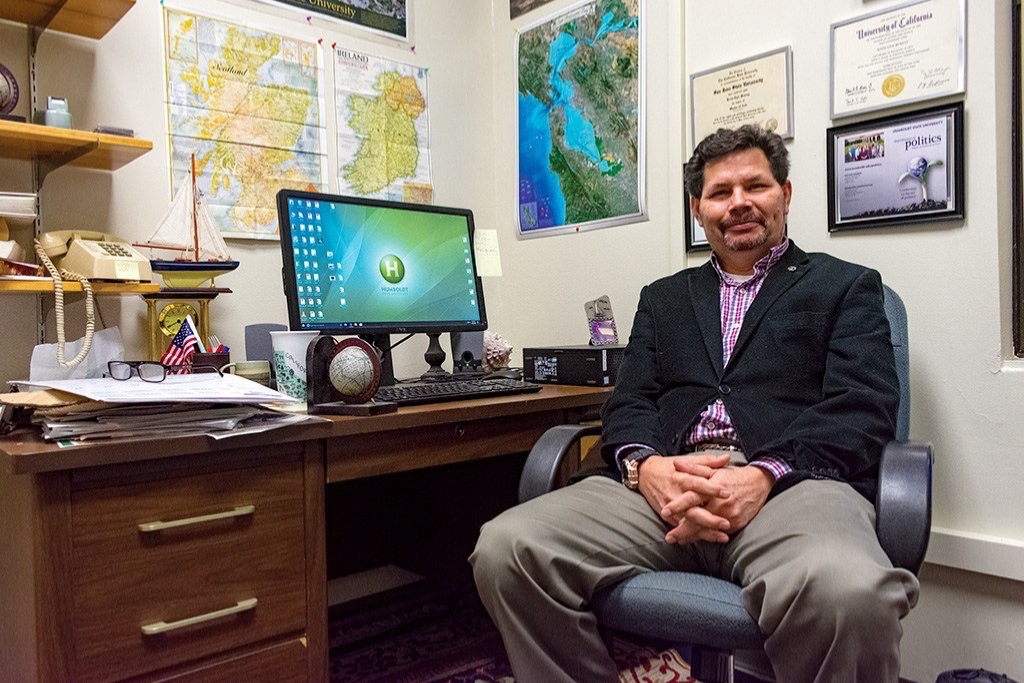
Humboldt State University’s political science professor, Kevin Murray, will be running as a candidate to represent California Assembly 2nd District in the upcoming elections.
Murray has taught college-level political science classes since 1989. He started teaching at HSU in 2015, and plans to take his political experience to the next level.
“I’ve taught political science for around 30 years and I figured it was time to convert that knowledge into action,” Murray said.
Murray is running as a Democrat and bases his political platform on four main issues:
Universal health care for California. Murray believes that every Californian should have full health care coverage in order to vastly improve our quality of life. The universal health care plan Murray wants includes mental health care and drug rehabilitation, helping those who are often ignored.
A green economy. By switching from our over-reliance of non-renewable energies, such as oil, to greener and more sustainable energies, we can help lead the way to show that there is a profitable way to have a green society.
Debt-free college. Murray states that an undergraduate college degree now has about the same equivalent to a high school diploma in the 1940s. Because a college experience is becoming essential to get better jobs, there shouldn’t be as large of a barrier for those with low-income backgrounds. By reducing or completely erasing college tuition, Murray hopes to have college graduates leave without debt hanging over their heads.
Affordable housing. With debt and homelessness on the rise in California, Murray wants to bring peace of mind to Californians by pushing for affordable housing. By introducing rent stabilization, tiny homes and Measure J Housing to the 2nd District of California, Murray plans to fix our states housing problem.
If elected as representative for the California Assembly 2nd District, he will represent several counties such as Humboldt, Trinity, Del Norte and Mendocino. Jim Wood is currently the incumbent representing California Assembly 2nd District.
“It’s a daunting task, but one I’m well prepared for,” Murray said.
Murray says that running for office won’t interfere with his current teaching, as his activism will take place only during weekends and, if anything, will enhance how he teaches.
“I don’t really have anything to lose,” Murray said. “I can take my 30 years of experience into the position or I’ll be able to walk away with the knowledge gained from running and incorporate it into my classes.”
The primary election is coming up on June 5, and the general election is occurring on November 6. If you’re interested in getting into contact with or volunteering for Kevin Murray, head to his website at http://murray4ca.homesteadcloud.com/
This website uses cookies to improve your experience. We'll assume you're ok with this, but you can opt-out if you wish. Cookie settingsACCEPT
Privacy & Cookies Policy
Privacy Overview
This website uses cookies to improve your experience while you navigate through the website. Out of these cookies, the cookies that are categorized as necessary are stored on your browser as they are essential for the working of basic functionalities of the website. We also use third-party cookies that help us analyze and understand how you use this website. These cookies will be stored in your browser only with your consent. You also have the option to opt-out of these cookies. But opting out of some of these cookies may have an effect on your browsing experience.
Necessary cookies are absolutely essential for the website to function properly. This category only includes cookies that ensures basic functionalities and security features of the website. These cookies do not store any personal information.
Any cookies that may not be particularly necessary for the website to function and is used specifically to collect user personal data via analytics, ads, other embedded contents are termed as non-necessary cookies. It is mandatory to procure user consent prior to running these cookies on your website.