The Lumberjack


Students Serving The Cal Poly Humboldt Campus and Community Since 1929

Tag: filmmaking

  • Humboldt students screen their work in film showcase

    Humboldt students screen their work in film showcase

    By Emma Sjostrom

    Originally printed February 22, 2023

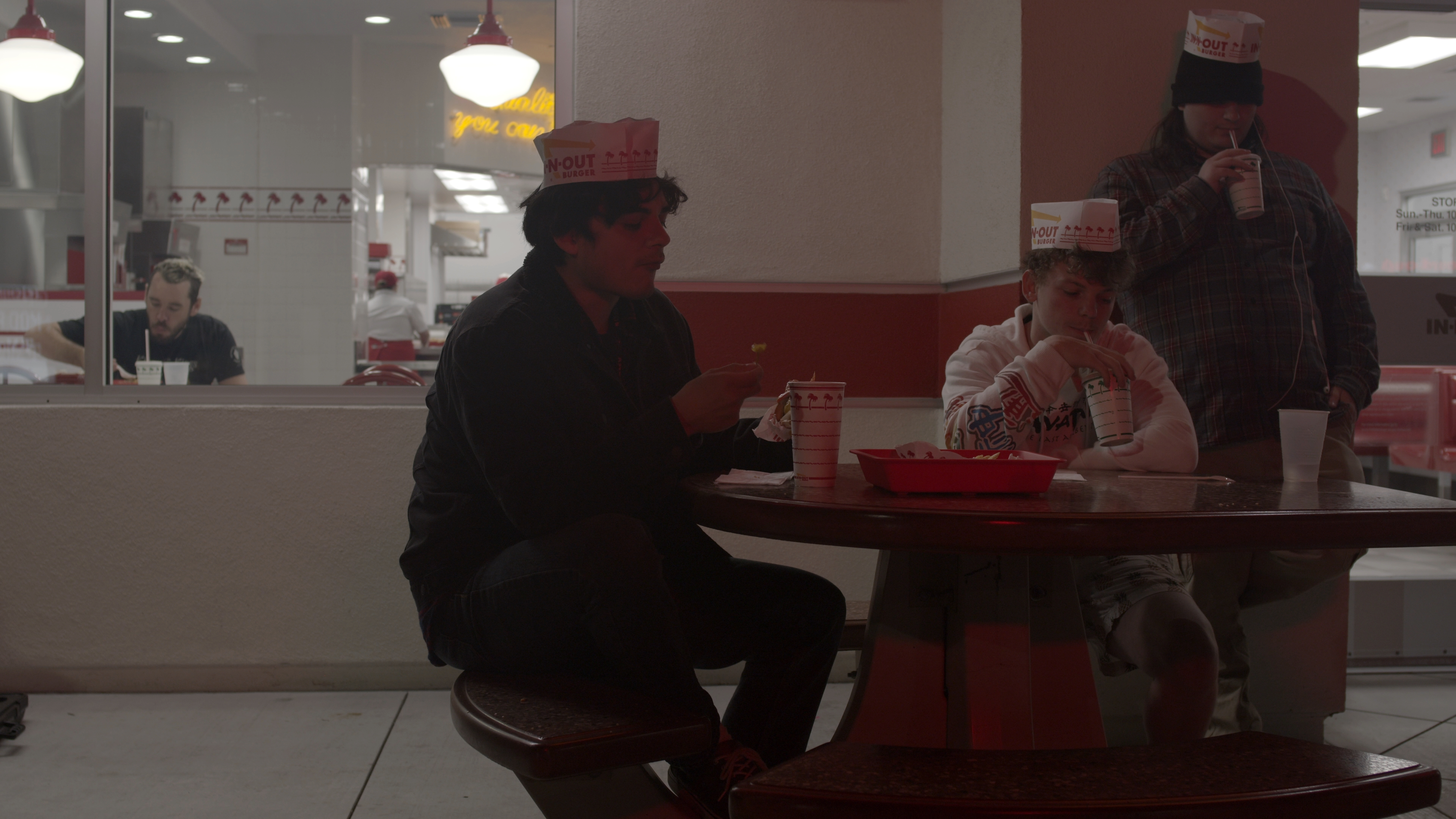
    Cal Poly Humboldt film students screened their films at the Film III Showcase on Feb. 21 at the Van Duzer Theatre. Featuring five short films that students worked on during the 2022 Fall semester, the event served as a chance for students to showcase their work to the campus community.

    With guidance from instructor Sarah Lasley, students wrote and directed the films in the showcase last semester. Lasley remarked that past semesters presented difficulties, with students not having access to practical experience. However, the students’ ambition particularly inspires her.

    “The students are so talented, so it’s been exciting because they all have these huge ambitions,” Lasley said.

    Spanning numerous genres, the films exhibit students’ artistic vision through their timely dialogue, emotional music, and methodical cinematography.

    Richard Schild’s comedy “Monster & Me” features an obnoxious roommate who just so happens to be a red-eyed cryptid. A suit-clad protagonist follows and is in turn pursued by mysterious beings in Matthew Mason’s ethereal thriller “Woman in Gold.” A satirical documentary depicts an ambitious and chaotic Bigfoot-hunting YouTuber in Mara Lifquist’s “The Search.” Daniel Delgado spins a comedic depiction of chaotic friendship in his coming-of-age film “Bad Hombres.” A horrific demon-like creature lurks in the depths of a young person’s home in Izzy Starr’s “Where Will You Hide?” The lineup undoubtedly had viewers chuckling, hiding, and looking on with intrigue; all within an hour’s time. 

    A still from Matthew Mason’s “Woman in Gold.”

    Beyond giving students the chance to look back at their hard work, Lasley mentioned the importance of students gaining the sometimes anxiety-ridden experience of screening their work to a broader audience. Delgado commented on the nerves that can come up from such an experience. 

    “It’s cool, but also overwhelming because I have never done [the showcase] before,” Delgado said. “But it’s cool, it does feel a little rewarding.”

    A soon-to-be graduate from the film program, Delgado remarked at the experience of working with and screening the film alongside fellow student directors, how they all bring their personalities to their work. “[We all] see the world differently and that reflects in our films,” Delgado said. “So it’s just cool to collaborate with people like that. I think we all inspire each other, and that gets us excited for what we do.”

    As film students get that experience, the campus community meanwhile gets to see the artwork that students have created. Through the showcase, Lasley hopes that students in the film program and beyond can see the possibilities of what can be created.

    “It’s one of those moments where I feel like you’re watching people exceed their own expectations of themselves in a way,” Lasley said. “And that’s my favorite. That’s why I teach, to show people that they’re bigger than they think.”

    Students whose films were featured are currently working on new productions for final film projects, which will be featured in the Fall 2023 showcase later this year.

  • Cal Poly Humboldt Directors in the spotlight

    by Carlos Pedraza

    In the Van Druzer theater on Thursday, March 3 for the first time since the start of the pandemic student films were shown to a live audience. Around 40 people came to the showing of Cal Poly student films. Several of the films were made in the fall of 2020 there showing being delayed by the COVID pandemic.

    The short films ranged from psychedelic, documentary, serious, and funny; some of the films were a combination. The audience made sounds of laughter, shock and sadness reacting to each film with emotion equal to the film itself.

    A film director who was in the audience was Kylie Holub, a senior film major. Holub directed and wrote the film “Abstraction” in the fall of 2020. They film . During the pandemic Houlb said “ just keeping our crew really lean and realing thinking about how to tell stories with minimum actors.”

    The narrative film “Abstraction” is the story of a beach treasure hunter finding an alien artifact and the fallout of her discovery. The unknown and aliens being major inspiration for the film.

    Holub said “ you see a lot of people with metal detectors, we know very little about the ocean and aliens are fun to play around with.”

    Another director was alumnus Valerie Rose Campbell created the experimental film “Recipe for Young Mothers.”. Campbell goes through the recipe of banana bread while she narrates the experience of a young mother and her attempts to reclaim her life from an abusive relationship and societal expectations of a mother.

    The COVID pandemic heavily impacted the creation of the film Campbell said “ everything got done digitally and that was really hard.”

    The film is inspired by Campbell’s own experience in the local family system. “ How it felt so unjust for my kids and family.” said Campbell describing her own life experiences.

    There will be another film showcase in the fall of 2022 showing films created in the spring.

  • Why the Oscars Lack 2020 Vision

    Why the Oscars Lack 2020 Vision

    The Academy Awards are broken—here are some ways to fix them

    The nominees for the 92nd Academy Awards were recently announced in the lead-up to the ceremony, which will take place Feb. 9. The nominees are, for the most part, very easily predictable to anyone who is familiar with the kind of films that tend to win Oscars or other similar awards. That isn’t in itself a bad thing, but it does raise the question of how relevant the Oscars really are, and if they really live up to their supposed purpose of granting the “highest honors in filmmaking” to the “best films of 2019.”

    In recent years, the Academy of Motion Picture Arts and Sciences has been under its fair share of criticism for its notably conservative and traditional values. Indeed, the Academy does seem much more inclined to nominate and award reassuring, easily accessible films and blockbusters than they are to consider better, but less successful films.

    A film has to play for at least one week in a theater in Los Angeles County, and its theatrical release has to be the first time that it’s shown.

    Of course, as with all aspects of art, the quality of any film is subjective. But the choices made by the Academy, which is comprised of around 6,000 industry professionals, invite the questioning of their practices.

    The criteria for a film to be considered by the Academy is extremely limiting. For starters, a film has to play for at least one week in a theater in Los Angeles County, and its theatrical release has to be the first time that it’s shown. It can’t be shown on television, released to DVD or Blu-ray or streamed before that.

    Nominees like “Marriage Story” or “The Irishman” would have instantly been disqualified if they hadn’t been shown in theaters before being made available to stream on Netflix.

    This might not sound like a major obstacle at first, but that’s mostly only true for American films with a wide release. Having a decent budget and big names attached doesn’t hurt a film’s chances either. Any independent or foreign film that can’t secure a release in one area of one country is instantly not considered, regardless of how good the reviews are.

    This is just one of several of the Academy’s rules for eligibility, but it’s the most easily-understood example of how limiting the criteria is for one of the most prestigious awards a film can receive.

    Even getting past the extensive list of rules, the Academy is known for usually nominating specific types of films. On this year’s list, only two of the nine Best Picture nominees, “Little Women” and “Parasite,” are not predominantly made by and starring white men, who have been the center of the majority of films that the Academy tends to nominate and award. This is a circumstance that has been the case due to both the criteria for Academy consideration and because the Academy’s board is comprised of, in large majority, white men—a point that is often made into memes with the hashtag #OscarsSoWhite.

    “Little Women”, while receiving nominations for Best Picture, Best Lead Actress, Best Supporting Actress and Costume Design, did not receive any nominations for Best Director or Best Cinematography despite being an incredibly strong film in those categories. An article by Vulture explained how these rare films being nominated cause them to be, possibly unfairly, depended on to please all their demographics.

    “I will say that Greta Gerwig and the film are put in the impossible position of having to represent all things to all women when she became the ‘presumptive representation of all-female directors,’” Angelica Jade Bastien said. “No film can shoulder such a burden.”

    Defenders of the Academy—those who are perfectly content with the nominations—will claim that it’s simply a meritocracy—that the nominations truly represent the best films of each year with no barriers.

    However, the numerous barriers, biased board and skewed representation severely limit which films are considered for one of the most widely recognized honors a film can receive. However, unintentionally, this influences how the film-going public decides what they want to watch and how they interpret what they watch.

    Until the Academy gets some new blood into their board, stops immediately disqualifying films and more frequently overcomes the 1-inch-tall barrier of subtitles, their choices will never fulfill their ostensible purpose.