The Lumberjack


Students Serving The Cal Poly Humboldt Campus and Community Since 1929

Tag: Freshman

  • Long distance relationships come with an expiration date

    Long distance relationships come with an expiration date

    by Alana Hackman

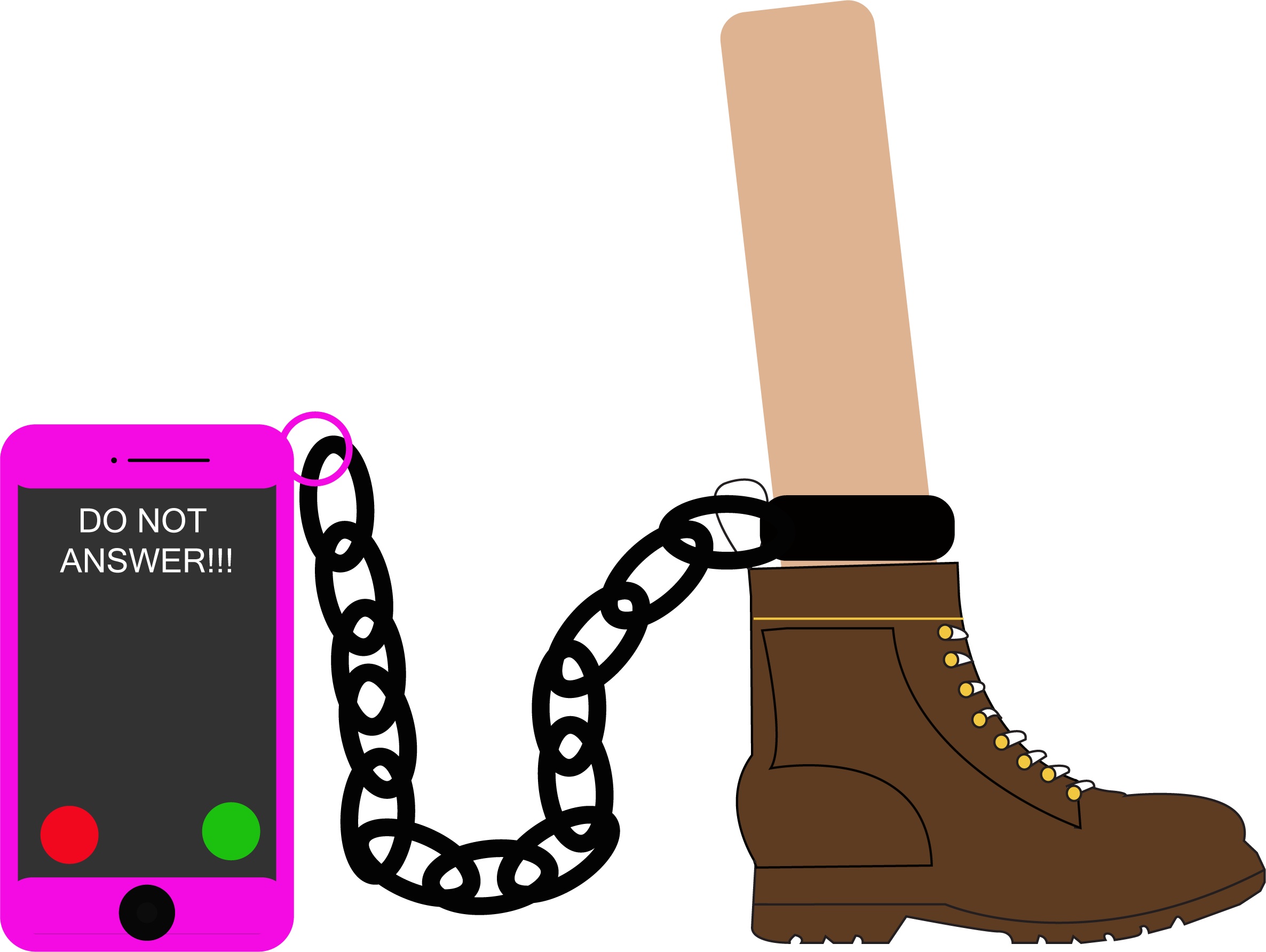
    Imagine this: you’re in your dorm room getting ready for a night out with friends with the cheap vodka your one friend with a fake ID supplied, and nothing but pure 18-year-old confidence. Adrenaline is pumping as you sashay around your roommates makeup bag strewn about your shared bedroom floor, careful to avoid speaking to them as they apply their liquid eyeliner. All of a sudden, your phone that was blasting some 2014 alternative indie throwback is buzzing. The music stops and everyone turns to you, wondering if your DJ rights should be revoked. You scramble to your smartphone, and as you flip it, over there lies an incoming Facetime call from your long-distance boyfriend. Pink heart emojis act as bookends to his contact name as you look at yourself on the screen and contemplate answering this call. 

    “Oh, it’s (some boring hometown man’s name),” you say to your friends.

    They know the weight that generic name holds in that dorm household. It’s 9 p.m. and they already called a cab, which should be there in about two minutes. You look at your phone as it vibrates in your hand, you look at the flock of young girls on your bed giving you the look – you know the one. The bordering Kubrick stare and eyes of disappointment, non-verbally asking, “Are you really gonna answer it right now?”  You gaze back at your phone and quickly say “I have to take this,” as you disconnect from the bluetooth speaker and rush out into the dank hallway of your shared living space, hoping to god your name isn’t part of the conversation that’s happening behind the door you just slammed. 

    I, too, was a victim of the unplanned long-distance boyfriend call. From my freshman year of college to my junior year, I was enraptured in my long-distance relationship. I wouldn’t say it was all bad but I will say it just took way too much energy in the long run. I was fresh out of highschool and still carrying the weight of my highschool boyfriend around. I spent nights having sleepovers over Facetime, or watching some movie that we had to perfectly time to sync over the phone. Long-distance relationships can truly show you love someone, but when does it reach the point of total time consumption? 

    It was fun in the beginning, when you were excited for each other and the different paths you took, but long-distance success is based on clear communication, and sometimes that isn’t even enough to hold the relationship together. When college and life in your new town away from your partner picks up, lots of factors come into play; jealousy, accessibility, and just the plain old feelings of missing each other. 

    When your time gets so constrained to the point of only being able to call your partner in your LDR (long-distance relationship) once a week, it can really throw an axe into your dynamic. Even if it’s clearly communicated and you’re transparent with your busy schedules, it can feel hard for your LDR partner to not feel neglected or forgotten about. They aren’t with you – they aren’t seeing your day to day schedule, and when you have to pencil in time to call them and try to keep their attention as you talk to them about your mind numbing statistics lecture, the spark can easily fizzle out. 

    You can try and keep it alive by doing movie nights for each other or sending care packages, but at the end of the day, it’s hard to feel truly loved and cherished when you’re six hours away from each other and not sure when you’ll see eachother again. 

    Honestly, I don’t think any 18-20-year-old has the emotional or physical capacity to do that either. These are such developmental ages, and trying to entertain an LDR partner in between it all can feel like a maze of confusion and a tow truck of effort. I’m not saying dump your LDR because it’s gonna ruin your social life. I don’t think I missed out much when I was in my LDR as a baby-faced college freshman, but I will say it caused some baggage in the long run. 

    Long-distance relationships seem to only be a blanket to hold on to the inevitable factor that you will break up; holding on to the very end until you have to throw in the towel. It usually isn’t pretty, and is the reason why most LDRs end over the phone or text with little-to-no closure at all. That’s gonna cause more pain in the end than just parting ways after highschool for the purpose of doing it for each other’s own benefit. Breakups are never easy, but it can give you a lot more peace of mind. You did it for your partner’s and your own self-preservation. 

    I can’t speak much on the mid-20s LDRs, but I’d have to say it’s the same. Open communication just isn’t possible without at least some weekly face-to-face conversations. Interaction in the digital world can feel awkward, less genuine and allows more time for feelings of neglect and loneliness to build up. Long distance has its expiration date; I can only see it as a temporary thing of a year max. Anything past that is just a waste of time. 

  • HSU Projecting Grave Hit to Enrollment for Fall Semester

    HSU Projecting Grave Hit to Enrollment for Fall Semester

    Freshman class projected to shrink, number of academic departments to be reduced

    For the latest information, see our story here.

    Update 11:10 a.m.: a second email sent yesterday from College of Natural Resources Dean Dale Oliver and obtained by The Lumberjack makes similar points but does not give a specific number to the expected enrollment drop for fall beyond noting that a 15-20% drop was expected prior to the COVID-19 outbreak. We will update this story when we have confirmed the numbers below. The second email is pasted below.

    Humboldt State University has issued a budget directive to take immediate action to prepare for the fall semester, including the freezing of open staff positions and the reduction of the number of academic departments, according to an email sent to faculty and staff of the College of Arts, Humanities and Social Sciences Tuesday morning.

    The email, sent by Interim Dean of CAHSS Rosamel Benavides-Garb, projected a freshmen class for fall 2020 of around 500 students, down from around 1,400 students five years ago and down from around 1,000 students for fall 2019.

    “The scale and impact of our current predicament is grave and as a result our budgetary practice has to be reconsidered and reformulated based on the simple equation of demand and resources,” the email said. “We have become, de facto, a much smaller institution, which compels us to undertake a comprehensive reset at HSU.”

    The email listed six directives, including requests to freeze all vacant staff positions, reduce the number of academic departments and develop online programs for current and transfer students to complete their degrees.

    The email promised to make the process consultative and sustainable.

    “We remain committed to “the student first” approach,” the email said, “and are extremely aware of the critical importance, now more than ever, of issues of social justice, equity, and inclusion in all we do.”


    The full email is copied below:

    Dear CAHSS Colleagues,

    On April 2, the deans of all three academic colleges received new administrative directives from Interim Provost Lisa Bond-Maupin regarding the coming academic year. The directives are a call to action, issued in response to the budget and recruitment/retention reality at HSU. The Interim Provost reiterated these directives yesterday, Monday, April 6 in her Provost/VPAA Report to the senate.

    As we all know, our student enrollment has been declining for several years and the institutional budget has been negatively impacted. The administration’s efforts to address the problem must now be reframed in light of new and profound challenges the current COVID-19 pandemic poses for HSU, and the CSU system in general.

    We are projecting a freshmen class of 500~ students across all three colleges. Five years ago, the freshmen class numbered 1,400+ students. The scale and impact of our current predicament is grave and as a result our budgetary practice has to be reconsidered and reformulated based on the simple equation of demand and resources. We have become, de facto, a much smaller institution, which compels us to undertake a comprehensive reset at HSU.

    The Interim Provost has directed the three academic deans to reduce spending and grow retention/recruitment. Her directives require our college to implement the following action areas immediately:

    1. Freeze all vacant staff positions: This is indefinite or until each college develops a plan to organize staff support within colleges and across colleges.

    2. Reduce the number of academic administrative units (departments): This needs to be planned immediately and be in place for this next fiscal year so we are reorganized starting fall 2020.

    3. Develop online degree completion opportunities for certain existing majors in the last two semesters of their programs.

    4. Develop two-year degree online completion opportunities for transfer students of certain majors beginning fall 2020.

    5. Develop a partnership with CEEGE related to workforce development, responding particularly to a post COVID-19 context.

    6. Integrate the Center for Teaching and Learning (CTL) in the development and implementation of new teaching capacity.The Interim Provost has also indicated that she expects this process to be:

    The Interim Provost has also indicated that she expects this process to be:

    · Consultative with unit leadership.

    · Consultative and collaborative across colleges.

    · Sustainable by creating new retention and recruitment opportunities.

    The deans of the three colleges have already begun discussing the directives. I have also initiated planning within CAHSS, in collaboration with the three associate dean fellows, and will continue to discuss budget with the chairs. We will move forward together, exploring multiple budget management opportunities to make our colleges strong and resilient in the face of present and future challenges. We can also regard these adjustments as unique opportunities to explore new and exciting programs to attract and serve our ever-diverse student population in a shifting and challenging workforce environment. We remain committed to “the student first” approach and are extremely aware of the critical importance, now more than ever, of issues of social justice, equity, and inclusion in all we do.

    Sincerely and in solidarity,

    Rosamel


    Email from CNRS Dean Dale Oliver:

    April 6, 2020

    CNRS Faculty and Staff

    Dear Colleagues,

    Earlier today Interim Provost Lisa Bond-Maupin sent out her report to the HSU University Senate in preparation for Tuesday’s meeting.  Included in her report was a call for collective action to prepare for fewer students and fewer resources in the next academic year.  I’ve pasted the relevant section of the Provost’s report below my signature.

    Current estimates indicate we could have 20% fewer students in Fall 2020 that we had in Fall 2019.  This reduction is significant, and we must plan over the next weeks and months so that those students who start or continue with us in the fall experience high quality, engaged learning that will prepare them well for STEM professions and advanced study.

    Three items from the Provost’s report that I want to highlight are personnel, administrative re-structuring, and online education.

    Personnel: Although we will be finishing out the two faculty searches currently underway, and ensuring we have sufficient temporary faculty to deliver our curriculum, all other hiring is frozen for the moment, including those which are currently vacant and those which will soon be vacant due to expected retirements. Through improving business processes, realigning and reorganizing staff positions, and targeting professional development we will find a way to support our educational enterprise without hiring additional personnel.  This work will be both necessary and challenging, and require collaboration with relevant unions and careful consideration of multiple factors.

    Administrative restructuring: At the Dean’s level we were already planning a partial re-assignment for Associate Dean Rick Zechman to manage the marine lab while marine lab director Brian Tissot transitions from full-time director to FERP faculty.  We are also being asked to reduce the number of administrative units in the college, meaning that some departments will be merged or reformed.  This work will be done in close collaboration with the CNRS Council of Chairs and the other two academic deans.

    Online Education: There are some programs in CNRS for which one of the following scenarios might make sense:  provide an online degree-completion option for a group of students who have a year or less left to complete their degree; provide a degree-starter program for a group of first year (or transfer) students to get started with HSU from home during the fall 2020 semester, and then begin on campus in Spring 2021; provide more online sections of general education courses for undeclared students or majors from outside CNRS.  For the moment, I recommend that faculty discuss within their departments whether one or more of these scenarios might be appropriate for their program.

    For this week I am collaborating with the Provost’s office, with the other academic deans, and with a working group of CNRS Chairs to create possible models for administrative restructuring that can then be discussed among all of the CNRS chairs the following week.  Relatively soon I will also set up a mechanism by which input can be given from across the college.

    We face a significant challenge as a college and university over the next few months and years, but I am confident that we will find solutions that serve our students and the citizens of California well.  My confidence rests solidly on the incredible talent, dedication, and creativity of our faculty and staff, whom I am proud to serve.

    Best wishes, safety, and health to you and your families,

    Dale R. Oliver, Dean

    College of Natural Resources and Sciences

    From Interim Provost Lisa Bond-Maupin’s report to HSU’s University Senate, April 6, 2020

    Realignment of Spending with Reduced Revenue

    In addition to supporting instructional continuity and Academic Master Planning, our division leadership is turning our attention to budget planning for next fiscal year and beyond. Prior to COVID-19, our enrollment picture for next academic year was apparently trending toward a 15-20% fall-to-fall (one year) student headcount decline. We were likely headed toward a reduction to the HSU budget for next fiscal year that was double that anticipated when the URPC created its annual budget recommendations to President Jackson.  While the college-going enrollment impact of the pandemic is unknown for all in higher education across the nation, it is clear that the CSU and HSU will experience further decline in student enrollment. Given the enrollment challenges felt across the state, it is likely that impaction at our southern campuses will be lifted. It is highly likely that more students will choose for financial and other reasons, in the shorter term at least, to remain at home or closer to home to study. 

    While we await the release of up-to-date enrollment projections and budget information, Academic Affairs is implementing a few immediate strategies toward student retention and recruitment on the heels of the pandemic and toward further reducing our spending. As we do so, we are guided by the URPC principles and our own commitments to meeting the instructional needs of our students and protecting employment. In addition to continuing to adjust our academic offerings for Fall, immediate strategies also include: 

    • Working with each dean and director to reduce budget allocations for FY 21 

    • Freezing hiring in all open staff positions for now and planning to absorb staff attrition

    • Working collaboratively with staff within and across colleges and budget units in Academic Affairs to reimagine and reorganize our staff support 

    • Working collaboratively with department chairs and faculty to condense the number of separate academic administrative units in the colleges 

    • Working within the Office of the Provost to realign and reorganize staffing

    • Identifying academic programs ready to continue to offer upper division major courses online into next year and beyond to: a) help students in their final semesters to study from home and complete their degrees, and b) offer new transfer students an opportunity to complete their degrees online 

    • Identifying a COVID-era retention specialist in Academic Affairs who will support the continued offering of all existing retention efforts in a virtual format and will work in collaboration with ODEI to implement inclusive retention practices at a distance. 

    Each one of us will be implicated in and needed for this work. It is tough and unavoidable at this time. Each one of us has a very important role to play, now, more than ever in maintaining close connections with our students, helping them to problem-solve their educational needs and connect to resources and to stay connected to HSU. We need our students. And I think we are finding in their response to our transformed instruction – they need us. This powerful connection will ultimately move HSU through and beyond this tough moment in our collective history to the future we envision. Thank you.
  • Voices of student science

    Voices of student science

    By | Kelly Bessem

    ____________________________________________________

    Voices of student science aims to highlight individual Humboldt State students majoring within the widespread realm of the sciences.

    ____________________________________________________________

    Alycia Padilla is a 27-year-old wildlife major from Bakersfield, Calif.

    Alycia Padilla, wildlife major. Photo by Kelly Bessem.

    Padilla’s desire to protect and take care of animals helped her choose her major.

    “When I was a child I was only allowed to watch television like National Geographic and Discovery Channel,” Padilla said. “That became all I wanted to watch and I fell in love with animals.”

    Last summer, Padilla set camera traps and collected recordings of bat sounds as part of a decade-long ecological survey. She worked with the California Department of Fish and in the mountains near Sacramento, Calif. 

    Though Padilla wants to get a job in Arcata after graduating, she has considered moving back to Bakersfield because she believes the area needs more wildlife expertise.

    “I feel like I could make some sort of change there,” Padilla said.

    ____________________________________________________________

    Sarah Franzen, 26, is a senior marine biology major. She’s originally from Lake Havasu, Ariz.

    Sarah Franzen, marine biology major, holding sea fan coral. Photo by Kelly Bessem.

    Franzen’s love for the ocean began with television shows such as “Planet Earth.”

    “That’s when I first decided that I wanted to learn how to scuba dive,” Franzen said. “So I got certified when I was 14.”

    It wasn’t until Franzen’s freshman year in college that she saw the ocean for herself. It was during a dive trip for Dixie State University in St. George, Utah.

    “That’s when I really fell in love with the ocean,” Franzen said.

    Last semester, Franzen worked in HSU’s Paul E. Bourdeau Lab making wax snails that are used for crab surveys.

    After graduating, Franzen will study manta rays in Australia and contemplate applying to masters programs.

    ____________________________________________________________

    Erica Siepker, 27, is a wildlife major and scientific diving minor from Long Beach, Calif.

    Erica Siepker, wildlife major and scientific diving minor. Photo by Kelly Bessem.

    Siepker was originally a zoology major but switched to wildlife after discussing her interests with a Humboldt State advisor. 

    “For me the wildlife degree had more practical, hands-on aspects that would take me beyond taxonomy and lab,” Siepker said. “Little did I know that HSU’s wildlife program was so widely known.”

    Siepker experiences many hands-on wildlife studies within her classes. These include the use of raptor perches to combat gopher problems, the relation between crows and human food sources and the habitat selection of salamanders in the Arcata Community Forest.

    Siepker plans to apply for an internship at Disney’s Animal Kingdom after graduating.

    “With an internship there I can study animal behavior, wildlife education and research,” Siepker said.

  • Freshman athletes adjust to college sports

    Freshman athletes adjust to college sports

    Ali Deeb, freshman forward for the soccer team just finished his redshirt season.

    Kellen Gerig, freshman guard just started his first game for the Lumberjacks against Cal State Dominguez Hills.

    AJ Mintz, freshman quarterback for the football team just finished his redshirt season.

    By Curran Daly

    Freshman basketball player Kellen Gerig had yet to start a college game. In his first start of the season he played for 17 minutes. In high school, Gerig scored 26.1 points per game and lead his team to a 24-3 record. So far for the Lumberjacks, Gerig has scored 1.1 points per game and averaged 6.9 minutes per game.

    “The hardest part is the change of competition and not playing as much,” Gerig said. “All of us were the stars of our high school and then we all get together and only five can be on the court. So it’s kinda tough to sit on the bench sometimes.”

    Gerig did not play much for the Lumberjack in the early parts of the season, but he felt a strong bond with his teammates and the fans.

    “Everyone’s really close together and we’re like a family,” Gerig said. “All of our fans get pretty into it, we know everyone on campus and in the gym.”

    Teams spend a lot of time together while playing, practicing, and studying. Ali Deeb is a freshman redshirt, who plays for the men’s  soccer team. Deeb can often be found with his friends and fellow teammates, but that doesn’t stop him from missing home.

    “The hardest part was missing my family and missing my city,” Deeb said. “I think that’s just the hardest adjustment, but eventually you get used to it.”

    Deeb is from Garden Grove, Calif. Growing up he loved nature, that was one of the factors that lead to him deciding to come to Humboldt.

    “I always really liked nature and soccer,” Deeb said. “I really wanted to play on the soccer team here because the coach showed a lot of faith in me.”

    The opportunity to play also led freshman AJ Mintz to Humboldt State. Mintz just finished his redshirt season for Lumberjack football team. He came to Humboldt State for the opportunity to learn about football but has learned more off the field.

    “I’ve probably learned more just in life,” Mintz said. “like a lot of life lessons in general, in the first six months of being here.”

    Mintz says these life lessons stem from living alone for the first time. He had an easy time adjusting to his dorm and got along with his roommate, but had to get used to 6 a.m. practices.

    “All through the season when our team was playing, the redshirts were lifting at 6 a.m. before practice. I would say that was the hardest, and not playing on Saturday,” Mintz said.

    In the future all three hope to feature predominantly for their teams. Right now they are more focused on practicing and growing as individuals. Even if that means practicing without playing.

  • Freshman student, senior player: Tyra Turner

    Freshman student, senior player: Tyra Turner

    By | Curran Daly

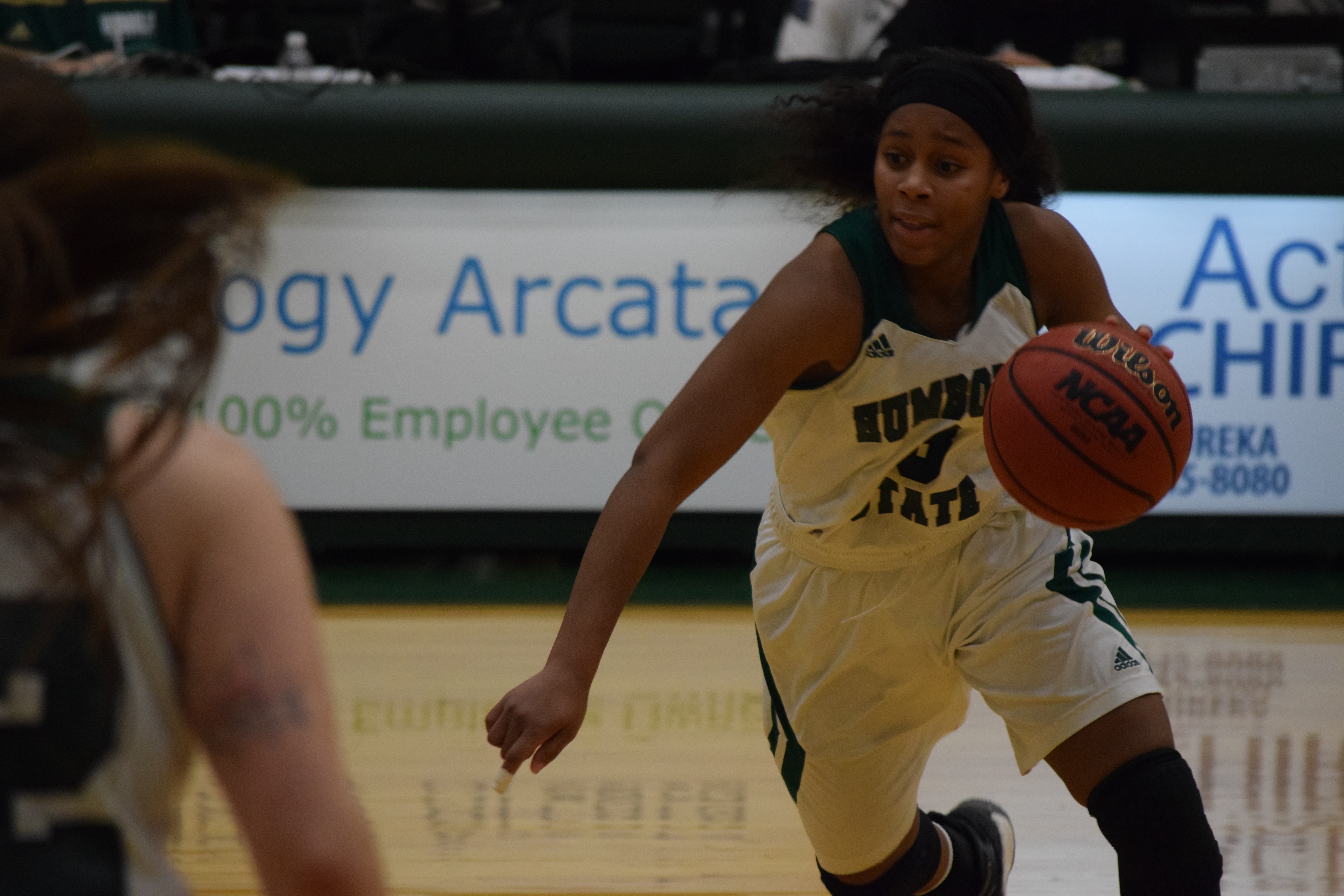
    Twenty minutes before practice, freshman guard Tyra Turner dribbles alone. This is a common sight for her teammates who have seen her come in as a freshman and immediately become a major asset for the team.
    She was recruited by head women’s basketball coach Michelle Bento-Jackson.

    “This year she’s got a lot of weight on her shoulders, she’s a freshman, she’s playing 40 minutes a game, she never comes out, she runs her offense,” Bento-Jackson said. “I’ve told her from day one that I wouldn’t treat her like a freshman, and that I’d have expectations of her as if she was a senior.”
    Turner responded well to these expectations and leads the Lumberjacks with an average 12.4 points, 5.0 rebounds, and 4.4 assists per game. She’s come a long way since late July when she got a call from first year coach Bento-Jackson.
    “My mom helped me send little films and highlights to the coach and that’s when she called me up the last week of July and was like ‘we really want you to come here,’” Turner said. “She talked to me over the phone about how nice the school was and everything and I just took the chance to come here.”
    Turner is a psychology major who hopes to follow in her mother’s footsteps and become a probation officer, talking and working with kids while they’re young to turn around their lives. Turner had originally planned to attend a junior college until the call from Coach Bento-Jackson came.
    “It was very late from a recruiting standpoint, and at that point in time, all I had was some game film of her,” Bento-Jackson said. “She’s definitely exceeded my expectations and she brings so much more to the floor than I had ever even thought.”
    Her late decision to come to Humboldt left her in completely new surroundings not entirely sure what to expect. Turner said that she didn’t expect to lead the team in stats

    “I don’t really look at it as leading in this and this and that, I’m just looking forward to helping my team win and be successful out there,” Turner said.
    Turner has started every game except the first two of the season, and has taken control of the team’s offense. In the home game against Chico State, it was Turner’s passing and ball handling skills that kept the Lumberjacks in the game.
    “I know that coming from a high school program is definitely gonna be tough.”  Allison Zalin, a junior forward said. “On the court she brings toughness. She plays 40 minutes she doesn’t give up she’s pushing the ball she directs people on the court.”

  • Loss to Chico ends Women’s basketball’s winning streak

    Loss to Chico ends Women’s basketball’s winning streak

    By: Curran Daly

    Humboldt State Women’s basketball lost to Chico State on Thursday night 45 to 57. The loss ended a three game winning streak for Humboldt’s women’s team and left them falling two games under .500 in conference with a 4-6 record.

    The game started slow as both teams looked to establish themselves. Chico got out in front early, but Humboldt battled back through good play from Junior guard Riann Thayer.

    The game was close throughout the first half with Humboldt and Chico exchanging leads. The half ended even with a score of 23 all after a jump shot at the buzzer by Junior guard Kindall Murie.

    When Humboldt’s women were at their best defensively with strong team defense to stifle Chico’s offense. Offensively Humboldt’s game ran through freshman guard Tyra Turner, who’s ball distribution and movement baffled Chico’s defense.

    Humboldt began to fall behind in the second half, trailing by six points heading into the fourth quarter. Looking to force its way back in the game a series of fouls and a lack of defensive stops resulted in a 12 point deficit that the lumberjacks could not erase.

    The season series now evens up at one a piece. With this loss the lumberjacks moves to 5-12 overall.