The Lumberjack


Students Serving The Cal Poly Humboldt Campus and Community Since 1929

Tag: Gambling

  • Prop 27 explained

    by Tucker Caraway and Camille Delany

    Proposition 27, on the ballot this November, would legalize online and mobile sports betting outside tribal lands. Despite record spending on the campaigns for and against the proposition, widespread advertisements do not make this clear. 

    Yes on 27, funded by online gaming companies, claims that the proposition is primarily a “solution” to “California’s homelessness and mental health crises.” No on 27, funded by tribal organizations, counters those claims and asserts that the proposition puts more Californians at risk for gambling addiction and infringes on tribal sovereignty. 

    The Yes on 27 campaign ads vary widely in their messaging. “Vote yes on online sports betting, and protect tribal sovereignty, and help Californians that need help the most,” one video promoting Prop 27 states, a wide-ranging claim. 

    Cal Poly Humboldt political science professor Dr. Stephanie Burkhalter describes the Prop 27 ads as “very sophisticated.” She said that she has overheard students expressing confusion about their messaging. According to Burkhalter, “Their inclination is to support tribal sovereignty,” but the mixed messages from the advertisements don’t make it clear whether supporting or opposing the proposition is the best way to do so. 

    The situation is made more confusing for voters by the fact that there are two different initiatives on the ballot this November to legalize sports betting in California. Prop 26 would legalize sports betting only at tribal casinos and California’s four horse racetracks, and is less contentious than 27. Many tribes oppose or remain neutral on Prop 26, while Prop 27 is firmly opposed by the majority of tribes. 

    Burkhalter explained that if Prop 27 passes, not just any online gambling would be legal in California. For a company to offer online betting under Prop 27, it must pay $100 million for a license, and must partner with a tribe that holds a tribal-state gambling compact. 

    “Because [online gambling licenses] can only be offered through federally recognized tribes, the sponsors [of Prop 27] had to partner with certain tribes,” Burkhalter said. “So those tribes, while supportive, are a small minority of all the tribes in California.” 

    CPH Native American Studies (NAS) and Critical Race, Gender, & Sexualiy Studies (CRGS) professor Dr. Rain Marshall explained that each tribe has a different, confidential contract with the state of California for revenue profit sharing. If Prop 26 were to pass, it would require tribes to renegotiate these contracts, a long and arduous process that many mistrust. 

    “Negotiating a new contract is timely and costly,” Marshall said. “The tribes are probably like, ‘You know what, we’re good how we are, it took us forever to negotiate this contract with the state.’” 

    Additionally, the $100 million necessary to secure a license guarantees that the online gaming companies that will benefit from Prop 27’s passage are already large and well-funded, with many headquartered out-of-state. Prop 26 doesn’t involve the corporations that support Prop 27, which is a reason why it’s preferred by some, including certain tribes. 

    “By far Prop 26 would support native sovereignty because it doesn’t involve these corporate conglomerates,” Marshall said. But it has still failed to gain resounding support from tribes, with many still remaining neutral or saying “No” on 26.

  • Betting on the Super Bowl Doesn’t Always Pay Off

    Betting on the Super Bowl Doesn’t Always Pay Off

    Clarifying the legality of betting on the Super Bowl

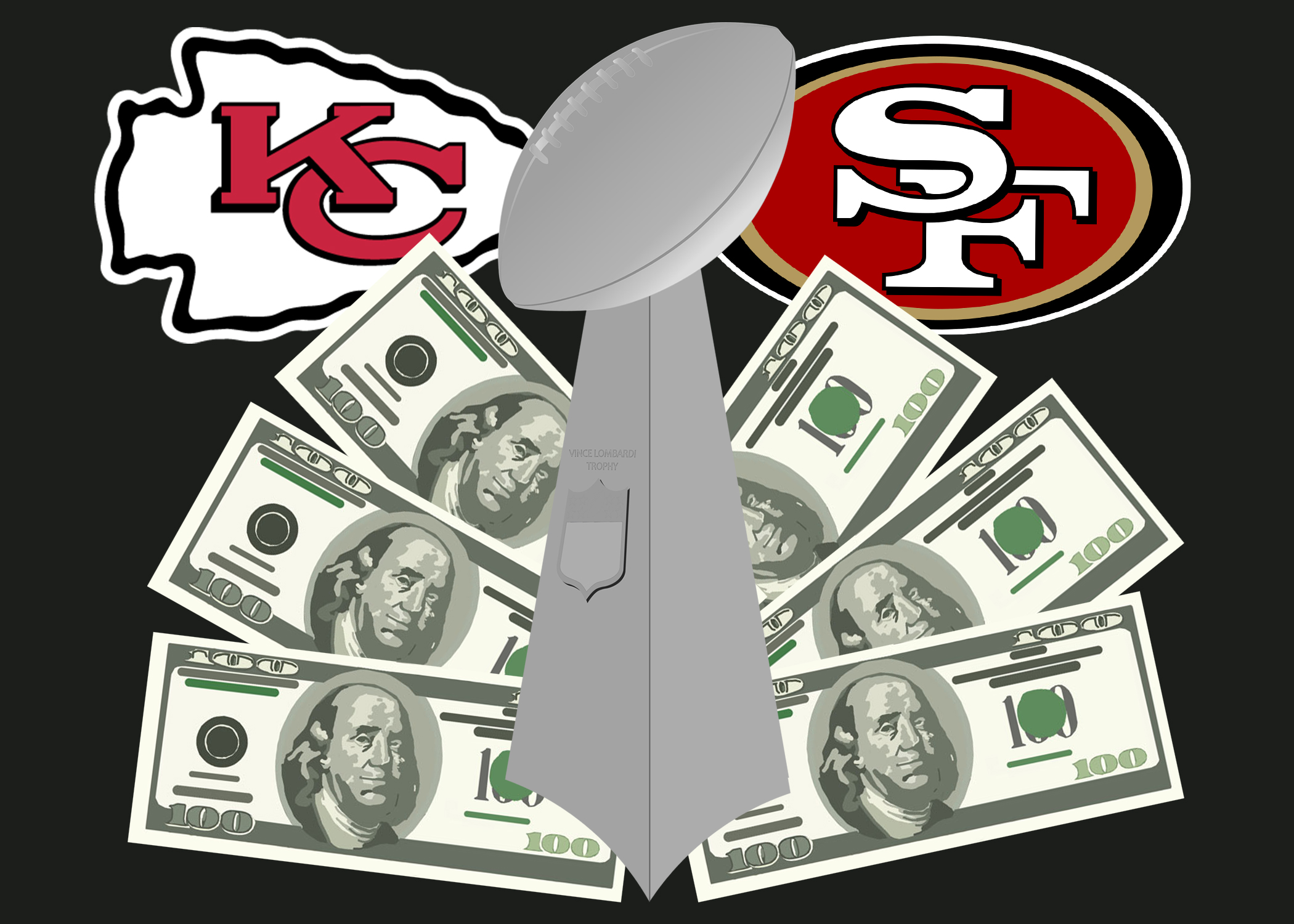
    When you think of Super Bowl betting, you might think of a couple friends harmlessly betting $50 on their hometown team. But Super Bowl betting is illegal in California.

    In 2015, the Association of Government Accountants estimated that people illegally wagered around $145 billion on sports betting. The AGA seeks to increase government accountability and transparency, according to its site.

    Clearly, even if it’s invisible to most, a lot of money is being illegally transferred through sports betting.

    Under California Penal Code 330, California state law says that gambling is illegal, with the exception of Native American reservation casinos, card clubs, charitable gambling, horse wagering and the California State Lottery.

    On Sunday, Feb. 2, the San Francisco 49ers will play the Kansas City Chiefs for the 2020 Super Bowl. Whether you’re watching the game or just going to a party to eat barbecue, you probably at least know someone that’s going to be watching, and more than likely, know someone placing a bet on the outcome of the game.

    In California it’s illegal to bet on the Super Bowl or sports of any kind, but people bet on the game anyway. In the 1990s the prohibition on sports betting began and all sports betting became illegal nationwide.

    Congress passed the Professional and Amateur Sports Protection Act in 1992, which banned governmental entities from legalizing sports wagering.

    Yet in a 2018 United States Supreme Court case, Murphy v. National Collegiate Athletic Association, the Court overturned PASPA due to its conflict with the Tenth Amendment.

    “Congress can regulate sports gambling directly, but if it elects not to do so, each State is free to act on its own,” Justice Samuel Alito said.

    Online betting is a popular form of wagering on the Super Bowl, but when you go to place a bet, you have to confirm your state of occupancy—thereby restricting Californians.

    Under California Penal Code 330, California state law says that gambling is illegal, with the exception of Native American reservation casinos, card clubs, charitable gambling, horse wagering and the California State Lottery.

    “Every person who plays or bets at or against any of those prohibited games, is guilty of a misdemeanor, and shall be punishable by a fine not less than one hundred dollars ($100) nor more than one thousand dollars ($1,000), or by imprisonment in the county jail not exceeding six months, or by both the fine and imprisonment,” the code says.

    So if you plan on betting on this upcoming game, know what you’re getting yourself into.

  • Raider Nation Finds New Home

    Raider Nation Finds New Home

    By Juan Herrera

    Party! Party! Party! that’s all I see in the new Las Vegas Raiders future as a professional football team. Early morning on March 27 the National Football League passed a vote moving the Oakland Raiders to Las Vegas, Nevada. The former Oakland Raiders packed up their bags and started getting ready for their new home in sin city.

    Being a Raiders fan my whole life, hearing this news was like a nightmare you wish to wake up from. The Oakland Coliseum has always been the home of the Raiders and now it will truly never be the same. Ever since I can remember, my household was always the epitome of “Raider Nation” every Sunday during football season. Taking away the Raiders from Oakland is like ripping a tradition from my family for years.

    A major concern I have with the Raiders relocation is the amount partying that might take place in their off time. This is a young team that previously has had troubles complying with rules on and off the field in the NFL which brings an even more concern when moving to the “party” city.

    According to Josh Planos from the Washington post, since 2000 the Oakland Raiders have committed a whopping 2080 penalties. Planos goes on saying this sets them with 215 more penalties than any other team in the league.

    Although I am devastated over the move, Humboldt State student and former Oakland resident Lorea Euskadi expresses how she is torn apart over the change as well.
    “Ever since I could remember my mom would always secure our spots for our season tickets for the Raiders, but not this year.” Euskadi said. “Growing up in Alameda, where the Raiders practice field was, makes them not only a team but apart of my childhood and town.”

    Euskadi goes on to mention how even though she is spiteful against the Raiders moving she is still a loyal fan and is hoping for a strong season in 2017.

    Another heartbreaking change that is coming with the Raiders’ move is a large increase in ticket prices. According to Levi Damien from the online sports publication SB Nation, almost every section of ticket prices have increased by at least 25 percent with some even increasing by 100 percent. Damien reveals how the Raiders new stadium will cost around $925,000 per year and $3.5 million in total, which explains the fans having to pay the price in ticket increases.

    Even though many people are upset about the move, Kassidy Hayes, an HSU student from Las Vegas, talks about how she is more than excited for the new Las Vegas Raiders.

    “As I transfer to UNLV, I am beyond excited for what the Raiders are gonna do for my college in terms of football.” Hayes said. “The amount of recognition that the Rebels will be getting is incredible.”

    Hayes also discusses how as a resident of  Nevada it might not so inviting to have them come.

    “The area already gets ridiculously congested with traffic,” Hayes said. “And the location of the stadium is going to make matters worse.”

    As a Raider fan all I can hope is that the new Las Vegas Raiders will truly succeed and not get distracted from the crazy environment they now call home.