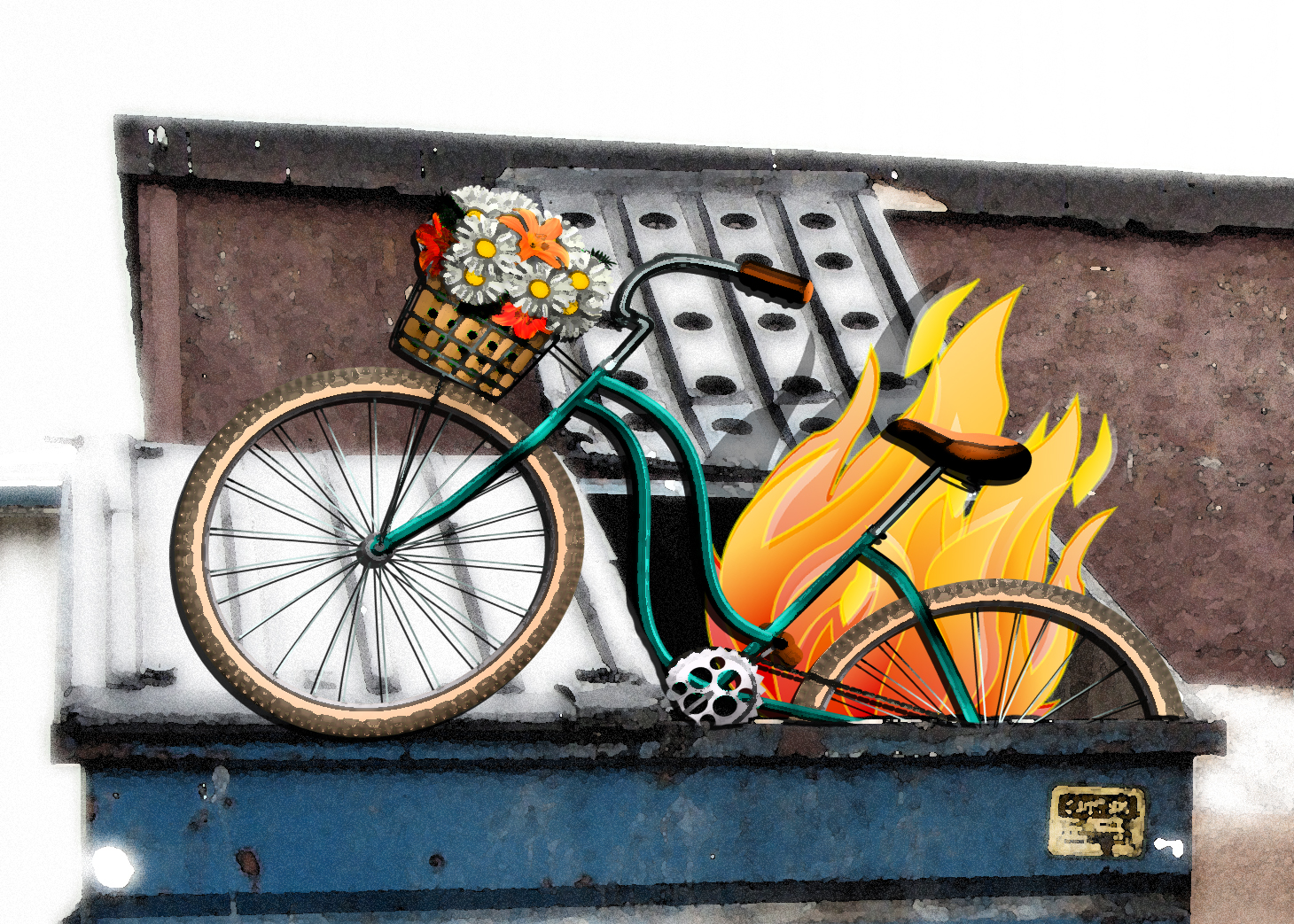
With all the gear and gadgets, mountain biking isn’t as sustainable as it may seem
For a sport that usually occurs in natural settings, and whose participants generally value the ecosystem and the world around us, mountain biking has a serious sustainability problem.
Everything has an expiration date. No matter the maintenance, nothing is ever ‘for life,’ and nowhere is this truer than in the mountain bike industry. Chains stretch, tires bald or blow out, brake pads get worn down and bearings become crunchy and rough.
Issues arise when one attempts to revive or service a bike. Many of the functions are delicate and precise, requiring fresh parts to operate smoothly. This means something as simple as a tune-up often results in cables, housing, tubes and tires being thrown away.
Improper installation or use means that these parts break before they should and get replaced prematurely. Some people replace prematurely simply because they want improved performance.
It’s hard to process this waste on an individual level, but walk into your local bike shop and look in the trash cans. Often, they’re filled with very un-recyclable items that are used, removed and replaced.
Of course, the nature of the sport is that parts get worn down or broken and must be swapped. That so many of these parts get replaced prematurely or destroyed early due to user error is only part of the problem.
With the way our world is headed, mountain biking is due for a rude awakening on the ways that it creates unnecessary waste.
Other issues arise when we look at the bike industry and the way they market their high-end products. Often, these brands will swaddle their expensive parts in multiple layers of processed cardboard and plastics.
Recently, I purchased a new shifter for my bike. The shifter is a small plastic pod, about the size of a mandarin orange. It arrived in a box that I could’ve fit my shoes into.
Just because you can get away with selling drivetrain parts that cost as much as high-end electronics, doesn’t mean you need to package them like iPhones.
If these parts were packaged in plastic bags rather than bulky cardboard, you could fit 10 times the items in a similar space, drastically cutting down on shipping material and resources.
Usually, I give corporations a bit of lee-way with the way they package expensive items. It makes sense that they’d want to provide the customer with a sense of exclusivity for choosing to spend their hard-earned dollars on these parts. But with the news about our world’s climate becoming grimmer with every passing day, the mountain bike industry needs to step up and restructure their priorities to make the sport more sustainable.
I’ve never met a mountain biker who didn’t care about the environment and the future of our planet. Unfortunately, when something breaks usually the whole bike is unrideable until the issue is corrected. Most of us just accept the impact of our sport as there aren’t many other options.
With the way our world is headed, mountain biking is due for a rude awakening on the ways that it creates unnecessary waste.