The Lumberjack


Students Serving The Cal Poly Humboldt Campus and Community Since 1929

Tag: geography

  • Featured researcher studies pupfish in geologic history

    Featured researcher studies pupfish in geologic history

    by Mekiah Glynn

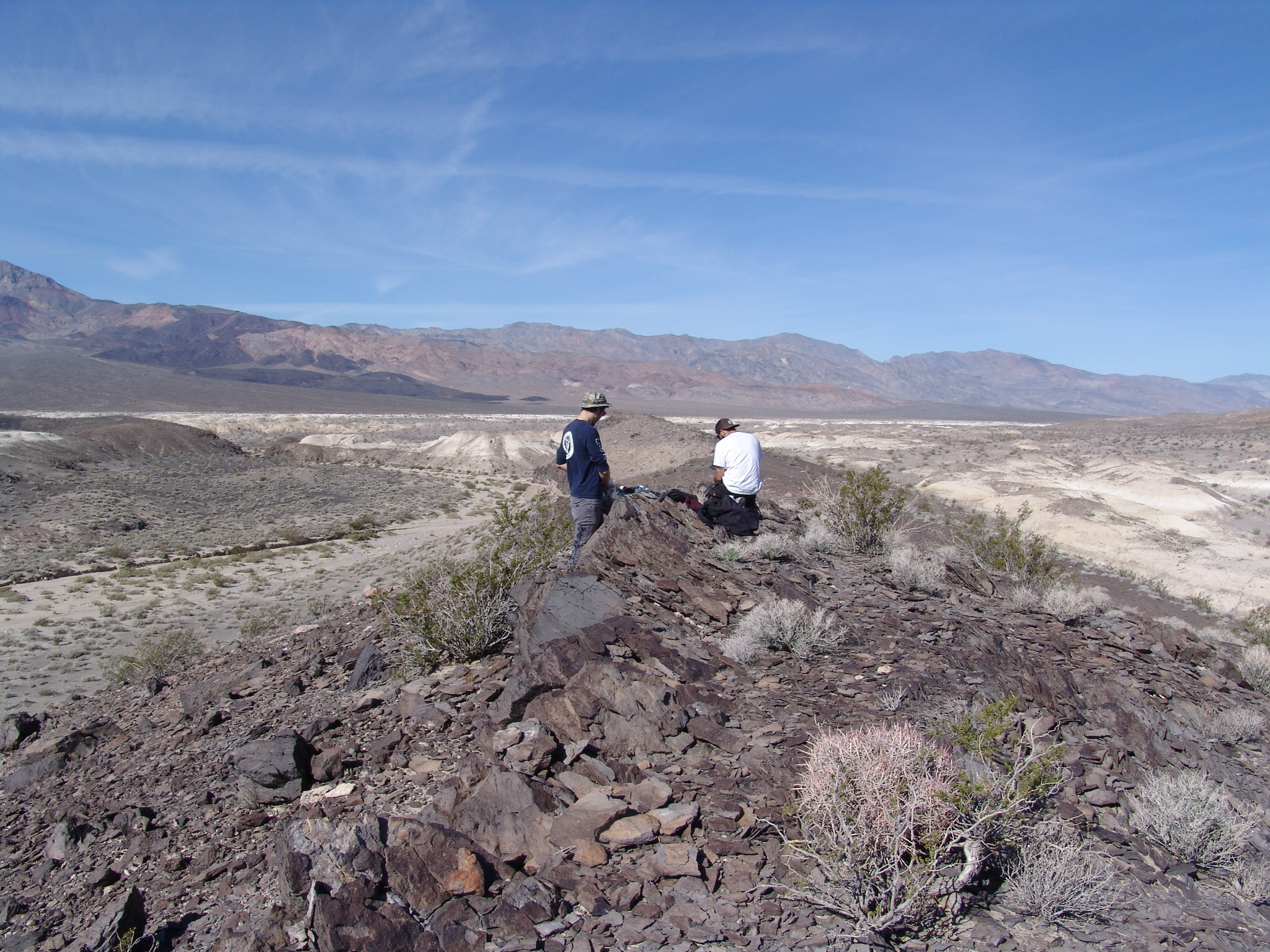
    The geology colloquium on Monday, March 28began with the introduction of Dr. Jeffery Knott. Knott is an emeritus professor at California State Fullerton and an experienced researcher in paleogeography and paleoclimatology. Paleography is the study of historical geography and paleoclimatology is the study of ancient climates. Combining these studies and biology, Knott shared the research he’s done. He explained how pupfish are so widely spread around the globe using paleogeographic understanding of past lakes and rivers where the pupfish were.

    Pupfish are about 2 inches in length and are often a blueish color. This group of species is found in a variety of locations throughout the world. The Death Valley pupfish (Cyprinodon salinus,) which lives exclusively in a small body of water known as Salt Creek, is the focus of Knott’s research.

    “[Salt Creek] is mostly a series of pools and sometimes very little ponds to the side, and it’s not very fast-moving as well,” Knott said. “It’s a relatively slow and low gradient stream but this is where one species of pupfish happens to live at the bottom of Death Valley”.

    The pupfish at Salt Creek are disconnected from other bodies of water. This makes it impossible for them to be related to pupfish in other parts of the world unless there was a connection to other bodies at some point in the past. This is why comparing the pupfish species proves that sea levels were higher and lakes in the past were big enough to connect these water sources.

    To figure out where and when these lakes existed, Knott had to use regional stratigraphy, which studies the layers of rock to determine time frames. Using geological evidence, Knott found that Death Valley had a deepwater lake from around 3.2 to 3.6 million years ago. Along with the timeline of the lakes, the rocks can be used to tell when the area was dried up or whether the lakes were warm.

    From there, Knott then compared the timeline set by different sediments to discover when and how the lakes may have overflowed into each other, and where there isn’t overflow there is usually a realistic explanation. Through the study of historical writings, we know that Native Americans moved pupfish into the Devil’s Hole in Death Valley because they used it for a bathing hole.

    There have been similar studies done to try and explain the evolutionary relationship between the Deep Springs black toad and the toads at Darwin Canyon. These toads are entirely aquatic, so the distance between these species also has to be explained by the history of lakes in the area.

    The next species that Knott and other researchers will focus on are the spring snails. These are a unique case: they move a lot slower than the pupfish and the toads so the distribution of the species is hypothesized to take a lot longer. Finishing the seminar, Knott acknowledged the team that helped him.

    “We’ve done a pretty good job of establishing a stratigraphy here in Death Valley in the western Great Basin,” Knott said. “Through the efforts of many, many people, we can correlate this with global climate records, and then we can start to look at the timing of these… lakes.”

  • Geography Department Celebrates Name Change

    Geography Department Celebrates Name Change

    Geography Department renamed to GESA to better reflect the discipline

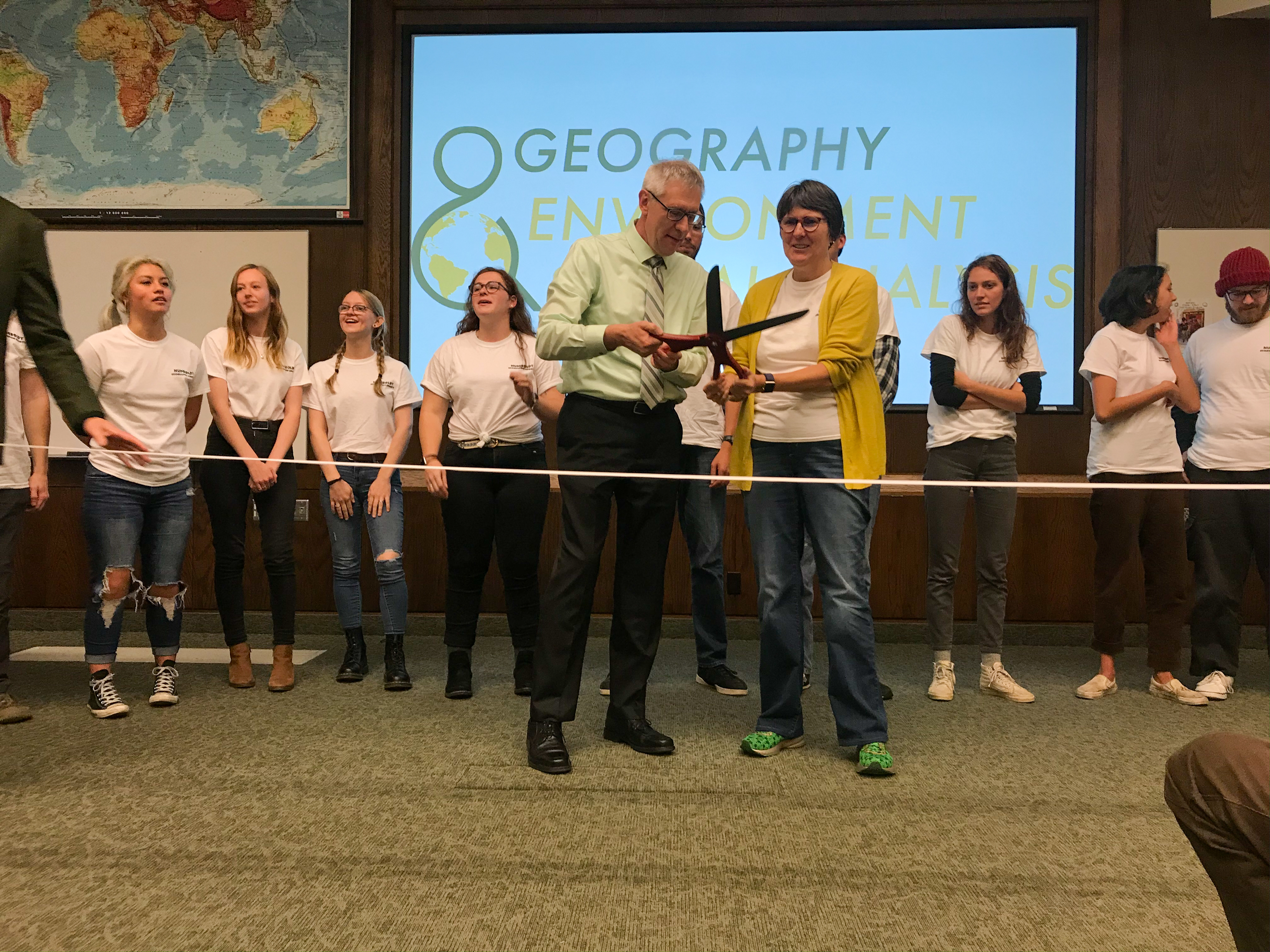
    The Humboldt State geography department was officially renamed the HSU Department of Geography, Environment and Spatial Analysis, or GESA for short. Along with the name change, the GESA department will begin to publish a scientific journal called Humboldt Geographic.

    More than 100 people showed up to the name-change celebration. The evening brought with it a number of presentations from professors within the department including department chair Matthew Derrick. Messages of praise came from the Provost and Vice President for Academic Affairs Alex Enydi as well as the Dean of HSU’s College of Arts, Humanities, and Social Sciences Lisa Bond-Maupin.

    “I am grateful to work with students, staff and faculty every day,” Bond-Maupin said. “I am struck by the idea of boundaries. What I am recognizing about this department is it’s about transcending boundaries. I’m struck by that.”

    One of the boundaries the GESA department is transcending is the barrier between the department and the greater academic community. To achieve this, Derrick has been promoting GESA’s scientific journal, “Humboldt Geographic.”

    “In any kind of education, I say there needs to be some sort of artifact,” Derrick said. “This idea is reunification, where you take ideas and values and they come into some physical form… It is the culmination of where we are right now, and hopefully next year we’ll do it better.”

    Humboldt Geographic is a collaborative, student edited and student published scientific journal. It will include coverage of projects within the department as well as alumni updates and stories about the department’s yearly trips abroad. Although each edition should be finished by the end of the semester, the journal will be on the news stands at the beginning of the spring semester.

    Changing the name of the department to Geography, Environment and Spatial Analysis reflects the dynamic nature of the discipline. Geography is the study of the physical features of the earth and its atmosphere, and Spatial Analysis is a type of geographical analysis which seeks to explain patterns of human behavior by layering data-filled maps over one another. The way this science can be used is restrained only by the imagination of the geographer.

    The Humboldt Geographic Society is chock full of imaginative students. The president of HGS, Summer Owen, talked about the direction of the new geography department.

    “As students, we’re not just studying where things are,” Owen said. “We’re studying why things are that way; why people are there, why those lines exist. Through politics, through landscape, mountain ranges, rivers, oceans, the barriers.”

    After the announcement, Derrick asked the student members of HGS to the front of the room for a group picture before everyone began to socialize. The festivities continued into the night fueled by champagne and finger food.

    Enyedi seemed to enjoy himself and was grateful for the invite from the department.

    “President Jackson said we’re gonna have a lot of parties,” Enyedi said. “Partying and celebrating is what we should do. We need to focus on the great things that our students do, that our faculty do, that we do as a community. I’m proud to be part of this community. So thank you for inviting me to [the] party.”

  • Voices of student science

    Voices of student science

    By | Kelly Bessem

    Voices of student science aims to highlight individual Humboldt State students majoring within the widespread realm of the sciences.

    ____________________________________________________________

    Isabella Knori, HSU Geography major with a minor in Geospatial Analysis. Photo by Kelly Bessem

    Isabella Knori is a senior geography major with a minor in geospatial analysis. Knori is originally from San Diego, Calif.

    “Geography allows you to learn about all different things that apply to a wide variety of disciplines,” Knori said. “When I came to HSU I was really indecisive and wanted to major in everything.”

    For her geography capstone project, Knori conducted a geospatial landscape analysis based on the historic habitats of California condors. This conservation mapping project found possible areas for California condor reintroduction in Northern California.

    ____________________________________________________________

    Kolbe Cathcart, HSU Biology major with an Ecology and Biodiversity focus, standing next to his redwood sapling “Toobee”. Photo by Kelly Bessem

    Kolbe Cathcart is a senior biology major with a focus in ecology and biodiversity. Cathcart grew up in Niles, Calif. 

    Cathcart chose his major because of a book he read growing up called “Dune” by Frank Herbert.

    “It’s about a lot of things but what interested me the most was the ecology aspect and the interaction between ecology and humans,” Cathcart said of the book. “I’m interested in looking at this interaction over thousands of years.”

    Cathcart is bringing a new perspective to the Humboldt State student-run aquaponics lab this semester by focusing on plants rather than fish.

    “Aquaponics is raising fish and using the fish waste to grow plants in that water,” Cathcart said. “It filters the water and then reduces waste production.” Cathcart is currently looking at the economic viability of aquaponics in Northern California.

    ____________________________________________________________

    Amber Hendershot, HSU Cellular and Molecular Biology major. Photo by Kelly Bessem

    Amber Hendershot is a sophomore in the cellular and molecular biology program. Hendershot is originally from Bangor, Penn.

    Hendershot is training to become an emergency medical technician and plans to apply to medical school.

    “I’m fascinated by the use of medicine for healing,” Hendershot said. “I would like to look into alternative medicine and see how it could become more validated through the scientific process.” Hendershot’s ultimate goal is to become a psychiatric or osteopathic doctor.